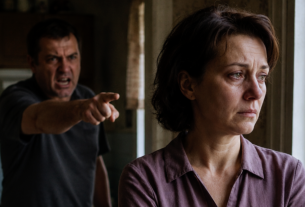
“Are you looking for dinner?” Svetlana asked in a perfectly calm, even voice as she watched her husband methodically lift the lids from the empty pots on the stove. “It’s in the trash. Right under the sink.”
“What do you mean, in the trash?” Dmitry irritably pulled off his tie, tossed it onto the windowsill, and dropped heavily onto a creaking stool. “Sveta, I’ve been on my feet for twelve hours. Three of my projects fell through today. Let’s not play guessing games. I just want something to eat. Serve me whatever you cooked.”
“I’m not speaking in riddles. Open the cabinet door. Pull out the gray plastic bin. See for yourself.”
Dmitry frowned and let out a heavy sigh, making it abundantly clear that he had reached the limit of his patience with these incomprehensible feminine games. He leaned toward the kitchen cabinets and yanked the chrome handle, rolling out the trash bin on its runners.
A sharp, unmistakable kitchen odor hit his nose. On top of crumpled egg cartons, damp tea bags, clumps of dust, and dirty potato peelings lay a thick layer of fresh meat stew that was still warm. Dark, rich gravy slowly ran down the inside of the garbage bag, soaking into scraps of paper. Pieces of prime beef, neatly chopped carrots, and potatoes were mixed with cigarette butts, creating such an absurd sight that Dmitry simply froze for several seconds, staring into the plastic container.
At that moment, Dmitry’s mother was sitting at the table less than two feet away. Nina Pavlovna was slowly stirring tea in a porcelain cup with the surgical precision of a trained professional. The metal spoon struck the delicate sides of the cup in a steady, uniform rhythm. She looked at neither her son nor her daughter-in-law. Her gaze was fixed somewhere near the gas water heater, while her face bore an expression of profound, almost meditative serenity.
“Mom… what is this?” Dmitry looked up from the trash bin. “Why is the food in the garbage?”
“It was burned,” Nina Pavlovna answered impassively, without changing the rhythm of her stirring. “I came into the kitchen to get some water and smelled burned meat. I looked into the pot, and there was a black crust on the bottom. Why should you swallow carcinogens? You’ll ruin your stomach, and then we’ll spend even more on medicine. I simply saved you from food poisoning.”
“Nothing was burned.” Svetlana stepped forward and placed both hands on the countertop. Her face resembled a frozen mask, with not a single muscle betraying the tension inside her. Only the knuckles of her fingers, gripping the edge of the counter, had turned white from the pressure. “I took the pot off the burner forty minutes before you came home. The meat had been simmering over low heat. It was perfect. Your mother simply picked up the heavy pot with oven mitts and calmly dumped two kilograms of food into the garbage.”
“Mom, seriously, why?” Dmitry rubbed his face forcefully with both hands, trying to ward off the headache that was beginning to form. “Even if the bottom was burned, you could have transferred the top portion to another dish. Why throw everything away? Groceries cost money. Svetlana spent two hours standing over the stove.”
“Next time, she’ll pay attention to the heat,” Nina Pavlovna snapped. She carefully placed the spoon on the saucer, picked up the cup with both hands, and took a small sip. “I will not allow you to be fed spoiled food in my presence.”
“This isn’t only about dinner, Dima.” Svetlana straightened and walked right up to her husband. “Take out your phone. Right now. Unlock it and open the clock app.”
“What does my phone have to do with this?” Dmitry was beginning to lose his patience. The spectacle involving the discarded food already seemed excessive, and he was not prepared to drag electronics into it as well. “Sveta, I’ll order delivery. Pizza or sushi. Let’s just eat and go to our separate rooms.”
“Take out your phone.”
Svetlana’s tone was so uncompromising that Dmitry automatically slipped a hand into his trouser pocket, pulled out his smartphone, and opened the alarm menu.
“Last night, you set your alarm for six o’clock because you needed to stop by the office for some documents before your meeting,” Svetlana continued methodically, as though she were reading from an official report. “What time does it show now?”
Dmitry stared at the screen. Next to the active alarm switch, the numbers 7:45 glowed brightly.
“Seven forty-five,” he said slowly. “That’s strange. I clearly remember setting it for six. It must be a system glitch. Maybe the update installed incorrectly.”
“A system glitch?” Svetlana tilted her head slightly. “And my phone, which was lying on the nightstand on my side of the bed, was completely turned off this morning. I never turn my phone off at night. Never. Because of that, we both overslept. You were late for the site, and I was reprimanded at work for missing the morning planning meeting.”
Nina Pavlovna placed her cup on the table. The ceramic made a short, dull sound against the wooden surface.
“I was dusting your room this morning,” the mother-in-law said evenly as she adjusted the collar of her cardigan. “There was a thick layer of dirt on the nightstands. I took a damp cloth and wiped the surfaces. I must have accidentally touched the screens of your devices. Technology is far too sensitive these days. One careless movement, and everything changes.”
“You accidentally touched the screen, opened the menu, selected the clock app, tapped a specific alarm, moved the time forward by one hour and forty-five minutes, and pressed ‘Save’?” Svetlana kept her hard gaze fixed on her husband’s face. “And on my phone, you accidentally held down the power button on the side for three seconds, then accidentally swiped the screen to confirm that it should be turned off?”
Dmitry remained silent.
The air in the cramped kitchen seemed thick, sticky, and unbearably heavy. The sharp smell of the stew in the garbage mingled with the delicate aroma of black tea, creating a nauseating combination. He looked at his mother, who was still calmly staring out the window, and then at his wife, who stood before him with a cold, calculating expectation of his reaction.
Inside him, the desire to defend his mother and dismiss everything as a ridiculous chain of coincidences struggled against a cold, slowly emerging realization: coincidences could not possibly be this surgically precise.
Svetlana smelled the burning before she even opened the bathroom door. The acrid, suffocating odor of scorched fabric penetrated the damp steam and citrus-scented shower gel.
That evening was supposed to be decisive for her career. The company’s chief executive was personally attending the annual corporate party, where new appointments were traditionally announced. The position of department head was practically hers. All that remained was for her to deliver a flawless presentation during the informal part of the event.
For the occasion, she had bought a dress made of heavy emerald silk, spending a third of her salary on it. It was perfect—formal, elegant, and unmistakably appropriate for her status.
She pulled her terrycloth robe more tightly around herself and stepped into the hallway. The smell intensified, taking on the distinct odor of burned protein characteristic of scorched natural fabric. Svetlana walked several feet to her bedroom and pushed open the partially closed door.
Her emerald silk lay on an ironing board set up in the middle of the room.
Or rather, what remained of it.
Directly in the center of the bodice, in the most visible possible location, was an enormous melted hole shaped like the sole of an iron. The edges of the fabric had blackened and curled into a hard, brittle crust, permanently fused to the ironing-board cover. The iron itself had been unplugged but was still radiating intense heat as it stood nearby on its metal rest.
Svetlana did not make a sound.
Her face turned into a stone mask. Using only two fingers, she carefully lifted the hanger holding the remains of the dress, pulled the fused silk away from the board with a faint tearing sound, and turned toward the door.
The television was on in the living room. Silent footage from a sports broadcast flickered across the screen. Dmitry was reclining on the sofa, mindlessly scrolling through his phone. In the armchair opposite him, beneath the floor lamp, Nina Pavlovna was methodically filling in the squares of a thick crossword magazine with a blue ballpoint pen. Her back was perfectly straight, and neat reading glasses gleamed on the bridge of her nose.
“What’s that horrible smell?” Dmitry sniffed the air, looked up from his phone, and turned toward his wife as she entered.
“My promotion,” Svetlana replied in a completely flat, emotionless voice.
She walked over to the coffee table and placed the ruined dress directly on top of the remote controls and glossy magazines. The charred hole in the chest stared at Dmitry like a black abyss.
Dmitry slowly sat upright. His gaze moved from the ruined fabric to his wife’s face and then to his mother. His mind refused to connect the facts, desperately searching for a logical, harmless explanation for what he was seeing.
“What is this?” He reached out and touched the hard, burned edge of the fabric, then immediately pulled his fingers back as though he had been burned. “How did this happen? Did you forget to turn off the iron before taking your shower?”
“I never took out the ironing board. I never plugged in the iron. My dress was hanging over the back of a chair, completely ready for me to put on. I had it professionally steamed yesterday evening.” Svetlana was not looking at her husband. Her gaze was fixed on her mother-in-law.
Nina Pavlovna slowly finished writing a word across the page, placed a period after it, carefully closed the magazine, and set down her pen. She removed her glasses, leisurely polished the lenses against the edge of her wool cardigan, and only then looked at the ruined garment.
“It was wrinkled,” Nina Pavlovna said as casually as though she were discussing a loaf of bread. “I went into your room to water the ficus on the windowsill and saw some crumpled green rag hanging over the back of the chair. I decided to help by ironing it before you left. How was I supposed to know that such cheap synthetic material would melt instantly? The iron had barely heated up.”
“It is natural Italian silk,” Svetlana said, enunciating every syllable. “There is a red embroidered symbol inside the collar specifically warning against contact with hot surfaces. And there was not a single wrinkle on it.”
“Mom…” Dmitry felt a heavy, suffocating wave of realization boiling inside him. He stared at the melted outline. “You burned the hole directly through the chest. Right in the center of the bodice. Why did you start ironing the chest area when the dress was hanging over a chair?”
“I laid it on the board.” His mother shrugged without losing her murderous composure for even a second. “I pressed the steam button, and it simply came apart beneath the iron. They must have sold you defective material. It’s no great loss. Wear your old black suit. It suits you better anyway. It hides the flaws in your figure.”
“You pressed an iron heated to its highest setting against the center of the dress and held it there for at least twenty seconds.” Svetlana leaned forward, bracing her hands against the edge of the coffee table. “To burn through heavy silk that badly, you would need both time and physical pressure. You stood there and deliberately forced the hot metal into the fabric.”
“Don’t invent ridiculous stories.” Nina Pavlovna grimaced with disgust and picked up her crossword magazine again. “As though I have nothing better to do than destroy your things. I was trying to do you a favor, and all I receive in return is ingratitude and rudeness. Dima, explain to your wife that people in this house do not speak to their elders in that tone.”
Dmitry stared at his mother.
For the first time since they had begun living together, the veil fell from his eyes. He clearly saw what he had tried for so long to ignore: cold, calculating cruelty hidden beneath a mask of domestic concern.
The discarded dinner, the altered alarms, and now the dress—everything formed one terrifyingly clear pattern. This was not merely an elderly woman’s clumsiness or a difference in personality. It was deliberate destruction.
“You’re not going to the corporate party?” Dmitry looked up at his wife, realizing how pathetic and inappropriate the question sounded at that moment.
“I am going to the corporate party.” Svetlana straightened and tightened the belt of her robe. Her face remained unreadable, but a hard, metallic gleam had appeared in her eyes. “I’ll put on my old suit, go to the office, and deliver the presentation. But when I return, you and I are going to make a decision. Once and for all.”
She turned on her heel and walked firmly out of the living room, leaving her husband alone with his mother and the black, burned hole on the table. Its lingering stench of scorched fabric eloquently announced the beginning of the end of their familiar life.
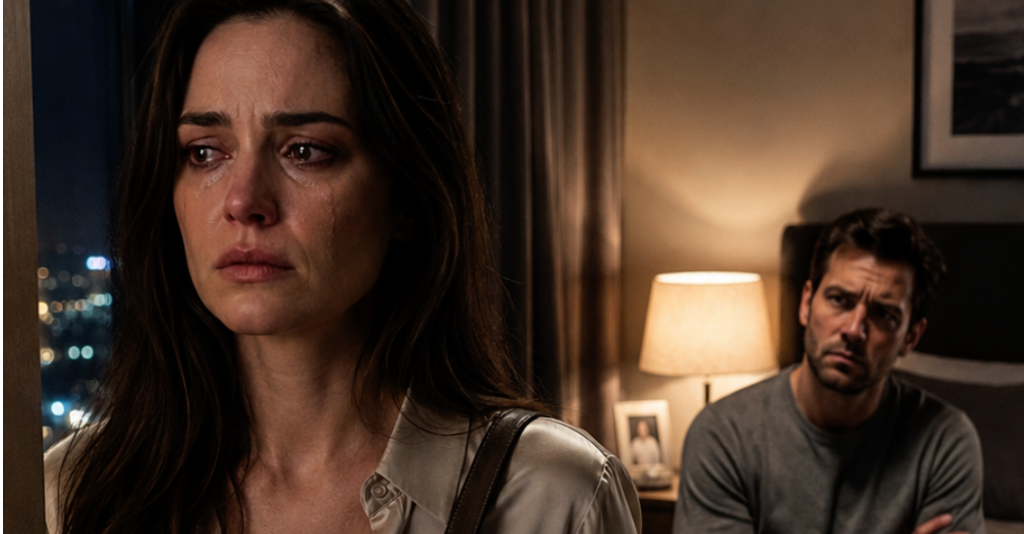
“You took out a travel bag at two in the morning just to wipe off the dust?” Dmitry asked in a flat, emotionless voice. He was sitting on the edge of the unmade double bed, watching his wife’s mechanical movements.
Svetlana did not even look at him.
She stood beside the open wardrobe wearing the old black trouser suit in which she had left for the corporate party several hours earlier. A travel cosmetics case, her work laptop, and a pair of folded jeans had already been placed at the bottom of the large leather suitcase.
Her movements were frighteningly precise and deliberate, without a single unnecessary pause. Every item was placed in its designated spot with mathematical accuracy. The heavy metal zipper on her toiletry case closed with a dry, sharp sound that cut through the dim nighttime atmosphere of the stuffy bedroom.
“I got the position,” Svetlana answered in the same even voice as she placed a stack of basic T-shirts into the bag. “The chief executive signed the appointment order during the banquet. My new salary will be more than enough to rent any spacious apartment in the city center. I’m moving out. I’ll call a taxi in ten minutes and go to a hotel. Tomorrow, after work, I’ll find a permanent place.”
Dmitry leaned heavily forward, resting his elbows on his knees. He looked at the melted emerald silk, which was still lying on the dresser like an ugly dark stain. The ruined fabric no longer smelled of burning; the odor had escaped through the partially open window. But the mere presence of the mutilated garment in the room pressed against his temples with the weight of lead.
The bedroom door creaked and opened wider.
Nina Pavlovna appeared in the doorway. She had changed into thick flannel pajamas, and her gray hair had been neatly combed back. The mother-in-law crossed her arms over her chest and examined the half-empty wardrobe shelves and her daughter-in-law’s filling suitcase with a sharp, searching gaze.
Her expression combined contemptuous superiority with unconcealed triumph.
“And where do we think we’re going in the middle of the night?” Nina Pavlovna asked dryly, leaning one shoulder against the wooden doorframe. “Have you decided to stage one final performance for dramatic effect?”
Svetlana froze with a warm cashmere sweater in her hands. She slowly turned her head, looked first at her mother-in-law, and then shifted her heavy, unblinking gaze toward her husband.
“I cooked dinner, and your mother threw all of it into the garbage because her precious little boy supposedly doesn’t eat food like that. She changes our alarms so we oversleep, and she rummages through our dirty laundry so she can discuss it with the neighbors. This isn’t a life. It’s a concentration camp with a guard. Unless you find us an apartment immediately, I’m going to my parents’ house alone!”
Nina Pavlovna gave a short, contemptuous laugh. She pushed herself away from the doorframe and stepped into the room, deliberately placing the sole of her foot on the edge of one of Svetlana’s slippers lying on the floor.
“Good riddance,” the mother-in-law said harshly. “It’s long past time for you to free up the living space. I knew from the first day that you didn’t want my son. You wanted a residence permit in the capital and a convenient base from which to launch your career. Don’t let the door hit you on the way out. Dima will find himself a normal woman instead of a soulless machine obsessed with her career.”
Dmitry raised his head.
His gaze moved from his mother to his wife. At that moment, the entire picture of his life assembled itself into one brutally clear puzzle.
He saw two women before him. One was methodically packing a suitcase so she could erase him from her life. The other was watching the process with open delight, savoring the result of her months-long campaign of sabotage.
Dmitry slowly rose from the bed.
He did not approach Svetlana or try to reason with his mother. Instead, he silently walked over to the tall wardrobe, stood on his toes, and pulled his large sports bag from the highest shelf. The thick synthetic fabric unfolded in his hands with a loud rustle.
The smirk vanished instantly from Nina Pavlovna’s face. Her back stiffened until it resembled a tightly stretched wire.
“What are you reaching for?” Her voice lost its velvety mockery and became harsh and rasping. “What are you doing?”
Dmitry did not answer.
He walked to his side of the dresser, yanked open a drawer, and began throwing packages of underwear, socks, and rolled-up casual shirts into the bag. His movements were not frantic. He acted with the same methodical coldness his wife had displayed only minutes earlier.
“I asked you a question.” Nina Pavlovna stepped forward and stopped three feet away from her son. “Put the bag back. Stop this ridiculous performance immediately. You have work tomorrow. You need to sleep, not run around the city after some offended career woman.”
“You burned the silk,” Dmitry said as he dropped a hard plastic shaving case into the bag. “You dumped fresh meat on top of potato peelings and wet tea bags. You manually changed the alarms on our smartphones. You coldly and deliberately drove my wife out of this apartment. Congratulations. Your plan worked exactly halfway. She really is leaving.”
Dmitry closed the zipper on the sports bag, gripped its sturdy fabric handles, and turned to face his mother.
There was no anger or resentment in his eyes. There was only the absolute, freezing coldness of realization.
“She’s leaving,” he repeated, looking directly into Nina Pavlovna’s tense face. “But she isn’t leaving alone. I’m going with her.”
Uneven red blotches spread across the mother-in-law’s face. She drew a deep breath, her nostrils flaring like those of a predator and revealing the full extent of her suppressed fury.
“The apartment is legally mine,” Nina Pavlovna hissed through tightly clenched teeth, never taking her eyes off her son. “If you cross that threshold with your belongings, I will not let you come back. Tomorrow morning, I’ll call a locksmith and change the locks. Do you understand me? You will not be allowed through the door.”
“Do me a favor,” Dmitry replied dryly.
He picked up the sports bag, walked over to Svetlana, who had already zipped her leather suitcase, and took it from her hand, slinging it over his shoulder.
“Tell the locksmith to install a high-security cylinder lock. I’ve heard they’re more reliable. Let’s go, Sveta. The car should already be waiting downstairs.”
“Put the keys to both locks on the shoe cabinet,” Nina Pavlovna ordered dryly, completely blocking the narrow hallway with her body. “Leave the spare entry-system fob as well. Since you’re setting off on your independent adventure, you’ll no longer require access to my apartment.”
Dmitry stopped beneath the dim hallway light.
The yellow electric glow sharply outlined the deep wrinkles on his mother’s face and emphasized her tightly compressed lips, which had turned white from strain. Svetlana stood half a step behind her husband, tightly gripping the broad handle of her leather suitcase.
The confined space smelled of stale dust from the winter coats hanging on the rack and cheap shoe polish.
Dmitry slipped his free hand into the right pocket of his jeans. The metal edges of the keys scratched unpleasantly against his skin. He pulled out the heavy key ring and methodically removed two long perforated keys and a blue plastic entry-system fob.
The metal landed on the scratched wooden surface of the old shoe cabinet with a loud, distinct clatter.
“Is that everything?” Nina Pavlovna narrowed her eyes, making no attempt to step aside and clear the way to the front door. Her gaze was sharp and searching, examining every movement her son made.
“Almost,” Dmitry answered without emotion.
He lowered his sports bag onto the worn linoleum, stepped toward the built-in wardrobe, and forcefully slid the heavy mirrored door aside. The rollers creaked against the aluminum tracks.
He reached beneath a stack of folded wool blankets on the highest shelf and pulled out a thick paper envelope tightly secured with two thin rubber bands.
“What have you been hiding in there?” His mother instinctively leaned forward and stretched out her neck. Her face twisted into a grimace of open, undisguised suspicion. “Have you been taking my money?”
“My bonuses from the past six months and the money I saved from three completed projects.” Dmitry placed the envelope inside his jacket and zipped the metal zipper all the way to his chin. “I was saving it for a down payment on a new car, but now the money will pay the rent on a normal home and buy my wife a new dress to replace the silk one you deliberately burned with an iron today.”
Nina Pavlovna smirked. It was a hard, asymmetrical expression that caused a dense network of deep creases to gather around her eyes.
“Buy dresses, rent a palace, and feed that career woman restaurant food,” his mother said, emphasizing every word. “We’ll see how long your pieces of paper last. You are both selfish people completely incapable of living independently. Two empty shells. Without my supervision, you’ll become buried in dirt and develop stomach ulcers from eating frozen dumplings.”
“We will decide our own diet and cleaning schedule,” Svetlana said as she stepped forward.
Her tone matched her husband’s—icy, even, and entirely free of emotional fluctuation. She looked directly into her mother-in-law’s eyes without blinking.
“Your mission to save your son from poor-quality food and an improper sleep schedule is officially over. You will no longer have to dump fresh stew into the garbage or secretly change the time on our phones. You achieved the perfect result. The apartment is now completely at your disposal.”
Dmitry took his smartphone out of his pocket. The bright screen momentarily blinded him in the dark hallway. He opened his contacts, found the number he wanted, and stepped close to his mother, turning the display toward her face.
“Watch carefully,” he said firmly.
Nina Pavlovna lowered her gaze to the screen.
Dmitry’s thumb confidently pressed the red option marked “Block caller.” A system notification immediately appeared, confirming that the number had been added to the blocked list. He then opened two popular messaging applications, deleted their conversation histories, entered the profile settings, and completely blocked her contact.
“I have blocked your calls and messages everywhere possible,” Dmitry said methodically, as though reading a strict set of instructions. He put the phone back into the pocket of his jeans. “Do not try to call Svetlana. Do not try to find us through my colleagues. Do not come to my work sites. Our relationship ends here and now. Completely. Permanently.”
Large, uneven red blotches spread across Nina Pavlovna’s face. Her nostrils flared with every sharp breath, while the knuckles of her clenched fists turned white from the fury pulsing inside her.
She had not expected this outcome.
According to her carefully constructed plan, her daughter-in-law was supposed to flee in disgrace, leaving her son completely under his mother’s control. Losing control over Dmitry was an unbearable, almost physically painful blow.
“Get out,” she hissed through her teeth, practically spitting the words into her son’s face. “Life will soon put you both in your place. Two traitors.”
She abruptly stepped aside and pressed her back against the thick vinyl wallpaper, clearing the narrow passage to the heavy metal door.
Dmitry lifted his sports bag, pulled the broad strap over his shoulder, and took hold of the lock handle. The thumb turn clicked dully twice in the cool air of the apartment entryway. He pushed open the heavy door, allowing a stream of fresh night air from the stairwell to enter the stuffy corridor.
Svetlana left first, her heels clicking rhythmically against the gray concrete floor of the building’s stairwell. Dmitry followed her.
He did not turn around. He did not look at his mother one final time.
He simply pulled the door toward himself, carefully holding the handle so the metal latch would enter its slot without unnecessary noise. The door closed with a dry, solid click, cutting them off from the past forever.
The nighttime street greeted them with a damp, gusting wind and the sharp smell of wet asphalt. A yellow taxi with its parking lights on was already waiting beside the curb, its powerful LED headlights illuminating a dirty puddle.
The driver, who was smoking an electronic cigarette through the partially open window, silently pressed the button to unlock the trunk.
Dmitry threw the bags inside, slammed the metal lid, and opened the rear passenger door for Svetlana. She slid onto the seat, which was covered in cheap imitation-leather upholstery. Dmitry sat beside her and closed the door.
The car smoothly pulled away from the curb, quickly gaining speed and carrying them away from the dark mass of the residential district.
The cramped interior smelled of an artificial pine air freshener and burned rubber. Behind the tinted window, streetlights and neon signs from twenty-four-hour stores flashed past in blurred streaks.
Svetlana sat with her back perfectly straight, staring directly ahead at the gray headrest of the driver’s seat. Dmitry leaned his head back and looked up at the dark, fuzzy ceiling of the car.
Neither of them said a word.
In their restrained movements, in their empty gazes, and in the very air surrounding them, there was not the slightest trace of relief or happiness at their sudden freedom.
There was only the cold, terrifyingly clear, and unforgiving realization that every bridge had been burned to ashes—and that ahead of them lay an entirely different and unknown reality, whose foundation had just been laid upon the ruins of a family that had been destroyed beyond repair.