Anna realized something was off with Maksim when he brought home an expensive bottle of champagne. Not just a nice wine for dinner, but a real French brut that cost half of his monthly salary. Such lavish spending was totally out of character for him.
«What are we celebrating?» she asked, eyeing the golden label.
«Oh, I just wanted to spoil my lovely wife,» Maksim replied, but his voice had an oddly forced cheerfulness.
After seven years of marriage, Anna had learned to read every nuance of her husband’s moods. And right now, she knew for sure: something was bothering him. The expensive champagne wasn’t a reward—it was bait before a serious conversation.
«Maks, what’s going on?» Anna put the bottle aside and looked at her husband intently.
«Nothing’s going on. I’m just in a good mood. Let’s have dinner first, then open the champagne.»
But Anna had no appetite. The sense of impending trouble just kept growing. Maksim was acting far too lively, too talkative, telling jokes he normally never told. It was all clearly an attempt to distract from the real issue.
The truth came out the next day, when her mother-in-law showed up unexpectedly.
Lyudmila Petrovna arrived early in the morning, before Anna even had time to get ready for work. She was holding a folder full of documents and looked extremely businesslike.
«Annushka, dear, how are you?» her mother-in-law asked as she walked into the apartment uninvited.
«I’m fine, thank you. What are those documents?»
«Oh, these…» Lyudmila Petrovna smiled mysteriously. «I’ll tell you later. First, let’s have some tea and a heart-to-heart talk.»
Anna grew even more suspicious. Lyudmila Petrovna was never one for heartfelt conversations. Usually she talked about household issues, gave tips on housekeeping, or complained about her health. But now, she suddenly wanted to have a deep conversation.
«Tell me, are you happy with your job?» her mother-in-law asked once they sat down at the table with their tea.
«Basically, yes. Why do you ask?»
«Oh, nothing special. I just wonder if maybe it’s time for you to do something more… promising.»
«What do you mean?»
«Well, an office job is stable, of course. But where’s the creativity? Where’s self-fulfillment? You’re a smart, educated woman. You could open your own business.»
Anna almost laughed. Lyudmila Petrovna had always been skeptical about women having careers and often said a wife belongs at home with her husband. And now she was suddenly talking about self-fulfillment and starting a business.
«Lyudmila Petrovna, I have no desire to run a business. I like my job.»
«Liking your job is great. But you can do what you love and earn good money at the same time. Just look…»
Her mother-in-law opened the folder and pulled out several sheets with numbers and calculations.
«Maksim and I did some math. If you open a small café in the city center, it’ll pay for itself in a year and a half. After that, it’s pure profit.»
Anna’s heart skipped a beat. So the champagne last night was all about this conversation. Maksim was getting her ready for a serious proposal, and now his mother was here as the heavy artillery. Continued in the comments.
«A cafe?» Anna repeated. «And where would we get the money to open it?»
«Well, we’ll need some start-up capital, of course. But not that much! We could rent a place, buy equipment that isn’t too expensive. The main thing is to organize everything properly.»
«And how much money are we talking about?»
«According to our calculations, about two million rubles.»
Anna felt the ground slip out from under her feet. Two million! She and Maksim were nowhere near having that kind of money. Their combined savings would only cover about a tenth of that amount.
«Lyudmila Petrovna, we don’t have that kind of money.»
«Oh yes, you do!» her mother-in-law exclaimed triumphantly. «You have the dacha. Your parents’ house. Sell it—and that would be just enough to open the cafe!»
There it was! That’s what the champagne, heartfelt conversations, and business plans were all about. The dacha. The only thing Anna had left from her parents. A modest house with a plot fifty kilometers from the city, where she’d spent her childhood and still went to escape the city noise.
«I’m not selling the dacha,» Anna said firmly.
«Why not?» Lyudmila Petrovna asked in surprise. «You’re hardly ever there—maybe a few times a year at most. And here’s a chance to start your own business!»
«Because it’s a memory of my parents. And because I don’t want to run a cafe.»
«Annushka, you don’t understand. This isn’t just a cafe. It’s a family business! Maksim will handle the admin side, you’ll manage the kitchen and service. I’ll help with organizing things. We’re family—we should help each other.»
«I work at the bank and I plan to keep working. I don’t have time for a cafe.»
«You can quit the bank. Why work for someone else when you can work for yourself?»
Anna realized the conversation had taken a completely unwanted turn. Apparently her life had already been mapped out for her: sell the dacha, quit her job, open a cafe, and become a waitress in the family business. And all this was being presented as concern for her future.
«Lyudmila Petrovna, thank you for your concern, but I’m not ready for such a drastic life change.»
«But Maksim is ready! Yesterday he was so excited about this idea, his eyes were sparkling. He said, ‘Mom, we’ll finally be working for ourselves, not for someone else.’ And now you’re disappointing him.»
«He can open a cafe if he wants, but not with my dacha.»
«There’s no way to do it without your dacha. He doesn’t have the money, I don’t either. Only you can help the family get on its feet.»
«Help the family, or help you all make money from my inheritance?»
Lyudmila Petrovna flushed with indignation.
«How can you say that? We’re not doing this for ourselves, it’s for the good of everyone! The cafe will belong to all of us, and so will the profits.»
«For everyone? And what if the business goes under? You can’t get the dacha back.»
«It won’t fail! We did all the calculations and studied the market. People want cozy places with home-cooked food. We’ll definitely make a profit.»
Anna stayed silent, processing everything she’d just heard. So it turned out that she and Maksim had already made their decisions—drawn up a business plan, picked out a space. All that was left was her formal agreement to sell the dacha. First they’d tried to sweeten her up with champagne, then sent in Mom with persuasive speeches.
«I’ll think about it,» she finally said.
— There’s really not much to think about. This is a great opportunity, and we shouldn’t let it slip by. Maksim says they might give the space to someone else if we take too long to decide.
— Then let them give it to someone else.
— Annushka! — Lyudmila Petrovna stood up and looked sternly at her daughter-in-law. — Do you realize you’re refusing to help your own husband? He dreams of having his own business, and you’re standing in his way!
— I’m not standing in his way. Let him find other ways to earn the startup money.
— There are no other ways! Only your dacha can save the situation.
— In that case, the situation is hopeless.
Her mother-in-law gathered the documents, stuffed them into a folder, and headed for the door.
— Fine. But when Maksim finds out you’ve refused, don’t be surprised if he’s upset. Men don’t like it when their wives don’t support their new ventures.
After Lyudmila Petrovna left, Anna sat in the kitchen for a long time, trying to collect her thoughts. Could Maksim really have agreed to such a plan? Did he seriously expect her to sell her dacha for a risky business idea?
That evening, her husband came home in a great mood.
— How are you, darling? — he asked, kissing his wife on the cheek.
— Fine. Your mom stopped by today.
Maksim froze halfway to the fridge.
— My mom? Why did she come?
— She talked about the cafe, showed me the business plan.
— Oh… right. We were just discussing different ways to earn money. But that was just a preliminary talk.
— Preliminary? Maksim, she said they might give the space to others if we don’t make a decision soon.
Maksim let out a heavy sigh and sat down across from his wife.
— Okay, let’s talk seriously. Yes, I want to start my own business. I’m tired of working for someone else, earning peanuts, and having no prospects.
— And to do that you want to sell my dacha?
— Anya, what else can we do? We don’t have any other assets like that. The dacha just sits there, it’s not doing us any good, and the money from the sale could change our lives.
— Not doing us any good? Maksim, we go there every weekend in the summer. My vegetable garden is there, my flowers, my memories of my parents.
— You can always start a garden somewhere else. And the memories will stay in your heart.
— That’s sweet. But what if the cafe fails?
— It won’t fail. Mom studied the market, found the perfect location, made a detailed plan. Everything’s been thought out down to the smallest detail.
— Your mom has never run a business before. Where did she get the experience?
— She has friends who are advising her. Plus, we’ve both read a lot, gone over special business books.
Anna shook her head. Her husband’s naivety was astonishing. Reading a few books on business and deciding you’re ready to open your own is just too overconfident.
— Maksim, the restaurant business is one of the riskiest. Most cafes close in their first year.
— Most do, yes. But not all. We’ll be among the ones who succeed.
— And what if we’re not?
— If we’re not, at least we gave it a shot. It’s better to try and fail than spend our whole lives regretting a missed opportunity.
— And you want to take that chance at my expense?
— At our expense. We’re a family; everything we have is shared.
— Shared? Then why are you and your mom making the decision to sell the dacha without me?
Maksim fell silent, realizing he’d caught himself in a contradiction.
«Alright, let’s make this decision together. What do you think?»
«I think this is madness. Selling our only property for a risky hope of profit from a café.»
«It’s not some risky hope—it’s real, Anya. Trust me, this is our chance.»
«My chance to end up with nothing, and your chance to finally try out being a businessman.»
«Our chance to get rich.»
«Or to lose everything for good.»
They fell silent, staring at each other across the table. In that silence, there was more truth than in any of their arguments. Maksim wanted to take a risk; Anna needed to hold on to what she had. Neither was willing to give in.
«Anna, I’m really asking you. Please, give me this chance.»
«And you give me the chance to keep the summer house.»
«The summer house is the past. The café is our future.»
«The summer house is my present. And my future too.»
«So you’re refusing?»
«Yes, I am.»
Maksim abruptly stood up from the table.
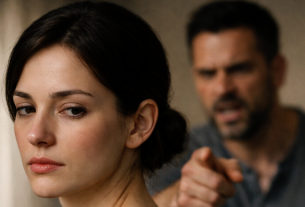
«Great. So I have to give up my dream because of your selfishness.»
«It’s not selfishness, Maksim, it’s common sense.»
«Common sense is supporting your husband in his ideas.»
«Support, yes. But not at the cost of everything I have.»
«You have me. Isn’t that enough?»
«Maksim, don’t guilt-trip me. If you’re ready to break up our family over the summer house, then maybe that’s more important to you than I am.»
«It’s not the summer house that’s more important, it’s about the chance to change something in my life. I’m tired of feeling like a failure, Anya. I want to succeed, make money, and secure a better future for us.»
«And I want to keep what’s dear to my heart. And I don’t think you’re a failure.»
«But you don’t believe in my success.»
«I just don’t believe in this particular project. Too many risks, not enough guarantees.»
Maksim paced around the kitchen, stopping at the window.
«Alright. Then I’ll find another way to raise the start-up capital.»
«How?»
«I don’t know yet. But I will.»
«Maksim, maybe for now you should stay at your current job? Save up, research the market better, find reliable partners?»
«There’s no time to wait. I’m already thirty-five, Anya. If not now, then when?»
«And I’m thirty-two. I don’t want to end up without a roof over my head at thirty-two.»
«The summer house isn’t a roof over your head. We have this apartment.»
«A rented apartment. The summer house is my own property.»
«It’s our property.»
«No, it’s mine. It was willed to me personally.»
Maksim turned to his wife, and she saw something new in his eyes. Coldness, disappointment, maybe even contempt.
«I see. So in our family, there’s ‘yours’ and ‘mine.’ Thanks for clarifying.»
«Maksim, don’t twist my words. This is about an inheritance from my parents. That’s a special case.»
«Special for you, but not for the family.»
«Special for the family too. That’s our place to relax, our weekends together, our garden.»
«And you’d rather have a vegetable garden than my success.»
«I’d rather have stability than a risky adventure.»
Maksim grabbed his jacket and headed for the door.
«Where are you going?»
«To my mom’s. I’ll tell her my wife thinks I’m a failure and doesn’t believe in me.»
«Maksim, don’t go. Let’s just talk this through calmly.»
«There’s nothing to talk about. It’s all clear.»
The door slammed, and Anna was left alone. There on the table sat the unopened bottle of champagne—a silent witness to a celebration that never happened.
She opened the fridge, grabbed an ordinary bottle of wine, and poured herself a glass. If she was going to drink tonight, she wanted it to be honest—no fake festive mood.
Maksim came home late that night, went straight to bed without saying a word. In the morning, he was cold and formal with her, like she was a stranger.
«I’ve been thinking,» he said at breakfast. «If you don’t want to help me start this business, then maybe there’s no point in continuing our marriage.»
Anna almost choked on her coffee.
«Seriously? You’re ready to get divorced over the cottage?»
«It’s not about the cottage. It’s about us being completely different people. I want to grow, take risks, build a future. And you just want to stay safe in your shell and never change anything.»
«I want to live wisely—not throwing myself into reckless ventures.»
«To me, this isn’t a reckless venture. It’s an opportunity of a lifetime. And if you can’t see that, maybe we really aren’t right for each other.»
Anna put down her cup and looked at her husband intently.
«Maksim, what if the cafe fails? Then what?»
«Then at least I’ll know I tried.»
«And I’ll know I lost the cottage because of your experiments.»
«So what’s more important—your cottage or our relationship?»
«And what’s more important—your cafe or our relationship?»
They looked at each other, both realizing: the game was over. Each had made a choice, and those choices couldn’t exist together.
«Alright,» Anna said quietly, «If that’s how it is, then let’s get divorced.»
«Alright,» Maksim echoed.
She got up from the table and began to pack her things. Seven years of marriage fit into two suitcases and a few boxes of books.
«Are you really leaving?» Maksim asked, watching her pack.
«Did you really think I’d stay after that ultimatum?»
«I didn’t give you an ultimatum.»
«You did. ‘Either the cottage or divorce.’ I’m choosing the cottage.»
«Why?»
«Because the cottage will never betray me or ask for sacrifices for uncertain goals.»
Anna closed the last suitcase and glanced around the apartment. Seven years of life were now behind her, and the future was unknown. But somehow, instead of fear, she felt a strange sense of relief.
«Good luck with the cafe,» she said in farewell.
«Anya…»
«Goodbye, Maksim.»
The sun was shining outside, and Anna thought it might be nice to go to the cottage and check on things after the winter. She finally had plenty of time to tidy up the garden and plant new flowers.
The cottage was still there, but her husband turned out not to be as reliable as she once thought.