«Just sign here, here, and here—and all our family problems will be solved.»
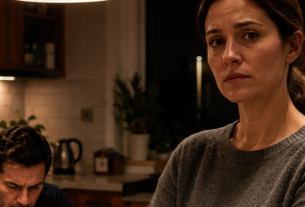
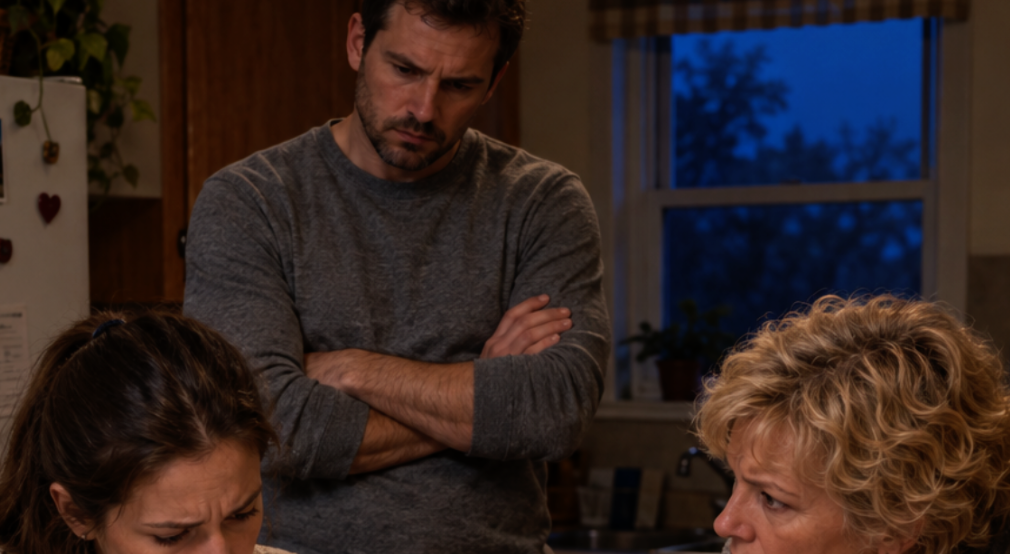
My mother-in-law, Yekaterina Vladimirovna, carefully slid a stack of printed papers across the kitchen table toward me with her fingertips. Her voice was calm, businesslike, completely devoid of emotion. It felt like we were discussing a stairwell cleaning schedule, not my life or my future.
Standing behind her, eyes downcast and shoulders slumped, was my husband. My Gena. The man I had spent eight years building what I thought was «our» life with.
I looked from the documents to my husband. My ears were ringing, and suddenly my hands felt icy cold. Eight exhausting years. Eight years I truly believed we were a team. That together we were carrying this heavy financial burden, sacrificing so much so our daughter Nastya, who is now five, could have a real home.
I believed my mother-in-law, who always looked at me with a slight, appraising squint, would one day truly accept me. Most importantly, I was one hundred percent sure that my husband would always be on my side during any crucial moment.
And now that crucial moment had come. But Gena just stood behind his mother, staring at the linoleum in silence.
I glanced down at the papers. It was a property division agreement. More specifically, a voluntary waiver of my legal half of the apartment. The documents, carefully prepared by my mother-in-law’s lawyer, offered me only meager crumbs—not even equal to my original contribution—while transferring most of the ownership to my husband.
«Yekaterina Vladimirovna,» I swallowed the lump in my throat, trying to keep my voice steady. «What does this mean? We bought this apartment together during our marriage. We split the down payment in half—I gave every last bit of my savings, Gena gave his. We paid the mortgage together…»
«Together?» my mother-in-law smirked, pulling her famous blue notebook from her bag—the one she never let out of her sight. «Let’s not fool ourselves, Lyudochka. I value accuracy.»
She opened the notebook to a page marked with a sticky note and placed it next to the documents. The entire page was covered in her neat, tiny handwriting. Columns of numbers, dates, and red underlines.
«Yes, the down payment was split evenly. I won’t argue with that,» she began in a tone reminiscent of a schoolteacher. «But the mortgage was for ten years, yet it was paid off in eight. And do you know why? Because my son worked himself to the bone.»
«But you, Lyudmila, were on maternity leave for three years. For three years, my little Gena took care of all the mortgage payments by himself. I’ve calculated everything. Considering his salary and your ‘vacation,’ Gena paid exactly seventy-five percent of the apartment’s total cost.»
«So, it would only be fair for the paperwork to show it belongs to him. And you’ll sign the waiver. You’re family, you have nothing to worry about—he’s not going to throw you and Nastya out on the street.»
It felt like scalding water had been poured over me. Three years on maternity leave. «Vacation.»
Those three years flashed before my eyes—the same years my mother-in-law so easily erased from my contribution to the family, turning me into a freeloader.
When Nastya was born, Gena and I made a promise: we needed to pay off our mortgage as quickly as possible. The extra interest to the bank was huge, so we decided to channel all our efforts into paying it early. Gena’s salary was much higher than mine, so as a team we agreed: his entire paycheck would go towards the mortgage payments.
And we would live off my maternity benefits.
I don’t know if Ekaterina Vladimirovna realizes what it’s like to survive with a baby on government assistance. I went into full-on, strict saving mode. I never asked my husband for money—not for groceries, not for diapers. I counted every penny. I bought the baby stroller from Avito, took the crib from a friend, and hunted for Nastya’s clothes at massive sales.
But the maternity benefits still weren’t enough for us to get by without my husband’s help. That’s when I started working.
While Nastya napped during the day, I sat at the kitchen table with my laptop. When she slept at night, I was there again. I took on students for online English tutoring. Whispering so I wouldn’t wake my daughter in the next room, I explained verb tenses to teenagers.
I grabbed whatever side gigs I could find: translations, writing student assignments, composing custom texts. My eyes were constantly red and watery from exhaustion and staring at the screen. My back hurt all the time.
But I never once complained to Gena. I was proud of myself! I kept thinking, “Look at me, I’m keeping our home running so my husband can pay off the mortgage in peace.” I freed him from worrying about basic needs. We were a team! We were fighting for our shared future.
And that future finally arrived. The mortgage was paid off. A month ago, Gena and I bought a cake, opened a bottle of wine, he hugged me, kissed the top of my head, and said, “We did it, baby.”
And now, that same “baby” stood there with his head drawn into his shoulders while his mother read out my sentence based on her own selfish, twisted calculations.
It turned out that while I was saving on myself—buying shampoo only when it was on sale and mending my home tights—my mother-in-law was busy keeping the accounts. She methodically calculated every thousand rubles her son transferred to the bank. And in her accounting, there was no column for ‘Lyuda bought groceries for the month’, no column for ‘Lyuda paid for electricity and water’, no column for ‘Lyuda clothed and put shoes on the child herself’.
In my mother-in-law’s eyes, I was just a woman who spent three years sponging off her darling son while he bought an apartment. And now I was supposed to sign off on my own failure.
“Gena,” I looked straight at my husband, ignoring my mother-in-law’s triumphant gaze. “Do you think so too? Do you also believe I contributed nothing to this apartment over those three years?”
The silence in the kitchen was deafening. You could hear the hum of the refrigerator and the ticking of the wall clock. Gena shifted from foot to foot, let out a heavy sigh, and finally raised his eyes to meet mine.
“Lyud, well… Mom is right about some things,” he mumbled quietly, almost apologetically. “Numbers don’t lie. I transferred most of the money to the bank from my account. Mom just wants things to be fair. You don’t mind signing some papers, right? It’s not like we’re getting divorced…”
At that moment, something inside me snapped with a crunch. Eight years of marriage. Eight years of illusions. I looked at the man I’d shared a bed with, the father of my daughter, the man I’d weathered so many storms with, and I didn’t recognize him at all.
My hand slowly reached for the stack of papers. My mother-in-law let out a satisfied, approving grunt and helpfully slid a ballpoint pen toward me.
I picked up the pen and rolled it between my fingers. It felt smooth and cold, just hard plastic.
Ekaterina Vladimirovna was practically glowing from the inside. Of course she was — her plan was working out perfectly. She always knew how to get her way, to push, to insist until she got what she wanted.
But as I stared at the pen, I suddenly realized something simple yet terrifying. If I signed right now, I wouldn’t just be giving up my rights to the apartment. I’d be erasing myself, too.
I’d be showing them both that they could treat me this way. That my hard work, my sleepless nights spent on translations, my scrimping even on my basic needs — all of it meant nothing.
I put the pen back on the table, right on top of the neat stack of papers.
«Whose idea was this?» I asked, staring my husband straight in the eye.
Gena flinched. He clearly hadn’t expected any resistance. In his world, carefully constructed by his mother, I was just supposed to cry a little, be touched by his financial heroism, and meekly give up my claim to our home.
«Lyuda, does it really matter?» he mumbled, looking away again. «It’s just a legal formality. For peace of mind.»
«It does matter, Gena,» I raised my voice so he would stop mumbling into his chest. «I want to know which one of you decided I mean nothing in this family. Was it your idea, while I was mending Nastya’s tights for the hundredth time just to save a few rubles?»
Gena reddened. He opened his mouth to say something, but immediately, backup arrived from behind him.
«It was my initiative, Lyudmila,» my mother-in-law said, enunciating every word. «Gennady works from dawn till dusk—he has no time for paperwork. I went to the lawyer, I gathered all the statements from my son’s bank accounts. I’m protecting his interests because he’s too soft!»
I turned my gaze to my husband.
Too soft. What a perfect way to describe a forty-year-old man hiding behind his mother’s skirt, letting her destroy his own family.
How blind I’d been all these years. There had been warning signs, so many of them.
I remembered the time we were picking out a car. Gena and I had been saving up for a roomy family wagon, but we ended up buying a sedan because «it’s more convenient for mom to take plants to the dacha, she said wagons are ugly.»
I remembered naming our daughter. I had always dreamed of naming her Sofia. But Ekaterina Vladimirovna boldly announced that the girl would be named Nastya, after her grandmother. And Gena had reacted the same way: fidgeting, staring at the floor, mumbling, «Lyud, let’s just give in, it’ll make mom happy, why start a fight.»
I gave in. I always gave in, for the sake of family peace. I’d convince myself: he just respects his mother, he doesn’t like conflict, he’s kind and easygoing.
But now, standing in front of me wasn’t the “nice” husband I thought I knew. It was a textbook mama’s boy, someone completely incapable of saying “no” to his mother—even when she was asking him to betray his own wife.
“Gena,” I made one last desperate attempt to reach the man I loved. “You know these calculations are nonsense, right? Sure, you paid the mortgage from your account. But what about how we actually lived for these three years? What did we eat? How did we pay the bills, buy gas for your car, get medicine, clothes?”
“Well… you did get your maternity payments…” he mumbled uncertainly, glancing at his mother as if searching for guidance.
“Maternity payments?!” I laughed nervously. “Gena, have you ever even asked how much a pack of diapers costs in three years? My maternity payments were gone within the first week of every month. The rest of the time, we survived on what I earned night after night, sitting right here in this kitchen! If it weren’t for my money, you wouldn’t have had a mortgage to pay—you would have starved! My contribution to this apartment is everything about our life: the day-to-day, our food, our child. We agreed, we’re a team!”
“Borscht and baby blankets don’t cost as much as a square meter in the suburbs!” snapped Ekaterina Vladimirovna, her mask of civility starting to crack. “Your measly tutoring money is just a drop in the bucket! My son invested millions!”
“My initial down payment was in the millions too! That was my personal savings from before the marriage!” I shot back.
“We accounted for your down payment,” my mother-in-law said coldly, stabbing at her notebook with her finger. “According to our calculations, you’re entitled to twenty-five percent of the apartment. The rest is Gena’s. Sign it, Lyuda. Don’t make this harder. If you refuse, Gena will file for divorce and we’ll handle the division in court. The lawyers will tear apart your claims. You won’t prove a thing.”
She started directly threatening me. Again, I looked at my husband.
He just stood there, shoulders hunched. He didn’t argue with his mother, not once. He didn’t say, “Mom, stop threatening my wife.” He simply stayed silent, agreeing that I could be thrown out of my own home if I didn’t cooperate.
It wasn’t just now that he betrayed me. He’d been betraying me every day, letting his mother meddle in our finances, our plans, our lives. Now, it was just the climactic moment of all that betrayal.
My chest felt empty and cold. The hurt, the anger—they were gone. All that was left was ringing, crystal-clear certainty.
“Fine, then,” I said, standing up from the table, scooping up the printed papers in one motion and flinging them at my mother-in-law. The sheets scattered across the kitchen.
Ekaterina Vladimirovna gasped, clutching at her heart.
“I’m not signing anything,” I said, enunciating every word. “The apartment was bought during the marriage. By law, it’s joint property. Half is mine, half is yours, Gena. And if someone here doesn’t like that, you know where the courthouse is.”
“You’ll regret this, you upstart!” my mother-in-law shrieked, forgetting her businesslike tone. “You’ll end up on the street, you pauper! We lifted you out of the dirt, and now you…!”
«Mom, calm down, your blood pressure will spike,» Gena panicked as he rushed to her. Then he turned to me, his eyes full of real anger: «Lyuda, are you out of your mind?! Why are you upsetting Mom like this?! She only wants the best for us! Was it really that hard to find a compromise?!»
A compromise. To give up my own home, just so that Mom could have peace of mind.
«Go to hell,» I said quietly but firmly. «Both of you. Ekaterina Vladimirovna, please leave my apartment. My half of the apartment.»
I turned and walked to the bedroom, shaking all over with nervous tremors. Behind me, doors were slamming and I could hear my mother-in-law’s outraged shouts mixed with Gena’s apologetic pleas.
There wasn’t a family anymore. Maybe there never truly was. It was always just me, carrying the weight—and Gena, waiting for his mother to tell him what to do next.
Well. Now I had to learn to live all over again. And this time—it would be by my own rules.
The front door slammed. In the silence of our apartment, it sounded like a gunshot.
I sat on the edge of the bed in the dark bedroom, hugging my shoulders. The adrenaline from everything that happened was still making me shake uncontrollably.
I heard Gena’s heavy, shuffling footsteps in the hallway. The bedroom door creaked open, and Gena turned on the overhead light, making me squint reflexively.
He looked lost. Like a schoolboy who’d just been reprimanded by the principal in front of the whole class. Gena sat down heavily on the pouf by the vanity and let out a deep sigh.
«Lyud… why did you get so worked up?» he started in his signature gentle tone, the one that used to calm me down but now only made me feel a dull irritation. «Mom’s gone. Her blood pressure is two hundred. Why did you treat her like that?»
I slowly raised my eyes to meet his.
«Why did I treat her like that? Gena, your mother just tried to leave me without a place to live. And you just stood there in silence.»
«Nobody’s taking your home away!» he said, waving his arms nervously. «God, it’s just paperwork! Mom’s just old-school—she’s worried about my investments. She even said a quarter of the apartment would stay with you. We’re a family, we’re not getting divorced. Why did you make such a scene throwing those documents around?»
I looked at him in disbelief. For eight years I’d shared a bed with this man, gone through joys and sorrows together, nursed him when he had COVID, and pinched pennies for our common future.
And he honestly couldn’t see the problem. In his skewed, mother-conditioned reality, taking away three-quarters of our shared property from his wife—is just «paperwork» and «worrying about investments.»
My first instinct was to pack my bags. Right now—grab the suitcase from the closet, throw my dresses inside, wake up five-year-old Nastya in the next room, call a taxi, and leave into the night.
To my parents’ tiny two-room apartment across the city? Or to a rental, which I couldn’t even afford right now since all my income was going toward living expenses?
And most importantly—why should I be the one who has to leave?
This is my apartment. My home. I invested all my pre-marital savings, sleepless nights, my health, and even my maternity payments into it. Walking out and slamming the door now would be handing them a lavish gift. It would mean giving up without a fight, making life easier for Ekaterina Vladimirovna.
No. I won’t do that.
«Gena, listen to me very carefully,» I made my voice as steady and cold as possible. «I will never sign anything. Never. This apartment is ours, equally. Fifty-fifty. If you or your mother don’t like that, go ahead and file for divorce, and we’ll let the court handle the division. But I’m not giving up my share willingly.»
Gena turned pale. The word «divorce» had never been spoken in our family before.
«Lyuda, divorce? What are you talking about?» he jumped up from the footstool and sat next to me on the bed, trying to pull me into a hug. «No one wants a divorce. I love you. And what about Nastya? My mom just went too far, I’ll talk to her, I promise. Let’s just forget this night ever happened, like a bad dream.»
I gently but firmly shrugged his arm off my shoulder.
«Let’s forget it, but the topic of re-writing the shares is closed forever. If your mom ever comes to me again with those papers, I’ll throw her out—period. Do you understand me?»
«I understand, Lyuda, I do,» he nodded quickly, clearly relieved. The conflict was postponed, and that’s all that mattered to Gena. Burying his head in the sand is his favorite strategy.
He undressed, got into bed, and within fifteen minutes he was peacefully asleep. I, on the other hand, lay there with my eyes open, staring at the ceiling until dawn.
That night, I made a decision. I’m staying. But I’m no longer the naive fool who believes in fairy tales about being a «team.» From now on, I’ll have my own plan.
For the next two weeks, our lives on the surface went back to normal. Gena went to work, I took Nastya to kindergarten, and in the evenings I tutored my English students. We had dinner together, chatted about everyday things. Gena did his best to pretend that evening in the kitchen had never happened.
Ekaterina Vladimirovna didn’t call or show up. And that silence scared me most of all. I knew her character: she’s not the type to give up. She just needed a pause to regroup her forces.
And I used that time wisely.
The very first free morning I had while Nastya was at kindergarten, instead of going shopping, I went to a legal consultation.
I sat in a bright office across from a stern, gray-haired family lawyer, telling him our whole story. About the payments, about my maternity leave, my freelance jobs, his mother’s calculations—everything.
«Don’t worry, Lyudmila,» the lawyer said as he took off his glasses and rubbed the bridge of his nose. «Your mother-in-law could fill ten notebooks with her calculations, but according to the Family Code of the Russian Federation, all property acquired during marriage is jointly owned and must be divided equally. Fifty-fifty.»
«But Gena paid the mortgage from his salary card…» I replied uncertainly.
«Your husband’s salary during the marriage is considered joint family money,» the lawyer said firmly. «The fact that you were on maternity leave fully protects your rights. The law is on your side.»
For your mother-in-law to prove otherwise, she would need to show that her son paid the mortgage with his own personal, premarital, or gifted funds. But he used his salary. So, take a deep breath. You won’t end up out on the street.
I walked out of the lawyer’s office feeling as though a concrete slab had been lifted off my shoulders. I’m protected. My daughter is protected.
But the lawyer also gave me an important tip. He told me to gather and hide all the documents for the apartment in a safe place, along with our marriage certificate, receipts for major purchases, and to print statements from my accounts as proof that I also contributed financially to our family in case we ever went to court.
Saturday morning, just as my daughter and I sat down for breakfast, the doorbell rang sharply, insistently. I looked through the peephole and saw my mother-in-law. This time she wasn’t alone—behind her stood an unfamiliar man holding a folder under his arm, and the sight of him left a knot of anxiety in my stomach.
Ekaterina Vladimirovna didn’t even wait for me to fully open the door. With confident, almost proprietorial steps, she crossed the threshold, declaring from the hallway that this discussion would be completely different this time and she wasn’t about to give up her victory willingly.
«This time, Lyudmila, the conversation will be very different,» my mother-in-law said calmly.
I glanced at the folder in the stranger’s hands and suddenly felt a wave of anxiety wash over me.
«Come into the kitchen,» I replied curtly, stepping back and feeling everything inside me coil into a tight, springy knot.
My heart was pounding in my throat, but I tried my best to keep a calm and icy exterior. I quietly closed the door to the kids’ room, where Nastya was happily drawing with markers, and followed the uninvited guests into the kitchen.
The stranger turned out to be a man of about fifty, dressed in a wrinkled gray suit with a sharp, unpleasant look in his eyes—the kind you see in professional complainers. He sat down at my kitchen table, disdainfully pushed aside Nastya’s half-eaten bowl of porridge, and placed his thick folder in front of him.
Ekaterina Vladimirovna sat down across from me. Her posture radiated absolute, rock-solid confidence that she was in the right.
Just then, Gena came out of the bedroom. He was in sweatpants and a stretched-out T-shirt. When he saw his mother and the stranger, he didn’t look surprised at all. In fact, he didn’t seem shocked. He simply slouched over to the windowsill, crossed his arms, and pointedly avoided looking at me.
He knew. They had planned this all in advance. While I spent my sleepless nights working on translations, my husband and his mother were prepping for this visit.
«Allow me to introduce, Lyudmila,» my mother-in-law began, her voice syrupy but cold. «This is Albert Eduardovich, my lawyer. Since you’ve decided to be… uncooperative and haven’t resolved this the family way, we are taking things to an official level.»
Albert Eduardovich snapped open the metal clasp of his folder.
«Good morning, Lyudmila Nikolaevna,» he began in a formal, monotone voice—the kind they use to read sentences in court. «My client, Ekaterina Vladimirovna, has come to me to protect the financial and property interests of her son.»
You see, the Family Code does mention equal shares between spouses. However, there are some significant nuances in the law that most people without a legal background simply don’t know about.
He pulled out a few thick sheets of paper from his folder, each one neatly clipped, and fanned them out on the table with precision.
«These are gift agreements for monetary funds,» the lawyer tapped the papers with his polished fingernail. «They were executed between Ekaterina Vladimirovna and Gennady. According to these documents, for all eight years, Ekaterina Vladimirovna regularly gifted her son large sums of money for a specific purpose—namely, to pay off the mortgage.»
And property purchased with personal, gifted funds from one spouse, according to Article 36 of the Family Code, is not considered marital property.
I stared at those freshly printed pages, and the picture in my head was coming together with frightening clarity.
I remembered the words of the gray-haired attorney I once consulted: «Lyudmila, the most common and dirtiest trick during property divisions is to suddenly whip up backdated gift agreements from the parents. Mothers-in-law suddenly ‘recall’ that they gave their sons millions in cash from under the mattress.»
«So what share of our apartment do I supposedly have a right to now, with your new ‘calculations’?» I asked, feeling cold fury boiling inside me.
«About twenty percent,» Albert Eduardovich replied without blinking. «Taking into account your initial contribution. We suggest you sign the agreement for dividing the shares right now, out of court. Otherwise, we’ll file a lawsuit.»
You’ll have to pay all the court fees, expert assessments, and legal services. Trust my experience—it will cost you a fortune. After all the deductions, your share will be so minuscule, you won’t even be able to buy a room in a distant district.
Ekaterina Vladimirovna sat with her back straight and proud. The victor. She’d found the lawyer, came up with the scheme, organized everything.
I slowly turned my gaze to my husband, who just kept studying the patterns on the linoleum.
«Gena,» I called softly. «You know this is fake, right? You paid the mortgage from your salary card. Every fifteenth of the month, right on payday. Both of us know your mother didn’t give you those millions.»
She’s a pensioner who scrimps on her medications. Where would she get that kind of money for ‘gifts’? Did you sign these papers yesterday? Or this morning while I was asleep?»
Gena jerked as if he’d been slapped, but he still didn’t look up. Red blotches spread over his face.
«Luda… please, stop being so stubborn,» he whispered in his usual, apologetic tone. «Does it even matter when the papers were signed? The money was always for the family. I earned it, mom helped however she could. She’s just backing me up. It’s a totally normal legal arrangement, Albert Eduardovich explained everything in detail. Nobody wants to hurt you, it’s just… well, it’s only fair.»
«Only fair.»
This is the man I went sleepless for, for three years, scraping by with odd jobs for next to nothing just so his salary was free for the mortgage. The man whose daughter I rocked in my arms night after night. And here he was, right now in our shared kitchen, admitting he’d teamed up with his mother to throw me out on the street with just twenty percent.
«Here’s what’s going to happen,» I said as I rose from my chair. My voice sounded dull, but steady as iron. «Albert Eduardovich, take your creative ideas and leave.»
«You are making a grave mistake…» the lawyer began, frowning.
«No, you are making the mistake,» I interrupted him. «My lawyer specifically warned me about schemes like this. We will absolutely ask the court to order a forensic examination to determine when these documents were actually made.»
We’ll have you cover the cost of that examination. And the expert will easily prove those so-called ‘gift contracts from previous years’ were printed this week and signed with fresh ink. Falsifying evidence in a civil case—that’s another story entirely. That’s a criminal offense.
The lawyer’s face twitched almost imperceptibly. His eye gave a nervous tic. He shot a quick, very displeased look at Ekaterina Vladimirovna. Clearly, my mother-in-law had assured him I was just a beaten-down housewife who’d cry and sign everything out of fear the second lawyers and court were mentioned.
«And another thing,» I turned to my mother-in-law, who’d noticeably gone pale. «The bank statements will show every single transaction. Gena made the mortgage payments straight from his paycheck—there’s no trace of cash deposits or transfers from you anywhere. You’re bluffing, Ekaterina Vladimirovna. And it’s a clumsy, stupid bluff.»
My mother-in-law opened her mouth to launch another volley of insults, but I didn’t let her get a single word out.
«Get out of my apartment,» I said, pointing down the hallway. «Both of you. Right now. Or I’ll call the police in your presence and report that strangers are threatening and trying to extort property from me.»
The lawyer silently, and with astonishing speed, scooped his papers into the folder, stood up, and was the first to head out. Ekaterina Vladimirovna followed right behind, cursing under her breath and promising that I’d end up penniless and regret everything.
The door slammed shut behind them. A heavy, ringing silence settled in the hallway.
Gena stood by the wall, looking pathetic, lost, all his legal bravado instantly gone now that his mother wasn’t there to back him up.
«Luda…» he stammered, taking a step toward me. «What are you doing… Why do you have to be so harsh? Albert Eduardovich is just a specialist…»
«Pack your things,» I said calmly, meeting his eyes directly.
«What do you mean? Where?» he blinked at me, genuinely confused.
— Go to your mom. That’s where your real family is. Where your headquarters and your accountant are. Nastya and I will stay here. Until the court decides.
— Lyuda, you have no right to throw me out! I’m registered here! This is my apartment! — For the first time tonight, his voice cracked with a shrill, hysterical note.
— I’m not physically kicking you out. I’m simply suggesting you leave on your own, before we turn our child’s life into a nightmare. If you stay, we’ll just end up living like strangers in a communal apartment. Pack your bag, Gena. The conversation is over.
— No, it’s not over! — Gena took a step forward, flinging his arms around. He clearly thought he was being decisive, but it just looked pathetic. — Who do you think you are?! What court? What kind of forensics?! Are you completely insane with your independence? I worked for eight years — for whom?! I brought every penny into this home so you could feel like a queen!
— So I could feel like a queen?! — I couldn’t take it anymore and gave a bitter smirk. — Gena, do you even remember the last time I bought myself clothes? Not for Nastya, not for the house, but for me? Do you recall how I ruined my eyes at night doing other kids’ homework and editing texts, just to have money for groceries while your salary ‘went to the mortgage’? I counted every penny for food, while your mom kept tabs on how much you transferred to the bank! And you helped her with that!
— Mom wants the best for me! — Gena screamed, losing his grip completely. — If it weren’t for Mom, you’d have taken me for everything I’ve got! She was right when she said you were trying to ride on my coattails! I broke my back at work while you ‘rested’ on maternity leave! Three years on my back! And now you’re giving me ultimatums?! Who even are you without me?!
— Is that really what you think? — I asked quietly, my voice icy with contempt. — So, all three years you came home to everything ready, ate normal food, wore clean clothes, and slept in silence because I took care of the kid and worked all night — you call that me ‘sponging off’ you?
— The numbers show who paid the mortgage! — Gena spat, fists clenched tight. — Me! My card! Your little money from tutoring is a joke! You’re just an ungrateful egotist! You’re destroying this family because of your pride! Think of Nastya! You’re leaving your daughter without a father!
— She lost her father the moment he brought a stranger and his own mother into her home, trying to take her mother’s house away! — I cut him off, pronouncing every word clearly. — You weren’t thinking of Nastya, Gena. You wanted to please your mom and grab a bigger share for yourself. So don’t you dare hide behind our child.
— I’m not going anywhere! — Gena crossed his arms and stuck out his chin defiantly. — This is my apartment! Just try to get me out!
— Fine, — I shrugged. — Stay, then. But know this: right now, I’m going to the kids’ room, taking Nastya, and we’re leaving for my parents’. And tomorrow morning, my lawyer will file a claim to divide our property, freeze the apartment, and begin your eviction through the courts due to your threats and fraudulent dealings with the property agreements.
And believe me—once the court hears about your little «gift agreements from previous years,» you and your mom will be in for quite a shock. Is that what you want? Do you want to face humiliation at work and among your friends?
Gena stood there, breathing heavily. The fire in him faded right before my eyes. The word «humiliation» and the very real threat of a messy court case seemed to sober him up. He was always the «good guy» for everyone, so the idea that people might find out about his schemes truly terrified him.
«You… you’re just a monster, Lyuda,» he hissed, stepping back toward the hallway. «I thought you were a normal woman, but you’re a real witch. Mom was right. She was absolutely right. You can’t have anything to do with someone like you.»
«Wonderful. Then go to the person who’s always right,» I replied, leaning against the doorframe. «See you in court, Gennady.»
He stood there for a few more seconds, apparently hoping to hear the slightest bit of doubt in my voice. But I just looked at him with cold, indifferent eyes. Realizing he couldn’t push any further, he gritted his teeth, turned around, marched into the bedroom, and slammed the door.
He spent two hours packing his things. Deliberately clattering hangers in the closet, throwing bags on the floor with a bang, sighing loudly throughout the apartment—hoping I would come to him, hug him, and say this was all just a bad dream.
But I sat in the nursery, stroking Nastenka’s head and reading her a story, doing my best to keep my voice steady. My daughter could feel the tension and clung to me. I whispered to her, «It’s okay, bunny, everything will be alright.»
After the door slammed behind him, I walked into the hallway, turned the lock, and sank to the floor right by the entrance. A delayed wave of hysteria hit me. I cried silently, burying my face in my knees so my daughter wouldn’t see. I felt desperately sorry for all the wasted years, my lost hopes, and my naive belief that we had a strong family.
And from the next day, harsh, everyday reality began.
The very first thing I did was head to the bank and collect detailed statements from all my accounts for the past three years. I gathered e-receipts for everything: children’s clothes, supermarket groceries, utility bills, medicine. I printed screenshots of the payments I received from my English students. Every single document went into a separate folder.
On Monday, my lawyer filed a lawsuit in court to dissolve the marriage and divide our jointly acquired property.
What began was a long, draining, and very dirty process that dragged on for seven months. Endless delays: court dates rescheduled because the other side claimed to be ‘ill,’ endless document requests, pointless postponements.
Gena moved in with his mother. He quickly adopted the role of the ‘wronged husband.’ He rarely showed up for the court hearings himself—his new lawyer handled everything (Albert Eduardovich quickly backed out once he realized this case was a dead end). Meanwhile, Ekaterina Vladimirovna faithfully waited outside the courtroom every single time.
She brought along her blood pressure monitor, took her readings theatrically on the bench, and told everyone in the waiting area about the ‘swindler and predator’ her poor son had rescued.
At the very first preliminary hearing, my husband’s side immediately tried to submit those very same ‘gift agreements’ as evidence.
My lawyer, calm and composed, read aloud a carefully prepared petition: to request banking transaction details on my mother-in-law’s accounts, to obtain her tax returns (to see if she actually had such large sums in cash), and to appoint a forensic technical examination of the documents to determine how old the stamps and signatures really were.
The moment the word ‘examination’ was mentioned, and after the judge warned about the responsibility for presenting obviously false evidence, my husband’s lawyer visibly backed down. At the next hearing, they submitted a statement to withdraw those agreements ‘due to clarification of the claims’.
Their main trump card crumbled to dust.
But living through those seven months was almost unbearable. I was on the brink financially. Gena immediately stopped giving money for our child, passing a message through his mother: ‘See you in court, let the court decide on child support.’
I had to take on four more online students. I worked from eight in the morning. During the day – while Nastya was at daycare, and in the evening – after I put her to bed. My eyes constantly burned from staring at the screen, my back ached with a dull pain, and coffee basically became my diet. There were nights when I’d just sit in the kitchen, staring into space, too exhausted to even make it to bed.
But I knew what I was enduring all this for.
The court’s decision was expected and fair. They dismissed all of my husband’s muddled arguments about his ‘special contributions’ and my ‘maternity leave’. The apartment was recognized as shared marital property and split exactly in half. Fifty-fifty.
As the judge read the verdict, Gena sat in the corner of the courtroom, staring at the floor. There was no victory for them, no ‘justice as written in the blue notebook’.
After everything that happened, living together in one apartment was impossible. Neither of us had the money to buy out the other’s share – Gena’s mother refused to help him out of spite, and I didn’t have the money either.
So we put the apartment up for sale.
That started yet another circle of hell. Gena did everything he could to make things difficult: sometimes refusing to sign the realtor agreement, sometimes sabotaging viewings by not opening the door for buyers, and even insisting on ridiculous prices just to drag the process out. He thought he was punishing me, but our realtor was an experienced woman who clearly explained to him that overdue payments for utilities and taxes are split equally too, and the longer the apartment sat unsold, the more money he was losing himself.
Four months later, a buyer was found. We sold the apartment we’d fought so hard over and put the proceeds into safe deposit boxes at the bank.
Walking out of the bank with the official document showing my half of the money transferred to my own account, I took my first real deep breath in a whole year. The air felt unbelievably fresh.
My savings and a small early reserve were just enough for a down payment on a modest but incredibly bright two-room apartment in a quiet neighborhood, not far from a great kindergarten. I took out the rest of the mortgage in my own name.
Yes, the monthly payment takes up a significant part of my budget. Yes, I still work a lot and don’t allow myself any unnecessary expenses.
But every evening when I turn the key in the lock of my new apartment, I’m filled with an incredible sense of peace. This is my home. The home that belongs to Nastya and me.
Here, no one will ever put a blue notebook with tiny handwriting in front of me. No one will criticize me over a piece of bread or call me a freeloader just because I gave birth and raised a child. There is no more betrayal or double standards here.
Gena still lives with Ekaterina Vladimirovna. He pays child support for Nastya—exactly as ordered by the court, 25% of his official salary, not a penny more. He sees his daughter once every three or four weeks, brings her cheap sweets, and quickly heads back to his mother.
Recently, mutual friends told me that Ekaterina Vladimirovna is actively searching for him a new «good and obedient» wife. One who definitely has her own apartment, so they «won’t repeat the mistakes of the past.»
And me… I just learned to respect myself. I realized that a real «team» is when two people hold hands and face the world together—not when one steers the wheel while the other hides behind his mother’s skirt.
It turns out, relying only on yourself isn’t scary at all. What’s really scary is spending your whole life next to someone who would betray you at the first opportunity.