Marina stepped into the notary’s office, welcomed by the cool glow of desk lamps and the scent of a brand-new leather chair. On the table in front of her was a document she wouldn’t have believed existed just an hour ago: a formal claim contesting the inheritance—her grandfather Nikolai’s apartment. At the bottom were two signatures: Andrey’s and Tamara Petrovna’s, both added yesterday while Marina was still stuck at work.
“Are you sure that’s the right name?” she asked quietly, clinging to the hope that there had been some mistake.
“I’m sure. The claim was filed yesterday at 4:40 PM,” the notary nodded. “I was obliged to notify you.”
“And they… didn’t think I’d find out so soon?”
“Apparently, they assumed you’d learn about it later. By then, it would be harder for you to object.”
Marina folded the document in half, as carefully as one folds a receipt for something they never needed to buy. Inside, something in her quietly shifted—no drama, no outburst. She thanked the notary and headed outside. Her legs carried her home faster than usual.
“Andrey, are you home?” Her voice was calm as soon as she walked through the door.
“In the kitchen. Want some tea?” he replied in his usual tone.
“I do. But first, I need you to explain something to me.”
She placed the folded document on the table in front of his cup. Andrey glanced at it but kept stirring his sugar, pretending not to notice. Only his fingers slowed on the spoon.
“What’s this, Marina?”
“That’s your signature. And Tamara Petrovna’s. I’m asking a simple question: what is this?”
“Look, let’s not jump to conclusions. Sit down, let’s talk calmly.”
“I am sitting. I’m very calm. Explain.”
***
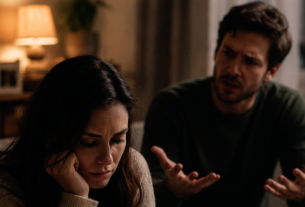
Andrey pushed his cup aside and stared at the wall for a long time. Marina waited, not breaking the silence. Her patience was hanging by a thread—the last strand of hope that maybe there was some explanation. Any explanation, even a silly or ridiculous one.
“It was my mother’s idea,” he finally blurted out. “She said the lawyer suggested it, just as a precaution. Like, if anything happens, we’ll have some leverage.”
“Leverage for what, Andrey? I’m your wife. What kind of leverage do you need over me?”
“Exactly—you’re my wife. Which means, in theory, our property is shared. My mom says it’s unfair: you get the apartment, but she and I get nothing.”
“Grandpa left the apartment to me. To me, personally. The will has been at the notary’s office for over a year and a half.”
“That’s exactly why it bothers your mother—it’s only for you.”
Marina let out a slow breath. The hope for understanding still fluttered inside her, like a trapped fly under a glass. She tried a softer tone—maybe a calm approach would get through to him.
“Andrey, listen to me. For a year and a half, I visited Grandpa every Saturday. Remember how you always complained that I was going across the city again? How I’d come home with shopping bags and cough until morning?”
“I remember. And?”
“Tamara Petrovna never once asked what his name was in four years. The only time, she called him ‘your grandpa.’ That was it. Now she wants leverage. And you, you put your signature.”
“Don’t twist things. They told me to sign, so I did. It’s not betrayal.”
“Then what is it, Andrey? Help me find the right word.”
“A family decision.”
“Family means you and me. When was the last time you asked about my family decision?”
Andrei just shrugged, as if she’d asked about the weather in some distant city. Marina felt her patience snap. A cold anger started to rise inside her—calmly, almost matter-of-factly.
***
Twenty minutes later, the doorbell rang. Her mother-in-law stood on the threshold, clutching a bag with what looked like oranges and two packs of cookies inside. She came in.
“Marina, I hear you’re having a discussion. I guess I showed up right on time.”
“Perfect timing, Tamara Petrovna. Come in, have a seat. I have exactly one question.”
“I know what this is about. Let me explain, adult to adult.”
“Go ahead. I’m listening.”
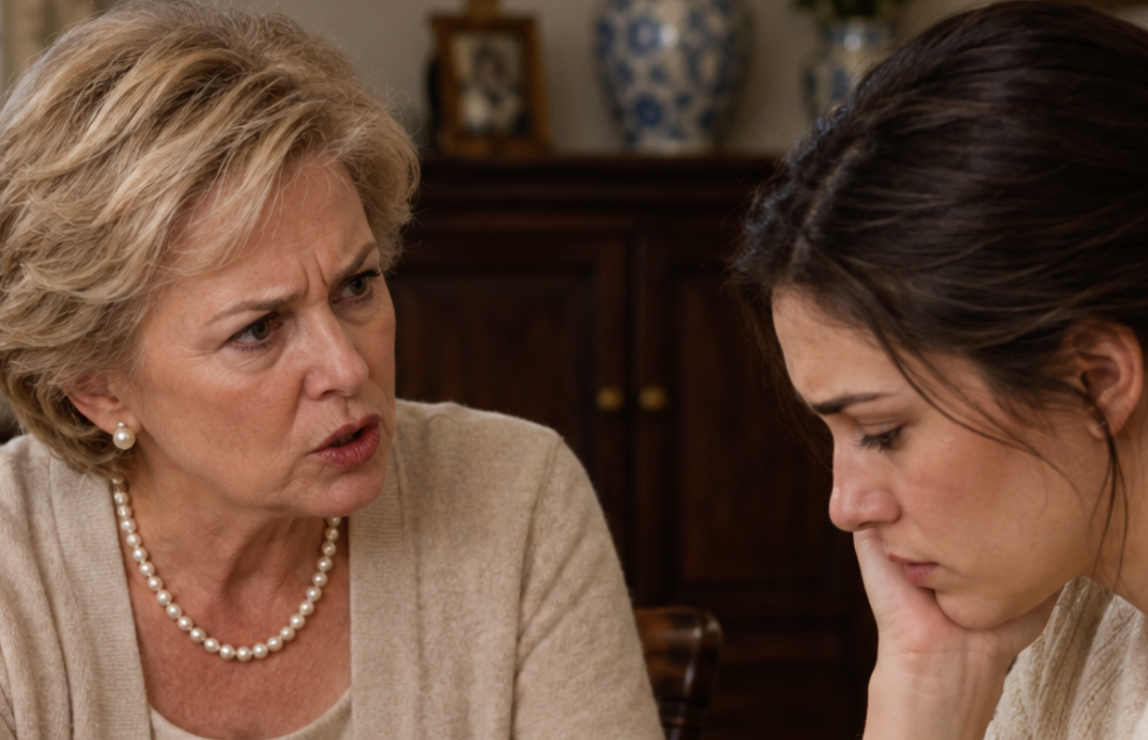
Her mother-in-law settled at the table, made herself comfortable, arranged her sweater, and put her elbows out. Andrei moved closer to her, and the two of them sitting there, facing Marina, said more than any protocol could. Two against one—and Marina on her own.
“You see, dear,” Tamara Petrovna began softly, “you have a three-room apartment. My son—nothing. We’re not forcing you to do anything. We just want what’s fair.”
“And what’s fair, exactly?”
“That the apartment should be shared. Andrei is your husband, after all. And I… I am his mother. I gave him life.”
“You gave him life. My grandfather gave me the apartment. Different people, Tamara Petrovna, different stories.”
“Don’t get sassy. I’m speaking to you human to human.”
“And I’m responding as a human. So here’s the explanation, plain and simple: the apartment is mine. The will is clear. Your application is just a piece of paper. The lawyer who suggested this ‘leverage’ to you took your money for nothing.”
“Are you accusing us of something?”
“I’m asking questions. Accusations might come later.”
Tamara Petrovna pressed her lips together and turned to her son. He sat with his head down, shredding the edge of a napkin with his fingers. He wouldn’t look at Marina.
“Andrei, tell her. Tell her we decided this together.”
“Mom, just wait…”
“Wait for what? Are you a man or not? Explain to your wife how things should work.”
“Mom, what she’s saying is legally correct.”
“And I’m talking about what’s right for people! Yesterday you agreed with me, did you forget?”
***
Marina stood up. She did it slowly, without unnecessary movements, making sure every word she was about to say was measured. Andrei finally looked up—and in his eyes was not shame, but the scared look of a child caught with someone else’s candy.
“Alright,” Marina said. “Listen, both of you. You’re withdrawing your application tomorrow by noon. In person. I’ve already spoken to the notary, he’ll record it.”
“And if we don’t?” Tamara Petrovna snapped.
“Then I lose nothing. The will was drafted properly; my grandfather made sure of that. But you’ll waste your nerves and your money on fees. It’s up to you.”
“Are you kicking us out?”
“I’m letting you go. That’s a completely different thing.”
“Andrei, do you hear how she’s talking to your mother?”
“Mom, be quiet a minute,” Andrei said unexpectedly. “Marina, can we just talk about this calmly…”
“Calm isn’t possible now. Andrei, you signed that paper against me yesterday while I was at work. Not as a joke, not by accident. Yesterday at 16:40. I’m not likely to forget that time.”
“I didn’t think…”
“Exactly. You didn’t think I’d find out. But I learned about it an hour later.”
“So now what?”
“Now—divorce. Today I draw the line, so tomorrow I don’t have to talk myself out of it.”
Her mother-in-law jumped up, her sweater twisted out of shape. She opened her mouth, ready to launch into a big motherly speech, but Marina calmly raised her hand—just like hailing a cab—to stop her.
«Tamara Petrovna. No more drama. The theatrics end here. Andrey, I’ll pack your things by morning. Tonight, you’ll stay with your mother. Leave the keys on the shelf.»
«Marina, you can’t be serious.»
«I’m not bargaining. I’m not threatening. I’m just letting you know.»
***
They left almost without a word. At the door, Tamara Petrovna glanced back and threw a short, angry word at her—»barren.» Marina heard it, nodded to herself, and double-locked the door. The word fell at the threshold and stayed there, like a stranger’s shoe.
A week later, Andrey called. First trying to make peace, then sounding hurt, then just asking if they could «talk like adults.» Marina answered evenly: the papers were filed, the meeting to inventory property was set, and that was that—nothing more to say.
«Marina, just think about it. My mother is upset.»
«Andrey, I’ve already thought it through. Spent a month thinking about it, ever since you signed.»
«You’ve become so cold.»
«Maybe so, but I kind of like it.»
The divorce went through quickly, almost matter-of-factly. Their attempt to contest the inheritance fell apart at the very first hearing—Grandpa Nikolai’s papers were flawless. Tamara Petrovna didn’t show up, just sent a doctor’s note about her blood pressure. Marina saw that as a period, someone else writing ‘the end’ for her.
A year passed. Compass the cat, rescued from the stairwell all wet and grumpy, claimed Grandpa’s old armchair and guarded their evenings in it. Marina started running in the mornings, signed up for ceramics, and discovered that clay is more forgiving than people. The promotion she’d dreamed about—she didn’t even ask, they offered it to her, and she just said yes.
«Do you always make decisions this quickly?» Sergey asked her one day in the park, after they’d bumped into each other on the same path for the second time.
«Not always. Sometimes I drag things out. And then I regret it.»
«What about this time?»
«Not this time. Not even close.»
That evening, she sat in the armchair, stroking Compass and gazing at an old photo of Grandpa—in his plaid shirt, tool in hand, squinting calmly. In her mind, Marina said to him: «Thank you for teaching me to say no at the right moment.» The cat purred, almost as if to agree.
The doorbell rang. It was Sergey—holding a bag with books softly bumping inside. Marina smiled, opened the door wider than usual, and for the first time in a year, realized this apartment was truly hers. All of it, no caveats.