A Wedding Where No One Showed Up
For their wedding, Viktor and Olga invited just six people. Not a single one showed up.
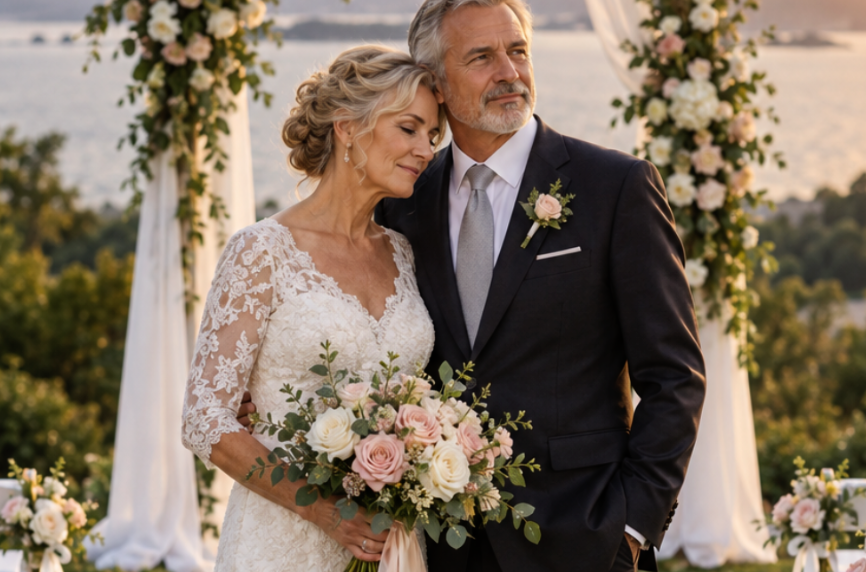
Two rows of white chairs stood in the garden of a country restaurant, beneath an arch made of white roses and hydrangeas. Olga put the arch together herself at six in the morning, while the grass was still wet with dew. After decorating hundreds of wedding arches for other brides over the past twenty years, this was her first time making one for herself.
In the front row stood two small chairs, tied with satin bows. On one sat a box with a red fire truck; on the other, a doll in a yellow dress.
The ceremony host, a young woman with a folder in her hands, glanced at her watch for the second time.
“Should we wait a bit longer?”
They waited twenty minutes. Then another ten. Waiters peeked out from the terrace, but seeing the empty rows, quietly slipped back inside.
Olga looked at the doll in the yellow dress and whispered,
“I’ve decorated so many weddings. And not once have I seen no one show up.”
Viktor took her hand.
“Olga, we’re not doing this for them.”
* * *
Viktor had worked in real estate all his life. Years ago, he and his wife Tamara bought a tiny one-bedroom apartment and rented it out to students, while they squeezed into a dorm for another two years. Tamara used to laugh that they must be the only apartment owners with nowhere to live. Later came a second apartment, then a third, then some shop and office spaces in the city center. Viktor became the sort of person people called a successful businessman, though he never used that word himself.
Tamara passed away three years ago. Since then, his three-room apartment had been very clean—and very quiet.
Olga started out with a kiosk at the market. She and her husband Yurii unloaded boxes of tulips every morning at five, drinking tea from a thermos to stay warm in the winters. Twenty years later, she had two flower shops in the city, steady clients ordering wedding and anniversary arrangements, and a plan to open a third shop.
Yurii died two years ago. Olga opened that third shop on her own.
She found the place for it on a corner by the bus stop—bright, with tall windows, just what she needed. The owner turned out to be Viktor.
Olga showed up to their meeting with a tape measure, measuring every windowsill herself and haggling so fiercely that Viktor just laughed.
“You should be in real estate, not flowers.”
He didn’t lower the rent. But he did install a new display for her, at his own expense, because, he said, “the old one didn’t suit the roses.”
After they signed the contract, Viktor started buying flowers only from her shop. First for his office. Then for his accountant’s birthday. Then, just because. Every time he’d ask, “Something that doesn’t smell like paperwork.” Olga made him bouquets with mint and chamomile, and he never asked the price.
Their chats at the counter grew longer and longer. He told her about tenants who moved out and left a cat on the balcony, and how the cat now lived with him. She shared how she had to teach herself accounting after Yurii passed. For years, both had been living on pause: work, home, grandkids, evenings in front of the TV. Suddenly, both noticed they were looking forward to Tuesdays, when Viktor came for his bouquet.
Half a year later, Viktor proposed to Olga. Right in the kitchen of her flower shop, among buckets of chrysanthemums.
* * *
They decided to tell their children separately. Sitting everyone at one table would’ve been awkward: first, they’d have to explain who this man or woman was, and only then get to the news. Each would talk to their own child.
Viktor invited his son to Sunday lunch. Denys, a programmer who’d been working remotely for an international company for years, showed up with his wife Yulia and their five-year-old son Maksymko. Maksymko immediately found the famous cat on the balcony and ignored everyone else.
Viktor hesitated, pouring more juice and adjusting napkins. When he finally said he’d been seeing a woman for half a year and they were getting married, it grew so quiet you could hear the kitchen tap drip.
“Dad, seriously? Mom’s only been gone three years. Just three years.”
“Her name is Olga. She owns flower shops. I rent her one of the spaces.”
“So she’s your tenant,” Denys said bitterly, “and you never told me about her.”
The silence was shattered by Maksymko, coming in from the balcony, cat in arms:
“Will there be cake?”
There was cake. But no one ever cut it.
That same week, Olga invited her daughter for dinner. Iryna, an English teacher at a local school, came with her husband Oleh and their three-year-old daughter Solomiika. Olga baked a cherry pie and struggled to start the conversation—rearranging the salt shakers, running to the kitchen for cups.
“Mom, what’s wrong?” Iryna finally asked.
When Olga explained, her daughter stared at her as if seeing her for the first time.
“Dad’s only gone two years. And you’re already getting remarried? To a man I’ve never even heard of? You didn’t even ask my opinion.”
Oleh quietly sliced the pie into tiny pieces and didn’t eat any of it.
* * *
The next day, Denys called his father. He spoke calmly, like at work meetings, but Viktor could hear his nerves.
“Dad, I don’t want to be the one who asks this. But you and Mom bought those apartments together. She scrimped for years, saved every penny. And now half could go to a stranger?”
“Everything your mother and I built will be yours,” Viktor replied steadily. “I’ve made sure of it.”
“That’s what you say now.”
Olga had almost the same conversation with her daughter.
“Mom, you and Dad started that first kiosk together. Remember how he’d carry crates all night? And now it’s all for someone you’ve known six months?”
“Don’t worry about it, honey.”
“That’s easy for you to say.”
The children did not know that Viktor and Olga had settled everything between themselves long before these talks. They had already visited the notary and signed a prenuptial agreement: everything each owned before the wedding stayed theirs. Then, both rewrote their wills so their own child would inherit. Viktor’s apartments and properties were to go to Denys one day. Olga’s shops, apartment, and summer home would go to Iryna.
That evening, Olga suggested they just show the children the paperwork.
“And that will settle things, Viktor. They’ll calm down.”
Viktor paused for a long time.
“If we show them, they’ll come. But they’ll come because the inheritance is safe. I don’t want to buy my son’s presence with some document. I want him to come because he’s happy for his father.”
Olga didn’t argue. She felt the same, only for her it was a little more frightening.
* * *
Three weeks before the wedding, Denys stopped by his father’s apartment to pick up Maksymko’s jacket, left behind the previous Sunday. He walked into the living room and froze.
Where his mother’s photos had hung above the couch for years, there were only pale rectangles left on the wallpaper.
Viktor had moved the photos to the summer house. He’d spent a long time thinking what was best, deciding it would be more considerate toward Olga. But Denys saw it differently.
“You even took down her photos. Three years, Dad. That’s it.”
He didn’t stay for explanations. The door slammed so hard a ceramic fish—something Tamara had once bought—fell off the shelf.
That night, Denys sat in the kitchen at home, staring at old pictures of his mom on his phone. Yulia quietly set tea in front of him and then sat beside him.
“Don’t go if it hurts so much,” she said. “No one’s making you.”
Iryna had her own moment in her mother’s apartment. Olga had decided to move in with Viktor and rent hers out. When her daughter dropped by unexpectedly, Olga was packing her late husband’s things into cardboard boxes: his fishing books, his favorite gray sweater, his badge collection from school.
“What are you doing?”
“Clearing the closets. The tenants will move in here.”
“Strangers will live in Dad’s apartment?”
For Iryna, that apartment was her last fragile link to her father. His room, his chair, his things in their places. Now, all of it fit into a few boxes.
Later, her mother-in-law Lyudmyla Stepanivna only made things worse:
“Decent widows your age don’t rush off and get married. Are you going to take your child too, so that everyone can see?”
Oleh didn’t want to argue with his wife or his mother. So he kept silent.
The evening before the wedding, Iryna called her mom.
“I’m not coming, Mom. Not because I don’t love you. But because I can’t watch you forget everything so quickly.”
Olga was silent for a long time. Then quietly said,
“I haven’t forgotten anything, sweetheart. I’m just still living.”
* * *
That same evening, Olga sat in Viktor’s kitchen, turning the wedding ring she’d wear tomorrow back and forth in her hand.
“Viktor, maybe we should call it off? Or postpone? Wait until they get used to it.”
Viktor sat across from her.
“Olga, we’ve spent our whole lives building things—businesses, homes, futures for our kids. They’re grown, they have everything we could give. And none of them, for the record, asked our permission when they got married. I love them. But this is our life. And there’s not that much of it left, to wait until everyone approves.”
Olga nodded. They decided to put out the children’s chairs anyway.
* * *
The host opened her folder, looked at the empty rows, and closed it again.
“I’m not going to read what’s written here,” she said. “That’s for young couples who haven’t experienced loss. You have. And still, you’re choosing this. I think this is the bravest wedding I’ve ever hosted.”
They exchanged rings. Olga’s hands shook, and Viktor struggled to get the ring onto her finger. They both laughed, and that laughter rang out loud in the empty garden.
They had already sent the musicians home that morning, so Viktor pulled out his phone and played the old song they’d first danced to—at the opening of Olga’s third shop, when a street musician played accordion at the bus stop and Viktor had suddenly taken Olga’s hand right there on the sidewalk.
Now, they danced between the empty rows. The restaurant staff quietly came out to the terrace. Someone started to clap, and soon everyone joined in: the waiters, chef in his white apron, the administrator.
The box with the fire truck and the doll in the yellow dress—they took those home.
Neither Denys nor Iryna realized the other family hadn’t come either. Each thought the other side would show up. Each of them felt they were the only one who stayed away.
* * *
That evening, Viktor sent his son—and Olga sent her daughter—the very same photo: the two of them under the white rose arch. And a short message:
“We love you very much. Our door is always open.”
There was no reply that night, nor the next.
They didn’t call, plead, or try to get explanations. They just lived. In the morning, Olga went to her flower shops, Viktor inspected apartments after tenants moved out and took care of repairs. In the evenings, they had dinner together, trying not to talk about the children. But each time a phone vibrated, both froze for a moment.
* * *
The first to come was Iryna.
Viktor and Olga invited only six people to their wedding. Not a single one showed up.
Two rows of white chairs stood in the garden of a country restaurant, beneath an arch made of white roses and hydrangeas. Olga had built the arch by herself at six in the morning, while the grass was still wet with dew. For twenty years, she had decorated hundreds of arches like this for other brides—this was the first time she did it for herself.
In the front row sat two small chairs tied with satin bows. On one was a box with a red fire truck; on the other sat a doll in a yellow dress.
The ceremony host, a young woman with a folder in her hands, glanced at her watch for the second time.
“Maybe we should wait a little longer?”
They waited twenty minutes. Then another ten. The waiters peeked out from the terrace, but seeing the empty chairs, politely slipped away again.
Olga looked at the doll in the yellow dress and quietly said:
“I’ve decorated so many weddings. And not once have I seen no one show up.”
Viktor took her hand.
“Olga, we’re not doing this for them.”
* * *
Viktor spent his whole life in real estate. Once, he and his wife Tamara bought a tiny one-bedroom apartment and rented it out to students, while they themselves squeezed into a dorm for another two years. Tamara used to laugh that they were probably the only apartment owners who had nowhere to live. Soon came the second apartment, then the third, then a space in the city center for shops and offices. Viktor became what people call a successful businessman, though he never saw himself that way.
Tamara passed away three years ago. Ever since, his three-room apartment had been very clean—and very quiet.
Olga started out with a kiosk at the market. She and her husband Yuriy unloaded boxes of tulips together at five in the morning, warming up with tea from a thermos in winter. After twenty years, she owned two flower shops in town, had lots of clients who ordered wedding and anniversary décor, and was planning to open a third shop.
Yuriy passed away two years ago. Olga opened the third flower shop on her own.
She found the perfect space for it on the corner near the bus stop: bright, with tall windows, exactly what she wanted. The owner turned out to be Viktor.
Olga came to their meeting with a measuring tape, double-checking every windowsill herself and bargaining so fiercely that Viktor ended up laughing.
“You should work in real estate instead of flowers.”
He never dropped the price. But he did install a brand new shop window at his own expense, because, as he said, the old one just «didn’t suit the roses.»
After signing the contract, Viktor started buying all his flowers from her shop. At first, it was for the office. Then, for the accountant’s birthday. And then, just because. Every time, he asked for the same thing: “Something that doesn’t smell like paperwork.” Olga made him bouquets with mint and chamomile, and he never once asked the price.
Their chats by the counter kept getting longer and longer. He told stories about former tenants who moved out and left a cat on the balcony—now the cat lives with him. She shared how she taught herself bookkeeping because Yuriy used to handle it. For years, both of them lived as if on pause: work, home, grandkids, evenings with the TV. Suddenly, they both realized they were looking forward to Tuesday—when Viktor came by for his flower bouquets.
Half a year later, Viktor proposed to Olha. Right there in the kitchen of her flower shop, surrounded by buckets of chrysanthemums.
* * *
They decided to tell their kids separately. Sitting everyone at one table would be awkward: first they’d have to explain who this woman is, who that man is, and only then get to the main point. So, each would talk to their own child alone.
Viktor invited his son for Sunday lunch. Denys, a programmer who had been working remotely for an international company for years, showed up with his wife Yulia and their five-year-old son Maksymko. Maksymko immediately found the cat from the balcony and paid no attention to anyone else.
Viktor took his time, offered everyone more compote, and straightened napkins. When he finally said he’d been seeing a woman for six months and they had decided to get married, the room fell so silent you could hear the kitchen faucet dripping.
“Dad, are you serious? Mom’s only been gone three years. Three years.”
“Her name is Olha. She owns flower shops, and I rent her a space for one of them.”
“So, the tenant,” Denys said with a bitter smile. “And you never told me about her.”
The silence was broken by Maksymko, who came in from the balcony with the cat in his arms:
“Is there going to be cake?”
There was a cake. But nobody ended up cutting it.
That same week, Olha invited her daughter over for dinner. Iryna, an English teacher at a lyceum, arrived with her husband Oleh and their three-year-old Solomiika. Olha baked a cherry pie and stalled for a long time: moving the salt shaker, running to the kitchen for cups.
“Mom, what’s wrong?” Iryna finally asked.
When Olha told her, her daughter looked at her as if seeing her for the first time.
“Dad’s only been gone two years. And you’re getting married already? To a man I’ve never even heard of? You didn’t even talk to me about this.”
Oleh quietly sliced the pie into tiny pieces and didn’t eat a single one.
* * *
The next day, Denys called his father. He spoke calmly, as if on a work call, but Viktor could hear the nerves in his voice.
“Dad, I don’t want to be the one to ask, but you and Mom bought those apartments together. She saved up for years, cut back on herself for every one. Now half could end up with a stranger?”
“What your mother and I built will be yours,” Viktor replied calmly. “I’ve made sure of it.”
“That’s what you say now.”
Olha’s talk with her daughter was almost exactly the same.
“Mom, you and Dad opened that first kiosk together. Remember how he hauled crates at night? And now everything could go to someone you’ve only known for six months?”
“Don’t worry about that, sweetheart.”
“Easy for you to say.”
The kids had no idea that Viktor and Olga had already settled everything between themselves before any of those conversations happened. They had sat down at the notary’s office and signed a marriage contract: everything each owned before the wedding would remain theirs. Then, each drew up a will for their own child. Viktor’s apartments and commercial spaces would someday go to Denys. Olga’s salons, apartment, and dacha—to Iryna.
That evening, Olga suggested they simply show the documents to the kids.
«And everything will work out, Vitya. They’ll calm down.»
Viktor was silent for a long time.
«If we show them, they’ll come. But they’ll come not for us, just because the property is safe. I don’t want to buy my son’s presence with a piece of paper. I want him to come because he’s happy for his father.»
Olga didn’t argue. She felt the same, just that it scared her more.
* * *
Three weeks before the wedding, Denys stopped by his father’s place to pick up Maksymko’s jacket, which had been left behind since last Sunday. He walked into the living room and stopped short.
On the wall above the sofa, where his mother’s photos had hung for years, there were now only bright rectangles on the wallpaper.
Viktor had moved the photos to the dacha. He had thought for a long time about what was the right thing to do, and decided this would be more considerate to Olga. But Denys saw something else entirely.
«You even took down her photos. Three years, Dad. And that’s it.»
He didn’t wait to hear any explanations. The door slammed so hard that the ceramic fish, which Tamara had once bought, fell off the shelf.
At home, Denys sat in the kitchen late into the night, scrolling through old photos of his mother on his phone. Yulia quietly set a cup of tea in front of him and then sat down next to him.
«Don’t go if it hurts you this much,» she said. «No one is making you.»
Iryna saw her own scene in her mom’s apartment. Olga had decided to move in with Viktor, and planned to rent out her apartment. When her daughter dropped by unannounced, her mom was packing up her father’s things into cardboard boxes: his fishing books, favorite gray sweater, and the collection of badges he’d started back in school.
«What are you doing?»
«Clearing out the closets. The renters will be moving in.»
«Strangers will be living in Dad’s apartment?»
For Iryna, that apartment was the last thread connecting her to her father. His room, his armchair, his things in their places. Now, it all fit in just a few boxes.
Her mother-in-law, Oleh’s mom Liudmyla Stepanivna, later only added fuel to the fire:
«Respectable widows at your age don’t go running off to get remarried. And you’re even taking your child there so everyone can see?»
Oleh didn’t want to argue with either his wife or his mother. So he just stayed quiet.
The night before the wedding, Iryna called her mom.
«Mom, I’m not coming. Not because I don’t love you. I just can’t watch you forget everything so quickly.»
Olga didn’t answer for a long time. Then she said quietly:
«I haven’t forgotten anything, my dear. I’m just still living.»
* * *
That same night, Olga sat in Viktor’s kitchen, rolling the wedding ring she was supposed to put on tomorrow in her hands.
«Vitya, maybe we should cancel? Or postpone? Wait until they get used to it.»
Viktor sat down across from her.
«Olya, we’ve spent our whole lives building things. Our work, our home, a future for the kids. They’ve grown up and have everything we could give them. And not one of them, by the way, asked our permission to get married. I love them. But this is our life. And we don’t have so much of it left that we can wait for everyone to approve.»
Olga nodded. They decided to set up the children’s high chairs anyway.
* * *
The host opened her folder, glanced at the empty rows, and closed it again.
«I won’t read what’s written here,» she said. «It’s for young couples who don’t know anything yet. But you, you know what it means to lose. And still, you dared. This is, I think, the bravest wedding I’ve ever hosted.»
They exchanged rings. Olga’s hands were trembling, and Viktor couldn’t quite get the ring onto her finger. Both of them burst out laughing, and in the empty garden, that laughter sounded surprisingly loud.
They had released the musicians scheduled for the evening earlier that morning. So Viktor took out his phone and played the old song they had first danced to. That was back at the opening of their third salon, when a street musician by the bus stop was playing accordion and Viktor suddenly reached out to Olga right there on the sidewalk.
Now they danced among the empty rows. The restaurant staff quietly stepped out onto the terrace. Someone began to applaud first, and soon everyone joined in: the waiters, the chef in his white apron, the manager.
They took home the fire truck toy and the doll in the yellow dress.
Neither Denys nor Iryna knew that day that the second row was also empty. Each thought the other side would come. Each felt like the only one who hadn’t shown up.
* * *
In the evening, Viktor sent his son, and Olga sent her daughter, the same photo: the two of them standing under an arch of white roses. And a short message:
«We love you very much. Our doors are always open to you.»
There was no answer that night, nor the next.
They didn’t call, plead, or try to sort things out. They just lived their lives. In the mornings, Olga went to her salons, Viktor checked apartments after tenants left and took care of repairs. In the evenings, they ate dinner together and tried not to talk about the kids. But every time one of their phones vibrated, both would freeze for a moment.
* * *
Iryna was the first to come.
For three weeks she stretched herself thin, juggling lessons and daycare. She had found a nanny, but the nanny only lasted four days. Every evening, Solomiika would ask, «Where’s Grandma Olya? When are we going to Grandma’s?» And every evening, Iryna invented a new answer.
One Saturday morning she stood at Viktor’s apartment door, holding her daughter’s hand.
«Mom, she’s worn everyone out already,» Iryna said awkwardly, as if apologizing for her child, not herself.
Olga didn’t explain anything or scold her. She simply knelt down to her granddaughter and handed her the doll in the yellow dress.
Solomiika hugged the doll tightly and announced that she would name her Sonechko. And Iryna, looking at that yellow dress, suddenly realized that there really had been seats saved for them at that wedding. And that they had waited.
* * *
Denys held out longer.
But at daycare, the kids were drawing «My Family.» Maksymko drew his dad, mom, himself, and grandpa with a fishing rod. And next to grandpa, he drew a woman in a blue dress among big, colorful flowers. He had seen the photo on Yulia’s phone.
The teacher gave the drawing to Yulia, and that evening she silently placed it in front of her husband on the kitchen table.
Denys stared at the drawing for a long time. Then he picked up his phone and, for the first time in two months, called his father.
The conversation was awkward, filled with long pauses. We talked about the weather, about Maksymko’s teeth, about how the faucet was leaking again in one of the apartments. At the end, Denys said:
«Maksym wants to know when you and Olya will take him fishing—just the three of you.»
* * *
Six months later, Viktor was celebrating his birthday at the same countryside restaurant.
Olga decorated the hall herself. And when there weren’t enough chairs, she asked to bring out those same white wedding chairs from the storage room.
This time, all the chairs were taken. Denys was there with Yulia. Iryna came with Oleh. For the first time, Denys and Iryna sat at the same table, meeting each other a bit awkwardly—like people who have always known about one another, but have never actually met. Maksymko and Solomiika ran between the tables, sharing a toy fire truck like real brother and sister.
In the middle of the evening, Viktor and Olga placed an envelope in front of each child.
«Everything your mom and dad and we have accumulated is here,» Viktor said. «It’s all yours. We took care of this before the wedding.»
Denys and Iryna exchanged glances. Iryna asked quietly:
«Why didn’t you tell us at the time?»
«Because we wanted you to come to us for us, not for the documents,» Olga replied. «And you did come.»
Denys turned to Iryna:
«Weren’t you at the wedding?»
«No. I thought you were.»
They looked at each other for a long time, both blushing.
Then Denys stood up and raised his glass.
«Dad. Olya. Sorry we weren’t there back then.»
Viktor smiled.
«The important thing is that you’re here now.»
Even happy weddings can have empty chairs. What matters most is that someday, they’re filled again.