The father-in-law gifted the newlyweds an apartment, and for five years, he showed up unannounced. But when the son-in-law finally changed the lock one day, the older man sat right down on the stairs outside…
****
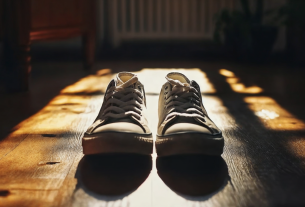
For five years, Arkadiy Semenovych kept the key to their apartment on his usual keychain, right beside the one to his own. A wooden acorn dangled between them—smooth and darkened by palms. He’d carved it long ago for his wife, and after she passed, it became his, along with everything she left behind.
This Friday, as always, his key slipped easily in the lock. But this time, it wouldn’t turn.
Arkadiy Semenovych tried again. Then a third time, harder, until the key scraped harshly against the metal.
The door stood firm.
Kostya was on the other side. He heard his father-in-law jiggling the handle, breathing heavily, rustling a bag. He had been waiting for this. He’d installed the new lock himself just the night before, set the box from it on the entryway table, handed one key to his wife and said, “Now no one else will have one.”
He had pictured this moment hundreds of times, imagined it would bring relief. But all he felt was a pounding heart and sweaty palms.
* * *
Five years ago, it all started so differently.
At the wedding, Arkadiy Semenovych didn’t say much. He sat beside the young couple in his one suit, fiddling with his fork—then stood up, placed a folder of papers in front of his daughter and said:
“Live here. Three-room apartment, brick building, almost downtown. The papers are in your names. Your mom would want you to have your own home, Vika. I just did what she would’ve wanted.”
Vika burst into tears, mascara streaming down her chin. Kostya squeezed his new father-in-law’s hand, speechless. He worked as a craftsman in the woodworking shop, and with his salary, an apartment like this in their town would only be a dream—maybe in retirement.
Arkadiy Semenovych kept a spare key for himself. No one thought twice about it. He was the dad. What if he needed to shut off the water while the newlyweds were at the sea or water the plants?
He dropped by for the first time a week after they moved in. Eight in the morning on a Saturday, when Kostya and Vika were still asleep—the one day they didn’t have to get up to an alarm.
The lock scratched, something thudded in the hall, and a cheery voice called out:
“Rise and shine, kids! I brought you potatoes, a sack of onions, and some zucchini. Vika, still in bed? The sun is already over the rooftops!”
Kostya just smiled into his pillow. No big deal. The man was sixty-two, had spent his life as a forest ranger, used to being listened to by both trees and people. His wife Lidia had passed away three years before the wedding. Vika was his only child. Of course, he was lonely.
After a month, his father-in-law came by three times a week. After six months—every day.
Morning: “Just for some tea, on my way.”
Evening: “Checking in on you.”
Weekends: “Helping around the house.”
If a bulb went out, he’d change it. If the plates weren’t arranged just right, he’d re-stack them. One day, Kostya opened the cupboard to find every jar labeled with masking tape: “BUCKWHEAT,” “RICE,” “MILLET”—all in big block letters, his father-in-law’s handwriting.
“So Vika doesn’t get confused,” he explained, as if it was nothing out of the ordinary.
The couch was in the wrong place, too.
“You can’t put it by the radiator. The fabric will fade by spring. You’ll have to buy a new one. Come on, Kostya, help me move it.”
And Kostya would help. Silently, jaw clenched.
* * *
The worst moment came on their second wedding anniversary.
They had planned it out: a night for just the two of them. Yulia, not even a year old, was with Kostya’s mom. Vika baked mackerel with lemon, Kostya made salad, they bought a bottle of wine and two candles—which kept falling over in old mustard jars because they had no candleholders. They laughed like kids about it.
At eight, the key turned in the lock.
“And here I am!” Arkadiy Semenovych walked into the kitchen with a three-liter jar of pickles. “Oh, looks like you’re celebrating! And I’m as hungry as a wolf.”
Vika looked at her husband. He knew that look: “Please. Not tonight.”
Kostya stayed quiet, staring into his plate as his father-in-law explained how to pickle cucumbers so they’d stay crunchy till spring.
After he finally left, Vika went to hug Kostya. He pulled away.
“Kostya…”
“What, Kostya? Vika, can you see how crazy this is? We can’t have a single evening alone in our own place! I can’t even close the door and know it’ll stay closed for five minutes!”
“He’s my dad,” she said quietly. “He gave us this apartment. We’re all he has.”
“He gave it to us! Us, Vika! That’s not a ticket to walk in whenever he wants!”
“Lower your voice. The neighbors will hear.”
Kostya walked out onto the balcony in just his shirt. The November wind cut to the bone. Rain puddled below under the lone streetlight. He remembered his own father, who never interfered in his life. When Kostya married, his dad just clapped him on the shoulder and said: “Now you’re your own man. You decide—and you’re responsible.” Nothing more. His dad had long passed, but those words stayed word-for-word in his memory.
When Kostya returned, Vika sat on the sofa, hugging her knees.
“I’ll talk to him. I promise. I will.”
She did talk to him. Arkadiy Semenovych listened, nodded, got offended, and didn’t show up for three days. Kostya started to hope he’d finally understood.
But on the fourth day, the key scratched in the lock again.
“I’ve been thinking,” Arkadiy Semenovych announced from the doorway, “your balcony needs glazing. The draft is so bad Vika will catch a cold. I’ve already called the guys—they’ll come take measurements tomorrow.”
That day Kostya understood something simple: words meant nothing to his father-in-law. Only what was already done counted.
* * *
Kostya changed in those five years. He used to be the first to grab a guitar at any party, could crack up even a tired supermarket cashier at the end of a shift. That’s what made Vika fall for him.
Now, he came home from work sullen. Eventually, he stopped hurrying home at all—staying after shifts, picking up extra jobs, helping a friend install kitchens.
“Kostya, what’s up with you?” his coworker Taras once asked. “You’ve been grumpy for three months. Problems at home?”
Kostya just waved it off. How could you explain to another grown man that you don’t feel like the master in your own apartment?
Some nights, Vika would cry facing the wall. Kostya heard it. But he couldn’t help himself. Every time the key scratched in the lock, something inside him tightened into a hard knot. He stopped being a man, a dad, a homeowner. He felt like a tenant allowed to stay out of pity.
Everything broke on a Sunday morning.
Kostya had just gotten up, pouring coffee in his shorts, when he heard the familiar click. Arkadiy Semenovych entered the kitchen and looked him up and down.
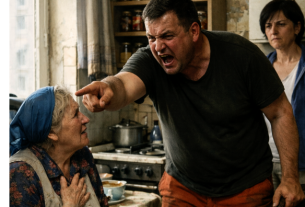
“You could at least put on some pants. There’s a child growing up here, my daughter lives here. This isn’t a dorm.”
And Kostya…
The key to this apartment had been hanging on Arkady Semenovich’s keychain for five years, right next to the key to his own place. Between them dangled a wooden acorn—smooth and darkened by palms over the years. He had once carved it for his wife, and after she passed, the acorn, along with everything else, became his.
That Friday, as always, the key slid effortlessly into the lock. But this time, it wouldn’t turn.
Arkady Semenovich tried again. Then a third time, applying more force until the metal squeaked.
The door wouldn’t budge—completely unresponsive.
On the other side was Kostya. He could hear his father-in-law fiddling with the handle, breathing heavily, and rustling a plastic bag. He had expected this. Just yesterday, he’d installed a new lock himself, placed the box on the hallway table, and pressed a single key into his wife’s palm, saying: “No one else will have this.”
He had pictured this moment a hundred times. Thought he’d feel relief. But all he could sense was his pounding heart and sweaty palms.
* * *
Five years ago, things started off so differently.
At the wedding, Arkady Semenovich was silent for a long time. He sat beside the newlyweds in his one suit, twirling a fork in his fingers. Then he stood, placed a folder with papers in front of his daughter, and said:
“Go live your lives. It’s a three-room apartment, brick building, almost in the center. The paperwork is already in your names. Your mother would have wanted you to have your own home, Vika. I just did what she would have wanted.”
Vika broke down in tears, mascara running to her chin. Kostya shook his father-in-law’s hand, speechless. He worked as a master in a woodworking shop, and with his salary, an apartment like that in their town was something he could only dream of—maybe by retirement.
Arkady Semenovich kept a spare key for himself. No one even noticed. He was the father, after all. Who knows—maybe he’d need to shut off a pipe while the newlyweds were at the sea, or water the plants.
The first time he visited was a week after they moved in. Eight in the morning on a Saturday—when Kostya and Vika were still asleep, their one day to sleep in without an alarm.
There was a scrape in the lock, a thud in the entryway, and a cheerful voice announced:
“Rise and shine, youngsters! I’ve brought potatoes, a sack of onions, and some squash. Vika, are you still in bed? The sun is already above the rooftops!”
Kostya just smiled into his pillow then. It didn’t seem like a big deal. The man was sixty-two, had spent his whole life as a forester, was used to being obeyed by both people and the woods. He’d buried his wife Lidiya three years before their wedding. Vika was his only one. Of course, he missed her.
A month later, his father-in-law was stopping by three times a week. After six months, it was every day.
In the mornings—“just for some tea on my way.” In the evenings—“just checking in.” On weekends—“here to help with chores.” If a bulb burnt out, he’d replace it. If dishes weren’t put away quite right, he’d rearrange them. One day Kostya opened the cupboard and noticed, on every jar, a strip of painter’s tape labeled in big, printed letters: “BUCKWHEAT,” “RICE,” “MILLET.” All in his father-in-law’s handwriting.
“So Vika doesn’t mix them up,” he explained, as if it was the most ordinary thing in the world.
Even the couch was misplaced.
“It’s wrong to put it near the radiator. The fabric’s going to fade by winter, and you’ll be buying a new one. Kostya, help me move it from that side.”
And Kostya did. Wordlessly, gritting his teeth.
* * *
The worst part happened on their second wedding anniversary.
They agreed ahead of time: this evening would be just for the two of them. Yulia, who was still under a year old, was dropped off at Kostya’s mother’s place. Vika baked mackerel with lemon, Kostya made the salad, and they bought a bottle of wine and two candles—which they struggled to set up because they didn’t own candleholders, so the candles stuck out from old mustard jars. They laughed about it like kids.
At eight o’clock, the key turned in the lock.
«Here I am!» Arkady Semenovich walked into the kitchen with a big three-liter jar of pickles. «Oh, you’re having a celebration! And I happen to be as hungry as a wolf.»
Vika looked at her husband. He knew that look well: «Please. Just not tonight.»
Kostya stayed silent. All evening he stared into his plate as his father-in-law talked about the best way to pickle cucumbers so they’d stay crisp until spring.
When the door finally closed behind him, Vika went over to hug her husband. He pulled away.
«Kostya…»
«What, Vika? Do you realize this isn’t normal? In our own apartment, we can’t even be alone! I can’t close the door and know that nobody is going to come in five minutes later!»
«He’s my dad,» she said quietly. «He gave us this apartment. And he doesn’t have anyone else except us.»
«He gave it to us! Gave it, Vika! That doesn’t mean he bought himself the right to walk in whenever he wants!»
«Keep your voice down. The neighbors will hear.»
Kostya stepped out onto the balcony in just his shirt. The November wind cut right through him, and the only streetlamp below reflected in the puddles. He remembered his own father, who never interfered in his life. When Kostya got married, his dad had just patted him on the shoulder and said simply: «Now you’re your own man. Your decisions, your responsibility.» Nothing more. His father had been gone for a long time now, but Kostya still remembered those words exactly.
When he came back in, Vika was sitting on the sofa hugging her knees.
«I’ll talk to him. Really. I will.»
And she did. Arkady Semenovich listened, nodded, got offended, and didn’t show up for three days. Kostya actually started to believe that his father-in-law had finally understood.
On the fourth day, the key scraped in the lock once again.
«I was just thinking,» Arkady Semenovich announced from the doorway, «you need to get the balcony glazed. That draft will make Vika sick. I’ve already spoken to some guys—they’ll be here tomorrow to take measurements.»
That day, Kostya realized something simple: words meant nothing to his father-in-law. He only acknowledged things that had already been done.
* * *
In five years, Kostya had changed. He used to be the guy who’d grab the guitar first at any party, who could make even a tired cashier at the supermarket laugh at the end of her shift. That was the man Vika had fallen in love with.
Now, he came home from work gloomy. And after a while, he stopped rushing home altogether—he’d stay after his shift at the workshop, take extra jobs, or help a friend renovate kitchens.
«Kostya, what’s up with you?» his coworker Taras finally couldn’t hold back one day. «For three months, you’ve been walking around like a storm cloud. Is something going on at home?»
Kostya just waved him off. How could he explain to another grown man that he didn’t feel like the master of his own apartment?
At night, Vika would sometimes cry quietly, facing the wall. Kostya could hear her. And he couldn’t do anything about it. Every time the key scraped in the hallway lock, something inside him twisted into a tight knot. He stopped feeling like a man, a father, or the head of the household. He felt like a tenant allowed to stay out of pity.
It all fell apart on Sunday morning.
Kostya had just woken up and, still in his shorts, was pouring himself some coffee when the familiar click of the lock echoed. Arkadiy Semenovich walked into the kitchen, giving his son-in-law a look from head to toe.
“You could at least put some pants on. There’s a child growing up here, my daughter lives here. This isn’t a dormitory.”
And Kostya snapped. For the first time in five years.
“You know what, Arkadiy Semenovich? This is my apartment! Mine and Vika’s! And if I want, I’ll walk around here however I please! You’re a guest here! And decent guests ring the doorbell before barging in!”
It got so quiet you could hear the dripping faucet in the bathroom. Vika froze in the bedroom doorway. Yulia, frightened by her father’s shout, burst into tears.
Arkadiy Semenovich didn’t say a word. He turned around, put on his shoes in the hallway, and left. The door slammed so hard that Yulia’s hat fell off the hook.
“Why did you do that?” Vika whispered. “He’s an old man…”
“He’s a man who hasn’t heard a single ‘no’ in five years,” Kostya shot back. “And if you still can’t see that, then we really do have a problem.”
He threw on his jacket and left too. He came back late at night. Vika was sitting in the kitchen under the light of the range hood, staring into space.
“I love you,” she said without turning around. “But I love my dad too. I can’t choose between you.”
“No one’s asking you to choose,” Kostya replied wearily. “I’m just asking for the doors in this house to be ours. Just regular boundaries. Is that really too much?”
Vika stayed silent.
On Thursday he came home from work with a box under his arm.
“What’s that?” Vika asked warily.
“A new lock.”
She turned pale.
“Kostya, you can’t… What about my dad…”
“Your dad has been unlocking these doors for five years like he owns the place. Not anymore.”
He worked for half an hour. Vika stood in the kitchen doorway the whole time, silent tears streaming down her cheeks. Yulia, always able to sense when something was wrong between her parents, quietly stayed in her room with her dolls and didn’t come out.
When he finished, Kostya handed his wife a key.
“This one’s yours. This one’s mine. The spare will stay here in the drawer. That’s it. No one else will have a key to our home. Vika, we’re a family. And a family needs a home where no one enters without permission.”
Vika took the key, turned it in her fingers, and said nothing.
* * *
On Friday, Vika took Yulia to a birthday party at a friend’s from daycare, leaving Kostya home alone. He knew his father-in-law would show up. He always came on Fridays.
The key rattled in the lock. Once, twice, three times.
Silence.
Then—the sharp, demanding knock.
“Vika! Kostya! Open the door! What is this nonsense?!”
Kostya glanced through the peephole. Arkadiy Semenovich was standing on the landing—red-faced, disheveled, with a full bag that clinked with jars. Kostya unlocked the door.
His father-in-law stormed into the hallway, almost bumping into his shoulder.
“What did you do to the lock?! Why doesn’t my key work?!”
«Because I changed it,» Kostya said calmly. «Yesterday.»
«Changed it?» Arkadiy Semenovich froze. «And you didn’t even ask me?»
«This is Vika’s and my apartment. We have the right to change the locks in our own home.»
«Yours?!» his father-in-law shouted. «But I bought this place! With my own money! Do you have any idea how long I saved up for it?!»
«I do understand. And I am grateful to you, truly. But you gave it to us. A gift isn’t an all-access pass to come in whenever you want. You never called first. You’d drop in when we were asleep. When we were having dinner. When we had guests—and you’d explain to them everything we were doing wrong. Five years, Arkadiy Semenovich. Five years we can’t feel at home in our own house. I can’t take it anymore.»
Arkadiy Semenovich was silent. Kostya braced himself for the usual burst of anger, but his father-in-law’s eyes held none. There was only confusion, as if he truly hadn’t realized until this very moment that he might have been a bother.
«So you’re… kicking me out?» he finally asked quietly.
«No. No one is kicking you out. All I ask is that before you come over, you call. That’s just being polite. That’s all.»
His father-in-law stood there a moment longer. Then he set the bag down on the table, turned, and left.
This time, there was no shouting, no slamming. The door closed surprisingly softly.
Kostya stayed in the hallway. His heart was pounding in his throat, and instead of relief, he felt a wave of nausea creeping up. He stepped closer to the door and peeked quietly through the peephole.
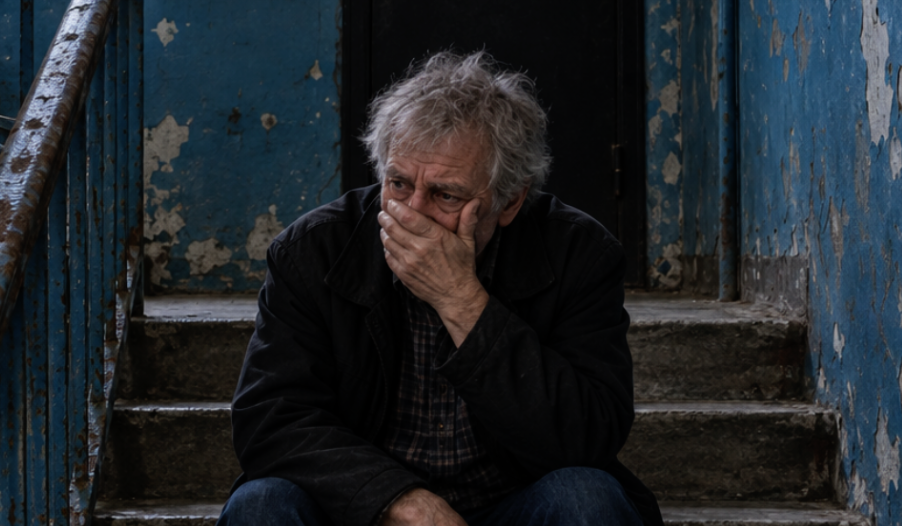
Arkadiy Semenovich hadn’t left. He was sitting on the stair across from the door, covering his face with his hands. His shoulders shook with tiny tremors.
Kostya recoiled. He put his hand on the door handle. He stood there for a while. But he didn’t open the door.
He unpacked the bag, just to have something to do with his hands. Two jars of currant jam. A jar of gooseberries. A little packet of dried mushrooms. And at the very bottom, wrapped in newspaper—a wooden horse. Small enough to fit in his palm, with a carved mane and tail. Tied to its little hoof was a note attached by a string: «For Yulia, from Grandpa.»
Kostya held that little horse in his hands for a long time. Then he heard slow, heavy steps shuffling down the stairs.
* * *
In the evening, when Vika and Yulia came home, Kostya told them everything. He didn’t sugarcoat anything, didn’t try to defend himself. He repeated almost every word of the conversation, explained that he’d seen his father-in-law sitting on the stairs. And he set the horse on the table.
Vika looked at him for a long time. She didn’t scold him, didn’t reproach him. She quietly got dressed and went to see her father.
After her mother passed away, Arkadiy Semenovich had moved into a one-bedroom apartment on the edge of town. Vika seldom visited—her dad would always come to them. Now she saw just how empty it was. Only a single stool in the kitchen. On the cabinet under the glass, photos dusted with age: her mother, young, in a headscarf in the garden; Vika with huge white bows at her first bell; Vika in her wedding dress, with Kostya by her side.
And on the windowsill, lined up in a row, stood wooden horses. Six or seven of them. One still missing a tail.
Her father was sitting at the table over a cup of long-cold tea and an open jar of jam.
«Dad…»
«Don’t, sweetheart. I understand everything now.»
«What do you understand?»
«That I’m just in the way. » He gave a sad little smile. «You have your own family, your child, your own life. And here I am, pushing into places I don’t belong. Kostya was right. It’s just that I…»
He fell silent and stared at the wall for a long time.
“I just didn’t want to be alone again. Do you understand?”
There was only one stool in the kitchen, so Vika crouched beside her father and took his hand. His hand was dry, sinewy, and smelled of resin and fresh wood shavings.
“Dad, no one is leaving you.”
«When Mom was gone, I nearly lost my mind,» he spoke softly, as if he hadn’t heard. «It’s been eight years, and I still wake up at night searching beside me with my hand. And then you left. I mean—not really, I get it—you got married, your own life, it’s how it should be. But I was alone. Completely. And at your place… I come in and hear you talking, Yulia stomping around, chat with Kostya for a bit. And it feels like I’m home again. Like Lida is somewhere nearby, in the next room. I never thought I was getting in the way. Honestly, I didn’t.»
“And what’s that?” Vika nodded toward the windowsill.
“Oh, that…,” he looked embarrassed. “Evenings are long. I carve a little. For Yulia. Wanted to make her a whole herd.”
Vika squeezed his hand tighter.
“Dad, we need you. Really. Come visit. Just call first—me or Kostya. Say: ‘I’d like to come over.’ Is that so hard? And… when did you last see Uncle Petro? Or Uncle Yaroslav? You used to go to the pond every Saturday. The cottage is sitting empty, pears are falling from the trees. You’re strong, Dad. You can find reasons to live for more than just us.”
He was quiet for a long time, then nodded.
«I understand.» After a moment, he added, «Tell Kostya for me… I never meant any harm. And that I’m grateful to him.»
«For what?»
«For you. For loving and protecting you. And for the truth. Not everyone is brave enough to say what someone doesn’t want to hear, right to their face. But he was brave enough.»
* * *
Three days later, on Saturday around eleven, the doorbell rang in the apartment. Kostya answered. Standing on the threshold was Arkadiy Semenovich—with a bag, as always. Only this time, nobody fumbled with the key in the lock.
«Did I call first?» his father-in-law asked seriously.
Kostya couldn’t help but smile.
«You called.»
«So, I’m here. May I come in?»
«Of course. Come on in.»
Arkadiy Semenovich took off his shoes and hung his cap on the hook—with the same motion he had used for five years straight. His eyes lingered on the new lock, but he said nothing. He handed a bag to his daughter:
“Pears from the cottage. Small ones, but sweet as honey.”
Vika hugged him right there in the hallway. Kostya lingered off to the side, not sure what to do with his hands.
«Kostya,» said his father-in-law, clearing his throat. “Can I have a word with you?”
They went to the kitchen. Arkadiy Semenovich sat at the table. Kostya stood by the window.
«I’ve come to apologize,» his father-in-law began. «For everything. For the past five years. You’re like a son to me, though I can’t replace your father. I’ve always respected you, don’t think otherwise. As for always interfering… it was just loneliness. And fear. I was afraid my daughter would forget me. That I’d be needed by no one. That I’d die alone in my tiny apartment and nobody would even notice.»
He lowered his eyes.
«You shook me up. Hard, yes. But otherwise, I guess I wouldn’t have figured it out. So, thank you.»
He took a set of keys from his pocket, slowly, with fingers that didn’t quite want to work, and removed that same key—together with the little wooden acorn—and laid it on the table.
«Here. I won’t be needing it anymore. Don’t throw it out, okay? And the acorn… Lida loved it. Let it stay with you. Even if that’s the only way I ever come in without calling.»
The kitchen fell silent. Kostya stared at the acorn, feeling the anger that had been living inside him for five years slowly dissolve, crumbling away like dry shavings.
«Arkadiy Semenovich, I never wanted to hurt you either,» he finally said. «I just needed one thing: for Vika and me to have our own home. A place without always feeling like we’re being watched. But that doesn’t mean we don’t love you or want to push you out. You’re Vika’s dad, you’re Yulia’s grandpa. You’ll always be part of us. We just need boundaries. Do you understand?»
«Now I understand.»
Suddenly, little feet ran down the hallway and Yulia burst into the kitchen, clutching her wooden horse to her chest.
«Grandpa! Grandpa’s here! Does the horse have a brother? Or a sister?»
Arkadiy Semenovich lifted his granddaughter into his arms and hugged her tightly. And suddenly, tears rolled down his cheeks. He didn’t sob or say anything—he simply hid his face in her soft curls.
Kostya turned to face the window. Vika stood in the doorway, wiping her eyes with her sleeve.
«Why are you all…» Arkadiy Semenovich mumbled, still holding onto Yulia. «What kind of people are you… Everything’s fine. Everything really is fine.»
And for the first time in five years, that was true.
* * *
A year went by.
Now, Arkadiy Semenovich always calls first. No exceptions. Sometimes he even calls twice: once to say he’s planning a visit, and again to double-check if they’re expecting him.
He usually comes over on Sundays for lunch. He brings homemade preserves, pears from the dacha, and in the summer he brought carp twice—he’s started fishing again with Uncle Petro and Uncle Yaroslav, and they always argue about who caught the biggest one. On Yulia’s windowsill, there’s now a whole herd of wooden horses—twelve and counting. Grandpa promised to make a little cart next.
And that spring, Kostya made a key for his father-in-law himself. He attached it to the same ring with the little wooden acorn and handed it over:
«Here, take it. Just in case. You never know what could happen. But the rule stays: you call first. Deal?»
Arkadiy Semenovich looked at the acorn. Then at the key.
«Deal.»
He turned the set of keys over in his fingers for a long time, tracing the darkened wood with his thumb. Then he slipped them into his pocket. Kostya noticed a nervous twitch flicker across his father-in-law’s cheek.
That evening, after Arkadiy Semenovich left, Vika came up behind her husband and hugged him, resting her cheek against his back.
«Do you know what the most important part of this whole story is?»
«What is it?»
«It’s not just that you changed the lock. You saved each of us. You freed me—from that endless guilt towards my dad. You freed Dad—from the loneliness he drowned out in our kitchen. And you freed yourself—from feeling like you didn’t belong here. I could never have done something like that.»
«I just reached my limit, Vika. I couldn’t do it anymore.»
«I know.» She hugged him tighter. «And that’s one more reason why I love you.»
They sat in the kitchen for a long time, drinking tea. Yulia slept behind the wall, hugging her very first wooden horse. Outside, the first real November snow was drifting down—thick, wet, and real.
The apartment was silent. Not that tense kind of silence, where you’re waiting for the scrape of a strange key every second. This was true, peaceful, homely silence.
Because now, they knew for sure: this was their home. A place where family was always welcome—but only after ringing the doorbell first.