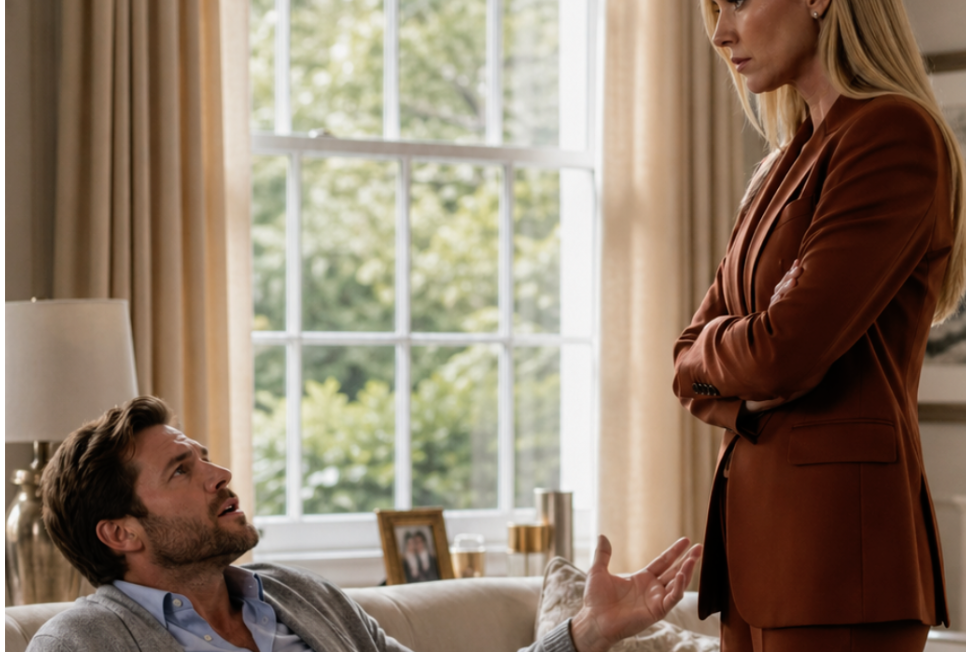
“You’ve got money, and what am I, worse than everyone else? I urgently need five hundred thousand for a business!” her husband declared, sprawled on the sofa.
“Give me the money, Ulyana! Write it off as business expenses, or whatever! You’re swimming in wealth, and what, in your opinion, am I supposed to do—sit on your neck forever and beg like a pauper?”
He burst into the office as if he had just signed the most profitable contract of his life, not slept until eleven in the morning. Ulyana, buried in quarterly reports, flinched and set the folder aside. Viktor stood in the doorway, openly savoring the effect he had produced. He was wearing that same Italian shirt for seven thousand, bought a month earlier for a mythical job interview. Wrinkled, as if he had slept in it.
“What money are you talking about, Viktor?” she asked, trying to keep her voice from trembling. Inside, everything tightened into a cold, heavy lump. She could feel something inevitable approaching, something that had been building up for months.
“What money, what money…” He snorted, dropped into the chair across from her desk, and crossed one leg over the other. His gaze slid over the expensive equipment, the leather chair, the view from the window of the night city. “I’ve come up with a venture. A serious one. A startup. Healthy meal delivery for office workers. The niche is empty. Everyone will eat it up.”
Ulyana slowly closed the laptop. She knew she would not be able to work now. Her heart was pounding somewhere in her throat.
“Congratulations on the idea. And what exactly is my role in your startup? Apart from the financial one, of course?”
“Don’t start with that sarcastic tone!” He slapped his palm against the armrest. “Are we a family or what? I’m a man. I need to realize my potential! And you… you’ve turned into an accountant, a money-making machine! When was the last time we simply talked?”
She looked at him, at his nostrils flared with smugness, at the familiar gesture—he was twisting an imaginary ring on his finger, a habit left over from the days when he had been a big boss and the ring had been real. Now his hand was empty, but his ambitions, apparently, had not gone anywhere.
“We don’t talk, Viktor, because you’re either sleeping, watching TV series, or demanding another thirty thousand for some ‘coaching on getting out of crisis.’ I have six salons, forty employees, loans, and rent. I don’t have time for meaningless conversations.”
“Exactly!” he said triumphantly, jabbing a finger in her direction. “Six salons! And everything rests on you alone? How am I any worse? I’m giving you the opportunity to invest in a promising project! The starting capital is five hundred thousand. That’s pocket change for you!”
Silence hung in the room, thick and oppressive. Ulyana could hear a car passing outside, hear the faucet dripping somewhere in the kitchen—he had promised to fix it two weeks ago. Five hundred thousand. Half a million. A month’s profit, for which she stayed awake at night, worked fourteen-hour days, and could no longer remember the last time she had simply read a book or walked in the park.
“Five hundred thousand,” she repeated flatly. “And for what exactly?”
Viktor perked up and rubbed his hands together. He had clearly prepared himself.
“Well, obviously, renting a suitable space for a mini-kitchen—not in a residential neighborhood, of course. Buying professional equipment—ovens, refrigerators. Then an advertising campaign, creating a website, paying a chef and a courier for the first couple of months… I’ve calculated everything.”
“Calculated?” Ulyana raised an eyebrow. “Show me your calculations. Even on a napkin.”
For a second, he looked embarrassed. His confidence showed its first crack.
“What calculations, for hell’s sake! I’m telling you in words! You don’t believe me? You don’t believe your own husband?”
“It’s rather hard to believe someone who hasn’t earned a single ruble in six months and has spent more than three hundred thousand on his ‘depression’ and ‘search for himself,’ you know. You can’t even wash your own dishes, and you want to run a business.”
His face twisted with anger. He jumped up from the chair and loomed over the desk.
“Don’t you dare throw my depression in my face! Do you know what it’s like to be thrown out onto the street at forty-five? From a big chair at the bank to your own sofa? And you… all you did was nag me! ‘Get up, find a job, help.’ Not a drop of support!”
Ulyana stood up too. They faced each other, separated by the wide oak desk, but the abyss between them was immeasurably wider.
“I supported you for the first two months, Viktor! I paid for that psychologist you went to once! I stayed silent when you bought stupid shirts and sneakers, in which all you did was walk from the sofa to the refrigerator! I turned a blind eye to your tantrums and to the fact that you drove away all our friends with your whining! But five hundred thousand… That is no longer depression. That is insolence.”
“Insolence?” he shouted so loudly that the windowpanes seemed to tremble. “You’re the insolent one! Have you forgotten who you were when we met? A simple hairdresser with two hair clips in your pocket! And who helped you back then? Who gave you money for your first rental space? Huh? Do you remember?”
Ulyana clenched her fists. Her nails dug into her palms.
“I remember. And I remember that I paid you back every bit of that money. With interest. A long time ago. We’re even. But you… you’re trying to put me on a meter now. As if your help back then gave you a lifetime license for parasitism.”
“I’m not a parasite!” He was crimson with rage. “I’m your husband! And I demand what I’m entitled to! Or do you think I’ll let some upstart hairdresser support me?”
“Support.”
The word hung in the air, heavy and ugly. It contained everything: the dirty dishes in the sink, the bills for sushi he ordered while she balanced accounts late at night, his contemptuous looks when she collapsed from exhaustion.
“You are not a husband, Viktor,” Ulyana said quietly, but very clearly. Each word was like a nail driven into a coffin lid. “A husband is a partner. A support. And you… you are dead weight. You’re dragging me to the bottom. And I am not going to drown anymore.”
He froze, stunned. He had clearly not expected such a direct blow. He was used to her giving in, paying him off, anything to avoid a scandal. His confidence began melting before her eyes, replaced by panic.
“You… you don’t understand…” he muttered. “This is a chance! My chance to become a person again! Let me write it all out for you, explain…”
“Explain it the way you explained the coaching? The way you explained the gym membership for fifteen thousand, which you used twice?” She shook her head. Inside, there was nothing but icy calm and fatigue. Endless, freezing fatigue. “That’s it. The game is over. Demand, shout, threaten—I don’t care. You won’t get the money. Not a kopeck.”
He looked at her, and genuine astonishment showed in his eyes. He truly did not understand how this could be—how his word, his desire, was no longer law. He was a little boy whose most precious toy had been taken away: his sense of self-importance, which all these months had been fed by her money and her silent patience.
“Fine,” he hissed, and his gaze became narrow and vicious. “Fine… If you won’t do this the easy way, we’ll do it the hard way. You think I’ll let you humiliate me just like that, on the spot? You don’t know me, Ulyana.”
“I do know you,” she smiled bitterly. “I’ve come to know you better in these six months than in all fifteen years of our life together.”
“Oh, look at that!” He stepped away from the desk, clasped his hands behind his back, and began pacing around the office the way he had once paced around his bank office. “You’re forgetting one little detail. We live in a small town. Everyone here knows everyone. And your salons have an impeccable reputation. ‘Ulyana’s Salon’ is the standard of quality, trust, almost like family to your clients. I wonder what they’ll say when they find out what kind of owner they really have… a cruel, heartless woman who threw her husband out into nowhere, while he was depressed, in crisis. A woman willing to trample the person closest to her for the sake of money.”
Ulyana listened to him, and it was almost funny to her. Everything was so absurd and predictable.
“You want to blackmail me?” she asked indifferently. “Go to all my clients and tell fairy tales about your cruel wife?”
“They’re not fairy tales! They’re the truth!” He rushed back to the desk. “I’ll tell everyone! Your friends, your suppliers… We’ll see if they still want to deal with such a bitch!”
She silently looked at him. She looked at this stranger, this embittered man, in whom not a trace remained of the confident, handsome man she had once fallen in love with. That man was dead. Or perhaps he had never existed at all.
“You know what, Viktor, do whatever you want,” she finally said, waving her hand with resignation. “Tell whoever you like. I don’t care anymore. But there is one small problem.”
“What problem?” he asked warily.
“The problem of where you’ll return after your little propaganda trips. Because you won’t be returning here.”
He froze, not understanding.
“What… what does that mean?”
“It means I’m kicking you out, Viktor. Right now. You have one hour to pack your things and get out of my apartment.”
His face fell. “My apartment.” He sobered up instantly.
“You can’t kick me out!” Notes of real, animal panic appeared in his voice. “This is our home!”
“No,” Ulyana objected coldly. “This is my apartment. It was bought with my money, which I earned before we got legally married. Legally, you are nobody here. Just a resident. And I am no longer allowing you in.”
She saw a spasm pass over his face. He was retreating, and he knew it. All his trump cards had turned out to be fake…
To be continued below in the first comment.
“Give me the money, Ulyana! Write it off as business expenses, or I don’t know, call it whatever you want! You’re swimming in money, and what am I supposed to do, in your opinion? Sit on your neck forever and beg like a pauper?”
He burst into the office with the air of a man who had just signed the most profitable contract of his life, not slept until eleven in the morning. Ulyana, buried in quarterly reports, flinched and set the folder aside. Viktor stood in the doorway, openly enjoying the effect he had produced. He was wearing that same Italian shirt that cost seven thousand, bought a month ago for a mythical job interview. It was wrinkled, as if he had slept in it.
“What money are you talking about, Viktor?” she asked, trying to keep her voice from trembling. Inside, everything tightened into a cold, heavy knot. She could feel something inevitable approaching, something that had been building for all these months.
“What money, what money…” he snorted, dropping into the armchair opposite her desk and crossing one leg over the other. His gaze slid over the expensive equipment, the leather chair, the view from the window overlooking the city at night. “I’ve come up with a business idea. A serious one. A startup. Healthy meal delivery for office workers. The niche is empty. People will eat it up.”
Ulyana slowly closed the laptop. She knew she would not be able to work now. Her heart was pounding somewhere in her throat.
“Congratulations on the idea. And what exactly is my role in your startup? Besides the financial one, of course?”
“Don’t use that sarcastic tone with me!” He slapped his palm against the armrest. “Are we a family or what? I’m a man. I need to fulfill myself! And you… you’ve turned into an accountant, a money-making machine! When was the last time we simply talked?”
She looked at him, at his nostrils flaring with self-satisfaction, at the familiar gesture—he was twisting an imaginary ring on his finger, a habit left over from the days when he had been a big boss and the ring had been real. Now his hand was empty, but his ambitions, apparently, had gone nowhere.
“We don’t talk, Viktor, because you’re either sleeping, watching TV shows, or demanding another thirty thousand for some ‘crisis recovery coaching.’ I have six salons, forty employees, loans, and rent to pay. I don’t have time for meaningless conversations.”
“Exactly!” he said triumphantly, pointing a finger at her. “Six salons! And all of it rests on you alone? How am I worse? I’m giving you a chance to invest in a promising project! Startup capital—five hundred thousand. That’s pocket change for you!”
A silence hung in the room, thick and oppressive. Ulyana could hear a car passing outside, the faucet dripping somewhere in the kitchen—he had promised to fix it two weeks ago. Five hundred thousand. Half a million. A month’s profit, for which she had gone sleepless, worked fourteen-hour days, forgotten the last time she had simply read a book or walked in the park.
“Five hundred thousand,” she repeated flatly. “And what exactly for?”
Viktor perked up and rubbed his hands together. He had clearly prepared for this.
“Well, obviously, rent for a suitable space for a small kitchen—not in some residential district, of course. Buying professional equipment—ovens, refrigerators. Then an advertising campaign, creating a website, paying a cook and a courier for the first couple of months… I’ve calculated everything.”
“Calculated?” Ulyana raised an eyebrow. “Show me your calculations. Even on a napkin.”
He faltered for a second; the first crack appeared in his confidence.
“What calculations, damn it! I’m telling you in words! You don’t believe me? You don’t believe your own husband?”
“It’s difficult to believe a man who hasn’t earned a single ruble in six months and has spent more than three hundred thousand on his ‘depression’ and ‘finding himself,’ you know. You can’t even wash your own dishes, and now you want to run a business.”
His face twisted with anger. He jumped up from the chair and loomed over the desk.
“Don’t you dare throw my depression in my face! Do you know what it’s like to be thrown out onto the street at forty-five? From a big chair in a bank to your own couch? And you… all you did was nag me! ‘Get up, find a job, help me.’ Not a drop of support!”
Ulyana stood up as well. They faced each other, separated by the wide oak desk, but the abyss between them was immeasurably wider.
“I supported you for the first two months, Viktor! I paid for that psychologist you went to once! I stayed silent when you bought ridiculous shirts and sneakers that you only wore from the couch to the refrigerator! I turned a blind eye to your tantrums and to the fact that you drove away all our friends with your whining! But five hundred thousand… This is no longer depression. This is insolence.”
“Insolence?” he shouted so loudly it seemed the windowpanes trembled. “You’re the insolent one! Have you forgotten who you were when we met? A simple hairdresser with two hair clips in her pocket! And who helped you back then? Who gave you money for your first lease? Huh? Do you remember?”
Ulyana clenched her fists. Her nails dug into her palms.
“I remember. And I remember that I paid you all that money back. With interest. Long ago. We’re even. But you… you’re now trying to put me on a meter, as if your help back then gave you a lifelong license to parasitize me.”
“I am not a parasite!” His face was crimson with rage. “I’m your husband! And I demand what I’m entitled to! Or do you think I’ll allow some upstart hairdresser to support me?”
“Support me.”
That word hung in the air, heavy and ugly. It contained everything: the dirty dishes in the sink, the sushi bills he ran up while she balanced accounts at night, his contemptuous looks when she collapsed from exhaustion.
“You’re not a husband, Viktor,” Ulyana said quietly, but very clearly. Each word was like a nail being driven into a coffin lid. “A husband is a partner. A support. And you… you’re dead weight. You’re dragging me to the bottom. And I am not going to drown anymore.”
He froze, stunned. He clearly had not expected such a direct blow. He was used to her giving in, paying him off just to avoid a scandal. His confidence began to melt before her eyes, replaced by panic.
“You… you don’t understand…” he muttered. “This is a chance! My chance to become a person again! Let me write everything out for you, explain…”
“Like you explained the coaching? Like you explained the gym membership for fifteen thousand that you used twice?” She shook her head. Inside, there was nothing but icy calm and exhaustion. Endless, freezing exhaustion. “That’s it. Game over. Demand, shout, threaten—I don’t care. You’re not getting the money. Not a single kopeck.”
He stared at her, and his eyes showed genuine astonishment. He truly did not understand how this could be—how his word, his desire, was no longer law. He was a little boy whose favorite toy had been taken away: his sense of importance, which had been fed all these months by her money and her silent patience.
“Fine,” he hissed, his gaze turning narrow and malicious. “Fine… If you won’t do it the easy way, then we’ll do it the hard way. Do you think I’ll let you humiliate me like this, just like that? You don’t know me, Ulyana.”
“I do know you,” she said with a bitter smile. “I’ve come to know you over these six months better than in all fifteen years of our life together.”
“Oh, look at that!” He stepped away from the desk, clasped his hands behind his back, and began pacing the office the way he once paced his bank office. “You’re forgetting one little detail. We live in a small town. Everyone knows everyone here. And your salons have an impeccable reputation. ‘Ulyana’s Salon’ is a standard of quality, trust, almost like family for your clients. I wonder what they’ll say when they find out what their owner is really like… a cruel, heartless woman who threw her husband out into nowhere, while he was depressed and in crisis. A woman ready to trample the person closest to her for the sake of money.”
Ulyana listened to him, and she almost wanted to laugh. It was all so absurd and predictable.
“You want to blackmail me?” she asked indifferently. “Go to all my clients and tell fairy tales about your cruel wife?”
“They’re not fairy tales! It’s the truth!” He rushed back to the desk. “I’ll tell everyone! Your friends, your suppliers… We’ll see whether they’ll want to deal with such a bitch!”
She looked at him silently. She looked at this strange, embittered person in whom not a trace remained of the confident, handsome man she had once fallen in love with. That man had died. Or maybe he had never existed.
“You know what, Viktor, do whatever you want,” she finally said, waving her hand in resignation. “Tell whoever you want. I don’t care anymore. But there is one small problem.”
“What problem?” he asked warily.
“The problem of where you’ll return after your little propaganda tours. Because you won’t be returning here.”
He froze, not understanding.
“What… what does that mean?”
“It means I’m kicking you out, Viktor. Right now. You have one hour to pack your things and get out of my apartment.”
His face stretched. “My apartment.” He sobered instantly.
“You can’t kick me out!” Real, animal panic appeared in his voice. “This is our shared home!”
“No,” Ulyana objected coldly. “This is my apartment. It was bought with my money, which I earned before we got married. Legally, you are nobody here. Just a tenant. And I am no longer letting you in.”
She saw a spasm pass across his face. He was losing ground, and he knew it. All his trump cards had turned out to be fake.
“Ulyana… Ulya, darling, let’s not…” He tried to switch from anger to tenderness. His voice became soft, ingratiating. “We’re adults. We can discuss everything. I got carried away, yes. Those five hundred thousand… maybe I really did overestimate. We can do less. Let’s sit down and calmly discuss everything, like before?”
“Like before.”
Before, they had sat in the kitchen of this very apartment, drinking coffee while she told him about her dream of opening her own salon. And he had listened, nodded, and stroked her hand. And she had believed that he believed in her. Now she understood—he had merely been indulging her. He had considered her passion a “cute female whim.” He had never believed she would succeed. And now what angered him was not so much her refusal as her success. Her independence. The fact that she no longer needed him.
“No, Viktor,” her voice was quiet, but there was steel in it. “No ‘like before.’ Before is over. It ended when you failed to get up for breakfast for the third time in a week while I ran across town to deal with a failed hair-dye delivery. It ended when I found your pizza marks on a freshly washed floor. It ended today, when you demanded half a million from me without even bothering to put on decent pants. One hour. I’m not joking.”
She turned toward the window, giving him her back, showing that the conversation was over. Beyond the glass, November rain mixed with snow was falling; the few passersby wrapped themselves in jackets and lifted their collars. The world was cold, wet, and real. And behind her, in her warm, cozy office, some other unreal life, one she had endured for far too long, was collapsing.
First she heard a deafening crash. He had hurled the heavy glass ashtray onto the floor. It shattered with a roar, shards flying all over the office. Then came a tirade—wild, incoherent, full of insults and threats. He shouted about his love, about how she was destroying everything, about how she would regret it. Then his tone turned pitiful; he recalled their past, their years together, begged forgiveness, swore everything would change.
Ulyana did not turn around. She watched the raindrops running down the glass like tears. But she herself did not cry. Inside there was only that same icy emptiness. She stood and waited for this noise, this uproar, this final act of a senseless performance to end.
Soon silence settled behind her. Then she heard him leave the office, breathing heavily. Sounds came from the bedroom—wardrobe doors slamming, rustling. He was packing.
About an hour passed. Ulyana was still standing at the window. She heard footsteps in the hallway, the creak of the front door opening and closing. First quietly, then loudly, throughout the apartment. The sound was final, like the click of a shutter.
Only then did she turn around. The office was empty. Shards of glass lay on the floor, and an overturned folder of documents was scattered nearby. She slowly walked over and picked it up. The papers were in complete disorder. She began carefully gathering them, sorting them into stacks. Her hands were not trembling. Her breathing was even.
She tidied the office and swept up the shards. Then she went into the kitchen, poured herself a glass of cold water, and drank it in one gulp. In the sink, as expected, stood Viktor’s dirty mug with the remnants of yesterday’s coffee. She looked at it, then picked it up and put it in the dishwasher. A simple, mechanical action.
She sat down on a kitchen chair and listened to the silence. The apartment was unusually quiet. There was no snoring from the bedroom, no television noise from the living room. There was no constant background feeling of irritation and injustice. The silence was heavy, but clean. Like after a thunderstorm.
She took out her phone, found her lawyer’s number in her contacts, and sent a short message: “Maxim, good evening. It happened. I’m preparing the divorce papers. I need your help.” The reply came almost instantly: “I understand. I’ll expect you at the office tomorrow. We’ll handle everything.”
Ulyana put the phone aside. Tomorrow would be a new day. A difficult one, full of paperwork and unpleasant conversations. But it would be her day. Her life. Without blackmail, without reproaches, without endless demands and excuses.
She walked to the living room window. Down below, a taxi stood near her building. The trunk was open, and the driver was helping Viktor load two large suitcases. Hunched over in that same thin Italian shirt, soaked through by wet snow, he was gesturing at the driver, probably complaining about fate and his cruel wife. Then he got into the back seat, the door slammed shut, and the car slowly pulled away, dissolving into the November gloom.
Ulyana felt neither joy nor triumph. Only immense, all-consuming exhaustion and the sense that she had just won a long, draining battle, in which the greatest victory was returning to herself. She remained standing by the window, looking at the city lights, at her reflection in the glass—lonely, but firm. And for the first time in a long while, she was not ashamed of herself.
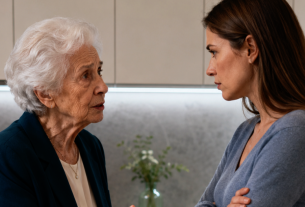
“Ulyana, what are you doing? You threw your husband out into the street! The state he came to me in—you have no idea! I’ve never seen him like that!”
Anna Viktorovna’s sharp, accusing voice cut into her ear. Ulyana slowly exhaled, looking out the window at the workers installing a new reinforced door.
“Anna Viktorovna, your son hasn’t been a husband for six months. He’s been a freeloader. He didn’t work, didn’t help around the house, but demanded money for his whims. Yesterday he demanded half a million rubles for a dubious startup. My patience snapped.”
“But he was depressed! A man must be supported in a difficult moment, not thrown out like a dog! He loves you!”
“Love is not lying on the couch while someone else works themselves to exhaustion at three jobs. And it’s not blackmailing someone when they refuse to give money. This conversation is over.”
She hung up without listening to objections. Calls from his relatives continued all day, but she no longer answered. In the evening, a message came from his sister:
“Are you even human? My brother says you didn’t even give him all his things! And you didn’t give him money for a ticket to Mom’s! He was left without a kopeck!”
Ulyana smiled coldly and deleted the message. She remembered how, a month earlier, he had spent eight thousand on restaurant delivery while she was counting every kopeck for new salon equipment.
Three days later, late in the evening, the doorbell began ringing again. Insistently, demandingly. She looked through the peephole—Viktor was standing there with two suitcases, gaunt, his eyes red.
“Ulya, I know you’re in there. Open up. I have nowhere to sleep. Mom’s renovating, my sister’s place is cramped. I won’t bother you anymore. Just let me spend the night.”
“There are hostels,” she replied coldly through the door. “Or you can leave your suitcases in a storage locker at the station.”
“How can you do this?!” He began pounding his fist against the door. “I am your lawful husband! We lived together for fifteen years! Has your heart turned completely to stone?”
“A heart turns to stone when it’s used for years like a cash cow. Leave, Viktor. The next call will be to the police.”
She stepped away from the door, dialing the local station’s number. Hearing this, he shouted in rage:
“Fine! Fine! Remember this! You’ll regret it! I’ll destroy your whole pretentious business! All your clients will find out! They’ll know what kind of bitch you really are!”
His voice broke into hysteria. Then she heard footsteps retreating down the stairs. She canceled the call. The threats no longer frightened her—they only confirmed that her decision had been right.
The next morning, she drove to the most problematic salon—the one located near the car dealership where, according to him, he now worked. The administrator, a young woman named Katya, met her anxiously.
“Ulyana Sergeyevna, your husband came yesterday. He loudly demanded to see you at the reception desk, said you had illegally blocked his access to shared finances. We called security, but he managed to scare the clients.”
“He won’t appear here again,” Ulyana said firmly. “Security has already been instructed. If he comes again, call the police immediately.”
She held a staff meeting, checked supplies, spoke with the nail technician who had complained about poor-quality polish from a new supplier. Work, reality, numbers—these calmed her. Here, everything depended on her, not on someone else’s momentary mood.
Returning to her car, she saw him. He was standing across the road, near the entrance to the car dealership, in a cheap corporate jacket and holding a stack of flyers. He looked pitiful and ridiculous. Their eyes met for a second. In his eyes, she saw not hatred, but confusion and fear. Fear of a life in which there was no longer a convenient cushion in the form of her wallet and patience. She got into the car and drove away without looking back.
That evening, the final, unexpected call came. An unfamiliar female voice, young and nervous.
“Hello, this is Irina, Viktor Anatolyevich’s colleague. He’s… he’s in the hospital. A hypertensive crisis. They took him from work by ambulance. He asked me to tell you to come.”
Ulyana was silent for a moment, looking at the city lights coming on in the dusk.
“Tell Viktor Anatolyevich that I wish him a speedy recovery. And advise him not to call me from other people’s phones anymore. It’s pointless.”
She hung up. Lying about the hospital was no longer even funny—it was pathetic. He had finally sunk into cheap manipulation.
A month passed. The court granted her divorce petition without unnecessary delays. On the day she received the certificate of divorce, the first snow began to fall. Large, unhurried flakes settled on the dirty November asphalt, wrapping the city in a clean white cover. She went into a small café near her home, ordered a cup of hot chocolate, and sat by the window.
The feeling was strange—neither joy nor sadness. Emptiness after a storm. But it was a good, bright emptiness, one that could be filled with something new. She took out a notebook and began sketching an idea for a new project—a small hairdressing school for girls from orphanages. Something she had postponed for years because “Viktor needed a new watch” or “it was time to go to an expensive resort.”
Her phone vibrated. A message from her friend Marina:
“So, free woman? How does it feel?”
Ulyana smiled and replied:
“Silence. And it’s wonderful.”
She left the café, wrapping herself in her coat. The snow crunched under her feet, the air was cold and fresh. Ahead was winter—long, difficult, but her own. Without the constant feeling of guilt, without the need to justify her success, without the heavy burden on her shoulders in the form of a grown, spoiled child.
She walked home, to her apartment, to her life. And for the first time in many years, she was not afraid. She knew that whatever came next, good or bad, she would survive it.
On her own.