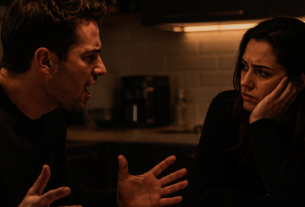
“Mom, please don’t be upset, okay? I won’t be able to come today. There’s a situation at work and I just can’t get away.”
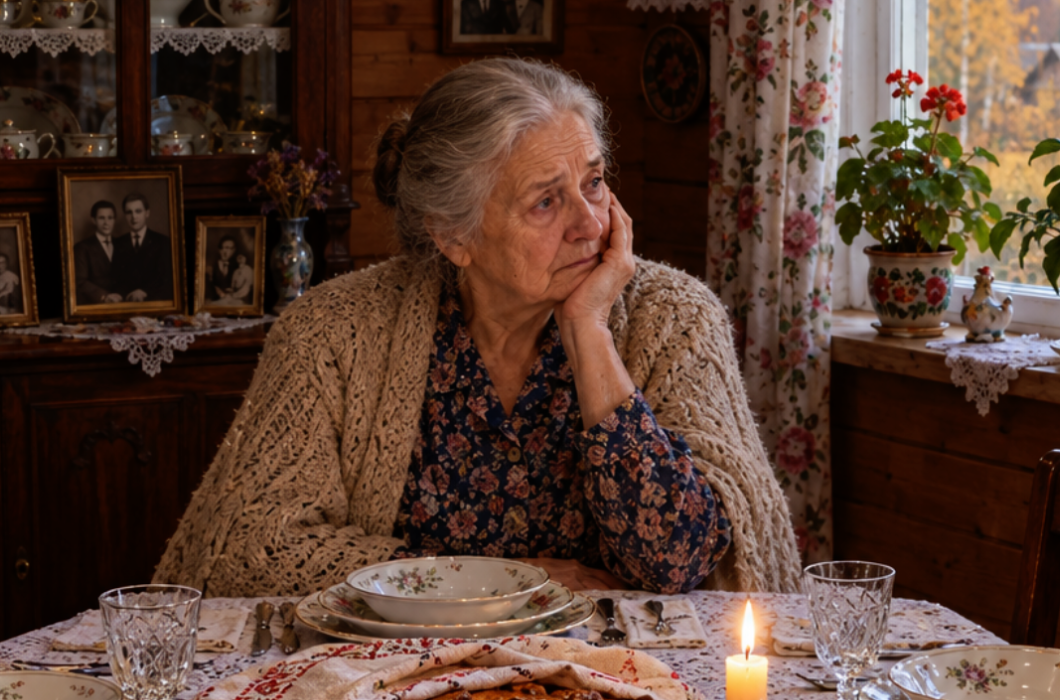
Tamara Volodymyrivna stood in the middle of her kitchen with her phone in hand. A freshly baked pie was cooling on the table, and seven festive plates were already set out in the room.
“Taras, but you said the whole family would come… I even set the table for seven.”
“Mom, it’s not on purpose. You know how it is. I’ve sent you some money to your card, get yourself something nice. We’ll come next weekend. I have to go, Mom, they’re calling me. Happy birthday!”
The call ended abruptly.
For a few seconds, she kept the phone to her ear. Then she placed it on the table, adjusted the towel over the pie, and softly said,
“Well… Maybe at least Tanya will come.”
That day, Tamara Volodymyrivna turned seventy years old.
* * *
She lived in a small village, in a solid house that she and her husband once built together. The house was wooden, covered in brick, with a large kitchen, a spacious room, and a glassed-in veranda.
The house had long had gas, water, and sewage. There was a dual-circuit boiler, a washing machine working in the bathroom, a refrigerator and a modern gas stove in the kitchen. There was even internet—her grandchildren once insisted so she could watch videos and call them.
Tamara Volodymyrivna never struggled. Her pension was enough for a modest life, and her garden provided potatoes, carrots, beets, and greens. Her son sent her some money every month, even though she had often asked him not to.
“Taras, why do I need so much? I’m not a child anymore, I can manage on my own.”
“Mom, just keep it. Buy whatever you want.”
And so she did. Mostly she bought food her children and grandchildren liked. Sometimes she’d order homemade cheese from a friend, buy good honey, or get candies for her youngest grandson who loved chocolate.
On a separate shelf in her pantry stood jars of jam. Each had a label: “For Taras”, “For Tanya”, “For the grandkids.”
But those treats were being picked up less and less often.
Tamara Volodymyrivna’s husband had passed away many years ago. She raised her children alone from then on. Taras was in his second year at university, while Tetyana was still in school.
It wasn’t easy. She worked as a manager at the local farm, and in the evenings she did sewing as a side job. She knew how to hem pants, alter dresses, and make curtains. People knew Tamara had skilled hands, so there were always orders.
When Taras needed a laptop for his studies, she saved up money from several large orders. When her daughter entered university, she helped her get settled in the dorm.
She never reminded her children of how much she’d done for them. On the contrary, she was happy that both of them had found their place in life.
Taras worked as a manager in a construction company. He had a wife, his own house, and a car. Tetyana lived in another city, worked in sales, and raised two sons.
Both of them were good people. They never forgot to wish their mother well on holidays and helped her when something needed fixing. But they always seemed to be too busy for a simple conversation.
“Mom, I’m driving right now, I’ll call you this evening.”
“Mom, let’s talk tomorrow, I just got home from work.”
«Grandma, I’ll show you later, I have class right now.»
Tamara Volodymyrivna never took offense—at least, she never said she did. After calls like that, she would head to the kitchen, put the kettle on, then sit by the window and watch the cars drive past her yard.
Sundays were always the hardest.
There was a time when the whole family would gather around the table on Sundays. Her husband would open the newspaper, the kids would argue over who got the biggest slice of pie, and she’d get annoyed because no one could just sit quietly for five minutes.
Now, that newspaper had long since been tucked away in a drawer, and only one chair was left at the table. She pushed the rest up against the wall so they wouldn’t get in the way.
Sometimes, she would purposely turn the TV up louder—not to actually watch anything, but just to fill the house with some kind of voice.
* * *
Tamara Volodymyrivna spent almost two weeks getting ready for her seventieth birthday. It was set to be the first time in ages that everyone would finally gather together. At the start of November, she called her son.
«Taras, I was thinking… Maybe you could come for my birthday? No need to bring any gifts. We’ll just sit together.»
«When is it, Mom? The twentieth?»
«Yes, it’s on Friday. But I understand it’s a workday. You can come Saturday instead. I’ll wait.»
«No, Mom. We’ll come on the twentieth. I’ll free up the day. It’s high time we visit you.»
«Will Olenka come with you?»
«Of course. I’ll check if her mom can watch the little one, but I think we’ll all be there.»
After that conversation, Tamara Volodymyrivna kept smiling for a long time.
Her daughter also promised to come.
«Mom, how could we miss your seventieth? Of course we’ll be there. The boys are already asking if you’ll have your cabbage pies.»
«There’ll be pies, Tanya, and stuffed cabbage too. And tell Matviy not to forget that book he promised to show me.»
«Okay, Mommy. Just don’t cook enough for a whole wedding.»
«Only a little! Just enough for you all to have something to eat.»
That «little» ended up so much that the fridge could barely close.
Two days before the big day, she made aspic, prepared the filling for the pies, and marinated some meat. The day before, she cooked stuffed cabbage and layered herring salad.
And on the morning of November twentieth, she tackled the main dish—a big homemade pie with chicken, rice, and mushrooms. Her husband used to love that. Taras always requested it when he came home from his student dorm.
«Mom, please make that pie—you know, the one with chicken and a crispy crust!»
She remembered.
Mothers always seemed to remember everything their kids loved. In the living room, Tamara Volodymyrivna set the table with a bright lace tablecloth. She pulled out the special china with little pink flowers from the cabinet.
She’d gotten it as a gift on her thirtieth birthday. In forty years, she had only broken a single saucer. She set out seven plates, seven cups, and laid out the spoons and forks.
Then she counted again: herself, Taras and his wife, Tatyana with her husband, and two grandchildren. Seven. Just right.
For her youngest grandson, she placed a little chocolate by his plate. She knew he loved finding treats just like that—unexpectedly.
Next to Tetiana’s seat, she placed a small package. Inside was a delicately knitted, soft gray shawl. Tamara Volodymyrivna had finished it back in September.
«Tanya is always cold,» she thought. «She told me it’s chilly at work, after all.»
By two o’clock, she was ready to welcome her guests. She put on the dark blue dress she’d bought especially for her anniversary. Her hair was neatly pinned up. She even added a touch of lipstick—something she almost never did at home.
She glanced at herself in the mirror and smiled.
«Well, Tamara, you’re still looking all right. Ready to greet the guests.»
Then she sat down by the window.
* * *
No one arrived at three o’clock.
Around half past three, the phone rang. It was Taras. After their conversation, she sat for a while looking at the festive table. Her son had transferred her ten thousand hryvnias.
Her phone lit up with a notification from the banking app. Tamara Volodymyrivna opened it, checked the numbers, and closed it again.
Ten thousand. With that money, she could buy a new washing machine. Or a bigger television. Or finally replace those old kitchen chairs she’d wanted to update for so long.
But she didn’t really need any of those things now. What she wanted was to hear her son walk in and call out:
«Mom, we’re here! Where are you?»
She wanted to scold him for never wiping his shoes at the door. She wanted to see her daughter-in-law take off her coat and have the grandchildren immediately run to the table.
But none of this was happening. She started rearranging the plates. She moved the little dish of pickled mushrooms closer, straightened out the napkins. Then she decided to call her daughter.
Tetiana didn’t answer right away.
«Hi, Mom! Happy birthday! I was just about to call you.»
«Thank you, dear. Are you on your way already?»
There was a brief pause on the other end.
«Mom, you see… our plans have changed a little.»
«Did something happen?»
«No, nothing like that. It’s just that Serhiy has an urgent matter at work, and he’ll be late today. I don’t really want to drive alone with the boys. It gets dark so early now.»
«Maybe you could come tomorrow? I’ve already cooked everything. There’s a place to stay overnight.»
«Mom, Matviy has English classes tomorrow, and we promised to visit friends on Sunday. Let’s do it next week, okay?»
«Alright, dear.»
«Just don’t be upset. We’ve already bought you a present. I’ll bring it next time.»
«I don’t need a present, Tanya.»
«Mom, don’t start. You know we love you.»
«I know, dear. I know.»
«Okay, hugs! The boys say happy birthday too!»
Tetiana ended the call. But Tamara Volodymyrivna kept standing there for a long time, looking at her phone’s screen.
Finally, she set it down beside her plate. She sat down. And for the first time all day, she stopped smiling.
* * *
By six in the evening, it was already dark outside. Windows in the neighboring houses glowed. Somewhere beyond the fence, a dog barked, a car passed by, and then it was quiet again.
Tamara Volodymyrivna turned on the chandelier over the table.
The festive dishes sparkled. The «herring under a fur coat» salad looked beautiful in the crystal bowl. On the big platter were golden-brown pies, covered with a cloth. In the center stood the pie she’d spent nearly two hours baking.
Everything was ready. Only the guests were missing. She walked over to the window, pulled the curtain aside, and looked out into the street. For a moment, she even thought a car had stopped by the gate. But it was just the neighbor coming home.
Tamara Volodymyrivna stepped away from the window.
«What are you looking out for?» she said to herself. «They already told you they wouldn’t come.»
She took a plate, cut a small piece of pie, and sat down to eat. She tasted the filling. It turned out just right. The rice was fluffy, the chicken tender, the mushrooms fragrant. Just the way Taras liked it.
Suddenly, she remembered how her son, when he was very little, would stand by the oven and impatiently ask:
«Mom, is it ready yet?»
«It’s still hot, you’ll burn yourself.»
«I’ll blow on it!»
Back then, she would cut him a tiny piece of crust. He would run to his sister and boast that he got to taste it first.
Tamara Volodymyrivna put her fork down. She didn’t feel like eating anymore. She took a cake out of the fridge. It was small, a sponge cake with cream flowers and the number seventy.
She had ordered it herself from a baker in the neighboring village. She set the cake on the table. She found the candle she had bought along with the napkins, but decided not to light it.
«Well, that’s how I celebrated,» she whispered.
At that moment, the phone rang. The woman even stood up from her chair. On the screen, it showed her neighbor’s name — Hanna Petrovna.
«Tamara, happy birthday! So, have your guests arrived yet?»
«Thank you, Hanna. No, the kids couldn’t make it.»
«What do you mean they couldn’t come? You said everyone would be here.»
«They’re busy. Taras has work, Tanya has things to do too.»
«Well, I’ll come over now. My apple cake just finished baking.»
«No need, Hanna. I’m a bit tired, I’d like to rest. Come by tomorrow, okay? We’ll have tea together.»
«Alright. But I’ll come tomorrow, don’t even try to refuse!»
«Come, please do. I’ll be happy.»
After the call, Tamara Volodymyrivna glanced at the table once more. Then she went to the bedroom, brought out a small box of photographs, and scattered them on the couch. Her whole life was here.
Taras in first grade with an enormous bouquet of asters. Tetyana at her graduation in a white dress. Both children by the Christmas tree. Her husband in the yard holding a little grandson in his arms.
And here’s a photo taken about twenty years ago. All four of them are sitting in the kitchen. Taras is telling a story, Tetyana is laughing, her husband has his arm around his wife’s shoulders.
On the table is that same festive set with pink flowers. Tamara Volodymyrivna looked at the photo for a long time. Then she took her phone and opened the family group chat.
She wrote: «Thank you for the greetings, my dears. I love you very much.»
She wanted to add more, but changed her mind. The message was read almost immediately. Taras reacted with a heart. Tetyana sent a little bouquet of flowers. No one else wrote anything.
* * *
Around nine in the evening, Tamara Volodymyrivna finally started to clear the table. She put the salads in the fridge, transferred the pastries to a container, and covered the jellied meat with a lid.
But for some reason she left the plates. All seven of them. Maybe she just didn’t want to admit the celebration was over.
A napkin was placed at every plate. On one chair hung a brand new kitchen towel—she had set it aside especially for her daughter-in-law. By her daughter’s spot, a little package with a prettily folded scarf waited.
The woman picked up the package, unfolded it, and gently ran her fingers across the soft yarn.
«Tanya, Tanya…» she whispered. «When will you come, my dear girl?»
She then sat down at the table and pulled out a sheet of paper.
Tamara Volodymyrivna loved writing little notes. She used to leave them for her children on the fridge: «Lunch is in the pot,» «Don’t forget your keys,» «Pastries are in the oven.»
Now she felt like writing something, too. Not a reproach. Not a complaint. Just what she had been carrying in her heart for so long, yet never found the courage to say out loud.
She wrote slowly, sometimes crossing out words and searching for the right ones. Then she reread what she wrote, folded the paper in two, and slipped it under her plate.
Her phone showed it was almost ten. The woman turned off the main light over the table, left a small lamp on near the cabinet, and headed to the bedroom.
But before that, she paused in the doorway and took one last look at the room.
«Good night, my sweethearts,» she said softly, as if her children were still home.
That night, Tamara Volodymyrivna passed away.
* * *
The next morning, Hanna Petrovna did just as she had promised and got ready to visit her neighbor. She baked a small charlotte, put it in a container, and added a jar of raspberry jam.
It was almost ten o’clock. An unusual silence surrounded Tamara Volodymyrivna’s house. The kitchen curtains were closed, though the lady of the house was usually up and about early in the morning.
Hanna knocked on the door.
«Tamara! It’s me! Open up, I brought you some treats!»
No one answered. She knocked again, then called. From inside, Hanna could hear the melody of a phone ringing. Worried, she remembered where her friend kept the spare key and soon managed to enter the house.
The festive table was still set in the room. Seven plates. Seven cups. A small chocolate bar at the youngest grandson’s place. And a cake with the number seventy on it.
She called out to Tamara again, but there was no reply. Within minutes, she understood what had happened. Later, when she called Taras, it took her a long time to find her words.
«Taras, it’s Hanna Petrovna, your mother’s neighbor.»
«Hello. Is there something you need?»
«Son, come home. And bring Tanya with you.»
«What happened? Is it something with Mom?»
«Mom’s gone, Taras.»
There was silence on the other end.
«What do you mean?.. I just spoke to her yesterday.»
«I know, dear. Please, just come.»
* * *
Taras arrived first. He parked the car by the gate, got out, and for a few seconds simply stood there, staring at the house. Everything looked just the same as always.
The tidy yard. The swept path to the front porch. Flowerpots of chrysanthemums under the window—each winter, his mother brought them inside to the veranda.
Even her blue work jacket was hanging on its usual hook. Taras stepped inside. Hanna Petrovna met him in the hallway.
«Come in, son.»
He silently took off his shoes. Mom had always asked them not to walk around the house in street shoes. Even as an adult, Taras sometimes needed a reminder:
«Son, I’ve just cleaned the floors!»
Now there was no one left to remind him. When he entered the room, he stopped. The table was still set—just as it was when their family gathered every summer and on every holiday.
Seven plates were set on the table. Taras slowly stepped closer.
«Did she make all this by herself?»
«She did,» answered Hanna Petrovna. «She spent nearly three days getting everything ready. She said you’d all be coming.»
The man ran his hand along the back of a chair.
«I couldn’t make it yesterday… I had work.»
«I know. She told me.»
«I was planning to come next weekend.»
Hanna Petrovna didn’t say anything. Taras noticed a pie on the kitchen table.
«Is that the one? With chicken?»
«I think so. She said it was your favorite.»
He lifted the towel. A big, golden pie was sliced on one side only. Taras remembered that smell. He remembered, as a child, sitting in the kitchen waiting for his mom to pull baked goods from the oven.
And he remembered how in recent years, every time he said:
«Mom, you don’t have to cook anything. We’re not staying long.»
And how she always replied:
«But I love when you eat what I make.»
He gently covered the pie with the towel again.
«Is Tanya on her way?» the neighbor asked.
«Yes. She’ll be here soon.»
Taras walked over to the window. On the windowsill sat his mom’s phone. Nearby were her glasses and a small notepad with contact numbers.
He picked up the phone and saw the last message in the family group chat.
«Kids, thank you for the greetings. I love you all so much.»
Beneath it was his heart emoji. Taras stared at the screen, remembering where he’d been at that moment—sitting in a restaurant with colleagues, discussing work. He saw his mom’s message, tapped the heart, and put the phone aside.
He never thought to call. «I’ll ring her tomorrow,» he’d decided then. Now, that wasn’t possible anymore.
* * *
Tetiana arrived about an hour later. She entered the house, hugged her brother, and was silent for a long time. Then she noticed the festive table.
«She was waiting for us…» she whispered.
Taras nodded.
«She was waiting.»
The daughter walked over to her spot. There was a small package with a gray knitted shawl waiting for her.
«What’s this?»
«Your mom made it for you,» Hanna Petrovna said. «She showed me the shawl back in the fall. She said you get cold at work.»
Tetiana unwrapped the gift and hugged it tightly.
«I told her just once, back in September… Mentioned that our office was chilly.»
She sat down on the chair.
«Just once, Taras. But she remembered.»
Her brother was silent.
Tetiana ran her palm across the tablecloth.
«Yesterday I told her that Matviy had his English class. But he could have missed one lesson. I didn’t even try to arrange it with the teacher.»
«Tanya…»
«No, listen. I knew all week it was mom’s anniversary. I promised I’d come. And then I decided it could wait until next time. Because next time was more convenient.»
She looked at her brother.
«But now what?»
Taras couldn’t come up with an answer. At that moment, Hanna Petrovna noticed a folded sheet under one of the plates.
«Kids, this is probably for you.»
She handed the paper to Tetiana. On the page was their mother’s familiar handwriting—neat, careful, with small slanted letters.
Tetiana began to read aloud.
«My dear Taras and Tanya!
I don’t know when you’ll read these words. Maybe next time you visit. I wanted to tell you something, but it felt a bit awkward over the phone.
Please don’t think I’m upset with you. I know you have your jobs, your families, your kids—so many responsibilities. And I’m truly glad that everything is going well for you.
But sometimes, I really wish for a simple evening with you. No rush. For you to be sitting in the kitchen, sharing stories, laughing. So I could ask how your day went, and you wouldn’t just say you’ll call me back.
Taras, thank you so much for the money. But I honestly have enough. I’m warm, there’s water, gas, the TV works, and my fridge is full. You’ve already done so much for me.
But you know what I really miss? When you used to come home and right away ask what was for dinner.
Tanya, I knitted a scarf for you. Try it on and see if it fits. I remember you said it gets chilly at work.
One more thing. Please don’t be hard on yourselves if you can’t get everything done. I couldn’t manage it all either when you were little. But I truly ask: make time for each other. Even if it’s just once in a while.
Today I cooked so much, there’s no way I’ll eat it all in a week. I was hoping we could all sit together. Oh well. Next time, we’ll have a reason to get together.
I love you all so much. Hugs for the grandkids too.
Your mom.”
Tatyana finished reading the last sentence. Then she was quiet. Taras took the letter, reread a few lines, and sat down on the chair next to his sister.
“She didn’t ask for anything special,” he said softly.
“Nothing at all,” answered Tatyana.
“I sent her money. I thought that was how I could help.”
“And every year I asked what she wanted as a gift.”
They sat side by side, looking at seven plates.
Finally, Tatyana asked:
“Do you remember how we never wanted to leave the table because mom would tell funny stories about the neighbors?”
Taras gave a small smile.
“And dad would say we had to get up early tomorrow, but we’d always ask to stay a bit longer.”
“Back then, it felt like it would always be this way.”
Taras lowered his eyes to the letter.
“Yesterday, I could have come in the evening. Even just for an hour. Or this morning. I have a car, the road is fine. I just decided mom could wait.”
Tatyana wiped away her tears.
“I decided that too.”
They didn’t look for excuses anymore.
* * *
A few weeks later, Taras and Tatyana returned to their parents’ house. This time, they brought their families. The children went in first. The youngest grandson ran to the kitchen, just as he always did, expecting grandma to have some tasty treats waiting.
But he came back quickly.
“Dad, where are grandma’s pies?”
Taras crouched down next to his son.
“Today, we’ll bake them ourselves.”
“But do you know how?”
“Not really,” the father admitted. “But grandma once taught me. Let’s try together.”
In the kitchen, they gathered flour, yeast, cabbage. Tatyana found mom’s recipe notebook. The pages were written in her neat handwriting. Next to some recipes were little notes:
“Add extra mushrooms for Taras.”
“Tanya likes thin dough.”
“Don’t put too much pepper for the grandkids.”
Tatyana smiled through her tears.
“Even here, everything is about us.”
They spent a long time cooking, debating over who mixed the dough wrong, laughing when the first batch of pies didn’t turn out like grandma’s at all.
Then they all sat at the table. The same big table, covered with a lace tablecloth. Suddenly, Taras stood up, went to the cabinet, and took out the special set of dishes with pink flowers.
“Let’s eat from these today,” he suggested.
“But Mom always kept it safe,” Tetiana said quietly.
“She kept it for us,” her brother replied.
They set out the plates, poured some tea, and started dinner. The table was filled with laughter and chatter. The kids talked about school, the adults reminisced about funny stories from their own childhood, and someone asked for another helping of pies.
Taras suddenly looked toward the window. The spot where Mom usually sat was now just an empty chair. On the armrest lay her gray knitted scarf. Tetiana had brought it with her—she often wore it these days.
“You know, Tanya,” her brother said softly once the room had quieted a bit, “I used to think Mom was doing just fine. The house was warm, she had everything she needed. She didn’t need any help.”
“I thought so too.”
“All she really wanted was for us to visit.”
Tetiana glanced at the children, who had started to playfully argue again.
“Let’s at least stop putting off our get-togethers from now on.”
“Let’s do that.”
Taras picked up his phone and opened the family calendar.
“Will you come over to our place next Saturday?”
“We will,” his sister replied. “But this time, you’re cooking.”
“It’s a deal.”
And for the first time in many years, they didn’t say: “Maybe next time.” On the sideboard, next to the photos, sat a small white envelope. Inside was a note from their mother.
Taras would read it every time he got tempted to postpone a family gathering because of work. He always paused at one particular line:
“I’m warm, I have water, gas, TV, and a full fridge.”
And each time he recalled his mom’s holiday table that November evening—the table the family never gathered around. Seven plates, seven cups, seven neatly folded napkins. And the woman who prepared it all, not for a holiday, but so she could see her children again.
All she really wanted was to see her children one more time.