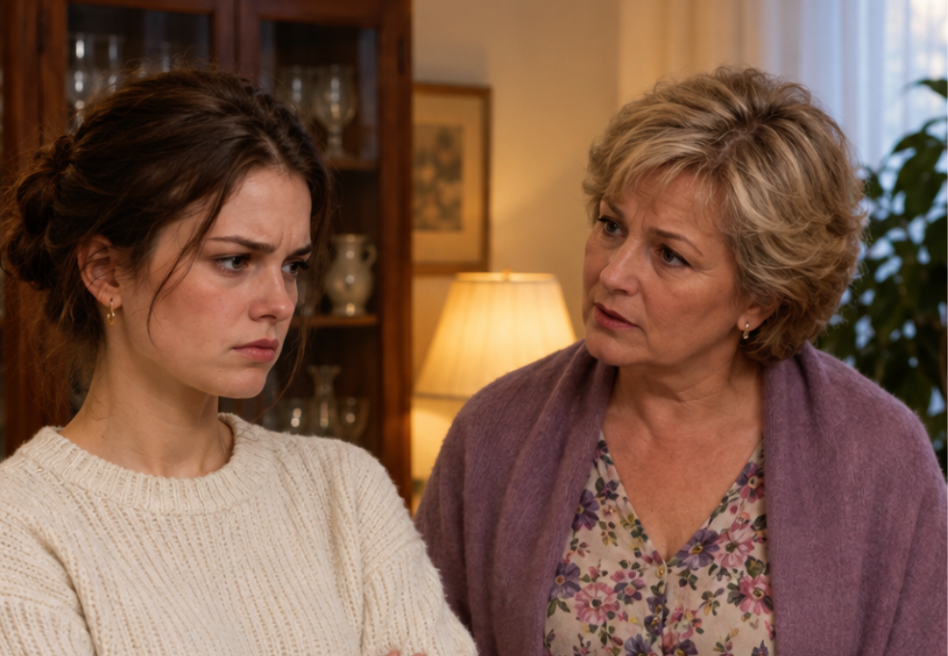
“Nice apartment you’ve got, Dasha. Looks like it’d go for around fifteen million,” drawled her mother-in-law, casting a suspiciously thorough gaze around the rooms.
It was in September, after four years, that Larisa Pavlovna first complimented not Dasha’s cooking or the spotless kitchen, nor a new kettle, but the kitchen itself.
“It’s spacious in here. What, eleven square meters?”
Darya, just then pulling roast chicken from the oven, gave her a puzzled look.
“A little over eleven. Why?”
“Oh, nothing. Just a good layout. And windows facing the courtyard. That’s really valuable these days.”
This was particularly odd coming from a woman who’d always insisted a kitchen’s best virtue was a good extractor fan, and criticized Dasha’s household mostly for lacking a large baking dish.
Over the next weeks, Larisa Pavlovna’s fascination with real estate grew noticeably.
First she asked when the building’s pipes were last replaced. Then about the age of the kitchen cabinets. On her next visit, she dug into how far it was to the nearest metro and whether the neighbors could be heard.
Darya even asked her husband if his mom was planning to join the property management council.
Roman just laughed.
“She’s browsing property listings now. She’s tired of her own apartment. Just making comparisons.”
The explanation seemed perfectly plausible.
Larisa Pavlovna lived alone in a fourth-floor studio in an old five-story walk-up. No elevator. The clinic was a transfer away by public transit, the best grocery was two stops over.
And according to her, the upstairs neighbors had been reorganizing furniture at night—for the last ten years.
Darya suspected they just owned a huge wardrobe they could never quite find a place for.
So, a move wouldn’t surprise her. The woman was sixty-seven; stairs were getting harder. Why not look for something more convenient?
But what did any of this have to do with Dasha’s kitchen?
Darya’s own apartment was quite nice. Two rooms, sixty-three square meters, in a well-established neighborhood, metro close by.
She had bought it three years before the wedding. Her grandmother sold her summer house and helped out with cash; the rest Dasha saved up, with a small loan for what was left.
She’d paid off that loan before even meeting Roman.
When they started dating, living arrangements never came up. Roman rented a studio, Dasha owned her place. Eventually he moved in with her and a year later they married.
They’d lived four years together in that apartment.
Roman paid half the utilities, bought groceries, replaced the washing machine once, and bought a new fridge.
Dasha handled the rest of the bills, daily expenses, and most of the household upkeep. They split day-to-day costs without much drama.
Roman had never once demanded any rights to the property.
In fact, whenever friends talked about mortgages, he bragged that he and Dasha were lucky—they could live in peace instead of handing half their pay to the bank.
But suddenly, come autumn, his attitude toward housing had shifted drastically.
It started with a regular Sunday dinner in October.
Larisa Pavlovna brought homemade pickles, griped about the price of butter, and then unexpectedly decided to check out the balcony.
She lingered there a while.
Then she inspected the bathroom, studied the tiles, tapped the pipe wall, and asked how long it had been since a renovation.
“Six years ago,” Dasha replied. “Is something leaking, Larisa Pavlovna?”
“No, just curious.”
Next up was a trip to the bedroom, where she peered out the window.
Darya watched all this unfold with growing curiosity.
When her guest finally returned to the table, she wore the same pleased look as if she’d just finished a new-apartment inspection.
“Nice place, Dasha. Fifteen million, easily,” her mother-in-law repeated, now eyeing the rooms like someone mentally checking boxes on a real estate checklist.
Darya set down her fork.
“Larisa Pavlovna, another five minutes of this and I’m giving you a realtor badge. Just don’t charge me a commission.”
Roman laughed.
“Mom, seriously. Soon you’ll be asking strangers on the street for their property numbers.”
“You make it sound like there’s something wrong with knowing your own apartment’s value,” Larisa Pavlovna huffed.
The topic didn’t come up again at dinner.
But four days later, real estate was suddenly on Roman’s radar.
He got home, dropped grocery bags in the hallway, and said city life was becoming unbearable.
Darya glanced outside.
The janitor was gathering leaves, two pensioners chatted by the entrance, and on the playground, a boy pleaded for a scooter. Nothing catastrophic.
“What’s wrong?” she asked.
“I’m just tired of it all. Nowhere to park in the evenings. Neighbors. Noise. I want my own space.”
Roman worked as a mechanic and loved his car—he’d sometimes circle for a while looking for a spot.
But he’d never wanted to move because of it.
“If only we had a house,” her husband continued. “Our own yard, a garage. I’d have an office upstairs. Summers we could grill outside, no one complaining.”
“And who’ll shovel the snow in winter?” Darya teased.
“I will.”
“Weren’t you the one who said country living means swapping elevators for shovels by choice?”
“People change their minds.”
Hard to argue with that.
The next evening Roman showed her a home listing—seventeen million eight hundred thousand.
A beautiful two-story house with a giant kitchen-living area, four bedrooms, land, and a carport.
Darya admired the terrace in the pictures, then handed back the phone.
“Lovely. Why show me?”
“Just curious.”
Then came a house for eighteen million two hundred. And another for nearly nineteen.
Darya watched as he scrolled listings, compared plots, calculated heating, checked maintenance costs.
One day she asked where they’d get that kind of money.
“We weren’t planning to buy anything.”
“I’m just dreaming,” Roman replied. “Dreams are still free.”
Darya remembered that line.
Especially the following Thursday, when a call came from a strange woman.
“Darya Sergeyevna? Hello. I’m Irina from a real estate agency. Can we discuss the value of your apartment?”
Darya was at work and assumed it was just a marketing cold call.
“Which apartment?”
The woman gave the correct address, floor, and size.
“We’ve had a request for a valuation ahead of a possible sale. Wanted to ask when you could meet our specialist.”
“Who made the request?”
“Roman. He said he’s your husband and that you’re both discussing a sale.”
Darya paused for several seconds.
“Did he not mention that I own the apartment?”
“He told me. That’s why I’m calling you directly.”
From her tone, the agent realized this was awkward.
She clarified no ad had been posted; Roman only requested an estimate and timeline.
Darya thanked her and asked that nothing be done without her say-so.
She stared at her phone for a while afterward.
She wasn’t even angry yet.
Instead—curious.
Turns out her husband wasn’t just daydreaming anymore. Those free dreams now involved a real estate agency and a schedule.
Darya didn’t confront him that night.
Roman came home tired, ate, grumbled about a customer who thought brakes could wait for his next paycheck, and went off to watch TV.
Darya turned on the home computer.
They both used it: she for spreadsheets, he for movies, car parts, and household shopping.
The browser history was packed with property ads.
But more fascinating, she found an Excel file titled “House. Options.”
She opened it.
First line: her apartment, fifteen million.
Second: Larisa Pavlovna’s, five million.
Total: twenty.
Next: the targeted house—eighteen million.
The remaining two million set aside for renovations.
Darya reread the numbers.
Someone in their household was extremely business-minded, budgeting a deal with money from properties owned by others.
Next tab: more math.
Roman’s backup plan—sell his mother’s apartment after the move, take a mortgage for three million in the meantime, then pay it off when the studio sold.
Smooth: fifteen million from Dasha, three million from the bank—buy the house. Then five million from the mother—three back to the bank, two for repairs.
No mention of interest, transaction costs, or moving expenses.
Apparently, Roman figured those would vanish purely out of respect for family initiative.
Darya was about to close the laptop when she spotted an open messenger chat.
A conversation with Larisa Pavlovna was right there on the screen.
There, the dreams had gotten even more elaborate.
Her mother-in-law had already toured a specific house outside the city. She liked the first-floor bedroom, the garden access, and being spared the stairs.
Roman planned to take the second floor with his wife. He wanted to make one room into an office.
The house was to be co-owned by the couple, with lifetime residency for his mother.
Darya read through the thread more than once.
The sneakiest part wasn’t even the scheme itself.
Mother and son had agreed not to outright propose selling Dasha’s flat.
Larisa Pavlovna figured her daughter-in-law would refuse if money talk came up directly.
So Roman was to lure her with beautiful home photos, garage stories, and tales of fresh air—slowly nudging her toward a move.
Then, “by accident”, he’d find the perfect house—the one he and his mother had already discussed.
One message, in particular, urged patience.
“Let her get used to the idea herself. That way it won’t feel like we’re pushing her.”
Darya leaned back in her chair.
It looked like they meant to convince her—so gradually she wouldn’t even realize it was happening.
In the kitchen, the fridge started humming.
The very one Roman once bought.
Continued just below in the first comment
In September, for the first time in four years, Larisa Pavlovna actually praised Dasha’s kitchen. Not the dinner she had cooked, not the cleanliness, not even the new kettle—specifically, the kitchen itself.
«You’ve got a spacious one here. Must be about eleven square meters, right?»
Darya, as she was taking a chicken out of the oven, looked at her mother-in-law in surprise.
«A little over eleven. Why?»
«Oh, nothing really. Just good layout. And those windows overlooking the courtyard… that’s a great feature these days.»
This sounded especially odd coming from a woman who always said the most important thing in a kitchen was a good extractor fan, and who considered the biggest flaw in Dasha’s housekeeping the lack of a large baking dish.
Over the next few weeks, Larisa Pavlovna’s interest in real estate grew noticeably.
First she asked when the pipes in the building had been replaced. Then she wanted to know the age of the kitchen cabinets. On her next visit, she found out how far it was to the metro and whether the neighbors could be heard.
Darya even asked her husband if his mother was planning to join the building management company.
Roman just laughed.
«She’s browsing listings right now. She’s tired of her own apartment. That’s why she’s comparing things.»
That explanation actually made a lot of sense.
Larisa Pavlovna lived alone in a one-bedroom apartment on the fourth floor of an old five-story building. No elevator. To get to the clinic, she had to make a transfer; the nearest decent shop was two bus stops away.
And according to her, the neighbors upstairs rearranged their furniture at night—this had apparently been going on for ten years.
Darya suspected the neighbors just had a really large wardrobe they couldn’t quite fit anywhere.
But it wouldn’t surprise her if her mother-in-law was thinking about moving. She was sixty-seven now, and her legs were tired of all those stairs. Why not find somewhere more convenient?
But what did Dasha’s kitchen have to do with any of this?
Darya’s apartment was actually quite nice. Two rooms, sixty-three square meters, in an established neighborhood with the subway nearby.
She had bought it three years before the wedding. Back then, her grandmother sold her summer cottage to help Darya with the money. Darya saved up the rest herself, and the small amount she was short she took out as a loan.
She’d paid off the loan before she even met Roman.
When they started dating, housing wasn’t even a question. Roman had a rented studio, and Darya owned her place. After a while, he moved in with her, and a year later they got married.
Altogether, they’d lived in that apartment for four years.
Roman paid half the utility bills, bought groceries, once replaced the washing machine, and later bought a new fridge.
Darya, for her part, covered the rest of the utilities, household expenses, and most small repairs. They managed their everyday spending without much argument.
Her husband had never made any claims to the apartment’s ownership.
In fact, when friends talked about mortgages, he loved to say how lucky he and Dasha were—they didn’t have to hand half their paycheck over to a bank.
But then suddenly in autumn, his views on their housing situation seemed to change completely.
It all started with a typical Sunday dinner in October.
Larisa Pavlovna brought over some homemade pickles, complained about the price of butter, and then—quite unexpectedly—headed off to inspect the balcony.
She stayed out there for a long time.
Then she went into the bathroom, gave the tiles a careful look, tapped on the wall near the riser, and asked, «When was this last renovated?»
«Six years ago,» Darya replied. «Larisa Pavlovna, is there a leak or something?»
«No, not at all. Just curious,» said Larisa Pavlovna.
After the bathroom, she peeked into the bedroom and looked out the window.
Darya watched all of this unfold with growing curiosity.
When their guest finally made her way back to the table, she looked so satisfied you’d think she’d just completed an apartment inspection in a brand new building.
«Not a bad place you have here, Dasha. I’d say it’s worth about fifteen million,» Larisa Pavlovna drawled.
She glanced around the rooms again, this time with the air of someone mentally adding checkmarks for every feature.
Darya set her fork down.
«Larisa Pavlovna, five more minutes of this inspection and I’m going to write you a realtor’s badge. Just don’t charge me a commission.»
Roman burst out laughing.
«Mom, seriously. Soon you’ll be stopping people on the street asking for cadastral numbers.»
«As if it’s bad to know the value of your own apartment,» Larisa Pavlovna retorted, a bit hurt.
They didn’t come back to the topic for the rest of dinner.
But four days later, Roman himself started showing interest in real estate.
He came home from work, left the grocery bags in the hallway, and announced that city living was slowly becoming unbearable.
Darya glanced out the window.
Outside, the janitor was gathering leaves, two retirees chatted by the entrance, and on the playground, a boy tried to convince his mother to buy him a scooter.
Nothing catastrophic seemed to be happening.
«What’s wrong?» she asked.
«I’m just fed up. Nowhere to park in the evenings. The neighbors, the noise. I want my own space.»
Roman worked as a service advisor at an auto repair shop. He loved his car and really did circle the block sometimes just looking for a spot.
But before, this never made him want to move.
«If only we had a house,» he went on. «A yard, a garage. I’d make an office upstairs. In summer, we could grill meat and not bother anyone.»
Darya smirked.
«And who’s going to shovel snow in the winter?»
«Me.»
«You used to say that country living is just voluntarily trading an elevator for a shovel.»
«People change their minds.»
Hard to argue with that.
The next evening, Roman showed her a listing for a house going for seventeen million, eight hundred thousand.
It was a beautiful two-story home with a spacious kitchen-living room, four bedrooms, a yard, and a carport.
Darya looked through the photos, complimented the terrace, and handed back the phone.
«It’s nice. But why are you showing me this?»
«Just thought it was interesting.»
Then there was a house for eighteen million two hundred thousand. And another one—nearly nineteen million.
Each evening, her husband would scroll through listings, compare yards, discuss heating systems, and figure out how much it would cost to maintain a house outside the city.
One day, Darya finally asked where they were supposed to get that kind of money.
«We weren’t even planning on buying anything.»
«Well, I’m not actually buying anything,» Roman replied. «Dreaming is still free for now.»
That phrase stuck with Daria.
She remembered it especially well the following Thursday, when she got a call from a woman she didn’t know.
«Daria Sergeevna? Good afternoon. My name is Irina, I’m with a real estate agency. Is it convenient to discuss the evaluation of your apartment?»
Daria was at work and at first thought it was just another marketing call.
«Which apartment?»
The woman named the address, the floor, and the square footage.
«We have a preliminary request for an evaluation before a possible sale. I wanted to check when would be a good time for you to have a specialist visit.»
«Who submitted the request?»
«Roman. He introduced himself as your husband and said you were discussing the idea of selling.»
Daria was silent for a few seconds.
«Did he tell you that the apartment belongs to me?»
«Yes, he did. That’s why I’m reaching out to you directly.»
From the agent’s voice, she clearly realized she was now in an awkward situation.
She clarified that no one had posted an official listing for the apartment, and that Roman had only asked for a preliminary assessment and timeline for the sale.
Daria thanked the woman and asked her not to take any action without her direct consent.
After the call, she stared at her phone screen for a while.
She wasn’t even angry yet.
She was just curious.
Turns out, her husband wasn’t just dreaming. His ‘free dreams’ already involved a real estate agency and a business schedule.
That evening, Daria decided not to ask any questions.
Roman came home tired, had dinner, complained about a client who tried to prove that brake repair could wait until the next paycheck, then went to watch TV.
Daria sat down at the home computer.
They both used it. She sometimes worked on spreadsheets, Roman watched movies, ordered car parts, and searched for anything he thought useful for the household.
She discovered dozens of real estate listings in the browser history.
But what caught her attention even more was a document titled «House. Options.»
Daria opened it.
The first line listed her apartment—fifteen million.
The second line—Larisa Pavlovna’s apartment, five million.
Total: twenty.
Next was the estimated price of the house—eighteen million.
The remaining two million were budgeted for renovations and improvements.
Daria read the figures again.
There was definitely a very business-minded person in their home. He had already worked out a deal budget, even though both main sources of funding belonged to entirely different people.
In the next browser tab, she found another calculation.
Here Roman assumed that his mother’s apartment could be sold after they moved into the house. For this, he planned to take out a mortgage for the missing three million and then repay it with the money from the sale of his mother’s place.
It looked neat: fifteen million from Dasha plus three million from the bank—to buy the house. Then five million from his mother: three to pay off the bank, two for renovations.
Interest, transaction fees, and moving expenses weren’t included in the spreadsheet.
Apparently, Roman was hoping that out of respect for family initiatives, those would just magically disappear.
Daria was about to close the computer when she noticed the open messenger.
A conversation with Larisa Pavlovna was right there on the screen.
And the dreams they had there were a lot more detailed.
His mother had already gone to check out a specific house in a suburban settlement. She liked the room on the ground floor, the access to the garden, and the fact she wouldn’t have to climb stairs every day.
Roman was planning to occupy the second floor with his wife. He already had plans to turn one of the rooms into an office.
The idea was to make the house joint property of the spouses, while ensuring his mother would have lifelong residence.
Daria went through the chat messages several times.
What bothered her most wasn’t even the plan itself.
Mother and son had already agreed that it was best not to suggest selling Daria’s apartment outright.
Larisa Pavlovna was convinced her daughter-in-law would refuse right away if she heard anything about money.
So Roman was supposed to start by showing attractive pictures of houses, talking about garages and fresh air, and gradually guiding his wife toward the idea of moving.
Then, as if by chance, he would stumble upon the very house he and his mother had already discussed.
In one message, his mother insisted emphatically not to rush things.
«Let her get used to the idea herself. That way, she won’t feel like we’re trying to convince her.»
Daria leaned back in her chair.
It turned out, they were going to persuade her for so long that she’d no longer even realize she was being persuaded.
The fridge hummed in the kitchen.
The very same fridge that Roman had once bought.
Daria looked toward it and unexpectedly found herself thinking that, in their household budget, the fridge was probably already listed as one of her husband’s investments.
She wrote down the main figures and the address of the chosen house for herself, closed the spreadsheet and the still-open chat.
Then she went to wash the dishes.
Roman peeked into the kitchen.
«Why are you so quiet?»
«I’m counting.»
«Counting what?»
«Family prospects.»
Her husband nodded, suspecting nothing, and asked if there was any chicken left.
In the following days, Daria kept an eye on things.
Suddenly, Roman started enthusiastically listing the benefits of country living, as if he had just become a real estate agent out there.
He showed her photos of spacious living rooms, talked about peace and quiet, his future garage, and the lack of parking problems.
Once he even mentioned that you could grow your own tomatoes in a house outside the city.
This especially amused Daria.
It was funny to imagine someone who had forgotten to water their only houseplant for three years planning to provide the family with homegrown vegetables.
«Will your mom be comfortable there?» she asked one day.
Roman hesitated a bit.
«Well, it depends on the settlement. Some have shops, buses.»
«And a clinic?»
«She could go to the city.»
Daria was surprised by this logic. Right now, it was inconvenient for Larisa Pavlovna to get to the clinic, which was why she wanted to move. Yet after buying the house, it was somehow supposed to become enjoyable to make those trips.
But her husband had already changed the subject.
On Sunday, Larisa Pavlovna came over.
She brought pie, criticized the tea for not being strong enough, and started talking about an acquaintance who supposedly had just bought a house outside the city.
«Imagine, Dasha, they have their own veranda. In the summer, you can have breakfast right outside. And there’s no one walking above your head.»
«What about winter?»
«Well, in winter you eat inside. But at least the air is wonderful.»
Roman backed up his mom. Together, they painted such a wonderful picture of country living for Daria that you had to wonder why anyone would choose to live in an apartment at all.
That’s when Daria decided to give the family strategists a little help.
«You know, I’ve also been thinking about real estate lately,» she said.
Roman immediately put down his phone.
Larisa Pavlovna stopped stirring her tea.
«Really?» she asked cautiously.
«Yes. In fact, I’ve decided to make a few changes.»
«What exactly?» her husband quickly inquired.
Daria smiled.
«I’ll tell you tomorrow. I want to think about one more thing.»
Her mother-in-law didn’t make a single comment about the tea after that.
In fact, when she left, she complimented the pie—even though she had baked it herself.
That evening, Roman was suspiciously attentive.
He cleared the table himself, loaded the dishwasher, and even suggested they watch the movie Daria had been wanting to see for ages.
Daria didn’t refuse.
She was curious to see just how motivated someone could get at home when the thought of fifteen million was on the line.
The next day, the conversation happened after dinner.
Roman sat down on the couch next to his wife and asked,
«So, what was it you wanted to say yesterday?»
«I’ve been thinking about the house. And I’ve decided I’m not opposed to the idea of owning a place in the country one day.»
Her husband visibly perked up.
«See! I told you—life out there is just on a different level.»
«But we’re not selling my apartment.»
Roman fell silent.
«What do you mean?»
«Just that. It’s my apartment. I bought it for myself, and I’m not going to give it up for a share in a house.»
«Hold on, no one’s asking you to sell your apartment right this second.»
«Of course. First you’ll show me the photos, then spend weeks talking about barbecues, and only after that make the suggestion.»
Her husband looked at Daria closely.
She went on:
«If you want a house, we can start saving for a down payment from our income. We’ll see how much we can actually put aside, look at our expenses, and decide if we can even afford a house. But not now, and not with the money from my apartment.»
Roman was silent for a while.
«And what about Mom?»
«Mom can sell her one-bedroom and get a place closer to us. I’ll even help her pick out a neighborhood. She’ll have an elevator, nearby shops, and a clinic without having to change buses. That’s what she said she wanted, right?»
«You do realize you can’t buy a good apartment in our area for just five million.»
«I do. So she’ll need to look for something smaller and see what she can add to her budget. But at least it’ll be her decision.»
Her husband got up, paced around the room, and stopped by the window.
«You talk like we were trying to take something from you.»
«Weren’t you?»
«Dasha, we were just looking at our options.»
«With Irina from the agency?»
Roman turned around.
«What Irina?»
«The one you asked to appraise my apartment.»
After that, it got noticeably harder to talk.
Daria explained that the agent had called her directly. She then stated the price of the chosen house and the amount her husband wanted to take out on a mortgage.
Roman sat back down.
«You looked at my calculations?»
«On our computer. You even had your chat with your mom open.»
He rubbed his face with his hands.
«Well, that’s unpleasant.»
«It is for me too.»
— We didn’t do anything. We were just talking.
— Roma, just looking at a listing is talking. Calling the agent and asking them to appraise someone else’s apartment? That’s already starting to sound more like a business operation on foreign territory.
Her husband smirked involuntarily, but quickly became serious again.
— I meant well. It would be more spacious for both of us. And it would be convenient for Mom too.
— And why didn’t you tell me about this?
Roman spent a long time searching for an answer.
— Because you would have said no immediately.
— So you knew what my answer would be. Instead of just hearing it, you tried to come up with a way to change my mind.
He didn’t argue with that.
Daria pulled out a sheet of paper and put it in front of him.
— Here’s your estimate. Fifteen million from me. Five million from Mom. And what are you contributing?
— I’d take out a loan, do the renovations. I have a car, I could haul everything.
— You planned to pay off the loan by selling Mom’s apartment. Were you going to sell your car too?
— No.
— So, we’ve got two investors and one person with a trunk.
Roman looked at the paper.
— You think this is funny.
— Not really.
He kept trying to explain that the house would still be the family’s, that he’d never try to deceive her, and that his mother just dreamed of a peaceful retirement.
Daria never denied her mother-in-law’s right to dream, or her husband’s wish for a garage.
What she couldn’t understand was why they had decided to chase their dreams by using assets that no one even asked her if she wanted to contribute.
— I’ve lived with you for four years, Roman said. Do you really think I was planning to take everything from you?
— I never even thought about it—until the realtor called. That’s what hurts.
The conversation ended without any loud promises.
Roman admitted what he did was wrong, though he still insisted for a long time that he didn’t see anything bad in his actions.
Daria didn’t ask for any immediate vows.
She just said there should be no more talks about her apartment. And if they ever decided to buy property together, they would discuss the terms as a couple first—before involving any relatives.
This time, her husband agreed.
Larisa Pavlovna took this news much worse.
Two days later, she called Daria and said she never thought Daria would be so attached to square meters.
— I’m not a stranger. We’re family.
— Of course, we’re family, Daria replied. That’s exactly why I have no intention of leaving you without a roof over your head.
— What does that have to do with it?
— You have your own apartment, I have mine. Everyone’s got a place to live. That’s a rare win these days.
Her mother-in-law was offended.
She was especially hurt by the suggestion to buy a smaller apartment closer to her son.
— I’ve lived in spacious rooms all my life, and now I’m being offered some kind of tiny box!
Daria reminded her that Larisa Pavlovna currently has a one-room apartment.
But for some reason, that argument ruined the conversation completely.
For almost a month, her mother-in-law mostly talked to Roman.
Her son would visit on weekends, bring groceries, and listen to complaints.
One day he came home looking thoughtful.
— Mom says she doesn’t want to sell the apartment at all.
— Then she shouldn’t, if she doesn’t want to.
— But she’s having a hard time living there.
«These are two different problems, Roma. If climbing to the fifth floor is hard, we should look for an apartment with an elevator—not a house for eighteen million that’s hard to get to from the city.»
Her husband didn’t say a word.
But in December, he came home not with photos of cottages, but with ads for smaller apartments in buildings with elevators.
He showed them to Daria and asked which neighborhood she thought would be most convenient for his mother.
This time, he didn’t make any calls or leave any requests.
Daria helped check out the transportation options, nearby shops, and where the clinics were located.
At first, Larisa Pavlovna rejected every option.
One building was too close to the road, another too far from the bus stop, and at a third, she didn’t like the entryway.
But after another grocery run up to the fifth floor, her mother-in-law herself asked her son to show her the apartment she once said was too small.
It was only thirty-two square meters, but it had an elevator, a decent courtyard, and a shop right across the street.
In January, Larisa Pavlovna went to see it.
She visited once more.
On the third visit, she brought along a friend who knew about renovations.
By the end of February, she had sold her old apartment for about the five million she expected and bought the new one, using some of her own savings as well.
She handled both transactions with a realtor. Roman helped with trips, paperwork, and moving.
Daria only got involved when asked.
It was during this time that she noticed a change in her husband.
When Larisa Pavlovna asked about taking the large dresser she liked from their place, Roman didn’t promise his wife’s furniture on her behalf.
«Mom, the dresser belongs to Dasha. Ask her.»
Her mother-in-law asked.
Daria said no, because she needed the dresser herself.
Roman didn’t argue. Instead, he helped his mother pick out a suitable wardrobe at the furniture store and brought it to her in his car.
The trunk was finally put to good use for the family’s property.
By March, Larisa Pavlovna had settled in nicely at her new place.
Now it was only a three-minute walk to the store and ten minutes to the clinic.
She could still hear the upstairs neighbors, but now it was just normal footsteps instead of endless furniture moving.
«At least people actually sleep at night,» she reported with satisfaction.
Daria was glad for her mother-in-law.
It turned out, you really can improve the living situation of an elderly woman without selling someone else’s apartment.
Her relationship with Roman was rebuilding more slowly.
Daria hadn’t forgotten how easily her husband took charge of her property without asking. But she could see he’d stopped trying to make every decision for her.
One day, he suggested opening a separate savings account for a future house down payment, should they decide to go for it. They agreed to only add money left over from their regular expenses.
No more sales, secret appraisals, or family meetings.
Roman even stopped sending her listings unless she asked.
Although, every so often, he still showed her photos of especially beautiful garages.
Daria didn’t mind that.
At least a garage couldn’t be bought with optimism alone.
In April, she decided to order an independent appraisal of her own apartment.
Not for selling.
She just wanted to know how much the place was really worth—the home that had been the center of other people’s plans for months.
The expert walked through the rooms, checked the paperwork, compared similar listings in the neighborhood, and then prepared a report.
He valued the apartment at nearly sixteen million rubles.
Daria reread the result and burst out laughing.
Larisa Pavlovna had been off by nearly a million.
And actually, she had underestimated it.
That evening, her mother-in-law called and shared that she’d finally found a great produce shop near the new place. The tomatoes were decent, the saleswoman polite, and—best of all—nobody had to trudge up to the fifth floor with heavy bags anymore.
Then she asked how the young couple was doing.
«We’re fine,» said Daria. «Working, living.»
«So, have you thought about changing your apartment?»
Daria glanced at the appraisal report lying next to her laptop.
«No, Larisa Pavlovna. We’re happy with everything we have.»
«That’s good. These days, it’s better not to rush with real estate.»
Daria found this advice especially valuable.
Just half a year ago, her mother-in-law was eager to swap Daria’s apartment for half a house outside the city. Now, she was all for treating property with caution.
Still, Daria chose not to remind her about the past.
She filed the report away with her other documents and went to the kitchen, where Roman was trying out a new recipe for dinner.
Something was hissing suspiciously on the stove.
«Hey,» her husband asked, «do we have a big roasting pan?»
Daria looked at him.
«No. Your mother has considered that the apartment’s biggest drawback for four years now.»
«We need to buy one.»
«We will. But first, let’s discuss the budget.»
Roman smiled.
«I’m sure we’ll come to an agreement about the pan.»
And they really did agree.
As for the fact that her apartment turned out to be almost a million more valuable than her mother-in-law’s earlier estimation, Daria chose not to tell any of the relatives.
After all, to someone who has once spent fifteen million of someone else’s money in their mind, it’s probably best not to trust even an extra theoretical million.