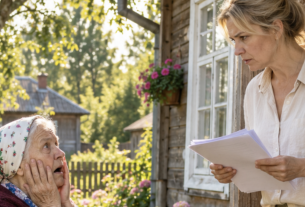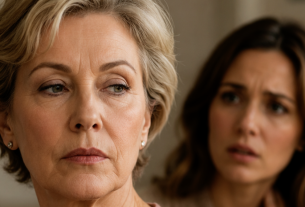
Inga closed the door to her beauty clinic and let out a deep sigh. It had been a tough day—three appointments back to back, a client with difficult skin demanding almost instant results, and a mountain of paperwork to get through. But now, at last, it was time to head home—to the very same two-room apartment her grandfather had left just for her. Not for her brother, not for any other relatives—Inga alone. When her grandfather passed away six months ago, the family was at first quietly puzzled, but soon enough the talk started: the apartment should have gone to someone else. They claimed her grandfather wasn’t of sound mind when he wrote his will. Inga remembered how Aunt Zoya hissed at the memorial service, saying young people didn’t need such housing and could always find somewhere else to live. But her grandfather always told Inga she was the only one who visited him outside of the holidays.
The paperwork went through without any issues. The notary explained everything clearly: the apartment belonged entirely to Inga Sergeyevna. No shares, no co-owners. Artem was even happier than Inga—finally, they could leave that shabby rented studio with the leaking pipes and a landlady who raised the rent every month. Artem’s work was hit or miss; sometimes he’d land a design project, sometimes he’d stay home for months, learning new programs and promising things would turn around soon. Inga wasn’t too worried—her cosmetology business provided a steady income, and at least her husband didn’t drink or cheat. He was just a dreamer, always planning, and calling his mother every night.
Lidiya Ivanovna lived on the other side of the city in a Soviet-era Khrushchev apartment she’d bought long ago. It was decent, but she was always complaining—about noisy neighbors, a broken elevator, or the smell in the stairwell. At first, Inga was sympathetic, but she soon realized Lidiya Ivanovna simply loved to complain—about her health, loneliness, and how rarely her son visited.
“Artem, my blood pressure is up again,” his mother would say loudly into the phone, so loudly Inga could hear every word from the kitchen. “The doctor says it’s my nerves. How can I not be nervous, living alone like a dog?” Artem always responded sympathetically, promising to visit and bring medication. Inga stayed silent. Everyone has their own parents, their own problems. Lidiya Ivanovna wasn’t old—at sixty-two, she was quite capable of taking care of herself. Her pension wasn’t small either—she had worked as an accountant at a big company up until retirement.
Three weeks ago, though, she called Inga directly instead of Artem. “Inga dear, I have a favor to ask,” Lidiya Ivanovna’s voice sounded particularly whiny. “My teeth are ruined, I need dental work. I can’t afford it—it’ll cost at least forty thousand. The doctor said so.” Inga could see where this was going. “Could you help? I’ll pay you back when I get my pension.”
“Lidiya Ivanovna, it’s a tough time for me right now,” Inga tried to be gentle. “I’m updating my equipment, paying off a loan, and we’re planning to renovate the apartment.”
“But you have your own apartment now. Surely you can spend a little on your husband’s mother’s health?”
Inga felt her neck muscles tighten. So it began—the apartment wasn’t just hers anymore, it was “theirs.” Shared property, so expenses should be shared, too. “You could go to the clinic, they do good work there as well,” Inga suggested.
“The clinic has lines, and I’m in pain. I thought my daughter-in-law would understand.”
After that conversation, Artem changed. He didn’t say a word about it, but Inga noticed—he was offended. He was gloomy, gave short answers, and his nightly calls to his mother lasted longer and became quieter. He’d close himself in their bedroom to talk, making sure Inga couldn’t hear. She tried not to let it bother her. Maybe it was just work stress, or he was having a bad week. It happens. Inga was busy with her own affairs—clients, procedures, ordering new equipment.
Last night, Artem didn’t speak at all. He ate dinner in silence, watched TV, and went to sleep. Inga thought tomorrow it would get better. They’d talk.
But that day, climbing the stairs to her third-floor apartment, Inga saw something strange. Two huge suitcases and a rolling bag stood by her door—the kind you take for a long trip or a move. She froze. Maybe her neighbors were moving? But the bags were right in front of her door. The door was ajar. Inga pushed it open and stepped into the hallway.
“Ah, Inga’s home!” came a familiar voice from the kitchen. There, in slippers and a bathrobe, stood Lidiya Ivanovna, sipping tea and eyeing a painting Inga and Artem had just bought last week.
“Nice apartment,” Lidiya Ivanovna said, as if inspecting merchandise. “Bright. High ceilings.”
“Lidiya Ivanovna, what’s going on?” Inga set down her bag and took off her coat. “Where’s Artem?”
“In the kitchen. Making tea.”
Inga walked in. Artem stood at the stove, avoiding her gaze.
“Explain what’s happening,” Inga tried to keep calm.
Artem turned, his face set with a stubborn, guilty look.
“Mom’s moving in with us.”
“What do you mean, moving in?”
“Just that—she’ll live here.”
Inga looked at him, then at Lidiya Ivanovna appearing in the kitchen doorway.
“Did anyone ask me?”
“Inga, don’t start,” Artem said, putting the kettle on. “Mom lives alone, it’s hard for her. We have space.”
“Space in my apartment?”
“In our apartment.”
Inga sat down—her head hurt. “Artem, this is my apartment. Legally. By inheritance.”
“We’re family,” Lidiya Ivanovna chimed in. “Why divide things between relatives?”
“You have your own apartment, Lidiya Ivanovna.”
“I do. But it’s scary alone. Here, I’ll be with family.”
Inga went to the window. Streetlights came on through the gathering dusk. Just this morning, this had been her home. Now it felt like anyone could live here—if Artem decided so.
“I don’t agree,” Inga said without turning.
“With what?” Artem asked.
“With Lidiya Ivanovna living here.”
Silence. Only the kettle heating up.
“Inga,” Artem’s voice was harder, “this is my mother. She has the same right to be here as you.”
Inga turned. “What right?”
“The right as family. We’re husband and wife—our parents are family, too.”
“Are you hearing yourself?”
“Yes. I’ve made my decision: Mom’s moving in. She has just as much right to this apartment as you!”
His last words were loud, close to shouting. Lidiya Ivanovna nodded as if her son was perfectly right. Inga looked at Artem and didn’t recognize him. This stubborn, angry man was not the Artem she’d married two years ago.
“I have no rights to my own apartment?” she asked.
“You do. But no more than my mom.”
“On what documents does Lidiya Ivanovna have rights to my apartment?”
“Family documents,” her mother-in-law chipped in. “Artem is my son, you’re his wife. We’re all one family.”
Inga put her hands on the table. “You have your own good apartment, Lidiya Ivanovna. Why do you need another?”
“Why do you need two rooms for just two people?” her mother-in-law retorted. “No kids yet, too much space. I’m an old woman alone.”
“You’re sixty-two.”
“So? That’s old?”
Artem poured tea into three cups and set them on the table.
“That’s enough arguing. The decision is made. Mom stays.”
“By whom?” Inga asked.
“Me. I’m the head of the family.”
Inga stared at him. Head of the family? The same Artem who hadn’t held a full-time job for half a year and lived off her income?
“Artem, you haven’t worked in four months.”
“What’s that got to do with it?”
“Everything. I got this apartment. I pay the utilities, buy the groceries.”
“But I did the renovations!” Artem protested. “Who put the wallpaper up? Who fixed the plumbing?”
“With my money.”
“So in your mind, whoever earns decides everything?”
Inga looked at her mother-in-law, then back at Artem.
“In this case, yes.”
Lidiya Ivanovna sniffed. “So you’ve shown your true colors. I thought you were a nice girl. Turns out you’re a witch.”
Inga felt her face flush. Her hands balled into fists.
“What did you say?”
“What I think. A witch. You’re driving my son away from his mother, throwing your money in our faces.”
“Lidiya Ivanovna, pack your things and leave. Now.”
“I’m not going anywhere,” her mother-in-law sat down and took a deliberate sip. “My son invited me, I’ll live here.”
Inga turned to Artem.
“Did you hear what your mother called me?”
“I did. So what?”
“She called me a witch in my own apartment!”
“And how are you talking to her? Like she’s staff or something.”
“I’m talking like the owner to an uninvited guest.”
“Uninvited?” Artem slammed his palm on the table. “She’s my mother!”
“I didn’t invite her!”
“I did!”
“You had no right not to ask!”
“I did! I’m your husband, this is my home too!”
Inga fell silent. She looked at Artem, realizing that something had broken—truly and finally. Her husband stood red with anger, her mother-in-law sat contentedly sipping tea from Inga’s mug.
“Fine,” Inga said quietly. “Then explain what rights I have to this apartment, and what rights your mother has.”
“The same,” Artem muttered.
“On paperwork?”
“Not everything is about paperwork.”
“Then what is it about?”
“Family! We’re relatives!”
“So any of your relatives could move in here?”
“If needed—yes.”
Inga nodded. Now it was clear.
“Fine,” she said, and left the kitchen. In the bedroom, she opened the wardrobe and took out her folder of documents. Title deed, deed of gift from her grandfather, certificates from the city office—all in her name. She brought them into the kitchen.
“Here,” she put the papers in front of Artem. “Read.”
He took the deed reluctantly.
“And?”
“Read aloud. Who’s the owner?”
“Sinitsyna Inga Sergeyevna.”
“Anyone else?”
“Just you.”
“Exactly. No one else. Not you, not your mother.”
Lidiya Ivanovna set her cup aside.
“Those are just pieces of paper. What about conscience?”
“Conscience means everyone has their own space,” Inga replied. “You have your own apartment.”
“I don’t feel good there.”
“That’s your problem.”
“Inga, why are you being so cold?” her mother-in-law tried to hug her. “We’re family now.”
Inga pulled away.
“Lidiya Ivanovna, tomorrow morning, take your things and leave.”
“What if I refuse?”
“I’ll call the police.”
Artem looked up. “Are you serious?”
“Completely.”
“You’d call the police on your own husband?”
“On people who entered my apartment without permission.”
Her mother-in-law threw up her hands. “Imagine! Son, do you hear how she talks to us?”
“I hear, Mom.”
“And what will you do?”
Artem said nothing. Inga could see him torn between mother and wife. But the choice was made—not in her favor.
“Artem, if Lidiya Ivanovna’s things are still here by tomorrow night, I’ll contact the police,” Inga said calmly. “This is unlawful entry.”
“We’re family!” Artem shouted.
“No,” Inga replied. “We’re husband and wife. Family is when people respect each other’s boundaries.”
“What boundaries?”
“Basic ones. You can’t move family members in without your partner’s consent.”
“What if my mother is dying?”
“Lidiya Ivanovna is healthy, able, and has her own place.”
“But she’s lonely!”
“Artem,” Inga sat across from him, “listen to me. I’m going to work tomorrow. When I come back, I want just you at home. We’ll talk calmly and decide what happens next.”
“And if Mom’s still here?”
“Then I’ll go to a friend’s for a few days. After that, we’ll get divorced.”
Lidiya Ivanovna gasped. “You’d divorce over such a trifle?”
“Over the fact that my opinion is treated like a trifle.”
Artem started pacing.
“Inga, don’t threaten me.”
“I’m not threatening. I’m setting a condition.”
“What if I don’t accept your conditions?”
“Then live with your mother in her apartment.”
“And what about here?”
“I’ll live here. Alone.”
He stopped, looked at her.
“You know what you’re saying?”
“I do.”
“We love each other.”
“Love isn’t just fancy words, Artem. It’s respect. And you don’t respect me.”
“How can you say that?”
“You brought your mother into my apartment without even asking me.”
“I thought you’d understand.”
“And I thought you’d understand I don’t want to live with a mother-in-law.”
Lidiya Ivanovna snorted. “Look at her, acting like a princess. Too good for her mother-in-law.”
“You’re right, Lidiya Ivanovna—I don’t want to live with you,” Inga replied. “We have different habits, schedules, values.”
“My son and I have the same values,” her mother-in-law said.
“Then you two can live together.”
Artem sat back down. “Inga, let’s find a compromise.”
“Like what?”
“Mom stays for a month—gets used to it, and then we decide.”
“No.”
“Why not?”
“Because a month will turn into six, six into a year. I don’t want to live with a stranger.”
“My mother isn’t a stranger!”
“To me, she is.”
Silence. Just the ticking of the clock and traffic outside.
“Okay,” Artem finally said. “Mom, pack up. We’ll go to your place.”
“What? Where will we live?”
“At your place for now.”
“Then what?”
“We’ll figure it out.”
“Are you really kicking me out for her?”
“I’m not kicking anyone out. We just need to think.”
“About what? A wife should accept her husband’s parents!”
“She should,” Artem agreed, looking at Inga. “But apparently, not everyone thinks like that.”
Inga stood up. “Call me when you decide where you stand. Right now, go pack.”
“Go where?” Artem said.
“To Lidiya Ivanovna’s. You two can talk it over there.”
“And you?”
“I’ll be at home.”
“So you’re throwing us out?”
“I’m giving you time to think.”
“This is stupid, Inga!”
“No, Artem. Stupid was thinking you could decide my life without me.”
Lidiya Ivanovna began making a scene while packing, complaining loudly. Artem helped her reluctantly, glancing at Inga every so often.
“Inga,” he said when the bags were packed, “I’ll come by tomorrow. We’ll talk properly.”
“Fine.”
“You won’t change your mind?”
“No.”
“And if I choose my mom?”
Inga gazed out into the dark street.
“Then bring the divorce papers tomorrow.”
Artem and Lidiya Ivanovna left. The flat was quiet again. Inga walked from room to room, checked the locks, turned off the kitchen lights. That evening changed everything. She realized—no one has the right to decide where she lives or how she lives, except her.
The next day, Artem didn’t come. He didn’t call or text. Inga worked, saw clients, performed procedures, and came home at night to an empty apartment. The quiet didn’t bother her—in fact, for the first time in ages she felt at peace.
Three days later, Artem finally messaged: “Mom’s sick. I can’t leave her.”
Inga replied: “Understood.” That was the last they spoke. A week later, Inga went to the registry office and filed for divorce. The process was simple—no joint assets, no children, no claims. The papers were signed quickly, and the divorce was granted without fuss.
That night, Inga sat in her kitchen, sipped tea, and looked at the divorce certificate. Strangely, there was no bitterness—just relief and the calm understanding that she owed no one any explanations for why the apartment was hers at last. On the table lay new keys—to the new locks she’d had installed. Now the ap