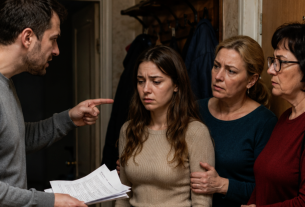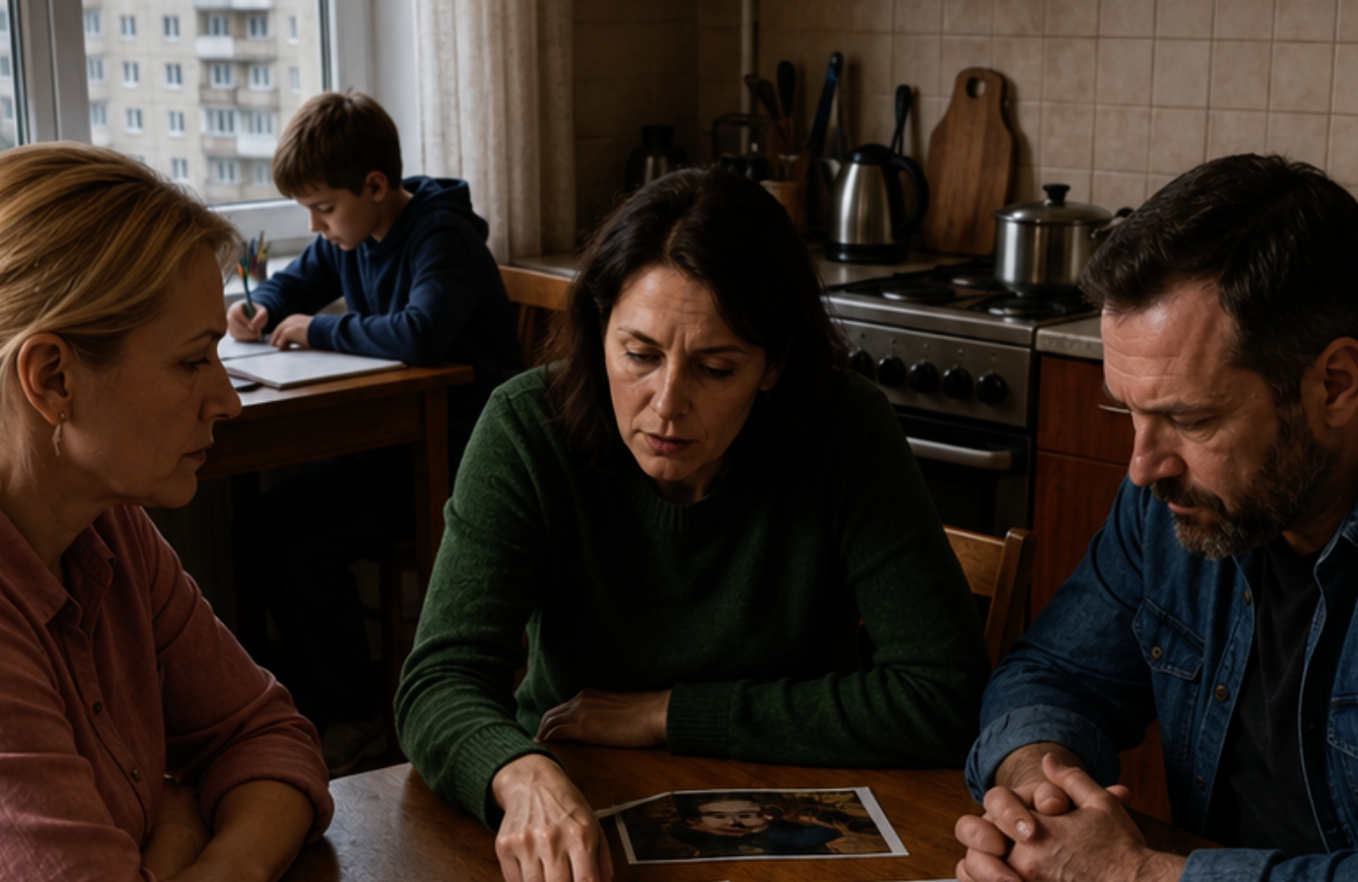
“She had spent four months working evenings, carrying a difficult project on her shoulders, and waiting for the bonus as if it were a lifeline. Meanwhile, her husband had already promised all the money to his sister for a new car, even though Nastya herself had not received a single ruble yet.”
Nastya was 35 years old. She lived in Nizhny Novgorod with her husband, Maxim, 38, and their nine-year-old son, Kirill. She worked as the head of the customer relations department at a company that sold equipment for cafés and bakeries. The job was stressful: phone calls, complaints, delivery deadlines, managers who mixed up documents, and customers who believed everything should have arrived yesterday.
Nastya’s regular salary was 105,000 rubles. Maxim worked as an engineer and earned about 92,000 rubles. On the surface, the family was not struggling, but in reality the money disappeared quickly: a 53,000-ruble mortgage payment, utilities, groceries, school expenses, their son’s extracurricular activities, a loan for the kitchen renovation, and the never-ending category of “unexpected expenses.”
Nastya had been waiting for the bonus for a long time. Her company had launched a major project with a chain of coffee shops, and she had practically carried the entire thing herself: approvals, deliveries, complaints, replacements, paperwork, and late-night messages from the client. Her manager had promised that if they completed everything without penalties, there would be a generous bonus.
In her mind, Nastya had already allocated the money. Part of it would go toward an early mortgage payment. Part would pay off the credit card. The rest would finally be set aside for a vacation, because Kirill had been asking to go to the seaside for two years, but they always ended up choosing kitchen repairs, dental treatment, or school uniforms instead.
Maxim knew about the bonus.
As it turned out, he was not the only one.
Her husband’s sister wanted a car, but Nastya was expected to pay for it
Maxim had a younger sister named Lena, who was 31. She worked as an administrator at a beauty salon, lived with her mother, and loved to complain that no one ever helped her in life.
In reality, people helped her regularly. Her mother bought her groceries, while Maxim paid for things such as insurance, phone repairs, and courses that Lena abandoned after three weeks.
Lena already had a car. It was old, but it still ran. It was a small hatchback that started, drove, and got her to work.
But Lena decided she needed a new one. It did not necessarily have to come straight from a dealership, but it had to be respectable, recent, and attractive—something she would not be embarrassed to drive.
“I’m a girl,” she would say. “It’s scary for me to drive an old car alone.”
Every time Nastya heard this explanation, she mentally stumbled over it. She would also have enjoyed driving a newer car. Yet she took the bus because the family car was usually needed more by Maxim and their son.
One evening, Maxim came home looking excited.
“Lenka found an option. It’s a good car, and the owner needs to sell it urgently.”
“Good for her,” Nastya replied as she unpacked the groceries.
“She doesn’t have enough for the down payment.”
Nastya already understood where the conversation was heading, but she asked anyway:
“How much?”
“270,000 rubles.”
She slowly placed the loaf of bread on the table.
“And?”
Maxim spoke as casually as if the answer were obvious.
“Well, you’re getting your bonus. We’ll solve the problem for her, and then she’ll gradually pay us back.”
He did not even ask.
At first, Nastya did not become angry. Sometimes the hurt is so overwhelming that the body responds with silence before anything else.
“Maxim, I haven’t received the bonus yet.”
“But you will.”
“What if I don’t?”
“You said they promised it.”
“They promised it at work. They did not hand the cash directly to you.”
He grimaced.
“Don’t nitpick. Everyone understands that the money is coming.”
“Who is everyone?”
Maxim did not answer immediately.
That was enough.
“You already told Lena?”
He looked away.
“I said we would probably help.”
“We?”
“Nastya, we’re a family.”
She gave a bitter smile.
“A family is where people ask before making decisions, not where they distribute someone else’s bonus in advance.”
Maxim rubbed his face irritably.
“There you go again, calling it someone else’s money. We’re married.”
“And yet, despite being married, you somehow forgot to tell me that you had decided to give almost 300,000 rubles to your sister for a car.”
“Not give. Lend.”
“Without a written agreement, without a deadline, and without a repayment plan, as usual?”
He did not answer.
The answer was already lying on the table between them.
That money could have helped their own family
That evening, Nastya took out the notebook where she tracked the family budget. Maxim hated it and called it “accounting for the soul,” but that notebook had saved them from taking out new loans many times.
She listed everything line by line: 84,000 rubles on the credit card, at least 100,000 rubles toward an early mortgage payment, 36,000 rubles for Kirill’s dental treatment, 12,000 rubles for a winter coat for herself, and the vacation their son had been talking about since January.
“Here,” she said. “These are our real needs. Not fantasies. Not wishes. Real needs.”
Maxim looked at the notebook, but he did not seem to see the figures. He seemed to see his sister, who had already been allowed to get excited.
“Lena will pay it back later.”
“She has been ‘paying back’ the previous 40,000 rubles for her car repairs with words for eight months.”
“Her salary is small.”
“Then why does she need a new car?”
He flared up.
“You’re saying that deliberately to humiliate her.”
Nastya closed the notebook.
“No. I’m saying it because I’m tired of being a financial safety net for adults who buy their dreams at someone else’s expense.”
Maxim went out onto the balcony to smoke. Nastya remained in the kitchen and suddenly realized that her bonus, which did not even exist yet, had already become the subject of a family war.
It was absurd and painful at the same time.
Her mother-in-law became involved immediately
The next day, Maxim’s mother, 63-year-old Valentina Sergeyevna, called. Her voice sounded offended, although she was making a careful effort to remain polite.
“Nastenka, Maxim told me that you’re against helping Lena.”
“I’m against everyone treating my future bonus as if it already belongs to Lena.”
“Why put it so harshly? The girl needs a car.”
Nastya closed her eyes.
Lena was 31, but in her husband’s family, she was still “the girl.” Nastya, at 35, had never been treated like a girl. She was a working wife, a mother, a co-borrower on the mortgage, and a convenient source of money.
“Valentina Sergeyevna, we have our own debts and a child.”
“Lena has a life too.”
“Then she should choose a car she can afford with her own money.”
Her mother-in-law sighed.
“You simply don’t want to accept our family.”
Nastya smiled wearily into the empty room.
“I accepted your family a long time ago. But you do not get to make financial decisions for me.”
Her hands were trembling after the conversation.
Not from fear.
From anger.
Once again, they had twisted the situation so that refusing to pay for someone else’s car supposedly meant she was unloving, cold, and difficult.
The bonus was smaller than everyone had already divided up
Two weeks later, the bonus was paid.
It was not 300,000 rubles, as people in the department had hoped. After taxes and internal calculations, it came to 180,000 rubles.
Nastya looked at the payment notification and actually laughed.
It was a quiet, bitter laugh.
That evening, Maxim was the first to ask:
“Well? Did it arrive?”
“It did.”
“How much?”
“180,000.”
He fell silent.
Then he said:
“Well, we could at least give Lena 150,000.”
Nastya looked at him in such a way that he immediately stopped.
“Are you serious?”
“Nastya, she was already counting on it.”
“What exactly was she counting on? The money I earned and that no one personally promised her?”
“I promised her.”
“Then you can explain why you promised her the results of someone else’s work.”
He flushed.
“You’re going to make me look like an idiot in front of my sister.”
“No, Maxim. You did that yourself. I simply refuse to pay for the consequences.”
At that moment, something shifted in their marriage. It did not break completely, but the crack became visible.
Nastya suddenly understood that her husband was ashamed in front of his sister, but not ashamed in front of his wife, who had spent four months working late into the night.
She allocated the money in 15 minutes
Nastya picked up her phone and made three transfers.
She paid 85,000 rubles toward the credit card, 50,000 rubles toward an early mortgage payment, and transferred 30,000 rubles into a separate savings account for a vacation with Kirill. She left the remainder for dental treatment and current expenses.
Maxim stood beside her, watching as though she were committing a betrayal.
“You didn’t even discuss it.”
Nastya looked up.
“I did discuss it. With you. Yesterday, the day before yesterday, and throughout the entire previous week. You didn’t listen to me.”
“I asked you to help my sister.”
“And I’m asking you to help your own family. The family you live with every day.”
He sat down on a chair and said quietly:
“Lena is going to be shocked.”
“Let her be. Maybe that will be more useful than a new car.”
He stood up abruptly.
“You’ve become very hard.”
Nastya did not reply immediately.
Then she said:
“I’ve become very tired. Situations where my money has already been allocated without me are what make me hard.”
Lena came to confront her in person
Three days later, Lena appeared at their home. She was smartly dressed, with her hair carefully styled, but her eyes were red. She held a printout of the car advertisement as if it were a medical diagnosis.
“Nastya, I don’t understand why you did this.”
Nastya was genuinely surprised.
“Did what?”
“Maxim said the bonus was coming. I already reached an agreement with the seller. She was holding the car for me.”
“Lena, you and I never agreed on anything.”
“But we’re family.”
Nastya poured herself a glass of water and sat across from her.
“Then let’s talk honestly, as a family. How much do you earn?”
Lena frowned.
“What does that have to do with anything?”
“It has everything to do with it. A car costs money. There are loan payments, insurance, repairs, fuel, and tires. If you don’t have the down payment, where will the rest of the money come from?”
Lena looked at Maxim.
“You’re going to let her speak to me like that?”
For the first time, Maxim did not immediately rush to defend his sister. He was still angry and offended with Nastya, but apparently the figures were beginning to catch up with him too.
“Len, it’s a reasonable question.”
Lena went pale with indignation.
“I understand. Your wife has turned you against me.”
Nastya gave a tired smile.
“No, Lena. This is called an adult conversation.”
The car deal fell through, and they immediately found someone to blame
In the end, Lena did not buy the car. The seller found another buyer.
The family group chat exploded with accusations, insinuations, and images containing quotes about how kindness always comes back to you.
Valentina Sergeyevna wrote to Maxim, saying that he had abandoned his sister during a difficult time. Lena posted statuses about people revealing their true faces.
Nastya did not respond, although she wanted to.
Maxim walked around looking gloomy for two days. On the third evening, he sat down in the kitchen and asked:
“What if it had been your brother?”
“I don’t have a brother. But if I did, I would not promise him your bonus for a car.”
“Even if he really needed it?”
“A newer car is not something someone truly needs. A necessary operation, medication, or housing after a fire—that is something a person truly needs. This is someone wanting a more comfortable life at the expense of my overtime.”
Maxim remained silent.
“Do you honestly not see the difference?” Nastya asked.
He rubbed his face with both hands.
“I do. It’s just difficult for me to say no to her.”
“And do you think it was easy for me to work evenings for four months and then be told that I’m a bad person?”
That sentence finally reached him.
Not completely, but more deeply than before.
Their son accidentally said the most accurate thing of all
A week later, nine-year-old Kirill asked during dinner:
“Mom, are we going to the seaside?”
Nastya smiled.
“We’ll try.”
Maxim looked at his son.
“Why are you asking?”
“Grandma said Mom was hoarding the money, so Aunt Lena was left without a car. I thought that meant we had a lot of money.”
The kitchen became silent.
Nastya slowly put down her fork. Maxim turned pale.
Apparently, adult manipulation was one thing, but hearing a child bring it home in a simple, innocent sentence was something else entirely.
“Kirill,” Nastya said, “we don’t have extra money. Mom received a bonus and decided to use it to pay the family’s expenses.”
“Does Aunt Lena really need the car?”
Nastya did not have time to answer.
Maxim answered himself.
“No, son. She doesn’t really need it.”
After dinner, he called his mother. The conversation was brief but difficult. Nastya heard only his side of it.
“Mom, don’t involve Kirill.”
“No, Nastya isn’t obligated to do that.”
“I was wrong myself.”
“Lena is an adult. She can buy a car within her own means.”
When he returned to the kitchen, his face looked exhausted.
“I went too far.”
Nastya did not pretend that this admission was enough.
But she nodded.
“Yes. You did.”
For the first time, the bonus became the result of her work, not someone else’s opportunity
A month later, the credit card had been paid off. The mortgage term had been shortened. Kirill had been booked in for dental treatment. And there was finally some money in the vacation savings account.
It was not much, but it was real.
Sometimes Nastya thought that in another family, people might simply have thanked her. Thanked her for completing the project, for earning the bonus, and for thinking about more than herself.
But in her family, she had first been forced to defend her own earnings from other people’s plans, and then prove that she did not owe anyone an apology for using common sense.
Lena barely spoke to her. Her mother-in-law became colder.
But Maxim began asking before making promises. Not always willingly, and sometimes with irritation, but he asked.
That was an important change.
One day, he said:
“I understand why it hurt you so much. I behaved as though your bonus was already a common fund for my relatives.”
Nastya looked at him carefully.
“Not simply a common fund. You put Lena ahead of our own family.”
He wanted to object, but he did not.
Adults should not buy their dreams with someone else’s exhaustion
Later, Nastya told a friend that the issue had not been only about the money, although the money mattered too. A bonus of 180,000 rubles was a large sum for a family with a mortgage.
What hurt more was something else.
Her husband had not seen her overtime, the late-night calls, or her exhausted face.
He had seen a future down payment on his sister’s car.
It was as though Nastya’s work were a nameless family resource.
After that incident, Nastya became stricter about promises. Whenever Maxim said that they needed to help Lena, she asked how much, what the money was for, when it would be repaid, and why Lena could not manage on her own.
Before, Nastya had felt uncomfortable asking such questions.
Now it felt normal.
Because discomfort should not cost 150,000 rubles.