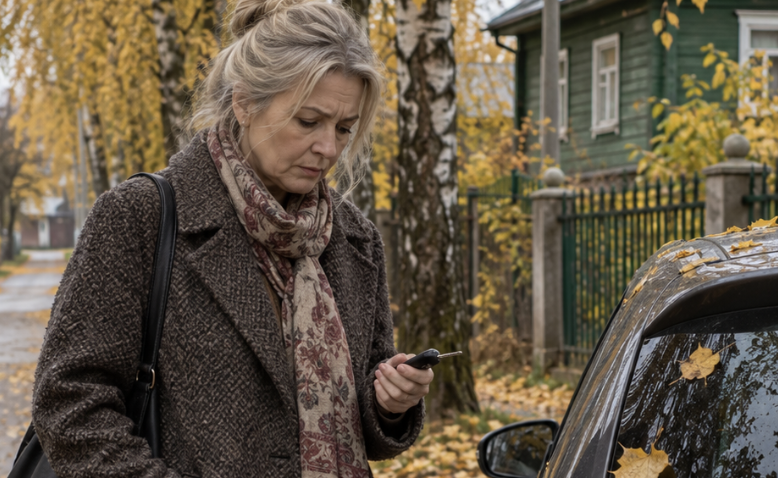
Valentina Ivanovna sold her car in April, on an ordinary Thursday. The buyer arrived in the morning, and they completed the paperwork right beside the vehicle, laying the documents on the hood. The man paid her, took the keys, and soon drove away in her gray Lada Kalina.
That very evening, however, a serious family argument broke out, and its repercussions were felt for quite some time. Along with the car, three adults suddenly lost a convenience they had relied on for almost ten years and had gradually begun to take for granted.
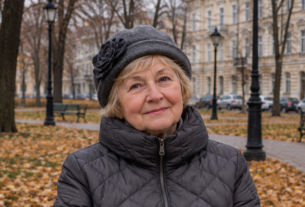
Valentina Ivanovna is sixty-eight. She worked for thirty-six years as a quality control inspector at a large industrial plant and retired eight years ago. She has two adult children: a forty-one-year-old daughter, Marina, and a thirty-eight-year-old son, Oleg. She also has four grandchildren.
I heard this story directly from Valentina Ivanovna herself. She has been friends with my aunt for many years. In May, I came to visit them and accidentally found myself right in the middle of the family’s discussions. I am telling the story with her permission because the role of the “family driver” is familiar to many older people who have a car and plenty of free time.
How It All Began
Valentina Ivanovna got her driver’s license when she was forty-two and bought her first car at fifty. She felt confident behind the wheel, but she drove carefully and usually stayed fairly close to home.
After she retired, she had considerably more free time. At around the same time, her grandchildren reached the age when all kinds of sports, clubs, lessons, and extracurricular activities begin.
At first, everything happened quite naturally.
One day Marina called.
“Mom, could you please take Dasha to dance class? There’s no way I’ll make it from work in time today.”
Her mother took her.
A week later, her daughter asked for help again.
Then Oleg called.
“Mom, can you pick Kirill up after swimming? I’m stuck in traffic.”
Of course, Valentina Ivanovna went.
At first, it really was ordinary help within the family. But gradually, occasional requests turned into a permanent schedule.
By about the third year, Valentina Ivanovna had what amounted to a full working timetable on her phone. Monday—take someone to dance class and pick them up afterward. Tuesday—swimming. Wednesday—art school. Thursday—dance again. Saturday—English lessons.
And unscheduled trips were regularly added on top of that.
She might need to take her daughter-in-law to a clinic, pick up a relative from the train station, or deliver bags of seedlings to her daughter’s country house.
Gradually, even the way her children phrased their requests changed.
They almost stopped asking Valentina Ivanovna whether she could go somewhere.
They only asked what time.
Her Children Had Their Reasons Too
It would be unfair to say that Marina and Oleg were simply too lazy to take care of their own children.
They both worked a lot. Both had mortgages. Marina had three children. The activities were located in different parts of the city, a young child could not simply be sent alone on public transportation, and taking taxis all the time was too expensive for their family budgets.
There was another important factor as well.
The children genuinely believed that their mother enjoyed helping them.
And during the first few years, that was actually true.
Valentina Ivanovna liked feeling needed. She especially enjoyed the trips with her grandchildren. In the car, the children often told their grandmother things they did not, for some reason, tell their mother and father.
And Valentina Ivanovna herself never refused.
Not once in ten years.
Because of that, Marina and Oleg simply failed to notice the moment when their mother’s attitude toward all those constant trips began to change.
The Last Straw
The changes came gradually.
First, her back began to hurt badly. Spending two hours at a time sitting behind the wheel in traffic became increasingly difficult.
Then Valentina Ivanovna noticed that she could no longer see as well in the dark. In winter, dusk came early, while many of the children’s activities ended in the evening.
Then a thought entered her mind that she had tried for a long time to push away.
What if, one day, she really failed to see a pedestrian or another car in the darkness?
And what if a child was sitting beside her at that moment?
In February, Valentina Ivanovna tried for the first time to talk to her children about it.
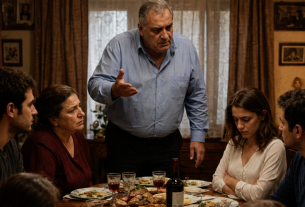
The family was sitting together around the table when she cautiously said:
“Guys, I probably won’t drive in the evenings anymore. It’s getting a little too difficult for me.”
Marina did not even look up from her phone.
“Mom, it’s not like you have a job.”
That short sentence was the one Valentina Ivanovna remembered most often afterward.
According to her, after that family dinner, she spent almost the entire night sitting alone in the kitchen.
By morning, she had made her final decision.
How Valentina Ivanovna Explained It Herself
“I wasn’t even angry with Marina at the time. In a way, she was telling the truth: I really don’t work anymore. But my daughter completely failed to hear what I was trying to tell her. I was saying that it was becoming physically difficult for me, and she understood it as though I simply didn’t feel like helping anymore.
“For ten years, my life had been organized around someone else’s schedule.
“I couldn’t simply go away for a vacation in spring because Dasha had an important dance exam coming up. I couldn’t go stay with my sister for a few days because the question would immediately arise: who was going to pick Kirill up after swimming?
“One day I saw an interesting bus tour. I had almost decided to sign up for it. Then I opened my calendar and realized that the trip fell on a Wednesday.
“And Wednesday was art school.
“So I didn’t go anywhere.
“That February night, I was sitting in the kitchen when I suddenly realized one very simple thing: I was constantly waiting for something.
“In the morning, I waited for a phone call.
“During the day, I watched the clock.
“In the evening, I thought about who needed to be picked up and from where.
“For years, my entire week had revolved around my grandchildren’s activities. And it turned out that I no longer had a week of my own at all.
“But even that wasn’t the most important thing.
“I had become afraid to drive in the evening.
“Truly afraid.
“I could feel that my eyesight wasn’t what it used to be. And admitting that was very difficult. It seemed to me that if I said I couldn’t do it anymore, I would be letting my children down.
“For ten years, I had never let them down once.
“And now suddenly I would.
“Then I thought: if I simply say that I’m not driving anyone around anymore, they’ll spend several more weeks trying to persuade me. They’ll explain that there’s nobody else, that it’s only temporary, that I don’t have anything else to do anyway.
“But if there’s no car, there’s nothing left to argue about.
“So I didn’t sell it out of spite or because I wanted revenge on anyone.
“I simply removed the very thing everyone was arguing about.
“And by the way, I didn’t give the money from the car to anyone, and I’ve barely touched it. This fall, I want to use it to go on vacation by myself for the first time.
“I’m sixty-eight years old, and I have never once traveled anywhere alone in my entire life.”
What Happened After the Sale
The family argument was genuinely unpleasant.
Oleg told his mother:
“You acted like a child. You could have discussed it properly instead of quietly selling the car.”
In the heat of the moment, Marina said something she later regretted.
“So I guess you don’t care about your grandchildren at all.”
After that, there was silence.
The phone calls became much less frequent.
Valentina Ivanovna said that during the first three weeks, her phone was so unusually quiet that several times she picked it up just to check whether the battery had died.
Then the children had to start doing what their grandmother had previously been doing for them almost invisibly: reorganizing their schedules.
Marina calculated the cost of taxis for three children. It came to roughly five and a half thousand a month.
That was a noticeable expense for the family budget.
So they had to look for other options.
And unexpectedly, they discovered quite a few interesting things.
It turned out that English lessons were available only two bus stops away from home, so there was actually no need to travel across several districts.
They discovered that the father of one of Dasha’s classmates drove his daughter to almost exactly the same place and was willing to take Dasha along sometimes.
And thirteen-year-old Kirill was perfectly capable of taking the bus to the swimming pool by himself.
In fact, Kirill had been asking for a long time to be allowed to travel alone, but for some reason the adults had continued to consider that impossible.
Within about a month, they managed to put together a new schedule.
It was not as convenient as the old one.
But it worked perfectly well.
How It All Ended
There were no winners or losers in this story.
Valentina Ivanovna still spends plenty of time with her grandchildren.
Now they come to visit her on Saturdays.
And it was the grandmother herself who chose that day and suggested the arrangement.
She no longer drives the children from one activity to another. Instead, they bake something tasty together, talk, go for walks, and walk to the park.
Two months later, Marina finally told her mother something that was not easy for her to admit:
“Mom, I had simply become so used to the idea that you could always help that it never even occurred to me to ask you first.”
Oleg still believes that the problem could have been solved through conversation and that there was no need to sell the car.
Perhaps there really was another way.
But Valentina Ivanovna gives a simple answer:
“I did talk. They just didn’t hear me until there was nothing left to drive.”
She scheduled her trip for the end of September.
She booked a twelve-day vacation.
For the first time in many years, there was a trip on her calendar that she did not have to coordinate with someone else’s dance classes, swimming sessions, clubs, or extracurricular activities.
What This Story Is Really About
This story is not about bad or ungrateful children. Nor is it about an elderly woman who stubbornly decided to leave her family without help.
It is about something else.
When a person helps others for many years and never says no, that voluntary help gradually begins to be treated as a permanent obligation.
And the hardest part is not necessarily the burden itself.
The hardest part is the moment when people stop asking.
Everyone simply assumes that you are supposed to be available.
In Valentina Ivanovna’s case, truly saying no required selling the car. Words alone were not enough.
People can debate whether such a drastic decision was necessary or whether there might have been a calmer way out.
But the result was very concrete: her children learned to organize transportation for their own children themselves, while Valentina Ivanovna, for the first time in many years, regained a schedule of her own.
And her relationship with her grandchildren did not disappear.
The only difference is that now their grandmother helps them when she chooses to, rather than because someone has silently inserted yet another trip into her day.