The phone rang shortly after six, while Svetlana was still trying to cling to the fading edges of sleep. Andrei’s voice on the other end sounded unfamiliar and broken, as though it had been dragged across a grater. She sat up in bed, holding the phone against her shoulder, and for some reason the first thing she did was look at her bare feet.
“Sveta, just don’t be frightened,” her brother said. “Can you hear me? Don’t be frightened.”
“Andryusha, why are you calling so early? Is something wrong with your son?”
“No. My son is fine. It’s… it’s about Mom.”
She understood before he finished. She understood from the pause hanging between them like a wet sheet on a clothesline.
“Andrei, tell me. Please, just tell me.”
“Last night. Her heart. They couldn’t do anything, do you understand? She simply passed away in her sleep.”
Svetlana did not scream. She would remember that many times afterward and wonder at herself. Inside, everything became empty and smooth, like a sheet of ice.
“I’ll take the first flight,” she said quietly. “Hold on. Do you hear me? Hold on, my dear.”
“I’m holding on.”
“Andryusha.”
“What?”
“I love you. Just remember that today.”
She packed the way people pack when their house is on fire: grabbing not what they need, but whatever happens to be within reach. Dmitry followed her around the apartment, supporting her by the elbow and pouring her water she never drank.
“I’m coming with you,” he kept saying. “Do you hear me? I’ll buy a ticket for this evening and fly out after you.”
“No, stay with Vika. I’ll go alone. I need… I need to be alone with this.”
“Sveta.”
“Dima, please don’t argue with me right now.”
He did not argue. He simply embraced her at the door so tightly that her knees gave way for a moment—and that embrace was the only thing holding her upright.
Two people met her in Sochi. Andrei stepped toward her, and they stood embracing in the middle of the noisy terminal while the stream of passengers flowed around them like water around rocks. Kristina stood slightly apart, adjusting the strap of her handbag.
“Hello, Sveta,” her sister-in-law said evenly. “My condolences.”
“Thank you.” Svetlana pulled away from her brother and wiped her face with her palm. “Thank you for coming.”
“The car’s in the parking lot,” Kristina said. “Let’s go. There’s no point standing here. We have more than enough to do.”
There was already something in that phrase—more than enough to do—that Svetlana failed to hear at the time. Later, she would struggle to forgive herself for not hearing it.
The funeral passed as though through a thick fog, with only isolated faces, words, and touches emerging from the haze. Svetlana nodded, thanked people, and held her brother by the arm. By evening, he had turned gray and somehow seemed shorter.
The memorial gathering was held in their mother’s apartment. Everything there remained unchanged: the knitted shawl draped over the back of the armchair, the cup with a thin crack beside the handle, the tiny bottle of perfume on the dressing table. Svetlana touched these things with the tips of her fingers, the way one touches a sleeping child, afraid of waking them.
“To her memory,” the guests said. “She was a good woman. A bright soul.”
“A bright soul,” Svetlana repeated. “Yes.”
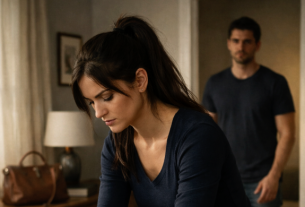
When the last guests had left, only three people remained in the room. Kristina cleared the plates from the table quickly and efficiently, as though tidying up after an ordinary dinner.
“Well,” she said, placing a stack of dishes at the edge of the table, “now that everyone’s gone, let’s discuss business.”
“Kristina,” Andrei said with a grimace. “Not now.”
“When, then? In a year? Sveta will fly home, and everything will be left unresolved again.”
“What will be left unresolved?” Svetlana looked up at her.
“The apartment.” Her sister-in-law said the word lightly, as though she were talking about the weather. “We need to sell it, and we need to sell it now. Prices are good. If they fall, we’ll regret it.”
Svetlana slowly lowered herself into a chair.
“Kristina,” she said gently, “we buried Mom today. Today. Do you understand that word?”
“I understand everything. Better than anyone. But the dead no longer care, while we’re the ones who have to live with this.”
“Kristina,” Andrei tried again.
“What do you mean, ‘Kristina’?” She spun toward her husband. “Are you going to hide again? We have debts. Your child is sick, his treatment costs money, and meanwhile all these square meters are standing empty, gathering dust!”
Svetlana took a deep breath. She wanted to understand. She truly wanted to understand.
“Andryusha,” she said to her brother. “Are things really that difficult?”
“They are, Sveta.” He looked away. “Seryozha needs expensive procedures. I can’t manage it.”
“Then why didn’t you tell me? I would have helped. Dima and I would have helped without selling anything.”
“They would have helped,” Kristina snorted. “How deep would your pockets have to be to pay for treatment like that for years? One apartment would cover everything. There would even be money left over.”
“This apartment is not just ‘square meters.’” Svetlana’s voice trembled, but she steadied it. “It is our home. I grew up here. Andrei grew up here. Every crack in these walls is a memory.”
“Memory.” Her sister-in-law smirked as though she had heard something foolish. “Shops don’t accept memories as payment. Memories won’t buy medicine.”
“Be quiet,” Svetlana said softly. “Please, just be quiet for one minute.”
Kristina shrugged and went back to the plates, deliberately clattering them. Andrei sat with his head lowered while Svetlana watched her brother.
She stepped onto the balcony and called Dmitry. He answered after the first ring.
“Dima,” she said. “They want to sell Mom’s apartment.”
“All right. What do you want?”
“I won’t let them.”
“Then don’t,” he said calmly. “I’m with you. Do you hear me? Whatever you decide, I’m beside you. I’ll fly out tomorrow or the day after, as soon as I sort everything out with Vika.”
“Dima, I’m frightened. I’m losing my brother right now. I’m sitting beside him and losing him.”
“You’re not losing him, Sveta. Someone is simply leading him by the hand in the wrong direction. And you’ll lead him back.”
“Do you think so?”
“I know so. You’re as stubborn as a hundred rams. I mean that in a good way.”
She laughed through her tears, although she immediately stopped herself, as though laughing on such a day were improper.
The next morning, Svetlana sorted through her mother’s belongings. It was a strange task—slow and careful, like sorting through letters from someone expected to return at any moment. In the bottom drawer of the dressing table, beneath a pile of handkerchiefs, she found a notebook with a worn oilcloth cover.
She opened it at random. Her mother’s handwriting was round and slanted to the right, painfully familiar. Shopping lists, telephone numbers, recipes, fragments of thoughts. On the final written page, there was a sheet of paper folded into quarters.
“My children, dear Sveta and Andryusha,” it read. “If you are reading this, it means I am no longer here. Do not quarrel over the apartment. I beg you. Walls are only walls, but you are the only brother and sister you have. Protect this home and protect each other. Everything else is dust.”
Svetlana sat on the floor for a long time. Then she heard the front door slam and voices rumble in the hallway.
“Come in, come in,” Kristina was saying. “Here, take a look. Two rooms, a kitchen, a balcony. As you can see, it’s perfectly livable.”
An unfamiliar man entered the room with a folder tucked under his arm. He was neat, smiling, and had the sharp gaze of someone measuring a room in square meters with his eyes.
“Sasha,” he introduced himself, extending his hand. “And you must be the other owner?”
“And you must have the wrong address.” Svetlana rose from the floor without taking his hand.
“Sveta!” Kristina stepped forward. “Don’t embarrass us. The man came here on business.”
“What business?” Svetlana spoke slowly and distinctly. “Who invited him?”
“I did.” Her sister-in-law lifted her chin. “I invited him, and I will invite others. Because at least one person in this family knows how to use her head.”
“Sasha.” Svetlana turned to the real estate agent. “You don’t strike me as a foolish man. So let me make this clear: this apartment is not for sale. Not today, not tomorrow, and not a year from now. You have wasted your time, and I am very sorry about the fuel you used getting here.”
The agent glanced from one woman to the other, understood everything immediately, and began backing away.
“I… call me when you’ve reached an agreement,” he muttered. “Goodbye.”
The door closed behind him. That was when Kristina finally exploded.
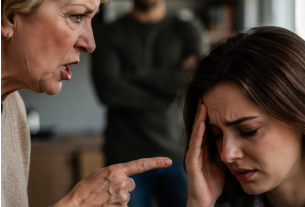
“What have you done?” Her voice rose and began to shrill. “Look at the grand lady! She flies in when everything is ready and starts giving orders! Where were you when your mother was ill? Sitting in Moscow!”
“Don’t you dare.” Svetlana clenched the notebook in her hand. “Don’t you dare touch that subject.”
“Isn’t it true? You haven’t been here for years! And now it’s all ‘childhood home,’ ‘memories,’ and tears! Spare me! The living need money, not the dead!”
“Kristina, can you even hear yourself?”
“I can hear myself perfectly! At least I’m thinking about the child, while you’re thinking about a cracked cup! You sentimental hen!”
Andrei stood in the kitchen doorway and said nothing.
“Brother.” Svetlana turned toward him. “Do you think the same? That I’m a hen? That Mom is just one of ‘the dead’?”
“Sveta, I…” He swallowed. “We desperately need the money. Desperately.”
“I know you need it. I offered to help. I did not refuse you. I refused only one thing—putting our home under the hammer.”
“Listen to you, Lady Benefactor.” Kristina planted her hands on her hips. “You can take your help and shove it wherever you like. We don’t need handouts. We need to solve the problem once and for all! Sell it, split the money, go our separate ways, and forget about it!”
“Go our separate ways,” Svetlana repeated bitterly. “So that’s how it is. You don’t even need your husband. All you care about is property.”
“I want to live normally!” Kristina shrieked. “Normally, do you understand? Not spend my life babysitting your tender feelings!”
Svetlana placed the notebook on the table, calmly—very calmly.
“All right,” she said. “I’ve heard you. Now you listen to me. This home will not be sold. End of discussion. And I have no intention of speaking to you again, Kristina. Ever.”
“Fine by me!” Kristina gasped. “Who needs you anyway? Andrei! Tell her! Say something!”
Andrei remained silent. Kristina hissed something through her teeth, grabbed her handbag, and stormed out, slamming the door.
The apartment fell silent. The brother and sister were left alone.
That evening, the electricity went out. There had been some kind of accident near the neighbors, and the entire building lost power. Svetlana found a box of their mother’s old candles in the kitchen, the same ones they had lit at every childhood birthday.
“Do you remember,” she said, placing a candle in a saucer, “the time you blew out my candles? You were four. I screamed like a fire engine.”
“I remember.” Andrei smiled faintly in the darkness. “I got into so much trouble. They made me stand in the corner, and then you came over and stuck your tongue out at me.”
“I used to be vindictive.”
“You still are.”
“Only now I have good reasons.” She smirked. “Age improves a person.”
They sat at the table, and the tiny flame trembled between them, drawing their familiar childhood features from the darkness.
“Andryusha,” Svetlana said more quietly. “Read this.”
She handed him their mother’s folded letter. He unfolded it and leaned toward the candle. He read for a long time, moving his lips as he had in school. Then he placed the letter aside, and his shoulders sagged.
“She knew,” he said hoarsely. “She knew we’d go for each other’s throats.”
“She knew us better than we knew ourselves.”
“Sveta, I…” His voice broke. “I’ve been living in a fog for months. The debts, Seryozha, Kristina saying the same thing every day: sell it, sell it, sell it. I don’t even understand where I am anymore.”
“I’ll tell you where you are. You’re in Mom’s kitchen, sitting by candlelight with your sister just like a hundred years ago. That’s where you are. And no matter how hard you try, you can’t escape it.”
“What should I do, Sveta?”
“Listen to me. We don’t sell. We settle that once and for all. Then we find the money like decent human beings. We can rent the apartment out during the winter—people are always coming here. We divide the income equally, down to the last kopeck. And every summer, we gather here. All of us. With the children. Like before.”
Andrei remained silent, staring at the flame.
“What about Seryozha’s treatment? It won’t be over in a month.”
“We pay for it together. Dima and I will support you. You can repay us from the rental income. Not immediately. Gradually. But the home will remain a home. Do you understand what I’m offering you? I’m offering you a way not to choose between your son and your mother. You don’t have to choose.”
“Kristina will eat me alive.”
“Andryusha.” Svetlana leaned toward him. “I’m going to ask you one question, and I want an honest answer. When was the last time you did what you wanted? Not what she wanted. What you wanted.”
Her brother stared at the flame for a long time.
“I don’t remember,” he finally said. “A long time ago.”
“That’s exactly my point. You can spend your whole life chasing every last coin, only to wake up one day rich and completely alone. A rich person is not someone who has a lot, but someone who has enough. I have enough, Andryusha. I have you, this kitchen, and Mom’s shawl. Money can always be earned.”
“I agree,” he suddenly said. “Do you hear me? I agree. We’re not selling.”
Unexpectedly, they both began to laugh—quietly and freely, like people breathing again after holding their breath for too long.
At that moment, a key scraped in the lock. Kristina stood in the doorway, her face illuminated by the glow of her phone.
“Sitting together, are you?” she said through clenched teeth. “Burning candles? Cooing like lovebirds?”
“Kristina, sit down.” Andrei stood. “We need to talk. Calmly.”
“I’ve already talked enough!” She stepped into the room. “Well? Have you decided anything? Are we selling?”
“No,” Andrei said. Then he repeated it firmly, with real conviction. “We are not selling. I’ve made my decision.”
Kristina froze.
“What?”
“We are not selling.” He looked directly into her eyes. “We’ll rent it out and divide the money equally with Sveta. In the summer, the entire family will gather here. That’s my decision, Kristina.”
“You… you’ve lost your mind,” she gasped. “Your precious little sister manipulated you in one evening! Candles, songs, a ‘childhood home’—and you melted like butter, you spineless rag!”
“Don’t you dare speak to him like that,” Svetlana said.
“And you keep quiet!” Her sister-in-law spun toward her, her face twisting. “You! This is all your fault! I invested so much in this family, so many years, and you sit here together for one night and destroy everything?”
“What did you invest?” Andrei asked very quietly. “Tell me. What did you invest besides ‘sell, sell, sell’? Did you ever once tell me, ‘Be patient, we’ll get through this’? Even once?”
Kristina opened her mouth but found no words.
“That’s what I thought.” He shook his head. “You wanted the money. Not me. Not even Seryozha, not really. You wanted the money.”
“How dare you!” She began to shake. “Everything I did was for you! Without me, you’re nobody! Do you hear me? You’re nothing!”
“Maybe I am nothing,” Andrei said calmly. “But this nobody will not sell his mother’s apartment.”
“Idiots!” Kristina shouted. “Poor, sentimental idiots! You run around worshipping your cups and shawls while life passes you by! Fine, sit here in the darkness! Both of you! Sit here!”
She grabbed her handbag, turned around, and left. The door thundered behind her once again. Andrei did not follow. He sat down and released a long breath.
“Sveta,” he said. “Forgive me. Forgive me for everything.”
“You’re home,” she replied. “That’s enough for a beginning.”
Two days later, Dmitry arrived with Vika. The girl burst into the apartment like a whirlwind, embraced her mother, then her uncle, and then her mother again.
“Mom, is this Grandma’s cup? The one with the crack?” Vika lifted it carefully, as though holding a baby bird.
“That’s the one.” Svetlana smiled. “Be careful. It’s very old.”
“I’ll be careful. I’ll only wash it on special occasions.”
The home filled with voices again. They went together to the market where their mother had once taken them to buy cherries and corn. They bargained and laughed while Dmitry carried the bags, pretending he was about to collapse under their weight.
“Sveta,” he said as they walked, “it looks as though you’ve conducted an entire peacekeeping operation here. They should send you around settling conflicts.”
“I’m only good at family conflicts,” she joked. “I don’t have enough strength for anything bigger.”
“Uncle Andrei.” Vika tugged on her uncle’s sleeve. “Is it true that you once rode your bicycle down the hill here and crashed into a fence?”
“I did.” Andrei laughed. “I nearly left two teeth behind. See that fence over there? It still remembers me.”
In the evenings, they sat at the table—without candles now, beneath an even, warm light—and Andrei told Vika things she had never known about her grandmother. Svetlana watched her brother and thought that he had become himself again.
Meanwhile, Kristina sat alone in the apartment she shared with Andrei, with no new messages on her phone. She called her husband, but he did not answer. She wrote to him, but he did not reply.
“Fine,” she said aloud to the empty room. “Stay there with your ridiculous little gathering. He’ll come crawling back. Where else would he go?”
But he did not come crawling back. The days passed, and the silence on the phone grew heavier.
A week later, Andrei came to collect his belongings. He was calm, composed, and unfamiliar.
“Are you serious?” Kristina stared at the bag in his hand in disbelief. “Because of the apartment? You’re destroying our family because of an apartment?”
“It’s not because of the apartment, Kristina,” he said. “It’s because of who you became when that apartment appeared. And because of who I became beside you.”
“I was doing it for us! For our future!”
“What kind of future has no sister, no mother, and no memories? A future with nothing but the money you set your sights on? I don’t want to live in that kind of future.”
“Andrei!” She grabbed his sleeve. “Wait! Let’s talk! I… I was wrong. Do you want me to apologize? I’ll apologize to your sister.”
“It’s too late.” He gently pulled his arm free. “I’ll take Seryozha to stay with your mother for the summer, provided you don’t object. My sister and I will handle the treatment. You don’t have to think about it anymore.”
“So you’ve decided everything without me? Completely without me?”
“You excluded yourself, Kristina. One word at a time, every day. It simply took me a long time to notice.”
He walked out. This time, she was not the one who slammed the door.
The next morning, Svetlana, Dmitry, and Vika went to the cemetery. They walked along the quiet path, with Vika carrying flowers in one hand and holding her father’s hand with the other.
“Mom, can Grandma hear us?” the girl asked.
“She can,” Svetlana said. “I’m certain of it.”
They stopped beside the grave. Svetlana crouched down, adjusted the flowers, and ran her hand over the cold stone.
“Well,” she said quietly, “we saved the home, just as you asked. And Andrei and I made peace. He is my brother again. Can you imagine? Mine again.”
“Grandma.” Vika crouched beside her. “I’ll take care of your cup. I promise.”
They stood there a little longer and then walked back slowly, the three of them together. Their steps felt light, without the heaviness that had burdened them throughout the previous days. What Svetlana carried within her was no longer grief, but something quiet and warm—something that could neither be sold nor lost.
At that same moment, Kristina sat on the floor of the empty apartment with her arms wrapped around her knees, rocking back and forth as she whispered:
“Fool. What a fool I am. I did it all with my own hands. All of it.”
Her phone lay beside her, dark and silent, with no one appearing on its screen.
“For what?” she muttered. “For a few square meters. For money that still doesn’t exist. I had a husband. I had a family. I had someone, at least. And now what do I have? Walls. Bare walls.”
She pressed her hands to her face.
“How did this happen? How? I only wanted things to be better. I only… Dear God, what have I done?”
There was no one there to answer her.