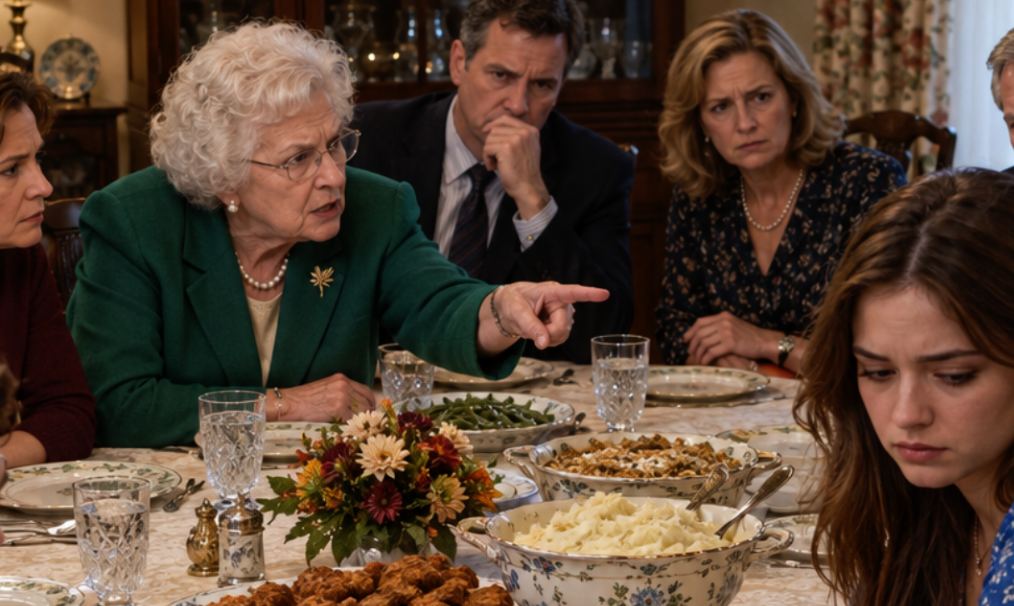
“So, the buyers have already put down a deposit?” the mother-in-law asked, stirring her tea with a tiny spoon.
“Yes, the deal is next week,” Artyom replied.
Lidiya Vasilievna let out a heavy sigh and shook her head.
“Such a shame. Truly a shame.”
“Why is it a shame?” he asked, confused.
“Because strangers will end up with the apartment. You could have given it to Nikita. After all, you already have another place.”
Polina slowly set her cup on the table and looked at her husband. For a few seconds, she was sure she must have misheard. That maybe the words meant something different, and she’d just misunderstood her.
But her mother-in-law stared at them, genuinely puzzled, as if she’d suggested moving a chair—not giving away the apartment they had paid off over five years.
***
Artyom always described himself simply: “I started young.” There was a lot behind those words.
His father died when Artyom was sixteen. Overnight, he went from being just a teenager to the man of the house, with a little brother barely eight years old.
The first summer after the funeral, he unloaded trucks at a friend’s warehouse. He’d get up at five in the morning, come home with numb, aching hands, and eat whatever was around. Later, he enrolled in a technical university and kept picking up side jobs—fixing computers for neighbors and friends, taking on any gig he could. He paid for his own project management courses. Bought his first car with his own money too.
“Do you ever take a break?” Polina asked him, back when they first started dating.
“I do,” he would say, smiling, though it was never clear whether it was true or not.
Nikita grew up differently. By the time he finished school, the family was no longer struggling. Having seen what her older son went through, Lidiya Vasilievna decided her youngest shouldn’t have to do the same. If Nikita quit a job, his mother never judged. If money ran out, she helped—no questions asked. If the washing machine broke, she’d show up herself and fix it.
“He’s still young,” she would say. “He’ll have plenty of time to go through hardships.”
Polina met Artyom at a company event she had hardly wanted to attend. She worked as a procurement specialist at a large firm, was excellent with money, and didn’t like unnecessary talk. Artyom, by then an engineer-designer, was calm, reserved, and reliable.
After their wedding, they bought a two-room apartment on the outskirts of town. They took out a mortgage and never complained. For months, they slept on a folding sofa—saving for a real bed. They assembled the kitchen set together, following the instructions. Artyom laid laminate flooring in the evenings after work, kneeling with a level in his hands. Polina painted the radiators and peeled off old layers of wallpaper by hand.
“Looks great,” she’d say, staring at yet another bare wall.
“It will look great,” Artyom would reply.
Every spare penny went toward paying off their debt. Instead of vacations, they took the commuter train to friends’ dachas and called it “a country getaway.” Five years later, the mortgage was finally paid off.
Now they were selling that apartment—the one they’d made their own, the one that felt like home—to buy a bigger place in a new neighborhood. Polina even found a school nearby, although they didn’t have children yet. “For the future,” she’d said, a little embarrassed. Artyom didn’t laugh. He just hugged her and said she was right—it’s smart to plan ahead.
***
Nikita announced his wedding plans at the end of October during a family dinner with their mother. His fiancée was Veronika—quiet, careful hands, and a thoughtful gaze. Everyone received the news warmly, clinked mugs of tea, and started discussing possible dates.
Then, Lydia Vasilievna gently asked where the newlyweds planned to live.
Nikita just shrugged.
“For now, we’ll stay in a rented studio. It’s fine.”
“Do you have any savings?” Artyom asked.
“Well… not really,” his brother admitted. “We’ve only just started putting some aside.”
Polina stayed silent and poured herself more tea.
About a week later, Lydia Vasilievna called and, almost as an afterthought, asked about the apartment sale. How much were they asking? When was the deal? Who were the buyers?
“I’m just curious,” she said.
Polina didn’t think much of it at the time.
The next time she visited her mother-in-law to help with the computer—something wouldn’t open, something froze—they fixed it quickly. Polina was getting ready to leave when she heard Lydia Vasilievna’s voice from the next room—she was on the phone, not realizing her daughter-in-law was still in the hallway.
“Don’t worry, Nikitushka. I’ll talk to your brother. We can solve this as a family.”
Polina quietly closed the door and stepped out onto the landing. She stood for a minute, staring at the wall.
A nagging unease began to grow inside her and wouldn’t go away.
A few days later, over tea, her mother-in-law started musing out loud, not addressing anyone in particular:
“Back in the day, brothers would build houses for each other. No one counted who invested what.”
She paused, then added:
“These days, people have become too calculating. But family should support family.”
Polina listened and realized: these weren’t just words. This was groundwork.
***
Lydia Vasilievna came over on Sunday, saying it was about the wedding. They discussed the date, restaurant, guest list. Polina brewed tea and brought out cookies. Everything was peaceful.
About half an hour later, her mother-in-law folded her hands on the table and spoke in a different tone—calm, measured, as if she’d practiced it many times before.
“I’ve been thinking… Why sell the apartment to strangers? Transfer it to Nikita. You’ve already found your new place, you have the money.”
Polina thought she misunderstood.
“Wait… Are you serious?”
“Of course I’m serious. You’re both young; you’ll earn more. Nikita has a harder time starting out, he has nothing. The older brother should help the younger one—that’s only right.”
Her mother-in-law spoke confidently and already began considering how best to handle the paperwork—gift deed or a symbolic sale price. As if the decision had been made. Without them.
Polina felt her hands turn cold.
Artyom was silent for a long time. Then he said quietly, but clearly:
“Mom, I paid that mortgage for five years. I worked every weekend. We never went on vacation. Polina painted the walls herself because we couldn’t afford to hire anyone. I remember every single payment.”
«So what?» Lydia Vasilyevna didn’t look away. «We managed, didn’t we?»
Three words. Spoken without malice, almost gently.
Artyom looked at her—and Polina noticed something shift in his face. Not anger. Something quieter, deeper. As if those three words suddenly erased everything that had come before.
***
After that Sunday, Lydia Vasilyevna called every day. Sometimes twice a day. She never mentioned the apartment directly—just told stories about how Nikita and Veronika were cramped in a rented studio, how the neighbors were noisy, how hard it was to get to work. Articles appeared in the chat: “Why it’s important to support your loved ones,” “Family isn’t just strangers.” Then she’d send photos of the brother and his fiancée, always with the same caption: “They really need a place of their own.”
Polina would read and put her phone away.
At aunt Galina Vasilyevna’s birthday, the whole family gathered. It was the middle of the feast—toast after toast, salads all around. Suddenly, Lydia Vasilyevna spoke up loudly, as if to the whole room:
«Some people are willing to give an apartment to strangers rather than help their own brother.»
An awkward silence fell over the table. Galina Vasilyevna started serving salad. Someone coughed.
Polina stared at her plate. Artyom didn’t say a word.
Later, Galina Vasilyevna quietly told Polina something. A few years back, her mother-in-law inherited a garage from a distant relative. She sold it and gave every cent to Nikita for a car. Artyom never knew about it.
The following week, Artyom invited his brother to help with a friend’s repairs. In the garage, surrounded by the sound of a ratchet and the smell of oil, the conversation turned honest—for the first time in years.
«Did you really expect me to give up the apartment?» Artyom asked.
Nikita was silent for a while, then nodded.
«Mom said you would help. That it’s just the way it should be.»
Artyom set the wrench down on the workbench. Suddenly he understood: his mother hadn’t just pitied her younger son. For years, she had convinced him that the world owed him something.
***
The sale happened on Thursday. Notary, paperwork, signatures. The buyers turned out to be a young couple—around the same age as Polina and Artyom. The husband held his wife’s hand as they signed the documents.
Outside, Artyom hugged Polina, and she buried her face in his shoulder. She didn’t say a word. Just stood there with him.
Lydia Vasilyevna arrived that same evening—unannounced. She rang the bell, walked in, and immediately started crying. Not quietly, but loudly enough for everyone to hear.
«You’ve betrayed your family,» she declared, still in her coat. «You destroyed your relationship with your brother. Nikita will never forgive you for this.»
Artyom listened while standing. Polina remained at the kitchen doorway.
«Mom,» he finally said, his voice calm, free of anger or pity. «I’m Nikita’s brother, not his sponsor. If you think helping family is an obligation, maybe you should start with your own property instead of mine.»
Lydia Vasilyevna opened her mouth, then closed it again. She couldn’t find the words. She sat for another ten minutes, then got up and left.
About two months passed. Nikita called himself—short and to the point: he and Veronika had been approved for a mortgage. The apartment was small, far from the center, but it was theirs.
«Congratulations,» Artyom replied.
«Thanks,» Nikita said.
They never spoke about it again.
***
They moved in March. Their new three-room apartment had that fresh scent of plaster and wood. Outside, the workers were finishing up a playground—the slide was already done, and the swings gently swayed in the wind.
Boxes crowded the balcony. Somewhere among them was a bag with a tiny stuffed bear and a star-shaped rattle—they’d bought them a month ago, right after the positive test. Polina tucked the bag away: it was still too early to bring it out.
They kept in contact with her mother-in-law, but it was distant, lacking warmth. Lidia Vasilevna had stopped sending articles and no longer called every day. Conversations about the apartment ceased, as if that topic had quietly been put away and locked up.
One evening, Artyom stood at the window, looking out at the shining lights of neighboring buildings. Polina came in with two mugs of tea.
«The strangest thing,» he said without turning around, «is that my mother never asked me for help. Not once, all these years.»
«And now?» Polina asked softly.
«Now, for the first time in her life, she had to hear the word ‘no.’»
Polina set the mugs down on the windowsill and silently took his hand.
Outside the window, the swings in the yard were still swaying slowly—moving all by themselves.