“Liz, you know your way around these phones, and I’ve tried a hundred times with no luck. Can you set it up so my rent just gets paid automatically? I’m tired of standing in line at the post office every month.”
Nina Petrovna placed her phone down on the vinyl tablecloth next to a bowl of crackers, sliding it over to her daughter-in-law. Elizaveta wiped her hands on a towel and picked up the phone. The banking app was already open on the main page.
“Alright. Where’s your payment slip?”
Her mother-in-law went to the other room to look for the bill. Elizaveta opened up the payments section in the app, started filling in the details for the utilities management company, and to double-check the account number, she pulled up the payment history. She wanted to find last month’s rent payment.
Instead, she found something else.
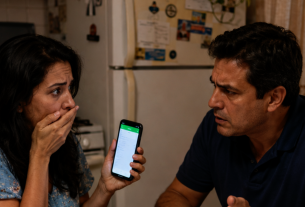
“Deposit: Pavel Andreevich G. — 90,000 rubles.” March 12th. That was the money for the bathroom renovation—Elizaveta clearly remembered Pavel sending it one evening, sitting at the edge of their bed. Just forty minutes later, on the same day: “Transfer: Timofey Andreevich G. — 90,000 rubles.”
She scrolled further back. November last year: “Deposit: Pavel Andreevich G. — 38,000 rubles.” That was for the refrigerator. Same day: “Transfer: Timofey Andreevich G. — 35,000 rubles.” In July, forty-five thousand for a spa trip. The next day, forty-five thousand sent to Timofey.
Elizaveta put the phone down and glanced over to the kitchen corner. The old Biryuza refrigerator was humming, yellowed with age, a watermelon-shaped magnet on its door. According to her mother-in-law, the new one had been there for almost a year.
“Found it!” Nina Petrovna came back with the bill. “So? Is it working out?”
“It is,” Elizaveta replied. Her voice was even—she was surprised at herself. “May I wash my hands?”
The bathroom looked exactly the same as it had three years ago. Green tiles, one with a chipped corner, hung above the sink. The tub had a rusty stain under the faucet. The dolphin-printed shower curtain. Ninety thousand rubles for this bathroom—Pavel gave his mother that money back in March. Nina Petrovna said at the time that workers would show up by fall, everyone was booked up right now.
Elizaveta stood at the sink for a long time, letting the cold water run over her hands. Then she went back to the kitchen, finished setting up the autopay, and even showed her mother-in-law where she could check the transactions. Nina Petrovna thanked her, pressed a bag of crackers into her hands for Pasha. Elizaveta took the crackers and headed home.
Back at her rented two-bedroom on Severnaya, she sat in the entryway for a long time without even taking off her coat.
Pavel was the oldest. Elizaveta learned his story bit by bit, over years. He was seven when Timofey was born. Their father left a year later, and from then on, Pavel basically became the second adult in the house: picking up his brother from preschool, heating up soup for him, babysitting whenever Timofey was sick instead of going out with his own friends. At sixteen he worked a whole summer on a construction site, hauling bricks to afford a class trip to St Petersburg. His mother said they didn’t have the money. One month later, she bought nine-year-old Timosha a bike for eight thousand.
“Well, Timosha’s just a kid,” she explained. “You’re grown up now, you can earn it yourself.”
That’s how things always were. Pavel paid his own way through university, rented his first room by himself, and bought his first car—a beat-up old ‘devyatka’—on his own. As for Timofey, their mother paid for his private college courses, which he dropped out of in his second year, then she paid for bartending classes, then fitness trainer courses. Timofey was now twenty-seven, working as a gym instructor when he felt like it, still living with his mom. Pavel was seven years older, thirty-four.
Pavel and Elizaveta’s wedding happened four years ago. It was a modest celebration, held at a café on the riverfront for just twenty guests. Nina Petrovna didn’t come.
«Pasha, Timosha has his driving exam on that day,» she told him on the phone three days before the wedding. «I’ll have to take him—he’s too nervous to go alone. You two go on without me, okay? I’ll come by afterward to congratulate you.»
She never came. Not that day, not even a month later. She just sent a message: «Congratulations, wishing you happiness.» No gift, no card. Then, a month and a half later, for Timofey’s twenty-third birthday, she gave him a new video game console and a mysterious envelope. How much was in the envelope, Elizaveta never found out, but Timofey boasted on social media about his new sneakers that cost twenty thousand.
Pavel didn’t say a word at the time. He just spent a long time smoking out on the balcony.
After the wedding, Nina Petrovna started calling her son more often—almost always to ask for something. The balcony was leaking and needed to be glassed in—fifty thousand. The fridge broke. The bathtub was falling apart and too embarrassing for guests. The doctor recommended a spa stay, but the trip was expensive.
Elizaveta never complained. She knew what it meant to be a lonely, elderly mom on a tiny pension. Her own mother lived in Achinsk and was barely getting by. Elizaveta felt that if she and Pavel didn’t help, who would?
Meanwhile, they lived very modestly themselves. They rented a two-room apartment for twenty-eight thousand. Pavel worked as a refrigeration repairman and earned about seventy-five. Elizaveta was an administrator at a veterinary clinic, working shifts—one full day on, two off—and brought in fifty-two. Each month, they saved whatever they could for a down payment, usually around twenty-five thousand, sometimes thirty. Their goal was 1.6 million. After three and a half years, they’d managed to save 1.1 million.
Elizaveta scrimped wherever she could. She bought groceries only on special deals, cooked batches for three days at a time, and cut Pavel’s hair herself. Last winter, she wore her fall jacket layered over two sweaters because that month Nina Petrovna asked for money for a new fridge, so the winter coat had to wait. She never bought the coat, deciding to hold out for the sales. Then the sale came and went, but her mother-in-law asked for help with the bathtub instead.
All this time, the money kept going to Timofey.
Pavel came home around eleven, after being called out to a supermarket where a freezer display had broken. Elizaveta was still sitting in the hallway.
«Liza, what’s wrong? What happened?»
She told him everything. At first, stumbling over her words, then more calmly. She showed him the photos she’d managed to take from her mother-in-law’s phone while she was looking for a receipt. Pavel stared at the pictures for a long time. Then he put her phone on the little table and sat down beside her on the floor, still in his jacket.
«Ninety thousand,» he said. «That was my quarterly bonus. We hadn’t even gone to Achinsk to see your mom yet.»
«I remember.»
«And the fridge? She sent me a photo of it. Brand new, silver one.»
«Pasha, she still has a ‘Biryusa.’ It’s yellow. With a watermelon on it.»
Pavel silently opened his messages with his mother, scrolled to November and found the photo. A silver two-door fridge stood against a light-colored wall. His mom’s kitchen walls were covered in beige wallpaper with little roses.
«That’s from the internet,» he said, turning off his phone. «It’s a picture from the store.»
The next day he went to see his mother himself. Elizaveta didn’t go—he had asked her not to. He came back three hours later. His face was pale and gray, as if he hadn’t slept for two days.
«She didn’t deny it,» he said, standing in the doorway. «She said Timosha needed it more. That he’s young, he has his life ahead of him, and we can handle things ourselves. That since we keep saving anyway, we obviously have extra money. That I’m the oldest and should help my brother since Dad isn’t here anymore. And that she would have told me everything if I’d just asked. But I didn’t ask.»
«And Timofey?»
«Timofey was in his room playing video games. Didn’t even come out.»
Pavel took off his shoes, walked into the kitchen, poured himself a glass of water and drank it in one gulp.
«That’s it, Liza. Not another ruble. Not for a fridge, not for a bathroom, not for anything.»
Two days later, Nina Petrovna called. She didn’t call her son—she called Elizaveta.
«You turned him against me,» she said without greeting. «I knew it right away, back when you started snooping in my phone. I took you in like family, and you’re checking my wallet. You’re stingy, Liza. Petty. You won’t even spare money for your husband’s own brother.»
«Nina Petrovna, you asked for money for bathroom renovations. There haven’t been any.»
«That’s my business what to spend it on! It was a gift, I can use it how I want!»
She hung up. For the next few months, she stopped calling altogether. Neither to Pavel nor Elizaveta. On Pavel’s birthday in October, not even a message from her arrived. Pavel kept glancing at the phone lying face up on the table all evening, and when Elizaveta brought out the cake, he flipped it face down.
Without sending money to his mother, for the first time in years, they started saving thirty-five, sometimes even forty thousand a month. By October, one million one hundred thousand had grown to one million three hundred thousand. Elizaveta bought herself a puffer coat. Dark blue, knee-length, bought on sale. The first time she wore it outside, Pavel looked at her and said:
«It suits you. Sorry it took so long.»
In February, Timofey bought a car. Pavel found out from his cousin, who sent him a link to his brother’s profile. In the photo, Timofey stands leaning on a white Kia with a red bow on the hood. The caption read: «Dreams come true if you believe in them.»
«One million six hundred,» Elizaveta read out loud in the comments where Timofey was bragging to his friends. «Mom helped with the down payment, the rest is on credit. For five years.»
«He only makes thirty-five,» Pavel said. «When he actually works.»
By May, Timofey couldn’t keep up with the payments. His monthly payment was more than his salary, and he’d already been fired from the gym for skipping work back in April. At first, it seems, Nina Petrovna helped cover the difference from her pension and odd jobs. Then she couldn’t anymore.
She called Pavel in mid-May, at eight in the morning, while he was driving to work.
«Pasha, Timosha’s in trouble. The bank calls every day. It’s been two months overdue. They said if he doesn’t pay, they’ll take the car, and he’ll still owe money. You have to help your brother.»
«Mom, I didn’t take that loan. And Timofey never asked me before he took it.»
«He’s your brother!»
«He’s a grown man, Mom. Twenty-seven years old. Let him sell the car, pay off the loan, and get a job.»
«Sell it? He dreamed about that car for a year! How heartless you’ve become, Pasha. It’s her fault you’re like this. You never used to be this way.»
«I used to trust you,» Pavel said and hung up.
Nina Petrovna called several more times, but he didn’t answer. Then there was silence. Elizaveta thought that would be the end of it.
On Thursday, she was home after a night shift. She slept until noon, then made soup, hung up the laundry, and settled on the sofa with a book. Around four o’clock, the doorbell rang. Elizaveta looked through the peephole and saw her mother-in-law. Nina Petrovna was standing in the hallway in her beige coat, a bag slung across her shoulder, impatiently shifting from foot to foot.
Elizaveta opened the door. Her mother-in-law walked past her into the hallway without taking off her shoes, and immediately peeked into the room.
«Where’s Pasha?»
«At work. He’ll be back by seven.»
«Well, that’s fine. I’ll talk to you. Actually, that’s even better.»
She walked into the room and sat down on the sofa, moving the book aside. She looked around. The old wardrobe with its crooked door, the carpet worn thin by the doorway, the drying rack with laundry by the window, and the TV on its little stand. Nina Petrovna looked at it all as if calculating how much it was worth.
«Liza, you’re a smart woman, I know that. Let’s decide this without Pasha—he’s stubborn as a mule. Timosha needs to pay the loan. The payment is thirty-one thousand. I’ll give my ten; I can’t do more, I’m already in debt myself. That means it’s up to you two to pay the other twenty thousand each month. You’re his brother, you’re responsible.»
«Nina Petrovna, we’re saving for an apartment. We’ve been saving for four years. We’re living in a rented place, you can see that.»
«I see,» her mother-in-law gave the room another disdainful look. «I see how you live. But don’t try to fool me. There are new boots in the hallway, a down jacket hanging up. Pasha’s got a good job, and you work too. Don’t pretend to be poor! You’ll find twenty thousand a month for your brother, and if not, you’ll take out a loan!»
Elizaveta stood in the middle of the room. Suddenly, she realized her hands were trembling. She had to clasp them in front of her so her mother-in-law wouldn’t notice.
A loan. For them, still renting after four years of saving every penny. Just to pay off Timofey’s car loan—the one he took just so he could pose for a photo with a big ribbon on the hood.
She remembered that fall jacket with two sweaters layered under it. Ninety thousand, spent instead of a trip to visit her mother in Achinsk. The old Biryusa fridge with a watermelon inside. The café by the river and the empty chair that she and Pasha left waiting, hoping his mother would come after all. The message: «Congratulations, be happy.» Then, a video game console for Timofey, a month and a half later.
«You didn’t come to our wedding,» Elizaveta said quietly. «And you didn’t give us anything. Not a single ruble. Not even a card. And now you want us to go into debt for Timofey.»
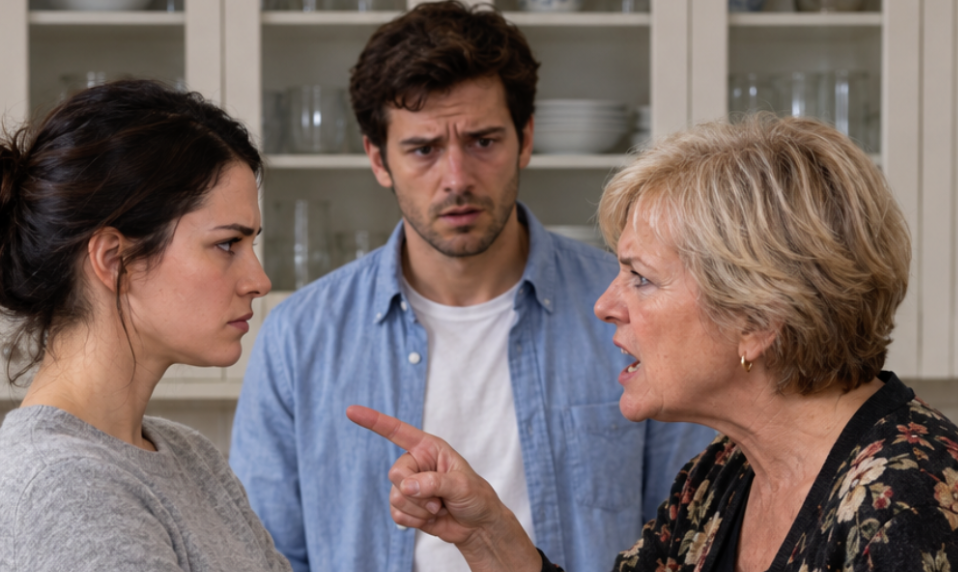
“Don’t talk to me about the wedding!” Nina Petrovna suddenly jumped up. “Timosha had exams then! How many times are you going to throw that in my face?”
“I’ve never brought that up with you. Not once in four years.”
“Oh, really! So you’ve been keeping it inside! Holding a grudge, just like you hoard your money! I knew it!”
They didn’t even hear the front door open. Pavel had left work early since a call was canceled. He stood in the doorway, tool bag in hand, looking from his mother to his wife.
“Mom, what are you doing here?”
Nina Petrovna spun around abruptly.
“Pavel! I’m so glad you’re here. Explain to your wife how she should talk to her mother-in-law. I came to her in good faith, to talk about your brother. And all she does is bring up the wedding. Set her straight, Pavel. Are you the man of the house or not?”
Pavel slowly set his bag down. He walked over to Elizaveta and stood right next to her. Shoulder to shoulder.
“Mom, it’s actually you who’s talking to Liza the wrong way,” he said. “No one has ever yelled at her like that. Not in her home, not in ours. And you won’t either.”
“What?”
“Do you know how much money you took from us over the last three years? I counted, Mom. Two hundred and twenty-three thousand. The balcony, the fridge, the bathtub, the trip to the sanatorium. All of it went to Timofey. Not a single balcony, not a single fridge, not even one trip. You sent me a photo of a fridge from the internet. You lied to my face. For three years.”
“I’m your mother!” Nina Petrovna shouted. “I have the right to do what I want with what you give me! I never asked for anything!”
“You did ask. Every single time.”
“Ungrateful!” she stepped toward her son. “Do you have any idea how much I’ve invested in you? I fed you, dressed you, put shoes on your feet! I stayed up nights when you were sick! I worked two jobs when your father ran off! I bought you a suit for school, a backpack, notebooks! Every penny went to you! And now you won’t give me twenty thousand for your brother?”
Pavel listened. Elizaveta saw the changes in his face. First he was angry, then confused, and then something appeared that she had never seen in him before. As if he was looking at his mother and truly seeing her for the first time.
“The suit,” he said. “Mom, Uncle Kolya bought me that suit for first grade. You told me so yourself. And I earned the money for my trip to St. Petersburg working construction. I was sixteen. And Timosha—you bought him a bicycle for eight thousand just a month after telling me you had no money.”
“So what? He was just a little boy!”
“He was nine. I was sixteen and carrying bricks all summer,” Pavel said, pausing before continuing more quietly. “Mom, do you really think I owe you? That I have to repay you for raising me? And I’m supposed to pay off that debt—for Timofey’s sake. For the rest of my life, is that it? Until his debts are gone.”
“He’s your brother! You have to take care of him!”
“And who’s supposed to take care of me?”
Nina Petrovna opened her mouth, but couldn’t find an answer. It seemed that thought had never even crossed her mind.
“Liza and I have been saving for four years to buy a home,” Pavel said. “We live in a rented apartment with someone else’s wardrobe. Liza had to wear her fall jacket through the winter before last. You didn’t even notice, Mom. It doesn’t matter to you. Nothing about me ever really matters to you—except how much I can do for Timosha.”
“Don’t you dare talk to me like that!”
“Leave, Mom.”
“What?”
“Leave. This is our apartment—even if it’s rented. Please, just leave.”
Nina Petrovna stood in the middle of the room, staring at her son. Then her face hardened to stone.
“If I walk out now,” she said slowly, “then you no longer have a mother. Do you hear me, Pasha? I’ll cross you out of my life. Forever. You’re no longer my son. You won’t be welcome in my home, I won’t even let you step through the door. I’ll leave everything to Timosha instead. Just so you know.”
Pavel nodded.
“Alright, Mom. Let it be that way.”
He said it calmly—without shouting, without anger. As if he’d always known this conversation would happen and was just waiting for it to finally be over.
Nina Petrovna grabbed her purse from the couch. In the hallway, she bumped into the coat rack and Elizaveta’s puffer jacket fell to the floor. The mother-in-law didn’t turn back. The door slammed so hard that the mirror in the corridor rattled.
Pavel picked up the puffer jacket and hung it back up, carefully straightening the hood. Then he went to the kitchen and sat down at the table.
He barely spoke all evening. He ate his soup, washed his plate, and then stood on the balcony for a long time. Elizaveta didn’t disturb him. She understood that, right now, any words would only be extra.
Around eleven, she went to bed and switched off the light. Pavel came later, lay down next to her, on his back, and stared at the ceiling for a long time. Then Elizaveta heard his breathing—uneven, breaking up. She turned toward him. Even in the darkness, she could see his shoulders trembling.
She had never seen him cry. Not when he was laid off from his old job, not even when he broke his arm on a project. Pavel had always been the one to keep it together.
“Pasha…”
“All my life, I thought it was my fault, that I just wasn’t doing enough,” he said into the darkness. “That if I tried harder, maybe one day she’d love me the way she loves Timka. I’ve thought that all my life, Liza.”
Elizaveta hugged him. He buried his face in her shoulder like a child, and she held onto him until he finally grew quiet. She stroked his hair and thought about the boy who, at sixteen, carried bricks so he could go to St. Petersburg with his class. About how he must have hoped his mother was proud of him. About the empty chair at their wedding, the one he never allowed anyone to take away.
In the morning, they drank coffee in the kitchen. Pavel was calm, though his eyes were a bit swollen. He picked up his phone, opened his contacts, and silently showed Elizaveta the screen. ‘Mom.’ He pressed ‘Block.’ Then he found ‘Tima.’ Blocked him too.
‘Are you sure?’ Elizaveta asked.
‘Yes.’
She picked up her own phone and did the same.
Pavel and Nina Petrovna no longer kept in touch. No calls for New Year’s, no birthday greetings. Occasionally, Pavel’s cousin would send him updates. In August, the bank repossessed Timofey’s car and put it up for auction. The money from the sale only covered part of the debt, so Timofey is still paying it off. Nina Petrovna took out another loan to help her son and now tells the whole family that her eldest son abandoned her in her time of need. Pavel listened to these updates in silence. Then he asked his cousin to stop writing about his mother.
Over the year, they still had to withdraw 150,000 from their savings: in spring, Elizaveta needed dental work, and Pavel’s work laptop broke. But by November, they had managed to save the full amount—one million six hundred twenty thousand. In December, they signed a mortgage for a one-room apartment in a new building on the outskirts of town, unfinished inside, on the ninth floor. They got the keys just before New Year’s.
They spent their first weekend there with a measuring tape and notebook. The apartment was cold, with the smell of concrete and fresh plaster in the air. Pavel stood on a stool by the window, measuring the width of the curtain rod space.
«Two forty-seven,» he dictated. «Did you write it down?»
«Got it. What about the height?»
At that moment, Pavel’s phone buzzed in his pocket. He climbed down from the stool, pulled it out and checked the screen. Unknown number. A message.
“Hey bro, it’s Tima from a new number. Can you spot me five grand until Friday? Really need it. Don’t tell Mom.”
Pavel read the message out loud. Then he burst out laughing—loud, genuinely, for the first time in a long while. Elizaveta laughed too, not even sure why.
“Don’t tell Mom,” Pavel repeated, wiping his eyes. “Did you hear that?”
He blocked the number, put his phone back in his pocket, and climbed back onto the stool.
“Alright, height. Two seventy from the floor. Liza, write that down. And what kind of curtains do you want?”
“Blue,” Elizaveta replied. “To match my puffer coat.”
Pavel looked down at her from above and shook his head.
“Blue it is, then.”