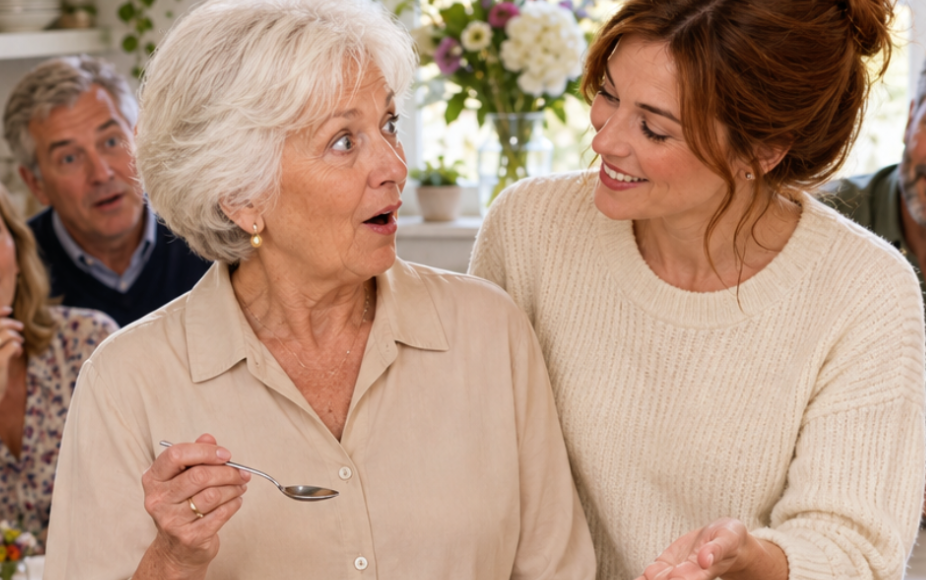
«It’s too runny,» my mother-in-law said as she licked the spoon. «Let me tell you something: cream should stand tall like a soldier on duty. Yours is sitting down.»
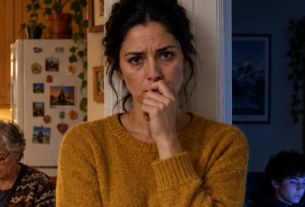
I shoved my hands into the pockets of my sweater. The honey cake with eight layers stood in the middle of my kitchen in an open box, still warm inside, filling the air with the scent of buckwheat honey and burnt sugar. My whole Wednesday was spent on it after a night shift at the boiler house.
That was the thirty-ninth one. I never wrote them down, just remembered. For seven years, Nonna Arkadyevna would come to me every two months with an empty box and leave with a full one. Birthdays, New Year’s, March 8th, and her «Thursdays»—that’s what she called her get-togethers with her old factory canteen coworkers, where she was in charge for thirty-eight years. Six cakes a year. Each one cost about two thousand rubles in ingredients and five hours at the stove. And every single time, she would present the cake to her friends and say, «I baked it myself, my hands remember.»
Why did I keep quiet? From 2013 to 2016, while I was working days and nights, she was the one picking up Mira from music school and feeding her cutlets. Rodion would look at me apologetically and ask, «Come on, Kar, it’s important to Mom. Is it really that hard for you?» And besides, I did try twice.
In 2021, I tried to be reasonable: could you at least say we baked it together? My mother-in-law gave me a look like I had just asked her to wear my jeans. «Don’t be ridiculous. Who even cares?» Then in 2023 I refused to bake for New Year’s. She bought a store-bought cake, told the whole family that Karina was too lazy, and Rodion only spoke to me about the weather for two weeks. By Christmas, I gave in.
«Close the box,» my mother-in-law snapped the clasp on her bag. «My girls are coming at four. Oh, and yesterday, Rodion brought over someone from the gas service. They took away the old ‘Gefest’ and put in a new stovetop. Two burners, black glass, just like in magazines.»
«And what about the oven?» I asked.
«Why would I need an oven?» She pursed her lips into a thin line, like I’d just said something foolish. «I have you, Karina.»
And she laughed, warmly and wholeheartedly. I stood there holding the box lid, thinking: then what am I to her? Not a daughter-in-law, not her son’s wife. Just a walking oven—one that doesn’t even need to be turned on, just heats up all by itself.
Meanwhile, my mother-in-law scooped up another bit of cream from the corner, winced, and sighed.
«I’ll tell the girls it’s the heat, the cream just got too runny. No point in embarrassing ourselves.»
No point in embarrassing herself—with my cake. My ears burned, the cardboard lid bent into an arch in my fingers, and I could hear the kitchen clock ticking above the door in the silence.
I set the lid on the table. Then I took the cake out of the box, cardboard base and all, and placed it on the cutting board.
«If it’s too runny, I won’t bring you any embarrassment,» I said. «I’ll take it to the guys on shift. They could use something sweet tonight.»
«What?» My mother-in-law dropped her bag onto the stool. «I have six people coming at four!»
«So the cream is fine, then?»
She stared at me for five seconds. Her lips pressed into a thin line, and the amber brooch on her blouse rose and fell with her breath.
«It’s fine,» she finally muttered.
«The whole cake, please.»
«The cream is just fine, Karina. Close it up, the taxi is waiting.»
I closed the door. She left without saying goodbye, her heels echoing down the stairs for a long time. Out the window, I watched her get into a taxi, carefully placing the box on her lap like it was a newborn. My cheeks were burning and my stomach fluttered a little, but I wasn’t afraid. For the first time in seven years, she said something nice about my cream—even if it was forced.
That evening, I finished off the leftover cake trimmings, washing them down with cold milk. The edges were a little overbaked and bitter, but honestly, I liked them better than the whole cake. Rodion noticed me smiling and asked why, but I just waved it off.
My mother-in-law called at nine.
“The anniversary’s on September fifth,” she said, skipping any greeting. “Seventy-five, that’s no joke. Inessa will be there. By the way, her daughter-in-law took pastry courses. So make sure it’s no worse than hers.”
And she hung up.
***
In August, I made a lattice.
Thin strips of shortcrust pastry criss-crossed over buttercream, a berry in every square. Just finishing the top took three hours. Blueberries at the market were 260 a cup—so I bought two, and my fingers stayed stained blue for a day, just like a schoolkid after using ink. My mother-in-law took the cake on Thursday, the 20th, for another girls’ get-together. She looked at the lattice, grunted, and said, “Looks like something from a café.” That was it. After the June cream incident, she’d been more cautious with me, and like a fool, I thought that was a good sign.
On Friday, I went to pick up the cake stand. The glass one with the tall stem—my mom’s. I never left it at my mother-in-law’s for long.
She answered the door in a robe, smelling like hand cream. Her kitchen was now bright and empty: where the old stove had been, a shiny black cooktop with two burners gleamed, and below it was a cabinet filled with pots. The cake stand was in the sink. As I leaned over to grab it, I caught sight of the trash bin with its lid flipped back.
In the trash was my lattice. Scraped off with a knife, crumpled, purple from squished blueberries. Lying on top was an empty plastic package labeled ‘Sugar roses, 12 pcs.’ from a marketplace—price tag: 289 rubles.
So she’d ordered the roses in advance. She didn’t scrape off my lattice in a fit of anger—she waited until the cake arrived.
“What’s this?” I asked.
My mother-in-law came over, looked into the bin, and shrugged.
“Just made a few changes. Your berries are for the young crowd. I’ve always had roses on my cakes. The girls know my cake.”
“Your cake.”
“Well, whose else would it be?” She was honestly surprised. “My kitchen, my friends, my party.”
The fridge hummed behind me, the glass stand was cold in my hands. I didn’t say a word. I wrapped it in a towel and left.
That evening, Mira arrived with Aurora. While my granddaughter played with a fire truck on the carpet, my daughter silently handed me her phone.
“Mom, I follow Grandma on Odnoklassniki. Scroll through her posts.”
I scrolled. Twenty-three posts in seven years. My honey cake, my Napoleon, my drunken cherry, my orange cake—the one I invented the night before Women’s Day. Under each photo, the same caption: “Baked it myself, my hands remember.” The most recent post was yesterday—a cake covered with sugar roses, forty-seven likes. The top comment from some Galina Petrovna: “Nonna, what hands you have! Today’s daughters-in-law can only dream.”
“Mom, this is getting ridiculous,” Mira said. “Why aren’t you saying anything?”
It’s true, why was I quiet? For seven years I always had a ready answer, but now it suddenly felt silly: it’s been ten years since I finished music school.
I looked at the group for ‘future daughters-in-law,’ and my finger hovered over the screen, refusing to cooperate. My mouth tasted sour, like underripe blueberries. Forty-seven people had clicked ‘Like’ and praised ‘my hands.’ Not one of them knew those hands were mine.
I opened my profile, found the post again, and commented: “I’m glad the girls enjoyed it. Honestly, the blueberries were tastier than the roses. Karina.”
“Mom!” Mira gasped, then stifled a laugh into her hand.
I hit send. There was nothing revealing in what I wrote—not a word about who baked it. Those who want to understand will get it. And for those who don’t, no explanation will ever help.
Ten minutes later, my comment vanished. Five minutes after that, Rodion’s phone rang. He slipped into the bedroom, and through the door I could hear him repeating, “Mom, please don’t cry. Mom, I’ll talk to her.”
He finished the call, emerged red-faced, and stood in the kitchen doorway.
“Why are you embarrassing my mom? She’s in tears. She’s going to be seventy-five soon!”
“And I’m forty-eight,” I replied. “For seven years I’ve been baking her cakes with no name attached. I wrote about the blueberries, Rodion. The blueberries.”
He stood there, opened his mouth, closed it, and went out to smoke on the balcony.
I washed my mom’s serving dish, dried it carefully, and placed it on the top shelf of the china cabinet. My fingers obeyed me again. It was quiet inside and a little empty, like after a shift when the boilers are already running and you can finally sit down.
Aurora came over and rested her chin on my knee.
“Grandma, will you make me a cake with berries? I want to put the berries on it myself!”
“I will,” I promised. “And you will.”
Mira gave me a big thumbs-up. Rodion smoked on the balcony until midnight, but didn’t say another word.
A week later, on the twenty-eighth, my mother-in-law called me herself. For the first time in seven years, she began the conversation with the word, “Karinochka.”
***
“Karinochka, let me put it this way,” my mother-in-law’s voice was tired, missing its usual steel. “I overreacted. Please bake a two-tier cake for my birthday. I’ll tell the guests it’s yours. Enough is enough. Just, please, don’t write any more comments—don’t embarrass me in front of the girls.”
I pulled the phone away from my ear and checked the screen to make sure it was really her number. It was.
“You’ll say it? In front of everyone?”
“In front of everyone. I said I would.”
That evening, Rodion paced around the apartment, whistling. “See, Kar, Mom finally gets it. We just needed a human touch.” I really wanted to believe him. For the first time in seven years, I heard something different in her voice—fear. She was afraid of a second comment. People who are afraid make deals.
I spent two evenings baking, nine hours in total. Cream, mascarpone, raspberries, blueberries, Belgian chocolate for the glaze—it came to three thousand four hundred, almost a twelfth of my salary. Rodion never asked about the money, and I didn’t remind him. Aurora, while Mira was getting her nails done, arranged berries on the top tier, carefully placing each one with her tongue sticking out in concentration, and ate every third berry.
“It’s my cake too,” she said sternly. “I decorated it.”
The anniversary was celebrated on Saturday, September 5th, at my mother-in-law’s house. We stretched out the dining table, pushed the couch up to it, and gathered fourteen guests around. The air was thick with the smells of aspic, dill, and someone’s sweet perfume, while the TV played a concert silently in the background.
My mother-in-law, dressed in a blue blouse with her favorite brooch, gave her friends a tour of the apartment.
«Have you seen the kitchen? Rodion put it in. Two burners—glass! I threw out the oven. What do I need it for at my age?»
«And where’s Valya, the neighbor?» one of the ladies asked. «Didn’t she come?»
«She’s at her dacha until Pokrov, watching over her cucumbers.»
Inessa stood by the window, wearing purple lipstick, the glasses on her chain swaying on her chest. She looked around the kitchen, then at me.
«My daughter-in-law made ‘Bird’s Milk’ cake last week, Nonnochka. Three layers. You should have seen it.»
«We’ll see it someday,» my mother-in-law cut her off, snapping her purse shut.
It was noisy and warm at the table. I carried plates in from the kitchen, sliced bread, changed out shot glasses. I’d made aspic with tongue the night before, and cabbage pies too—my mother-in-law had asked for it to be ‘like everyone else’s.’ The guests ate and gave their compliments.
«Nonna, what a herring under a fur coat you made!» shouted an older man in a suit from across the table. «Layered to perfection!»
«That’s Karina,» my mother-in-law waved her hand. «She’s our salad expert. Her slicing is flawless, can’t deny it. But dough? Dough needs love. Her hands are made for the boiler room—turning valves, not kneading dough.»
Everyone burst out laughing—loud, carefree, someone even tapped their glass with a fork. Inessa squinted at me over her glasses. I smoothed the spotless tablecloth before me and felt the heat rise under my collar.
She promised me. Just last week, over the phone. Yet here she sits at the head of the table in front of fourteen guests, telling everyone my hands aren’t cut out for pastries.
I poured myself half a glass of wine and stood up.
«May I make a toast?»
Everyone went quiet. My mother-in-law pursed her lips but nodded.
«To Nonna Arkadyevna,» I said. «To the woman who taught me the most important lesson: how to bake so no one can ever guess who actually did it.»
The guests applauded. Someone said, «Well said!» and the man in the suit shouted, «Kiss!» and laughed at his own joke. The wine tasted sour and warm. No one seemed to understand—except her.
My mother-in-law stared straight at me across the table without blinking, her brooch on her chest rising and falling quickly.
In the hallway, as I carried the empty pie dish back to the kitchen, she caught my elbow. Her fingers were dry and cold.
«Don’t be upset,» she whispered. «I’ll announce the cake as yours. I promised, didn’t I?»
And I nodded. Truly nodded. I leaned against the hallway wall, exhaled, and thought: here it comes. The moment she says it, I can finally put all this behind me—the roses in the bucket, the valve jokes.
From the living room, someone called out, «Nonna, bring the cake!»
Rodion turned off the overhead light. Mira lit the candles—‘seven’ and ‘five’—and my two-tiered cake floated out of the kitchen into the darkness of the living room, trembling in the birthday boy’s hands.
***
The guests gasped. The cake landed in the center of the table, right between the aspic and a vase of asters, candles glinting off the chocolate glaze. Raspberries adorned the bottom tier, blueberries on the top, set in a wobbly circle—Aurora had placed them herself.
My mother-in-law took a deep breath, blew out both candles in one go, and everyone burst into applause. Rodion turned the lights back on.
Inessa adjusted her glasses and leaned in so close to the cake, it looked like she was about to sniff it.
“Nonnochka,” she sang out. “Did you really make it yourself? Just this spring you were complaining your fingers weren’t what they used to be, saying you couldn’t even open a jar of pickles.”
The room fell silent. You could hear the kitchen faucet dripping. My mother-in-law looked first at Inessa, then at me. I could see her choosing. One second, two. Her hand landed on her brooch.
“I baked it,” she said loudly and clearly, like she was leading a meeting. “My daughter-in-law doesn’t know how.”
“Oh, Nonna!” the guests exclaimed. “Golden hands! Seventy-five, and still working magic like this!”
Then, from the end of the table, under my mother’s arm, a loud, indignant little voice spoke up:
“That’s not true! Grandma Karina baked it! I put the berries on!”
My mother-in-law didn’t even turn around.
“The child’s confused. Mira, feed your daughter, she looks tired,” she said.
Aurora opened her mouth, closed it, and looked at me. Her lower lip started to tremble. My five-year-old, who just a week ago was sticking out her tongue while arranging blueberries, had just found out that grown-ups could say she was ‘confused’ and everyone would believe them.
I sat there with my hands tucked in my sweater pockets, nails digging into my palms. Heat was creeping from my neck up to my ears, and my mouth was filled with the taste of that sour wine. Around me, people were cutting the cake and passing out plates; Inessa was chewing, nodding approvingly. My mother-in-law was accepting compliments, saying: “The secret’s in the syrup, girls.”
A minute went by. Maybe a little more.
I stood up. Pulled my hands from my pockets and smoothed the tablecloth in front of me.
“Nonna Arkadyevna,” I said. “Which oven did you bake it in?”
All the forks froze. Someone stopped mid-bite. Everyone turned their heads—not to look at me, but toward the open kitchen door, where the black glass stovetop gleamed under the lamp. The very one she had proudly showed off to every guest two hours before.
My mother-in-law was silent. Her lips pressed tight, she reached for her bag on the chair and clicked the clasp once, then again.
“At the neighbor’s,” she finally said. “At Valya’s place.”
“Nonnochka,” Inessa said slowly, taking off her glasses. “But you told us yourself—Valya’s at the dacha until Pokrov.”
Now the silence felt real. Even the kitchen faucet seemed to have stopped dripping.
“It was baked in my oven, on Zarechnaya,” I said. “Like forty cakes before this one. Seven years now, six cakes a year. More than two hundred hours and almost eighty thousand rubles worth of ingredients. And all twenty-three posts on ‘Odnoklassniki’—those are my cakes too. And the berries on the top tier were placed by Aurora. She didn’t mess up anything.”
“Karina, sit down,” Rodion said softly, almost pleading.
I didn’t sit down. I picked up the knife, cut a piece from the top tier—where the most blueberries were—and set it on a plate for my granddaughter. Aurora stared up at me, her eyes wide.
“Eat,” I told her. “You did a beautiful job decorating.”
Then I turned to my mother-in-law.
“Happy birthday, Nonna Arkadyevna.”
Mira was already dressing Aurora in the hallway, quickly and quietly, fumbling with the sleeves. I took my jacket off the hook. Behind me, no one said a word; only a man in a jacket coughed, and his chair creaked.
Already on the stairs, just a floor below, I heard the door swing open and my mother-in-law’s voice, high and raw, shout down the stairwell:
«You disgraced me! At my anniversary! In front of everyone!»
The door slammed shut. Mira took my arm, her hand hot and damp.
In the taxi, Avrora ate cake straight off the plate she still hadn’t let go of, crumbs falling onto her jacket. The car smelled of chocolate and someone’s pine-scented air freshener dangling from the mirror. I was shaking—not on the outside, but somewhere deep under my ribs. I gazed out the window at wet Oryol and wondered: should I have waited till later? At home, over the phone, without any guests? She’s seventy-five. It was her day.
«Mom,» Mira said, not turning toward me. «If you start beating yourself up right now, I’m dropping you off at the boiler house.»
I laughed. I didn’t even know what was funny.
Rodion came home after midnight. He took off his shoes in the dark, sat in the kitchen for a long time with the lights off. In the morning, as he was heading out the door, he only said one thing:
«Mom wanted me to tell you she doesn’t want any more cakes.»
«I wasn’t planning on it,» I replied.
***
Three weeks went by.
My mother-in-law hasn’t called. She told the rest of the family that her daughter-in-law embarrassed her in front of guests at the anniversary, and Rodion’s aunt sent me a two-minute voice message about shame and conscience. I didn’t listen to all of it. Rodion spends Sundays visiting his mother alone now, comes back quiet and keeps repeating: “You could have waited. Without the guests. She’s seventy-five, Kar.” I don’t argue. We hardly talk at all these days.
For September’s «Thursday,» my mother-in-law bought a cake from the store. Mira showed me her post: a photo with no caption, not a single comment.
Then on Wednesday, Inessa called.
«Karina, dear,» she said sweetly, a little nasally. «My grandson’s turning ten on Saturday. Will you make a honey cake? I’ll pay, don’t worry.»
I named my price—three and a half thousand. She transferred the money that very evening. The first money I ever earned for a cake. I baked it in my own oven, on my own day off, and I didn’t have to prove anything to anyone. My mom’s dish on its pedestal is still in the cabinet; now I only take it out for my own.
And word is, my mother-in-law doesn’t mention me to the girls anymore—not good things, not bad things.