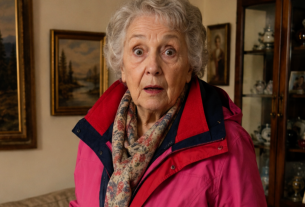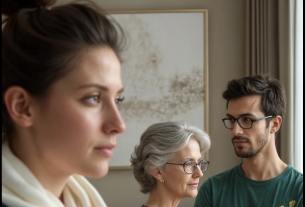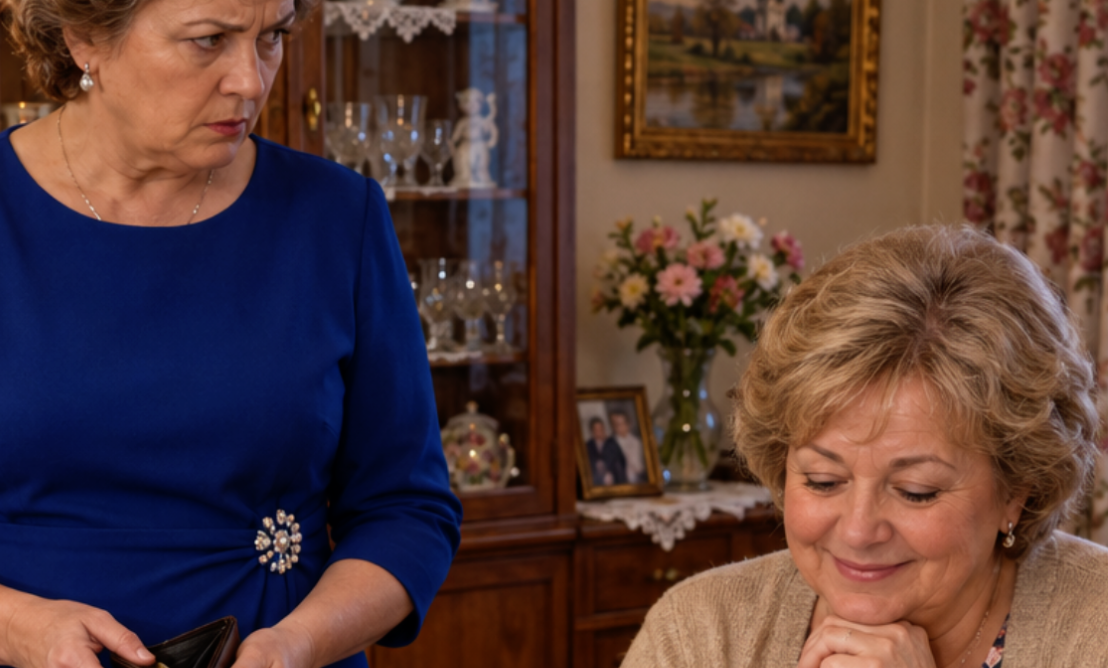
Iryna never visited her sister without her bag. It was big and brown with a brass clasp, and on the way there it dangled from her arm as if it weighed nothing, like an empty basket. But on the way home, the bag was always heavy: filled with jars of pickles, a bundle of dumplings, half a pie wrapped in foil. Valentyna noticed it long ago. She noticed but kept silent. Just as she had kept silent for almost fifty years.
Continued in the comments.
She was four years older than her sister. Once, during New Year’s in their childhood, they each got a tangerine. Their mother looked at Valya and said, «Share with your little sister, you’re older.» Valya handed over her tangerine whole. Irynka ate both, licked her fingers, and asked if there were any more.
Continued in the comments.
That’s how it was ever since. Only the tangerines kept getting more expensive over the years.
Continued in the comments.
* * *
Continued in the comments.
When Iryna’s son Vadym started at technical college and needed to pay for the dorm, Valentyna gave her own vacation money. When her sister’s washing machine broke, she paid for half of a new one as well. For Iryna’s birthdays, she didn’t give small things, but things meant to last: an electric oven, a warm camel wool blanket, a set of thick-bottomed pots. Every summer she sent Iryna jars of preserves because she always grew more in her garden than she could eat herself.
Continued in the comments.
Iryna always accepted. Sometimes she’d even say, «Well, it’s good you have it.» Valentyna never once heard a «thank you» from her in all her life. Somehow, it just never happened.
Continued in the comments.
She asked her sister for something only once. The autumn before last, the roof over her veranda started leaking and there were only a few weeks before the cold set in. The handyman told her the cost and Valentyna was four thousand short. She called Iryna, taking a long time to work up the courage to ask.
Continued in the comments.
«Valya, where would I get that?» her sister asked, truly surprised. «You know how much the utilities are! I spent almost half my pension on gas bills.»
Continued in the comments.
Valentyna ended up borrowing from a former coworker and paid it back in installments until spring. Two weeks later, at their cousin Halyna’s name day party, Iryna spent the whole evening turning her head so everyone could see her new gold earrings.
Continued in the comments.
«I bought them with the interest,» she explained to the guests. «I put the money in a deposit so it works for me. After all, you have to have a cushion at our age.»
Continued in the comments.
Valentyna went home that evening, sat in the kitchen under the clock, and stared out the window for a long time. She didn’t feel angry. Instead, she felt like she’d been pouring water into a bottomless pitcher her whole life, and only now noticed the table was wet.
Continued in the comments.
* * *
Continued in the comments.
Valentyna spent a week preparing for her sixty-fifth birthday. Iryna had scoffed about it back in the fall:
Continued in the comments.
«Sixty-five isn’t even a big milestone. Why waste money on it?»
Continued in the comments.
But Valentyna decided it was a milestone worth celebrating. Her son Andriy, who had worked in a big city three hundred kilometers away for many years, sent her money and told her over the phone:
Continued in the comments.
«Mom, promise me you won’t skimp, okay? Just once, make a celebration for yourself—not for everyone else.»
Continued in the comments.
And this time, she didn’t skimp. At the market, she picked out a large carp and baked it with onions and sour cream. She bought a piece of red fish and preserved it herself. She made aspic, olivier salad, herring under a fur coat, and even a cod liver salad—the only dish in the whole family that only Iryna really loved.
Continued in the comments.
A friend from the next village brought over homemade garlic sausage, and its aroma filled the whole veranda. Meanwhile, Valentyna spent two evenings baking a Napoleon cake. She spread the thin layers out on towels all over the kitchen—even on top of the fridge—while she whipped up the cream late at night, as the first wet snow fell outside.
There weren’t many guests. Lidiya came—they’d worked together at the post office for thirty years at the same counter. Their neighbors Oksana and her husband Yurii arrived too, bringing a new electric kettle with a light. Halyna traveled by minibus, carrying a bouquet of chrysanthemums.
Iryna was the last to arrive, wearing a new champagne-colored puffer jacket. She kissed her sister on the cheek and handed her a card with tulips on the front.
“Here, this is from me. I just can’t give more, you know how expensive everything is right now.”
Inside the card were two hundred hryvnias, folded in half. Valentyna thanked her and placed the card on the shelf of the display cabinet, right next to their mother’s photograph.
* * *
The first hour was warm and cheerful. Lidiya reminisced about the time they were searching together for a parcel that the village postman had mistakenly delivered to the wrong village. Yurii shared jokes, and Oksana laughed so hard she had tears in her eyes. Iryna was enjoying the food and, between toasts, mentioned that the bank had good terms now so she decided to keep her deposit there for another year.
Then she reached into her bag and pulled out a package. Inside were plastic containers with lids, stacked one inside the other and carefully labeled with a marker.
“Valia,” Iryna announced to the whole table as she busily opened the first lid, “can you pack me some of this sausage to take home? It’s homemade, you can’t buy this in a store. And some red fish, a piece of carp, and a slice of cake—Vadym loves Napoleon. You can’t eat all of this yourself anyway. And I’m not a stranger—I’m your sister.”
The table fell silent. Lidiya put down her fork. Oksana looked at Valentyna, then at the containers, then back at Valentyna.
Valentyna stood up. She left the room and returned with a red wallet with a clasp—Andrii had given it to her last year. She opened it, took out two hundred-hryvnia bills, and set them in front of her sister, right next to the empty container.
“What’s this?” Iryna asked, confused.
“This is your gift, Iryna. Take it. And take your containers, too. Nobody is packing up food today.”
“Are you serious? In front of everyone?”
“In front of everyone,” Valentyna answered calmly. “Because when we’re alone, I tried to tell you a hundred times and never could. I’ve given you things my whole life. Gave you my tangerine, paid for Vadik’s dorm, gave you this oven and pots. My roof was leaking and you showed me your new earrings. I kept hoping one day you’d say: ‘Thank you, Valia.’ Just once. I’ve been waiting fifty years, Iryna. I’m tired.”
Iryna’s face turned red up to her collar. She grabbed the money, swept the containers back into her bag, and stuffed the bag into her purse.
“I’ll never set foot in this house again!” she shouted from the doorway. “I lived just fine without your salads and I’ll go on living!”
The door slammed so hard that the tea set in the display cabinet rattled. For a moment, everyone was silent. Then Lidiya pulled the knife toward herself and asked,
“Valia, are we cutting the Napoleon cake? Or are we putting it on deposit?”
Yuriy was the first to laugh, followed by Halyna. Valentyna laughed too, even though her eyes were wet. They cut the Napoleon cake for everyone, and sat around for a long time enjoying tea from a new kettle that glowed blue as it boiled.
* * *
Iryna called on the third evening. Her voice was sweet, as if nothing had happened at all.
«Valyusha, hi. You’re not upset, are you? I just lost my temper a little—you know how it goes. Listen, I need a favor. Vadym is swapping his car, but he’s short thirty thousand. You live alone, what do you need that money for? I’ll pay you back later, somehow.»
«What about your deposit?» Valentyna asked.
«Oh, please! I can’t touch the deposit, or I’ll lose the interest. And another thing. For New Year’s Eve, we’re all coming to your place—my kitchen is too small, you know that. Can you cook like you did for your anniversary? But make more aspic this time, Vadym really loves it.»
Valentyna listened and looked at the cabinet. The tulip postcard still stood next to her mother’s photograph: Iryna had taken the money then, but left the card behind. And right now, Valentyna finally understood what she’d always been afraid to admit. To her sister, she wasn’t family. She was a storeroom and a cash machine at the same time. You take what you need, and don’t call unless you need something. Nobody ever thanks a fridge.
«No, Iryna,» she said.
«What do you mean, no?»
«There’s nothing for you. No money, no aspic for New Year’s. If you want to see your sister, come visit—but leave the shopping bag at home.»
On the other end, Valentyna could hear Iryna taking a breath.
«You’ve changed, Valya. Lida’s been in your ear, I saw how she looked at me!»
«No,» replied Valentyna. «It’s just that I’m sixty-five.»
And for the first time in her life, she was the one to hang up first.
* * *
That evening she sat in the kitchen for a long time. The clock kept ticking, the radiator gurgled quietly, and the snow outside was no longer melting. Valentyna picked up the postcard from the cabinet and opened it. Under the printed poem about happiness and health, her sister had written just two words: «From Irya.» No wishes, no «with love.» Valentyna folded the card and put it away in a box with old photos. Let it stay there.
In the morning, Valentyna went to the market and bought a kilo of tangerines. She peeled the first one right there at the bus stop and ate it all herself, every last segment. It tasted tart and smelled just like home used to at New Year’s.
That evening, she called Lidiya:
«Lida, come over for tea. I have tangerines. Don’t bring anything, just come.»