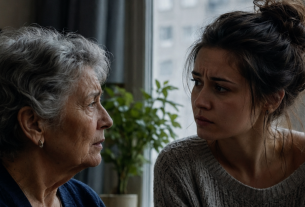
Nina watched as Edik carried her food processor out of the kitchen, saying nothing. Not because words failed her—she had plenty to say. But she realized by now that anything she said would end up written in his notebook, used as more evidence that she was “suffocating” him. That notebook, by the way, was his too. Bought during one of his personal growth courses. On it, he’d written: “My boundaries. My life. My rules.” Nina had seen that by accident, when he left it on the table.
Edik bought the food processor three years ago for her birthday. The gift was labeled ‘for you, my love.’ Nina was the one who used it, since Edik never made anything more complicated than a sandwich. But now, as he wrapped it up in plastic, he kept repeating that it was his appliance, bought with his money, and that he had every right to take it.
“Are you really planning to take the robot vacuum too?” she asked, even though she could already see him carefully winding up the cord.
“I bought it,” Edik replied, not even lifting his head.
He said it in the tone of someone reading an invoice. No anger, no guilt, no pause to look her in the eyes. Nina leaned against the doorframe and realized that in their nineteen years together, she had never seen him command unfamiliar men so confidently. At home, he could go six months without putting up a shelf.
When the moving truck left, the apartment looked like a waiting room. Empty corners, pale spots on the wallpaper where the pictures used to be, the TV cord sticking out of the wall like a stub. In the kitchen, there was just the old table, two chairs, and the fridge. Edik hadn’t taken the fridge because it wouldn’t fit in the elevator. Nina opened it, looked at the pot of soup she’d made yesterday for two, and closed it again.
She didn’t cry. She sat down on a chair and called her sister.
«Alla, he’s gone.»
«For good?»
«He took the food processor, the TV, the game console, the armchair, both floor lamps, and the microwave.»
«The microwave? He only ever used it to heat stuff up.»
«He said he bought it with his own money.»
Her sister was silent for a second, then exhaled so hard Nina could hear it through the speaker.
«Did he leave the kettle?»
«He left the kettle.»
«Well, at least that’s something.»
Nina laughed. It was the kind of laugh that felt both out of place and absolutely necessary.
The whole breakup saga had dragged on for a while, but it only turned into a decision after New Year’s. In January, Edik walked around with the look of someone who’d made a big internal decision. By February, he started saying the word «freedom» so often that Nina began to flinch, like at an alarm clock.
«I need freedom,» he would say over breakfast.
«A person needs freedom to breathe,» he’d repeat in the evenings.
Nina didn’t realize where all these phrases were coming from until she accidentally saw a subscription on his phone to some men’s self-help channel. The coach taught you to «break the routine with radical steps.» His avatar had a beard and a dazzling smile, promising freedom for fifteen thousand rubles a month.
Edik worked as a logistics manager at a building materials warehouse. He was forty-eight. The most radical thing he’d done in the past five years was buying an electric scooter, which sat unused in the hallway for two seasons until Nina sold it on Avito. By the way, Edik took the scooter too—even though he had never ridden it.
Now he had rented a studio on the outskirts, in a building with thin walls and an elevator that only worked half the time. Nina knew this because her husband himself told her over the phone when he called for the rest of his things.
«At least it’s quiet,» he said. «And nobody nags.»
«I never nagged you,» Nina replied.
«See, you don’t even notice when you do it.»
She hung up and stood in the kitchen for a minute, trying to make sense of that logic. She couldn’t, so she washed the dishes—which were now exactly half as many as before.
The first days without Edik felt strange. Not good, not bad—just strange. It was like someone had taken away not the furniture, but a constant background noise she’d never noticed until it was gone. Now the evenings were truly quiet. No clicking of the remote, no mumbling about the news, no more of that sound Edik made slurping tea from his big mug, leaning down instead of bringing it to his lips.
Nina worked as a pharmacist at a pharmacy. Surprisingly, her first week at work after he left was calm. Her colleague Sveta, who knew about Nina’s situation, would occasionally stop by with a sympathetic face and a chocolate bar. But Nina always waved her off.
«Sveta, I’m fine. Really.»
«Are you sure? You seem way too fine.»
«And how should I be? Throwing plates?»
Sveta shrugged and left. Nina thought that nineteen years of routine is a kind of anesthesia, lasting long after it’s all over. She didn’t miss Edik. She missed predictability. The schedule. That feeling that each evening would go just like the last, even if yesterday was boring.
On the third day, she bought herself a small TV. Cheap, with a thin frame. She didn’t hang it where the old one used to be, but put it in the kitchen above the table. She turned it on while cooking dinner for one. And that was okay. She’d eat dinner, watch some doctor show, then wash just her own plate, one fork, one glass. And head to read.
On the fourth day, her mother called.
«Ninochka, is it true that Edik’s gone?»
«It’s true, mom.»
«Where did he go?»
«He rented a studio. On the outskirts.»
«Alone?»
«Seems like it’s just him.»
Her mother was silent for exactly three seconds. Then she said:
«Idiot.»
And hung up. Nina smirked, thinking her mother had never spoken so much truth in a single word.
Meanwhile, Edik was adapting to his new life with the enthusiasm of someone who read a book on freedom but skipped the chapter on daily chores. Nina heard about it all not from him, but from their son, Artyom. He was twenty-five, living on his own, but kept in touch with both parents.
«Mom, dad bought himself a frying pan,» Artyom told her on Wednesday.
«Good for him.»
«He tried to make eggs on it and burned the handle. It’s flimsy, plastic. He put it on high heat.»
«He’s forty-eight, Artyom!»
«I know, mom. I said the same thing to him.»
On Thursday, Artyom called again.
«Mom, dad broke the washing machine. The landlord’s one. He was washing his sneakers.»
«Sneakers…»
«Yeah. Without a bag. They smashed everything inside. The machine was old anyway, as far as I understand.»
Nina listened to these reports with a feeling she couldn’t quite place at first. It wasn’t pity, or schadenfreude, or even longing. It was more like a tired sort of amazement. Nineteen years living with someone, and she still didn’t realize just how much he’d depended on the system of care she’d built—the one he called ‘the daily grind.’
Edik never cooked, never did laundry, never ironed. He had no idea when the toilet paper was about to run out. He couldn’t remember what kind of detergent she bought. He didn’t know how to choose meat. He couldn’t tell the difference between fabric softener and rinse aid. He changed the bed sheets no more than once a month. And he truly believed that all these things just happened on their own. Like the weather or sunrise.
Back when they lived together, Nina tried to talk about this a few times. But every conversation ended the same way. Edik would nod and say, just tell me what to do, and I’ll do it. But then he wouldn’t. And after a week, she would do it herself, because waiting was impossible. The sink wasn’t going to wait for a man to mature enough to wash it without being reminded.
Now Edik lived alone. And the sink was waiting just for him.
On Saturday, exactly eight days after he left, Nina was standing in the kitchen baking a cabbage pie. She always baked it on Saturdays. Because she bought cabbage on Fridays at the market from Ashot, who had been selling in the same spot for twenty years and knew exactly which head she liked. The routine hadn’t changed, even though her family situation had. The only thing that changed was the amount: not two pies, but one. A small one. Enough for her and her sister, if her sister happened to drop by.
At two in the afternoon, the doorbell rang.
Nina wiped her hands on a towel, walked to the door, looked through the peephole, and saw Edik. He was standing in the same jacket he had left in. Only now there was a fresh stain on the sleeve, something that looked like sauce. He was holding a bag in his hands. And the look on his face was one of someone trying very hard to make it all seem like a coincidence.
Nina opened the door.
«Hi,» Edik said.
«Hi.»
«I was just driving by. Thought I’d stop in.»
«You live on the outskirts. This is the other end of the city.»
He shifted from foot to foot and sniffed the air a little. Nina saw his nostrils twitch as the smell of the pie reached the landing.
«Are you baking a pie?» he asked in the kind of voice kids use when they ask about ice cream.
«I am.»
«Can I…»
He didn’t finish his sentence. Instead, he held out the bag. Nina peeked inside: there was a bottle of wine. Nothing fancy. Exactly the kind he used to buy for holidays, when he didn’t want to think about what to choose.
«Edik, did you come all the way across town for pie?»
«I came to check on you.»
«I’m fine, thank you. You didn’t have to.»
«Well, that’s good to hear. May I come in?»
She stepped aside. And he came in so naturally, so automatically, that he took off his shoes in the exact same spot he had been using for nineteen years. Even though the doormat had been gone for a long time.
Edik sat down at the table in his old spot. He looked around, noticed the new TV on the wall, and raised his eyebrows.
«Oh, you bought one?»
«Yes, I did.»
«It’s so small.»
«It’s enough for me.»
He nodded, tapped his fingers on the table, glanced over at the cooling pie on the stove, and licked his lips so honestly that Nina almost laughed. His whole new life, all his freedom and radical choices vanished in a second, as soon as he smelled the fresh-baked dough with cabbage and onions.
«I was thinking,» he began.
«About what?»
«That maybe we could talk normally. Like people. No hard feelings.»
«I’m not mad at you, Edik.»
«Good. Can I have a piece?»
Nina set a plate of pie in front of him. Only afterwards did she pause to wonder why she was doing it.
Edik ate with the look of someone listening to their favorite song after a long silence. With every other bite, he would close his eyes, gently nod his head, and make appreciative noises—noises he never made when he lived here and had this pie every Saturday.
«God, this is delicious,» he said, his mouth full. «Yours is always the best.»
Nina stood leaning against the counter, arms crossed, watching him. She was forty-six. She wore reading glasses and dyed her hair every six weeks. For the past nineteen years, her husband had mostly complimented her on her cooking. Not her dress. Not her smile. Not how good she looked after a tough week. Just the food. The pie is great. The soup turned out well. The cabbage is as always. As if she wasn’t a woman, but a cafeteria with free admission.
«Edik,» she said quietly.
«Hmm?» He looked up, not quite finished eating.
«Why did you come here?»
«I told you. Just checking in.»
«Did you come for the pie?»
«Well, for the pie too. What’s so strange about that? We did live together for nineteen years.»
«Nineteen years.»
«Exactly. Nineteen. Don’t I have the right to come back and have a decent meal?»
He said it so sincerely, with such genuine hurt, that for a moment Nina hesitated. Maybe it really was normal. Maybe ex-husbands always cross the whole city for a slice of pie, and it’s nothing unusual.
But then she looked at his plate. At the way he wiped up the sauce with bread so thoroughly, as if collecting the last bit. She remembered all those times over the years she stood at the stove while he lay on the couch. How many times she dragged bags from the market while he watched football. How many times she heard, «Well, alright, it’s okay,» instead of thank you. And how not once, not a single time, had he asked what she would like for dinner.
Edik finished eating. He leaned back in the chair and placed his hand on his stomach in that familiar gesture Nina remembered with distaste. Because after that gesture usually came: «Are you making tea?»
«Are you making tea?» he asked.
Not «should I make you some tea.» But «are you»—meaning make some for me too.
Nina silently turned the kettle on. Edik gazed out the window, looking completely at ease. As if he hadn’t moved out. As if he hadn’t hauled away all the furniture. As if he hadn’t given that speech about freedom and space. As if the last eight days had just been a business trip, and now he was home again.
«So how are you doing here? Are you okay?» he asked.
«I’m fine.»
«Isn’t it boring being alone?»
«No.»
«What do you do in the evenings?»
«I read. Watch a series. Sleep.»
He nodded, as if evaluating her routine and finding it lacking.
«Well, that’s kind of sad.»
«It’s not sad for me.»
«Alright, alright.»
He took a sip of tea, burned himself, cursed, and blew on the cup. Nina watched him and suddenly felt not tired surprise, but something else. Something cold and clear, like a winter morning just outside the window.
He didn’t come to see how she was doing. He didn’t come to have a conversation. He came to the place that worked for him, where there was food, tea, warmth, a clean space, and everything organized without him lifting a finger. He left their apartment, but he didn’t leave his habit of being taken care of. He thought a new life meant just new walls and a new address, but that everything else could be taken from the old life as needed. Just like he took the food processor.
«Listen,» he said, putting down his cup. «Do you think you could freeze a couple of containers for me? You know, some pie. I could come pick them up once a week.»
Nina almost choked on her tea. She slowly set her own cup down on the table.
«What did you say, sorry?»
«I mean containers. With pie. I’d stop by on Saturdays to take them. You’re baking anyway, and honestly, food’s a bit of a struggle for me right now.»
He said it with the same casual tone someone uses to ask for the salt. As if it was a completely normal request—to leave, take half the apartment, declare a new life, and still get a home-baked pie in plastic containers every week.
Nina stood up, went to the fridge, took a piece of paper and a pen off the magnet. She wrote down an address and a name, then handed it to Edik.
«What’s this?» he asked.
«The deli on Profsoyuznaya. Three minutes from your studio. Homemade pies. With cabbage, apples, meat. Eight hundred rubles per kilo. They’ve got borscht, dumplings, and even stuffed cabbage rolls on Thursdays.»
Edik looked at the paper. Then at her. Then back at the paper.
«Nina, are you serious right now?»
«Absolutely.»
«That’s not it. I don’t mean store-bought.»
«Edik, you chose a new life. In your new life, there’s no pie from me. That stayed in the old one, with those nineteen years you decided didn’t fit you anymore. And honestly, how can you even ask after you hauled off half the house?»
He opened his mouth and struggled to come up with a reply. Then he tried to approach it from another angle.
«I don’t understand why you’re reacting like this. I was just asking—like a human being.»
«You just asked your ex-wife to cook for you for free. That’s your idea of ‘like a human being.’»
«It’s not that hard!»
Nina gave him a long look. There was so much in her eyes, it could have filled a whole conversation.
«It wasn’t hard for nineteen years, Edik. Every day. Breakfast, lunch, dinner. Laundry, ironing, cleaning. Doctors’ appointments, paying the bills, groceries, cleaning supplies, light bulbs, water filters, cat food for the cat you dragged in and never once cleaned his litter box.»
«What does the cat have to do with it?»
«It has to do with you thinking everything just happens on its own. Like electricity. Flip a switch, use it, don’t have to pay.»
He got up from the table, looking as if she had insulted him.
«You know, I thought we could still talk like normal people.»
«We are talking like normal people. It just looks different now. Remember that—for good.»
Edik pulled on his jacket with a stain on the sleeve, grabbed his empty wine bag, and walked into the hallway. He put on his shoes and stood at the door, as if waiting for her to stop him. Nina stood in the kitchen doorway, arms crossed, not moving.
«Okay then,» he said.
«Okay.»
He opened the door, stepped outside, and turned to look back from the landing.
— And this cooking note, are you serious about it?
— I’m serious, Edik. Cabbage rolls on Thursdays.
He stood there for another second, then turned around and walked toward the elevator. Nina closed the door, turned the lock, and leaned her back against it.
She stood there like that for three minutes. Maybe five. Then she went back to the kitchen. Washed his plate and put it away in the cupboard. Wiped down the table where he had been sitting. Brushed away the crumbs. Then she grabbed her phone and called her sister.
— Alla, can you believe it, not even a week has passed and he stopped by.
— What for?
— For pie.
— You’ve got to be kidding.
— I’m not joking. He ate a piece and asked me to freeze containers for him for every week.
Alla was silent for so long that Nina checked to see if the call had dropped.
— Alla?
— I’m here. I’m just trying to find words I can actually say without cursing.
— Don’t bother.
— Nina, who is he to you now?
— Nobody.
— Then the pie belongs to no one as well.
Nina smiled and thought that her sister must have inherited from their mother that ability to say exactly what’s needed in the moment.
In the evening, she took out the leftover pie. Sat at the table. Turned on a TV show. And ate slowly, dipping each piece in sour cream, which Edik couldn’t stand. For nineteen years she’d bought sour cream only for herself. In little containers. And hid them on the top shelf so he wouldn’t complain.
Now the sour cream stood right on the table. In front of her. Next to the salt shaker. On full display.
Edik called three days later. Nina saw his name on the screen. She waited through four rings and then picked up.
— Hi, Nina.
— Hi.
— Listen, I’ve been thinking about us.
— There is no ‘us’, Edik.
— Why jump to that right away? I want to talk. Properly.
— Go ahead.
— Not over the phone. Let me come over.
— Don’t.
— Why not?
— Because you’re not coming to talk. You’re coming to eat. Like always. My place isn’t a restaurant. We’re done with that.
He went silent. And in that silence, Nina clearly heard something bubbling in a pot on his end.
— I can cook for myself, too, — he said defiantly.
— Then do it.
— I am!
— Excellent, Edik. Bon appétit.
She hung up. And realized that, for the first time in a very long while, she didn’t feel guilty or compelled to explain why she didn’t want to feed, comfort, serve, or take care of a grown man who had chosen to leave.
It was getting dark outside. In the kitchen, the refrigerator Edik couldn’t take with him hummed quietly. Turned out, that fridge was the most useful thing he left behind. Nina opened it. Took a little container of sour cream from the top shelf, which now wasn’t the top—it was the only shelf. She spread it on a piece of bread. And ate it, just standing by the window. In the kind of silence that no longer felt empty.
You know what’s funny? As I sit here and think, I realize—he never actually asked how I was. Not in the usual ‘How are you?’ sense. But how I really was. What I feel. What I think. What I want. The only thing he asked was whether I was bored being alone. And, from his tone, he was hoping I’d say yes. Just so he could feel needed again. To justify showing up for another slice of pie.
continued in the comments
But here’s the twist. I’m not bored at all. I’m at peace. Now I bake pies just for myself—filled with cabbage, apples, or whatever else I want. I buy the big tub of sour cream just because I can.