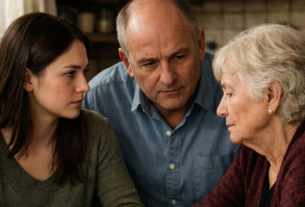
“Starting next month, you’ll pay fifteen thousand,” my mother-in-law said, placing a grid-lined piece of notebook paper in front of me. “I wrote everything down.”
I was peeling potatoes for dinner, the knife still in my hand.
On the paper, her teacher’s handwriting listed columns: electricity, gas, water, and a separate line for “house wear and tear.” At the bottom, twice underlined: “Inna – monthly.” And the total.
“Rimma Arkadyevna, am I understanding this right? You want me to pay for living here?”
“What did you think?” she sat down across from me and fixed her glasses. “I’m a direct person, don’t beat around the bush. For three years you’ve had everything done for you. You came to my son with just one suitcase, and now you’re living in a mansion with a veranda. Time to know your place.”
It was the sixth week since she’d moved in with us. She’d come from Rybinsk in mid-September, ‘just for a week to get some fresh air,’ then rented out her two-room apartment and stayed. She’s seventy-one, spent half her life as a school deputy principal, and speaks to everyone in that tone teachers use to scold students who show up late.
I put the knife aside. Wiped my hands on a towel, though they were still covered with starch and the towel was clean.
I’m forty-four, a dental technician, and I grew up in this house. Our home in Uglich is a real head-turner: a merchant’s house, stone on the bottom, wood on top, ornate carved trims. My father was a carpenter-restorer, bought this ruin in the nineties for the price of a used Lada, and spent twelve years bringing it back to life. He’s been gone five years now.
Gleb and I got together late in life, both of us after divorces. He moved in with two bags and a toolbox and has rewired the entire house since then. His mother used to visit twice a year, always polite but cold, admiring the garden and never asking me anything.
– Why am I expected to live here and enjoy everything for free?
– Just growing up in this house isn’t enough, – my mother-in-law tapped her nail against the paper. – If it weren’t for Gleb, your father’s mansion would’ve been sold off to strangers a long time ago. He bought it back. He’s the rightful owner here, and you’re just living with him. If we’re being honest, you’re just a dependent.
I didn’t even get angry right away. At first, I actually found it funny.
– Who told you that Gleb bought my house?
– My son told me. That’s all I need to hear.
– Nobody sold or bought the house. My dad gave it to me seven years before the wedding, through a notary. The documents are upstairs. Want me to bring them?
– You can print any piece of paper nowadays, – she folded her hands on the table. – Don’t take me for a fool, Inna.
The front door slammed in the hallway. Gleb was back from his shift; he’s an elevator technician and always smells a bit like machine oil. He’s forty-six, but as he stood in the kitchen doorway, he pulled his head in like a schoolboy.
– Gleb, – I slid the paper toward him. – Please explain to your mom whose house this really is.
He looked at the paper, then at his mother, then at me.
– Can we not do this right now? I just got home from work.
– Right now.
– Inna, let’s step outside.
***
We sat in his car in the yard. It was impossible to talk inside—the mother-in-law’s hearing is better than mine.
Gleb kept his hands on the wheel, though the engine was off. There was a maple leaf on the windshield, yellow with brown edges, and for some reason, I stared at that instead of looking at my husband.
– Did you tell her you bought my house?
– I did.
– When?
– Before the wedding. – He rubbed his face with his hand. – You have to understand. After the divorce, I lived in the factory dorm and left the apartment to my ex. My mother never called me anything but a loser. Then you came along, with this mansion. She would have thought I was just moving in for comfort. So I said your father was selling the house and I bought it back. That way, I was the one saving you.
– Three years, Gleb.
– She never lived here! She’d just visit for a couple days and leave. Who was it hurting?
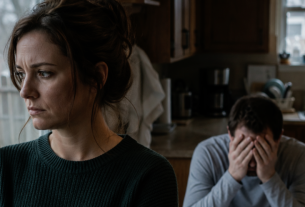
– Today, she charged me rent for living in my own home. I’m the one it’s hurting.
So that’s why she never asked any questions. Everything had been explained to her already.
He fell silent. Then he started talking quickly, staring at the steering wheel:
– She had an episode in September, right on the bus. That’s why she came—she’s scared to be alone. The cardiologist appointment is in two weeks, on Monday. Give me until that Monday. I’ll tell her myself, after she sees the doctor. If we tell her now, she’ll be bedridden, and that’ll be on both of us.
I did the math in my head. Two weeks. An elderly woman with heart problems who was lied to by her own son. And me, being called a dependent in my own kitchen. Who should I feel sorry for first?
– Here’s the deal. I’m not paying a cent. She takes away that paper today. And on Monday evening, you tell her everything—with me there.
– I promise. You have my word.
By dinner, the paper had disappeared from the table. My mother-in-law ate in silence, staring into her plate.
The next morning, I stepped out onto the veranda and didn’t hear any ringing. The copper bell my dad brought from Valday and hung over the door so he’d know when I came home from school was gone. Only a wire loop was left on the nail.
Who could be bothered by a bell?
– It clanks, – my mother-in-law said without turning around. She was standing by the veranda window with a tape measure, jotting down numbers right onto her palm. – I took it down. That ringing gives me a headache.
– Where is it?
It’s in some drawer. I didn’t throw it away, don’t worry.
I was running late for the lab so I didn’t bother searching for it. Should have, though.
That day at work I was finishing up a bridge for a long-haul trucker. He had chipped the same tooth three times on dried vobla and kept swearing to me every time that he was done eating it. But that’s not really the point.
On Wednesday, I came home and didn’t recognize the veranda. Dad’s wicker chair was gone. My desk with the lamp, where I would finish up wax molds in the evenings, gone too. Along the wall stood two folding beds, made up with our guest blankets.
«By winter, Zhanna and her son will move in,» my mother-in-law smoothed out a crease on a blanket. «She can’t afford her rented one-bedroom anymore, and this warm veranda is sitting empty. The boy is fifteen, he needs space.»
Zhanna is her youngest, my sister-in-law—she’s forty-one, works as a curtain shop assistant. No one had mentioned the move to me.
Dad had insulated the veranda his last winter: installed double windows, put in a radiator, and made a larch windowsill himself. He said he’d sit there in his old age and watch the Volga. He only got to sit one spring.
«Where are the chair and desk?»
«In the shed. Just junk, Inna. I’m a straightforward person: you cluttered up the veranda.»
I sat down on one of the folding beds. It squeaked.
«Rimma Arkadyevna, let’s agree on something reasonable. Restore the veranda as it was. Zhanna visits, but she doesn’t live here. And about the groceries—since you arrived, I spend nineteen thousand more on food each month: fish, market cottage cheese, your Sunday guests. I’m the one paying. You rent out your apartment for twenty-eight thousand—you bragged about it to your friend right in front of me. Not a ruble of that went into our household budget. Can we at least split the costs fifty-fifty?»
«You’re counting my money now?» she straightened up. «That rental money gets saved, and it’s none of your business for what. Whoever invests in this house gets a say. What did you bring? A suitcase?»
«So am I right in understanding you’re not going to discuss this?»
«I only make deals with equals.»
That evening, I called my husband—he was on an emergency job.
«Your mother is moving Zhanna and her son into the veranda.»
«Can this wait? I’m standing in a mine right now.»
«Who brought the folding beds?»
A pause. Somewhere on his end, steel was humming.
«Mom asked me. Inna, just wait until Monday. Everything will be sorted out then, all at once.»
I hung up without saying goodbye.
So he was the one who brought in the folding beds. In the afternoon, while I was at work. The same person who asked me for peace until Monday was moving other people’s beds into my home.
***
Late at night I logged onto the government services and ordered a fresh property extract for the house. The old certificate was in a folder, but I needed a document with today’s date, so no one could say it was ‘printed earlier.’ I ordered it from my phone, sitting on the staircase. Why on the stairs, I don’t even know.
Then I went down to the kitchen for some water. In a drawer, among screwdrivers and rolls of electrical tape, there was a little bell. The clapper was wrapped in a paper napkin.
I held it in my hand for a while before putting it back. Hanging it up in the middle of the night would mean declaring war a week before the date I set myself.
There was a nightlight glowing in the veranda. My mother-in-law was sitting on the folding bed in her shawl, a blood pressure monitor with an unwrapped cuff lying on her knee.
«Can’t sleep,» she said before I could even ask. «But don’t worry, I’m not dying. I’m just used to it.»
I stood in the doorway.
«I can’t at home,» she said, gazing into the dark window. «His slippers are still by the door. It’s been two years and I still can’t bring myself to move them. I told the tenants: do not touch the slippers. It’s silly, isn’t it? Strangers live there, but the slippers stay.»
Her voice broke on the last word. She took off her glasses and started wiping them with the edge of her shawl, though it made no difference in the dim light.
«But here I hear voices. Gleb walks around, you rattle the dishes. If only Zhan could be here too, the boy. So everyone would be together. I don’t mean anything bad, Inna.»
I brought her a glass of water. She drank half and suddenly ran her tongue over something in her mouth.
«By the way, your bridge doesn’t bother me at all. It’s a good bridge. Even in Rybinsk they wouldn’t have done one that good, not even for money.»
I made that bridge for her last year for her birthday. She said ‘thank you’ at the time and never mentioned it again.
«Try to sleep, Rimma Arkadyevna.»
«And think about the payment,» she said to my back in her usual tone. «Fifteen thousand is really quite reasonable.»
I went upstairs and lay down without undressing. It was impossible to feel sorry for her and be angry with her at the same time—I could only manage to do it one after the other.
And on Sunday, she was expecting guests. Third Sunday in a row.
What Mom Invested In
By lunchtime, Zhanna arrived from Rybinsk by bus with her son and her mother-in-law’s friend from the veterans’ choir—a woman wearing a lizard-shaped brooch. The lizard was green, with one missing eye.
I started cooking in the morning. Out of spite, I made only one salad instead of three, and no one even noticed.
«This is Inna, Gleb’s wife,» my mother-in-law said, gesturing toward me as everyone sat down. «She lives with us on borrowed time, but we’re not chasing her out. A boarder—just in the good sense. Inna, slice some bread.»
The friend laughed and then stopped right away. The nephew buried his face in his phone. Gleb was cutting up meat that had long since been sliced.
I’d heard that word from her before, but back then it was just the two of us in the kitchen. Now she said it over my table, on my tablecloth, in front of a stranger who would repeat it to the whole choir tomorrow.
I placed the bread knife on the cutting board.
«Rimma Arkadyevna, how about I tell the guests myself who has what kind of rights in this house?»
«Inna,» my husband found my knee under the table and squeezed it. «Not now. Please.»
«Go ahead, go ahead,» my mother-in-law grinned at her friend. «She’s got a bit of a personality.»
I got up and left for the kitchen. If I had stayed at the table, I would have said everything, but I had promised to wait until Monday. I stood by the sink, running my hands under cold water until my fingers went numb.
Zhanna followed, carrying the empty salad bowl.
«So what?» she said, quietly closing the door. «Just put up with her. Mom put four hundred thousand into this house, she has a right to call the shots.»
I turned off the tap.
«Invested in what?»
Zhanna set the salad bowl down. Very carefully, right on the edge of the table.
«Oh, Gleb didn’t tell you. I see. Well, ask him.»
«Zhanna. You know the house is mine? That no one bought it out?»
«So what? Yes, I know.» She stared at the salad bowl. «Gleb asked me to be quiet. It’s easier for Mom to believe her money is in these walls, not where it really went.»
«And you were planning to move in here—knowing all that.»
«I don’t have any money to pay for the rent,» she replied and walked out.
***
Our guests left on the evening bus. I can’t even remember how I managed to make it through the rest of dinner or who ended up doing the dishes. I think it was me.
I waited for Gleb upstairs in the bedroom. He walked in and just stood by the door.
«Did Zhanna tell you?»
«Say it yourself.»
He sat down on the edge of the bed with his back to me.
«Before the wedding, my mother gave me all their savings. Hers and dad’s—they were going to use that money to buy a new car. I told her it was for payment on the house, that I didn’t have enough. But the truth was, I paid off a loan for the tire shop. The one from my first marriage; I told you about it before. Collection agents were already waiting for me at the entrance.»
«You told me about the loan. But not that you paid it off with your mother’s money on my house.»
«I thought I’d pay her back gradually, and she’d never know.»
«How much did you pay her?»
He didn’t answer.
I stared at his back. I ironed that shirt for him just this Friday. It’s strange what sort of random things go through your head when your husband confesses he’s been using you to cover his debt.
That night, I did some counting. She’s been living here for a month and a half. The extra expenses for food during that time add up to exactly what she gets from her tenants per month. Every Sunday, I served her guests. The veranda was taken away from me, dad’s things moved to the shed, and then on top of that, a bill was slapped down.
Then I started to see it from another angle. An old woman gave her son everything she and her husband had saved. In her mind, she paid for these walls. She’s not some freeloader; she’s a wronged investor coming to see what’s rightfully hers. And the episode on the bus was real—Gleb didn’t make that up.
Maybe I’m the cold one here? Maybe I should just give her the money, wait another week for the doctor, and let my husband tell her the truth himself? It’s not like it would ruin me financially.
I got up and walked to the window. Down on the veranda, the nightlight was on again—she was up, as usual. Sitting there with her blood pressure monitor, probably thinking she’s guarding her own money. Should I go downstairs and talk to her myself? In the middle of the night, without Gleb? But what if she feels unwell, and the only one around is me—the supposed mooch?
By morning, I had almost decided to wait.
On Monday, I left for work earlier than usual. At the end of our street, near the garbage bins, I saw Dad’s old wicker chair. A wet piece of cardboard was lying on the seat.
I stopped. My bag slipped off my shoulder to my elbow, and I didn’t bother to fix it.
The chair was light. I carried it home by myself, put it in the shed, and locked the door. My mother-in-law watched from the porch.
«Gleb took it out, I asked him to,» she said. «It’s falling apart, Inna.»
I walked right past her. At the lab, I logged into the government services portal: the statement had already arrived last Thursday. I printed it out, along with a sample rental agreement I found online in five minutes. The printer was sketchy, so I had to print everything twice.
There was one week left until her doctor’s visit. I had no intention of waiting any longer.
The contract on the kitchen table
That evening, they were both in the kitchen. My mother-in-law was peeling apples for jam, the peel curling from her knife in one long strand. Gleb was fixing the outlet near the fridge.
I put the statement on the table.
«Rimma Arkadyevna, please read this.»
«More paperwork again.»
«This is from the government portal, dated today, with a verification code. You can check it on your tablet.»
She wiped her hands, put on her glasses, and read, moving her lips softly.
“I’m the owner,” I said, my voice calm even though it surprised me. “The reason? A gift deed from my father. The date? Seven years before our wedding. Gleb didn’t buy this house. He never purchased it at all. He lives here because he’s my husband.”
My mother-in-law lifted her eyes to her son. The screwdriver he was holding froze in his hand.
“Gleb?”
“Mom, can we not do this right now?”
“Gleb.” She set the paper down. “And what about my four hundred thousand?”
He crouched down by the wall, staying right where he was.
“I paid off my tire shop loan with that. Otherwise they would’ve let me go from the factory, Mom. I wanted to pay you back.”
“Your father and I spent eleven years…” she started, then trailed off. She took off her glasses and put them down with the lenses facing down, something she never did.
The stovetop clicked softly as it cooled. An apple fruit leather sat on the table, curled up.
“I’m a straightforward person,” my mother-in-law said, speaking into the table, but stopped before finishing.
I knew I should have stopped. I could see it was the right thing to do. But I didn’t.
I put another sheet of paper on the table next to the first.
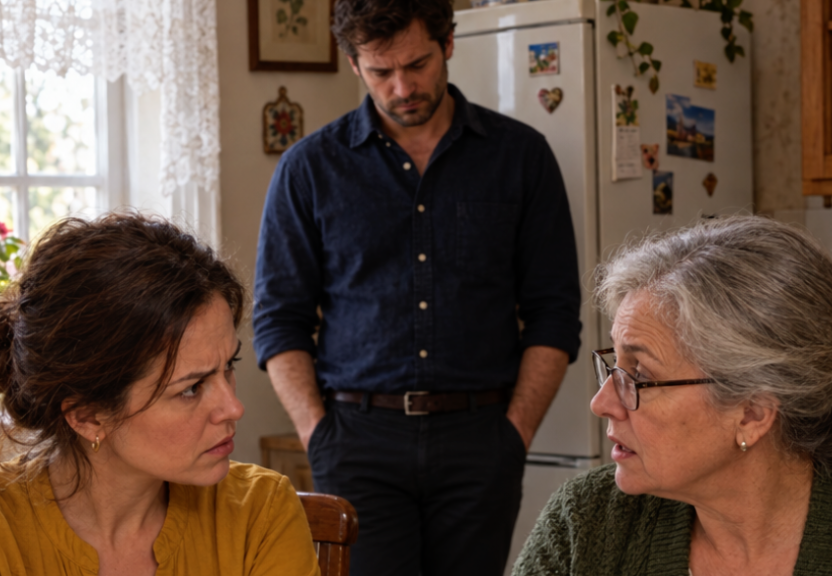
“Now about the notebook paper. You set a rent for me to live here. I’m setting one for you. The room upstairs—twenty-eight thousand a month, the same as what you charge your other tenants. The lease starts on the first of the month. If that doesn’t work, free up the room by Sunday. The veranda—today. Zhanna isn’t moving in here.”
“You’re going to charge an old woman like me to stay here?”
“You were planning to charge me.”
“I thought this was my son’s house!”
“And I spent a month and a half listening to people call me a freeloader. Right in front of your guests.”
“Inna,” Gleb stood up. “We had a deal. There’s only a week left. She has a doctor’s appointment.”
“We did. But this morning you threw my father’s chair out with the trash. The week is over.”
My mother-in-law got up, holding onto the back of the chair. She stood there for a moment, then walked to the stairs, the railing creaking under her hand with each step. The agreement was left on the table.
I expected her to say something about ingratitude, or that she’d never set foot here again. She said nothing. Upstairs, the door closed without a word.
Gleb looked at me.
“You could’ve just told her about the house. About the house, and that’s it. Why did you have to name a price?”
“So she’d remember.”
“She’ll remember,” he nodded. “For the rest of her life, she’ll remember that her daughter-in-law charged her rent.”
He went upstairs to his mother. I put the apples in the fridge because they were browning. I sat down. My legs ached, even though I’d been at my desk all day.
***
That Monday, the day she was supposed to see the cardiologist, I was alone in the house.
My mother-in-law never signed the agreement. On Saturday, Gleb moved her—with her bags—to Rybinsk, to Zhanna’s rented one-bedroom: her own apartment is rented until May. He’d take her to the doctor from there. He only sent me one message: “They said she needs to be monitored and to avoid stress.”
They left in the morning. My mother-in-law came downstairs in her coat, buttoned all the way up, walked past me through the hallway, and stopped at the front door. I thought she might say something. Instead, she straightened my scarf on the hanger—it was crooked—and left.
She left the room tidy: bed made, nothing on the nightstand, just a forgotten teaspoon in a glass.
He spends his nights there too, sleeping on the floor on an air mattress. He took his winter coat and his drill. He put his car up for sale to pay back his mother’s debt. When it came to us, he just said, “We’ll talk later.” I never asked when that ‘later’ would be.
I folded up the cots and put them away in the shed. I brought the armchair back to the porch, the table too. Now I cook for just one, and the pot of borscht lasts four days. The neighbor over the fence doesn’t say hello anymore—she saw my mother-in-law carrying bags to the car.
I wanted to keep the notebook page with the columns, so I searched the entire house. I never found it.
Yesterday, Zhanna called.
«So what did she ever do to you?» she yelled into the phone. «Her own son took everything from his mother, down to the last thread, and now you’re charging her rent like she’s a stranger!»
I didn’t argue. I turned off my phone and went to clean the windows on the porch—even though I’d already cleaned them back in September.
I took the little bell from the drawer with the screwdrivers, unwrapped it from its napkin, and hung it back on its old nail. But now there’s no one to come in through the porch, so the bell stays silent.