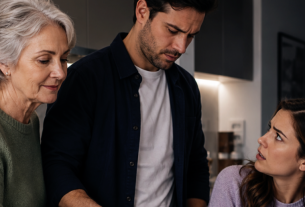
“Elena, do you really think I’m going to end up wandering around apartment buildings after the divorce?” Lyudmila Nikolaevna pulled her sweater out of the bag and calmly placed it on the closet shelf. “Don’t make me laugh. I’ve been living here for two years now.”
Elena stood in the bedroom doorway, watching her former mother-in-law unpack her things with such confidence, as if the apartment was her own country house and her son’s divorce from Elena was just a bothersome piece of paper she could shove into a back drawer.
It was a hot July day outside. The window was slightly open and the air drifting in brought dust, hot asphalt, and the scent of freshly cut grass. Children were chasing a soccer ball in the yard, someone laughed loudly by the entrance, and inside Elena’s apartment the thing she had been preparing for nearly a month was finally happening.
Only Lyudmila Nikolaevna didn’t know about it yet.
“You lived here because I allowed it,” Elena said calmly. “That permission has ended.”
Her mother-in-law turned to her over her shoulder. Her face now looked bored, even a little condescending.
“Don’t start. You’re not heartless. Where am I supposed to go now? My blood pressure is high, my leg still hurts after the surgery. And Vadik will come here anyway. You’re not a stranger.”
“I am a stranger now.”
Lyudmila Nikolaevna slammed the closet door shut—not out of fear, but from irritation. She wasn’t used to Elena giving short, unhurried answers. Before, her daughter-in-law would explain, justify herself, pick gentle words so nobody would get offended. In recent years, Elena seemed to speak as if apologizing in advance for simply living in her own apartment.
But that was before.
Two years ago, Lyudmila Nikolaevna moved in with them after her knee surgery. Everything seemed different then. She called her son Vadim in the evening, said she was afraid to be home alone, needed her medication on a schedule, had to go for bandage changes, the clinic had long lines, and the neighbor wasn’t obligated to help. Vadim looked at Elena with that look that meant: ‘You understand, right?’.
Elena understood. Back then she still tried to be a good wife, a good daughter-in-law, a good person. She thought offering a little help wouldn’t destroy anything. Lyudmila Nikolaevna had her own room in a small house outside the city, but after surgery she really did need care. Elena herself suggested bringing her over for a few weeks.
A few weeks turned into a month, then three, then a year. Lyudmila Nikolaevna settled in quickly. She learned where the towels were kept, what groceries Elena bought, the day the store got fresh vegetables, the time the courier delivered medicine. After that, she started correcting Elena: you’re not cutting right, not storing things right, bought the wrong thing, Vadik won’t eat that, the doctor said otherwise, normal people do it differently at home.
Elena’s silence wasn’t weakness. She tried hard to save her marriage. At first she told herself her mother-in-law was old, just out of surgery, nervous. Then she thought Vadim had a hard time choosing between his mother and his wife. Then she believed making a scene would only make things worse. But one morning, she finally realized something simple: things were already bad; everyone had just gotten used to thinking her patience was normal.
continued in the comments
The apartment belonged to Elena. She bought it before her marriage, back when she worked as an administrator at a private clinic, picking up extra work at medical equipment exhibitions and saving every bit she could. Later, she sold the old room inherited from her father, added her savings, and purchased a one-bedroom apartment in her own name. Vadim came into her life afterward. He joined her in a fully prepared home—renovated, filled with appliances, cookware, order, and a woman who knew how to keep everything under control.
At first, Vadim was impressed by all of this. Then he got used to it. Eventually, he started taking it for granted.
The divorce didn’t happen because of a scandal, cheating, smashed plates, or late-night drama. It was much simpler: one day, Elena overheard her husband once again discussing her apartment with his mother. Not the repairs, not day-to-day issues, but the apartment itself.
She came home from work early, unlocked the door with her key, and heard Ludmila Nikolaevna’s voice coming from the kitchen:
“Don’t rush to finalize the divorce. Elena is forgiving. Once she spends some time alone, she’ll realize that life without you feels empty. And I’ll stay here for now so she doesn’t get too comfortable. The apartment is nice, the neighborhood is convenient. Why go back home?”
Vadim replied wearily:
“Mom, she already filed the papers at the registry office. I signed them too. We don’t have kids, there’s nothing to divide. The apartment is hers, the car is mine—we’ve settled everything.”
“‘Settled!’” scoffed Ludmila Nikolaevna. “Are you a man or what? You lived here for seven years. That means you have rights. So do I. She fed me for two years—am I supposed to end up on the street now?”
Elena didn’t go in right away. She stayed in the entryway, slipped the keys into her pocket, and kept listening—not out of curiosity but calculation. She needed to know just how far they were willing to go.
Vadim didn’t argue with his mother. He just said:
“Don’t start with her right now. Let the divorce go through peacefully.”
That same night, Elena dug out the folder with her documents: the certificate of ownership, the deed of sale, an extract, old payments, receipts for major purchases, and utility bills. Everything was in her name. Over the years, Vadim hadn’t contributed to the apartment, major renovations, or furniture. He’d sometimes buy groceries, occasionally bring his mother medicine, but more often handed Elena the shopping list.
A week later, they finalized the divorce at the registry office. They had no children, nothing jointly acquired worth going to court over. Vadim kept his composure. He even tried to joke on the way out, saying they’d “parted ways like civilized adults.” Elena looked at him in such a way that his smile vanished.
“It’ll only be civilized when your mother leaves my apartment,” she said.
“Lena, give her some time.”
“How much?”
“Well… a month.”
“Two weeks.”
“She just had surgery.”
“That surgery was two years ago.”
Vadim rubbed the bridge of his nose, looked away, and promised to talk to his mother. Elena didn’t believe him—and she was right not to.
Even after the divorce, Lyudmila Nikolaevna didn’t change her behavior one bit. Every morning, she took over the kitchen, blasting the radio from her phone, shuffling through her bags of medicine, and insisting on a specific brand of cottage cheese. During the day, she called her girlfriends from the countryside to chat about how ‘Lenka and Vadik only did the paperwork so far, but it’s not serious.’ By evening, she would check what Elena brought home from the store.
On the third day after the divorce, Elena came home empty-handed.
«Where are the groceries?» Lyudmila Nikolaevna asked, peeking out from the kitchen in surprise.
«At the store,» Elena replied.
«What do you mean?»
«It means I bought dinner for myself on the way home.»
Her mother-in-law stared at her for a few seconds, as if she was trying to translate from a foreign language.
«Elena, I’m on a diet. I can’t just eat anything.»
«Your son knows,» Elena replied.
«Vadik is working,» Lyudmila Nikolaevna said.
«Then he can buy groceries after work,» Elena answered.
Lyudmila Nikolaevna frowned, her face showing the look of someone whose daily routine had just been disrupted.
«You’re being petty,» she complained.
«I’m just counting,» Elena said.
«Counting what?»
«Money, time, and my responsibilities. You’re no longer on that list.»
That evening, for the first time, Lyudmila Nikolaevna called Vadim not to complain, but out of genuine concern. Elena overheard snippets of their conversation from the other room: «she’s acting strange,» «didn’t buy anything,» «talks to me like we’re strangers,» «you need to come.» Vadim showed up an hour later, wearing a light shirt, looking annoyed and sweaty from the road. He went straight to the kitchen, where his mother sat looking like the injured party.
Elena didn’t join them right away. She finished an email for work, saved the file, closed her laptop, and only then went to the kitchen.
«Len, we need to talk,» Vadim began.
«Go ahead,» Elena replied.
«Mom needs some time. You know how hard it is to sort things out quickly in the summer,» Vadim said.
«I understand perfectly. That’s why I’m giving her ten days,» Elena said.
Lyudmila Nikolaevna looked up suddenly.
«You’re giving me a deadline?» she asked.
«Yes,» Elena replied.
«I’m your husband’s mother!»
«Ex-husband,» Elena corrected her.
«That’s just a formality!»
Elena walked over to a drawer, took out a folder, and placed it on the table—not tossed or shoved, but set down carefully, right in front of Vadim.
«These are the documents for the apartment. I bought it before marriage. Here’s proof that Lyudmila Nikolaevna isn’t registered at this address. Here’s a list of expenses I’ve covered over the past two years for her food, medicine, travel, and household needs. I’m not asking for anything back, though I could at least ask why a grown son managed to shift responsibility for his mother onto his ex-wife. But as of today, that’s all over.»
Vadim opened the folder. His face grew hard.
«You collected all this on purpose?» he asked.
«Yes,» Elena replied.
«Why?» Vadim pressed.
«So you can’t pretend not to understand,» Elena said.
Lyudmila Nikolaevna craned her neck, trying to get a look at the documents.
«So that’s who you are. Did you count every pill I took?» she accused.
«No. I just calculated how much someone’s nerve costs when it’s called family help for too long.»
Vadim looked up at Elena.
«Len, don’t treat mom like this,» he pleaded.
«Then you talk to her yourself. But the outcome must be clear: in ten days, her things should be out of my apartment and the keys should be returned to me in person.»
«And if she can’t make it in time?»
— She’ll make it. She has a son, a house in the suburbs, and an adult daughter in a nearby district. She’s not someone stranded at the train station without papers.
Lyudmila Nikolaevna stood up abruptly. Her chair scraped loudly against the floor.
— I won’t go to my daughter’s. She has two kids and a strict husband.
— So it’s not convenient for you there, — Elena remarked calmly. — Got it.
— Who do you think you are?
— Calling things by their names.
Vadim slapped his palm on the table. Not hard, but enough to show his irritation.
— Enough. We’re all tired. Let’s not turn this into a war.
Elena slowly turned towards him.
— There won’t be a war if your mother packs her things and returns the keys. You like peaceful solutions, right? Here’s one.
He looked at her for several seconds. Elena could see him trying to find his old wife—the one he could convince, shame, or accuse of being heartless. But the old Elena wasn’t in the room anymore. Now stood a woman who had done the math, made her decision, and left no room for pressure.
For the next ten days, Lyudmila Nikolaevna turned the apartment into a little theater. Each morning she wandered the rooms with heavy sighs, slammed cupboards, called her friends to complain that her former daughter-in-law was ‘kicking out a sick woman.’ During the day she refused to eat anything Vadim bought because it was ‘not right’ and ‘too dry.’ In the evenings, she perched by the TV and cranked up the volume, as if trying to reclaim with noise what she was losing on paper.
Elena didn’t argue. She stopped joining unnecessary conversations altogether. She bought her own groceries, stored them in a container with a lid, and had dinner on the way home or at her own table. She didn’t touch her mother-in-law’s things. But every evening, she marked another day off the countdown on her phone’s calendar.
On the sixth day, the downstairs neighbor, Galina Arkadyevna, caught Elena by the elevator.
— Lenochka, can I ask you something? Lyudmila Nikolaevna says you’re kicking her out without a penny and with her bad leg. Is that true?
Elena looked at her neighbor. Galina Arkadyevna was attentive—not mean, just curious. By now, Lyudmila Nikolaevna had surely told half the building her version of the story.
— Galina Arkadyevna, the apartment is mine. Lyudmila Nikolaevna isn’t registered here. She came temporarily after her surgery two years ago. Now my marriage to her son is over. I gave her time to pack up and move back to her house or her children. Vadim knows about it.
The neighbor seemed embarrassed and adjusted her bag on her shoulder.
— She says she has nowhere to go.
— She has a house. She has a son. She has a daughter. It’s just easier for her here.
Galina Arkadyevna squinted, quickly piecing together a new version of events in her head, then nodded.
— I see. I thought something wasn’t adding up. Yesterday she told me you were obligated to support her.
— Exactly. It doesn’t add up.
By evening, the whole apartment building knew the second part of the story. Lyudmila Nikolaevna noticed the change right away. The neighbors stopped their sympathetic sighs and started asking more specific questions. Does she have her own home? Why doesn’t her son take his mother in? Why should the former daughter-in-law pay for groceries after a divorce? Lyudmila Nikolaevna returned home, cheeks flushed, gripping her purse so tightly the skin on her fingers creased.
«You embarrassed me in front of the neighbors!» she declared as soon as she walked in.
Elena was sitting at her laptop, double-checking the budget for an offsite project. She didn’t look up right away.
«I answered a question.»
«You made me look like a freeloader!»
«You told everyone in the building that I’m supposed to support you.»
«I never used that word!»
«That’s exactly what you meant.»
Lyudmila Nikolaevna walked into the room and stood next to Elena.
«Listen closely. I’m not going anywhere. Got it? Vadim lived here, so I’ll live here too. You wouldn’t dare kick out an elderly woman. The neighbors won’t allow it.»
Elena slowly closed her laptop. Then she stood up.
«The neighbors have nothing to do with my property.»
«Property, property—you’re stuck on that. Who do you think you even are without Vadim?»
Elena looked down at her. Lyudmila Nikolaevna was shorter, but always tried to win with her voice. Now, even that didn’t help.
«A woman with an apartment, a job, papers, and patience that has finally run out.»
«I’ll call my son.»
«Go ahead.»
«He’ll come and set you straight.»
«Let him come. He can take your boxes with him while he’s at it.»
Vadim arrived the next day—not alone, but with his sister Oksana. Elena realized that Lyudmila Nikolaevna had decided to call a family council and pressure her with numbers. Oksana entered the apartment confidently, dressed in a bright summer suit, phone in hand, and wore the expression of someone who had already decided who was guilty.
«Lena, this really isn’t nice,» she began without even saying hello. «Mom is anxious. She’s getting older.»
«Oksana, come into the kitchen. This will be a short conversation.»
Oksana hesitated for a moment. She had clearly been expecting apologies, not an invitation to a business meeting.
At the table, Elena laid out three sheets of paper. The first listed Lyudmila Nikolaevna’s belongings: clothes, medications, documents, a small TV, a folding chair, and several boxes of dishes she brought from the countryside. The second had the moving date. The third had numbers for a moving service and a private caregiver, in case the children needed help with their mother.
«Here are her things. Here’s the deadline. Here are contacts for people who can help with moving and care. I’m not keeping anything. I’m not standing in the way. I even helped to organize everything.»
Oksana took one of the sheets, skimmed it, and smirked.
«You’re acting like you’re at work.»
«Exactly.»
«Can’t you handle this more humanely?»
«There were two years for a humane approach. Now it’s time to be grown-ups.»
Vadim stood by the window, hands clasped behind his back. He looked tired and angry. Elena knew this look well. It meant he wished the problem would just disappear, and for everyone to stop demanding he make decisions.
«Lena, Mom doesn’t want to go back to the countryside,» he said.
«That’s not an argument.»
«The house there is old.»
«It’s her house.»
«It’s cramped for Oksana.»
— These are your family matters.
Oksana frowned.
— So you don’t care at all?
— I do care. That’s why I didn’t kick her out on the very first day after the divorce. I gave her some time, made a list, and let both of you know. But I’m not going to act as a free boarding house for a woman who treats me like staff.
Lyudmila Nikolaevna threw up her hands.
— Did you hear that? Boarding house! That’s what she calls me!
— No, — Elena turned to her. — That’s how you used my apartment.
Oksana placed the sheet on the table.
— Mom, seriously, why won’t you stay with me, even for a while?
Lyudmila Nikolaevna quickly looked at her daughter. Irritation briefly flashed in her eyes: her daughter was supposed to attack, not ask uncomfortable questions.
— You have kids. I’ll just be in the way.
— I have a spare room that’s empty while Dima is away on business. You said so yourself.
— Your husband has quite the personality.
— And Elena, what, isn’t allowed to have a personality?
Elena raised an eyebrow slightly. Now this was interesting. Oksana had come here to put on pressure, but after hearing the facts, she started calculating. And she was pretty good at calculating.
Vadim noticed this too.
— Oksana, don’t start.
— No, wait a minute. Mom lived with Elena for two years. We all got used to it. I’m not innocent either, it was convenient for me that she was here. But if the divorce is final, it’s strange to demand that the ex-daughter-in-law keep handling everything.
Lyudmila Nikolaevna turned pale with indignation.
— Darling, whose side are you on?
— I’m on the side of common sense.
A thick, heated silence filled the room. Outside, a car drove by with loud music, and in the yard someone shouted at a child not to run through the flowerbed. But inside, it became clear: Lyudmila Nikolaevna’s family front had cracked.
— Alright, — Elena said. — The deadline stays as before. By Saturday at six in the evening, everything must be moved out. The keys go directly to me. After that, I’ll call a locksmith and change the locks. No more discussion.
— You have no right! — Lyudmila Nikolaevna shouted.
— I do. This is my apartment.
— I’m not giving you the keys.
— Then there will be witnesses and the police present when transferring your things, if you decide to make a scene.
Vadim turned around sharply.
— Are you serious right now?
— Completely. I’m done solving your problems at my expense.
Saturday turned out to be stifling. Since early morning, the air was dense and heavy, like before a thunderstorm. Elena woke up early, took a shower, packed her documents into a separate bag, and had already removed her jewelry and cash from the apartment the day before. Not because she was scared, but because she didn’t want to have to search for a missing necklace among other people’s grudges later.
By ten in the morning, Oksana arrived with her husband. Her husband, Sergey, was a silent, broad-shouldered man who immediately sized up all the boxes and said:
— We can’t take this all in one trip. Should have packed earlier.
Lyudmila Nikolaevna sat on the couch in the room, staring straight ahead. She had barely packed anything. Two bags, stuffed any-old-way, stood on the floor, but most of her clothes were still in the closet.
Oksana stopped in the middle of the room.
— Mom, what have you been doing all week?
— I was feeling unwell.
— So unwell that you spent two hours at Galina Arkadyevna’s yesterday?
Lyudmila Nikolaevna jerked her head up.
— So now you’re interrogating me too?
— No. I’m packing.
Oksana opened the closet and began putting things into bags. She was quick, not gentle, but careful. Sergey silently carried the first box to the hallway. Elena stood nearby with a notebook, checking off what was being taken out. Lyudmila Nikolaevna glared at her with hatred.
— Are you enjoying this?
— I’m supervising.
— You’re heartless.
— I’m pragmatic.
— Do you think that’s better?
— For my apartment, yes.
By noon, Vadim arrived. He was late, and no one was surprised. But he entered as if he was about to fix everything. There was nothing left to fix: the belongings were steadily disappearing from the closets, Oksana was in charge, Sergey carried boxes, and Elena made sure none of her own things left with her former mother-in-law.
— Mom, what are you doing? — Vadim said when he saw the mess.
Lyudmila Nikolaevna immediately straightened up.
— I’m not doing anything. I’m the one being kicked out.
— No one’s kicking you out, — Elena said, checking off another box. — Your children are just giving you back the responsibility for your own life.
Vadim grimaced.
— Lena, can you not say it like that?
— No, I can’t. That’s exactly what’s happening.
By four o’clock, almost everything was packed. Oksana was exhausted, her hair falling out of place and sweat on her face. Sergey had already left with boxes for the second time. Lyudmila Nikolaevna suddenly perked up when she realized the process was really almost over.
— I can’t find the keys, — she said, leaning back on the couch.
Elena looked up.
— You’ll find them.
— I don’t remember where I put them. Age, you know.
Oksana slowly turned to her mother.
— Mom.
— What, mom? I don’t remember.
Vadim frowned.
— Mom, stop it.
— I’m telling you, I don’t remember!
Elena closed her notebook, walked to the hallway, and picked up her phone.
— Fine. Then I’ll call the police right now and report your refusal to return the keys to my apartment after ending your stay here. I’ll also call a locksmith at the same time. The locks will be changed today. If you find the keys later, they won’t fit anymore.
Lyudmila Nikolaevna leaned forward, a flicker of worry on her face.
— The police? Over keys?
— Over your refusal to leave my apartment peacefully.
— You’re humiliating me!
— You chose to have an audience.
Elena was already dialing when Lyudmila Nikolaevna suddenly reached into the pocket of her robe, which was hanging over the chair, and pulled out the keys.
— Take your precious keys, then!
She raised her arm, as if she meant to throw them on the floor. Elena stepped closer and held out her hand.
— Hand them to me.
— That’s more respect than you deserve.
— Please hand them over, Lyudmila Nikolaevna.
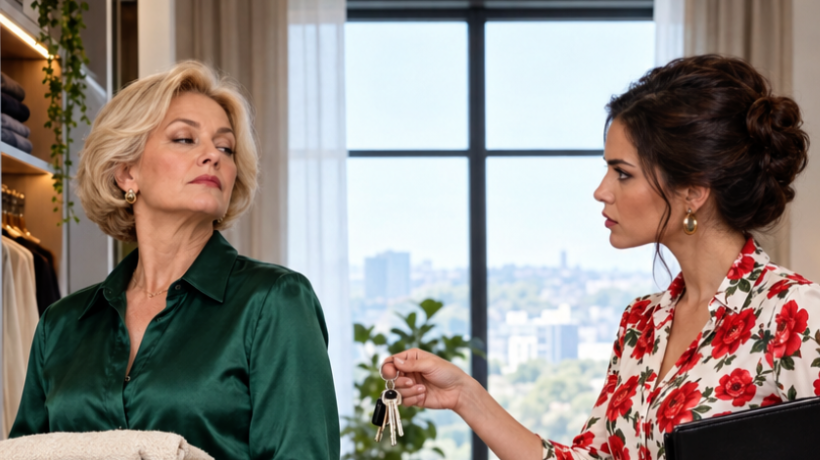
For a few seconds, they stared at each other. Then her mother-in-law placed the keys into Elena’s palm. Elena immediately checked them: lower lock, upper lock, mailbox key. She also removed the intercom key from the ring.
— Now that’s how it should be.
— You’ll regret this, — Lyudmila Nikolaevna hissed.
— Maybe I will. But not today.
By six in the evening, the last bag stood by the door. Sergey returned, grabbed it, and asked Oksana:
— Is that everything?
Oksana looked at Elena.
— Is it all hers?
Elena walked around the room. The closet was empty, shelves were clean, there were no creams left in the bathroom, and the kitchen was free of other people’s bags. She nodded.
— That’s everything.
Lyudmila Nikolaevna stood up. Without her usual confident, hostess demeanor, she suddenly seemed smaller. But Elena refused to let herself feel pity—after all, pity was the hook that had kept her in place for two years.
Lyudmila Nikolaevna paused at the door.
«I thought you’d turn out to be a decent person,» she said.
Elena opened the door.
«Turns out I’m just the owner,» Elena replied.
Oksana let out a quiet sigh but stayed silent. Vadim looked at his ex-wife with a mix of anger, confusion, and something like respect—it was the first time he saw Elena not asking for permission to be firm.
Once the door closed behind them, Elena didn’t sit down, cry, or stare into space. She immediately called a locksmith. He showed up forty minutes later, briskly inspected the locks, and offered two options. Elena picked the more reliable one. The old lock cylinders were replaced quickly with new ones. No need for statements, no unnecessary conversation. The money was sent via bank transfer, the paperwork slipped into a drawer.
While the locksmith tested the keys, a thunderstorm finally started outside. Big drops pounded the windowsill, the hot air inside trembled and turned fresh. Elena stood in the hallway, watching the locksmith turn the new key in the new lock.
The click was sharp and clean.
«All done,» said the locksmith. «Go ahead and check.»
Elena took the key and turned it. The lock moved smoothly. She checked it a second time, then a third.
«Perfect,» she said.
When the locksmith left, Elena locked the door from the inside and slowly walked through the apartment. Not to say goodbye to the past—she never cared for grand gestures toward herself. She just needed to assess the situation and plan her next steps. The wardrobe was free in the bedroom. The kitchen had more space. The smell of someone else’s ointments had vanished from the bathroom. The hallway was finally clear of the bags she used to trip over every morning.
She opened the window wider. After the rain, the scent of wet leaves and warm concrete rushed in from the yard. Somewhere below, children were laughing and celebrating the puddles. Elena picked up her phone and blocked Vadim on her messenger app for a week. Not forever—he could contact her about something truly important via email. But she wasn’t about to listen to nighttime accusations anymore.
Then she opened her notes and made a list: cleaning, dry-cleaning the blanket, checking the bills, changing the home Wi-Fi password, leaving a new set of keys with her mom in a sealed envelope. Simple, peaceful, methodical.
The next day, Vadim still managed to write from another number: «My mom’s crying. Are you happy now?»
Elena looked at the message, took a screenshot, and replied: «Your mom is with her children. That’s how it should be. My apartment is free of outsiders. That’s also how it should be.»
A minute later came: «You’ve become so cruel.»
Elena typed back: «No. I’ve become precise.»
And she blocked the second number.
A week later, she ran into Galina Arkadyevna at the entrance. Her neighbor looked at her cautiously.
«How are you, Lenochka?» she asked.
«I’m well,» Elena replied.
«Lyudmila Nikolaevna called me. She said she wasn’t comfortable at her daughter’s place.»
Elena adjusted her purse strap.
«Being uncomfortable isn’t an emergency,» Elena said.
Galina Arkadyevna blinked, then, unexpectedly, smiled.
«Well said,» she replied.
But at least it was honest.
Summer continued on. The apartment felt quiet, but not empty. For the first time in ages, Elena woke up on a Sunday without someone coughing on the other side of the wall, without the radio blaring from someone’s phone, without a grocery list left in the kitchen like an order. She brewed coffee, sliced a peach, settled by the window, and opened the book she hadn’t managed to finish in almost a year.
No one called her from the next room. No one urgently asked her to run to the pharmacy. No one informed her that a proper woman should be softer.
That evening, Oksana called.
Elena looked at the screen for a few seconds before she picked up.
«Yes.»
«I’m not calling to argue,» Oksana said immediately. «I just wanted to say that Mom is with me. It’s hard, of course. But we’ll manage.»
«Alright.»
«And… I finally understand why you did what you did. It took me a while, but I get it now.»
Elena stayed silent.
«We all got used to you carrying the load. Vadim did. I did. Mom most of all. It was convenient. Not honest, but convenient.»
«Convenience rarely ends on its own.»
«True. That’s why you ended it yourself.»
There was no old sharpness left in Oksana’s voice. Only tiredness and clarity. Elena respected clarity—even when it came late.
«Oksana, I don’t hold a grudge against you. But that door won’t open again.»
«I understand.»
«Alright.»
After the call, Elena set her phone down on the table and smiled. Not broadly, not in triumph—just the corners of her mouth moving on their own. She hadn’t destroyed a family. She’d simply given everyone back their share of responsibility. Lyudmila Nikolaevna—for her own life. Vadim—for his mother. Oksana—for making family decisions. And herself—for her own home.
As she discovered, a home instantly feels it when someone else’s authority is carried out the door.
By the end of July, Elena ordered a deep cleaning, threw out the old sofa slipcover, cleared the closet, and turned the former mother-in-law’s corner into a workspace. She didn’t move furniture around, stage a dramatic makeover, or try to prove to herself she was starting over. She simply erased the traces of someone else’s presence and brought the apartment back to its true meaning.
One evening, Vadim showed up at the entrance to the building. Elena saw him from the window, standing below with a bag in his hand, staring at the building and clearly hesitating to ring. Eventually, he called her number, but didn’t get through. He sent an email: «Can we talk? No drama.»
Elena replied an hour later: «If it’s about paperwork—write to me. If it’s about your mother—talk to Oksana. If it’s about us—there is no us anymore.»
He didn’t reply.
And that was the best answer possible.
By August, the heat had softened. In the evenings, the courtyard smelled of damp earth and flowers from the flowerbed by the entrance. Elena came home from work, climbed to her floor, pulled out her new key, and every time felt a brief, clear satisfaction at how smoothly it fit in the lock.
The apartment hadn’t gotten any bigger. The walls hadn’t moved. The neighborhood stayed the same. But inside, the space felt straightened out. There were no more outside demands, no illnesses turned into leverage, no ex-husband trying to please everyone at her expense.
Lyudmila Nikolaevna was certain that after the divorce, she would keep living in her former daughter-in-law’s apartment and continue receiving her support. The only mistake she made was confusing kindness for weakness.
But Elena was just waiting for the right moment when she wouldn’t have to explain anything anymore.
And then she closed the door with her new key.