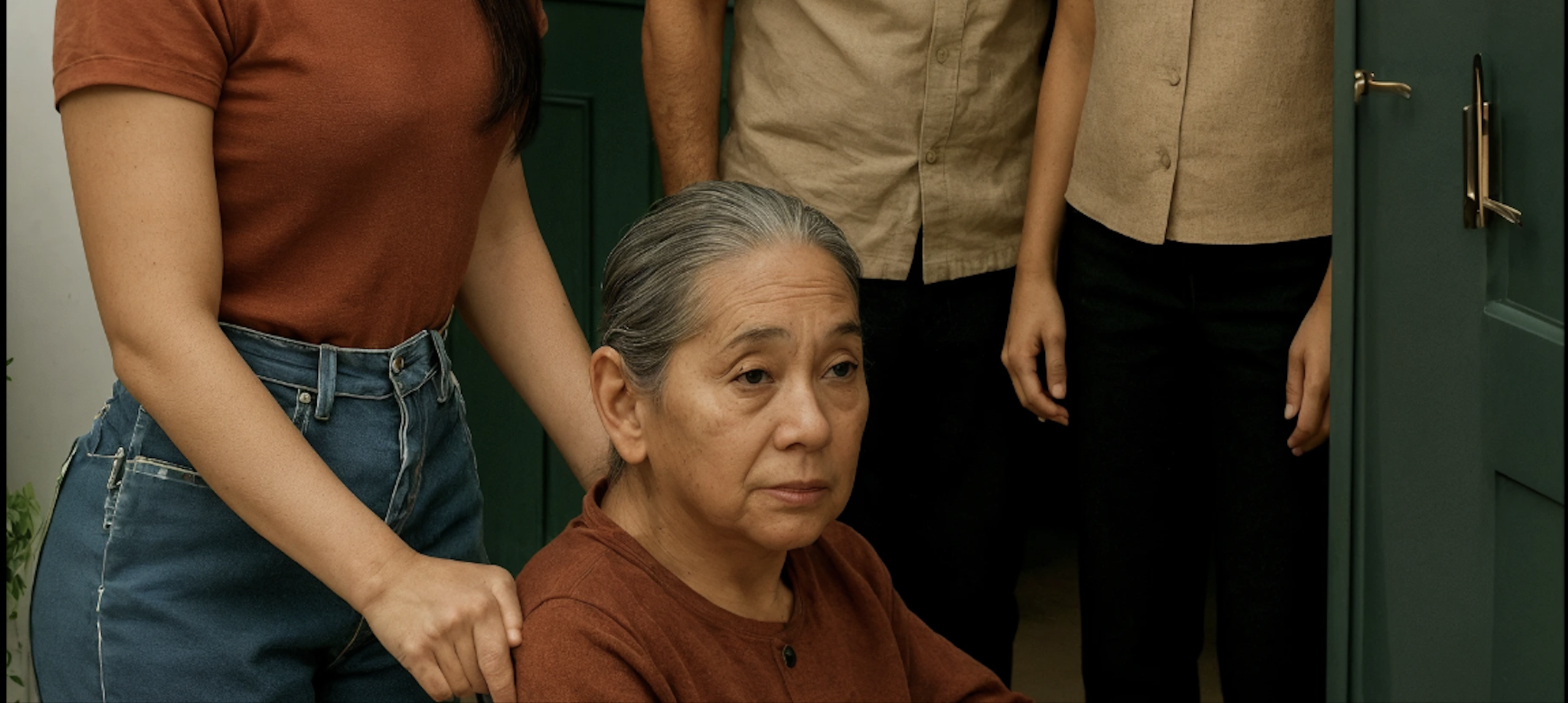
My husband left to live with his mistress. I didn’t say anything. I simply pushed my bedridden mother-in-law’s wheelchair to their place and left her there for them. Then, as I turned to leave, I spoke a few words… that made their faces turn pale.
Miguel and I had been married for seven years. From the first day of our marriage, I had agreed to live with my mother-in-law, Doña Carmen, a woman who had suffered a stroke, was paralyzed on one side, and required constant assistance for every meal and every nap. At first, I thought it would be simple: she was my mother-in-law, I was her daughter-in-law, and taking care of her was simply part of my duty.
But I never imagined that this burden would last so long—and that the hardest part would come from the one who should have shared it with me: my husband, Miguel.
Miguel went to work during the day, and in the evening, he stayed glued to his phone. He often said:
“You take better care of Mom than I do. If I try, she will suffer from it.”
I never resented him.
I thought that was life: the woman manages the house, the man brings in the money.
Until the day I discovered that Miguel wasn’t just at work—he was elsewhere, with someone else.
One day, I stumbled upon a message:
“I’m coming again tonight. Being with you is a thousand times better than being at home.”
I neither screamed nor cried. I didn’t make a scene.
I simply asked him, calmly:
“What about your mother? The one you abandoned all these years?”
Miguel didn’t say anything.
The very next day, he left. I knew exactly where he had gone.
I turned to Doña Carmen—this woman who had criticized me for every bite I ate, every nap I took, who said I was «not worthy of being her daughter-in-law»—and I felt a lump in my throat.
I wanted to drop everything.
But I reminded myself of one thing: one must always leave with dignity.
A week later, I called Miguel:
“Are you free? I’m bringing your mother to you so you can take care of her.”
I prepared her medications, her medical files, and an old tracking notebook.
That evening, I settled her into her wheelchair.
I said softly to her:
“Mom, we’re going to Miguel’s for a few days. Staying in the same place all the time is boring.”
She nodded, her eyes twinkling like a child’s.
When we arrived at the small apartment, I rang the bell. Miguel opened the door.
Behind him stood the other woman, in a silk negligee and bright lipstick.
I pushed Doña Carmen into the living room, arranged the cushions, the blankets, and placed the bag of medications on the table.
The apartment smelled strongly of perfume, but a glacial silence reigned.
Miguel stammered:
“What… what are you doing?”
I smiled gently:
“Remember? Mom is yours. I am only your daughter-in-law. I’ve taken care of her for seven years—that’s enough.”
The woman behind him went pale, a spoon of yogurt frozen in her hand.
Calmly, as if completing a long-planned task, I continued:
“Here are her medical files, her prescriptions, her diapers, her pads, and the cream for her sores. I’ve written everything down in the notebook.”
I placed it on the table, then I turned around.
Miguel shouted:
“Are you abandoning my mother? That’s cruel!”
I stopped, without turning around, and replied in a calm voice:
“You neglected her for seven years—what is that, if not cruelty? I took care of her like my own mother. Not for you, but because she is a mother. Now, I am leaving. Not out of revenge. But because I have fulfilled my duty as a human being.”
I turned to the other woman, looked her straight in the eyes, and smiled tenderly:
“If you love him, love him entirely. That comes with the full package.”
Then I put the deed of ownership on the table:
“The house is in my name alone. I am taking nothing. He only took his clothes. But if you need money for Mom’s care, I will still contribute.”
I leaned down and stroked Doña Carmen’s hair one last time.
“Mom, be good here. If you are sad, I will come back to see you.”
She smiled, her voice trembling:
“Yes… come see me when you get back home.”
I closed the door behind me.
The room was silent, imbued with perfume and a slight scent of massage oil.
That night, I slept soundly, without dreams.
And in the morning, I woke up early, took my son out for breakfast, and embraced a new start—without tears, without bitterness.