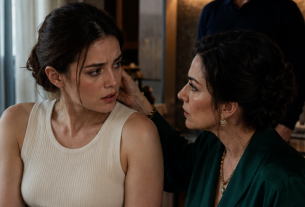
“Vadim, do you hear me? I’m telling you, that sound is driving me crazy. It’s like someone is scraping inside it. Metal against metal. Whirr-whirr. And the worst part is, it only happens on the second speed!” The voice on the phone trembled, breaking into shrill notes.
“Mom, please calm down. It’s just a fan. It’s ten years old, the bearing has dried out,” Vadim said, pinning the phone against his shoulder as he tried to pull off his work jacket, wet and heavy with clay.
“Just a fan? For you it’s just a fan, but I’m here alone in this stuffy apartment! Yesterday the neighbor came over, that bald one from the fifth floor. He looked at it, twisted something, took a thousand rubles, and left. He said the button was sticking. And today it’s happening again! Whirr-whirr! Vadim, I’m afraid to turn it on. What if it short-circuits?”
“Mom, a thousand for a button?” Vadim closed his eyes. Blood pounded in his temples. The shift had been hellish: a burst heating main, boiling water up to his ankles, then cold sludge, welding in an awkward position.
“An ordinary thousand! People have no conscience these days. Vadichka, transfer that thousand to me, will you? I paid it from my pension, and I still need medicine. And you know, I was thinking… The toilet is leaking again. A thin little stream, the meter is spinning, money is dripping away. I need to set aside three thousand. Tomorrow I’ll call a proper repairman from the housing office.”
Vadim looked at his wife. Ksenia was sitting at the kitchen table, stirring her cold tea. She was not looking at him, but her shoulders had tensed. She heard everything.
“Mom, three thousand for a toilet? The gasket costs twenty rubles. I’ll come over on the weekend…”
“By the weekend I’ll go bankrupt on water! And that sound has worn my nerves raw! Vadim, can you really be stingy with your own mother? I’m not asking for fur coats!” Tears rang in Victoria Romanovna’s voice. Professional tears, rehearsed for years by a lonely woman. “And vitamins… The doctor said I need Omega, a good one, imported. Another two thousand.”
Vadim exhaled. He had no strength to argue. His tongue would not move; his exhaustion-poisoned brain wanted only silence.
“All right. I’ll transfer it now. Six thousand, Mom. But that’s it. Until payday.”
“Thank you, son. You’re the best boy I have. I’ll turn off that fan for now, suffer through the heat…”
Vadim ended the call, quickly opened the bank app, transferred the money, and threw the phone onto the sofa. The silence in the apartment became thick, almost tangible.
Ksenia raised her head. Her gaze was not angry, only endlessly tired.
“So my dentist appointment is canceled?” she asked quietly.
Vadim said nothing. He stood in the middle of the hallway in his dirty pants, wanting to sink through the floor, straight down into the basement, to the familiar pipes. Everything was simpler there: if there was a leak, you welded it shut. But here the leak was in the family budget, and he could not seal it.
“Ksyusha, she was crying. The fan, the toilet… She’s old, she panics,” he muttered, feeling guilty.
“Vadim,” Ksenia stood up and went to the window. “Last month it was a ‘burned-out’ kettle. The month before that, an orthopedic mattress she ‘couldn’t sleep on.’ Before that, new glasses because the old ones ‘pressed on the bridge of her nose.’ For two years we haven’t been able to save for a down payment. We live in a rented apartment, and your salary, a good salary for a chief welding technologist, is draining away… where?”
“I promise, next month I’ll be tougher. Honestly.”
He went to the bathroom and turned on the water to drown out not only the ringing in his ears, but also his conscience.
The next day, during her lunch break, Ksenia sat in the small utility room of the archive where she worked as a restorer of old maps. The work required delicate precision, millimeter movements, silence, and calm. But there was no calm. Her hands were shaking.
Her colleague, Klavdia, a plump woman with a kind face, was laying containers of homemade lunch on the table. Klavdia was a bookbinding specialist, a solid and wise person.
“Why are you so pale, Ksyusha? Your stomach again?”
“No, Klava. My mother-in-law again,” Ksenia put down the tweezers and removed her magnifying glasses. “Yesterday six thousand flew away. Fan, toilet, vitamins. Vadim came back from an emergency repair barely alive, and she… She’s like a vampire. She senses when he’s weak and presses.”
Klavdia shook her head, carefully cutting a cutlet with a plastic knife.
“And what kind of pension does she have? Do you know?”
“She says it’s the minimum. She complains she doesn’t have enough for utilities or food. We lived with her for the first six months, remember? I thought I’d go insane back then. Every piece of bread was followed with her eyes. Don’t turn on the light, save water. Vadim himself suggested we move out. He said renting was cheaper than treating our nerves. But it turns out she still reaches us from a distance.”
“Interesting,” Klavdia drawled thoughtfully. “My husband used to help his mother the same way. She whined that she had no money. And when she died, may she rest in peace, we found savings books in her wardrobe under the linens. There was one and a half million there. Older people sometimes develop this shift: save, deny themselves everything, but keep pulling money from their children. It’s like a sport. Or a way to control them.”
“I don’t know, Klava. Vadim loves her. He’s a good son. He feels ashamed to refuse her. And I feel ashamed to ask him to pay for my teeth because the money went to his mother’s ‘Omega.’”
That evening, when Vadim was already home and lying on the sofa with a book—he liked reading technical literature, diagrams calmed him down—the doorbell rang.
It was Antonina Arkadyevna, Ksenia’s mother. She entered like a fresh wind: noisy, rosy-cheeked, smelling of dill and currant leaves.
“All right, youngsters, accept humanitarian aid!” she announced loudly, putting a heavy bag on the floor.
Vadim jumped up, breaking into a smile. This transformation always amazed Ksenia. With his own mother, he was tense, choosing his words, grimacing. With his mother-in-law, he blossomed.
“Antonina Arkadyevna! Why are you carrying heavy things? I would have come by myself!”
“Oh, stop it, Vadya. Your own burden doesn’t weigh you down. Your father dug up some young potatoes, the cucumbers have come in. I opened a jar of mushrooms for you, with onions. I’ll fry some potatoes now.”
Antonina Arkadyevna was not the typical mother-in-law from jokes. She worked as a landscape designer, creating alpine gardens for wealthy clients, and at her own dacha she rested her soul by growing simple vegetables.
Half an hour later, the kitchen smelled of fried potatoes and coziness. Vadim ate with appetite, praising his mother-in-law.
“You have golden hands, Antonina Arkadyevna. It tastes like childhood.”
“Eat, eat. You need strength to move those pipes,” she said affectionately. “Tell me better, how are things with the apartment issue? Any progress?”
Vadim choked slightly and lowered his eyes to his plate. Ksenia sighed.
“It’s frozen, Mom. This month we even went into the red. Victoria Romanovna had a radiator leak, so it had to be replaced with bimetal ones. Vadim transferred money.”
Vadim tensed, expecting reproach or a lecture. But Antonina Arkadyevna only shook her head with understanding.
“Well, what can you do? Metal is metal, it rusts. Parents need help, Vadim. You’re a good man for not abandoning your mother. That’s right. A man must carry responsibility.”
After dinner, Vadim, as usual, stood at the sink to wash the dishes. He liked doing this when his mother-in-law was visiting: he felt like part of some ideal, proper family.
Ksenia and her mother went into the room.
“Mom, why are you praising him?” Ksenia whispered indignantly. “We’ll never save up this way!”
Antonina Arkadyevna winked slyly and pulled an envelope out of her bag.
“Hush. Don’t nag the man; he’s already tearing himself apart working two jobs. Here. There’s five thousand. Buy yourself decent mascara, or whatever you need. And don’t worry about your teeth. I’ll get a bonus in a week, and we’ll add more.”
Ksenia took the money, feeling a lump in her throat.
“Mom, you need it yourself. You wanted to fix the roof at the dacha.”
“The roof can wait. Peace in your family cannot.”
When her mother-in-law left, Vadim sat in the kitchen for a long time, staring into the dark window. Ksenia came up behind him and hugged his shoulders.
“Why are you so sad?”
“You know, Ksyusha… It’s a paradox. Your mother lives alone in the same kind of two-room apartment as mine. She works, yes, but she doesn’t make millions. And she always has treats, always sets the table, and she still slips you money. And mine… She also worked all her life as a technologist at a food production plant. Can pensions really differ that much?”
“It’s not about pensions, Vadim. It’s about attitude.”
“Maybe,” he rubbed his neck. “Mom called again while you were seeing Antonina Arkadyevna off. She asked for another two thousand. For a taxi to the clinic. Says her legs don’t work.”
Ksenia let go of him and silently left the kitchen. The five thousand from her mother burned in her hand. And Vadim’s two thousand had already flown into the black hole called “Victoria Romanovna.”
The middle of the week turned out insane. Vadim worked without days off, taking side jobs—private orders for complex welding. He welded decorative grilles for cottages and repaired truck frames. Money accumulated on the card, but he was afraid even to look at the balance.
At lunch, he got talking with Yura, a colleague who had been living separately from his parents for six years and was paying a mortgage.
“Listen, Vados, how much do you give your mother?” Yura asked, chewing a sandwich.
“Well… it varies. This month it’s already reached thirty thousand. Repairs, medicine, household stuff.”
Yura choked on his tea.
“How much?! Thirty grand? Are you crazy? I send mine five thousand once a month and pay for her internet. That’s it. She’s a pensioner too, but you know, she has enough conscience not to milk me. And when she started whining about a sanatorium, I said, ‘Mom, go to the trade union.’ She went, made a bit of a fuss there, and they gave her a voucher! Free! Yours has simply climbed onto your neck.”
That evening Maxim, Vadim’s older brother, called. He lived in Novosibirsk, worked as a programmer, and rarely communicated with the family.
“Hey, bro. How are you? How’s Mom?”
“Hi, Max. Fine. Mom… well, as usual. Sick, and everything is breaking at her place. When did you last call her?”
“A week ago. She asked for money for a new blood-pressure monitor. I transferred five thousand. Listen, do you help her often?”
“Constantly, Max. This month she’s already cleaned me out.”
“Strange,” his brother’s voice hardened. “She complained to me that you’d completely forgotten about her. That you don’t visit, don’t give money, and she lives on bread and water.”
Vadim felt heat wash over him.
“What? I sent her two thousand yesterday for a taxi! Last week six for the fan and toilet! Before that, we changed the radiators!”
“Wow…” Maxim fell silent. “I see. So she’s using the ‘divide and rule’ strategy. Vadim, stop this. She has a normal pension, plus veteran benefits. She’s not poor.”
Vadim hung up. An unpleasant, sticky feeling grew in his chest. Hurt mixed with anger. He had believed her. He had truly thought he was saving his mother from poverty.
And then the phone rang. The screen showed: “MOM.”
Vadim stared at the screen for about ten seconds before answering.
“Yes.”
“Vadik! It’s a catastrophe!” his mother’s voice was not merely anxious, but hysterical. “The oven! My favorite oven has gone crazy! I turned it on to bake a pie, and something banged inside, smoke came out, the numbers on the display are jumping! Come urgently!”
“Mom, I’m working tomorrow. I can’t come right now.”
“What do you mean tomorrow?! I’m afraid to spend the night in an apartment with faulty appliances! What if it’s gas?”
“You have an electric oven, Mom. Pull the plug out of the socket.”
“I can’t reach it! The cabinet has to be moved! Vadim, do you want your mother to burn to death?”
That was a forbidden move. Vadim clenched his teeth so hard his jaw creaked.
“I’ll come tomorrow morning. That’s it.”
He ended the call. Ksenia stood in the bedroom doorway.
“Again?”
“The oven.”
“Vadim, if you give her money tomorrow for a new oven or repairs, I don’t know what I’ll do. We’ll have a fight. Seriously.”
“I’ll just look at it. I won’t give her money.”
In the morning he drove to his mother with a heavy heart. The city was gray and gloomy, just like his thoughts. Victoria Romanovna’s apartment smelled of mustiness and medicine—a smell she artificially maintained by never airing the place out. “Drafts will kill me.”
His mother met him in an old robe, with a towel theatrically tied around her head.
“Oh, son, my savior. Look what’s going on.”
Vadim went into the kitchen. The built-in oven really did look dark and lifeless. He moved the cabinet aside—it was easy; his mother had exaggerated how heavy it was—checked the outlet, and turned it on. The display lit up and showed error E-05.
“It’s the control board, Mom. The electronics are dead.”
“There! I knew it! It’s old! I need to buy a new one. I’ve already picked one out; Eldorado has discounts, only thirty thousand. Vadichka, I have five saved up. Add twenty-five for me, will you? How can I live without baking? I wanted to bake you pies…”
Vadim slowly straightened.
“Twenty-five? Mom, I don’t have that kind of money right now.”
“Borrow it! Ask Ksenia, ask that mother-in-law of yours, she’s rich, she digs around in land! Vadim, are you really going to leave your mother without hot food?”
At that moment, his mother’s phone rang in the hallway. Victoria Romanovna, groaning, shuffled into the room.
“One moment, one moment… Who else now… Hello?”
Vadim remained in the kitchen. He mechanically pressed the buttons on the oven, trying to reset the error. The kitchen door was slightly ajar.
“Yes… Yes, I received it. Thank you, Artur. Yes, everything is fine,” his mother’s voice changed. The dying-swan notes disappeared; a businesslike, even hard tone appeared. “The flowers? Water them once a week. Don’t stain the wallpaper. And the armchair… I asked you not to rock in it. It’s old, antique.”
Vadim froze. Artur? What Artur? What wallpaper and armchair was she talking about? There was no antique armchair in this apartment.
“Forty-five, yes. Correct. The next payment is on the fifth, don’t be late, or I’ll find someone else. It’s a good apartment, in the center. Plenty of people want it.”
Apartment? Center? Forty-five thousand?
He quietly walked out into the hallway. His mother stood with her back to him, writing something in a notebook. Her mobile phone lay on the dressing table.
“…check the taps so nothing leaks. That’s all, goodbye.”
She put down the landline and turned around. Seeing her son’s face, she twitched, but immediately pulled on her mask of suffering.
“Oh, Vadim, you frightened me. Well, what’s wrong with the oven?”
Vadim silently picked up her mobile phone from the table.
“What are you doing? Give it back!” she squealed, trying to snatch the device.
But Vadim was taller and stronger. He knew the password: four ones. He had set up the banking app for her himself so she could pay utilities. Back then, a year ago, the accounts had been empty.
He opened the app.
“Give it back immediately! That’s private!” She beat his chest with her little fists, but he did not feel the blows.
The main screen showed a sum.
Current account: 2,700,000 rubles.
Below it: Incoming transfer: 45,000 rubles. From: Artur S.
Message: “Rent for August.”
Vadim raised his eyes to his mother. There was no fury in his gaze. There was emptiness. A cold, dead emptiness of disappointment.
“What is this, Mom?”
Victoria Romanovna took a step back.
“It’s… it’s a mistake. It isn’t mine.”
“Not yours? Two and a half million in your account? And a rent transfer? What apartment are you renting out, Mom?”
She pressed her back against the wall and shrank. She realized it was useless to lie.
“It was my brother’s,” she hissed. “Your Uncle Pavel’s. When he died five years ago… The apartment went to me. A one-room apartment on Lenin Street.”
“Five years…” Vadim spoke quietly, but each word fell like a stone. “For five years you’ve had an apartment. You rent it out. For forty-five thousand a month. And you… you asked me for a thousand for a fan? You howled into the phone that you had nothing to eat? You knew Ksyusha and I lived in a rented place, saved every ruble, cut costs on doctors… And you have almost three million?”
“It’s for old age!” she suddenly screamed, and her voice became shrill and nasty. “I’m an old woman! Needed by no one! And you’re young, you’ll earn more! What, was I supposed to give it to you? You would have squandered it! This way the money is safe! I saved it!”
“We would have squandered it?” Vadim gave a laugh. A terrible, crooked laugh. “We dreamed of having a place of our own. We lived with you for six months, and you counted every kilowatt-hour. And you had another apartment. Empty. Or were you already renting it out then?”
“I was renting it out!” she snapped defiantly. “So what? It’s my inheritance! I have the right! And you’re my son, you are obligated to support your mother!”
“Support?” Vadim threw the phone onto the dressing table. The screen thudded dully. “You’re not a mother. You’re… just a greedy old woman.”
“How dare you!” she gasped for air. “I raised you! I stayed awake nights! Now give me the money for the oven! You promised!”
Vadim went to the door and began putting on his shoes. His movements were sharp and precise.
“Not a kopeck. Never again. You won’t get a single kopeck from me. Or from Maxim either. I’m going to tell him everything right now. I sent myself the screenshots. Let him see.”
“Vadim! You wouldn’t dare! You’ll leave me without help? I’ll sue! For alimony!”
He opened the door and turned around.
“Go ahead. The court will look at your accounts, your real estate, your rental income. And laugh in your face. Goodbye, Victoria Romanovna.”
“May you die together with that Ksenia of yours!” flew after him.
He slammed the door.
He did not drive home; he walked. He walked for a long time, two hours, until his legs began to ache. He needed to air out that smell—the smell of lies and betrayal.
On the way, he stopped at a supermarket. He filled a whole basket: cheese, wine, fruit, marbled beef steaks—things they had always denied themselves.
Ksenia met him anxiously. Seeing the bags, she was surprised.
“What’s this? Did your mother give you money? Or are we celebrating your mother-in-law’s new oven?”
Vadim went into the kitchen and began laying out the groceries. His hands trembled slightly, but his face was calm.
“We’re celebrating liberation, Ksyusha. There will be no oven. No fan. And no more Omega-3 either.”
“You… refused her?”
“I found out the truth. She has an apartment. A one-room place in the center. She rents it out for forty-five thousand. And she has almost three million in her account.”
Ksenia sat down on a chair, covering her mouth with her hand.
“God… Vadim, is that true?”
“Yes. I saw the account. I heard the conversation with the tenant. She was simply draining us. Out of greed. Out of some twisted hoarding urge.”
Ksenia was silent for a minute, digesting what she had heard. And then she suddenly began to cry. Not loudly, but quietly, with relief.
“So we’re not guilty? So we’re not bad children?”
“We’re excellent children, Ksyusha. Too good for her.”
That evening they sat in the kitchen, drank wine, ate steaks, and for the first time in many years talked about the future without fear. Vadim called Maxim and told him everything. His brother was furious, shouting into the phone and promising to come and “teach her a lesson,” but Vadim stopped him.
“No, Max. Ignoring her is the best punishment. Let her sit alone on her bags of gold.”
Six months passed.
Vadim and Ksenia took out a mortgage. They gathered the down payment quickly—without the constant “tribute,” the budget recovered within a couple of months, and Antonina Arkadyevna added a little extra “for curtains, daughter.” The apartment was small, but it was theirs. Bright, with a large balcony where Ksenia set up a mini workshop.
Victoria Romanovna called. During the first week, every day. First she demanded, then begged, then pressed on pity.
“Vadim, my blood pressure is high!”
“Call an ambulance, Mom. You have money for a private room.”
“Vadim, a tap burst!”
“Call a plumber. The site where you look for tenants is full of repairmen.”
A month later, she tried to reach him through Ksenia.
“Ksyushenka, talk some sense into him! He’s a beast! He has forgotten his own mother! I’ll give you my amber beads!”
Ksenia, who previously would have gotten flustered and mumbled, answered firmly:
“Victoria Romanovna, we don’t need your beads. Or your money. Live however you want. You have everything.”
And then one day, in late autumn, Victoria Romanovna fell ill. Truly ill. A strong flu knocked her off her feet. She lay in her two-room apartment, surrounded by pillows, and listened to the silence. The fan had been put away in the closet. A repairman had fixed the toilet for three thousand. The oven still stood broken—her greed strangled her at the thought of spending her own hard-earned money.
She called Maxim. He did not answer.
She called Vadim.
“Son, I feel terrible. My temperature is thirty-nine. There’s no bread. Bring medicine, I beg you.”
Vadim’s voice was even, emotionless. Like a robot’s.
“I have an order right now, I can’t. Call the neighbor, remember, that student downstairs? Give her a thousand, she’ll run to the pharmacy and the store. A thousand rubles, Mom. That’s nothing to you now.”
And he hung up.
Victoria Romanovna stared at the phone with a dim look. The three million in her account warmed her soul, but it could not bring her a glass of water. The apartment in the center brought income, but the tenant, Artur, would not listen to her complaints about her health.
Her only friend, the same one who had advised her to “keep the children on a leash,” now merely nodded over the phone:
“There, Vika, I told you! Ungrateful pigs! And you gave them everything, everything…”
But Victoria Romanovna understood: not everything. She had given them only her fears and demands, and taken their lives in return. And now she was left with what she valued most—money. And with endless, cold loneliness that could not be paid away with any transfer.
Her apartment was quiet. Nothing creaked, nothing buzzed. But that silence was more frightening than any noise. It was the silence of an empty crypt she had built with her own hands.