Marina accidentally overheard her mother-in-law talking about her to a neighbor. Those words turned everything upside down. Not because they were cruel, but because they were the truth Marina had been hiding from herself.
Marina was returning from the pharmacy. In the bag were vitamins for Alyoshka, a pack of bandages, and valerian drops. The valerian was for her.
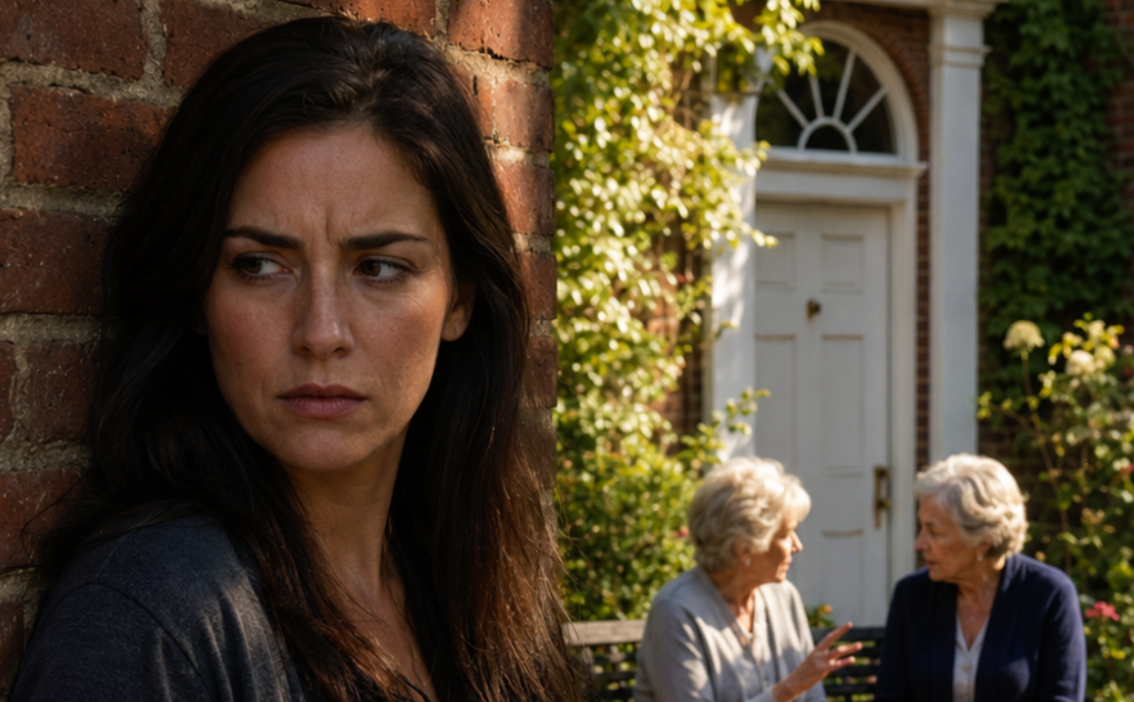
She turned the corner of the building and heard Zinaida Pavlovna’s voice. Her mother-in-law was sitting on a bench near the third entrance with Tamara Ivanovna, a neighbor from the second floor. Both women were basking in the May sunshine, and their conversation flowed lazily, like water from a poorly closed faucet.
Marina was about to walk past, greet them, and go upstairs. But then she heard her own name.
She stopped around the corner, clutching the bag to her chest.
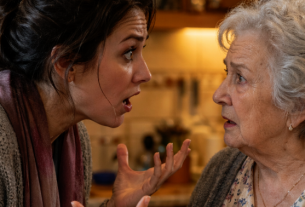
“Our Marinka has completely faded away,” Zinaida Pavlovna said. Her voice wasn’t angry. More tired than anything.
“Is life that hard for her?” Tamara Ivanovna asked.
“No, that’s the problem. It isn’t hard. She’s simply gotten used to it. Like a horse in harness. She keeps pulling and pulling, and she no longer remembers why.”
Marina leaned against the wall. The brick was warm from the sun, rough through the fabric of her jacket.
“My Seryozha doesn’t mistreat her, of course,” her mother-in-law continued. “He doesn’t drink, doesn’t beat her, never lays a hand on her. But he doesn’t see her, either. Do you understand, Toma? She’s standing right next to him, and he looks straight past her. As though she were made of glass.”
Tamara Ivanovna sighed.
“That’s how they all are these days. Those phones.”
“It’s not about the phones. Take the phone away, and what then? He still doesn’t look at her. I can see it. A mother sees everything, even when she doesn’t want to.”
Marina stood around the corner, unable to move. The pharmacy bag rustled in her hands. She tightened her grip to keep it quiet.
Zinaida Pavlovna spoke softly, but the courtyard was empty, and every word reached Marina clearly, as if traveling along a wire.
“I told her, Toma. About three years ago, I told her. ‘Marish, don’t forget about yourself.’ And she looked at me, you know, as though I were talking about aliens. ‘What self?’ she said. ‘I have to take Alyoshka to kindergarten and cook borscht.’”
“Well, that’s right. Children come first.”
“Of course. But Alyoshka is already seven. And Seryozha could cook borscht himself once in a while. Nothing would fall off. He cooked before they got married, I remember perfectly well. He made salads and fried meat. Then he got married, and that was it. Like someone flipped a switch.”
Marina closed her eyes. Behind her eyelids it was dark and warm. The air smelled of poplar buds, sweet and sharp. She remembered that scent from childhood, when her grandmother used to take her to the park and they collected sticky twigs.
“I told Seryozha once,” her mother-in-law’s voice grew quieter. “I said, ‘Do you even see your wife? She lost eight kilograms over the winter. Did you notice?’ Do you know what he said?”
“What?”
“Mom, stay out of it.”
Tamara Ivanovna clicked her tongue.
“And that was the whole conversation,” Zinaida Pavlovna said after a pause. “Stay out of it. And I look at her and think, my poor girl, you’re disappearing piece by piece. Every day there’s a little less of you. And no one notices. Not even you.”
Marina opened her eyes. The sun struck the wall opposite her, and the poplar tree cast a long slanting shadow across the asphalt. She looked down at her hands. Her fingers had gone white from gripping the bag so tightly.
She should leave. Go upstairs, open the door, put the vitamins in the cabinet, start dinner. Alyoshka would return from after-school care in an hour. Seryozha would come home at seven, as usual, take off his shoes in the hall, walk into the kitchen, sit at the table, and turn on his phone.
He would ask, “What’s for dinner?”
She would answer.
He would nod.
And that would be all.
That would be all.
She stood there thinking: why had these words, spoken not to her but to a neighbor on a bench, struck more precisely than everything she had ever told herself at night?
At night, when she lay beside Seryozha, listening to his breathing and counting the cracks in the ceiling. One crack ran from the chandelier toward the window and branched like the bed of a dried-up river.
“I feel sorry for her,” Zinaida Pavlovna said. “She’s a good woman. Not quarrelsome, not greedy. She loves Alyoshka. Keeps the house running. But there is no happiness in her, Toma. Not a single gram of it. I saw eyes like that in my own mother when my father drank. Except Seryozha doesn’t drink. And somehow that makes it worse. Because there’s nothing you can point at and say, ‘There. That’s the reason.’ There is no reason. And her eyes are dead.”
Marina took one step backward.
Her heel scraped the asphalt.
She froze, but the women on the bench didn’t turn around.
Dead.
Her mother-in-law had said, “dead.”
Marina raised a hand and touched her face. Her cheek was warm. A normal cheek, a normal face. That morning she had put mascara on her lashes and lightly colored her lips. She didn’t even know why.
Seryozha hadn’t noticed.
Alyoshka had said, “Mom, you’re beautiful.”
He was seven, and he still saw her.
Marina went around the other side of the building. She entered through the far entrance, climbed the stairs to the fourth floor, and crossed the passageway between sections. The long corridor smelled of dampness and cats. A flowerpot with a dried-up geranium stood on the windowsill.
Marina thought, That’s me.
A geranium on a communal windowsill.
Someone put it there once and forgot to water it.
The apartment was quiet. The kitchen clock showed a quarter to five. She placed the bag on the table and took out the vitamins, bandages, and valerian.
She looked at the little bottle.
Then she put it back in the bag.
Instead of making dinner, she sat on a stool by the window.
The window overlooked the courtyard. The bench wasn’t visible from there, only part of the playground and the garbage bins. The swings creaked even though no one was sitting on them.
The wind.
She took out her phone.
Opened her photographs.
Scrolled back to the wedding pictures.
Eight years ago. August. Thirty-two degrees Celsius.
She wore a white dress, simple, without lace, because at the time she thought lace was vulgar. Seryozha stood beside her in a light-colored shirt with the sleeves rolled up.
He was smiling.
Looking at her.
At her.
When had he stopped?
She tried to remember and couldn’t.
There had been no single moment, no click, no fracture.
It had been a slow dissolution, like morning fog.
First, he stopped asking how her day had gone. She didn’t notice because she had stopped telling him.
He stopped touching her hand when they walked side by side. She didn’t notice because her hands were always occupied: shopping bags, Alyoshka, an umbrella.
And by the time her hands were free, there was nowhere left to reach.
Seryozha came home at ten past seven. He took off his shoes, walked into the kitchen, and sat down.
Dinner was on the table: cutlets, mashed potatoes, cucumber salad.
She had cooked after all.
Her hands had worked automatically while her mind remained somewhere far away, around the corner of the brick building.
“Day okay?” he asked without looking up from his plate.
“Okay.”
“Alyoshka finish his homework?”
“Yes.”
He nodded and reached for his phone.
The screen lit up.
Marina watched the bluish glow illuminate his face and tried to find the young man with rolled-up sleeves in it.
She couldn’t.
“Seryozha.”
“Mm?”
“Look at me.”
He raised his eyes.
Not immediately. A second later, as if tearing himself away from the screen required effort.
“What?”
“Just look.”
He looked.
Without expression. Without curiosity. Without warmth.
The way someone looks at a wall clock to check the time.
“Marinka, what’s wrong with you?” He finally frowned. “Did something happen?”
“No. Nothing.”
She stood up and began clearing the table. The plates knocked against each other as she carried them to the sink.
The water from the tap was hot, almost scalding.
She didn’t turn it down.
That night, she lay listening to Seryozha breathe.
Steady and deep.
He fell asleep the instant his head touched the pillow. It had always been that way. She used to envy him for it.
Now it seemed to her that a person who could fall asleep so easily simply had nothing heavy to think about.
The crack in the ceiling was still there. From the chandelier to the window, branching to the right like an upside-down tree without leaves.
Marina knew every curve of it.
She turned onto her side and stared at the wall.
Beige wallpaper with tiny flowers. They had put it up together when Alyoshka was two.
Back then, Seryozha still joked.
He smeared wallpaper paste on her nose and laughed. She swung the roller at him, and they both burst out laughing while Alyoshka stood in his playpen clapping his hands.
When had that been?
Five years ago.
Five years.
She closed her eyes and tried to imagine another five years passing.
The kitchen.
The table.
Cutlets.
The phone.
Alyoshka would be twelve.
Seryozha wouldn’t look at her.
She would no longer ask him to.
Something tightened inside her. Not in her chest, but lower, in her stomach, the way it did before an exam.
Or before a jump.
In the morning, she walked Alyoshka to school.
He held her hand and talked about dinosaurs.
He was going through a dinosaur phase. Books with pictures lay on his desk, figurines stood on his shelf, and a plastic tyrannosaurus named Kesha traveled in his backpack.
“Mom, could a tyrannosaurus beat a bear?”
“I think so.”
“What about an elephant?”
“An elephant is heavier. But a tyrannosaurus had stronger teeth.”
Alyoshka thought about it, wrinkling his nose.
His nose was Seryozha’s, slightly turned up, with a scattering of freckles that appeared every May and vanished by October.
“What if the tyrannosaurus was nice?”
“Nice tyrannosaurs don’t exist.”
“They do,” Alyoshka said confidently. “Kesha is nice.”
She smiled.
And realized it was the first smile in three days that reached her eyes.
At the school, she kissed the top of his head.
His hair smelled of children’s shampoo and something warm and bread-like, the way all small children seemed to smell.
He waved and ran toward the entrance, his backpack bouncing on his shoulders.
Marina watched him disappear through the doors.
And stood there for another minute.
Just stood.
At work, she opened a browser and typed:
“How to file for divorce.”
The cursor blinked.
She sat in an open-plan office. Keyboards clattered around her, someone laughed by the water cooler, and the air smelled of coffee and someone’s overly sweet jasmine perfume.
She read the first result.
Then the second.
Then the third.
It was easier than she had imagined.
An application. Thirty days. Division of property, if there was anything to divide.
The apartment belonged to Seryozha; he had inherited it from his grandmother.
The car was also his.
She worked as a manager at a transportation company and earned forty-seven thousand rubles a month. Enough for groceries and Alyoshka’s swimming lessons.
She tried not to calculate what it wasn’t enough for.
She closed the browser.
Opened it again.
Closed it.
At lunchtime, she went to the cafeteria and ordered soup, which she didn’t eat.
She sat stirring the noodles with her spoon, thinking:
I’m not doing this because of one conversation.
I’m not crazy.
You can’t file for divorce because your mother-in-law told a neighbor the truth.
But what if the truth sounds so terrible that it makes you want to run?
That was what wouldn’t leave her alone.
Not Zinaida Pavlovna’s words themselves.
But the fact that every single one had been accurate.
Like a diagnosis you keep postponing, and when you finally hear it, you realize you had known all along.
That evening, she called her mother.
Her mother lived alone in Saratov after Marina’s father had died four years earlier.
Her voice was cheerful and slightly hoarse. She smoked, although every New Year she promised to quit.
“Marish, what happened?”
“Nothing, Mom. Just calling.”
“People don’t call for no reason at half past eight on a Wednesday night. Talk.”
Marina was silent.
Through the phone, she could hear her mother moving things around, probably clearing the table.
“Mom, were you happy with Dad?”
A pause.
Long as the passageway between the two sections of Marina’s building.
“What brought this on?”
“I’m just asking.”
“No one asks questions like that for no reason. But I’ll answer. Yes, I was. Not always. Not every day. There were years when I wanted to leave. Years when I was happy I stayed. And there were years when I felt nothing. That may be the hardest thing of all, when you feel nothing.”
Marina swallowed.
Her throat was dry.
“What did you do?”
“When I felt nothing? I waited. Sometimes the feeling came back. Sometimes it didn’t. But I knew he saw me. Whatever happened, your father saw me. He got angry, shouted sometimes, idiot that he was, but he saw me. That’s the important thing, Marish. If someone sees you, you can survive the rest. But if they don’t see you, no flowers or gifts can save you.”
Her mother took a drag on her cigarette.
Marina heard the click of the lighter and then a long exhale.
“Seryozha doesn’t see you?”
Marina didn’t answer.
“I understand,” her mother said.
She asked nothing more.
On Thursday, Marina came home from work early.
Alyoshka was with Seryozha’s parents. Zinaida Pavlovna had picked him up after school.
The apartment was empty and echoing.
Marina walked through the rooms as though she were visiting a museum of her own life.
The bedroom.
The bed neatly made, pillows perfectly aligned.
On Seryozha’s nightstand lay a book, open facedown. He had been reading it for six months and was halfway through.
Nothing lay on Marina’s nightstand.
She had stopped reading before bed because she fell asleep by the second paragraph.
She was tired.
The living room.
The sofa, television, shelf of photographs.
She walked over and picked one up.
Alyoshka at three years old, sitting on a swing, cheeks red, mouth open in laughter.
Behind him stood Seryozha, gripping the chains of the swing with both hands.
Smiling.
The kitchen.
The table.
Four chairs, although only three people ever sat there.
The fourth chair was piled with shopping bags she hadn’t gotten around to unpacking.
She moved the bags aside and sat down.
Then she took out her phone.
She called her friend Lena.
“Lena, I need a good lawyer.”
“Good God, why? Did you get fired?”
“No. I want a divorce.”
Silence.
“Marinka, wait. What happened?”
“Nothing happened. That’s the problem.”
Lena arrived an hour later carrying a bottle of wine and wearing an expression of complete disbelief.
She was short, five foot two, with a chin-length bob and a habit of talking quickly and swallowing the ends of words.
“Okay. Tell me everything. From the beginning.”
Marina told her.
About the bench.
About her mother-in-law.
About the “dead eyes.”
About how Seryozha didn’t look at her.
About the cutlets and the phone.
About the crack in the ceiling.
Lena listened with her cheek resting on one fist.
The wine remained untouched.
“Marinka, are you sure this isn’t just emotion? You overheard something hurtful, got upset, worked yourself up.”
“It wasn’t hurtful. It was true.”
“Fine. Let’s say it was true. But divorce? Because your husband stopped looking at you? They all stop looking after five years.”
“Eight.”
“Even more so. Eight years, a child, an apartment. Do you understand that you’ll have to rent a place? On forty-seven thousand rubles?”
Marina nodded.
She understood.
She had calculated everything.
At night, instead of sleeping, she calculated.
“Lena, this isn’t because of one conversation. For three years, I’ve fallen asleep next to someone and felt like I don’t exist in that bed. Like you could replace me with a pillow and he wouldn’t notice the difference. Three years.”
Lena said nothing.
She twisted a napkin between her fingers, rolling it into a narrow tube.
“Did you tell him? That you’re unhappy?”
“I did.”
“And?”
“He said, ‘Mom, stay out of it.’ Then realized it wasn’t his mother speaking, but his wife. He looked surprised. Said, ‘Marinka, what are you talking about? Everything’s fine.’”
Marina stood, took two glasses from the cabinet, and poured the wine.
Her first sip was sour and cold.
Good.
“Fine,” she repeated. “That word is killing me. Fine. There’s food, there’s a roof over our heads, my husband doesn’t drink or beat me. Fine. And the fact that every morning I get up and don’t know why—is that fine too?”
Lena drank half her glass in one gulp.
“I have a lawyer. Olga Viktorovna. She’s good. But Marinka, at least talk to him first. One more time. Really talk.”
And Marina did.
On Friday night, after Alyoshka fell asleep.
They sat in the kitchen opposite each other.
Seryozha drank tea, holding the mug in both hands. It was blue, with a chipped edge.
Marina had bought it at a market six years earlier because there was an owl on it, and back then Seryozha liked owls.
Did he still?
She didn’t know.
“Seryozha, we need to talk.”
“Okay.”
“I’m unhappy.”
He put the mug down.
That alone was something.
Usually, he wouldn’t have.
“What do you mean? Does something hurt?”
“No. I’m unhappy with you. With our life. I’m unhappy.”
He looked at her.
For the first time in a long while, he really looked, and she saw something flicker across his face.
Not understanding.
Fear.
Men were afraid of conversations like this the way children were afraid of thunderstorms: not because they were dangerous, but because they were loud and incomprehensible.
“Marinka, what are you talking about? Everything is fine. Alyoshka is growing up, we have enough money, we have an apartment.”
“You don’t see me.”
“What do you mean, I don’t see you? There you are. Sitting right there.”
“I’m sitting here. But when was the last time I wasn’t just sitting here? When was the last time I existed to you?”
He said nothing.
He rubbed his thumb over the chipped edge of the mug, back and forth.
“I don’t understand what you’re missing,” he said finally.
Quietly.
Without irritation.
And that was worse than irritation.
Because he truly didn’t understand.
“You,” Marina said. “I’m missing you.”
He raised his eyebrows.
“I’m here.”
“No, Seryozha. You’re not. You’re at home, yes. You’re at the table. You’re in bed beside me. But you’re not here. And apparently, neither am I.”
He pushed the mug away.
Ran a hand down his face, from his forehead to his chin, a familiar gesture she knew as well as her own.
“Do you want a divorce?” he asked.
Directly.
Without beating around the bush.
That was Seryozha. When things finally reached the heart of the matter, he was blunt.
“Yes.”
She had expected anything.
Shouting.
Begging.
Silence.
A door slammed shut.
He nodded.
Just nodded.
As though she had said it would rain tomorrow.
“Okay,” he said. “If that’s what you’ve decided.”
Then he went into the bedroom.
A minute later, she heard the bed creak.
He lay down.
Whether he fell asleep, she didn’t know.
Probably not.
Marina remained in the kitchen.
The tea in his mug grew cold. A tea leaf floated on the surface, slowly turning like the needle of a compass that had lost north.
She thought:
So that’s it.
That’s all.
No scandal.
No tears.
He didn’t even ask why.
Or perhaps he had asked, but the answer, “I’m unhappy,” had been enough for him.
He accepted it like the weather.
And that made it even clearer that she was right.
A person who hears, “I’m leaving,” and answers, “Okay,” left a long time ago.
Only his body remained in the apartment.
On Saturday, she called Zinaida Pavlovna.
Her hands were ice-cold, although the kitchen was twenty-four degrees Celsius.
“Zinaida Pavlovna, can I come over?”
“Of course, Marishka. Did something happen?”
Marina arrived after lunch.
Her mother-in-law opened the door wearing a green housecoat with worn elbows.
The apartment smelled of pies and something floral. Small pinkish violets bloomed on the windowsill.
They sat in the kitchen.
Zinaida Pavlovna poured tea.
She didn’t ask questions.
She waited.
“I heard your conversation with Tamara Ivanovna,” Marina said. “On Tuesday. On the bench.”
Her mother-in-law didn’t flinch.
Only the hands holding her cup shifted slightly, and the tea sloshed toward the rim.
“What exactly did you hear?”
“Everything. About the dead eyes. About Seryozha not seeing me. About the horse in harness.”
Zinaida Pavlovna put down the cup.
Heavily, as though it had suddenly become twice as heavy.
“Marish, I never wanted you to hear that.”
“I know.”
“But you did.”
“Yes.”
Her mother-in-law stood and walked to the window.
Her back was straight, her shoulders narrow.
She was sixty-three but moved quickly and precisely, without the slowness of old age.
She stood looking down at the courtyard.
The same courtyard.
The same bench.
“I filed for divorce,” Marina said.
Her mother-in-law didn’t turn around.
But Marina saw her fingers tighten around the windowsill.
“Does Seryozha know?”
“Yes. He said, ‘Okay.’”
Now Zinaida Pavlovna turned.
Her expression was strange: sad and angry at the same time.
Like someone who knew there would be a fire and had warned everyone, but no one believed her, and once the flames began there was no joy or satisfaction.
Only the smell of smoke.
“What a fool,” she said. “Just like his father.”
Marina blinked.
“Ivan Petrovich too…?”
“Ivan Petrovich.” Zinaida Pavlovna sat down again. “Marish, I left Ivan Petrovich twice. The first time, Seryozha was four. I packed my things, took the child, and went to my mother in Kaluga. For a month and a half.”
“You never told me.”
“Why would I? Who needs someone else’s pain when they already have enough of their own?”
Zinaida Pavlovna spoke slowly, choosing her words carefully, as one chooses mushrooms, examining every one.
“Ivan didn’t drink. Didn’t cheat. He worked. Came home, had dinner, watched television. Got up in the morning and left. And I was like furniture. Table, chair, wife. No difference.”
“But you came back.”
“I did. Because he came after me. Stood under my mother’s third-floor window shouting, ‘Zina, I’m an idiot! Come back!’ My mother leaned out the window and said, ‘At least you’ve finally realized it.’ A neighbor called the police. The local officer came, recognized Vanya because they had served together in the army, and instead of writing a report, they drank tea in my mother’s kitchen.”
Marina smiled despite herself.
“Did he change?”
“Not immediately. Not completely. But he started trying. Clumsily, awkwardly, like a man. Once he brought me flowers and put them in a saucepan because he couldn’t find a vase. But he brought them. And I understood: he sees me. Poorly, crookedly, but he sees me.”
She paused.
“And the second time?”
“The second time I was forty-eight. Seryozha was already grown and married to you. Ivan retired and almost completely stopped talking. Months could pass with him saying nothing but ‘good morning’ and ‘good night.’ I thought, here we go again. I packed a bag. I was standing in the hallway.”
“And?”
“He came out of the room, saw the bag, looked at me, and said, ‘Zina, I love you. I’m just hurting, and I don’t know how to say it.’”
Her mother-in-law’s voice trembled.
She turned away, took a handkerchief from the pocket of her housecoat, and dabbed at her eyes.
“Men don’t know how, Marish. Not all of them, of course. But many. They don’t know how to talk when they’re hurting. They close themselves like a shell. And you knock and knock, but there’s only silence inside.”
“Seryozha isn’t silent. He says everything is fine. That’s worse than silence.”
“I know.”
They sat opposite each other.
The tea grew cold.
The violets on the windowsill swayed in the draft.
“I’m not going to talk you out of it,” Zinaida Pavlovna said. “I’m not the one to do that. I already said what I thought on that bench when I believed no one could hear. But I will say one thing. If he doesn’t even ask you to stay, then you’re right. And if he does, make your own decision. You’re the one who has to live with it.”
Seryozha didn’t ask.
For a week, they lived as before.
Breakfast.
Work.
Dinner.
Sleep.
Except now the word divorce lay between them, and it occupied so much space that the kitchen felt cramped.
He didn’t ask whether she had changed her mind.
He didn’t cry.
He didn’t shout.
He didn’t stand beneath her window.
He didn’t put flowers in a saucepan.
On Wednesday, Marina took her documents from the dresser drawer.
Passport.
Alyoshka’s birth certificate.
Marriage certificate.
Seryozha saw her.
Said nothing.
On Thursday, she made an appointment with the lawyer, Olga Viktorovna.
She turned out to be a woman of about fifty with short gray hair and a habit of removing her glasses while listening.
“One child?”
“One. Alexei. Seven years old.”
“Joint property?”
“The apartment belongs to my husband. He owned it before marriage. The car is his. Furniture and household appliances.”
“Will you request child support?”
“He’ll pay voluntarily. He isn’t greedy.”
Olga Viktorovna put her glasses back on and looked over the top of them.
“That’s what you think now. We’ll include it just in case.”
Marina signed the documents.
The pen was someone else’s, heavy, with a gold cap.
Her handwriting came out uneven, like a first grader’s.
She told Alyoshka on Sunday.
They were sitting in the park on a bench by the pond.
Ducks swam in circles. One with a brown patch on its wing came closer and stared at them demandingly.
“Mom, do we have bread?”
“No, sweetheart. Bread is bad for ducks.”
“What’s good for them?”
“Grain. Or peas. We’ll bring some next time.”
He nodded, swinging his legs.
His sneakers were new, red with a white stripe. She had bought them the previous week and still tied the laces for him because Alyoshka’s bows came out crooked.
“Alyoshka, I want to tell you something.”
He turned toward her.
Gray eyes.
Seryozha’s eyes.
The freckles were already beginning to appear.
“Your dad and I are going to live separately. But we both love you. Very much. That will never change, do you hear me?”
Alyoshka said nothing.
He looked at the ducks.
Then he asked:
“Who will Kesha live with?”
“With you. Kesha will always stay with you.”
“And Dad?”
“Dad will be nearby. You’ll see him.”
He was quiet for another moment.
Then he took her hand and squeezed it.
Small fingers, hot and slightly damp.
“Mom, I love you.”
Marina squeezed his hand back and looked at the ducks.
The one with the brown patch dived beneath the water and emerged again, shaking itself.
Droplets flew in a fan.
She found an apartment within a week.
A one-room place on the outskirts, fifth floor, no elevator, but the windows faced south.
The wallpaper was horrible, brown with gold diamonds, like the office of some provincial bureaucrat.
But there was light.
Good light.
Their belongings fit into three suitcases and four boxes.
Books.
Clothes.
Alyoshka’s toys.
Kitchen odds and ends.
She took the cezve because Seryozha only drank instant coffee.
And she took a geranium from the communal windowsill.
A living one, not the dried-up plant.
Her own geranium that had stood in the kitchen.
Seryozha helped carry the boxes.
Silently.
He placed the last one by the door and stood there with his hands in his pockets.
“Marinka.”
“What?”
He opened his mouth.
Closed it.
Opened it again.
“Nothing.”
She nodded and closed the door.
In the car, Alyoshka sat in the back seat hugging Kesha and looking out the window.
Silent.
Marina drove carefully, following the navigation system even though she already knew the route.
Her hands on the steering wheel were calm.
Strangely calm, considering she had just left the home where she had lived for eight years.
The first night in the new apartment smelled of paint and other people.
Alyoshka fell asleep on an inflatable mattress, hugging his tyrannosaurus.
Marina sat in the kitchen on the only chair and drank tea from a paper cup because she hadn’t unpacked the mugs yet.
The ceiling was clean.
Not a single crack.
She looked up at it and waited for something to hit her.
Fear.
Grief.
Regret.
Anything.
Nothing came.
It was quiet.
Not the empty silence of the old apartment, but a different kind.
Like the first page of a blank notebook.
The phone rang.
Her mother.
“Settled in?”
“Almost.”
“How’s Alyoshka?”
“Asleep.”
“And you?”
“Sitting here. Drinking tea.”
Her mother was silent for a moment.
“Marish, how are you? Really.”
Marina looked out the window.
A streetlight illuminated the courtyard, the swings, a tree with a crooked trunk.
An unfamiliar courtyard.
Still someone else’s.
“Mom, I can see myself.”
“What?”
“I look in the mirror and I can see myself. That hasn’t happened in a long time.”
Her mother took a drag on her cigarette.
Exhaled.
“That’s good, then.”
Two weeks later, Zinaida Pavlovna called.
“Marish, can I take Alyoshka on Saturday? I want to take him to the zoo.”
“Of course.”
“And one more thing…” Her mother-in-law hesitated. “Seryozha walks around like a shadow. Barely eats. I tell him, ‘Call her.’ And he says, ‘She doesn’t want me to.’ As though that were a reason not to call.”
Marina remained silent.
“I’m not matchmaking,” Zinaida Pavlovna added quickly. “I’m just telling you what I see. Out of habit.”
“I know.”
“You’re not angry with me? About that conversation?”
“No, Zinaida Pavlovna. I’m not angry.”
“Zina. How many times have I told you? Just Zina.”
“Zina.”
He called a month later.
In the evening, after Alyoshka had gone to sleep.
Marina was washing the floor in the hallway, standing barefoot on the wet linoleum.
“Marinka.”
“Hi.”
“Can I come over? To talk.”
She straightened.
The mop leaned against the wall and slowly slid down.
It landed with a dull thud.
“Talk about what?”
“About us. About the fact that I’m an idiot.”
Silence.
She could hear his breathing through the phone.
Uneven.
Like someone who had been running.
“I’m not coming back, Seryozha.”
“I’m not asking you to come back. I’m asking you to talk to me. Once. Properly.”
She picked up the mop.
Propped it against the wall again.
Looked down at her feet.
Bare, with chipped polish on the big toe.
Ridiculous feet.
Alive.
“Okay. Come on Saturday. Alyoshka will be with your mother.”
“Okay.”
He hung up.
Marina stood in the middle of the hallway, staring at the phone screen.
The call had lasted three minutes and fourteen seconds.
The mop slid down again and fell.
She didn’t pick it up.
He came.
He stood on the doorstep carrying a bag with flowers sticking out of it.
Not roses.
Daisies.
A huge, ridiculous bouquet of daisies wrapped in newspaper.
“You probably don’t have a vase,” he said.
“No.”
“I brought a saucepan.”
From the bag, he took out a small aluminum saucepan with a wooden handle.
Marina recognized it.
It belonged to Zinaida Pavlovna.
The saucepan from the story.
She looked at the daisies.
At the saucepan.
At Seryozha.
He stood in the doorway, tall and broad, six feet tall, slightly stooped, wearing the same jacket he had worn for the past three years.
There were dark circles beneath his eyes.
Three days of stubble covered his face.
But his eyes.
His eyes were alive.
Frightened, confused, but alive.
He was looking at her.
At her.
Not through her.
“Come in,” Marina said.
He stepped inside.
Took off his shoes.
Put the daisies into the saucepan and filled it with water from the tap.
The saucepan stood on the windowsill, ridiculous and touching, the daisies drooping over its rim.
They sat in the kitchen.
Opposite each other.
Two chairs.
A table.
A window.
“Mom told me,” Seryozha said. “About Dad. About Kaluga. About the saucepan.”
He rubbed his hands together as though they were cold, although the apartment was warm.
“Marinka, I don’t know how. I honestly don’t know how. I thought: I work, I don’t drink, I bring money home. What else is needed? Then you left, and I came home, and it was empty. And suddenly I realized it had been empty for a long time. You were just filling that emptiness. And I didn’t notice.”
Marina listened.
She didn’t interrupt.
Her hands rested on her knees, palms facing upward, as though waiting for someone to place something in them.
“I’m not asking you to come back. Mom said that if you don’t come back, then I was too late. Well, maybe I was. But I want you to know: I see you. I see you now. Before, I didn’t, and that was my fault. Not yours.”
He fell silent.
Then added:
“And your eyes aren’t dead. Mom was wrong.”
Marina looked into his face.
For a long time.
He didn’t look away.
“I need time, Seryozha.”
“How much?”
“I don’t know.”
“Okay.”
But this “okay” was different.
Not the flat, empty one he had said at the kitchen table when she told him she wanted a divorce.
This “okay” had weight.
There was something behind it.
Maybe fear.
Maybe hope.
Maybe simply the understanding that some things couldn’t be repaired in a single evening.
He left an hour later.
At the door, he turned around.
“Marinka.”
“What?”
“You’re beautiful.”
She closed the door.
Leaned against it with her back.
Stood there for a moment.
The daisies in the saucepan smelled of summer and something slightly bitter and herbal.
Marina walked over and touched one of the petals.
White.
Slightly damp.
She didn’t know what would happen next.
Whether she would return.
Whether she would forgive him.
Whether she could.
That was still ahead of her, and what lay ahead was unknown.
But one thing she knew for certain.
In the little mirror in the hallway, the one with a crack in the corner that she had bought at a flea market for two hundred rubles, she could see herself.
Her eyes were alive.