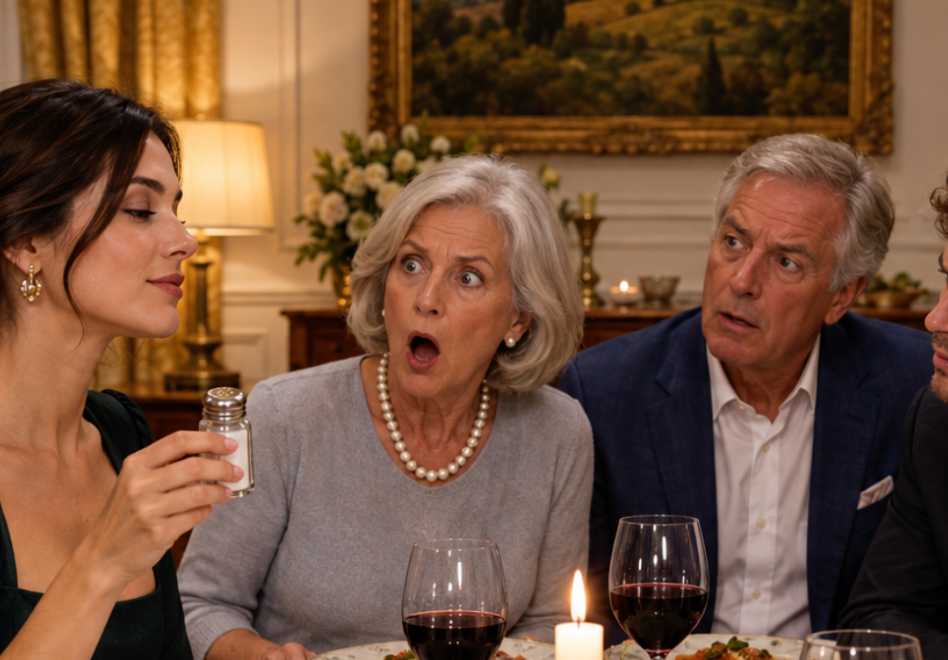
“Is your food too bland, dear?” Ariadna Modestovna slid the silver saltshaker closer to her own plate. “Better get used to it. In this house, we don’t oversalt anything.”
I nodded and swallowed the plain rice. It stuck to the roof of my mouth like soggy paper.
She dabbed the corners of her lips with a napkin and, without losing her smile, said a few words in Italian to her husband. Felix Petrovich glanced down at my hands.
I pulled my hands under the table, onto my lap.
Almost every Sunday lunch was like this. For six years, twice a month, in a Stalin-era apartment in Sokol, ceilings three meters twenty, parquet floors smelling of polish. And every time the hosts wanted to discuss something I wasn’t supposed to hear, they would switch to their “family” language.
This language stuck with them since the eighties: Felix Petrovich had spent five years working in Milan for the Foreign Trade Ministry, his wife was with him, little Rodion started school there. Forty years have passed, but Italy never left this apartment.
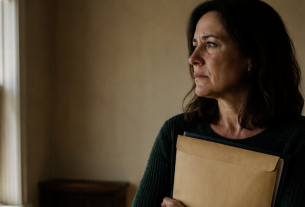
And who am I? Albina, fifty-one, head nurse at a suburban health resort. In the fall of 2020, Felix Petrovich came to our sanatorium with a voucher, his son visited him and once complained about his pillow. I brought him a different one.
To his mother, I remained the woman who brings pillows.
After his divorce, Rodion moved back in with his parents, but from Friday to Sunday, he would come to see me in Vykhino. Alone, he was different—warm, funny, fixed my kitchen faucet. At forty-five, after fifteen years alone, you don’t say no to that.
“Don’t take it to heart, Alya,” he would say when I asked what they were talking about. “It’s just habit. They’re almost eighty, you can’t change them.”
In the second year, I asked Ariadna Modestovna herself to speak Russian when I was around. She raised her eyebrows: “Dear, not everything in this world is about you.”
That’s when I realized there was no point in asking. I’d have to learn it myself.
Three years ago, I found Silvia online. She’s from Verona, married to a Russian, lives in Khimki and teaches via video calls. Tuesdays and Thursdays, eight in the evening, fifteen hundred rubles a lesson. Rodion never visited on weekdays, so he had no idea.
At first, I was planning a surprise: I’d learn the language, give a toast at the wedding in their favorite tongue, and Ariadna Modestovna would finally look at me as one of her own. I sat through two hundred seventy classes for that look, spent four hundred and five thousand rubles out of my sixty-two thousand salary.
But then I started understanding—at first just bits and pieces: “that dress again,” “talks like a market vendor.” And I kept quiet, doubting myself every time: maybe I misheard? Maybe, as a perpetual C-grade student, I was imagining things?
And how could I possibly admit it now? “Hello, I’ve been listening to you for two years”?
Rodion understood everything, of course. I told myself he’d grown up with that background noise and didn’t notice it anymore, the way people stop hearing a ticking clock.
But that Sunday, I didn’t mishear: “mani da lavandaia”—washerwoman’s hands.
“Now, about the wedding,” Ariadna Modestovna set down her fork. “Third of October, the guests will be from our circle. So let’s agree: don’t mention the sanatorium.”
“Why not?”
“Because ‘laundry lady’ isn’t the best label at the table, dear.” She smiled sweetly. “Let’s phrase it like this: Albina works in the health retreat field. It sounds more polite and refined.”
A tram rumbled outside, and the crystal in the cabinet chimed softly. Rodion gave a crooked smile and started studying the label on the bottle.
He always smiled like that when it was time to choose between me and Mom. And he always picked the label.
My palms were getting sweaty under the tablecloth. With these hands, I’ve spent thirty years making beds, counting linens, ironing, receiving and handing out. Should I be ashamed of them? Ashamed in front of whom?
I wiped my hands on my skirt and placed them on the table. One at a time.
“Ariadna Modestovna, I’m not a housekeeper. I’m a ward sister. I manage two hundred and twenty beds, fourteen staff and a storeroom with every pillowcase logged into inventory.”
She stopped chewing.
“And that’s exactly what I’ll tell the guests. Anyone who doesn’t catch it the first time—I’ll repeat it.”
“Felix, do you hear this?” she turned to her husband. “I’m being given conditions.”
“Seems I do,” said Felix Petrovich, and for the first time at dinner he looked me in the face, not at my hands.
I finished every single grain of the risotto. Bland and cold, but it went down easily.
Rodion walked me to the metro, arm in arm, saying I did great and that it was about time someone put Mom in her place, since he never could. I thought: there he is, mine. Hesitant, but still my own.
But one thought kept nagging me. For years he insisted, ‘why bother with a marriage certificate?’ Then suddenly in June, he proposed, and his mother didn’t object at all. What changed between them?
I had no answer. Then, on Tuesday, right in the middle of my lesson, Ariadna Modestovna called: “I reviewed the guest list. I expect you at my place on Wednesday—there’s a lot you’ll have to cross out.”
***
On Wednesday, I went straight to Sokol after my shift, my hair still smelling like bleach.
My list was lying on the oval table under a lamp. Twenty-two names from my side, eighteen of them slashed out in red pencil. Thick, heavy strokes, the paper even torn in places.
“Sit down, dear,” Ariadna Modestovna tapped the list with her pencil. “I left you four. Your mom, your aunt, and two more—you pick.”
“And the rest?”
“The rest, darling, are your maids and some Raya with her driver husband. Can you imagine them next to Nonna Arkadyevna? They’ll show up in cheap glitter.”
Raya’s worked with me side by side for twenty years. When I got sick last winter, she managed my storeroom and her whole floor for a month. She doesn’t own cheap glitter—all she has is one blue dress for every occasion.
“The hall fits forty,” I said. “There’s room for everyone.”
“There’s no hall.”
I didn’t understand. I found that hall myself back in July—a restaurant near our metro, a veranda, forty seats. Put down a thirty-thousand deposit from my vacation pay. Even used Rodion’s number for the booking. And I’d already ordered foiled invitations, 150 rubles each.
“Rodion called and canceled everything on Monday,” she adjusted the brooch on her collar. “I asked him. The veranda is already booked for someone else’s anniversary, so don’t bother calling. The wedding is at ‘Toscana’ by Patriarch’s Ponds, intimate, just eighteen guests.”
“And the deposit?”
“As far as I know, deposits aren’t refunded. Consider it a lesson in good taste. And just to be clear—for ‘Toscana’ it’s nine and a half thousand per person, the bill is split. Your share is 85,500.”
I did the math before she even finished talking. Only four of the eighteen guests were mine, and yet I was paying for half.
Rodion sat in the armchair by the window, rolling a wine cork between his fingers. He didn’t even glance at me.
That hurt the most—not the red pencil, not the shiny lurex. He was the one who dialed the number, the one who said ‘let’s cancel,’ and then, as if nothing had happened, wished me goodnight over the phone on Tuesday.
The room smelled of polish and dried roses. The clock in the corner struck six, and each chime seemed to echo right under my ribs.
Ariadna Modestovna turned to her husband and, half-whispering in Italian, added a short phrase I understood perfectly: fewer people, less expense, and less shame.
Felix Petrovich grunted into his newspaper.
A rush of heat hit me, my blouse stuck to my back. The deposit was half my salary. The invitations were already at home in a box—I’d spent three evenings personally handwriting each one.
My hands instinctively crept under the table. I caught myself halfway.
‘Rodion, look at me.’
He lifted his eyes.
‘You’ll transfer the money to me by Friday. You canceled, so the debt is yours. That’s how we’ll note it.’
‘Al, come on, don’t start. I was just trying to do what’s best, Mom said, you know, everything there is cheap.’
‘By Friday.’
Then I picked up the red pencil and my list from the table. Found Raya and ticked her name. Found the girls from the third floor—check, check, check. Eighteen times.
‘All twenty-two of my guests will be there, Ariadna Modestovna. Whether it’s in Tuscany, on the veranda, or in my kitchen doesn’t matter to me. But if they’re not at the table, neither am I.’
‘You’re risking your own wedding,’ she said very quietly.
‘I’m adding ticks.’
I placed the pencil on her saucer. Felix Petrovich lowered his newspaper and looked at his wife. ‘Thirty-six people won’t fit there. So, we’ll have to figure something out.’
In the elevator, I pressed my forehead to the cold mirror. My knees felt weak, but inside I suddenly felt something solid. Turns out, you can stand up to them! The ceiling didn’t cave in, the floor didn’t split apart.
I rode down six floors, smiling at my own reflection—red-faced and disheveled.
The money came through Thursday evening. The full amount, no signature and no ‘sorry.’ At that very moment, Silvia was making me rehearse the toast I’d been writing all summer: ‘Dear Ariadna and Felix, thank you for welcoming me into your family.’
‘Bravissima,’ she said on screen. ‘Your accent is better than half my students.’
I laughed. Silvia only knew the toast was for my future in-laws. I never told her what they say about me—I was too embarrassed.
And I almost felt at peace. But one phrase from that Wednesday still stuck in me like a splinter. Just as I was leaving, Ariadna Modestovna tossed out, ‘We’ll sort out the living arrangements after the wedding, dear. Rodion’s not going to live in Vykhino.’
So where exactly is he supposed to live? And what does ‘we’ll sort out’ mean?
***
In ten days, Felix Petrovich would turn seventy-nine.
Ariadna Modestovna called the night before, her voice sweet as honey: ‘Alyechka, you’re the professional here, come early and help with the table.’ I thought maybe she wanted peace, so I arrived three hours before the guests.
I ironed the tablecloth for twelve myself, using the heavy owner’s iron and damp gauze. I set out the porcelain, polished the glasses until they squeaked. The apartment was filled with the smell of roasted veal and her perfume, sweet and powdery.
«Put this on, or you’ll get splashed,» the hostess said, handing me an apron.
I put it on. And I didn’t take it off for the next four hours.
There were eight guests, all from foreign trade circles: dry old men in jackets, ladies with pearls. They talked about Milan, garage prices, grandchildren in London. As they sat, I served. Starters, the main course, bread, ice, clean forks. My place setting was at the edge, right by the door, but I never sat down.
Later, I counted: over forty plates out, and just as many back.
An old man with a medal bar asked me for still water twice, calling me ‘miss’ both times. No one told the guests who I was. Not ‘fiancée’, not ‘Albina’, not even ‘our Alya’.
In the kitchen, between the main course and dessert, I caught Rodion by the sleeve.
«Tell them who I am. Just say it in one sentence.»
«Al, not now. It’s Dad’s day, it’s awkward. Later, okay?»
Later. His favorite word.
He went back to his seat, on his father’s right, and gave me a half-smile from across the table.
Over dessert, the lady in pearls, Nonna Arkadyevna, touched my elbow.
«Dear, how much do you charge for an evening? I’m having a big birthday in September and I need someone just as efficient.»
Suddenly everything went quiet, only a spoon clinked against a saucer. I looked over at Ariadna Modestovna—just say it. Just one word!
She dabbed her lips, leaned in toward her friend, and answered in Italian—loud enough for the whole table, like she was telling a good joke:
«Gratis. È la lavandaia di Rodion.»
For free. She’s Rodion’s laundress.
Three people laughed: Nonna Arkadyevna, her husband, and the hostess. Felix Petrovich frowned but said nothing. Rodion stared down at his plate, ears turning red—he understood every word.
The tray in my hands suddenly felt very heavy. All these years, I thought I was invisible here. Turns out I was seen all along—they just saw me as the help, someone they didn’t even have to pay.
Heat rushed from my neck to my temples, and my mouth went dry.
I set the tray down on the side table. Untied my apron, folded it in quarters—just like I fold the linens before laundry—and hung it on the back of the hostess’s chair.
Then I took my place setting from the door and moved it to the other end of the table.
«Move over, Rodion.»
He moved over immediately. I sat down.
«I’ll answer myself, Nonna Arkadyevna. I don’t charge for the evening. My name is Albina Sergeyevna, I’m Rodion’s fiancée. The wedding is on October third, you’ll get an invitation.»
The lady in pearls dropped her spoon.
«And now, Ariadna Modestovna, the hostess can serve the coffee. The pot is on the stove, I washed the cups.»
Ariadna Modestovna sat up very straight, clutching her napkin. Red blotches crept up her neck.
«Well then, happy birthday to me,» said Felix Petrovich, pouring me a glass of wine himself. «It was about time you sat down, Albina.»
The wine was tart and warm. I sipped it slowly, feeling the tension melt from my back. Four hours on my feet—but as it turned out, I wasn’t tired from the plates.
What if I ruined someone’s special day? Seventy-nine years old, surrounded by guests, and here I am in my apron. But he was the one who poured my wine.
In the taxi, Rodion broke his silence for the first time: “You’re right. I’ll talk to them, this just can’t go on.” He held my hand all the way to Vykhino.
And on Sunday morning, she called me herself.
“Alyechka, I was impossible yesterday. The guests, my age, my nerves. Please forgive me. Come visit us next Saturday, just the four of us, only family. Felix Petrovich wants to give you his mother’s ring, it’s a family tradition.”
I sat down on the hallway stool. His mother’s ring. For me!
Could it be that six years weren’t for nothing? Did it really take just one time of taking off my apron?
All week, I practiced my toast on the commuter train, whispering the words to the rhythm of the wheels. On Saturday, they’ll see that I understand every word. They’ll feel awkward, I’ll feel lighter, and we’ll be able to start over.
I texted Silvia that I had an exam on Saturday. She replied: “In bocca al lupo.” Break a leg.
Or so I thought.
***
On Saturday, I wore the blue dress—the one Ariadna Modestovna always commented, “that one again.” I didn’t need another.
The table was set for four: candles, yellow roses, risotto with porcini mushrooms. The air smelled of warm wax and garlic. The silver salt cellar, as always, was by the hostess’s plate.
Felix Petrovich pulled a velvet box from his pocket. The ring was old, heavy, set with a dark garnet. With his cool, dry fingers, he slipped it onto my right hand himself.
“Wear it, Albina. My mother never took it off for half a century.”
I felt a sting in my nose. Rodion kissed my cheek, Ariadna Modestovna raised her glass: “To our Alyechka.” I found the paper with my toast in my purse, though I knew it by heart. As soon as I finished eating, I’d stand and make my speech.
The risotto was bland again. I smiled to myself: get used to it, darling.
And then she turned to her husband. Same old smile, glass at her lips, her eyes on me.
“Sempliciotta, però con l’appartamento.”
A simple girl, but at least she has an apartment.
I translated it before I could even be afraid. Silvia certainly taught me well.
“And hands to work,” Felix Petrovich replied in the same language. “Someone to look after us.”
“Did you talk to her about selling?—now, to her son.—First’s coming up again, time for another payment.”
Rodion glanced at me, smiled slightly, and answered slowly, like a schoolboy at the board:
“Dopo le nozze, mamma.”
After the wedding, Mom.
The fork in my hand turned ice cold, and my ears rang like the metro tunnel.
So that’s what had really changed last June. Two years ago, Rodion’s business folded—Italian tiles—and he was left with a loan: two million three hundred. He told me himself, sighing, about the forty-eight thousand a month he pays the bank and how he’s living off his parents. My two-bedroom in Vykhino is worth close to twelve million.
My mother signed the apartment over to me as a gift when she moved to her sister’s in Ryazan. Gifts aren’t split in a divorce—I knew that without a lawyer. But sell it, buy something new during marriage, and just try to prove where the money came from.
So the apologetic call, the ring, the friendly “Alyechka”—it was all just an advance. For my apartment, and a free caregiver thrown in.
My hands rested on my lap under the table, damp, wearing a stranger’s garnet ring. I stared at them for what felt like a minute. Rodion was pouring wine for his father. Ariadna Modestovna was already telling a story in Russian about how wonderful September is in Tuscany.
I could have stood up and left silently. I could have cried. But then they’d never know what I actually heard at that table.
Then I placed both palms on the tablecloth.
«Signora Ariadna, mi passa il sale, per favore?»
Please, pass me the salt.
Her napkin stopped at her lips. Felix Petrovich missed the coaster with his wine glass. The cork slipped from Rodion’s fingers and rolled under the table.
No one passed me the salt. I stood up, reached for it myself, and seasoned my food. Generously, like I would at home.
«Now for a toast,» I said in Italian. «I’ve been preparing it for three years.»
I spoke calmly and never faltered. How I’d spent two hundred and seventy evenings learning their language, just so I could say thank you for welcoming me into the family. That I would say thank you anyway—for the truth. It’s better to learn it before the wedding than after the sale.
«The simple girl gets to keep the apartment,» I finished. «And the groom stays with his mother.»
Outside, a tram passed by, and the crystal in the cabinet chimed, just like that Sunday.
«You were eavesdropping!» Ariadna Modestovna gasped in Russian. «Three years! That’s so low!»
«I was just sitting at your table. One hundred and forty-four meals, I counted. You said all that in front of me.»
«Alya, you misunderstood!» Rodion jumped up. «Mom misspoke, and I only said it to get her off my back!»
«I understood you word for word, Rodion. Pay off your loan on your own. We’ll leave it at that.»
The ring came off my finger with some effort. I put it back in its box and set it beside the salt shaker.
«Her accent is better than yours, Ariadna,» Felix Petrovich suddenly said, staring at the tablecloth. «You and I have been speaking with one for forty years.»
She didn’t answer. She sat clutching her napkin, and for the first time, seemed to not even know what language to speak.
In the hallway, I put on my shoes slowly. My palms were dry.
Rodion caught up with me at the elevator. The stairs smelled of cats and someone else’s dinner.
«Al, wait. After so many years together, is it really just one word that ends it?»
«Three words,» I said, pressing the button. «‘After the wedding, Mom.'»
***
Rodion picked up his things the next day: two shirts, a razor, slippers, and his charger. I handed everything to him, all listed, in his own gym bag, right at the doorway.
I withdrew our wedding application from the registry office on Monday. ‘Toscana’ kept Ariadna Modestovna’s deposit, fifty thousand, and Rodion later complained to me over the phone that his mother hadn’t spoken to him in three weeks. I listened for a minute and hung up. He’s paying off his loan by himself now.
On October third, the day our wedding was supposed to happen, I set the table at my place in Vykhino. Twenty-two guests couldn’t fit in my two-room apartment—fourteen came, sitting on stools and an ironing board laid across two chairs. Raya showed up in her blue dress, and I wore mine. We turned our embossed invitations into coasters for hot dishes.
My hands remained on the table all evening—red, broad, with short-trimmed nails. Nobody paid them any attention, because everyone at that table had hands just like mine.
I haven’t stopped my lessons with Silvia. Every Tuesday and Thursday at 8 PM, just for myself now. I’m taking a vacation in May, and I’m already gathering documents for my visa: Silvia has invited me to Verona, and her mom is renting out a room.
“Al, pass the salt!” Raya shouted across the table.
My salt shaker is simple and glass, from the hardware store. I keep it in the middle so everyone can reach it.
“Prego,” I replied.
And I passed it to her.