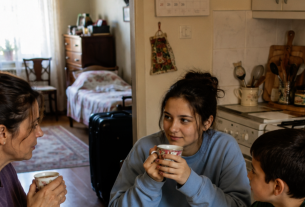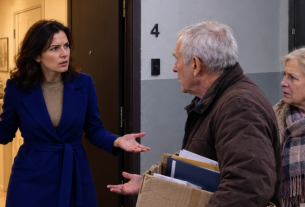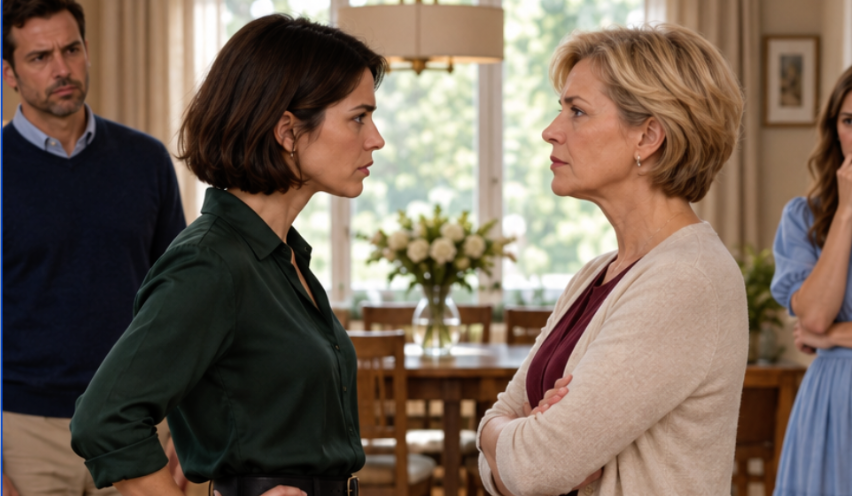
“So, where have you been this time, Olechka?” Tamara Ivanovna didn’t even turn around, standing by the window with her phone in hand and her trademark look of eternal disappointment. “It’s almost eight o’clock. And, of course, nobody bothered to heat up dinner from the fridge. Dmitry has been home for half an hour already.”
Olga slipped off her wet sneakers and let out a deep breath — the elevator was out again, and the climb to the sixth floor felt as steep as ever. Her backpack seemed to press down on her spine, and she was carrying two discounted packs of buckwheat, some eggs (one of them already cracked), and a can of tomato paste.
«I got held up at my side job,» she said quietly as she walked past her mother-in-law into the kitchen. «We got an advance and I went straight to the store…»
“Of course, of course,” Tamara Ivanovna dismissed her with a sneer. “She’s working, right. A part-time secretary in the housing office. Hilarious. If it weren’t for my apartment, you’d have been living under a bridge, my dear.”
Olga pressed her lips together tightly as she opened the fridge. There was a baking tray covered in plastic wrap with plain boiled pasta. No cutlets, no chicken. Just pasta.
“So, Dima didn’t eat?” she asked, not turning around.
“And who would eat that, excuse me?” her mother-in-law smirked. “You’re the daughter-in-law, you do the feeding. Just look at you: living in my apartment, tormenting my son, and then waltzing in like a queen at nine at night. My mother would have smacked me with a frying pan if I’d done that at your age.”
“You know, Tamara Ivanovna,” Olga said softly, sitting at the table and leaning her elbows on the cool plastic tablecloth. “You always say this is your apartment. But isn’t it registered under Dima’s name?”
“It could be registered to a dog for all I care,” her mother-in-law snapped. “My mother privatized this apartment, and I’m the one in charge here. You’re just temporary. A parasite.”
Dmitry walked out of the room — beer in hand, wearing a wrinkled T-shirt. The air smelled of cigarette smoke, even though he had promised Olga he wouldn’t smoke in the apartment.
“Mom, enough,” he grumbled, not looking at either his mother or his wife. “I’m tired of all these fights. It would’ve been better if you cooked some pasta instead, honestly. You knew I’d be coming home after my shift.”
Olga looked at her husband as if seeing him for the first time. Back in college, he’d seemed kind. Calm. Strong. Now he was more like an extension of his mother: silent when he should speak, and speaking when silence would be best.
“I brought some money,” she said, pulling out a crumpled envelope. “I wanted to save up for fixing the bathroom. We’ve got mold growing behind the toilet, and the pipe is leaking…”
“So go ahead and save up,” Dima shrugged. “Just don’t think about saving by cutting back on me. As you can see, beer doesn’t come out of thin air.”
“Yeah,” Tamara Ivanovna added with a predatory smirk, “beer is what matters, right? Who cares about a little mold. We lived here just fine before you—and nothing happened to us. But you show up, and suddenly everything’s wrong.”
Olga stayed silent. She had the feeling she was living in someone else’s house, where she was only allowed to stay ‘temporarily,’ but every single day they reminded her that the door worked both ways, and it wasn’t really hers.
She really had arrived at this house with just a suitcase, like a proper bride—full of dreams and hopes. They’d gotten married quickly, just six months after meeting. Back then, Dmitry was warm-hearted and sincere, even if his views were simple. His mother seemed strict, but fair. Or so it seemed.
Then the little things began. First, “You’re not washing the towels right,” then, “You chose the wrong pot for the borscht.” And then outright: “You’re not right for us. Not our kind. Not smart enough, not the right character.”
That evening, lying on the creaky sofa in the walk-through room, Olga stared at the ceiling. The wallpaper had peeled back near the window, hanging down like the tongue of a tired dog. Tomorrow was work again. In the morning—minibus to the station, then a transfer to the bus. Then eight hours of numbers and folders.
“Want to come stay with me for a couple of days?” Victoria offered on the phone, when Olga had slipped out into the hallway to ‘call her mom.’
“I don’t want to. Not yet, anyway. I’m not ready. But thank you, Vika.”
“This isn’t a home, Olya. It’s a prison. They’ll break you if you don’t leave on your own.”
“I’m holding on. I… I’m holding on for now.”
She really was holding on. Clinging to life with her teeth. Hanging onto the window ledge with her fingertips—nine stories up.
But her heart was telling her—she couldn’t last much longer.
Everything happened a week later. In the evening, during a rainstorm. The kind of rain that hits your face like you’re personally to blame for something.
“Pack your things,” Tamara Ivanovna said, standing in the doorway. “And don’t try to make a scene. Dima agrees—it’s decided. We don’t need you here anymore. You have friends, your mother’s still alive. Go stay with them for now.”
“What?” Olga shot up from the sofa.
“Exactly that. Leave the keys. And don’t you dare show up without calling first. This is not your home. It never was.”
“Dima…” She turned to her husband, who stood with his eyes fixed on the floor by the wall.
He said nothing.
“Coward,” Olga whispered. “You knew she’d do this.”
“It’s her apartment,” he muttered. “I don’t make any decisions here.”
Fifteen minutes later, she stood outside the building. One hand carried a bag of clothes, the other held a plastic bag with her documents. Her phone was in her pocket. Her heart felt left somewhere in a puddle at her feet.
Victoria arrived twenty minutes later.
«I warned you,» was all Victoria said as she settled her friend into the warm car. «Now you don’t owe anything to anyone.»
«Now the only person I owe anything to is myself,» Olga replied, gazing out at the rain-streaked window.
The car started moving.
***
Olga arrived at Vika’s place feeling shattered. Literally—red eyes, a coat soaked by rain, and a bag holding everything that remained from her old life: documents, a toothbrush, and one spare sweater.
«Don’t worry, we’ll wash everything, dry it out,» Victoria said cheerfully, opening the second room in her small apartment. «The mattress is on the floor, the blanket’s clean—just be warned, the cat might sleep with you. He’s grumpy but can sense loneliness instantly.»
«I just want to sleep,» Olga whispered. «Without a mother-in-law breathing down my neck or my husband’s beer breath nearby.»
«Sleep. You’ll eat, too. Then we’ll figure out what’s next. The most important thing is—you’re free.»
Olga fell asleep almost immediately, without even changing clothes. And for the first time in a very long while, she didn’t wake up to the sound of footsteps or whispered voices at the door.
«…So, there I am in the morning, you know, and she walks out of the bathroom in my bathrobe. Mine. And she goes: ‘Olechka, can’t you at least learn to clean the bathroom after yourself? This isn’t a hostel, you know.’»
«Oh my God, she’s not a mother-in-law, she’s a character from a bad soap opera,» Vika exclaimed as she set a plate of omelet and green onions in front of her friend. «Did you ever say anything back to her?»
«What’s the point? The moment you try, it’s straight to: ‘My house—my rules.’ And Dima just stayed silent. Chewed quietly and looked away.»
«He’s not a husband. He’s an accessory for the intercom.»
Olga gave a sad little smile. The omelet smelled wonderfully homey. There it was—that feeling of home. It wasn’t about the apartment. It was about how someone brings you breakfast.
«Are you going to get a divorce?» Victoria asked cautiously.
Olga shrugged:
«Would you?»
«I’d have divorced him on the third day after hearing ‘my apartment.’ And I’d have taken my things—and the door with me.»
Olga nodded. It was a sensible thought. But inside, she still felt tangled in webs of fear, guilt, and shame. As if she had ruined everything herself. As if she deserved to be kicked out.
The days flew by. At work, people started treating Olga differently: she was more focused, wasn’t late, and stayed behind after hours. Chernyova, the accountant, even gave her a compliment: «At least you look presentable now. Before, you looked like you’d been wrung out by a steam iron.»
She and Vika made a plan: Olga would take extra shifts, study «1C» and «Personnel records management» courses online in the evenings, and on Saturdays, search through apartment listings. For now, it would be rent. But her dream was to have her own place—even a tiny one-bedroom—where no one could come in without her say-so.
«I’ve even picked out the wall color,» she told Victoria. «A light linen shade. And no carpets. The couch—just mine. No drunk people lying on it.»
«That’s what adult life really is, my friend. When your couch is your freedom.»
Nine months had passed. Olga rented a tiny apartment in Khimki—old and a bit run-down, with peeling paint in the entryway, but at least the door locked and there was a small kitchen table where she could have her meals in peace. Each morning, she sipped coffee from her travel mug on the minibus. She listened to the radio and slowly learned how to dream again.
After two months, a bonus came her way. By the third month, she earned a promotion. Her boss, a man with a raspy voice and the liver of a true accountant, told her:
«Olya, you’re doing great. If only everyone was as sharp and drama-free as you. If a good project comes up, it’s yours. Work on your finances and you’ll climb even higher.»
She walked out of his office, her knees trembling. Her dream was starting to take shape—and, more importantly, weight. The weight of possibilities.
One evening when she was already home, her phone rang with an unfamiliar number. Olga usually didn’t answer unless necessary, but something twisted in her stomach.
«Olga… it’s Tamara Ivanovna. Hello.»
For a second, the world stopped turning. Even the kettle on the stove seemed to go silent.
«Tamara Ivanovna…» she said slowly. «I didn’t expect this.»
«I’m not calling to argue,» her mother-in-law’s voice was raspy, cracked. «We… we’re in trouble, Olga. Dmitry has gotten himself into something.»
«Into what?»
«Money. He… borrowed from certain people. Important ones. Used the apartment as collateral.»
«Yours?»
«Yes. Mine. Ours. You know what I mean. He wrote an IOU. Now they’re demanding repayment. Otherwise… well, you know the type of people they are. I’m scared.»
Olga said nothing.
«I wouldn’t be asking if it wasn’t so…» her mother-in-law sobbed quietly. «I’m not well. My blood pressure, my heart. Dima… he’s not himself. He’s crying, Olechka. You should see him.»
«Why are you calling me?»
«Who else? You’re the only… normal one we have. You’ve always been so… proper. And kind.»
Sarcasm rose in Olga’s throat, but she choked it back.
«And what exactly do you want?»
«I’m not asking for money. No. Just… help us find a way out. You work now, you have, they say, connections. You’re smart. Only you can get us out of this.»
Olga stayed silent. Somewhere deep inside, the memory of that evening screamed—rain, the bag of documents, and their words: «We don’t need you anymore.»
«I’ll think about it,» she finally said.
«Olechka, please…» the voice was cracking now. «We can’t do this without you.»
Later, when she told Vika everything, Olga broke down in tears for the first time.
«Why does it hurt so much? I should be happy. They kicked me out. Called me a stranger. And now they want me back.»
«Because you’re human,» Viktoria said. «You’re not like them.»
Olga sat on her gray sofa, the one with the pillows and the light blanket, and looked out the window.
The rain was starting again.
***
Olga didn’t sleep all night. Her thoughts ran wild—rattling, hissing, boiling over like kettles on a stove. She tried to imagine what would happen if she agreed to help. Would everything go back to the way it was? Or get even worse?
But there was something else too: the feeling of power. For the first time in a long while, they were calling her out of desperation, not to give her orders. Now she could choose—not out of fear, but out of strength.
In the morning, with coffee and the lamp turned on as if lighting her own path, Olga called Tamara Ivanovna.
«I’ll come in the evening,» she said clearly. «We’ll talk. Just once. No shouting, no accusations. If I don’t like what I hear, I’ll leave and never answer again.»
«Of course, of course, Olechka,» her mother-in-law stammered. «Everything will be different. We’ve understood everything.»
Olga stood in the same apartment building where, a year ago, she was shown the door with just a bag in her hand. The walls were just the same—yellow, streaked. The smell was a mix of old paint, tobacco, and despair. The elevator still wasn’t working.
Tamara Ivanovna opened the door. She looked older. Thinner. Gone was her usual styled hair and the sharp tone in her voice.
«Come in,» she said quietly. «Dima’s in the room.»
In the living room, the same couch, the same table with a cracked tablecloth. And Dmitry—looking gaunt, with bags under his eyes and a guilty hunch in his shoulders.
«Hello,» he managed to say. «Thank you for coming.»
«Go ahead,» Olga said calmly, remaining standing.
Tamara Ivanovna began to speak. Her words were hesitant, her hands trembling. She talked about the debt—800,000 rubles that Dima had tried to invest, but lost. About how he signed a paper without reading it. How now they’re facing eviction unless they pay or sign over the apartment.
«Can’t you sell it?» Olga asked.
«Where would we go?» her mother-in-law cried out. «We’re old now. And Dima needs treatment…»
«Where was I supposed to go when you kicked me out?»
Silence filled the room. Dmitry lowered his head.
«I’m sorry…» he whispered.
«There’s nothing to be sorry for,» Olga replied. «You didn’t defend me. You let her throw me out like trash. And now you want me to come back and clean up the mess?»
«No…» he sighed. «I just didn’t know what to do. I was scared.»
«And now you’re scared again—and you suddenly remember you had a wife.»
Olga took a folder with documents out of her bag.
«Here are some contacts for a lawyer. He can check if it’s possible to challenge the contract or at least delay the payment. The attorney is good; he helped me with work issues. I’ve already paid for the initial consultation. After that—you’re on your own.»
Tamara Ivanovna nodded, still in disbelief.
«I thought… you forgave us.»
«No,» Olga said. «I haven’t forgiven you. I understand you. And I understand it’s foolish to expect gratitude or love from you. You don’t change. You’re just scared.»
She stood up.
«Olga…» Tamara Ivanovna whispered. «Don’t you want… maybe… to come back?»
Olga looked her directly in the eyes. Her gaze was calm, tired—and distant.
«No one returns to prison willingly.»
And with that, she left.
That evening, she returned to her own apartment. Small, with peeling paint on the balcony, but filled with the warm glow of a lamp and the cat that Vika had given her. He purred, winding around her legs, as if he knew his owner was finally home.
Olga grabbed a blanket, turned on the kettle, and the cozy sound of boiling water filled the room.
Rain tapped against the window. But now it wasn’t cold—it felt almost warm, like spring. A fresh start.
She took a sip of tea and thought:
«Now my life belongs to me. And no one else.»