“Well, happy birthday. Valya, what are you, a little girl that I’d bring you flowers? At our age, what are we even celebrating? It’s ridiculous.”
“Where do you think you’re going? I didn’t say you could leave!”
Mykola shouted so loudly that someone on the second floor pulled back their curtain to look. He sat in the car with the window down, engine running—outside it was minus fourteen, and the silver car had been puffing white exhaust for ten minutes, warming up before heading to the garage.
Valentyna paused by the front wheel. She adjusted her white knitted hat and swung her travel bag’s strap over her other shoulder. The bag was crammed, sporting a brand-new tag. That’s what set Mykola on edge. Nobody takes a bag like that just to buy cheese at the market.
“I told you yesterday, Kolya. I’m headed to the train station. Departure’s at 9:40.”
“I thought you were just… talking.”
“And I thought, maybe just once, you’d listen to me.”
Mykola leaned out the window so far that his glasses instantly fogged up from the freezing air. He stared at his wife as if she’d just declared she was going to the Moon.
“Valya, are you out of your mind? At your age, traveling by yourself? What am I supposed to eat? Who’ll make me dinner?”
Valentyna smiled—not with malice or sarcasm, but calmly, and that calm unsettled Mykola even more.
“Kolya, you’re sixty-two. I’m sure you and a pot of potatoes will come to an understanding. There’s borscht in the fridge, enough for three days. After that, you’re on your own.”
“And what if I don’t give you any money?”
“I never asked you for any.”
She set off toward the bus stop, her boots crunching over packed snow. Just then, their neighbor, Raisa Fedorivna, stepped out of the third entrance with a bucket.
“Valya, where are you off to so early—and all dressed up?”
“On vacation, Raisa Fedorivna! For two weeks!”
The neighbor froze in place, bucket in hand. Mykola sat in the idling car for a long time, watching the back of Valentyna’s red puffer coat—a coat he’d never seen before.
Red had been “banned” in their household for thirty years. Not officially, of course. But back in the early 2000s, Valentyna had tried on a red coat at the market, and Mykola had made a face: “Why do you need that? Looks like a fire truck. Get the gray one, at least it doesn’t show dirt.” So she took the gray one. After that, it was brown, then navy. And that’s how it went.
That’s how it went with everything. Mykola decided what wallpaper they got, where they traveled in summer—it was always the dacha, because “those cucumbers won’t water themselves.” If Valentyna mentioned going to the sea, he had a slew of reasons: the dacha’s roof leaks, the car needs the shop, there’s no money, or “what would I even do sitting on that sand?”
But twice a year, every fall and spring, Mykola and his pal Stepan would go fishing for a week at the reservoir. Suddenly, money for a new fishing rod would materialize, the roof could wait, the cucumbers survived just fine without him. Valentyna packed him a thermos, pork patties wrapped in foil, warm socks. For thirty-six years straight.
She never complained. Told her friends, “My husband’s fine. No bad habits, always provides for the house.” That was true. But every year, she felt more like furniture in that house—comfortable, familiar, unnoticed as long as she stayed put.
The last straw was her birthday. Valentyna turned fifty-eight that January.
She’d been preparing since morning—put a meat stew in the oven (Mykola’s favorite), made salads, pinched dumplings with cherries. Set the table with the festive lace tablecloth, the one that only comes out once a year. Put on the earrings her daughter gave her for her fiftieth. Incidentally, her daughter called at 8am from across the country and spent half an hour chatting and telling her a package was on its way.
Mykola walked in from the garage at 7pm. Sniffed the air in the hallway.
“Oh, stew! Good job.”
Sat, ate, said the dumplings were great. Reached for the remote, since hockey was just starting.
“Kolya,” Valentyna said softly, “did you forget something?”
He looked at her, then at the festive tablecloth, back at her. You could see the wheels turning in his head.
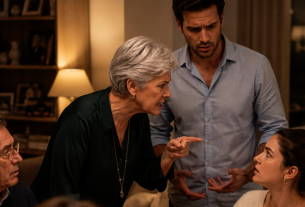
“Ah, right. Well, happy birthday. Come on, Valya, what are we even celebrating at our age? It’s laughable. Are you a little girl that I should bring flowers for you?”
And turned on the TV.
Valentyna washed the dishes and waited for the inevitable lump in her throat. It always came. But this time, it didn’t. Inside, she felt quiet and calm, as if someone finally shut off the loud refrigerator that had been humming for years—you only now realize how much it was bothering you.
When Mykola dozed off in front of the TV, she took an old box from the top shelf. For five years, she’d been stashing away money she earned herself—knitting hats and scarves on commission for neighbors and their grandkids. A hundred hryvnias here, two hundred there, sometimes five hundred for a set. Mykola knew about the box, thought it was “for a rainy day.”
She counted it up. Twenty-six thousand four hundred.
“A rainy day,” Valentyna thought, stacking the bills back. “And what is a rainy day? When the washer breaks? When the roof leaks again? Or maybe it’s when you completely forget that you have a right to be happy. Maybe that day is already here.”
The next day she…
«Where do you think you’re going? I didn’t say you could leave!»
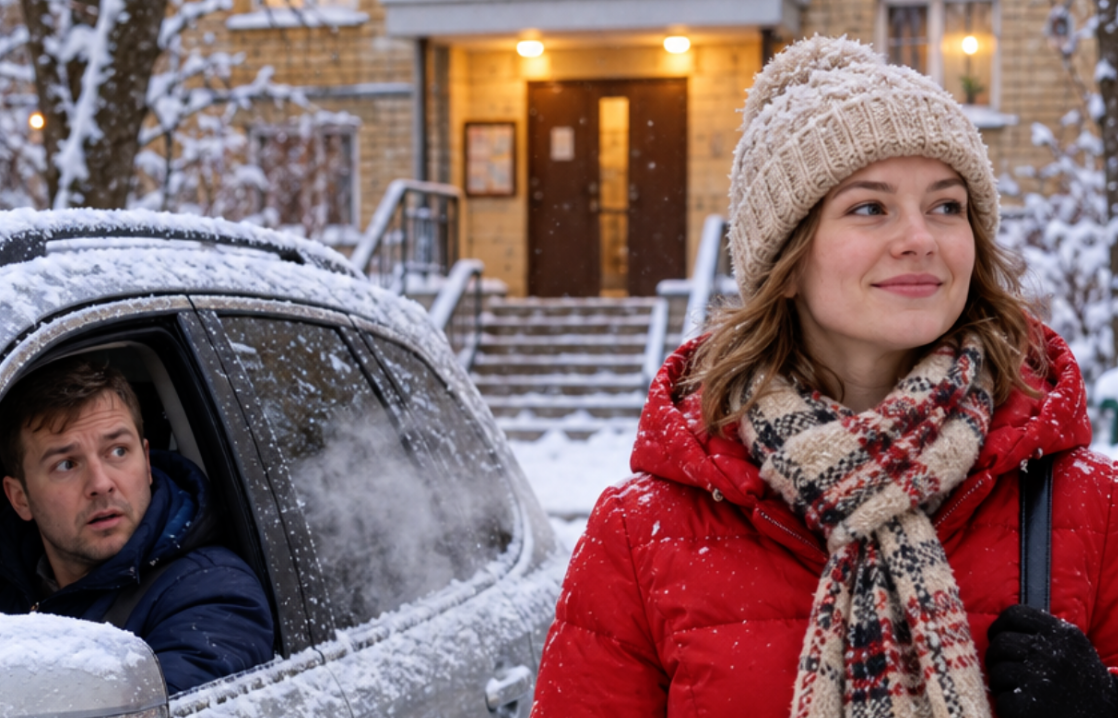
Mykola shouted so loudly that someone on the second floor peeked through their curtain. He was sitting in his car with the window down, engine running—the freezing minus fourteen air outside crackling as the silver car puffed out white clouds, warming up for its trip to the garage for a good ten minutes.
Valentyna stopped by the front wheel. She adjusted her white knitted hat and shifted the strap of her bag to the other shoulder. It was a travel bag, packed tight, with a brand new tag on the handle. That bag was what made Mykola suspicious. You don’t take bags like that to the market for some cheese.
«I told you yesterday, Kolya. To the station. My train leaves at nine forty.»
«I thought you just wanted to… talk.»
«And I thought you’d finally listen to me for once.»
Mykola leaned farther out the window, his glasses instantly fogging up from the cold. He looked at his wife as if she had just announced a trip to the Moon.
«Valya, are you out of your mind? At your age, going off somewhere alone? And what am I supposed to eat? Who’s going to make me dinner?»
Valentyna smiled—not angrily or mockingly, but calmly. Mykola felt even more unsettled by that calmness.
«Kolya, you’re sixty-two years old. I’m sure you and a pot of potatoes will get along somehow. There’s borscht in the fridge, enough for three days. After that—you’re on your own.»
«And what if I don’t give you any money?»
«I didn’t ask you for any.»
She headed for the bus stop, her boots crunching on the packed snow. Just then, their neighbor Raisa Fedorivna was coming out of the third entrance, carrying a bucket.
«Valya, where are you off to so early and all dressed up?»
«On vacation, Raisa Fedorivna! For two weeks!»
The neighbor froze, bucket in hand. Meanwhile, Mykola stayed in his idling car for a long while, staring at the back of the red puffer jacket. He realized, by the way, that he’d never seen that jacket before.
* * *
Red had been banned in their family for about thirty years. Not officially, of course. But once, back in the early 2000s, Valentyna tried on a red coat at the market, and Mykola made a face: «Why do you need that? You’ll look like a fire truck. Get the gray one—you won’t even see the dirt on it.» So she got the gray coat. After that it was brown, then dark blue. And that’s how it always went.
It was the same with everything else. Mykola decided which wallpaper to use in the room. He decided where they’d go in the summer too—and they always went to the dacha, because, as he said, «the cucumbers won’t water themselves.» Whenever Valentyna brought up the sea, he’d always have ten reasons: the dacha roof is leaking, the car needs servicing, there’s no money right now, «and what am I supposed to do on that sand, just sit there doing nothing?»
But twice a year, in fall and spring, Mykola and his buddy Stepan would go fishing for a week at the reservoir. Suddenly there was money for a new spinning rod, the roof could wait, and the cucumbers somehow survived without him. Valentyna would pack him a thermos, cutlets wrapped in foil, and warm socks. She did this every year for thirty-six years.
She never complained. To her friends, she would say, «My husband is a good man. No bad habits, always brings everything home.» And it was true. But with every passing year, she more and more felt like she was just another piece of furniture in their home—comfortable, familiar, the kind of thing you don’t notice as long as it’s in its place.
* * *
The final straw was her birthday. In January, Valentina turned fifty-eight.
She started preparing from early morning. She put roast in pots in the oven, because Mykola loves it. She made salads and cooked cherry dumplings. She covered the table with the special festive tablecloth—the one with lace on the edges that comes out of the closet just once a year. She put on the earrings her daughter gave her for her fiftieth birthday. By the way, her daughter called at eight in the morning from the other side of the country and spent half an hour telling her that the package was already on its way.
Mykola came back from the garage at seven in the evening. He sniffed in the hallway:
«Oh, roast! Well done.»
He sat down and ate. He complimented the dumplings. Then he reached for the remote because the hockey game was starting.
«Kolya,» Valentina said quietly, «did you forget anything?»
He looked at her, then at the festive tablecloth, then at her again. She could see the wheels in his head slowly turning.
«Ah, right. Happy birthday. Listen, Valya, what kind of holidays do we need at our age? Isn’t it silly? Are you a little girl that someone needs to bring you flowers?»
And he turned on the TV.
Valentina washed the dishes and waited for the tears to rise in her throat. That’s how it always happened. But this time, they didn’t come. Inside, it was quiet and calm, like someone had finally unplugged the noisy fridge that had been humming for years—and only now did she realize how tired she was of it.
When Mykola dozed off in front of the TV, she took an old box down from the top shelf of the closet. For five years, she’d been putting away money she earned herself—knitting hats and scarves to order for neighbors and their grandchildren. A hundred hryvnias, two hundred, sometimes five hundred if it was a full set. Mykola knew about the box, but thought it was «for a rainy day.»
She counted it. Twenty-six thousand four hundred.
«A rainy day,» Valentina thought as she put the money back. «But what is a rainy day? When the washing machine breaks? When the roof at the cottage leaks again? Or is a rainy day when you finally forget that you also deserve to be happy? Maybe it’s already come.»
* * *
The next day, she went to a travel agency on the main street. A young manager with long lilac nails paged through the catalog for a while and finally turned the monitor toward her:
«Here, take a look. A sanatorium in the mountains, two weeks, three meals a day, a pool, evening activities. Firs outside your window. And it fits your budget perfectly.»
«Are there dances there?» Valentina asked, surprising even herself.
«Every evening,» the girl smiled. «The women your age dance so well that even the young people are jealous.»
That evening, Valentina set the travel voucher next to Mykola’s plate on the table the night before her trip. He read it, snorted, and pushed it aside.
«You’re not going anywhere. You get lost even on the bus without me.»
She didn’t reply. She walked into the bedroom and started packing. And in the morning, it was frosty, exhaust from the car pipe, and that same phrase from the car window that the whole yard heard.
* * *
The first evening, Mykola saw it as an adventure. He heated up some borscht, ate in front of the TV, and even enjoyed the fact that no one was nagging him about crumbs on the couch.
By the fourth day, the borscht was gone.
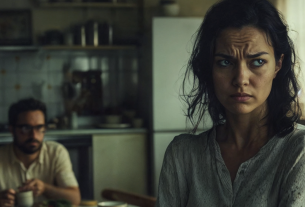
Mykola peeled some potatoes, put them on the stove to cook, and then headed out to the garage ‘just for five minutes.’ He came back an hour later to a kitchen that smelled like burnt rubber. He ended up scrubbing that pot for two evenings to get it clean.
He spent half the morning searching for a shirt for Monday, but never did find the iron. He visited his friend Stepan supposedly on business, but in reality he went for dinner. Stepan’s wife piled his plate high, sat across from him, and rested her cheek in her hand:
«So, Mykola, now do you know what it’s like?»
«Know what, exactly?»
«All of it. What it’s like when nobody’s at home waiting for you with a hot meal.»
Mykola stayed silent and finished everything on his plate.
He called Valentyna every evening. At first he complained: where’s the salt, where’s the iron, why does the washing machine beep? She answered briefly and cheerfully, with music and laughter in the background, someone calling: «Valya, come here, it’s time for tango!» She told him she walked a forest path to a spring every morning, that she was sharing a room with Stefaniya, a woman from the west who knows every song in the world, that they’d already been dancing twice, and, as it turns out, she still remembers how to waltz.
On the tenth day, Mykola realized he was calling her not for the salt, but just because. Just to hear her laugh through the phone.
* * *
He arrived at the train station forty minutes before the train. He stood on the platform, shuffling his feet in the cold, not sure what to do with his hands. The thought of buying flowers only struck him when the train was already pulling in.
Valentyna stepped off the train, cheeks rosy and with a look as if she’d just decided how the whole year was going to go.
«Finally,» muttered Mykola, grabbing her bag. «There’s nothing to eat at home. The fridge has nothing but ketchup and half an onion.»
«Let’s stop by the supermarket,» she said calmly. «We’ll buy what we need, and cook. Together.»
Mykola heard the word ‘together,’ but thought his wife was just tired from the trip. He was wrong.
* * *
There weren’t many changes, but each one hit the mark.
«Valya! Where are my socks?» Mykola called out from the other room one morning.
Before, she would have dropped the frying pan and run to help. Now, she didn’t even turn away from the stove.
«In the closet, Kolya. Second shelf from the left. The same place they’ve been for the past thirty-six years.»
A week later, she signed up for dance classes at the community center, in the group for those over fifty. Tuesdays and Thursdays, six in the evening. She only told Mykola after she’d already paid for the month.
And then, a dress appeared in the closet. Red like a rose, with a small white collar. Mykola spotted it on a hanger and stared at it for a long time, like it was something suspicious.
«How much did that cost?»
«However much it cost is what I paid. From my own money.»
«And where are you planning to go in something like that?»
«To the dance, Kolya. I told you already.»
That evening at dinner, he couldn’t take it anymore. He pushed his plate aside, took off his glasses, and rubbed his nose for a long time.
«Valya, tell me honestly. What happened to you up there in the mountains? It’s like you’ve changed. I don’t recognize you.»
Valentyna set down her fork. She looked at him closely, the way you look at someone you’ve spent a lifetime with, but suddenly see for the first time.
«No, Kolya. I haven’t changed. I’ve come back. The woman you married. Remember how we danced the waltz at our wedding? You stepped on my foot three times and told me you weren’t ever letting me go.»
Mykola stayed silent for a long time. Then he mumbled something under his breath, took his plate, and—something he’d never done before—carried it himself to the sink.
* * *
On Thursday at half past five, Valentyna was standing in the hallway. Red dress, a new down jacket, white hat. She was just fastening her boots when Mykola came out of the kitchen. He was holding the car keys in his hand.
«It’s slippery out,» he said, looking off to the side. «Let me give you a ride.»
Valentyna looked up.
«But you wanted to watch football.»
«Ah, who cares about football…»
He fell silent again, shifting from one foot to the other.
«Hey, do they take men there? I mean, to your dance classes?»
She laughed, lightly, just like she used to in her youth.
«They do, Kolya. But you’d have to brush up on your waltz.»
He nodded and went out to warm up the car. Valentyna stood for a minute longer by the window, watching as the silver car in the yard sent up white puffs of steam. The very same car he once yelled after her from. But this time, he was waiting for her.