— “Parents?” he repeated slowly. “Your parents? The ones who live in an old panel-block apartment and take the commuter train to their dacha?”
The wind mercilessly tore the last yellowed leaves from the trees, flinging them against the windows of an ordinary secondary school. Evgenia stood by the window of her classroom on the third floor, thoughtfully watching as the janitor in an orange vest melancholically raked the leaves into large piles. Classes had ended half an hour ago, but the workday for a simple English teacher was still far from over. A stack of sixth-grade test notebooks towered on her desk, and in an hour her first student was due to arrive for a private tutoring lesson.
Zhenya loved her work. She enjoyed seeing understanding light up in children’s eyes when they finally grasped a difficult rule or began freely forming sentences in a foreign language. But she understood perfectly well that teaching was more of a calling than a way to make a fortune. Her salary was stable, but modest. The tutoring she did in the evenings and on weekends brought in a decent supplement, allowing her not to skimp on quality groceries, good cosmetics, and books. But there was no question of fabulous income, luxury resorts, or designer clothes.
Her life was measured, calm, and suited her completely. By the age of thirty, Evgenia could boast of the main achievement unavailable to many of her peers: she had her own two-room apartment. Spacious, bright, in a good neighborhood, with solid renovations, quality parquet flooring, and expensive Italian tile in the bathroom that pleased the eye.
Her colleagues often sighed when they looked at Zhenya and whispered about how lucky she must have been with an inheritance or a wealthy patron. But she had neither. The apartment was the result of the enormous labor and incredible thrift of her parents, Nadezhda Mikhailovna and Pyotr Sergeyevich.
Zhenya’s parents were people of the old school. They had worked all their lives as engineers at a large factory. They had never chased fashion, never bought expensive cars, never vacationed abroad, preferring to spend their holidays at their modest dacha, growing cucumbers and tomatoes. They knew how to save. Every spare kopeck was put aside “for the future,” “for a rainy day,” “for our little daughter.” They denied themselves many things, wore clothes for years, ate simply but heartily, and methodically, year after year, replenished their savings.
When Zhenya turned twenty-five, her parents solemnly handed her the keys to a brand-new apartment.
“This is for you, daughter, a start in life,” her father said then, wiping away a restrained tear. “So you won’t depend on anyone. So you’ll always have your own corner. And your mother and I will manage somehow. We don’t need much.”
Zhenya was endlessly grateful to her parents. She treasured that apartment like the apple of her eye, buying furniture and appliances herself with the money she earned from tutoring. And three years ago, Valery moved into that apartment.
She and Valera met by chance at the birthday party of a mutual friend. He worked as a sales manager at a large trading company, was always dressed to the nines, wore expensive cologne, and knew how to speak beautifully. Valera seemed like a successful, confident man. He courted her handsomely: he gave her huge bouquets of roses, took her to cozy restaurants, arranged surprises. When they decided to live together and then get married, the question of where they would build their family nest did not even arise. Zhenya’s apartment was the perfect option. Before that, Valera had been renting a modest one-room place on the outskirts.
Their financial life in marriage developed in a rather peculiar way. Valera earned more, but he also spent a lot on himself. He upgraded his car, buying a prestigious foreign car on credit, regularly bought himself designer items, and paid for memberships at an elite fitness club. They contributed roughly equally to household needs, groceries, and utilities. This did not bother Zhenya. She was used to relying on herself and did not demand mountains of gold from her husband.
But everything changed one cold evening.
They were sitting in the kitchen. Zhenya was brewing thyme tea, while Valera scrolled through the news feed on his smartphone, clicking his tongue in irritation.
“Just look at these prices,” he said indignantly, tossing the phone onto the table. “My colleague Maxim decided to expand. He and his wife bought a three-room apartment. A mortgage for twenty-five years! The payment is so high they’ll have to live on buckwheat now. Pure slavery. How do people even buy housing these days without million-ruble debts?”
Zhenya placed a mug of fragrant tea in front of her husband, sat down across from him, and, without thinking, smiled lightly.
“Well, not everyone is that unlucky. I didn’t have to take out a mortgage.”
Valera looked up at her in surprise. He had always been sure that Zhenya was paying off some remaining loan, or that the apartment had come to her from a deceased grandmother. They had never discussed the subject in detail. Valera had simply moved into something already prepared and taken it for granted.
“What do you mean?” he frowned. “How did you buy it? You work at a school. On that kind of salary, you’d have to save until retirement just for the down payment.”
“I didn’t save,” Zhenya answered simply, taking a sip of tea. “My parents did. They saved all their lives, economized on everything. So they gathered enough for an apartment for me. Bought it without any loans, paid the full amount at once.”
Silence hung in the kitchen, broken only by the quiet hum of the refrigerator. Valera looked at his wife as if he were seeing her for the first time. Something strange flashed in his eyes — a mixture of surprise, disbelief, and some feverish, cold calculation.
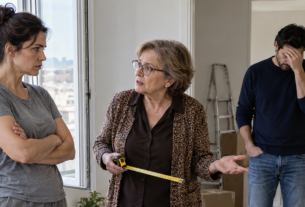
“Parents?” he repeated slowly. “Your parents? The ones who live in an old panel-block apartment and take the commuter train to their dacha?”
“Well, yes,” Zhenya shrugged, not noticing the change in her husband’s mood. “I’m telling you, they’re very frugal. They have their priorities. It was important to them to provide me with housing. They’re wonderful.”
“Oh yes… Wonderful, no doubt,” Valera drawled, thoughtfully drumming his fingers on the tabletop. “Buying an apartment in cash these days… What kind of sums do they have moving around?”
“No sums are moving around, Valer. It’s simply many years of work. Let’s drop the subject. I don’t like counting other people’s money.”
Zhenya changed the subject to the coming weekend, but the seed of suspicion and greed had already fallen into fertile soil. From that very evening, Valera seemed like a different person.
If before he had communicated with his father-in-law and mother-in-law politely but distantly, trying to keep visits to a minimum, now he became the initiator of every meeting.
“Zhenya, why don’t we visit your parents this weekend?” he suggested once over dinner. “I’ll buy a nice cake. We haven’t checked on the old folks in a while.”
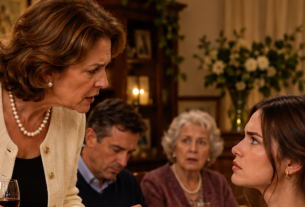
Zhenya was pleased. It seemed to her that her husband had finally developed family feelings. But during the visit, Valera’s behavior alarmed her. He acted like an investigator during an interrogation or a tax inspector.
While Nadezhda Mikhailovna bustled about in the kitchen, setting the table, Valera paced around their modest living room, scrutinizing the furnishings.
“Pyotr Sergeyevich,” he addressed his father-in-law, who was reading a newspaper in an old, sagging armchair. “Why don’t you replace the television? This box of yours still has a picture tube. It’s from the last century. They sell such panels now — smart TVs, high resolution. You’re ruining your eyes.”
“Why would we need a new one, Valerka?” his father-in-law replied good-naturedly. “This one works fine, shows the news. We rarely watch movies. It’s enough for us. Why throw money to the wind?”
“Well, comfort matters,” Valera narrowed his eyes. “Especially since, from what I see, you’re not poor people. You could afford it.”
Zhenya heard this from the hallway and frowned. “What is he getting at?” she thought.
At the table, Valera continued his strange game. He paid attention to everything: the cheap sliced sausage, the faded tablecloth, the simple kettle.
“Nadezhda Mikhailovna, where do you buy meat? At the market?” he probed, spearing a piece of baked pork with his fork.
“At the supermarket around the corner, Valerochka. They often have discounts there. A pension isn’t elastic, you have to look for bargains.”
Valera snorted and cast Zhenya a meaningful glance. When they returned home, he could not hold back.
“Listen, your parents are pathological misers,” he declared, taking off his jacket. “They live like paupers! Soy sausage, tea bags, a television from the nineties. And yet they buy apartments! Do you know what that means?”
“It means they know how to set priorities,” Zhenya answered dryly. The conversation was unpleasant to her.
“It means they have a stash hidden somewhere! And not a small one!” Valera’s eyes gleamed with excitement. “If they saved enough for an apartment for you, then they still have money left. They couldn’t have given away every last kopeck. They’re definitely saving from their pensions and whatever they manage to scrape together. They probably have millions lying there as dead weight while they choke down discounted food!”
“What business is it of yours, Valera?!” Zhenya flared up. “It’s their money! They earned it through honest work. If they want to save it, they save it. If they want to throw it into the stove, they can do that too. It doesn’t concern you!”
“How does it not concern me? We’re family!” her husband protested.
From that day on, Valera began watching. Not only Zhenya’s parents, but Zhenya herself. He started asking about her tutoring income with manic persistence.
“How much did the mother of that boy pay you today, the one in fifth grade?” he asked in the evening, when Zhenya collapsed onto the sofa, exhausted.
“As usual, a thousand per hour,” she answered wearily.
“Why so little? You’re an experienced teacher. Raise your rate. And where do you put that money? I looked in the app — the balance on your card has barely changed.”
“I bought groceries for the week and set some aside for new winter shoes. Should I provide you with a report and receipts?” Zhenya was beginning to lose patience. This total control irritated her. Valera had never stuck his nose into her wallet before.
But Valera would not let up. He began calling his mother-in-law under various plausible pretexts, trying to draw out information. “Nadezhda Mikhailovna, have you applied for a utility subsidy? Why not? Oh, your savings exceed the limit? I see, I see…”
Zhenya felt the ring of absurdity tightening around her. Her husband had turned into a bloodhound obsessed with other people’s money. The culmination of this insane spy game was an accidental visit by Zhenya and Valera to her parents on a weekday.
They stopped by to drop off medicine her father had asked for. Her parents were not home — they had gone to the clinic — but Zhenya had keys.
“I’ll be quick. I’ll put the pills on the table and we’ll go,” Zhenya said, opening the door.
While she took off her shoes and went into the kitchen, Valera darted into her parents’ room. Zhenya, after leaving the bag of medicine, returned to the hallway and froze. The door to the room was slightly open. Valera was standing by the old sideboard, hastily flipping through a folder of documents that her father always kept in plain sight — it contained payment receipts and medical records.
“What are you doing?!” Zhenya gasped, rushing into the room.
Valera jumped and dropped the folder. A thick white sheet fluttered out of it onto the carpet. It was a bank statement.
Valera quickly bent down, picked up the paper, and before Zhenya could snatch it from his hands, greedily fixed his eyes on the numbers. His face stretched in astonishment, then spread into a triumphant, almost insane smile.
“I knew it!” he breathed, waving the paper in the air. “I knew they were sitting on bags of gold! Look at this amount, Zhenya! Look!”
Zhenya snatched the document from him. It was a bank deposit agreement in her father’s name. The amount was indeed substantial — the result of selling her parents’ old house in the village, which they had recently managed to sell profitably, plus those same years-long savings they had continued to stubbornly put aside.
“Put this back! Immediately!” Zhenya felt nausea rise in her throat from disgust. Her husband was rummaging through her parents’ belongings like a thief.
“You don’t understand!” Valera paced excitedly around the room. “They’re sitting on these millions! What do they need them for? Are they going to take them to the grave? And we’re economizing here! I drive a car that still needs endless payments! We can’t afford a normal vacation!”
“We live normally!” Zhenya shouted, throwing the folder back into the sideboard. “Get out of here before my parents come back! I’m ashamed that you’re my husband!”
They drove home in deathly silence. Zhenya looked out the window, feeling her picture of the world collapse. The man she loved, with whom she had planned a future, had turned out to be petty, greedy, and unprincipled.
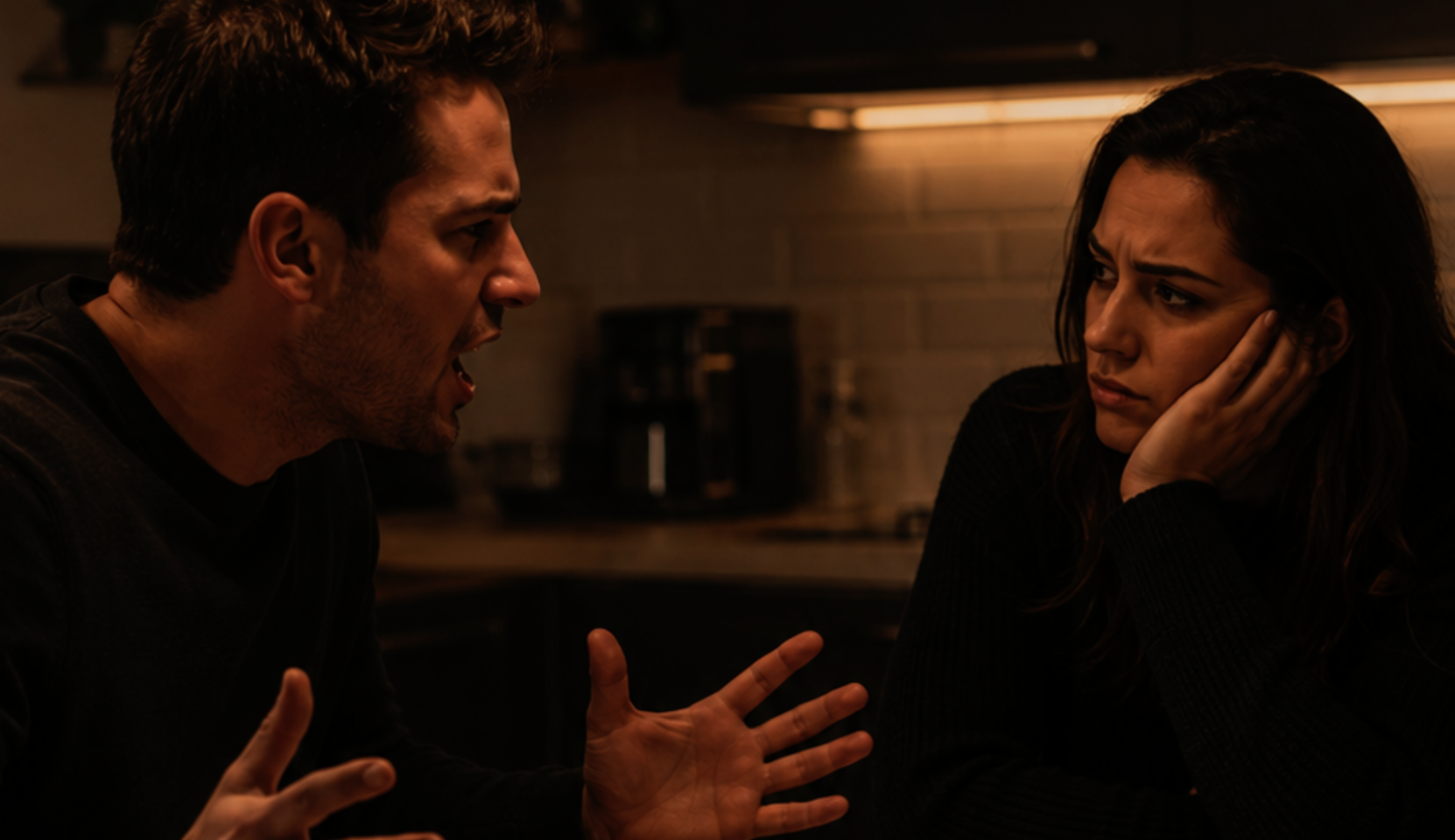
At home, the storm broke. Valera, apparently deciding he had nothing left to lose, went on the offensive. He threw off his jacket, went into the living room, and flopped down onto the sofa, looking at his wife defiantly.
“Here’s how it’s going to be, Evgenia,” he began in a tone that brooked no objections. “Enough playing the offended innocent. I am your husband. We are family. And we must think about our shared future.”
“Our future? You were just rummaging through someone else’s documents!”
“They are your parents’ documents! Which means they concern us too. They’re old people. They don’t know how to handle money. Inflation will eat that deposit! That money should be working. For us.”
Zhenya leaned against the doorframe, crossing her arms over her chest. She felt as if she were watching a bad play.
“And how exactly should it work for us?” she asked quietly, holding back her fury.
“Very simple!” Valera became animated, mistaking her calm for willingness to discuss. “We need to talk to your old folks. Let them withdraw that money. We’ll sell your apartment, add their savings, and buy a luxurious spacious place in an elite complex! We’ll register it in both our names as jointly acquired property. And with what’s left, we’ll upgrade my car. I’ve wanted an SUV for a long time.”
Zhenya listened to this nonsense and could not comprehend how anyone could be so brazen.
“You want to take my parents’ money, sell my apartment, which they bought for me, and buy a shared one so that in case of divorce you can grab half? Plus buy yourself a car? Are you out of your mind, Valera?”
“What does divorce have to do with it?!” Valera jumped up from the sofa, his face turning crimson. “I’m thinking in terms of family! We are one whole! And your parents are simply wasting away over their gold! I’m the man of the house. I know how to invest properly!”
“Invest in your own desires at someone else’s expense?” Zhenya smirked with a bitter, angry smile. “My parents worked themselves to the bone their entire lives. They denied themselves everything. And that money is their safety cushion for old age, for medicine, for care if they need it! And you want to take it away to feed your ego?!”
“They won’t take it with them to the next world!” Valera yelled, losing control. Greed had finally clouded his reason completely. “I’m your lawful husband! We live together! We’re family, which means your parents’ money is our common resource.”
“We’ll split everything fifty-fifty!” her husband insisted after learning about my parents’ bank deposit. “I have the right to a normal life! I’m not going to count pennies knowing there are millions lying around in my wife’s family!”
Those words were the last straw. The illusions shattered into pieces. Standing before Zhenya was not a beloved person, not a source of support and protection, but a parasite ready to devour everything he could reach.
She straightened. All the exhaustion of the past day vanished, replaced by cold, steely determination.
“We will divide only what we acquired together,” Evgenia said in an icy tone. “And together we acquired only a couple of pots and your car loan, which you pay yourself.”
Valera faltered. He clearly did not like his wife’s tone.
“Zhenya, what’s wrong with you? You don’t understand what’s in your own interest…”
“I understand everything perfectly, Valera. I understand who I married. A kept man who moved into a ready-made apartment and is now opening his mouth for old people’s money.”
She went into the bedroom, took a large travel suitcase from the top shelf of the wardrobe, and threw it onto the bed.
“What are you doing?” Valera followed her, his voice trembling.
“I’m packing your things. You’re leaving. Right now.”
“Have you lost your mind?! You’re destroying our family over some money?!”
“We don’t have a family, Valera. A family is when people build together. And you only want to consume.”
Valera tried to argue, to threaten her, then began pressing on pity, talking about love. But Zhenya was unyielding. She methodically tossed his designer shirts, expensive sweaters, and cologne into the suitcase. She did not shed a single tear.
An hour later, the suitcase was standing in the hallway. Valera, realizing that hysterics were not working, bared his teeth maliciously.
“You’ll regret this, Zhenechka. Who needs a plain schoolteacher? You’ll sit in your two-room apartment checking notebooks until old age!”
“At least my parents will be at peace about their old age,” Zhenya answered calmly, opening the front door for him. “Goodbye, Valera. Leave the keys on the cabinet. Tomorrow I’m filing for divorce.”
When the door closed behind her former husband, Zhenya leaned against the wall and exhaled deeply. Silence settled over the apartment. Real, soothing silence. Ahead of her lay a difficult divorce process, questions from acquaintances, conversations with her parents. But for the first time in a long while, she felt absolutely free. She had defended herself, her parents, and their right to a peaceful life. As for money… money really should work. And it had worked perfectly — it had revealed the true face of a man who had no place in her life.