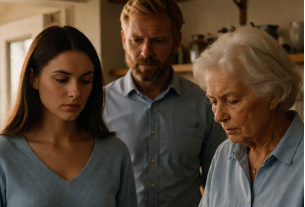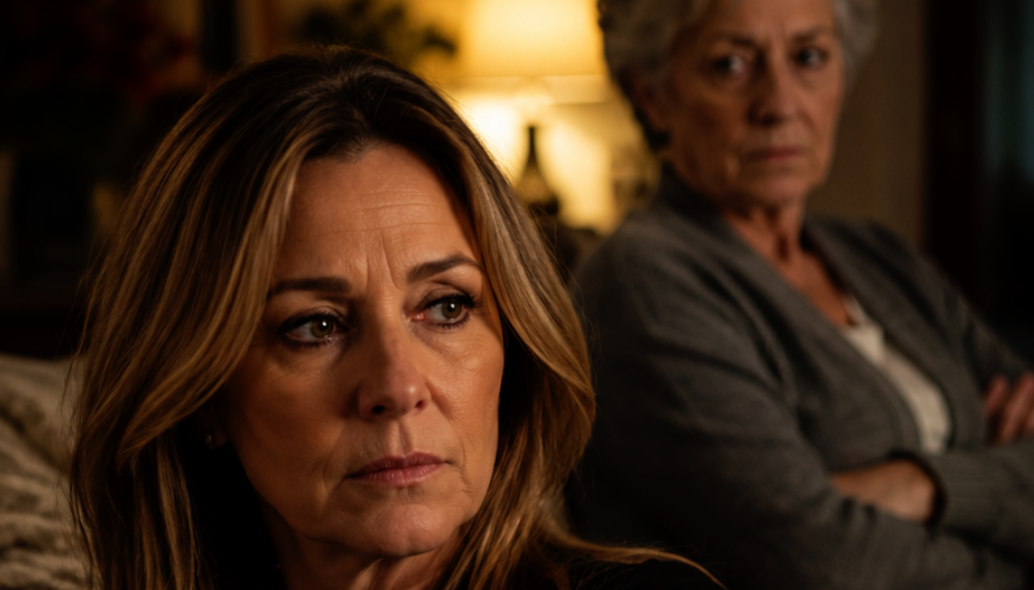
“My dears!” Svetlana Grigoryevna wailed, pressing a handkerchief to her eyes. “You are all sitting here, enjoying yourselves, eating caviar… while I… I am standing on the edge of an abyss! And because of whom? Because of my own daughter!”
Veronika’s life resembled a perfectly calibrated, complex mechanism in which every part was in its place and functioned with flawless precision. Her position as a senior sales manager at a major distribution company that supplied cosmetics to huge chain stores required an iron grip, angelic patience, and incredible stress resistance.
Veronika conducted negotiations masterfully. She knew how to persuade even the harshest and most unyielding purchasing managers, securing the best and most brightly lit shelves for new lines of moisturizing serums, organic shampoos, and matte lipsticks. Her partners valued her, management respected her, and competitors were openly afraid of her.
This work brought Veronika a very solid income, allowing her not only to stand firmly on her own feet, but also to provide a comfortable, need-free life for those she considered close. Or rather, for one single person — her mother.
Svetlana Grigoryevna was a domineering woman, used to the world revolving exclusively around her. In her youth, she had shone at the local House of Culture, sang in the choir, and always considered herself an underrated star.
Over the years, that image never disappeared. It merely transformed into a demanding, capricious manner of communication. From the very beginning of her successful career, Veronika had taken full financial responsibility for her mother. She paid for her spacious apartment with designer renovation, regular trips to health resorts with five meals a day and spa treatments, and the services of an expensive dentist, cosmetologist, and personal hairdresser.
Every month, impressive sums were automatically withdrawn from Veronika’s account to pay for the utilities in her mother’s apartment, as well as deliveries of elite groceries. Moreover, Svetlana Grigoryevna had an additional bank card linked to her daughter’s account, which she regularly used to pay for her whims — from new Italian boots to expensive perfumes.
However, Veronika received no warmth, motherly affection, or even basic gratitude in return. Svetlana Grigoryevna took the financial help for granted. More than that, she sincerely believed her daughter ought to give much more. Any attempt by Veronika to have a heartfelt conversation, to talk about her exhaustion or problems at work, ran into a deaf wall of indifference.
“Oh, why are you complaining?” her mother would usually say, examining her fresh manicure. “You sit in a pretty office, shuffling papers around. In my day, people broke their backs in factories! Better tell me when we’re going to replace the sofa in my living room. That ivory color is already irritating me. I want powder pink.”
Veronika’s only outlet, her way of hiding from work stress and her mother’s coldness, was restoring antique porcelain figurines. In the evenings, in the silence of her cozy apartment, she would take out special solutions, the finest brushes, glue, and paints. With jeweler-like precision, she restored chipped fingers to porcelain ballerinas, renewed faded smiles on shepherdesses, and glued broken wings back onto little angels. There was a deep metaphor in this painstaking hobby: Veronika felt that if she could repair these fragile, broken things, then perhaps one day she could glue her relationship with her mother back together too.
But life is not porcelain.
Besides sofas and resort vouchers, Svetlana Grigoryevna had another passion — three enormous Maine Coon cats: Richard, Archibald, and Marquis. These fluffy giants with tufted ears cost a fortune, and their upkeep cost Veronika an amount equal to the average salary of a junior specialist. The cats ate only premium holistic food ordered from a special supplier, slept on orthopedic beds, and regularly visited a groomer.
The point of no return in the mother-daughter relationship came on an ordinary weekend. Veronika came to visit Svetlana Grigoryevna, bringing a gift — a brand-new, incredibly expensive robot vacuum cleaner of the latest model, which not only collected the fur of the three enormous cats but also washed the floors with a special antibacterial solution.
Her mother’s apartment greeted Veronika with the smell of expensive coffee and aromatic diffusers. Svetlana Grigoryevna was sitting in an armchair, stroking Richard, who lazily squinted with pleasure.
“Did you bring it?” her mother asked instead of greeting her, glancing at the bulky box in her daughter’s hands. “I hope it works silently. The last one you bought two years ago hummed so loudly that Marquis started getting stressed.”
“Hello, Mom. Yes, this is the quietest model,” Veronika said tiredly, lowering herself onto a pouf in the hallway as she took off her shoes. She had just closed an extremely difficult quarter, exceeded the sales plan by one hundred and twenty percent, and felt squeezed dry like a lemon. “How is your health? How is your back?”
“My back hurts,” Svetlana Grigoryevna immediately replied in a dissatisfied tone. “The massage therapist you pay for is slacking off. And anyway, I’ve been thinking… I need a new refrigerator. A double-door one, with a built-in ice maker. My old one no longer fits the kitchen concept.”
Veronika took a deep breath.
“Mom, we just paid for your trip to the mineral springs last month. And right now, I’ve invested a large sum into a deposit. Let’s wait with the refrigerator at least until New Year’s, all right? This one works perfectly. It’s only four years old.”
Svetlana Grigoryevna’s face instantly twisted with outrage. She carefully removed the cat from her lap and straightened in her chair.
“Wait?!” Her voice broke into a shriek. “I raised you, stayed awake nights, gave you the best years of my life! And now you begrudge me a piece of metal? I’m not asking for strangers! Just look at how you live: no husband, no children, only gluing your porcelain cups and bowls together! Who are you saving all that money for?”
“I’m saving for my future, Mom,” Veronika replied, trying to remain calm. “And I don’t deny you anything. But there has to be a reasonable limit to everything.”\
“Reasonable?” Svetlana Grigoryevna laughed theatrically. “Oh, so that’s how we’re speaking now! Counting my pennies? You think that because you bought me an apartment, I’m now your slave and should fall at your feet? Well then, my dear! That apartment is registered in my name. And if you think you can boss me around while waiting for an inheritance, you are deeply mistaken!”
Svetlana Grigoryevna paused, savoring the effect her words had produced, and crossed her arms over her chest.
“I will leave everything to my kitties, and you can manage on your own!” her mother declared with a vengeful gleam in her eyes. “They love me selflessly, unlike you. I’ll put everything into a special fund so that Richard, Archibald, and Marquis are cared for until the end of their days, and afterward the apartment will go to an animal shelter. You won’t get a single meter from me!”
A heavy, thick silence hung in the living room. The only sounds were the quiet hum of that very old refrigerator in the kitchen and Marquis purring on the windowsill.
Veronika looked at her mother, and it was as if an invisible switch had flipped in her mind. For many years, she had tried to earn love. She had bought that love with money, comfort, resort trips, and robot vacuum cleaners. She thought that if she was the perfect daughter, if she covered all her mother’s material needs, then one day she would hear a simple, “Thank you, my daughter. I love you.”
But now, looking at this well-groomed, well-fed woman who was threatening to disinherit her in favor of cats because she had refused to buy a new refrigerator, Veronika saw clearly.
She understood that the porcelain figurine of their relationship was not merely broken. It had been ground into dust. There was nothing left to glue back together.
“All right,” Veronika said, her voice surprisingly even and calm. “I heard you.”
She did not argue. She did not shout, cry, or accuse her mother of ingratitude. Veronika simply stood up, straightened her skirt, took her handbag, and headed for the door.
“Go on, then!” Svetlana Grigoryevna shouted after her, confident in her victory. “And think about your behavior! Until you order that refrigerator, don’t bother coming over!”
The door closed quietly behind Veronika.
After leaving the entrance, Veronika got into her car. She took out her smartphone, opened her banking app, and began to act. First, she blocked the additional card her mother had been using. Then she went to the automatic payments section and cold-bloodedly canceled the monthly utility payments for Svetlana Grigoryevna’s apartment. After that, she canceled the subscriptions for premium cat food delivery, home internet, and cable television.
The thin stream that had grown over the years into a full-flowing financial river was cut off with one tap of her finger. Veronika did not argue. She simply stopped helping her with money.
The next few days passed in absolute silence. Veronika buried herself in work, preparing a presentation for a new line of organic cosmetics for a major regional distributor. In the evenings, she sat at her worktable and, with real pleasure, restored a complicated nineteenth-century porcelain dinner set. Her soul felt surprisingly light and empty.
The first call came on Thursday morning. Veronika was drinking coffee at the office.
“Veronika! What is going on with my card?!” Svetlana Grigoryevna’s voice trembled with indignation. “I’m at the beauty salon right now. They dyed and styled my hair, and the terminal says ‘declined’! I’m standing here like a fool in front of the administrator! Transfer money to me immediately!”
“Hello, Mom,” Veronika replied calmly. “I blocked that card. My financial plans have changed.”
“What plans?! Are you out of your mind?! How am I supposed to pay?”
“I think you can manage on your own,” Veronika returned her mother’s own words to her. “You have your pension. And if it isn’t enough, you can ask the kitties for help. They love you selflessly, after all. Sorry, I have an important meeting.”
She ended the call.
What began next could be described as the stage of denial turning into anger. Svetlana Grigoryevna could not believe that her obedient, endlessly compliant daughter had truly dared to cut off her oxygen. At first, her mother tried to pressure her with pity, sending messages that she had no money to buy bread — although Veronika knew her mother’s pantry was stuffed with delicacies. Then came threats and curses. Svetlana Grigoryevna called all their few relatives and complained about the “heartless, greedy girl” who had abandoned her own mother to fate.
But Veronika remained unshakable. She redirected the freed-up money toward her own interests: she opened a brokerage account, began saving for the country house she had long dreamed of, and bought herself a stunning antique cabinet for her porcelain collection.
Meanwhile, reality hit Svetlana Grigoryevna hard. It turned out that a pension vanished at catastrophic speed when one had to pay the bills for a huge apartment alone. Premium food for Richard, Archibald, and Marquis cost so much that her mother had to switch to cheap pasta for herself in order to feed her fluffy heirs. Cosmetologists, massage therapists, and restaurants became things of the past.
However, instead of admitting she had been wrong and trying to repair her relationship with her daughter, Svetlana Grigoryevna decided to go all in. Her wounded pride demanded revenge and the return of her accustomed standard of living.
The intrigue began when Svetlana Grigoryevna, standing in line at the veterinary clinic — where she had brought Marquis for a free vaccination — met a certain Eduard. Eduard introduced himself as the owner of an elite cattery and a professional breeder. After learning about Svetlana’s purebred Maine Coons, he offered her what she considered a brilliant business scheme. Eduard convinced the woman that her cats carried an extremely rare gene, and that if they were bred with his titled female cats, they could produce kittens worth tens of thousands of dollars.
But in order to join his “closed club of elite breeders,” pay for the services of foreign experts, obtain international certificates, and prepare the cattery according to all standards, an initial contribution was required. A very large contribution.
Blinded by the thirst for easy money and the chance to wipe the nose of her “ungrateful daughter,” Svetlana Grigoryevna went to the bank. Using her designer apartment as collateral, she took out an enormous loan at predatory interest rates. The money was solemnly handed over to Eduard in a cozy café. Eduard kissed Svetlana Grigoryevna’s hand, assured her that wealth was just around the corner, and then… disappeared. He vanished into thin air along with his promises, international certificates, and her loan money.
When the time came for the first loan payment, and Eduard’s phone answered with the mechanical voice, “The subscriber is unavailable,” Svetlana Grigoryevna realized the scale of the catastrophe. The apartment — the very one she had proudly intended to leave to the cats — was now at risk of being seized by the bank.
In a panic, her mother decided it was time for heavy artillery. She planned a grand performance to corner Veronika and publicly force her to pay off the debt.
Aunt Nina’s anniversary was approaching — Svetlana Grigoryevna’s elder sister. The whole family had been invited to celebrate at a nice restaurant. Veronika also received an invitation and, after some hesitation, decided to go, since she had always had a warm relationship with Aunt Nina.
The evening began calmly. Guests gave toasts, presented gifts, and pleasant music played. Veronika sat at the table in an elegant silk dress, enjoying perfectly cooked salmon. Svetlana Grigoryevna sat across from her, pale, tight-lipped, nervously twisting a napkin.
When dessert time came, Svetlana Grigoryevna suddenly stood up. She tapped a fork against her glass, drawing everyone’s attention. The relatives quieted down, expecting another flowery toast. But instead, her mother burst into theatrical sobs.
“My dears!” Svetlana Grigoryevna wailed, pressing a handkerchief to her eyes. “You are all sitting here, enjoying yourselves, eating caviar… while I… I am standing on the edge of an abyss! And because of whom? Because of my own daughter!”
A dead silence fell over the table. Aunt Nina blinked in confusion. The relatives shifted their bewildered gazes from the sobbing Svetlana to the perfectly calm Veronika.
“She abandoned me!” her mother continued, raising her voice to a dramatic crescendo. “She deprived me of a piece of bread! I, an old, sick woman, was forced to take out a loan just to feed myself and my poor animals! And now scammers have deceived me! The bank is taking my apartment! I will be left on the street! Veronika, how are you not ashamed to look people in the eye? You earn millions, bathe in luxury, while your mother will have to live at the train station!”
An indignant murmur rolled through the room. A couple of elderly second cousins shook their heads disapprovingly as they looked at Veronika. Svetlana Grigoryevna’s scheme seemed to have worked perfectly: in front of the whole family, Veronika was supposed to burn with shame and immediately promise to pay off her mother’s debt in order to save the family’s honor.
But Veronika did not blush. She did not lower her eyes. She carefully placed her dessert spoon on the saucer, dabbed her lips with a napkin, and slowly rose. Her gaze was cold as ice and sharp as a scalpel.
“A remarkable speech, Mom. Very theatrical,” Veronika’s voice sounded even, but there was such force in that evenness that the murmuring at the table instantly died down. “And now let’s talk about facts.”
Veronika opened her elegant handbag and took out a thick envelope.
“Aunt Nina, dear relatives. I truly did not want to air dirty laundry at such a beautiful celebration, but since my mother decided to stage a public trial, I have the right to defend myself.”
She pulled a stack of printed bank statements from the envelope.
“First, about that ‘piece of bread.’ Over the past five years, I transferred to my mother’s accounts, paid for her resort trips, dentists, apartment renovation, and food for her purebred cats an amount with which one could have bought another one-room apartment in this city. Here are the statements. Anyone who wishes may take a look.”
The elderly cousins, who only a minute earlier had been condemning Veronika, stretched their necks, trying to see the numbers.
“Second,” Veronika continued, enunciating every word. “I stopped financing her exactly on the day when, in response to my request to wait a couple of months before buying a new refrigerator to replace a perfectly functioning old one, my mother said the following to me. I quote word for word: ‘I will leave everything to my kitties, and you can manage on your own. They love me selflessly.’”
Svetlana Grigoryevna turned so pale she nearly blended into the white tablecloth. She opened her mouth to protest, but Veronika gave her no chance.
“And third. About the loan. You did not take it out for a piece of bread, Mom. You took it out against your apartment so you could give the money to a fraudster named Eduard, who promised you mountains of gold from breeding your precious cat heirs. You decided to play businesswoman in order to prove your independence to me. You risked the apartment which, by the way, I bought for you.”
A collective gasp went around the table. Aunt Nina clutched her heart.
“That is a lie! That is slander!” Svetlana Grigoryevna squeaked weakly, but her voice no longer had its former strength.
“I have a copy of your loan agreement, Mom. The security department at my workplace helped me check this Eduard. He is federally wanted for fraud. You handed your apartment over to a swindler. And now you want me — the same daughter you traded for cats — to save your property?”
Veronika looked around at the silent relatives. No one was looking at her with condemnation anymore. The looks full of pity mixed with contempt were now aimed at Svetlana Grigoryevna. Her mother sat hunched over, her face covered in red blotches, all her arrogance and theatrics gone, leaving only pitiful confusion.
“I will not pay for your stupidity and greed, Mom,” Veronika concluded. “The bank will take the apartment. You will move into a modest one-room apartment on the outskirts — I am willing to pay your first month’s rent, simply out of a sense of duty. Your cats will go with you. You wanted to live in a way where I managed on my own? Now you will manage on your own.”
Veronika carefully placed the statements on the table, approached Aunt Nina, kissed her on the cheek, and quietly wished her a happy birthday. Then she turned around and, with her back straight, walked out of the restaurant to the sound of her heels clicking.
The scandal that erupted after her departure was enormous. Once the relatives learned the truth, they turned away from Svetlana Grigoryevna. No one offered her financial help to repay the gigantic debt. The loan proved impossible to bear. The bank acted mercilessly and quickly. The designer apartment in which her mother had so loved receiving spa treatments and stroking her enormous cats was sold at auction to repay the debt.
Svetlana Grigoryevna had to move into a tiny, shabby apartment on the very outskirts of the metropolis. Richard, Archibald, and Marquis, deprived of their orthopedic beds and premium food, huddled there with her among old boxes. The luxurious life built on her daughter’s inability to refuse turned to dust.
And Veronika… Veronika finally became truly free. Her career rose even faster. She bought that very country house she had dreamed of, furnished it with impeccable taste, and set up a workshop in the brightest room. There, surrounded by silence and peace, she continued restoring antique porcelain.
And now she knew for certain: sometimes, in order to build something beautiful and strong, you must allow what has been broken to remain broken forever.