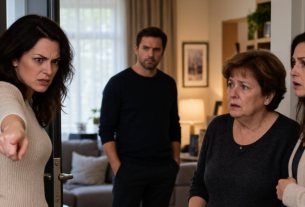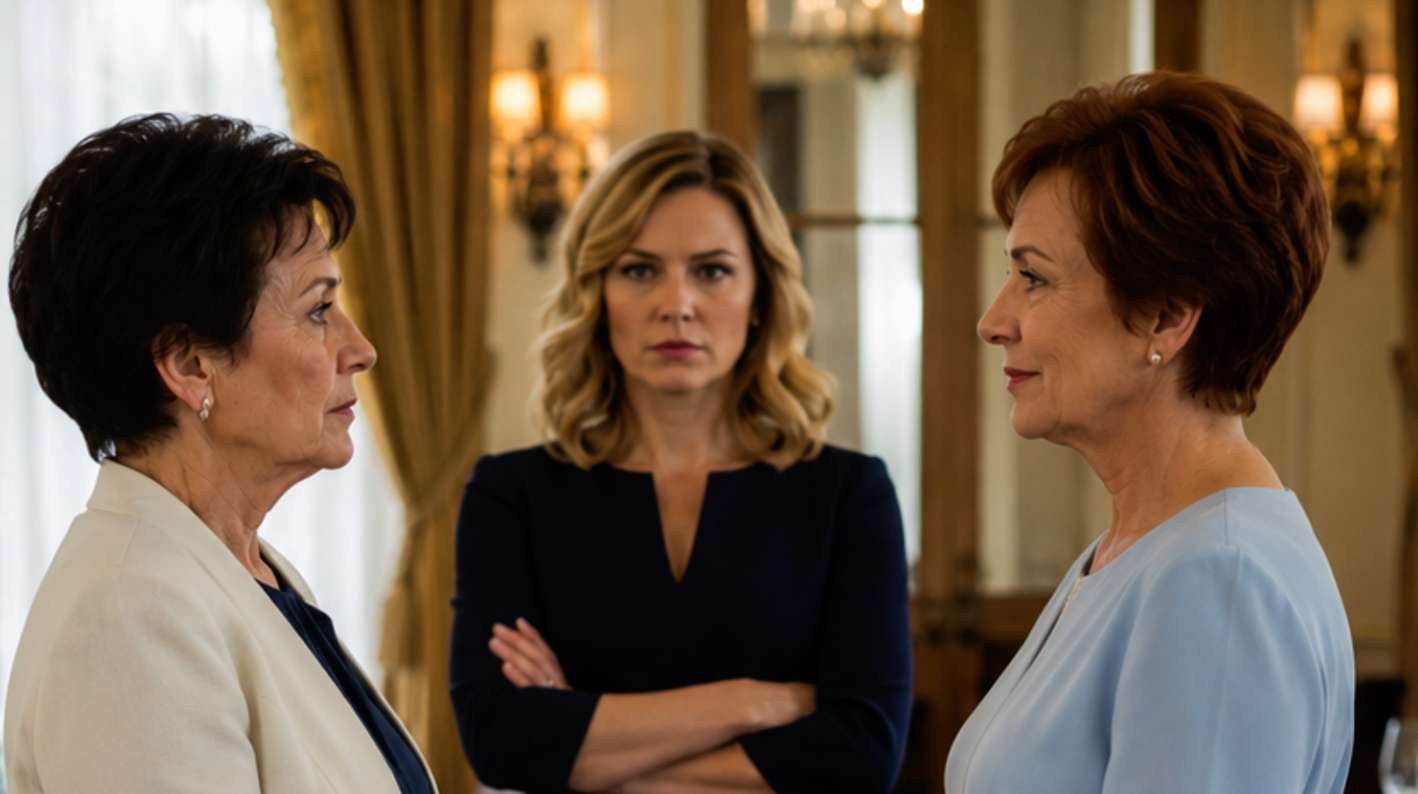
“Call your village bumpkin over. Let’s give people something to laugh at!” Eleonora Genrikhovna adjusted the diamond brooch on the lapel of her jacket and measured me with a contemptuous look. “Respectable people from the city will be gathering at my anniversary celebration. They need contrast. Let them see what hopeless backwater my son pulled you out of.”
Her words struck like a slap across the face. I stood in the middle of my mother-in-law’s spacious hallway, gripping the guest list tightly, feeling a suffocating lump rise in my throat. At that very convenient moment, my husband became deeply absorbed in his phone screen, pretending the conversation had nothing to do with him. He always avoided arguing with his domineering mother.
My mother lived two hundred kilometers from the regional center. She had worked the land all her life, raised me alone, and helped me make something of myself. Her hands had grown rough from constant labor, but I had never known a kinder person. And now they wanted to use that woman like a fool at Eleonora Genrikhovna’s vanity fair.
I was ready to refuse outright. To say she was busy. But then stubborn pride suddenly woke inside me.
You want to see? Fine.
Making the call was difficult. When my mother heard about the expensive restaurant, she let out a heavy sigh into the receiver.
“Daughter, where would I even go? There will be ladies in silk there, and I’ll be in my wool suit, the one we bought back for your graduation. They’ll laugh at me. They’ll click their tongues.”
“No one will laugh,” I answered firmly. “You are my most honored guest. Come. Without you, I won’t be able to breathe there at all.”
“If it’s needed, I’ll come, my little blood. I’ll just bake something to bring. I can’t show up to a celebration empty-handed.”
The day of the banquet was stifling. The hall glittered with crystal, gold, and cold luxury. Appetizers had already been arranged on the tables — tiny portions of something smeared across huge plates, decorated with sprigs of microgreens. The guests arrived slowly: women smelling of heavy, sweet perfume and solid-looking men in formal suits. The heroine of the evening herself fluttered among them, accepting flattery and envelopes.
My mother appeared quietly. She entered the hall neatly combed, with a timid smile. In her hands she held a huge woven basket covered with a snow-white embroidered linen towel.
My mother-in-law noticed her instantly. Her eyes flashed like a predator’s. She immediately dragged along a little flock of her most arrogant friends.
“Oh, Nina Stepanovna! You’ve arrived!” the hostess’s voice rang through the entire hall. “Just look at that, straight from the farm. And what do you have there? Potatoes from the garden?”
She unceremoniously lifted the edge of the towel.
At once, such an aroma hit my nose that my stomach cramped from hunger. Inside the basket, wrapped to keep them warm, lay plump, golden pies filled with meat and forest mushrooms. Their glossy sides shone with butter, and the smell of baked dough instantly overpowered all the elite fragrances around us.
“They’re pies,” my mother answered with dignity. “Our family recipe. Please, enjoy them.”
My mother-in-law sighed theatrically, pressing her manicured fingers to her chest.
“My dear, honestly! This is a European-cuisine restaurant. Who brings baked goods to an anniversary celebration? Take this disgrace away. Don’t embarrass me in front of decent people. We have salmon tartare and duck breast here.”
The guests began whispering. I wanted to grab my mother by the hand and lead her out of that snake pit, but she calmly set the basket on the edge of the nearest table.
“If you don’t want them, don’t eat them. That’s the hostess’s choice.”
The banquet began. Waiters carried around tiny portions of haute cuisine. The guests picked at their plates with their forks, politely praising the delicacies. After their first drink, the men began to look openly miserable.
Sitting next to our basket was a heavyset, gray-haired man — a retired general, the most distinguished guest there. Every now and then he glanced toward the towel, from beneath which an intoxicating homemade aroma drifted. At last, he couldn’t resist. Looking around, he stretched out his large hand and took one pie.
He bit off a big piece. Closed his eyes. Exhaled loudly through his nose.
“Mother of God…” he boomed so loudly that the music suddenly seemed insignificant. “Wife, just try this. The dough is like fluff! And the filling! Just like my late grandmother used to make in the stove.”
The general reached for a second one. His wife, a refined lady in diamonds, wrinkled her nose disdainfully and pinched off a small piece.
Then suddenly her eyes widened. She took a whole piece and sank her teeth into it, forgetting all her society manners.
As if by an invisible signal, people from nearby tables began reaching for the basket. The aroma of real food worked flawlessly. Soon, a real crowd formed around my mother’s treat. The elite tartare dried sadly on the plates. Respectable men chewed with delight, while ladies dabbed their fingers with napkins and asked someone to pass them that one over there, the one with the crispy side.
“Nina Stepanovna, my dear, a masterpiece!” the general rumbled, wiping his mustache. “It made my soul open wide.”
My mother sat upright, embarrassed, but her eyes glowed with warmth. She nodded, answered questions, and dictated flour proportions to someone.
Eleonora Genrikhovna stood at the other end of the hall, red blotches spreading across her face. She tried to redirect attention back to herself, loudly proposing toasts, but no one listened.
The kitchen doors swung open. The restaurant’s head chef entered the hall — a stately man in a snow-white chef’s jacket. He approached our table. Conversations fell silent. My mother-in-law straightened her back triumphantly, clearly deciding that now the chef would cause a scandal over food brought in from outside.
The chef looked at the empty basket, at the last broken piece lying at the bottom. He picked it up. Slowly tasted it.
“Who made this?” he asked loudly.
My mother timidly rose from her chair. The chef stepped toward her and respectfully bowed his head.
“I trained in the finest establishments and know hundreds of recipes. But this… this has real life in it. Tell me, do you add homemade whey to the starter?”
The hall exploded with applause. The general slapped his palm on the table and shouted, “Bravo!” People smiled sincerely at my mother, who looked like the true queen of the evening.
I turned around. Eleonora Genrikhovna was nowhere to be seen. Only the back of her expensive silk dress flashed briefly in the corridor.
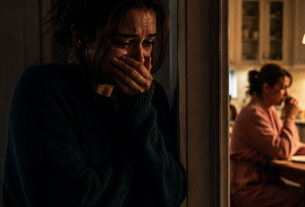
She spent almost half an hour in the restroom. I went in to wash my hands and heard someone in the far stall blowing her nose into paper towels with spasmodic, sobbing breaths. The howl of wounded vanity could not be mistaken for anything else. Her plan to humiliate us had collapsed completely.
When my mother-in-law finally returned to the hall, her eyes were red, and her face looked sunken. She lowered herself heavily onto a chair. Her gaze swept over the spot where the basket had stood, then she looked at her empty plate.
“And the pies… are they gone?” she asked barely audibly in a hoarse voice, looking at the general. She clearly wanted to save face somehow by showing that she, too, was part of the general delight.
“Gone, dear lady!” he barked. “You should have acted sooner.”
At that moment, the head chef came back to our table, holding the restaurant’s branded envelope in his hands. He handed it to my mother.
“Nina Stepanovna, the owner of the establishment has just tasted your creation. He would like to buy the recipe and production method. There is a generous advance here.”
My mother looked in surprise at the thick envelope, then at me. Eleonora Genrikhovna perked up, instantly changing her tone.
“Well, of course we agree! After all, I was the one who insisted that my son’s mother-in-law bring her baking for tasting!”
My mother calmly pushed the envelope back toward the chef.
“I don’t sell recipes, dear man. I pass them down as inheritance.”
She turned to me, took a bunch of keys out of her old handbag, and placed them on the tablecloth in front of me.
“Daughter, yesterday I sold my house in the village. The neighbors had been asking for it for a long time. The money is in the account. Tomorrow we’re going to look at a separate home for you. Enough living like a poor relation. And I’ll teach you to bake the pies myself, in our own kitchen.”
My husband choked on his mineral water, my mother-in-law froze with her mouth open, and I looked at my mother’s work-worn hands and realized that today’s celebration had been a glorious success.