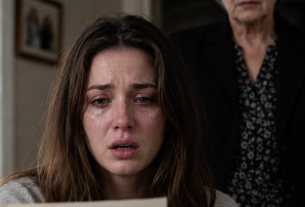
“Did you give all my savings to your sister? Then pack your things and go live with her,” Valeria said calmly, placing a travel bag beside the front door.
Maxim looked from his wife to the bag. The case containing his documents protruded from an unzipped side pocket, and a folded T-shirt lay on top. Valeria had prepared everything in advance, so he could not hope for another drawn-out argument after which life would return to normal.
That morning, he had still been confident that he could explain what he had done. Perhaps his wife would be angry for a few days, demand an IOU from Larisa, and remind him about the country house, but then she would agree to wait. Maxim believed the important part was already done: the money had been transferred, his sister had paid a deposit on the premises, and the situation could not easily be reversed.
There was only one thing he had failed to consider. Valeria had no intention of adapting to the consequences of a decision made behind her back.
She had begun saving money long before she met Maxim. She did not make saving an ordeal or deny herself everything, but whenever money arrived in her account, she transferred a fixed portion to a separate savings account. Sometimes the amount was larger and sometimes smaller, but the rule never changed.
Valeria worked as an administrator for a company that serviced medical equipment. Her days consisted of handling requests, coordinating field technicians, negotiating with clinics, and constantly monitoring deadlines. Her job required discipline, and she brought the same discipline to her personal affairs.
Over several years, she had accumulated almost one million rubles.
The money had a specific purpose. Valeria wanted to buy a small country house suitable for year-round living—not a huge cottage or a grand family estate, but a solid two-bedroom home with proper heating and enough land for a greenhouse and several apple trees.
On August evenings, she often browsed property listings, saved suitable options, and compared different areas. She did not yet have enough to buy a house outright, but the money could serve as a down payment. She had already studied the banks’ offers and calculated how much she could comfortably repay.
She and Maxim had met six years earlier at a mutual friend’s birthday party. He repaired industrial equipment, traveled frequently to different sites, and knew how to carry on a conversation without acting self-important. Valeria liked that he did not try to impress her with grand promises.
Seven months later, Maxim moved into her apartment.
The apartment had belonged to Valeria before they met. She had inherited it from her grandmother and formally taken ownership six months after her death. Maxim knew this and had never made any claim to the property. He brought his clothes, books, tools, and computer, while Valeria cleared space for him in the wardrobe and gave him a desk in the bedroom.
A year later, they married.
They had no children. They never purchased property together or made any other major joint acquisitions. Each contributed to everyday household expenses while managing personal savings independently.
Maxim had known about Valeria’s account from the beginning.
She did not treat the savings as a secret reserve or hide her bank statements. When the amount became substantial, she told her husband directly that she intended to use it as a down payment on a house. Maxim supported the idea at the time and even suggested looking at several areas near the city.
“The main thing is that the road should be passable in winter,” he said. “And we shouldn’t have to spend two hours commuting every day.”
They discussed the house’s size, heating, the condition of the land, and the distance to the nearest shops. Maxim occasionally sent his wife property listings, but their plans had not progressed beyond conversation. Valeria continued adding money to the account and intended to begin seriously searching for a house the following spring.
Maxim had a younger sister named Larisa.
She became excited about new ideas easily and abandoned them just as easily once the tedious part of the work began. Several years earlier, she had wanted to open a manicure studio. She chose a name, ordered a logo, and took photographs for a social media page, but changed her mind after speaking to the owner of the premises.
Then she decided to sell women’s clothing online. She bought a small batch of clothes and organized two photo shoots, but three months later she was selling the remaining stock to acquaintances.
Her next project was a prepared-food delivery service. Larisa researched packaging, drafted a sample menu, and found someone who promised to handle the advertising. The idea ended after she spent several days in the kitchen and realized how much time purchasing ingredients, cooking, and delivering the food would require.
Maxim defended his sister every time.
“She’s trying to find the right business for herself.”
Valeria did not argue. Larisa could search for as long as she liked, provided her experiments were not financed from someone else’s pocket.
Her latest idea appeared in the middle of summer. Larisa wanted to open a small beauty salon in a newly developed residential district. She found ground-floor premises, met a hairstylist and an eyebrow specialist, and compiled a list of the necessary expenses.
Rent, the security deposit, equipment, furniture, signage, supplies, and the first few months of operation would require approximately eight hundred thousand rubles.
The amount was far beyond what Larisa could afford.
She did not want to take out a bank loan. She explained that a new business needed time to develop, while monthly loan payments would begin immediately. The bank might also demand proof of income and refuse to approve the amount she needed.
At first, Maxim suggested finding cheaper premises.
Larisa refused.
“That would defeat the whole purpose. It’s a new district surrounded by apartment buildings, and there isn’t a decent salon nearby. In six months, someone else will take the location.”
She visited her brother several times, showing him photographs and financial projections. Valeria hardly participated in those conversations. When Larisa eventually asked whether she would like to invest in the project, Valeria answered without irritation.
“No. I’m saving for a house, and I’m not changing my goal.”
Larisa shrugged.
“I was only asking.”
The matter appeared to be settled.
After that, however, she began calling her brother more frequently. Their conversations took place in the kitchen, in the car, or late at night when Valeria was already preparing for bed. Maxim shared only fragments of what they discussed: the premises might be rented to someone else, the hairstylist was waiting for an answer, and the owner was willing to reduce the deposit slightly.
“It’s a shame,” Maxim said one day. “It really is a good opportunity.”
“A good opportunity should stand up to proper calculations,” Valeria replied. “If the entire plan depends on somebody else’s money, then it isn’t ready yet.”
Maxim frowned but did not continue the conversation.
Several days later, he met his sister without his wife. Larisa brought a printed business plan, showed him the expected expenses, and confidently declared that she would begin repaying the money almost immediately after opening.
She gave neither an exact repayment date nor the amount of the payments.
Maxim understood that his own savings were insufficient. He did not want to take out a loan in his name either. Then he remembered his wife’s account.
The money was sitting untouched apart from Valeria’s regular deposits. She did not intend to buy a house until the following year. In Maxim’s mind, this meant the savings could work for Larisa for several months and then gradually be returned.
He did not ask his wife’s permission because he already knew her answer.
He had not gained access to the banking application by accident. In the spring, Valeria’s phone had broken, and while it was being repaired, she installed the banking app on their shared tablet. She confirmed the login with a temporary SIM card, created a short access code, and used the account from the tablet for several days.
After getting her phone back, she did not delete the application from the tablet. The device was kept in a desk drawer and used by both spouses: Valeria read documents on it, while Maxim viewed work instructions and technical diagrams. He knew the tablet’s unlock code.
Valeria had never told him the banking app’s code. One day, however, Maxim saw the combination while she was checking a payment in his presence. He remembered the digits because they matched the last numbers on the license plate of an old company vehicle.
One evening, while Valeria was working late, he took out the tablet.
The banking application opened after he entered the short code. Transfers to a regular customer of another bank did not require confirmation by text message. Maxim added Larisa’s bank details himself and authorized the transactions within the app. Because of the daily transfer limit, he divided the money into several payments and sent them over the course of the evening.
Almost all the money in Valeria’s savings account disappeared.
Larisa received it and immediately transferred a deposit to the owner of the premises. She intended to use part of the remaining amount to purchase equipment she had already selected.
“Are you sure Valeria agreed to this?” she finally asked her brother after the first transfer.
“I’ll deal with her.”
“That isn’t an answer.”
“The money would have been sitting there until next year anyway. You’ll repay it before then.”
Larisa fell silent. The convenient explanation satisfied her, although she understood perfectly well that if Valeria had agreed, Maxim would not have transferred the money secretly.
Valeria did not check her savings account for two days. She used her primary card, paid for ordinary purchases, and concentrated on her work. On Wednesday evening, she was about to transfer another amount into the account when she saw the balance.
At first, she thought she had opened the wrong section.
She closed the application, logged in again, and opened the list of accounts. The name and number were correct, but instead of almost a million rubles, only a small amount remained.
Valeria straightened in her chair and blinked several times. Then she brought the tablet closer, as if the figures might change if she moved it.
They did not.
She opened the transaction history.
The transfers appeared one after another. The recipient was listed as Larisa Maximovna. Beside each transaction were the date, exact time, and amount. Every payment had been made on the evening Valeria worked late.
For several seconds, she stared motionlessly at the screen. Then she set the tablet aside and walked around the room. She stopped by the window, gripped the edge of the windowsill, and exhaled slowly.
The recent conversations immediately fell into place: Maxim’s interest in the salon, his remarks about a rare opportunity, his telephone calls to his sister, and his question about when Valeria intended to buy the house.
Valeria did not call her husband.
She returned to the table and began acting methodically.
First, she downloaded a complete statement for the account. She emailed herself a copy and uploaded another to secure storage. Then she changed the passwords to her banking applications, logged out on every device, and left access enabled only on her phone.
After that, she checked her email, government service accounts, and every other important account. She also changed any passwords Maxim might have known.
She switched off the tablet and put it in a cupboard.
Then she opened the bedroom wardrobe and took out her husband’s travel bag.
She did not throw his possessions inside carelessly. She packed several changes of clothes, underwear, chargers, work documents, the medication Maxim occasionally used, and his glasses case. He could collect everything else later.
She placed the bag in the hallway and went back to the living room.
Maxim returned shortly after seven. He put his keys on the shelf, removed his shoes, and asked what they were having for dinner.
Valeria was sitting at the table with the tablet in front of her.
“Sit down.”
Maxim glanced at the screen, and his expression changed for a moment. Then he pulled out a chair and sat opposite her.
“You opened the account,” he said.
“I did.”
“I was going to tell you.”
“When?”
“Tonight.”
“After Larisa had already signed the lease and spent the rest on equipment?”
“She hasn’t spent everything yet.”
“That wasn’t my question.”
Maxim leaned back.
“Let’s talk calmly. The money hasn’t disappeared. Larisa will repay it.”
“How much did you give her?”
“You can see the statement.”
“I want to hear you say it.”
He named the amount.
It was almost everything Valeria had saved.
“And what repayment period did you agree on?”
“She’ll start paying as soon as the salon opens.”
“That isn’t a deadline.”
“Valeria, you understand that a new business can’t produce a stable income immediately.”
“Then what repayment schedule did you agree on?”
“We haven’t written one yet.”
“Is there an IOU?”
“We’ll prepare one.”
“When?”
“Soon.”
“Is any ownership share in the salon being registered in my name?”
Maxim waved his hands irritably.
“Why do you immediately expect the business to fail?”
“I’m not expecting failure. I’m establishing the terms under which you gave away the result of several years of my work.”
“I didn’t give it away. I helped my sister.”
“With my money.”
“We’re married. Do we really have to divide everything into yours and mine?”
Valeria ran her finger along a line on the statement.
“You understood the difference perfectly when you made the transfers. You didn’t touch your own savings.”
“I don’t have that much.”
“You could have given her whatever you did have.”
“It wouldn’t have been enough.”
“You could have taken out a loan in your own name.”
Maxim grimaced.
“And pay interest?”
“But taking my money for free was acceptable?”
“It was intended for the future.”
“You decided to postpone my future for Larisa’s project.”
“Our future,” he corrected her.
“No. If you had considered it our future, you would have discussed the decision with me.”
Maxim got up and walked over to the window. Darkness was slowly settling over the courtyard. The August evening remained warm, and the voices of children and the sound of passing cars drifted through the open window.
“You’re exaggerating,” he said. “Larisa isn’t a stranger.”
“To you.”
“She’s my sister.”
“Which is precisely why you should have helped her—with your own money, your own loan, and under your own responsibility.”
Maxim turned around.
“You wouldn’t have given her a single ruble anyway.”
“That’s correct.”
“That’s why I didn’t tell you.”
The room became silent.
Valeria did not raise her voice. She did not ask whether he understood what he had done. Maxim had understood everything from the beginning. He had deliberately circumvented her refusal, abused her trust, and was now trying to present the theft of her right to decide as an act of family assistance.
She stood up.
“Wait here.”
Valeria brought the packed bag from the hallway and placed it beside the door.
“Did you give all my savings to your sister? Then take your things and go live with her.”
Maxim looked at the bag and then at his wife.
“Are you serious?”
“Completely.”
“You’re throwing your husband out because of money?”
“The apartment belongs to me. And I’m throwing out someone who secretly accessed my banking application and disposed of my savings.”
“I told you the money will be returned.”
“You don’t know when or how.”
“We’ll put everything in writing.”
“After I discovered the transfers?”
Maxim stepped toward her.
“Let’s calm down and talk tomorrow.”
“You can take the bag now. You can collect everything else later in my presence.”
“I’m not going anywhere.”
Valeria looked at him without hesitation.
“Then I’ll call the police and report that you are refusing to leave my apartment after gaining unauthorized access to my account. I’ll also show them the statement and explain how the transfers were made.”
Maxim’s confidence visibly weakened.
“You’re going to report your own husband?”
“I’m going to protect my money and my home.”
“You realize this will destroy our relationship.”
“You destroyed it when you decided that my refusal could simply be ignored.”
Maxim gripped the handle of the bag but did not lift it.
“I don’t even have anywhere to go.”
“Go to Larisa’s. Thanks to you, she’ll soon have plenty of space.”
“Don’t be sarcastic.”
“I’m not joking. You chose her plans. Now you can live nearby and supervise the repayment of the money.”
For several more minutes, he tried to persuade Valeria to postpone her decision. He said he was tired, that the conversation had become too heated, and that they would think more rationally in the morning.
Valeria opened the front door.
“Your documents and essential belongings are in the bag. You can collect the rest later.”
Maxim understood that his wife was not going to debate the seriousness of what he had done. She did not bargain, demand promises, or invite him to invent an appropriate punishment for himself.
“So six years mean nothing to you?” he asked.
Valeria straightened her shoulders.
“They did mean something. That’s why I trusted you with access to my home, knowledge of my plans, and the ability to see how I managed my finances. You used that trust to do something you already knew I had refused to approve.”
Maxim picked up the bag.
“You’ll regret this.”
“Return the money. Then at least one part of this story will end properly.”
He stepped onto the landing. Valeria closed the door and kept her hand on the lock for several seconds before turning the key.
She barely slept that night. It was not because she doubted her decision, but because she kept replaying what had happened. Every peaceful evening, every conversation about the house, and every discussion of their future now looked different.
Maxim knew how long she had been saving. He knew what she had given up and why she refused to invest in questionable ventures. He had not made a mistake or misunderstood her. He had decided that his wife’s opinion could be removed from the process if the money reached Larisa first.
The following morning, Valeria called her husband’s sister.
Larisa did not answer immediately.
“Is Maxim with you?” Valeria asked.
“Yes.”
“Then put me on speakerphone.”
“Why?”
“So I don’t have to say everything twice.”
There was a rustling sound, followed by Maxim’s voice.
“What now?”
“By noon today, you will send me written confirmation of the amount owed and a repayment schedule.”
Larisa spoke first.
“Valeria, I didn’t know he would transfer the money without your permission.”
“Did you ask him whether I had agreed?”
Larisa went silent.
“I did,” she admitted reluctantly.
“And he told you he would deal with me himself.”
“Yes.”
“So you understood that I hadn’t given my consent.”
“I thought the two of you would come to an agreement afterward.”
“You reach agreements about someone else’s savings before the transfer.”
Maxim interrupted.
“Don’t pressure her. It was my decision.”
“Then you can repay the entire amount yourself.”
“I don’t have it.”
“That is why both of you will be held responsible.”
Larisa began explaining that some of the money had already gone to the owner of the premises. She had not yet purchased the equipment, but under the preliminary agreement, the deposit might not be fully refundable.
Valeria listened and took notes.
“Today you will contact the owner and find out how much can be recovered. Transfer the rest of the money to me immediately. For whatever remains outstanding, we will prepare a written repayment agreement with exact deadlines.”
“I can’t abandon the salon now,” Larisa objected. “I’ve already made arrangements with the specialists.”
“You can continue the project using your own money or take out a loan. My money is no longer participating in it.”
“But I’ll lose the premises.”
“That is the consequence of a decision you made while knowing that the owner of the money had not agreed.”
Larisa raised her voice.
“You and Maxim should sort this out between yourselves! He said the money would be repaid gradually.”
“Then repay it gradually under a written agreement. There will be no interest-free, open-ended loan.”
Valeria ended the call and sent both of them a message listing the transferred amounts, her repayment details, and a demand for an answer by that evening.
After work, she stopped at a hardware store and bought a new lock cylinder for the front door. She removed the old one herself. The job was simple: she merely had to unscrew the fastener, remove the mechanism, and install the new one.
Even if Maxim returned his key, Valeria could not know whether he had made a copy. The old lock was therefore no longer secure.
She kept every new key for herself.
Two days later, Larisa returned the portion of the money she had not yet spent. She then reported that the owner of the premises had agreed to return most of the deposit, withholding only the expenses caused by several days of lost rental time and the cancellation of the agreement.
For Larisa, this marked the end of her original plan. Without Valeria’s money, she could not purchase all the equipment or finance the salon’s first few months. She had to abandon the separate premises, expensive signage, and some of the planned services.
She found space in an existing salon, arranged to rent a small workstation, and decided to begin with what she could afford herself.
Valeria was not interested in the details. Her only concern was getting her money back.
Larisa signed an IOU for the remaining amount. Valeria insisted that the document include her passport information, the precise amount, deadlines, and the repayment procedure. Maxim also signed an agreement to repay part of the money because he had accessed the application and performed the transactions.
He moved in with his sister the day after the confrontation. Larisa’s apartment had only one bedroom, so Maxim slept on a folding sofa in the living room. For the first several days, he continued messaging his wife and suggesting that they meet and “discuss everything without emotion.”
Valeria responded only to messages concerning his possessions, documents, and the repayment of the money.
A week later, Maxim arrived to collect the rest of his belongings. Valeria had already packed his clothes, tools, and electronics. She allowed him into the apartment only after confirming that he had come alone.
Maxim walked through the rooms, noticed the new lock, and smirked.
“You made all your decisions quickly.”
“You had access to the old key.”
“I wouldn’t have come without warning.”
“I once thought you wouldn’t enter my bank account without permission either.”
He said nothing.
While gathering the boxes, Maxim repeatedly tried to start a conversation about their marriage. He claimed that the punishment was disproportionate to what he had done and that because the money was being returned, the problem could be fixed.
Valeria sealed the last box with tape.
“The money is being returned only because I demanded it immediately. You had no intention of establishing deadlines or rules yourself.”
“I wanted to help my sister.”
“The person offering the help should be the one who pays for it.”
“Can’t you give me another chance?”
“A chance to do what? Make another decision for me whenever you decide the goal is important enough?”
Maxim lifted the box.
“Will you never forgive me?”
“I’m not going to remain married to someone from whom I must protect my accounts and my apartment.”
After he left, Valeria checked every room and locked the door.
Because they had no minor children or jointly owned property, they could obtain a divorce through the civil registry office if they both agreed. At first, Maxim refused to submit the application. He hoped his wife would change her mind after her initial anger passed.
Valeria explained that if he did not agree, she would file through the courts.
Several days later, Maxim finally agreed to go to the registry office. Apparently, living with his sister, facing demands to repay the money, and losing the comfort of his former home had helped him understand that their old life would not return.
They submitted a joint application.
After the legally required waiting period, their marriage was dissolved. There was nothing to divide: Valeria had inherited the apartment long before their marriage, while they distributed their other possessions without disagreement. Each person took the things they had purchased for themselves.
Larisa repaid the money according to schedule. She had to abandon the grand opening, the spacious premises, and most of the equipment she had planned to purchase. Instead of owning a salon, she began working under modest conditions and, for the first time, calculated her actual expenses rather than imagined profits.
Maxim also contributed to the repayments. He now transferred a considerable portion of his spare income to Valeria, even though he had previously insisted that taking out a loan in his own name would be too burdensome.
Valeria began adding money to her savings account again. The balance recovered more slowly than before, but her goal did not change. She continued looking at country houses and never again shared access to her banking applications with anyone.
With a single decision, Maxim had hoped to give his sister an impressive start in her new business. He imagined the salon opening, the money gradually being returned, and his wife eventually admitting that the risk had been justified.
Instead, Larisa lost most of the project she had envisioned, Maxim lost his home and his marriage, and Valeria lost several months that she could have spent moving closer to her own goal.
Her money was returned.
Her trust was not.