“Put your bag there, on the mat,” Slava said, taking his jacket. “I’ll get you some slippers.”
Anton lowered his worn sports bag to the floor. The hallway smelled of expensive perfume and fresh coffee. The floor was covered in pale porcelain tiles that softly reflected the recessed lights.
Rita came out of the room. She stopped in the doorway, holding a folded towel in her hands. In five years, she had hardly changed. Only her hair was shorter, and there was something wary and sharp in her gaze.
“Hi,” Anton said quietly.
“We were expecting you on Friday,” Rita said, placing the towel on an ottoman and taking a step back, folding her arms across her chest. “Slava was going to send a car for you.”
“They processed the paperwork earlier. I took the bus.”
A heavy silence settled over the hallway. Slava loudly slammed the sliding wardrobe door as he hung up his brother’s jacket.
“Well, come into the kitchen. I’ll put the kettle on.”
They sat around a large glass table. Rita took out three cups and poured the tea. Her movements were mechanical and precise. Slava sat opposite Anton, turning his phone over in his hands. His shoulders had noticeably broadened, and his face had acquired the healthy color of a man accustomed to giving orders.
“So… how was it there?” Slava asked, carefully avoiding his brother’s eyes.
“Fine,” Anton replied. He picked up the cup, instinctively wrapping both hands around it to warm his palms. “You can survive.”
“I’ll transfer some money to your card to help you get started,” Slava finally looked at his brother. His gaze was businesslike, appraising. “Finding work is difficult right now, especially with your… record. But I know someone who works at a household-appliance warehouse. He can hire you as an inventory clerk. The pay isn’t much, but it’s steady. You can rent a room.”
Anton took a sip. The tea was too hot.
Five years earlier, they had sat in a different kitchen, in their parents’ old Khrushchev-era apartment. Slava was finishing law school then and had an excellent job opportunity lined up. That evening, Slava had borrowed Anton’s car to drive out of town. He returned before dawn, sober from sheer animal terror. On the highway, he had hit a man standing on the roadside.
“Anton, I’m finished,” Slava had muttered, clutching his head in his hands. “You understand, I’d been drinking. They’ll give me real prison time. Everything will be over. My career, my life.”
And Anton, the older brother who had been used to rescuing the younger one from trouble since childhood, took the blame. The lawyer Slava quickly found swore that with the right testimony, Anton’s clean record, and the poor visibility on the road, he would receive a suspended sentence.
The judge gave him five years. It turned out that the man who died was related to a local official. The authorities made an example of the case.
“Dad, who’s that?” A boy of about three peeked out from the hallway. He had light brown hair and a familiar squint.
Rita immediately stood up, walked over to her son, and placed her hands on his shoulders as though protecting him.
“That’s Uncle Anton, Yegor. Go to your room and play. Daddy and I are talking.”
The boy looked curiously at Anton, turned around, and left.
Anton looked at Rita. When he had been taken to the detention center, she had cried on his shoulder. They had been planning their wedding. Slava had sworn he would help her with everything and find the best lawyers for an appeal.
A year later, Rita wrote Anton a letter. It was short, only one sheet of notebook paper.
“Anton, forgive me. I’m not made of iron. Slava and I have decided to get married. It will be better for everyone. Please don’t write to me anymore.”
“I’ll find a room,” Anton said, putting his cup back on the saucer. “But I need to register my residence again at our apartment on Parkovaya Street. Otherwise, I won’t be able to get a decent job.”
Slava stopped turning the phone in his hands. Rita walked over to the sink, turned on the water, and for some reason began washing an already clean plate.
“There’s something you should know, Antosh,” Slava cleared his throat. “The apartment on Parkovaya doesn’t exist anymore.”
Anton said nothing, waiting for him to continue.
“I sold it three years ago. We needed a bigger place. Yegor was born, and we didn’t have enough room. We bought this apartment in a new building. Part of it was financed with a mortgage, and part with the money from selling the old place.”
“How did you sell it?” Anton’s voice remained flat, devoid of emotion. “Half of it belonged to me.”
“You signed a power of attorney for me yourself, remember? A general power of attorney. When the prison warden let a notary come in. I told you we needed it to transfer the utility accounts.”
Anton remembered. It had been during his third year in prison. Slava had personally visited and brought some forms. He had hurried Anton, saying huge utility debts were piling up and that without Anton’s signature, the housing office was threatening to cut off the electricity.
“So you sold our parents’ apartment using the power of attorney,” Anton said slowly, “and invested my share in your mortgage.”
“But we’re family, Anton,” Rita cut in, drying her hands with the towel. “We’re not strangers. We’ll help you. Slava will transfer two hundred thousand rubles to you. That should be enough at first to rent somewhere and buy clothes. Then you’ll have to manage on your own. You need time to adjust.”
Anton looked at Rita, then at Slava. Slava stubbornly stared in the direction of the sugar bowl.
“Two hundred thousand,” Anton repeated. “For half of a three-room apartment in the city center. And for five years.”
“Don’t start,” Slava’s voice hardened. “Nobody forced you to take the blame back then. You’re an adult. I’m grateful to you, really. But life doesn’t stand still. I couldn’t put my life on hold for five years. I have a family, responsibilities. We’re trying to help you. We’re offering you support.”
Anton silently stood up. Slava instinctively pressed himself against the back of his chair, but his brother merely walked over to his bag.
“I’ll stay here tonight,” Anton said. “I’ll leave in the morning.”
That night, Anton lay on the expensive sofa in the dark living room. Through the wall, he could hear muffled voices.
“Why did you let him stay?” Rita whispered irritably. “He’s angry. Did you see his face? We have a child in the house.”
“Calm down,” Slava replied. “He’ll leave tomorrow. I’ll give him some money and he can get lost. He won’t be able to prove anything. The apartment sale was clean. And the statute of limitations on the old case has expired. Everything is covered. The important thing is not to provoke him right now.”
Anton left early the next morning, quietly closing the front door behind him.
For the next two weeks, he lived in a cheap hostel on the outskirts of the city. He found work as a loader at a wholesale depot, where they paid cash and did not ask many questions about documents.
One evening, he went back to his old neighborhood, to the building on Parkovaya Street. For a long time, he stood in the courtyard looking up at the second-floor windows where he had spent his childhood. New roller blinds now hung there.
The next day, during his lunch break, a white crossover stopped outside the warehouse gates. Rita got out. She looked around with disgust, spotted Anton sitting on a wooden pallet with a thermos, and walked over to him.
Rita took a thick envelope out of her handbag.
“Slava asked me to give you this. There are three hundred thousand rubles here. He added another hundred thousand. Take it, Anton. Buy yourself some decent clothes and rent an apartment instead of staying in that dump.”
She held out the envelope. Anton did not move.
“Put it on the pallet,” he said.
Rita pressed her lips together but placed the envelope beside him.
“Why are you making everything worse?” she said, looking down at him. “You’re acting like an offended child. Yes, what happened wasn’t pretty. But we had no choice. Slava had potential, his career was taking off. If he had gone to prison, all of us would have gone under.”
Anton silently screwed the lid back onto his thermos. Rita grew nervous under his calm gaze. She adjusted the collar of her coat.
“We fell in love. You were in there, and we were here. Slava took care of me. We’re a family. You just need to let it go and move on.”
“Go away, Rita,” Anton said quietly.
“Take the money,” she repeated. “Slava won’t give you any more. Don’t try to manipulate us with guilt. You’re the one who chose what to do with your life.”
She turned around and quickly walked back to the car. Anton picked up the envelope.
Three hundred thousand rubles.
The price of five years of his life.
That evening, Anton sat in an internet café. He had not wasted his time in prison. He had read legal books in the library, trying to find loopholes in his conviction. He understood how official registries worked.
He ordered an extract from the Unified State Register of Real Estate for the old apartment on Parkovaya Street. The document arrived by email a couple of hours later. Anton carefully studied the history of ownership transfers.
The apartment had been sold three years earlier. The buyer was listed as a certain V. A. Ignatov. Anton typed the name into a search engine together with his brother’s surname.
V. A. Ignatov turned out to be Slava’s senior partner at the law firm.
Anton looked at the date of the sale.
September.
Three years earlier, in September, Anton had been in the prison hospital with severe pneumonia, isolated in a secure ward. No notaries had been allowed to visit him. The power of attorney Slava had brought him to sign had actually been executed a year later, in October.
Slava had forged the general power of attorney.
He had arranged the sale through his partner using fraudulent documents.
Slava had not merely abandoned him.
He had methodically and deliberately robbed the brother who was serving a prison sentence in his place.
The next day, Anton asked for time off from the warehouse. Through an acquaintance who had once worked at the cadastral office, he obtained a copy of that very power of attorney from the archives.
The signature on the document resembled his, but it had clearly been written by someone else—more angular, without the characteristic pressure of his handwriting.
He took out his phone and dialed Slava’s number.
“Yes,” his brother answered in a cold, businesslike tone. “Rita said she gave you the money. I hope the matter is settled?”
“We need to meet,” Anton said. “Today. At your office.”
“I don’t have time for pointless conversations.”
“I’ve seen the power of attorney dated September fourteenth, Slava. The one you used to sell the apartment to Ignatov.”
There was a long silence on the other end. Anton could hear only uneven breathing.
“In an hour. The café downstairs from my business center,” Slava said hoarsely before hanging up.
The café was empty. Slava sat at a corner table with an untouched espresso in front of him. When Anton sat down opposite him, his brother nervously adjusted his tie.
“What do you want?” Slava asked immediately. His voice had lost its former confidence.
Anton placed a copy of the power of attorney on the table.
“Forgery of documents. Fraud on an especially large scale. Article 159.”
Slava swallowed. Leaning over the table, he lowered his voice.
“You won’t prove anything. The limitation period for challenging the transaction has expired. They don’t conduct handwriting examinations on copies. And the original was destroyed a long time ago.”
“The original is in the Rosreestr archives,” Anton replied evenly. “And a handwriting examination of the original will prove that the signature isn’t mine. It will also prove that on the date the power of attorney was supposedly signed, I was in a secure hospital ward where visitors were prohibited. Medical records and prison visitation logs are kept for a long time.”
Slava turned pale. His hands, which had been resting on the table, began to tremble slightly. He quickly lowered them into his lap.
“Why are you doing this, Antosh?” Slava’s voice became pitiful. “Do you want to send your own brother to prison? Do you want my son to grow up without a father?”
“You left me without a life,” Anton replied calmly. “For five years. I slept on prison bunks while you built your career, lived with my fiancée, and sold our parents’ apartment.”
“But we had an agreement! You took the blame yourself!”
“I took the blame for the accident. I never gave you permission to steal my home.”
Slava wiped his forehead with a paper napkin.
“All right,” he said quickly. “You’re right. What I did was… wrong. But I had debts. I needed money to get my business started. Ignatov demanded a stake in exchange for the partnership. I was desperate. Name your price. Five million? Six? I’ll take out a loan, mortgage the apartment. Just don’t pursue this legally. I’ll lose my license to practice law. It’ll be the end of everything. Rita won’t survive it.”
Anton looked at his brother.
The man in the expensive suit now looked like a misbehaving teenager—cowardly, willing to do anything to save his own skin.
For a moment, Anton considered going to the police. Filing a complaint. Starting the machinery of justice that would crush Slava’s life just as Slava had crushed his.
Slava would go to prison.
Justice would be served.
Then Anton pictured Rita.
He pictured three-year-old Yegor asking where his father had gone.
He could do it.
But then he would be letting all this filth into his new life, a life that had only just begun.
And Anton wanted to wash himself clean of it.
“I don’t want your blood,” Anton said, looking Slava in the eyes. “And I’m not going to destroy your family. You and Rita deserve each other.”
Slava leaned forward hopefully.
“So we can come to an agreement?”
“We can. Tomorrow, you transfer half the current market value of the apartment on Parkovaya Street to my account. I calculated it using today’s prices. That’s eight million rubles.”
“Eight million?” Slava choked. “I don’t have that kind of cash! I’ll have to mortgage our apartment! Rita will find out, there’ll be a huge scandal!”
“Your family problems don’t interest me,” Anton said, standing up from the table. “The money must be in my account by noon tomorrow. Otherwise, I’m going to the prosecutor’s office.”
He turned and headed for the exit.
“Anton!” Slava shouted after him. “We’re family!”
Anton did not turn around.
The money arrived at eleven o’clock the next morning.
That evening, Anton received a long message from Rita. It was full of reproaches and accusations. She called him a heartless blackmailer, accused him of destroying their peace, and said Slava had taken out a huge loan secured against their apartment and that they now lived in constant fear of losing their home.
“You ruined our lives,” the message ended.
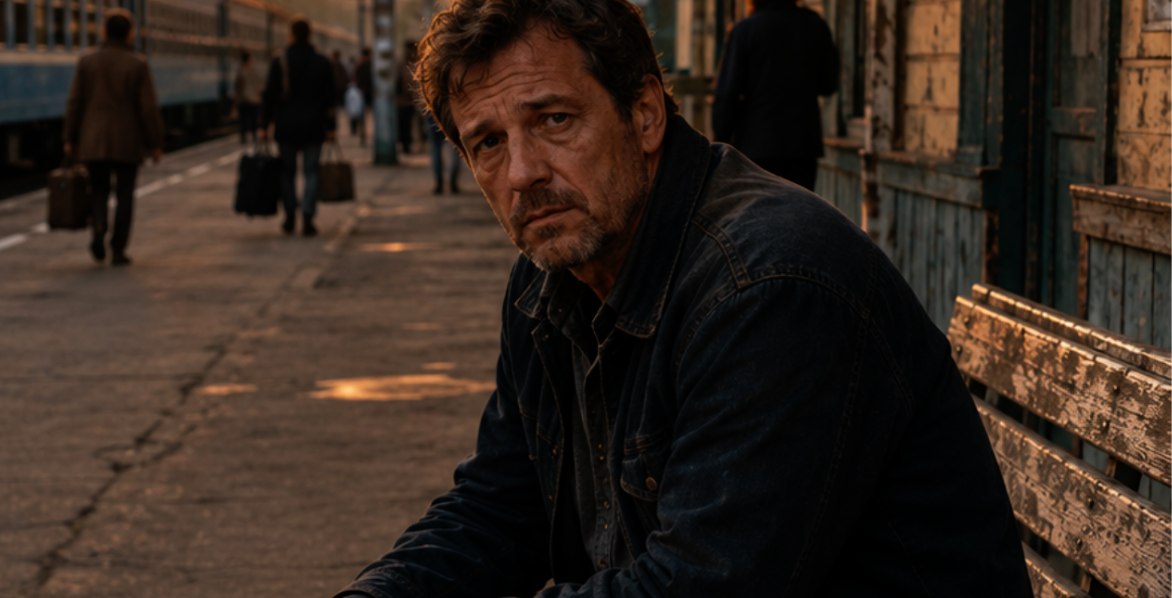
Anton read it while sitting at the railway station. Beside him lay a ticket for a train to the regional capital. He had decided to leave the city, buy a small place somewhere no one knew him, and open his own auto repair shop.
He deleted Rita’s message.
Then he removed the SIM card from his phone, snapped it in half, and threw the pieces into a trash bin.
They had destroyed their own lives by building them on lies.
Now they would have to live with the mortgage hanging around their necks, forever afraid that one day he might return. That fear would remain with them, poisoning their perfect marriage and making them suspect one another whenever anything went wrong.
That would be their punishment—to live inside a prison they had built for themselves.
Anton rose from the bench.
He picked up his bag.
For the first time in five years, he felt completely free.