On the third day, the washing machine let out a long, angry beep and flashed “E21” on the display. Yevhen crouched down, tapped the glass as if it were a stopped clock, and called down the corridor:
«Rytka! Where’s the manual for this thing?»
«How should I know?» his sister answered from the kitchen. «Mom knows.»
Mom knew everything. Where the washing machine manual was, which detergent was for whites and which for colors, when to report the meter readings, and why there was always a pack of dumplings in the freezer for hard times. But Mom hadn’t been home for three days.
Yevhen snapped a picture of the display and sent it to Mom. The message showed as read. No reply came.
The apartment was chilly—typical October dampness, the kind before the heat comes on, with drizzle outside since morning. Rita sat in the kitchen, wrapped in Mom’s sweater she’d grabbed from the hallway hook, staring into the empty fridge. On the top shelf, a lone slice of lemon sat on a saucer next to a jar of mustard.
«The dumplings are finished,» she said. «And the bread. Really, everything.»
Yevhen walked in, glanced over her shoulder, and shut the fridge door, as if that might somehow refill it.
«She couldn’t really have left,» he said for the second time in as many days. «Where would she even go?»
They found out the answer that very evening. And they wished they never had.
* * *
Iryna was fifty-six years old. By day she worked at a bookstore, by night—at home, and the second shift had long since become longer than the first.
Ten years ago, when she ended up alone with two teenagers, it all felt temporary. The kids would grow up, she thought, get settled—and then she’d finally have time for herself. The kids grew up. Yevhen was twenty-eight, working on computer networks at a solid firm and earning more than she did in two months.
Twenty-six-year-old Rita worked as a manager at a furniture salon and went to cafes with her friends every Friday. Both had money, plans, and their own keys.
But time for herself still never appeared.
Iryna got up at six every morning to cook Yevhen his oatmeal—he refused any other porridge for breakfast. She packed Rita’s lunch in containers because «there’s nowhere near work to eat properly.» She washed and ironed their shirts, made sure there was always toothpaste in the bathroom.
She paid the utilities—from her own salary, because that’s just how it started and stayed. On the fridge, under a sunflower magnet, hung her small, neat to-do list: «Yevhen—car inspection by the 20th. Remind Rita about Olya’s birthday. Buy a lightbulb for the hallway.»
No one ever asked her to do all this. But no one offered to take anything off her hands, either.
That evening, she came home late—the quarterly report was due at work. Bags of groceries pulled at her arms, and the sink was piled with dishes from breakfast. Rita lounged on the couch with her phone, Yevhen played in his room with headphones on.
Iryna set down the bags, washed her hands, and, still in her coat, said:
«Rita, can you please do the dishes? I’m exhausted.»
«Mom, I’m just dead after work,» her daughter mumbled without looking up from her screen.
«And where do you think I just came from?»
Rita finally looked up and was genuinely surprised:
«Mom, but you’re at home anyway!»
Yevhen peeked out of his room—he must have heard the voices even with his headphones on.
«What’s going on here?» He glanced at the sink, his mom, his sister, and burst out laughing. «Mom, you always want to do everything yourself. Nobody can please you quite like you do.»
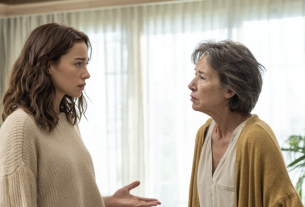
Iryna slowly folded the kitchen towel and placed it on the table. Neatly, corner to corner, just as always. She opened her mouth as if to say something—but suddenly realized she had nothing left to say. She’d already said it all hundreds of times: in the kitchen, in the hallway, through the bathroom door. It never changed anything.
So she washed the dishes in silence and went to her room.
The kids didn’t even notice how unusually quiet the house was that evening.
* * *
The next morning, there was a sheet of paper on the kitchen table, held down by the sugar bowl—torn from the shopping list notepad.
«I’ve gone away for a month. Food is at the store, the washing machine is in the bathroom, bills are in the drawer under the TV. I’m 56 years old. And I want to live, too. Mom.»
Rita read it twice and snorted.
«She’s upset. She’ll be back by evening.»
«She’s probably at Aunt Larysa’s,» Yevhen agreed, pouring himself some coffee. «She’ll vent, have a little chat, and come back home.»
There was no oatmeal that morning. But Yevhen decided they could manage without it, just this once.
But mom didn’t come home that evening. She didn’t turn off her phone, but she didn’t answer calls either. She replied to messages with a short text: «I’m fine. Don’t worry.» Aunt Larysa, mom’s old friend from tech school, wasn’t picking up her phone, either.
* * *
After three days, the apartment was almost unrecognizable.
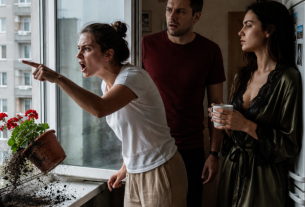
Rita’s white blouse, washed together with Yevhen’s red socks, turned a delicate pink. On the stove was a pot with leftover dumplings stuck to the bottom. Laundry was piling up in the bathroom because Yevhen had broken the washing machine—it showed «E21″—maybe he overloaded it or pressed the wrong button. They bought bread in turns and both forgot every time.
What surprised Yevhen most was the drawer under the TV. He opened it looking for the washing machine manual and found a neat stack of receipts tied with a rubber band. Gas, electricity, water, HOA fees, internet. At the bottom of each—mom’s signature and the amount. He added up the total for the month in his head and stared at the number for a long time.
«Rita,» he called out. «Did you know mom pays for everything herself?»
«Who else would?» she said from the hallway, surprised. Then fell silent, realizing how that sounded.
That same evening, Rita was scrolling through her social media feed—when she suddenly shrieked so loudly that Yevhen ran out of his room, fork still in hand.
In a photo Aunt Larysa had posted, their mom stood smiling in a brand new bright red jacket, backpack over her shoulder, on the wooden porch of some guesthouse. Misty mountains loomed in the background, and next to her, leaning on the railing, was an older man with gray hair and a camera around his neck, also smiling. The caption read: «We’re in the Carpathians with Iryusya. Day three. Finally!»
«She’s in the Carpathians,» Rita gasped. «With Aunt Larysa. And some guy!»
Without a word, Yevhen went to his mom’s room. He knew where she kept the envelope. Everyone in the family knew: in the wardrobe, under the pile of bed linen, was a thick envelope labeled «For the kids.» Mom had been putting money in it for years—»for Rita’s wedding, for Yevhen’s car.»
The envelope was still there. Empty. Inside it, another note written in the same handwriting: «You’re adults now.»
* * *
It took them five tries to get through. When Mom finally answered, she sounded out of breath, and there was water noise in the background—maybe a river, maybe rain.
«Mom, where are you?!» Rita put the phone on speaker and both of them leaned over it.
«I’m in the mountains, sweetie. Today we went to see a waterfall. Oh, it’s so beautiful here, you should see it…»
«Beautiful?!» Yevhen couldn’t hold back. «You left without telling anyone! We’ve been here three days…»
«I left a note.»
«A note! What about the money? Mom, where’s the money from the envelope?»
The phone fell silent. Then Mom spoke up, calmly, without a hint of resentment, almost gently:
«I spent it. On my trip, a jacket, and boots for the mountains. I’ll spend the rest too, don’t worry.»
«That was our money!» Rita cried out.
«No, Rita. Your money is on your cards. You earn it yourselves and spend it—on coffee shops, on new phones, on the seaside vacation last summer. This money, I saved from my own salary. After I paid for the electricity, gas, and groceries for three adults.»
«Who’s that next to you in the photo?» Rita changed the subject, because she had nothing to say about the first question.
«That’s Yaroslav Mykhailovych. He’s leading our group. All of us here are over fifty. We hike the trails and sing by the fireplace in the evenings. Yesterday, I climbed up a mountain meadow for the first time in my life. On my own, with my own two feet.»
«Mom, you’re fifty-six!» Yevhen exclaimed. «What mountains? What singing? What will people say?»
«Exactly, son. Fifty-six. I wrote that in the note.»
She paused, and through the sound of rushing water, they could hear someone calling her from afar.
«I’ve lived for so many years in a way that’s convenient for you. At first, you were little, and that’s how it had to be. Then you grew up, and I never even noticed when it was time to stop. You’re not bad kids. I just taught you myself that ‘Mom’ is like a washing machine. Always there, always working.»
«We don’t think that,» mumbled Rita.
«Yes, you do. Otherwise, you wouldn’t have said ‘you’re always at home.’ They’re calling me, kids. And one more thing: unplug the washing machine. ‘E21’ means the filter is clogged, it’s at the bottom, behind the little door.»
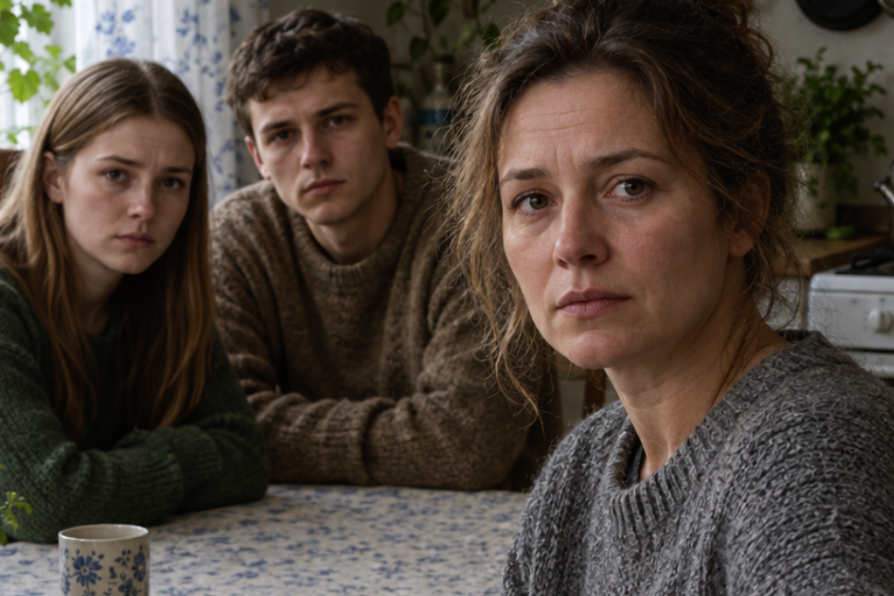
She hung up. Brother and sister sat in silence for a long time in the cold kitchen.
«So she read all our messages,» Yevhen finally said. «And didn’t reply even once.»
«She replied,» Rita said quietly. «Just now.»
* * *
The next few weeks became the strangest of their lives.
It turned out the washing machine filter really was clogged—with two coins, a button, and Rita’s hairpin. Yevhen cleaned it out himself and felt like he’d repaired an airplane. The first time he made borscht, it was too salty; the second time, too watery; but the third time, Rita ate two bowls and didn’t say a word, which, in her case, was as good as praise.
Rita learned to separate the laundry into whites and colors. She bought herself a new blouse, but kept the pink one as a reminder. She also took on the bills: she sat down one evening with a calculator, went over everything, and wrote down who had to contribute what each month. When she saw the amount Mom had been paying alone for years, she couldn’t sleep for a long time.
In mid-October, we finally got the heating turned on. The radiators became warm, and the damp smell left the apartment. On the fridge, right next to Mom’s sunflower-themed shopping list, a new sheet appeared—a duty schedule, scribbled out in Yevhen’s messy handwriting.
Mom called every few days. She told us about the morning fog, the fresh bryndza cheese that the farm hostess made herself, and how their group got lost and stumbled upon someone else’s apiary, where they were treated to honey. Not once did she ask what we were eating or whether the house was tidy. Rita noticed this in the second week—and, for some reason, felt hurt. But in the third week, she understood: Mom was finally telling them about herself.
* * *
She came back in early November—sun-kissed from the mountains, cheeks wind-burned, and carrying a heavy backpack that smelled of dried mushrooms and juniper.
She unlocked the door with her own key—and stopped in the doorway.
The apartment was warm and clean. Not perfect: there were streaks on the hallway mirror, and the bulb in the corridor still hadn’t been replaced. But there were no dirty dishes in the sink. From the kitchen came the smell of borscht—a little oversalted, she could tell from the doorway.
On the kitchen table, underneath the same sugar bowl, there was a note.
“Mom, the dishes are washed. Check the schedule on the fridge. Your name is only on Sunday, and only if you want to cook something. We’ll buy the light bulb tomorrow, we promise. We love you. R. and Y.»
Iryna stood for a long time holding the note in her hands. Then she took off her new red jacket and hung it on the hook in the hallway—right next to her sweater, which, she noticed, had also been washed.
At dinner, Yevhen served her borscht himself, and Rita cleared the table afterward. Iryna told them about the pasture, the mist, and the apiary, and for the first time, the kids listened in a way they’d never listened before.
“Will you go again?” Rita asked quietly when Mom stopped talking.
Iryna smiled and pulled a folded brochure out of her pocket.
“In May, the group is going to Zakarpattia. Yaroslav Mykhailovych has already signed me up first.”
Yevhen opened his mouth to say something—but closed it. Then he took Mom’s plate from the table and headed to the sink.