The gate slammed shut so hard the latch clattered. I was in the middle of taping up a box of notebooks, the tape hissing and sticking to my fingers. Zhora came into the kitchen without even taking off his shoes and tossed my card onto the cardboard.
«What did you do with the card?»
The card hit the box lid and slid onto the tablecloth. My husband stood in the doorway in his dark blue sawmill work jacket. The logo on the back had long faded to pink, but he still wore it to the store and around the village, like he was still going to his shift.
For five years, he lived off my salary. But on Monday, I was starting a new job as the chief livestock specialist for the whole holding, at the main office in Kazan. At eight o’clock, a car was scheduled to pick me up.
I got up at six, while it was still dark, quietly carrying folders and notebooks from the bedroom to the kitchen so I wouldn’t wake him. Zhora got up from the couch in the living room, walked past me without a glance, washed up, put on his jacket, and left. Not a word, not even a goodbye. I was actually glad I wouldn’t have to talk. I thought I’d be able to pack without any shouting.
I was wrong.
«I’m asking you,» Zhora said. «What about the card?»
I smoothed out the tape seam with my palm before looking up. In the box were my herd notebooks—thick, with plastic covers. The herd records have been kept on the computer for a while now, but I still logged everything by hand. One time, the database deleted all our calf records from an entire winter. Notebooks don’t disappear.
«So, what happened at the store?» I asked.
He really didn’t want to talk about it—you could tell by the way he kept zipping and unzipping his jacket. But his anger got the better of him. Our shop is just three houses away, near the bus stop, and it opens at seven in the morning. People head there before catching the bus, picking up bread or milk. Zhora picked up his pack and handed his card to the cashier. She swiped it once, then again, looked at the screen and announced to the whole store:
«Georgiy, it’s not going through. Maybe Inna Pavlovna turned it off before Kazan?»
Everyone in line laughed. Not in a mean way, just that typical village laughter. Zhora put his pack back on the counter and left without saying a word.
«And your milkmaids were there too,» he added. «Coming back from the morning milking.»
«I did turn it off,» I said. «It was me.»
He stared at me. I could see he expected something else. That I’d gasp, start fiddling with my phone, say, oh, the bank must’ve made a mistake, I’ll call them right now.
«Do you realize what you’ve done?» Zhora slapped the fridge door. «By lunchtime, the whole village will know Zhora’s wife cut him off from the trough!»
The boiler on the wall clicked and started humming. The kitchen was warm, it was just barely dawn outside, and frost glistened on the grass in the yard. I glanced at my watch. A small women’s watch, always tight on my wrist—I’d always fasten it on the last hole, but it would still dig into my broad, father’s wrist, leaving a red line. There was barely any time left before the car arrived.
«Zhora, sit down,» I said.
«I’m not sitting down!» And he really didn’t. «Listen. Call your people in Kazan. Tell them your husband didn’t let you go. Tell them what’s what, it’s a family issue. They’ll understand—folks are people there too.»
«I already signed the agreement, Zhora. I start work on Monday.»
I said it more quietly than he did. My voice is low, rough at the edges—I’ve spent a lifetime shouting over fans and the milking line at the farm. When I get angry, I don’t yell—I grow quieter and more deliberate. And people listen. The milkmaids listened, the cattlemen listened, even the director at meetings listened. Zhora went quiet, too.
But not for long.
«You signed it,» he said. «But did anyone ask me? What, I’m supposed to just trail after you? Not gonna happen.»
«No one’s asking you to trail after me. You were invited with me.»
«Yeah, invited!» He jerked his head toward the boxes. «You’re dragging your notebooks. Plan to count the cows over there by your notebooks too? They use computers there—they’ll laugh at you for bringing notebooks.»
«Let them laugh. My records will stay safe that way.»
«And what am I supposed to do here? Alone? Who’s gonna heat up my dinner?»
«The stove’s gas, Zhora. You fixed it yourself; you’ll figure out how to turn it on.»
He went red to his ears. Even I didn’t know why I said that. Probably because he’d been silent for weeks and I’d kept my patience, and now it was all bubbling out of me.
«If you leave—you’re not coming back.»
He said it, and I think he scared himself. It was the only thing he had left, and he played it, right after the card.
«I’m not getting a divorce,» I said. «I’m going to work.»
We built this house together, back in the late nineties, brick by brick. He couldn’t just kick me out with a single word, and we both knew it. I didn’t argue. Why bother? He’d already heard what he said.
Zhora turned away and stared at the fridge. Under a magnet from our complex, there was a transparent folder hanging there, and through the plastic, you could see some papers inside.
«What’s that?» He jabbed his finger at the folder. «A farewell letter?»
«Receipts,» I said. «I’ll give them back when the car arrives.»
He didn’t take them. He never got involved with my paperwork—never touched payslips or receipts. He used to say, ‘That’s your thing, you understand it, and I understand machines.’ I used to even like that about him.
«She’s leaving me the receipts,» he said to the room, not to me. «Receipts for what? For living here with you?»
I kept quiet. What could I say to him now? If I told him what was really in that folder, he’d think I was mocking him. Or maybe he’d think I was trying to buy him off. Better to let him see for himself when the car is at the gate and there’s no time left to argue.
I pulled a new roll of tape from the drawer—the old one was finished—and got to work on the last box, the one with the folders. My hands just kept moving on their own. Life on the complex taught me: no matter what happens, the cows still need to be milked and the documents need to be in order. Zhora stood and watched as I pulled the tape. He always hated it when I kept doing chores during an argument.
Zhora reached into his jacket pocket, pulled out an empty cigarette pack, crushed it in his fist, and tossed it into the bin under the sink. He wanted a smoke so badly he licked his lips. But there were none to be had. The cigarettes were left sitting on the counter by the cashier, in full view of the whole line.
«You’ve really lost your conscience, Inka,» he said. «At your age.»
I didn’t take offense. He only ever called me Inka when he had nothing else to say.
«I disabled your card on Friday night,» I said. «And you know why.»
He didn’t answer. He looked out the window at the shed, then down at his boots, where a puddle of melted frost had formed on the linoleum. At last, he swept the card off the table, stuffed it in his jacket pocket, and walked out into the yard. I could hear him slide the shed bolt open and start clattering around in there. He had cigarettes hidden in the tiller box since summer—I’d known about them for a while but kept quiet.
He knows, I thought. Of course he knows. Otherwise, the first thing he would’ve asked was why.
I pushed the taped boxes closer to the door and put my bag of documents on top. The last one, the box with the folders, was still open, and the suitcase was waiting in the bedroom. The clock read twenty minutes to eight. If he comes back from the shed and starts yelling again, I decided, I’ll go outside to wait for the car. Let him shout at an empty kitchen.
***
While he was banging around in the shed, I taped up the last box and found myself remembering how we got to this Sunday.
They closed the sawmill in the spring of 2021. The old owner sold it, the new one came, looked around, ran the numbers, and shut it down. Zhora started there as a mechanic right after the army, before we ever got married, and he could recognize every engine just by sound. He was fifty-three.
«I’ll find something for myself, Inna,» he said then. «I’m not a kid to slave away for pennies.»
I didn’t argue. There was no work for a mechanic in the village, his pension had been delayed, and it was still a long way off. The employment office offered him a job as a warehouse guard, but he refused—he said guarding was for people who didn’t know how to do anything else. My salary was enough for the two of us, as long as we didn’t live extravagantly.
A couple of weeks later, I went to the bank myself and got a second card linked to my account, for him, so he wouldn’t have to ask me for every little thing. It was embarrassing to see a grown man standing awkwardly in the doorway: ‘Inn, can I have some money for cigarettes?’ This was better. The card would cover cigarettes, gas for his old Niva, and his projects.
The women in line would tell me: well, he doesn’t drink or sneak around, you should be happy. And I was happy. Almost.
He did have his projects though. In the spring of ‘23, he got obsessed with the idea of a motor-cultivator. Said he would plow gardens—for half the village, there were old ladies who couldn’t manage the land on their own. We bought the motor-cultivator and a plow with my money. That spring, he really did go out and plow. He’d come home in the evening covered in mud up to his knees, looking pleased with himself, eating enough for two, and telling stories about who had what kind of soil. But then came the complaints: one woman hadn’t paid enough, another wanted to borrow his services until her pension came in, and a third wanted him to also plant her potatoes.
‘I didn’t sign up to dig up other people’s land for pennies,’ he said in June.
By summer, the motor-cultivator was put away under a tarp in the shed. It’s still there now.
Over this time, Zhora’s hands got lighter. He used to have black oil stains in the cracks of his fingers that wouldn’t wash off even in the bathhouse—I remembered that since our youth, it’s honestly what drew me to him. Now his palms had turned white and soft, and that mark was gone.
Still, the neighbors kept bringing him things: a chainsaw here, a trimmer there—‘Zhora, can you take a look?’ He would. He could tell what was wrong by the sound of the engine, even before taking the cover off. But he never took a single ruble.
‘I’m not doing this for money,’ he’d say. ‘It’s just neighborly.’
And I’d think: there you go, money just falls into your hands. Take it. But I never said it out loud. What could I say to him anyway? That his pride was twisted?
I knew where it all came from. He’d told me himself, back when he was younger, laughing about it. On their street there was a neighbor whose wife was a supervisor. Zhora’s father, the breadwinner and the boss at home, always made jokes at the neighbor: ‘henpecked, living off a woman’s money.’ And little Zhora would laugh right along with his dad. Now he’d become that neighbor, but couldn’t admit it to himself.
So I kept going. Off to the farm in the morning, tending the garden and chickens in the evening, laundry, bills. I was doing everything a man and a woman should do in the house. One night I was installing the kitchen tap myself while Zhora watched TV in the living room, and I realized I wasn’t even angry. I was just tired.
In early October, Rashid Khaydarovich, the director of our farm complex, called me into his office. He was Zhora’s former classmate—they’d been friends since childhood—and he’d known me since the day he first started working here.
‘Inna Pavlovna, you’re wanted in Kazan,’ he said. ‘As the chief livestock technician for the consortium. The former chief just retired, and our farm has the best yields across all the complexes. I recommended you.’
I sat across from him, not knowing what to do with my hands. Me? A promotion at my age?
‘Can I think about it?’ I asked.
‘You can think in Kazan. The car is already at the gate.’
That same day, a young driver from the head office named Ildar drove me to Kazan. They showed me my new office and told me about the team there. They promised to rent an apartment for me for my first year and move all my things at their expense. The pay was much better. At the HR office, I asked if they needed any technical staff. The chief mechanic himself came out to meet me: he said they needed skilled men for the equipment yard before planting season, to work on machinery over winter, and that anyone interested should call him. He wrote his phone number on a piece of paper and gave it to me.
We drove back late, after dark. Ildar turned the radio down and asked if I was feeling carsick. I said no and held my bag on my knees the whole way, with that piece of paper inside. I kept thinking: Zhora misses working with machines—he’s always said his hands itch to get back at it. And there, in Kazan, they have tractors, combines, a whole equipment yard. Would he really say no to this?
That night I told Zhora everything: about Kazan, about Rashid, about the apartment. He listened silently and then turned off the TV.
“It’s shameful for a man to follow a woman around,” he said. “Turn it down.”
“Let’s go together, Zhora.”
“As what? A husband tagging along after his boss-lady wife?”
I didn’t answer him then. My thoughts turned to my mother, who still brings up Kazan. She never went to study there when she was young because her fiancé—my future father—insisted: ‘A wife stays with her husband.’ She’s wondered her whole life what she might have become, where she might have lived. Even now, when I visit her with gifts, sometimes she’ll say, ‘I could have…’ I didn’t want that for myself. Would I spend my whole life wondering too?
At the end of that same week, I signed the agreement for the transfer. That very day, Rashid Khaidarovich announced it to everyone at the morning meeting, and by evening, the whole village—from the milkmaids to the shopkeeper at the bus stop—knew about my Kazan move. People congratulated me at the post office, on the bus, at the school. Zhora moved through all these congratulations wearing a scowl, pretending not to notice.
I carried that slip with the mechanic’s number in my bag for a week, waiting for Zhora to cool off. Then I stuck it to the fridge with a magnet and told him:
“They need mechanics at the equipment yard before planting season. Give them a call.”
He read it, but didn’t touch it.
«Tightening bolts in front of my wife’s window? Not a chance.»
But he didn’t take the note down. It stayed there, and every morning when Zhora got milk, he saw that number. I kept hoping he’d copy it into his phone one day. He never did.
Since that night, he hasn’t spoken to me. He moved to sleep on the couch in the living room, ate only when I’d left for work, and went outside to smoke whenever I came home. For two weeks, we lived in the same house and didn’t speak. I kept thinking: he’ll grumble, complain, then go with me. Where else would he go?
This Friday—just two days ago—at half past five, Rashid Khaidarovich called me at the farm and asked me to stop by. I thought it would be about handing over my responsibilities. He closed the office door, sat across from me, and spun a pen between his fingers for a long time.
«Inna Pavlovna, Zhora called me last night,» he finally said. «He asked me to tell Kazan that you’ve changed your mind. Said you’re just too shy to say it yourself. ‘You set her up for this, you tell her,’ he said.»
I clasped my hands on the table. The watch strap left a red mark on my wrist—I stared at that mark because I couldn’t look at Rashid. I felt ashamed, as if I was the one who had made that call.
«I didn’t call Kazan,» he said. «I called you first.»
«Thank you,» I replied.
«Only you can refuse, and it must be in writing. That’s exactly what I told him.» He paused. «Please, try to go easy on him, Inna Pavlovna. He doesn’t mean any harm. It’s just foolishness.»
As I walked home past the bus stop, I kept thinking the same thing: He kept searching for himself, and what did he find? A way to trip me up—behind my back, through my own boss, who happens to be his classmate. What was he expecting from Rashid? That Rashid would call Kazan, quietly cross me off, and I would never even know?
In the evening, Zhora was watching TV in the living room. I sat in the kitchen with my phone. The football game was coming through the wall, and Zhora occasionally cursed at the referee. In my app, I had two cards—mine and his. I had labeled his as ‘Zhorina’ so I wouldn’t confuse them. I opened his card and deactivated it. My finger didn’t even hesitate. Then I opened the gas and electricity bills and paid them all the way through April. The house is ours, and I wasn’t about to freeze my husband out. Let him stay warm and think.
I took the mechanic’s note off the fridge and put it in a clear folder. On Saturday, when I handed things over at the complex, I printed out receipts and tucked them in too. Then I hung the file back up under the same magnet.
Tell him? No. If I tell him, he’ll start: ‘I’m sorry, I acted out of anger, let’s think it over.’ And I’d start thinking again. I know myself.
Saturday evening, my son called from Surgut and asked what time the car would arrive. I said nothing about his father, but he understood anyway.
«Mom, go,» my son said. «Dad will blow off steam.»
Afterward, I called Ildar and confirmed: eight o’clock, by the gate.
And on Sunday at seven, Zhora—as usual—went out to get cigarettes.
***
He didn’t come back from the shed right away. He found a cigarette after all—just one, crumpled. He smoked on the porch, and I saw his back with the pink letters through the window. Then he came inside, bringing with him the smell of tobacco and frost.
«So you found one,» I said.
«Just one.» He paused. «You knew about my stash, too?»
«I knew about a lot of things, Zhora. I just kept quiet.»
He wanted to say something, but didn’t. He pulled off his hat, crumpled it, and shoved it in his pocket.
I spoke quietly, so he’d really listen:
«Rashid told me everything. You called him on Thursday.»
Zhora stayed standing in the middle of the kitchen, his pale hands shoved into his jacket pockets.
«Yeah, I called,» he said. «What else was I supposed to do? You don’t listen.»
He shifted from foot to foot and started to talk faster, as if worried I might interrupt him:
«I meant well. I thought Rashid would call, and they’d tell you at work: ‘No need, just stay home.’ You’d cry a little and calm down. Then everything would go back to how it was.»
«Go back to what? Me working at the farm while you lounge on the couch?»
He flushed in blotches, his neck turning red and the color rising.
«You didn’t call me. You called my boss.»
«He’s not my boss. He’s Rashidka. We used to sit at the same school desk.»
«That’s exactly why you called him,» I said. «You thought you two would handle things your own way, and I wouldn’t find out.»
He sat down on the stool by the door—the first time he’d sat down that morning. He was silent for a long while. Then, without looking at me, just staring at the boxes, he said:
«And who am I there?»
«There where?»
In your Kazan, I’m just Zhora. Here, people greet me on the street, even with chainsaws in hand. But over there, I’m just Inna Pavlovna’s husband. Some young mechanic would show up and say, ‘Oh, he’s the one whose wife got him the job.’ I’m almost sixty, Inna. Who needs me over there?
That’s when it hit me—it wasn’t laziness holding him back, it was fear. He wasn’t afraid of work, he was scared people would laugh at him in a place where nobody knew who he was.
‘They’ll know you for what you do there,’ I told him. ‘The chief mechanic said it himself—they need people. I’m not the one getting you the job, Zhora. They need your hands, not just my husband.’
‘Yeah, hands,’ he scoffed. ‘They’ll just say Inna Pavlovna brought her husband, and now they have to figure out what to do with me. I’m telling you, it’s too late for me.’
‘I’m not twenty either,’ I replied. ‘But I’m going.’
‘At least you have something to go for. What about me?’ He pulled his hands out of his pockets and stared at them. ‘You embarrassed me in front of the whole village—right in the store, in front of everyone. Now, I can’t even go there anymore.’
‘I should have told you on Friday,’ I answered. ‘But I didn’t. I was afraid you’d talk me out of it again. I wanted you to find out when the car was already at the gate.’
He looked up at me. Maybe he hadn’t expected me to admit it. Honestly, I didn’t expect that from myself either. But I wasn’t about to apologize for the card itself.
‘It’s my card,’ I said. ‘I opened it, and I closed it.’
‘Yours, mine,’ he mimicked. ‘We used to have everything in common.’
‘You used to work,’ I said.
He flinched. Even I was surprised at how steady and clear my voice sounded, like I was scolding a herdsman for not watering the cattle at a meeting. Zhora looked away and began to study the boxes.
‘I bet you already complained to our son,’ he said.
‘He called me himself. He said, «Go, mom.»‘
‘Of course. A mama’s boy,’ Zhora muttered. He paused. ‘What did he say about me?’
‘He said you’d get over it.’
Zhora scoffed, but I could tell it actually hurt him this time. Our son had always taken his father’s side—he taught him how to fix motorcycles, he was the one who took him fishing. And now, he just told his mother to go. It was clear Zhora hadn’t expected that.
He didn’t say another word. I went to the bedroom for my suitcase. It was old, from the days when we used to visit our son up North. I dragged it through the living room. Halfway there, one of the wheels jammed, so the suitcase tipped to the side and scraped a gray line across the painted floorboards.
Zhora got up from his stool. Without a word, he tipped the suitcase on its side, pulled out the desk drawer, grabbed a screwdriver, and squatted down. He pried at the axle, pressed something with his thumb. There was a click.
‘The axle’s bent,’ he said. ‘Now it’ll roll.’
I stood silently over him. Years ago, he sat in this same living room—in those days the floors weren’t painted—and hammered in the baseboards while I handed him nails. Back then, he could do anything, and nothing ever scared him.
I watched his hands: pale, soft, yet his fingers remembered everything. He didn’t miss with the screwdriver even once, never needed to look to see where to put the screw. They’d love a mechanic like him at the machine yard, I thought. He just needed to pick up the phone.
Zhora rolled the suitcase back and forth. The wheel worked perfectly. He looked up, and for a split second, his face was young and pleased—just like when he used to get an old engine running that everyone else had given up on.
«See?» he said. «And you keep talking.»
I hadn’t said anything like that, but I didn’t argue. I just stood and waited. Any moment now, he’s going to say: fine. I’ll go. I’ll call that mechanic, whether it’s in a month or by New Year’s. Will he say it or not?
«What if I don’t come at all?» he asked quietly. «Ever.»
«Then you won’t come,» I replied.
He straightened up and tossed the screwdriver back into the box. His face suddenly looked distant and harsh.
«In a month, you’ll come crawling back,» he said. «There are plenty like you there. You’ll bounce around someone else’s apartments and return. And then I’ll see if I let you in or not.»
«I won’t crawl back,» I told him.
«We’ll see.»
«We’ll see,» I agreed.
I suddenly remembered Rashid Khaidarovich twirling his pen: be gentle with him. I was already being gentle. Any gentler and I’d have stayed, but I wasn’t planning on staying.
He had just fixed my suitcase so I could leave and now he was threatening not to let me back in. I turned toward the window, because I couldn’t bear to look at his face anymore.
A car honked at the gate.
***
Ildar was standing by the gate, spinning the key fob on his finger.
«Good morning, Inna Pavlovna! Ready to load up? We’ve got to make it to Kazan by lunchtime.»
«Let’s start loading,» I said.
He put the keys in his chest pocket and started hauling the things. Young, fast, wearing a light jacket that didn’t suit the weather. He’d driven me to Kazan back in early October, and I’d given him the address myself on Saturday. He carried two boxes of notebooks at once, wheeled the suitcase down the path, and even commented in surprise:
«Your suitcase wheel is in great shape. Usually on these old suitcases, that’s the first thing to fall off.»
I didn’t say anything. Zhora stood on the porch in his work jacket—not helping, not leaving. Across the street, the neighbor came out to her fence, supposedly for the mail, but just stood there empty-handed. By evening, she’d be telling everyone about Inna Pavlovna’s departure. Let her talk.
«It’s chilly this morning,» Ildar remarked, passing Zhora with a box. «Hello. The highway’s supposed to be clear, we’ll definitely make it by lunch.»
Zhora nodded without looking at him. Ildar just shrugged and carried the box on.
I went back inside. The kitchen felt empty and suddenly more spacious, bits of packing tape left on the plastic tablecloth. I gathered them up and tossed them in the trash, along with his crumpled cigarette pack. I checked to make sure the stove was off. The boiler was humming steadily.
I took the file folder off the fridge. The plastic was cold and crinkled in my fingers. I put on my coat and grabbed my bag of documents. I loosened my watch strap by one hole so it wouldn’t dig into my wrist during the trip. At least today, let it not leave a mark.
On the porch, Zhora stepped aside to let me pass.
«Leave the keys,» he called after me.
«The house is mine too, Zhora. I’m keeping the keys.»
He opened his mouth and closed it again. He didn’t mention «not letting me back» anymore.
From the open shed came the smell of gasoline and cold earth. I walked through the gate, and Zhora reluctantly came down from the porch and followed me.
I looked at the house. The brick had darkened over the years, and a couple sheets on the shed roof needed replacing. Spring, I thought. If he stays, let him fix it then.
I handed him the file folder.
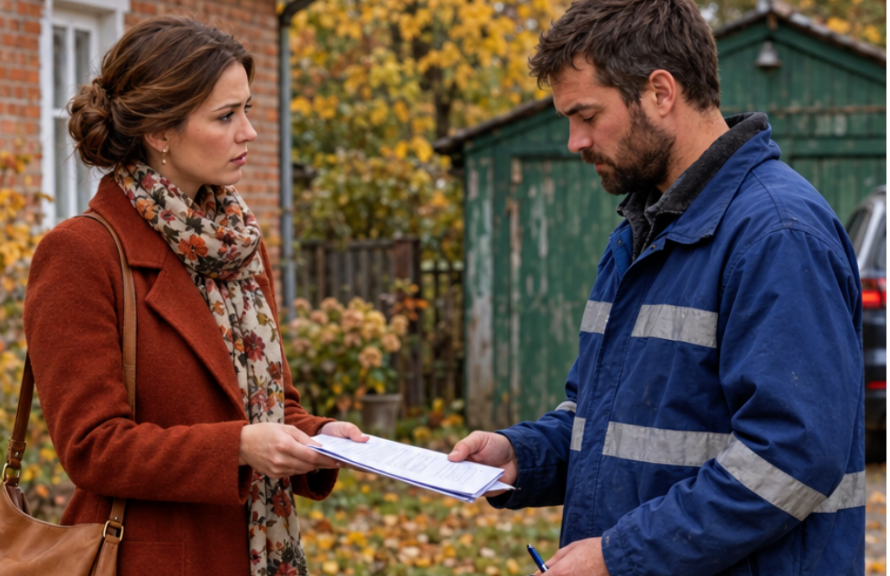
«Here are the receipts,» I said. «Gas and electricity are paid up until April, I won’t let you freeze. Here’s the head mechanic’s number—he needs people before planting season. The power tiller is in the shed, they’ll start plowing the gardens in spring. And the card is closed.»
He picked up the folder delicately by the very corner, turning it and holding it up to the light. His lips moved as he read.
«You paid for the gas?» he asked. «For the whole winter?»
«For the whole thing.»
«By yourself?»
«Who else would, Zhora?»
He lowered the folder. He looked like he was all set to argue, but then realized there was nothing to argue about.
«What about after?» he asked.
«After that, you’re on your own. You spent five years finding yourself on my salary. Now look for yourself on yours.»
Ildar packed the last box and turned away to look down the road, like he was suddenly fascinated to see who might be passing by.
Zhora stared at the folder. Through the plastic, the top receipt was clearly marked: gas. In his other hand was the card—he’d pulled it from his pocket without noticing, and now he just stood there, unsure what to do with it. It was no use to him now.
He was silent for a long time. Then he asked, not about me and not about Kazan:
«Does he answer on Sundays?»
«Call and find out.»
He nodded and slipped the card back into his pocket, carefully holding the folder by the corner so it wouldn’t get crumpled.
Ildar slammed the trunk shut. I got in the front seat, set the documents folder on my lap, and didn’t look back at the gate. The car turned around at the bus stop, passed the shop, and headed down the road toward the highway. I left for Kazan without him.