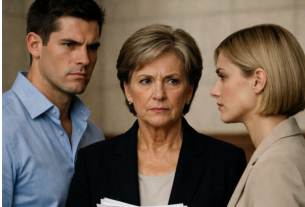
“I slaved away at my mother-in-law’s dacha all summer, and she gave the entire harvest to my sister-in-law. In spring, I came back again — but this time with one condition.”
“Where, exactly, is the lecho?” I pushed aside a jar of last year’s compote covered in a layer of dust thick enough to resemble felt. “And the pickled cucumbers with oak leaves? I canned forty jars. There are only three here, and even those have cloudy brine.”
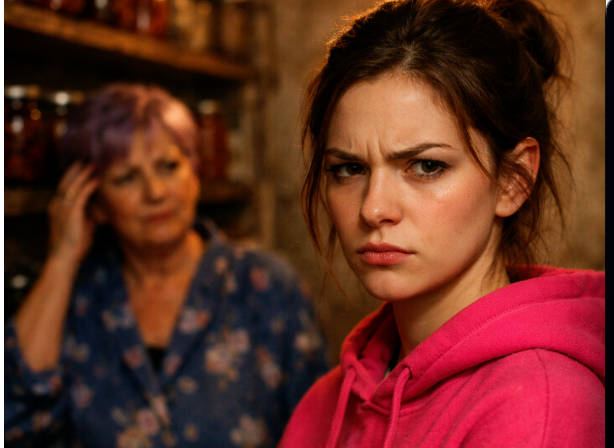
The cellar smelled of dampness and, as it turned out, shameless deceit. Zhanna Arkadyevna, my mother-in-law, adjusted her perfectly styled purple hair — a legacy of thirty years working as a nanny with the ambitions of a Minister of Education — and pretended to study the label on a jar of horseradish.
“Olenka, why are you being so petty?” Her voice rang with exactly those notes that used to make children wet the bed during nap time. “Dashenka came by. She needed it more. She’s raising a child on her own, she needs vitamins.”
“Dashenka is thirty-four years old,” I reminded her calmly, wiping my glasses with the hem of my T-shirt. “And her ‘child’ is already fifteen and wears size forty-three shoes. And as far as I remember, vitamins are fresh vegetables, not pickled tomatoes with more vinegar in them than your daughter has character.”
“Don’t be sarcastic!” My mother-in-law pressed a hand dramatically to her chest, where normal people usually have a heart, but she had a brooch made of fake amber. “We’re family. And in a family, people share. You work at a bank, you make good money, you can buy whatever you need at the supermarket. But Dasha… she’s going through a difficult period.”
I smirked. Dasha’s “difficult period” had lasted since the moment she was born.
Last year I spent the entire summer at that dacha. Pregnant, on maternity leave, but still with a laptop under my arm — closing quarterly reports in between weeding the beds and fighting off Colorado potato beetles. Vasily, my husband, showed up only from time to time, bringing me there in his company Mercedes, which he liked to pass off as his own personal car. He strutted around the plot, kicking the wheels of the wheelbarrow and telling the neighbors how he was “handling things” with Chinese business partners. In reality, he just hauled bags from the Sadovod market whenever his boss, Mr. Li, was in a bad mood.
I grew that harvest. I sterilized those jars in thirty-degree heat while Zhanna Arkadyevna lounged in the hammock with her “blood pressure issues,” directing the process by phone. And now it turned out that all my labor, my entire “gold reserve” for the winter, had gone off in the trunk of a taxi to my sister-in-law — who hadn’t touched a hoe once all summer because, in her words, “soil dries out your cuticles.”
“So, sharing?” I repeated, looking my mother-in-law straight in the eyes.
“Exactly. It’s a Christian principle.” Zhanna Arkadyevna triumphantly lifted her chin, basking in her sense of moral superiority. “He who does not work, neither shall he eat — that’s not about us. In our family, whoever can, carries the burden.”
“That’s an interesting interpretation of the Bible. Sounds more like parasitology,” I remarked quietly.
May came warm. This year we arrived to open the season as one big “happy” family. Vasily, wearing dark glasses despite the cloudy morning, was unloading the car.
“Olya, come on, move faster,” he tossed over his shoulder, not even taking the cigarette from his mouth. “I still need to polish the car. Li told me to… I mean, I decided myself, so it’ll shine. Status matters.”
“Of course, Vasya. The status of a luxury textile loader does require a mirror shine,” I nodded, pulling my one and only piece of cargo from the trunk.
nnk
It was not a box of seedlings. Not a sack of fertilizer. Not even a set of tools.
It was a folding chaise lounge. An expensive one, with an orthopedic mattress and a cocktail holder.
Zhanna Arkadyevna, already changed into her battle-ready gardening robe with buttercups on it, froze with a shovel in her hands. Beside her stood Dasha, yawning, who had apparently been forced to come after all “to get some fresh air.”
“Olya?” My mother-in-law blinked. “Where are the pepper seedlings? I told you there’s no room on the windowsill, so you were supposed to buy ready-made ones.”
“There won’t be any seedlings,” I said, unfolding the chaise lounge on the sunniest patch of ground, right in the middle of the un-dug carrot bed. “There will be отдых.”
“What do you mean?” Dasha adjusted her sliding sports glasses. “Then who’s going to dig? Mom can’t, she has vein problems.”
“And you, Dasha, have cuticles, as I recall.” I sat down in the chaise lounge, stretched, and opened my laptop. “So I propose an innovative method. Outsourcing.”
“What?” Vasily stopped rubbing the headlight with a rag.
“In economics, there’s a concept called opportunity cost,” I began in a lecturer’s tone, savoring the moment. “It’s the benefit you lose by choosing one course of action over another. One day of my work at the bank is worth ten thousand rubles. One day of a ditch digger’s work is worth three. If I spend my time digging, the family loses seven thousand rubles a day. Irrational.”
Zhanna Arkadyevna turned red, blending in with the future tomatoes.
“Don’t get smart with me!” she shrieked. “The land loves the care of hands, not the wallet! I read in a gardener’s calendar that the energy of money kills the root system of nightshades! Only selfless labor fills vegetables with prana!”
She looked around triumphantly, convinced of the invincibility of her argument.
“Zhanna Arkadyevna,” I said, adjusting my glasses without looking away from the screen, “prana is wonderful. But last year your ‘selfless’ prana drove off to Dasha’s house, while I spent the whole winter buying tomatoes at Pyaterochka. By the way, according to the law of conservation of energy, if energy goes into Dasha and never comes back, then Dasha is a black hole. And nightshades don’t grow in outer space.”
My mother-in-law opened her mouth to object, but choked on air instead, flung out her arm, caught the handle of the shovel on a bucket of water, and knocked it over straight into her galoshes.
She hissed like a red-hot frying pan splashed with ice water.
“Vasya!” she barked. “Say something to your wife!”
Vasily, realizing that polishing the car would have to wait, tried to assume the air of a man in charge. He came over to me, his jaw working.
“Olya, seriously. Mom’s asking. Why are you starting this? People are watching. Look, Mikhailych is hanging around by the fence. Don’t embarrass me.”
“Vasya,” I said with a sweet smile, “embarrassing is when you tell Mikhailych you’re a business partner, but last month you borrowed two thousand rubles from him until payday so you could buy new seat covers for a car that doesn’t even belong to you. Want me to ask him loudly how that debt is going?”
Vasily deflated instantly, like a punctured tire on the vehicle of his imaginary authority. Silently, he picked up the shovel and trudged toward the beds.
“And you, Dashenka?” I turned to my sister-in-law.
Dasha rolled her eyes.
“I’m actually a guest. And besides, I’m under stress. My boyfriend dumped me.”
“The same one who was supposedly ‘a businessman from Dubai,’ but in reality was an entertainer from Anapa?” I clarified.
“You’re just jealous!” Dasha snapped. “I was made for love and inspiration, not for manure! I’ve taken tarot courses, by the way. I’m a spiritual guide now! I can see auras, and yours, Olya, is dirty brown!”
She waved her arms, apparently attempting some sort of karmic cleansing, but the long sleeve of her trendy oversized hoodie caught on a branch of the old apple tree. Dasha jerked, the fabric ripped with a loud tear, and she ended up dangling awkwardly, twisting in place as she tried to free herself.
“At least your aura is getting aired out now,” I commented. “You’re hanging there like a sausage roll forgotten in the microwave.”
Dasha shrieked and ran into the house to change.
Work was in full swing. Vasily puffed and sweated, digging the potato bed. Zhanna Arkadyevna, wet up to the knees, stabbed onion sets into the ground furiously, muttering curses that were no doubt intended to bring me a personal crop failure.
And I sat in my chaise lounge, sipping homemade rosehip tea from a thermos and working. On my laptop screen, graphs kept climbing — and so did the numbers in my bank account.
“Olya!” my mother-in-law finally burst out an hour later. “Have you no conscience? We’re bending our backs out here while you just sit there!”
“I’m not just sitting here, Zhanna Arkadyevna. I’m honoring our new agreement.”
“What agreement?!”
“A public offer,” I said, snapping the laptop shut. “You said it yourself: ‘We’re family, we need to share.’ Great. I’m sharing with you the opportunity to work in the fresh air. It’s good for your circulation. And in the fall, you’ll share the harvest with me. If there even is one. And if not, I’ll buy whatever I want at the market. I do have money, after all — I’m not wasting my time growing food for Dasha.”
“You… you’re cruel!” my mother-in-law gasped. “I’ll call your mother!… Continued just below in the first comment.”
“Where, exactly, is the lecho?” I moved aside a jar of last year’s compote coated in a layer of dust thick as felt. “And the pickled cucumbers with oak leaves? I sealed forty jars. There are only three here, and even those have gone cloudy.”
The cellar smelled of dampness and, as it turned out, shameless deceit. Zhanna Arkadyevna, my mother-in-law, adjusted her perfectly arranged purple hairstyle — a legacy of thirty years working as a nanny with the ambitions of a minister of education — and pretended to study the label on a jar of horseradish.
“Olenka, why are you being so petty?” Her voice rang out with the very same notes that used to make children wet themselves during nap time. “Dashenka came by. She needed it more. She’s raising a child on her own, she needs vitamins.”
“Dashenka is thirty-four years old,” I reminded her calmly, wiping my glasses with the hem of my T-shirt. “And her ‘child’ is already fifteen and wears size forty-three shoes. And as far as I remember, vitamins are fresh vegetables, not pickled tomatoes with more vinegar in them than your daughter has character.”
“Don’t be sarcastic!” My mother-in-law pressed a hand dramatically to her chest — where normal people usually have a heart, and she had a brooch made of fake amber. “We’re family. And in a family, people share. You work at a bank, you make good money, you can buy everything at the supermarket. But Dasha… she’s going through a difficult time.”
I smirked. Dasha had been going through a difficult time since the day she was born.
Last year, I spent the entire summer at this dacha. Pregnant, on maternity leave, but with a laptop tucked under my arm — closing quarterly reports between weeding the beds and fighting off Colorado potato beetles. Vasily, my husband, showed up in spurts, driving me there in his company-issued black Mercedes that he passed off as his own. He would strut around the property, kick the wheelbarrow tires, and tell the neighbors how he was “handling business” with Chinese partners. In reality, he just hauled bags from the Sadovod market whenever his boss, Mr. Li, was in a bad mood.
I grew that harvest. I sterilized those jars in thirty-degree heat while Zhanna Arkadyevna lay in a hammock with her “blood pressure,” directing the process by phone. And now it turns out that all my work, my entire “gold reserve” for the winter, left in the trunk of a taxi for my sister-in-law, who hadn’t touched a hoe even once all summer because “working with soil ruins the cuticles.”
“So, sharing?” I repeated, looking my mother-in-law straight in the eye.
“Exactly. It’s a Christian principle.” Zhanna Arkadyevna lifted her chin triumphantly, feeling morally superior. “He who does not work shall not eat — that’s not how we do things. In our family, whoever can carry the load, does.”
“Interesting interpretation of the Bible. Sounds more like parasitology,” I remarked quietly.
May turned out warm. This year we came to open the season with the whole “close-knit” family. Vasily, wearing dark sunglasses despite the cloudy morning, was unloading the car.
“Olya, come on, move faster,” he tossed over his shoulder, cigarette still hanging from his mouth. “I still need to polish the car, Li told me to… I mean, I decided myself. It has to shine. Status, you know.”
“Of course, Vasya. The status of an elite textile mover demands a mirror shine,” I nodded, pulling out my only piece of cargo from the trunk.
It was not a crate of seedlings. Not a sack of fertilizer. Not even a set of tools.
It was a folding chaise lounge. Expensive, with an orthopedic mattress and a cocktail holder.
Zhanna Arkadyevna, already changed into her battle-ready country robe with buttercups on it, froze with a shovel in her hands. Beside her stood Dasha, yawning — they had managed to force her to come after all, “to get some fresh air.”
“Olya?” My mother-in-law blinked. “Where are the pepper seedlings? I told you there’s no room on the windowsill, so you should buy ready-grown ones.”
“There will be no seedlings,” I said, unfolding the chaise lounge in the sunniest spot, right in the middle of an untilled carrot bed. “There will be rest.”
“What do you mean?” Dasha adjusted her slipping sports sunglasses. “Then who’s going to dig? Mom can’t, she’s got veins.”
“And you’ve got cuticles, Dasha, I remember.” I sat down in the chaise lounge, stretched, and opened my laptop. “So I propose an innovative method. Outsourcing.”
“What?” Vasily stopped rubbing the headlight with his rag.
“In economics there’s a concept called ‘opportunity cost,’” I began in the tone of a lecturer, savoring the moment. “It’s the benefit lost by choosing one course of action over another. A day of my work at the bank is worth ten thousand rubles. A day of a laborer’s digging work is worth three. If I do the digging, the family loses seven thousand in one day. Irrational.”
Zhanna Arkadyevna turned red, blending in with the future tomatoes.
“Don’t get clever!” she shrieked. “The earth loves the care of hands, not a wallet! I read in the gardener’s calendar that the energy of money kills the root system of nightshades! Only selfless labor charges vegetables with prana!”
She looked around victoriously, sure her argument was unshakable.
“Zhanna Arkadyevna,” I adjusted my glasses without taking my eyes off the screen. “Prana is wonderful. But last year your ‘selfless’ prana went off to Dasha, and all winter I bought tomatoes at Pyaterochka. By the way, according to the law of conservation of energy, if energy goes into Dasha and never comes back, then Dasha is a black hole. And nightshades don’t grow in outer space.”
My mother-in-law opened her mouth to object, but choked on air, waved her arm, hit a bucket of water with the shovel handle, and the whole thing crashed right into her galoshes.
She hissed like a red-hot skillet splashed with ice water.
“Vasya!” she barked. “Say something to your wife!”
Realizing that polishing the car was no longer happening, Vasily tried to put on an air of authority. He walked up to me, jaw working.
“Olya, seriously. Mom’s asking. Why are you starting this? People are watching. Look, Mikhailych is hanging around by the fence. Don’t humiliate me.”
“Vasya,” I smiled sweetly at my husband, “humiliation is when you tell Mikhailych you’re a business partner, while last month you borrowed two thousand from him till payday so you could buy new seat covers for a car that doesn’t even belong to you. Want me to ask him loudly right now how that debt is going?”
Vasily deflated instantly, like a punctured tire on the vehicle of his imaginary authority. Silently, he picked up a shovel and trudged toward the garden beds.
“And you, Dashenka?” I turned to my sister-in-law.
Dasha rolled her eyes.
“I’m a guest, actually. And I’m under stress, by the way. My boyfriend left me.”
“The same one who was supposedly ‘a businessman from Dubai,’ but in reality turned out to be an entertainer from Anapa?” I уточнила.
“You’re just jealous!” Dasha snapped. “I was made for love and inspiration, not manure! I even took tarot courses, I’m a spiritual guide now! I can see auras, and yours, Olya, is dirty brown!”
She flung her arms around, apparently performing some kind of karma cleansing, but the long sleeve of her trendy oversized hoodie caught on a branch of the old apple tree. Dasha jerked, the fabric ripped with a loud tear, and she ended up hanging there awkwardly, spinning in place as she tried to free herself.
“At least your aura is getting aired out now,” I commented. “You’re hanging there like a sausage roll forgotten in the microwave.”
Dasha squealed and ran into the house to change.
Work was in full swing. Vasily puffed and sweated, digging a bed for potatoes. Zhanna Arkadyevna, wet up to the knees, jabbed onion bulbs into the ground with furious force, muttering curses that were no doubt intended to summon a crop failure specifically for me.
And I sat in my chaise lounge, sipping homemade rosehip tea from a thermos and working. Graphs were growing on my laptop screen, and numbers were growing in my bank account.
“Olya!” my mother-in-law finally couldn’t stand it anymore after an hour. “You’ve got no conscience! We’re breaking our backs here and you’re just sitting!”
“I’m not just sitting, Zhanna Arkadyevna. I’m observing our new agreement.”
“What agreement?”
“A public offer,” I said, snapping my laptop shut. “You said it yourself: ‘We’re family, we have to share.’ Wonderful. I’m sharing with you the opportunity to work in the fresh air. It’s good for the blood vessels. And in the fall you’ll share the harvest with me. If there is one, of course. And if there isn’t, I’ll buy everything at the market. I do have money, after all. I’m not wasting my time growing food for Dasha.”
“You… you’re cruel!” my mother-in-law breathed out. “I’ll call your mother!”
“Go ahead,” I nodded. “My mother said just yesterday, ‘Trying to teach a fool only ruins your nerves, but if the fool has initiative, let her hill her own garden beds.’ I think she’ll support you. Morally.”
By lunchtime, Vasily had rubbed his hands raw. Dasha came out of the house with a sandwich, but under my pointed stare and the question, “And whose sausage is that? Not from the groceries I bought, is it?” she choked and went behind the shed to eat.
That evening, when the sun was sinking behind the forest, painting the sky in the colors of a bruise earned in an honest fight, I folded up the chaise lounge. My mother-in-law sat on the porch clutching her lower back. Vasily lay on the grass staring blankly at the sky.
“Good day’s work,” I said briskly as I walked past them toward the car. “Very productive. Vasya, don’t get behind the wheel, your hands are shaking. I’ll drive.”
“But that’s…” he started.
“Get in, ‘director,’” I said, tossing the keys into the air. “I’ll get you home in comfort.”
I got behind the wheel of someone else’s Mercedes, feeling a strange, intoxicating calm. The anger was gone. The pity for them was gone too. All that remained was crystal clarity.
Next year I’m not coming here at all. I’ll buy a voucher and fly off to a health resort with my mother. And as for these people… let them plant the whole garden with tarot cards and water it with prana.
“Olya,” my husband asked quietly from the passenger seat when we pulled onto the highway, “maybe we really should just buy tomatoes in the fall? Forget the garden?”
I looked at him in the rearview mirror. In his eyes I saw the hope of a prisoner who had just spotted an open cell door.
“We’ll see, Vasya,” I smiled, turning on the blinker. “It all depends on how well you behave this year. And remember: free cheese only comes in a mousetrap, and free tomatoes only exist in your mother’s dreams.”
The car carried us smoothly toward the city, away from the garden beds, hypocrisy, and other people’s ambitions.
And it was the best dacha season of my life.