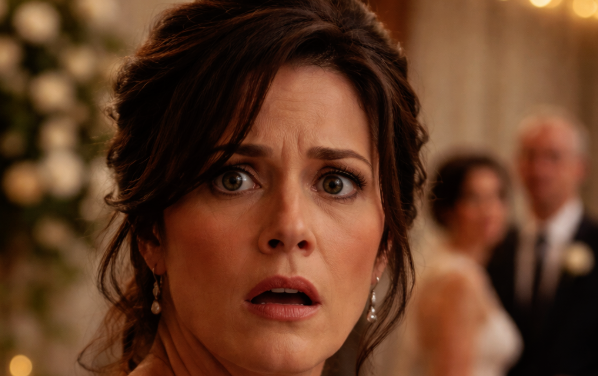
When Vera Saw Her Daughter’s Fiancé—the Very Man She Had Run Away From Many Years Earlier—She Went Pale
From early morning, Vera Vasilyevna had been as tense as a coiled spring—sitting down in an armchair with a cup of tea, then jumping right back up as if she had forgotten something. And really, what was there to fuss over? The house was in perfect order, fit for a magazine photoshoot: every item in its place, the floors shining so brightly they reflected little patches of sunlight. But her hands still itched to fix something—straighten the tablecloth again, shift the vase half an inch. After all, you only turn forty-five once.
Just the evening before, Vera had walked through the apartment with the strict eye of a hostess, checking whether everything was ready. The new curtains she had dreamed of since winter had finally taken their place—soft sandy-colored ones, flowing like gentle waves. In the evening light they gleamed faintly gold, as if the sun of last summer had been hidden inside them. In the sideboard, on the lower shelf, stood a snow-white dinner set with a delicate gold trim—like a royal relic carefully displayed for a celebration. She and Lana had even washed the windows until they sparkled the day before. And yet, waking that morning, Vera felt the familiar slight itch—not anxiety exactly, but rather a kind of restlessness of the soul, like an artist sensing that the canvas still needs one more stroke. She walked from room to room, fluffing a cushion on the sofa, turning the vase just slightly—as if the flowers suddenly came alive at a better angle.
Couriers had already visited the birthday woman: two neat bouquets in soft pink shades from colleagues she had worked with for a good ten years; a huge basket of yellow tulips from her parents, who still lived in another city; and an elegant floral arrangement from Tanya—her faithful friend since school days. Every ribbon, every greeting card pleased her eye and warmed her heart. It felt good to be remembered.
The main celebration with friends and relatives was planned for Saturday: the café was booked, the menu approved long ago. But today, on an ordinary weekday, the occasion was meant to be quiet and homey—just her and her daughter Svetlana, known to family simply as Lana. Still, even knowing this was only a kind of “rehearsal,” Vera wanted the evening to breathe festivity. Let dinner be simple—but the table must have candles, napkins matching the curtains, everything just so.
She turned on her favorite playlist—old familiar songs that had played back in her youth—and from the first notes, a tender warmth spread through her chest. Those melodies, like loyal friends, knew how to bring back a bright mood. Vera tied on an apron and got to work on the cake. The kitchen quickly filled with the sweet scent of vanilla, and it seemed the celebration had already begun—quietly, without guests, but truly.
The ring of the phone cut through the silence, interrupting the rhythm of the whisk. It was Lana.
“Mom, what are you doing?”
“Making a cake. Why?” Vera wiped her hands on her apron and smiled, as though her daughter could see her through the phone.
“Perfect,” her daughter’s voice sounded mysterious. “Set the table for three tonight. I have a special gift for you.”
“For three?” Vera narrowed her eyes, smiling despite herself in anticipation. “Lanочка, who are you bringing? Could it be… a boyfriend?”
“Not that young,” her daughter laughed, then immediately cut herself off. “That’s it, don’t try to find out—you’ll see for yourself.”
The line went dead. Vera held the phone to her ear for a few more seconds, as if hoping to hear something else, but there was only steady silence in return. She lowered her hand, feeling her slight smile fade into surprise. What was Lana up to? For a minute she stood motionless, as though listening to her own thoughts. Then she remembered the batter and hurried back to the bowl, but her hands were already working mechanically. In place of her cheerful morning excitement, something like a slowly growing knot began to stir in her soul—unease. A vague but persistent foreboding. Like a faint shadow sliding across a sunny morning, leaving behind a chill.
Could it be that Lana—God forbid—had gotten ideas from the neighbor’s example? Upstairs lived Inna Petrovna and her daughter Alyonka—quiet, polite people, but now the whole neighborhood gossiped about them. Alyonka had really outdone herself: she had married a man the same age as her own mother! To be more precise, the groom turned out to be two days older than Inna Petrovna. And Alyonka was a late child, so the age gap was like an abyss.
The groom was a wealthy man, no denying that: a solid two-story stone house with a wrought-iron gate and a fireplace in the living room, several cars parked outside. Alyonka was now the picture of a capital-city beauty: at the salon every week, perfect nails and hairstyle, always in some new outfit, driving around the district in an expensive car. And, to be fair, the newlyweds didn’t forget Inna Petrovna either. Twice a year they sent her to a health resort, always brought the best groceries—fruit, fish, delicacies. They had even recently given her a new fur coat.
Of course, from the outside it all looked beautiful—a picture for a glossy magazine. But Vera Vasilyevna involuntarily sighed: to her, all that wealth was like shiny foil covering emptiness. Her own heart had long since learned to distinguish real warmth from flashy glitter. After all, the important thing was not health-resort vouchers and fur coats, but whether people understood one another, listened to one another, breathed in unison.
She slowly stirred the batter while strange images flashed one after another through her mind—Lana in a white dress with a bouquet, next to some gray-haired gentleman with manicured hands, then neighbor Inna Petrovna in her new fur coat with that same triumphant sparkle in her eyes. “No, well, who knows…” Vera whispered to herself, but the anxiety would not ease. On the contrary, it grew like a snowball rolling down a mountain.
She knew all too well the cost of those wealthy houses and tables bending under lavish food. At the very word “rich,” something inside her contracted painfully. She remembered too clearly what other people’s arrogance, mixed with money, could lead to. Once, long ago, it had already cost her her own happiness.
…Back then, her fiancé had been Ivan. Handsome, tall, with lively eyes that seemed to spark with light. He loved her, swore that no conventions would ever stand in their way. Vera believed every word—young, trusting girls find it so easy to believe when love itself seems stronger than any walls. And then came the day she was to meet his parents.
She had gone there with her heart pounding: a new blouse, a faint flush from excitement. She thought they would welcome her as one of their own, because if their son loved her, surely his family would accept her too. But reality turned out colder than the winter wind. They wouldn’t even let her across the threshold. Ivan’s mother, stately and proud in posture, looked her straight in the eyes and said the words Vera would remember through every sleepless night afterward:
“My son will marry—but not you. To him, you are only a diversion, nothing more.”
Those words lashed her like a whip, burned all the way to her core. Vera did not wait for explanations. She ran away then, as if escaping a fire. She never answered Ivan’s calls again, never opened the door to him. She left for her aunt’s house in another city and gave her parents strict orders: not to reveal her address, even if he turned the whole earth upside down looking for her.
Time healed slowly. Then everything changed. Svetlana appeared—little Lana. First came the tears and fear, the sleepless nights and uncertainty. But with the first sound of her child’s laughter, a quiet joy settled in Vera’s heart. Lana grew, and Vera felt that in her daughter she had found not only the meaning of her life, but also a reward for all her past suffering.
She returned home, to her native places, only when her daughter had turned two. The neighbors whispered the news—Ivan had married, by his parents’ will. And soon after that, he disappeared from sight altogether—perhaps he moved, perhaps he left for good. Since then, Vera had known nothing about him and, more importantly, had not wanted to know. She erased him from her heart as though he had never existed, like a faded inscription washed off a fence by rain.
Since that time, a firm belief had taken root in Vera Vasilyevna’s soul, as if carved in stone: the rich are a breed apart. Money, for them, is not simply a means—it is the measure of everything: actions, friendship, love. Feelings? Those are alien to them. People like that judge everything by the wallet: as long as it is profitable, they keep you near; once you are no longer useful, they cast you aside without regret. She knew too well how that worked to believe even for a moment in their pretty glitter…
Continuation just below in the first comment.
Vera Vasilievna had been like a coiled spring since early morning—she would sit down in her armchair with a cup of tea, then jump right back up as if she had forgotten something. It would seem there was no reason to fuss. The house was in perfect order, fit for a magazine photo shoot: every item in its place, the floors shining so brightly they reflected little sunbeams. And yet her hands still itched—to smooth the tablecloth again, to shift the vase by half an inch. After all, you do not turn forty-five every day.
The evening before, Vera had walked through the apartment with the stern eye of a hostess, checking whether everything was ready. The new curtains she had been dreaming about since winter had finally taken their place—soft sandy in color, flowing gently like waves. In the evening light they shimmered with a pale gold tint, as though the sun of last summer had been hidden inside them. In the china cabinet, on the lower shelf, stood a snow-white dinner set with a delicate gold rim—like a royal relic carefully displayed for the celebration. She and Lana had even washed the windows to a sparkle the day before. And yet when she woke that morning, Vera felt the familiar faint itch—not anxiety, no, but rather a longing of the soul, like an artist sensing that the canvas still needs one more brushstroke. She walked through the rooms, straightened a pillow on the sofa, turned the vase slightly—as if the flowers suddenly came alive more vividly that way.
The couriers had already paid a visit to the birthday girl: two neat bouquets in soft pink tones—from colleagues with whom Vera had worked for a good ten years; a huge basket of yellow tulips from her parents, who still lived in another city; and an elegant arrangement from Tanya, her faithful friend since school days. Every ribbon, every card pleased her eye and warmed her heart. It is always nice to be remembered.
The main celebration with friends and relatives was planned for Saturday: the café was booked, the menu approved long ago. But today, on an ordinary weekday, the holiday was supposed to be quiet and homey: just her and her daughter Svetlana, known to family simply as Lana. Still, even though Vera understood this would only be a “rehearsal,” she wanted the evening to breathe festivity. Even if dinner was simple, the table absolutely had to have candles, napkins matching the curtains.
She turned on her favorite playlist—old, time-tested songs that had played back in her youth—and from the very first chords a tender warmth spread through her chest. Those melodies, like loyal old friends, had a way of bringing back a bright mood. Vera tied on her apron and started on the cake. The kitchen quickly filled with the sweet scent of vanilla, and it seemed the celebration had already begun—quietly, without guests, but for real.
The ring of the telephone cut through the silence, breaking the rhythm of her whisk. It was Lana.
“Mom, what are you doing?”
“Making a cake. Why?” Vera wiped her hands on her apron and smiled, as though her daughter could see her through the phone.
“Perfect,” her daughter’s voice sounded mysterious. “Set the table for three tonight. I have a special gift for you.”
“For three?” Vera narrowed her eyes, smiling despite herself in anticipation. “Lanochka, who are you bringing? Don’t tell me… a boyfriend?”
“He’s not that young,” her daughter laughed, then cut herself off. “That’s it, don’t try to find out. You’ll see for yourself.”
The line went dead. Vera held the phone to her ear for a few more seconds, as if hoping to hear something else, but there was only the steady hush of silence. She lowered her hand, feeling her faint smile turn into surprise. What was Lana up to? For a minute she stood motionless, listening to her own thoughts.
Then she remembered the batter and hurried back to the bowl, but now her hands worked mechanically. In place of the cheerful excitement of the morning, something like a slowly growing knot stirred in her soul. Some sort of premonition—vague, but insistent—like a light shadow gliding across a sunny morning and leaving a chill behind.
Could it be that Lana, God forbid, had taken an example from the neighbor? Upstairs lived Inna Petrovna with her daughter Alyonka—quiet, polite women, but now the whole district was gossiping about them. Alyonka had pulled quite a stunt: she married a man the same age as her own mother. In fact, if one was being exact, the groom was two days older than Inna Petrovna. And Alyonka was a late child, so the age gap was enormous.
The groom was a wealthy man, no denying that: a stone two-story house with a wrought-iron gate and a fireplace in the living room, several cars parked outside. Alyonka had turned into quite the city beauty now: at the salon every week, nails and hairstyle impeccable, always in some new outfit, driving around the neighborhood in an expensive car. And, to be fair, the newlyweds did not forget Inna Petrovna either. Twice a year they sent her to a health resort, and they always brought the best groceries: fruit, fish, delicacies. They had even recently given her a new fur coat.
Beautiful, of course—from the outside it looked like a glossy magazine spread. But Vera Vasilievna sighed involuntarily. To her, all that wealth was like shiny foil covering emptiness. Her own heart had long ago learned to tell genuine warmth from ostentatious glitter. After all, the main thing was not health-resort vouchers or fur coats, but whether people understood each other, heard each other, breathed in unison.
She slowly stirred the batter while strange images flashed one after another through her mind: Lana in a white dress with a bouquet; beside her some gray-haired gentleman with well-groomed hands; neighbor Inna Petrovna in her new fur coat, with that same victorious gleam in her eyes. “No, well… who knows…” Vera whispered to herself, but the тревога would not subside. On the contrary—it grew like a snowball rolling downhill.
She knew too well the price of all those rich houses and tables groaning under food. At the very word “rich,” something inside her tightened painfully. She remembered far too well what other people’s arrogance mixed with money could lead to. Once, long ago, it had already robbed her of her own happiness.
…Back then her fiancé had been Ivan. Handsome, tall, his eyes alive as though sparks danced inside them. He loved her, swore that no conventions would stand in their way. Vera believed every word—a young, trusting girl finds it so easy to believe when love itself seems stronger than any walls. And then came the day she met his parents.
She had gone there with her heart fluttering: a new blouse, a light blush from nervousness. She thought they would welcome her as one of their own—if their son loved her, then surely his family would accept her too. But reality turned out colder than a winter wind. They would not even let her cross the threshold. Ivan’s mother, stately and haughty, looked her straight in the eyes and said the words Vera would remember through many sleepless nights:
“My son will marry—but not you. To him, you are just entertainment, nothing more.”
The words lashed her like a whip, burning her to the depths. Vera did not wait for explanations. She ran, as if escaping a fire. She stopped answering Ivan’s calls, would not open the door to him. She left for her aunt’s in another city, and strictly instructed her parents not to give him the address, even if he turned the whole earth upside down looking for her.
Time healed slowly. Then everything changed. Svetlana appeared—little Lana. At first there were tears and fear, sleepless nights and uncertainty. But with the child’s first laughter, a quiet joy settled in her heart. Lana grew, and Vera felt that her daughter was not only the meaning of her life, but also her reward for all her past suffering.
She returned home, to her native place, only when her daughter was two years old. The neighbors whispered the news—Ivan had married, by his parents’ will. Soon after, he disappeared from sight altogether—either moved away or left forever. Since then Vera had known nothing of him and, more importantly, had not wanted to know. She erased him from her heart as though he had never existed, like a faded inscription washed off a fence by rain. From that time on, one firm thought took root in Vera Vasilievna’s soul, as if carved in stone: the rich are a breed apart. Money, to them, is not merely a means, but the measure of everything—actions, friendship, love. Feelings? Those are alien to them. For such people, everything is weighed by the purse: as long as it is profitable, they keep you near; once you stop being useful, they cast you aside without regret. She knew too well how that worked ever to believe in their pretty glitter again.
That was why she looked at Inna Petrovna’s new son-in-law with wary coldness. He had found himself a young Alyonka, abandoned his former family, left his children orphaned despite having a living father—though surely he already had grandchildren there too. And nobody cared: not about the woman who probably lay awake at night swallowing tears, nor about how his children were living now, deprived of their father’s shoulder.
Vera would only shake her head, looking out the window where the morning sun flashed across the glass:
“So he’s happy, is he… in his new family. And who says it will last forever? Today he builds stone houses and buys fur coats—and tomorrow? If something happens, how will Alyonka behave? And will she ever understand that there are values in life far greater than expensive cars and vacation packages?”
She knew that at first Inna Petrovna had fought it, cried, screamed herself hoarse, unwilling to hear of such a marriage. But Alyonka had stood her ground—stubborn, eyes blazing: “If you don’t accept my husband, then forget me forever!” What could a mother do? So she submitted. At first she drifted about like a woman in a fog, and then… as if something inside her broke. She herself began praising the new son-in-law: “He built the house, he takes care of her, spoils her. Alyonushka is happy!” she repeated to Vera every time they met. But Vera did not feel better from such rosy speeches. On the contrary, the anxiety only tightened around her heart like an icy band. One dreadful thought chased another:
“What if Svetlana has decided to do the same? What if she too has found herself a rich admirer—but one old enough to be her father? And what if another family has already paid for his present happiness with its own collapse?” That would be quite a “special” gift!
Vera pressed her lips together. No, she would not accept such a thing. Better that… better she even renounce her daughter than reconcile herself to such cruel truth.
What thoughts did not pass through Vera Vasilievna’s mind during those endless hours? At times she mentally rehearsed how she would choose her words—calm, weighty, without the slightest hint of rudeness, so as not to hurt Lana and yet still stand by her own truth. At other times she imagined the possible replies of that “not very young man,” and in each one she heard a challenge.
“Let him put himself in my place,” Vera thought bitterly. “Would he like it if some old friend came trying to marry into his family? Of course not! So there has to be understanding here too.” She decided firmly that she would behave with dignity. She would not raise her voice, would not let one sharp word slip out—her upbringing would not allow it. But yield? Agree to such a thing? No, she would never forgive herself for that. That is what a mother is for—to protect her daughter not only from misfortune, but from someone else’s pretty lies.
“Oh, Sveta… what a gift you came up with on a day like this…” Vera whispered almost soundlessly as she tasted the thick sauce simmering in the saucepan. Her hands worked as if separate from her thoughts, automatically and confidently, as though living their own life. How many times over the years had she realized that cooking was like breathing for her, like quiet music where every movement had been polished to perfection? Her pies with their crisp golden crust and her signature holiday salads had long become legendary at work—her colleagues nearly lined up to beg her for the recipes. And now her fingers themselves seemed to know what to do: chop the herbs, check the oven, carefully lay out the slices of cheese. Everything moved along in its usual order—while her mind boiled with thoughts, each sharp as a needle.
“Maybe I should first take a closer look at him…” Vera thought. “Listen to him over dinner, understand what sort of man he is, and only then… carefully, without witnesses, hint: ‘Let’s talk privately…’”
At once another option flashed through her mind: take his phone number, then invite him to a café—neutral ground, where they could calmly, without unnecessary emotion, discuss everything that troubled her.
She had already gone through a dozen scenarios in her head—some gentle, some extremely firm. Some seemed too timid, others dangerously harsh. And each time she imagined how she would begin the conversation, Vera caught herself noticing that her heart was beating too fast, as though sensing the storm ahead.
Suddenly the sharp ring of the doorbell sliced through the silence.
Vera flinched as if torn from a dream. She slowly straightened up and, as though through someone else’s eyes, looked at her reflection in the hallway mirror. When had she managed to dress herself like this? Her hair was neatly arranged, not a single strand out of place. A light, almost weightless makeup. And the dress—that dark plum one which she took out only on rare, truly special days. It was as if her body had been living separately from her mind all that time, preparing for an important meeting while her thoughts had been darting about in anxious guesses.
Vera smoothed the hem unconsciously, drew a deeper breath to calm the wild pounding of her heart at least a little, and went to the door.
Lana entered the apartment carrying a huge bouquet of roses.
“Mom!” she exclaimed, her voice ringing with genuine joy. “You look gorgeous!”
She threw up her hands so girlishly that Vera, despite her heart tightened by anxiety, could not help but smile—even if a little uncertainly.
Lana handed her mother a box wrapped in silver paper and hugged her tightly, clinging to her as she had in childhood.
“Happy anniversary!” she said with ceremonial tenderness. “And now…” mischievous sparks danced in her eyes, “…your special gift!”
Lana turned and waved a hand toward the door. A man appeared on the threshold. Vera gasped so loudly that her own voice sounded foreign.
Her thoughts whirled like autumn leaves in a cold gust of wind: that’s… it can’t be… Lana… she had not simply brought into the house some wealthy admirer old enough to be her father…
She had fallen in love with him. Her own father.
Vera felt the blood drain from her face in an instant. Her knees trembled treacherously, and for a moment the world swayed.
Svetlana, noticing how pale her mother had become, immediately took the bouquet and the box from her hands, deftly placed them on the chest of drawers, and, supporting her by the elbow, led her to a soft ottoman.
“Mommy, easy… everything’s fine… do you hear me? Everything’s fine…”
Lana was already handing her a glass of water, and in her eyes glowed the same warm, caring concern that Vera herself had given her daughter for so many years.
Ivan stood on the threshold awkwardly, like a schoolboy caught in some mischief and now waiting to explain himself. In his hands he held a lush bouquet of snow-white lilies—the very flowers whose fragrance had always soothed Vera. But now she could barely smell them. Ivan shifted from foot to foot; his face was confused, his eyes full of timid hope. It seemed that one more moment and he would simply turn around and leave.
Lana was the first to break the silence.
“Mommy, forgive me…” Her voice was soft, but there was a trace of guilt in it. “I didn’t warn you… Ivan Petrovich asked me so much to keep it a secret. He wanted to surprise you.”
“Ivan Petrovich?” the thought echoed dully in Vera’s head. “What does this mean—Sveta calls her admirer by his patronymic?” Her thoughts flew in all directions like frightened birds, refusing to let her grasp even one of them. Her heart pounded so loudly she could hear the roar of it in her ears. But the long-standing habit of keeping a composed face, developed over years of working with people, kicked in almost automatically. Vera drew a deep breath—and was surprised at how even, how steady her own voice sounded:
“Come in. The table is already set for three, just as you asked, Lanochka.”
Only after those words did Ivan seem to come alive. He stepped over the threshold and timidly held out the bouquet. His voice was hoarse, as if after a long silence:
“Verochka… happy birthday.”
She flinched in surprise. So he knew whose house he was coming to. Knew to whom he was bringing these flowers. This was no accidental visit, no passing encounter…
All day long Vera had run through dozens of versions of the future conversation in her head: how she would meet a strange man, what she would say, how she would defend her daughter. But none of those imagined scenarios included a turn like this—such a strange intertwining of circumstances. The words escaped on their own, trembling a little but sounding firm:
“Explain… what does this mean?”
Ivan looked away. It was as though he was searching for words but could not find them. Then Lana resolutely took matters into her own hands.
“Mom,” she began gently, “you remember how I got a job at the new company this spring? How they noticed me right away there?”
Vera nodded—yes, of course she remembered.
“Well,” Lana continued, “when I had just started, Ivan Petrovich… he’s the director, after all… noticed me and invited me to his office. He offered me work on the most difficult project—the client there is so demanding! You remember, I told you about it.”
Yes, Vera remembered—but her daughter had never mentioned the director’s name. Always just “the director.”
“We worked together a lot, sometimes staying late…,” Lana continued calmly, as though not noticing how her mother’s face was growing paler with every passing second. “Ivan Petrovich turned out to be not only an excellent manager. He’s also an amazingly interesting conversationalist. He’s read so many books, seen so many countries! And the way he tells stories—you listen as if you’re walking through the streets of distant cities with him.”
With every word Vera felt as though the solid ground were melting beneath her feet. Her heart clenched and beat in a spasmodic rhythm. “Without realizing it,” a desperate thought rang in her mind, “my daughter was forming a relationship with her own father…”
And Lana kept speaking so lightly, so joyfully, as though beside them sat not a gray-haired man whose past stirred such painful echoes in her mother’s soul, but a peer she was hopelessly in love with.
“And the more I talked with him,” Lana smiled and glanced from her mother to Ivan for a moment, “the more clearly I understood: a man like that is rare these days. Honest, intelligent, real…”
A cold lump slowly rose in Vera’s throat, as if threatening to choke her.
“I even…” Sveta grew a little embarrassed but did not look away, “I even caught myself thinking once or twice: if he were ten years younger, I’d probably start looking at him as a man.”
She laughed—brightly, girlishly—and that laughter struck Vera’s heart with sharp pain.
Vera drew in a shaky breath. Her heart dropped. “Dear God…” flashed through her mind. “Has she really decided that age doesn’t matter?..”
But Lana suddenly turned the conversation:
“Mom, I noticed right away that Ivan Petrovich looked at me in a special way. Not like a boss—more attentively, more warmly. And once, when we stayed late after work, he invited me to dinner. At a restaurant. I told him directly: ‘There’s no point in looking at me that way. Maybe I’m flattered, but age-wise you’re absolutely not for me. You’d be better off taking a look at my mother—that would be a different story altogether.’”
Vera Vasilievna exhaled slowly, almost soundlessly. But relief did not come.
Sveta turned to Ivan, as though handing him the floor, and at last he spoke—hoarsely, with emotion in his voice:
“That is exactly how I was looking at her… from the very first days at work. Svetlana reminded me too much of a girl from my distant youth. So I asked, ‘What is your mother’s name?’ And when I heard: Vera… I knew it was fate.”
He lifted his eyes to Vera—and in their moist depth there flickered so much pain and tenderness that she involuntarily turned away, as though afraid that her own heart would betray her before she could say a word.
“I told Svetlana everything as it really was,” Ivan continued quietly, but restrained pain rang in his voice. “Once… I was madly in love with you, Verochka. But my parents…” he sighed, as though again feeling the weight of their stern gaze, “they insisted on their own way. They wanted me to marry a girl from their circle, to strengthen business ties. I resisted, fought, was ready to tear everything apart just to stay with you… But you disappeared.”
He fell silent for a moment. The shadow of memory crossed his face.
“I searched,” he continued after a pause, “searched for a whole year. I turned over every familiar place, called, wrote. But I did not find you. And then… then my strength gave out. I surrendered. I married the woman my parents chose. But six months later I understood—I could not live like that. I got divorced. My parents disowned me: to them, I had destroyed their plans, broken the advantageous ties.”
Ivan lowered his head, his shoulders trembling almost imperceptibly.
“I left,” he said dully. “Started everything from scratch. Worked day and night. Little by little I built my business. Expanded, opened branches. But… all that time I dreamed that I might meet you. Even for a moment. Even just catch a glimpse of you. I wanted to explain that I had never betrayed you. That you had run away for nothing.”
Vera sat motionless, only her fingers trembling.
“The years passed,” Ivan went on even more quietly. “I came back here. Moved my business to my hometown. I thought: surely you have your own life by now, a family, a husband, children… maybe even grandchildren. But still I dreamed of meeting you. Of telling you that I love you, that I remember you. Sometimes I tried to convince myself that there was no point stirring up the past. But every time my heart gave me no peace.”
He inhaled slowly, as though bracing himself for a confession, and finally said:
“And when I saw Svetlana… I lost all peace entirely. She reminded me of you in every feature. Every movement.”
Vera Vasilievna did not raise her eyes. Tears slowly rolled down her cheeks one after another, leaving clear tracks.
“When Svetlana told me that all these years you…” Ivan faltered, ran a hand through his hair, “that you had never married… and there was only a week left until your birthday. I understood: it was a sign. Fate itself had shown me the moment. I had to come.”
Now everything was clear.
The evening began to flow in a special, stretched-out way—the kind of time that is not measured in hours. First there were tears: quiet, bitter, then relieved, as if an old pain had finally found its way out. Then came long conversations, broken by pauses in which silence meant more than any words.
Ivan told her how he had lived all these years: about endless business trips, about how he began each day with the same thought of her. Vera told him how she had raised Sveta, how afraid she had always been of even the slightest memory, not wanting to reopen the old wound.
Lana sat beside them—at times carefully hugging her mother, at times furtively wiping tears from her own cheeks. And the longer she listened, the more clearly she understood: love is not a flash, not a brief fire, but a quiet, stubborn light that does not go out with the years.
When the conversations gradually faded and the last candles in the kitchen burned low, Ivan suddenly shifted his gaze to Lana. He stared at her for a long time, intently, as though comparing her features—the soft arch of her eyebrows, the familiar dimple by her lips, the warm look in her eyes—and with every second his expression became more bewildered.
“My God…” he breathed almost soundlessly. “Sveta…”
He covered his face with his hands.
And only then did he understand—Svetlana was his daughter.
Ivan could no longer hold back: tears poured down in a hot, helpless stream—not manly tears, but living, real ones. Vera gently placed her hand on his shoulder, and she herself could not restrain herself: tears ran down her cheeks as well, washing away years of pain. Lana silently came up and embraced them both. In that warm, tight embrace, the long years of unspoken truths, grievances, and separation disappeared—as if fate itself had joined them into one whole.
…On Saturday, when relatives and friends had gathered in a small cozy café to celebrate Vera Vasilievna’s forty-fifth birthday, the door swung open—and she entered arm in arm with Ivan.
“My dear ones,” she said, and her voice trembled slightly, “meet my husband, Ivan.”
For a moment silence filled the room, thick as evening air before a storm. And then there was laughter, joyful exclamations, applause. Someone raised a glass, someone wiped their eyes with the corner of a napkin.
Ivan had thought of everything: they were married officially on the very day they filed the application—without unnecessary fuss, simply and intimately. Now they were celebrating not only Vera Vasilievna’s anniversary, but also a wedding. The wedding of two people who, having endured years of separation, had managed to carry their love through unshaken.
The guests wished them many long years, a warm home, quiet joy, and in every toast there sounded a faith that happiness truly does come to those who know how to wait for it—patiently and faithfully, no matter how many years pass.