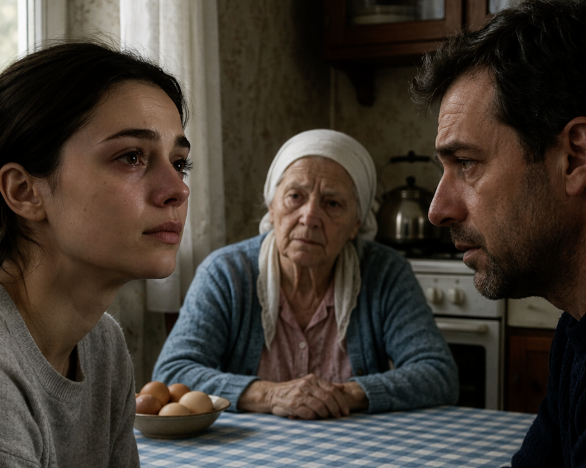
“I wasn’t hired to work as a caregiver for your mother — call a professional,” Vera finally snapped.
When Sergey called and asked me to come over, I immediately felt that something was wrong. His voice sounded guilty, as if he were apologizing in advance for something that hadn’t happened yet.
We had met at work three years earlier. He joined the sales department, and I worked in accounting. At first we just greeted each other in the hallway, then he started coming by with questions about paperwork. More often than necessary. I noticed, but didn’t let on. Then he invited me to a café after work, and somehow it just naturally happened that we started dating.
Sergey was a good man. Calm, dependable. He didn’t yell, didn’t drink, and always helped around the house. On weekends he could get up early and make breakfast so I could sleep a little longer. He brought me flowers for no reason. The only problem was his mother. Galina Petrovna. The first time he brought me to his home, she opened the door and looked me up and down as if I had come to steal the family silver.
“Oh, so you’re the one,” she said instead of greeting me. “Well, come in, since you’re already here.”
I kept quiet then. I thought things would get better with time. Sergey said she was always like that, cold with all his girlfriends. He told me not to take it to heart.
But time passed, and things did not improve. Galina Petrovna found fault with everything: the way I cooked, the way I dressed, the way I spoke. In the middle of a conversation, she might suddenly ask how many men I had had before Sergey. Or remark that I wore too much makeup for a respectable woman. Sergey usually asked his mother to be gentler, and she would snort and fall silent, but I could see the way she looked at me.
Then Galina Petrovna fell ill. She had a stroke right at home while she was alone. Luckily, a neighbor stopped by and called an ambulance. They took her to the hospital, and she stayed there for a month. When she was discharged, the doctor told Sergey that his mother needed care. Constant care. She could barely walk, her left arm hardly worked, and her speech was impaired.
“Vera, I know I’m asking a lot,” Sergey said to me one evening in the kitchen. “But I can’t send her to a nursing home. She raised me alone, my father died early. She did everything for me.”
I was silent, stirring my tea with a spoon. I understood where he was going.
“Let her move in with us?” he finally exhaled. “Just for a little while. Until she gets back on her feet. Your job is flexible, you can work from home. We’ll hire a helper to come in for a couple of hours a day so it won’t be so hard on you. And I’ll help in the evenings and on weekends.”
‘
I knew I was going to say yes. Because I loved him and didn’t want to seem heartless. But even then, something inside me tightened into a hard knot.
Galina Petrovna moved in with us a week later. Sergey prepared a room for her, set up a special bed, and bought a wheelchair. He found a woman named Lyudmila who came from ten to two to help with her care. I thought that would be enough. I thought illness might soften my future mother-in-law, that she might become at least a little grateful.
How wrong I was.
For the first few days, she was quiet. She lay there staring at the ceiling. I brought her food, helped her wash, changed the bed linens. Lyudmila came, gave massages, helped with hygiene, and fed her lunch. Sergey came home from work and sat with his mother, talking to her. But then Galina Petrovna began to recover. Her speech returned. And with her speech, her character returned too.
“This soup is too watery,” she said the first time I brought her lunch. “My tongue hasn’t failed completely yet, I can still tell.”
I clenched my teeth and took the bowl away. I added more grains and cooked it thicker. Brought it back.
“Now it’s too thick, the spoon stands upright in it,” Galina Petrovna said, shaking her head. “Sergey, son, tell her how to make proper soup.”
Sergey looked at me guiltily.
“Mom, it’s fine.”
“Fine! You’re just hungry, that’s why. I’m used to something different.”
Every day it got worse. After three weeks, Lyudmila stopped coming. Galina Petrovna complained to Sergey that the helper was rude, that she hurt her during the massages, that she gave her headaches.
“We’ll find someone else,” Sergey promised.
But the next one lasted only four days. He never even looked for a third.
“Mom says strangers make her nervous,” he told me. “Can you handle it yourself for now? She feels more comfortable with you.”
“The rest of the story is in the comments under the post 👇”
When Sergei called and asked me to come over, I immediately sensed that something was wrong. There was a guilty note in his voice, as if he were apologizing in advance for something that had not happened yet.
We met at work three years ago. He joined the sales department, and I worked in accounting. At first we just greeted each other in the hallway, then he started dropping by with questions about paperwork. More often than necessary. I noticed, but I did not let it show. Then he invited me to a café after work, and somehow, naturally, we started dating.
Sergei was a good man. Calm, dependable. He never yelled, never drank, always helped around the house. On weekends he could get up early and make breakfast so I could sleep a little longer. He brought me flowers for no reason. But his mother was difficult. Galina Petrovna. The first time he brought me to his home, she opened the door and looked me up and down as if I had come to steal the family silver.
“Oh, so you’re the one,” she said instead of greeting me. “Well, come in, since you’re here.”
I kept quiet then. I thought things would improve with time. Sergei said she was always like that, cold with every girl he brought home. He told me not to take it to heart.
But time passed, and things did not get better. Galina Petrovna found fault with everything. The way I cooked, the way I dressed, the way I spoke. In the middle of a conversation she could suddenly ask how many men I had been with before Sergei. Or remark that I wore too much makeup for a respectable woman. Sergei would usually ask his mother to be gentler, and she would snort and fall silent, but I saw the way she looked at me.
Then Galina Petrovna fell ill. She had a stroke right at home when she was alone. Luckily, a neighbor dropped by and called an ambulance. She was taken to the hospital and stayed there for a month. When she was discharged, the doctor told Sergei that his mother needed care. Constant care. She could barely walk, her left arm hardly worked, and her speech was impaired.
“Vera, I know I’m asking a lot,” Sergei said to me one evening in the kitchen. “But I can’t put her in a nursing home. She raised me alone, my father died early. She did everything for me.”
I stayed silent, stirring my tea with a spoon. I understood where he was going.
“Let her move in with us?” he finally blurted out. “Just for a little while. Until she gets back on her feet. Your job is flexible, you can work from home. I’ll hire someone to come in for a couple of hours a day so it’s easier for you. And I’ll help in the evenings and on weekends.”
I knew I would say yes. Because I loved him and did not want to look heartless. But even then, something inside me tightened into a hard knot.
Galina Petrovna moved in with us a week later. Sergei set up a room for her, put in a special bed, bought a wheelchair. He found a woman named Lyudmila who came from ten to two to help with her care. I thought that would be enough. That illness would soften my mother-in-law, that she would at least become a little grateful. How wrong I was.
For the first few days she really was quiet. She lay there staring at the ceiling. I brought her food, helped her wash, changed her bedding. Lyudmila came, did massage, helped with hygiene, fed her lunch. Sergei came home from work and sat with his mother, talking to her. But then Galina Petrovna started recovering. Her speech returned. And along with her speech, her character returned.
“This soup is kind of watery,” she said the first time I brought her lunch. “My tongue hasn’t failed completely yet, I can still taste.”
I clenched my teeth and took the plate back. I added more grain and cooked it thicker. Then I brought it back.
“Now it’s too thick, the spoon can stand up in it,” Galina Petrovna said, shaking her head. “Sergei, son, tell her how to make proper soup.”
Sergei looked at me apologetically.
“Mom, it’s fine.”
“Fine! You’re just hungry, and I’m used to something different.”
With each day it got worse. Three weeks later Lyudmila stopped coming. Galina Petrovna had complained to Sergei that the helper was rough, that the massage hurt, that she got headaches from her.
“We’ll find someone else,” Sergei promised.
But the second woman lasted only four days. He did not even try to find a third.
“Mom says strangers make her nervous,” he told me. “How about you handle it yourself for now? She’s more comfortable with you.”
I wanted to object, but he looked so tired, so worn out. And I agreed. I thought it was temporary. That just a little more time and Galina Petrovna would be back on her feet.
But she was in no hurry to get better. She demanded attention constantly. One moment she was too hot, the next too cold. Fix the pillow, bring water. The TV channel was wrong, the light hurt her eyes. I got up for her at night when she called. During the day I tried to work, but every half hour I had to run to her room.
My job started falling apart. I missed calls, failed to finish reports on time. Accounting is not the kind of job where mistakes are forgiven; deadlines are strict. My boss called and said this could not go on. He needed an employee, not a ghost. I asked for a little more time and promised to do better. Then in the evening I cried in the bathroom, biting down on a towel so no one would hear.
“Vera, I see how hard this is for you,” Sergei said. “Just hold on a little longer. Mom is improving, soon it’ll get easier for her.”
“Sergei, I need help. Let’s hire someone again. I’m really not coping.”
“You saw it yourself, Mom can’t handle strangers. I’ll spend the whole weekend with her, and you can rest.”
He was trying. He really was trying. On Saturdays and Sundays he stayed with his mother, and I could go out with friends or just take a walk. But it was not enough. Catastrophically not enough.
One morning I overslept. I did not hear the alarm. I woke up to Galina Petrovna shouting from her room. I jumped up and ran to her.
“Where have you been?” she shouted. “I’ve been calling you for half an hour! I need the toilet!”
I helped her get to the bathroom, then back to bed. My hands were shaking from exhaustion and anger.
“I’m sorry,” I forced out. “I didn’t hear the alarm.”
“Didn’t hear it! What if something had happened to me? I’d have been lying here while you slept peacefully!”
“Galina Petrovna, I didn’t do it on purpose.”
“On purpose, not on purpose. You look at me like I’m a burden. You think I don’t see it?”
“What are you saying…”
“I’m saying what I see! Do you think it’s easy for an old woman to be helpless? I did everything myself my whole life, never asked anyone for anything.”
For a moment there was something real in her voice. Pain. Resentment. And suddenly I felt sorry for her. Truly sorry. She really had been strong all her life, and now she could not even get to the toilet without help.
“Galina Petrovna, I understand how hard this is for you,” I said more gently. “But it isn’t easy for me either. Let’s try to hear each other.”
She turned toward the wall.
“Just go. I’m tired of you.”
I left the room. Sat down on the couch and buried my face in my hands. Everything inside me was boiling.
Two more weeks passed. Then I started noticing something strange. Galina Petrovna could already do a lot on her own. Once I saw her get out of bed and walk to the window by herself when she thought I was at the store. But the moment I entered the room, she lay back down and became helpless again.
“Bring me the blanket,” she would say, even though it was lying right there on the chair.
“Turn on the TV,” she would ask, even though the remote was already in her hand.
I said nothing to Sergei. He would not have believed me anyway. He would have said I was imagining it, that his mother would never do such a thing on purpose.
That day I was working at my computer, finishing a quarterly report. I had two hours left before the deadline. Galina Petrovna called out.
“Vera! Come here!”
I got up and went to her.
“What happened?”
“I’m bored. Talk to me.”
“Galina Petrovna, I’m working. In two hours I’ll be free, then we can talk. This report is very urgent.”
“I need you now. Is it really so hard to spare five minutes for a sick person?”
I sat on the edge of the bed. She started telling me some story about a neighbor who once said something about someone a long time ago. I listened with half an ear, thinking I would not finish the report in time.
“You’re not listening to me at all!” Galina Petrovna suddenly snapped.
“I am listening.”
“No, you’re not. You have that look on your face… absent. Am I nothing to you?”
The next day they fired me. I did not finish the report on time. My boss was polite but firm. He said he understood my situation, but the company needed results.
I came home and simply lay down on the bed. Stared at the ceiling. Sergei was not home, he was at work. Galina Petrovna was calling for me, but I did not respond. I could not get up. I just lay there.
When Sergei came home, I told him I had lost my job. He went pale.
“Vera… I didn’t think it would turn out like this. I’m sorry. You understand, I never wanted this.”
“You never wanted it. But here we are.”
He sat down beside me and put his arms around me. I felt numb, wooden.
“Get some rest. We’ll find you a new job. Maybe it’ll even be better.”
“Sergei, something has to change. I can’t live like this anymore.”
“I understand. Let me… let me take unpaid leave for a couple of weeks. I’ll stay with Mom, and you can recover, look for work in peace.”
“And how are we supposed to live without your salary? We’re already short on money.”
He hesitated.
“Well… somehow. We could ask my brother for a loan.”
Suddenly I realized he was willing to do anything except hire a full-time caregiver for his mother. He would rather go into debt than put her in someone else’s hands.
“I wasn’t hired to work as a caregiver for your mother. Call a professional,” I finally snapped.
I said it and got up. I went into the kitchen. My hands were trembling. A minute later I heard Galina Petrovna shouting something from her room, but I could not make out the words. I did not care.
Sergei came into the kitchen.
“Vera, what are you talking about? What caregiver? We don’t have money for that.”
“Then sell the car. Or borrow from your brother. Or find some other way. But I can’t do this anymore. I lost my job because of this. I haven’t slept properly in two months. I’m working myself into the grave, and your mother is still unhappy.”
“Mom is sick. This is hard for her.”
“Your mother has been able to do a lot on her own for quite a while now. I’ve seen her walking around the room when she thinks no one is looking. She is pretending to be helpless on purpose.”
“How can you say that? She had a stroke!”
“I’m saying what I see. And I’m tired of pretending everything is fine.”
We stared at each other. He was genuinely shocked. He did not believe me.
“Let’s calm down,” he said at last. “You’re tired, your nerves are shot. Let’s get some sleep and talk about it tomorrow.”
“No. I want to talk now. Either you find a caregiver, or I’m leaving.”
He went pale.
“You’re serious?”
“Absolutely.”
“Vera… how can you say that? We’ve been together so long. I love you.”
“If you love me, find a solution. I’m tired of being a free caregiver in my own home.”
I went into the bedroom and started packing. Sergei stood in the doorway watching me.
“Vera, don’t. Please. I really will take time off and stay with Mom myself.”
“For two weeks? And then what? I lose the next job too?”
“What am I supposed to do? I can’t abandon her!”
“But you can abandon me,” I said quietly.
I zipped up my bag and put on my coat.
“Call me when you decide what matters more to you.”
I walked out the door. He did not stop me. I went down the stairs and out into the street. It was November, cold rain drizzling down. I walked along the wet sidewalk crying without wiping away the tears.
I moved in with my friend Olga. She lived alone in a two-room apartment and immediately agreed to let me stay. The first week I simply lay there. I slept twelve hours a day, as if making up for all those months. Olga cooked for me, made chamomile tea, sat beside me in silence when I wanted to cry.
Sergei called every day. At first he begged me to come back, said we would work everything out. Then he started getting angry, saying I had abandoned him in a difficult moment. Then he started pleading again. I did not answer the calls. I only read the messages.
On the tenth day he wrote:
“Vera, forgive me. I was wrong. You were right about everything. Mom really could do a lot on her own. I finally saw it. Yesterday she fell in the bathroom, I ran in, and she got up and walked on her own. She didn’t even stagger. I asked her why she had been pretending. She said she wanted attention. That after the stroke she was afraid of being left alone. I don’t know what to say. It was my fault for not listening to you. But I can’t hand my mother over to strangers. She is my mother. I’ll find a solution. Just please come back.”
I read the message several times. Then I sat by the window staring at the gray sky beyond the glass. Olga brought me tea and sat down beside me.
“What are you going to do?” she asked.
“I don’t know.”
“Do you love him?”
“I do. But I’m afraid to go back.”
“Then don’t go back,” Olga said simply. “Love is good. But you almost broke. You spent three months not living your own life. And even if he changes something, the scar will remain. You will remember how he chose his mother over you.”
She was right. I understood that. But I still wanted to go back. Because in spite of everything, I loved Sergei. And it seemed to me that if I left now, I would be betraying our three years together.
I called him that evening.
“I’ll come back,” I said. “But only if you hire a caregiver. A professional. Full-time.”
“All right,” he answered quickly. “I’ve already found one. Lyudmila Semyonovna, she’s sixty, she worked in medicine all her life. She comes at eight in the morning and leaves at eight in the evening. Mom gets along with her fine. Says she’s strict but fair.”
“Where did you get the money for a caregiver?”
“I took out a loan. A small one. We’ll manage.”
I was silent. So the money could be found. He simply had not wanted to before.
“All right,” I said. “I’ll think about it.”
I thought for three days. Then I realized I did not want to go back. Something inside me had broken for good. I imagined myself walking into that apartment again, the place where I had spent the worst months of my life. Imagined seeing Galina Petrovna. Imagined living in that triangle again. And I knew I could not do it. Not even with a caregiver. Not even if Sergei did everything right.
I wrote him a message:
“Sergei, forgive me. I’m not coming back. I realized that you and I want different things. You want a family where your mother comes first. I want a family where you and I come first. That’s neither good nor bad. We’re just different. Thank you for these three years. Take care of yourself.”
He called, wrote, asked to meet. I refused. I knew that if I saw him, I would give in. And I could not afford to give in. I was fighting for myself. For my life. For the right to be happy.
I stayed with Olga for another month. I found a new job, again in accounting, but this time at a small company with a friendly atmosphere. My boss turned out to be an understanding woman, a mother of two herself. I rented a one-room apartment on the outskirts of the city. Small, but mine.
Gradually, life got better. I started sleeping normally again. I stopped jumping at every sound. I began seeing my friends again, going to the movies, reading books. I realized how much I had missed an ordinary, peaceful life.
Recently I ran into Sergei at the supermarket. By chance. He was standing in the dairy aisle choosing kefir. He had aged, grown gaunt. Gray had appeared at his temples. I wanted to walk past, but he saw me.
“Vera,” he said. “Hi.”
“Hi.”
We stood there in silence. People passed us with shopping carts, soft music was playing, and someone was announcing a sale on fruit over the loudspeaker.
“How are you?” he asked.
“I’m all right. Working, living.”
“I’m glad. I really am.”
Another pause.
“Mom died,” he said suddenly. “Three weeks ago. Another stroke. The doctors couldn’t do anything.”
“I’m sorry,” I said.
And I truly was sorry. Not for Galina Petrovna. For him. Because despite everything, she was his mother. And he loved her.
“I’ve thought a lot,” Sergei continued. “About us. About what happened. You were right. I behaved selfishly. I demanded sacrifices from you, but I sacrificed nothing myself. I’m very sorry.”
“It’s all right,” I said. “It’s all over now.”
“Maybe we could meet sometime? Talk?”
I looked at him. At this tired, older man who had once been my love. And I realized I did not want to meet. I did not want to return to that time, even in my mind.
“No, Sergei. We shouldn’t. We had a good story, but it’s over. Let’s leave everything as it is.”
He nodded. His eyes were sad, but he smiled.
“You’ve become stronger,” he said. “It shows. Take care of yourself, Vera.”
“You too.”
I walked farther down the supermarket aisle. Picked up my groceries, paid, and went outside. It was a warm May evening, the sun was shining, leaves were unfolding on the trees. I walked down the street and suddenly realized that for the first time in a long while, I truly felt free. I was not angry with Sergei, I did not regret the past, I did not blame myself.
Sometimes you have to leave in order to save yourself. Even if you love. Even if it hurts. Because love for yourself is more important than any other love.
There was one more scene I can also translate naturally, which fits into the same story:
“Galina Petrovna, I really do need to finish the report. They could fire me.”
“Your report! It’s always that report with you! And here I am lying here alone all day.”
“You’re not alone. I’m here.”
“Here! Like a wall is here. Cold, indifferent.”
I stood up.
“I’m sorry, I really need to work.”
That evening Sergei came home late. Tired, rumpled. His mother immediately started complaining to him.
“Son, I sat here alone all day. Vera was either working or doing something else. I didn’t even have anyone to talk to.”
Sergei looked at me. I stayed silent.
“Ver, maybe you really could spend more time with Mom?”
Something inside me jerked.
“Sergei, I’m losing my job. Do you understand? They’ve already given me a final warning. One more missed deadline, and I’m fired.”
“Well…” he hesitated. “You’ll find another job. But I only have one mother.”
I looked at him and did not recognize him. Was this really my Sergei? The same man who, six months ago, got up at six in the morning to make me breakfast?
“I’ll find another job,” I repeated slowly. “I see.”
“Vera, don’t be angry. I didn’t mean it like that. It’s just that Mom needs support right now, and you’re young and strong.”
“And I don’t need anything, then?”
He fell silent, confused. Galina Petrovna lay in bed and said nothing too, but I saw something like satisfaction in her eyes.
If you want, I can also turn this into smoother literary English, more like a polished short story than a direct translation.