Nastya did not open the door right away. She stood there with the keys in her hand, as if she did not recognize the doorbell. Her coat was wet, the umbrella was covered in droplets, and the handle on the bag of milk was torn. The evening was coming to an end; the stairwell already smelled of someone’s dinner and someone’s cat.
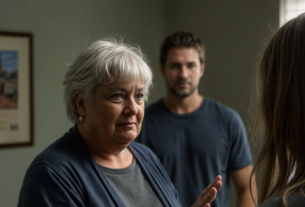
Behind the door stood Valentina Grigoryevna. A knitted scarf, patent-leather shoes, a suitcase on wheels, a bag with something hot in her hands. And her voice was like that of an actress from old films: cheerful, with a touch of drama.
“My dear light! I’m staying with you for three days! With a pie. Cherry. Pavlik loves it.” She was already in the hallway while Nastya was still only exhaling. “Why didn’t you warn me that the entry code had been changed? I had already left, then came back with the suitcase. I barely found your janitor and asked him for the code.”
Nastya said nothing. She nodded somewhere over her shoulder, as if someone else were there. Though the apartment was quiet. Unpleasantly quiet.
“And Pavel?” Valentina changed her shoes and looked around. In the entryway, only one hook was free. No men’s jacket. No boots. None of his smell, none of his chaos. “He’ll be back later, yes? We’ll sit down to dinner together. I brought pilaf just in time. Pyotr, Pavel’s father, will come too. He stopped by an acquaintance’s place first on some business, something urgent.” Then she added, “And Sasha? Still at kindergarten, probably?”
For some reason Nastya smiled — briefly, as if someone had tugged a string.
“His meeting ran late.”
“Ah, I see. Work, work, well…” Valentina fell silent. Her eyes darted around. Too quickly. She noticed that there was only one cup on the shelf. In the bathroom, one opened bottle of shampoo, but only one. Children’s drawings were still on the refrigerator, but Pavel’s photos were gone.
In the kitchen she placed the pie on the table, carefully opened the container of pilaf, and took Nastya’s hand.
“The main thing is, don’t worry. These things happen. Just breathe. We’ll sit down, eat. Dad will come, and you two will laugh. He’s kind, our Pyotr.”
Nastya nodded. She sat down. She picked up a plate, but did not eat. The kettle began to boil, loudly, as if scolding them.
A little later, they went together to pick up Sasha. Valentina carried mittens and a thermos of compote; Nastya walked in silence, holding herself by the sleeve. In the elevator, on the way back, they ran into their neighbor Lena. She smiled, then slipped into her usual rapid-fire tone:
“Nastya, was your ex at the shopping center again with that dyed woman? With the stroller? And he doesn’t bother with the child at all, does he?”
Valentina pressed her lips into a thin line. She looked neither at Nastya nor at Lena.
“Lena…” Nastya only breathed out.
“Well, what? I’m telling the truth. Everyone knows everything anyway.”
That evening, when Valentina pulled a blanket out of the closet and carefully made up the sofa bed, she suddenly stopped. She held the pillow in her hands for a long time. Then, without looking up, she asked:
“He left? Where is my son? What happened?”
Nastya stood in the kitchen doorway. Her back was straight, her hands on the kettle.
“Three months ago. He said he was going to a meeting. And he never came back.”
“To her?”
Nastya did not answer. She only looked past her.
Valentina sat down. She placed the blanket beside her. She set her bag on her knees. She took out another pie. A small one, in a plastic dish.
“I baked it especially for you. He kept saying everything was fine with you… That the four of you wanted to go to the seaside in the summer… He…”
Suddenly she lost her breath. As if she had climbed a long staircase. Nastya came closer. But she did not touch her. She simply placed a cup of tea beside her.
The room was quiet. Outside the window, an old trolleybus hummed. Nastya stood by the window. Valentina sat without moving. Each of them had her own silence.
The door slammed shut with its characteristic click — Pyotr always closed it hard, as if reminding everyone of his presence. He entered cheerfully, wearing a jacket with a fur collar, carrying a bag of mandarins and a newspaper under his arm.
“Well, hello, beauties! Here I am with the spoils! Mandarins — Abkhazian, sweet. Just like in childhood.”
He took off his shoes, hung up his jacket, and went into the kitchen. There was silence there, and three pairs of eyes. One was tired — Nastya’s. Another was anxious and direct — Valentina’s. And the third was joyful, childish: Sasha, hearing his grandfather’s voice, dropped his cookie and rushed toward him, clinging to his trouser legs like to a tree and lifting his head, his eyes shining.
“Why did everyone go quiet?” Pyotr did not understand. “Did I come at the wrong time?”
“Pavel…” Valentina began, but her voice slipped. She looked at Nastya as if asking permission.
“Pavel left,” Nastya said. Calmly, as if she had repeated it a hundred times. “Three months ago.”
The bag of mandarins dropped softly onto the table. The newspaper followed. Pyotr sat down. He was silent. For a long time he stared out the window, as if looking there for an explanation.
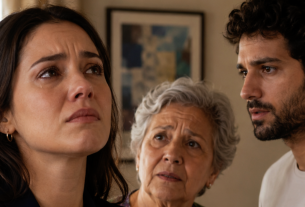
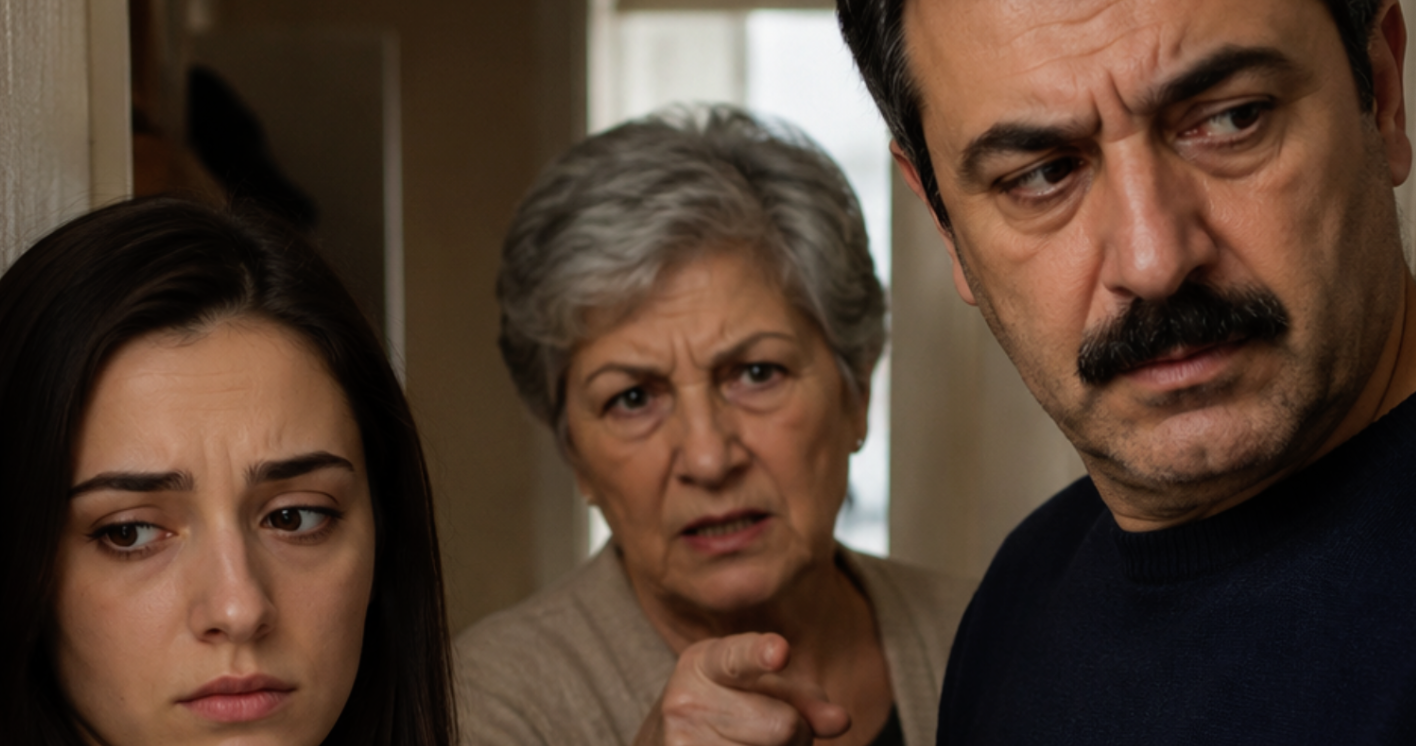
“What do you think you’ve done here?” he suddenly said loudly. “You drove him to it, Nastya. You pressured him, nagged him, like hammering a nail into wood. I couldn’t recognize him by his voice anymore — he came home as if he were going to hard labor!”
“Pyotr,” Valentina said quietly.
“What, Pyotr? What? Everything was hidden away, and now — hello! You simply…” He waved his hand. “Ruined him.”
Nastya did not answer. She only took her cup and carried it to the sink. But she did not leave the room. She stood with her back turned, as if deciding whether to go or stay.
Valentina was silent. Her face had gone pale. She got up, approached Pyotr, and squeezed his shoulder. He did not react right away.
“He told me everything was fine with them. That Sasha was healthy, Nastya was doing well, that they were planning a vacation. Do you understand that he was lying?” Her voice broke. “To me. His mother.”
Pyotr raised his eyes. And for the first time, he did not know what to say.
“I… I thought…” He faltered. “He’s not a child. He makes his own decisions. Maybe he has someone…”
“He’s had someone for a long time,” Nastya said without turning around. “He lives with her. The same woman from work. The one he used to text in the bathroom.”
Pyotr stood up and went out onto the balcony. He shut the door behind him. A cigarette flared in the dusk like a beacon. He never smoked in front of his grandson. But now he did.
“I’ll call him,” Nastya said. “Let him explain it himself.”
Valentina said nothing. She only closed her eyes.
On the phone screen was the name “Pavel.” The call. The beeps. Then a tired voice:
“Yes?”
“Come over. Now. Your mother and father are here. Sasha too. We need to talk.”
A pause. A long one. Then, “All right.” And the line went dead.
Nastya looked out the window. Beyond the glass, someone was clearing snow from the paths. A white night. Winter. Soundless.
Twenty minutes later, the lock clicked again. Pavel entered as if stepping into a stranger’s apartment. He was wearing the same down jacket from which Nastya had once pulled chewing gum and receipts. His hair was slightly disheveled, and the scent of another woman’s perfume was barely perceptible. He froze on the threshold.
“Hello, everyone…” he said dully.
Sasha ran toward him, but stopped halfway. Pavel awkwardly crouched down and pulled him close.
“Hi, buddy. How are you?”
“You don’t live with us,” Sasha said. Not as a reproach, but as a fact.
Pavel hugged him to himself, but did not raise his eyes.
Silence hung in the kitchen. Pyotr came back from the balcony, the smell of smoke trailing after him. Valentina looked at her son as if seeing him for the first time.
“You told me…” she began. “You told me everything was fine. That Nastya was doing well. That Sasha was happy. Did you lie to me, Pasha?”
“I didn’t want to upset you.”
“And her?” Valentina nodded toward Nastya. “You didn’t want to upset her? Or was it simply convenient to… disappear?”
Suddenly Pyotr spoke, quietly:
“Why did you set your mother up like that?”
Pavel sat down. He placed his hands on the table as if surrendering.
“I don’t owe anyone anything. Not you, not her. I left because I didn’t want to lie. I couldn’t be with Nastya anymore. And with you either.”
“You left because you were too weak to stay and speak like a man,” Valentina threw back. “You betrayed not only her. You betrayed us. Yourself.”
Nastya sat in the corner. Silent. As if she no longer needed to know anything. She already knew everything.
Valentina approached her son. She touched his shoulder. Her hand was trembling.
“You used to be better, Pasha. I remember you differently.”
He said nothing. He only closed his eyes.
Sasha peeked into the kitchen again. This time he did not run. He simply stood in the doorway and watched.
Pavel stood up, stepped back, and looked at all of them. His face hardened, as if a mask had frozen over it. He turned sharply and left, closing the door behind him — not loudly, but distinctly. Like a full stop at the end of a chapter.
Morning came. Outside the window was damp light and fresh snow on the windowsill. Pyotr was reading the newspaper again, Sasha was eating porridge, Valentina was moving something around in the kitchen, and Nastya stood by the window.
Nastya straightened. Her voice became steadier.
“I can gather the appliances you gave us. The microwave, the multicooker, the kettle. Take them if you want. I was planning to renovate anyway. Changes won’t hurt. It just feels right to clear everything down to the foundation.”
Valentina turned sharply.
“Have you lost your mind? The morning has barely begun, and you’re already talking about property. There’s nothing for us to divide here. We’re not petty misers. We need to apologize. Not take appliances.”
At that moment Sasha was sitting in the room, playing with toy cars on the rug. Then he peeked out.
“Grandma, will Daddy come?”
Valentina looked at him. She took a deep breath. She knelt beside him and stroked his head.
“He will, Sashenka. A little later. Do you want to watch a cartoon for now?”
Sasha nodded.
Nastya stood by the doorframe. No tears, no anger. Just some inner deafness. Like after a long noise — when all sound disappears and only silence remains in your ears.
She put the kettle on. It began to hum, a background to their silence. Ahead of them was simply a day. New, ordinary. But with the feeling that everything was beginning again.
It smelled of soap and dry air. Valentina stood in the bathroom, washing the sink slowly, as if performing a meditation. Nastya came in — she wanted to take a towel, but froze.
“Leave it,” Valentina said without turning around. “I’ll do it myself.”
Nastya did not answer. She took the towel and placed it nearby. She stood there for a moment.
“I wasn’t angry with you,” she finally said. “I was just… tired of explaining that I wasn’t the only one to blame.”
Valentina leaned on the edge of the sink. She shook her head.
“And I was angry. At myself. For not noticing. For not wanting to see it. I thought you had everything. Do you understand? Everything: love, family, happiness. That’s what I told everyone.”
Nastya nodded. They stood in the cramped bathroom — two women connected by a son, a home, and the past.
“I’m sorry,” Valentina said. “For everything. I truly thought that you… well, that you somehow failed to keep him. And now I look at you and understand that you were holding all of us together. Even when you shouldn’t have had to.”
Nastya sat on the edge of the bathtub. Quietly, she said:
“I’ll hold myself together now. Only myself. No one else.”
From the kitchen came Sasha’s voice: “Mom, where are my socks with sharks?” Then something crashed.
“And him,” Nastya added. “I’ll hold him together a little longer.”
They smiled. Not awkwardly, but in a womanly way — tired and genuine.
Later, at the door, they hugged for a long time. Pyotr stood nearby, awkwardly shifting from one foot to the other.
“I was wrong too,” he mumbled. “It’s just that we men aren’t taught to talk. Not in childhood, not later.”
“Learn,” Nastya said. “While there’s still someone to talk to.”
He nodded.
Sasha ran out, put on his shoes by himself — though not quite the right ones — and hurried down the stairs ahead of them.
“We’ll invite you,” Valentina said. “Or you’ll invite us. Either way… we’re family now. Where else can we go?”
Nastya nodded. She hugged her.
The apartment was almost empty. The furniture was restrained, boxes stood against the wall, and on the windowsill there was only a mug. Nastya put a spoon in it, poured boiling water over it, and opened the window. Cool air flowed in, carrying something new.
Sasha lay on the floor, drawing the sky with a green marker.
“Why not blue?”
“Because spring will come,” he said. “And spring is green.”
Nastya watched him move his hand across the sheet of paper. Then she came over and straightened his collar.
“Shall we go buy bread later?”
“Yes! And mandarins. But only ones with leaves!”
She smiled.
Outside the window, a tram hummed. Someone laughed below. Light fell across the floor. And in that light there was everything — pain, forgiveness, and what was beginning.
Nastya sat down beside him. She simply sat there. Without fear. For the first time — without fear.