— Tamara, when was the last time you looked in the glove compartment?
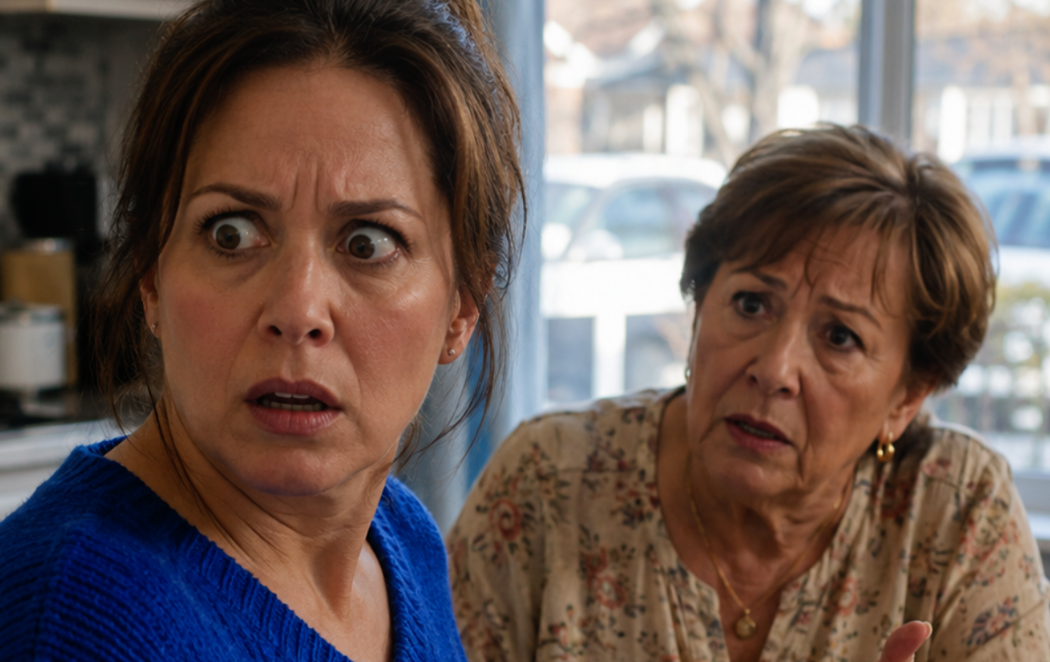
The question sounded innocent. As if a neighbor were asking about the weather. But neighbors don’t ask about the weather with the kind of face Lyuba had — my old friend, sitting in the passenger seat of my own car and holding an OSAGO insurance policy that did not have my name on it.
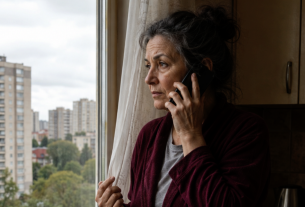
My name is Tamara. I am fifty-three. I drive a silver 2019 Hyundai Solaris, which I bought myself, with my own money, earned over fifteen years of accounting work at a construction company. I love that car. Not the way you love a cat, of course, but somewhere close.
And Lyuba had reached into the glove compartment for napkins because she had spilled coffee from her thermos onto her lap. Instead of napkins, she pulled out an envelope.
— What is this, insurance? In the name of Zhanna Viktorovna Chekalina?
Zhanna Viktorovna Chekalina is my sister-in-law. My husband’s sister. A forty-eight-year-old music teacher at a children’s art school, the owner of two cats of the “someone sinned with someone” breed, and the possessor of a voice capable of commanding a parade.
I took the envelope from Lyuba. I looked at it. It really was an OSAGO insurance policy. For my car. The policyholder was Chekalina Zh.V. The date was three weeks earlier.
— Lyuba, this must be some kind of mistake.
— Tamara, a mistake is when they mix up a letter in a surname. Here everything is exact. The series, the number, the VIN. Your car, someone else’s surname.
I turned off the engine. We were standing in the parking lot of the Kalina shopping center, where we had come to buy new curtains for Lyuba’s dacha. The curtains could wait.
I should explain our family.
My husband, Gennady, is a calm man, the kind who walks around conflict in a wide arc, the way a pedestrian walks around a puddle. Not because he is a coward. It’s just easier for him to agree than to argue. After twenty-six years of marriage, I had gotten used to it.
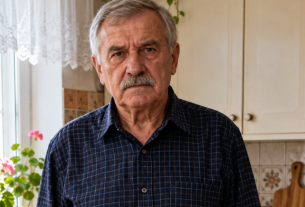
His mother, Valentina Pavlovna, lives in the next district. Seventy-four years old, high blood pressure, a love of TV dramas, and absolute certainty that she is always right. At the same time, she is kind. Truly kind. It’s just that her kindness is specific: she does good for you the way she thinks is right, not the way you ask.
And then there is Zhanna. My sister-in-law. Zhanna and I had existed in parallel all our lives. We didn’t quarrel, and we weren’t friends. She came to birthdays, brought boxes of the same brand of chocolates, and talked about how hard it was to be a music teacher. I nodded. She nodded. Then we parted ways until the next holiday.
Zhanna does not have a car. Or rather, she had one — an old Logan, which she sold two years ago because repairs cost more than the Logan itself. Since then, Zhanna has traveled by bus, by taxi, and on the nerves of everyone around her.
So that was the scenery.
That evening, I sat in the kitchen and stared at the insurance policy. Gennady was at work, on the second shift. I could have called him, but first I wanted to figure it out myself.
The insurance listed a power-of-attorney number. I photographed it and enlarged the image. Notary Komarova E.S., registry number, date of issue — four weeks earlier. The power of attorney had been issued by Chekalina Valentina Pavlovna.
By my mother-in-law.
Here I need to clarify something. The car is registered in my name. But when we bought it, my mother-in-law gave us one hundred thousand rubles, and Gennady, in a burst of gratitude, entered his mother in the vehicle title as…
No, I’m lying. He did not enter her anywhere. He simply said to her, “Mom, this car is yours too.” And my mother-in-law remembered it.
In Russia, there is a wonderful genre called the oral promise. It has no legal force and no statute of limitations, but it can offend forever.
Valentina Pavlovna had never used the car. Not once. She does not drive. But in her picture of the world, the car was “common, family property,” and if it was family property, that meant one could help poor Zhanna, whose life was already not easy.
I called my mother-in-law.
— Good evening, Valentina Pavlovna.
— Tamarochka! How are you? My blood pressure is jumping again, can you imagine? This morning it was one hundred forty…
— Valentina Pavlovna, I found an insurance policy in the car in Zhanna’s name.
A pause. Short, but expressive. Like a caesura in music — Zhanna would have appreciated it.
— Ah, that… Well, yes. Zhannochka needed to take some things to the dacha. And she goes to the doctor, her knee…
— Valentina Pavlovna, a power of attorney has been issued for my car. In your name. For Zhanna.
— Well, what’s wrong with that, Tamarochka? I am the grandmother, I have the right.
That was when I exhaled. Slowly. The way my yoga instructor had once taught me, back when I attended classes for two months before realizing it was easier for me to exhale in the car, in traffic.
— Valentina Pavlovna, you are not the owner of this car. The car is registered in my name. You have no right to issue a power of attorney for it.
— But Gena said…
— Gena said words. The traffic police have a registered document. Those are different things.
My mother-in-law took offense. I could hear it in her breathing. She did not shout or scold. She simply fell silent in such a way that the silence on the phone became thick, like the chokeberry jam she makes every September.
— Tamara, I don’t understand why you are acting like this.
— I don’t understand either, Valentina Pavlovna. Why behind my back?
The conversation ended with nothing. My mother-in-law hung up. I sat for a while and finished my tea. The tea was cold, but that was a minor detail.
The next day I went to a notary. Not to Komarova, who had drawn up the power of attorney, but to my own notary, Irina Nikolaevna Bochkaryova, with whom Gennady and I had been certifying various papers for about ten years.
Bochkaryova’s office smells of wood and an old printer. On the wall there is a calendar with kittens. I remember this because while I was waiting in line, one of the kittens in the photo looked at me with an expression as if it too were thinking, “How did you manage to get yourself into this?”
— Irina Nikolaevna, I need to understand a situation.
I showed her the photo of the policy and the power-of-attorney number. Bochkaryova put on her glasses and looked.
— Tamara Sergeevna, if the car is registered in your name, then a power of attorney from a third party to drive this vehicle… well, that is an interesting construction.
— My mother-in-law issued a power of attorney for my car to her daughter.
— Is your mother-in-law the owner?
— No.
— Then this power of attorney is just a piece of paper. A pretty one, with a seal, but still just a piece of paper. Notary Komarova apparently drew it up based on words alone, without checking the vehicle title and registration. It happens. It shouldn’t, but it happens.
Irina Nikolaevna took off her glasses and placed them on the desk.
— There is not even anything for you to revoke. This power of attorney has been invalid from the moment it was signed. Your mother-in-law had no authority to issue it.
— And the insurance? Zhanna took out OSAGO.
— The insurance is a separate story. Anyone can be included in a policy; that is a question for the insurance company. But if you want everything in order, write a statement and we will record your position. Just in case.
Just in case. I like that expression. All Russian jurisprudence is built on “just in case.”
I wrote the statement. Bochkaryova certified it. I paid two thousand four hundred rubles and left with the feeling that the world had become a little more understandable.
That evening Gennady came home. I was waiting for him in the kitchen. On the table lay the OSAGO policy in Zhanna’s name, the photo of the power-of-attorney number, and the certified statement from notary Bochkaryova.
Gennady put down his bag, looked at the table, then at me.
— Tamara…
— Sit down.
He sat down. He picked up the policy. Read it. Put it down. Picked up the photo. Read it. Put it down.
— I didn’t know.
— Gena, are you serious?
— Tamara, I really didn’t know about the power of attorney. Mom said Zhanna would take the car a couple of times to go to the dacha. I said, fine, let her. I thought you knew.
He thought I knew. I thought he had not given permission. My mother-in-law thought she had the right. Zhanna thought… actually, I was interested in finding out what Zhanna thought.
— Gena, Zhanna has been driving my car for three weeks. Does she have the keys?
A pause. Gennady scratched the back of his head. A gesture I had studied for a quarter of a century: “I am about to say something that will make you feel ill.”
— Mom had the spare set. I left it with her, just in case.
Again, “just in case.” Wonderful.
— So your mother gave Zhanna the keys to my car.
— Well… apparently, yes.
— And you think that is normal.
— I think it is… not very good.
A soft formulation. Gennady in his usual style. If the house were on fire, he would say, “The temperature in the room is not very comfortable.”
— Gena, tomorrow you will take the spare keys back from your mother. That is the first thing. And you will call Zhanna. That is the second.
— Maybe you could…
— No. This is your family. Your mother, your sister. They pulled this off through you, and you will untangle it through yourself.
Gennady nodded. Silently. Then he got up, opened the refrigerator, took out kefir, and drank a glass in one gulp. His evening ritual, meaning: “Information received.”
The next two days passed in silence. Gennady walked around thoughtful, calling his mother and speaking in short, monosyllabic phrases. I did not eavesdrop, but our kitchen is small, and Valentina Pavlovna’s voice on the phone can be heard from the next room.
Fragments floated over:
— Mom, you can’t do that…
— …I thought it was for the family…
— …the car is Tamara’s, Mom…
— …and you are all against me…
A classic of the genre. Act Three. “Everyone is against me” — the signature line after which one is supposed to feel guilty. I did not. Maybe because I am fifty-three and have seen this performance about forty times.
On the third day, Gennady brought back the keys. He put them on the little cabinet in the hallway. The key fob, the second set, with the small leather cover I had bought myself at an auto parts store.
— Got them back.
— Thank you.
— Tamara, Mom is offended.
— Gena, I’m offended too. But I’m offended quietly, and I don’t issue powers of attorney for other people’s property.
He nodded and went to watch football. In our family, football is not a sport. It is a shelter.
And then the most interesting part began.
A week later Zhanna called. Not me. Gennady. But Gennady was in the shower, his phone was lying on the kitchen table, and the screen lit up: “Zhanna.” I did not answer. I called her back later from my own phone.
— Zhanna, it’s Tamara.
— Ah… Tamara. Hello.
Her voice was cautious. Like a cat that knows it has climbed onto the table and is waiting to see whether it will be chased away or whether everyone will pretend not to notice.
— Zhanna, let’s meet. We need to talk.
— About what?
— About my car, Zhanna.
Silence. Then:
— All right. Where?
— At the Beryozka café on Lenin Street. Tomorrow at two.
The Beryozka café was neutral territory. Neither my home nor hers. The pastries there were tasteless, but the coffee was tolerable and the tables were far apart, so one could speak calmly.
Zhanna arrived at two fifteen. A delay just long enough to show that she had not rushed, but had not ignored me either. I appreciated that. Pedagogical precision.
She was wearing a gray coat and a plum-colored scarf. Zhanna always dressed neatly, that much could not be taken away from her. She sat across from me and ordered tea with lemon.
— Tamara, I understand that you are angry.
— I’m not angry, Zhanna. I’m surprised. Those are different things.
She stirred sugar into her cup. The spoon tapped the side twice.
— Mom suggested it.
— What exactly did Mom suggest?
— She said the car was family property. That Gena didn’t mind. That it was inconvenient for her herself, and I needed it — for the dacha, for the doctor, to bring groceries from the wholesale store. And that it would be easier to make a power of attorney so everything would be legal.
Legal. Wonderful. Except the law assumes that a power of attorney is issued by the owner, not by someone who once gave one hundred thousand rubles and decided that made her a co-owner.
— Zhanna, did you know the car was registered in my name?
— Well… yes.
— And you didn’t think to call me? To ask?
She lowered her eyes. For the first time in the conversation.
— Tamara, honestly? I thought you would refuse. And it was easier for me… through Mom.
There it was. The key word. “Easier.” Not “more correct,” not “fairer.” Easier. To go around, not ask, not risk being refused. To take someone else’s property and call it “family help.”
I took a sip of coffee. The coffee at Beryozka was exactly as I remembered it: not good, not bad, just nothing. But it was hot.
— Zhanna, I’ll explain something to you. The power of attorney Valentina Pavlovna issued is invalid. She is not the owner. My notary confirmed that.
— I… didn’t know.
— Komarova, your notary, drew up the document without checking ownership rights. That was her mistake. But you took advantage of that mistake.
Zhanna said nothing. She kept stirring tea that had long since been stirred. The spoon moved in circles, like thoughts inside her head.
— Tamara, I really needed the car. My knee hurts, buses… You know what our buses are like.
— I know, Zhanna. I rode them too while I was saving for this car.
She flinched. Not from offense, but from surprise. Apparently, in her version of the story, I had always had a car, the way I had always had arms and legs — simply as a fact of existence.
— I have no claims against you, Zhanna. No resentment. I have one request: if you need something, ask me directly. Not through Mom, not through Gena. Me.
— And will you give it?
— It depends on the circumstances. Sometimes yes. Sometimes no. But it will be my decision, not a surprise from the glove compartment.
Zhanna smiled. Crookedly, joylessly, but she smiled.
— I’ll reissue the insurance. At my own expense.
— No need. I’ve already called the company. That policy has been canceled, and my valid one remains in force. Just return the envelope that was in the glove compartment.
— Mom has it.
— Of course Mom has it.
We both fell silent. The waitress brought me a second coffee, which I had not ordered. Apparently, she had decided that two women with faces like ours needed support.
And now comes the funniest part. The reason, in fact, for this whole story.
Two days after our conversation at Beryozka, Valentina Pavlovna called me. Her voice was solemn, like at a school assembly on the first of September.
— Tamarochka, I have been thinking.
— I’m listening, Valentina Pavlovna.
— Since the power of attorney didn’t work out, maybe you and Gena could give this car to Zhanna? And buy yourselves a new one? Gena has a good salary, after all.
I stood by the window, looking at the parking lot, at my silver Solaris with the scratch on the rear bumper that I got while reversing badly at the market, and thought: here it is. The moment for which it was worth going through these three weeks.
— Valentina Pavlovna, why don’t you buy Zhanna a car? You have a good pension, after all.
Silence. Thick. Like that same jam.
— Tamara, what are you saying? My pension is twenty-two thousand.
— And we have a mortgage, Valentina Pavlovna. And a child in college. And a cat who needs eye surgery.
— What cat?
— Barsik. You saw him at New Year’s. He was sitting on your lap.
— That ginger rascal who tore my tights?
— The very one. Now the rascal has glaucoma. Treatment is forty thousand.
My mother-in-law grunted. Not from sympathy for the cat. From the realization that the plan had failed.
— Fine, Tamarochka. I understand.
— What do you understand, Valentina Pavlovna?
— That you are greedy.
And she hung up.
I laughed. For the first time in three weeks — truly, to the point of tears. Not from hurt, but from how perfectly everything had come together. My mother-in-law called me greedy because I did not give my car to her daughter. Every word in that sentence is beautiful.
That evening Gennady asked:
— Did Mom call?
— She did.
— Is she offended?
— She considers us greedy.
— For what?
— For not giving Zhanna the Solaris as a gift.
He put down his mug. Slowly.
— Is she serious?
— Absolutely.
Gennady sat down on a stool and stared at the wall for a minute. Then he said:
— Tamara, maybe we should get a second cat.
— Why?
— So we have two reasons not to give away the car.
And we both burst out laughing.
Zhanna called back three days later. Me, not Gennady. Her voice was different — without caution, without that feline insinuation.
— Tamara, I wanted to apologize.
— For what exactly, Zhanna?
— For not asking. For going through Mom. It was… dishonest.
The word “dishonest” was hard for her. I could hear her pushing it out like a cherry pit. But she pushed it out.
— Accepted, Zhanna.
— And one more thing. Mom told me she suggested that you give me the car. I want you to know: I did not ask her to do that. It was her idea. I feel uncomfortable about it myself.
That was unexpected. Truly.
— I believe you, Zhanna.
— Tamara, if I ever need the car for a weekend… may I ask? You, directly?
— You may. Only in advance, not through a power of attorney.
— Deal.
She said goodbye. Briefly, dryly, the way she was used to. But there was more warmth in that dryness than in all the boxes of chocolates she had given us for twenty-six years in a row.
Barsik, by the way, had his surgery. Successfully. Forty-one thousand two hundred rubles. The ginger rascal now sees the world worse with one eye, and with the other, according to the vet, “within the age norm.” He walks around pleased with himself, sits on the windowsill, and watches the parking lot where my silver Solaris stands.
Mine. With my keys. With my insurance. With the scratch on the bumper that I still have not painted over, because there are more important things.
My mother-in-law, incidentally, called a month later as if nothing had happened and asked me to drive her to the market for seedlings. I drove her. She bought Bull’s Heart tomatoes, eggplants, and two petunia bushes that did not fit in the trunk and rode in my back seat, dropping soil onto the covers.
On the way she said:
— Tamarochka, could you maybe give Zhannochka a ride to the dacha on Saturday? It’s hard for her with her knee.
I looked in the rearview mirror. The petunias were shaking on the back seat. Barsik was waiting at home for his eye drops. Gennady was watching football. The world was in its place.
— I could, Valentina Pavlovna. Let her call me.
My mother-in-law nodded, satisfied. And for the rest of the way, she talked about her blood pressure.