Every Saturday, My Husband’s Sister Dumped Her Kids at My Dacha for Free—Until One Day, I Changed Everything
“Varya, go to Aunt Sveta. Aunt Sveta is so kind… Svet, don’t just stand there—take the child. It’s not like you have anything to do on weekends anyway.”
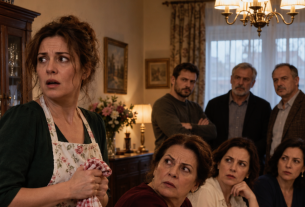
Svetlana took Varya by her small hand, sticky from cookies. It was eight o’clock on Saturday morning, and they were standing on the apartment landing. Her sister-in-law Marina stood in the doorway wearing a new coat. Behind her, six-year-old Kiryusha shifted from foot to foot with a shark-shaped backpack.
“Here’s their bag.” Marina set a plaid bag beside the door. “Varya’s sweater is inside in case it’s cold at the dacha. Don’t let Kiryusha watch cartoons for more than an hour—his eyes are sensitive. And don’t feed them your pickles. Varya’s cheeks turn red from salty food.”
“We didn’t agree on this Saturday,” Svetlana said.
“What’s there to agree about?” Marina smiled broadly, like a cashier at the opening of a new store. “You’re going to the dacha anyway. The children get fresh air, and you get some entertainment. All right, I have to run—I’ve got a million things to do. Kisses, my little bunnies!”
Her heels clattered down the stairs. A car honked impatiently below. Vitalik, Marina’s husband, was waiting behind the wheel. He never came upstairs.
The entrance door slammed shut. Varya put a finger in her mouth. Kiryusha asked where the tablet was.
Denis peered out of the kitchen, holding a cup.
“Oh, the little nephews and nieces are here! Great. We’re going there anyway, Svet. What’s the big deal?”
The child drop-off center was open every Saturday from eight o’clock in the morning. No lunch break, no vacation, and no salary.
Four months earlier, it had been called “just this once.”
Back then, Marina had stood on the same doormat, pressing her hands to her chest and blinking dramatically. Vitalik had been given a short vacation package through work—only two days. When else would they get a chance to escape? Svetochka, you’ll save us, won’t you?
Svetlana saved them.
A week later, “just this once” happened again—this time without the vacation package and without the words “you’ll save us.” They simply rang the doorbell.
Two weeks after that, Marina stopped coming upstairs altogether. She dropped the children off outside the entrance and waved from the car.
Soon, the bag came with a list of instructions.
Kefir had to be one particular brand—eighty-nine rubles per bottle. The Pyaterochka store near the dacha did not sell it, so Svetlana brought it from the city. Sugar-free cottage-cheese snacks. “Don’t get Kirill used to eating your pasta.”
When Varya arrived wearing sandals with a broken strap, Svetlana bought her a new pair for 1,400 rubles at Lenta. Marina noticed the sandals, turned Varya’s foot from side to side, and nodded.
“Comfortable.”
She did not ask how much they had cost.
Svetlana worked as an accountant, and all her figures balanced down to the last ruble.
Over four months, she had spent almost thirty thousand rubles of her own money on someone else’s children. Kefir, cottage-cheese snacks, sandals, a sun hat, and children’s round-trip train tickets.
That did not include the Saturdays and Sundays themselves, because apparently no one counted those at all.
During those same seventeen Saturdays, Denis mastered exactly one game with his sister’s children.
It was called, “Go ask Aunt Sveta.”
While Svetlana cooked porridge for four people and pulled Varya out of a barrel of rainwater, Denis sat with a fishing rod beside the neighbors’ pond.
Once, he held both children in his arms—for a photograph.
Marina later sent the picture to the entire family.
“Look what a wonderful Uncle Denis he is!”
Marina herself was the most delighted of all.
Gradually, the Saturdays began spreading into weekdays.
One Wednesday, Marina called at lunchtime.
“Svetik, pick Kiryusha up from art class. You finish work earlier, and I won’t make it in time.”
Svetlana asked the chief accountant for permission to leave and picked him up.
A week later, art class became a permanent responsibility: Wednesdays at 4:30 p.m.
“You’re nearby anyway.”
“Nearby” meant forty minutes by bus in the opposite direction.
Then, in May, there was the conversation about sneakers.
“Svetik, buy Kiryusha sneakers for gym class at kindergarten. Size 31. I’ll transfer the money immediately. I’m completely overwhelmed.”
Svetlana bought them for 2,400 rubles and sent Marina a photograph of the receipt.
Marina replied with a heart emoji.
The money never arrived.
The message containing her promise remained in the messenger, undeleted. Svetlana did not touch it. It was an accountant’s habit: you never threw away source documents.
Once, Svetlana told her husband she was tired.
Denis pushed his plate aside and looked offended.
“What, do you begrudge them something? They’re my own niece and nephew. You’re always picking on my family.”
He always became offended in exactly the same way, and Svetlana always came out of every conversation feeling guilty.
Marina picked up the children on Sunday nights, usually close to ten o’clock.
She generally did not come upstairs. She simply sent a message saying, “We’re downstairs.”
But the previous Sunday, she had come up.
The goods inspection was conducted according to strict procedure.
“Why is Varya wearing this T-shirt? I packed a different one.” Marina turned her daughter by the shoulders beneath the hallway light. “Now, let me see her cheeks. Her cheeks are red. Did you give her pickles?”
“She was out in the sun,” Svetlana said. “She was helping me in the garden.”
“You should have put a sun hat on her.”
“She was wearing one. I bought it for her.”
Marina ignored that and walked into the kitchen.
“Give us some of your pickles. And some lecho. The two of you won’t eat it all anyway. Oh, what’s this—cherries? Give us some cherries too. Kiryusha loves them.”
“But you said salty food makes Varya’s cheeks red,” Svetlana said.
“Varya can’t have them. Vitalik and I can.”
Three jars left in the plaid bag.
The word “thank you” did not leave with them.
Two weeks earlier, they had celebrated Svetlana’s mother-in-law’s birthday. Tamara Pavlovna had turned sixty-five.
Around twelve people sat at the table: relatives, a neighbor, and an aunt from Kolomna.
That evening, Marina performed for the audience like a wind-up toy.
“Denisochka and I are so close! Everyone envies us!” She wrapped an arm around her brother’s shoulders. “And the children absolutely adore Aunt Sveta. Isn’t that right, Kiryushenka?…”
The continuation is just below, in the first comment.
“Varya, go to Aunt Sveta. Aunt Sveta is so kind… Sveta, don’t just stand there—take the child. It’s not as though you have anything to do on weekends anyway.”
Svetlana took Varya’s little hand, sticky from cookies. Saturday, eight in the morning, on the apartment landing. Her sister-in-law Marina stood in the doorway wearing a new coat, while six-year-old Kiryusha shuffled behind her with a shark-shaped backpack.
“Here’s the bag.” Marina set a plaid bag beside the door. “Varya’s sweater is inside in case it gets cold at the country house. Don’t let Kiryusha watch cartoons for more than an hour—it’s bad for his eyes. And don’t feed them your pickles. Salty food makes Varya’s cheeks turn red.”
“We didn’t agree on this Saturday,” Svetlana said.
“What is there to agree about?” Marina smiled broadly, like a cashier at the grand opening of a new store. “You’re going to the country house anyway. The children get fresh air, and you get some entertainment. All right, I have to run. I have a million things to do. Kisses, my little bunnies!”
Her heels clattered down the stairs. A car honked impatiently below. Vitalik, Marina’s husband, was waiting behind the wheel. He never came upstairs. The entrance door slammed. Varya put a finger in her mouth. Kiryusha asked where the tablet was.
Denis appeared from the kitchen holding a cup.
“Oh, the little ones are here! Great. We’re going there anyway, Sveta. What’s the problem?”
The child drop-off center operated every Saturday from eight o’clock in the morning. No lunch breaks, no vacations, and no pay.
Four months earlier, it had been called “just this once.” Marina had stood on the same doormat, pressing her hands to her chest and blinking pleadingly. Vitalik had been given a two-day vacation package through work. When else would they get a chance to escape? Sweet Sveta, you’ll save us.
Svetlana saved them.
A week later, “just this once” happened again—this time without the vacation package and without the words “you’ll save us.” Someone simply rang the doorbell. Two weeks after that, Marina stopped coming upstairs altogether. She dropped the children off in front of the building and waved from the car.
Soon, the bag came with a list.
Kefir had to be one particular brand—eighty-nine rubles a bottle. The Pyaterochka near the country house did not stock it, so Svetlana brought it from the city. Sugar-free cottage-cheese snacks. “Don’t get Kirill used to eating your pasta.”
When Varya arrived wearing sandals with a broken strap, Svetlana bought her a new pair for fourteen hundred rubles at Lenta. Marina noticed them, turned Varya’s foot from side to side, and nodded.
“Comfortable.”
She did not ask about the money.
Svetlana worked as an accountant, and her figures always balanced down to the last ruble. Over four months, she had spent almost thirty thousand rubles of her own money on someone else’s children. Kefir, cottage-cheese snacks, sandals, a sun hat, and round-trip train tickets for the children.
That did not include the Saturdays and Sundays themselves, which apparently counted for nothing in anyone’s calculations.
During those same seventeen Saturdays, Denis had mastered exactly one game with his niece and nephew. It was called “Go to Aunt Sveta.”
While Svetlana cooked porridge for four people and fished Varya out of a barrel of rainwater, Denis sat with a fishing rod beside the neighbor’s pond. Once, he held both children in his arms—for a photograph.
Marina later sent the picture to the entire family.
“Look what a wonderful Uncle Denis they have!”
No one was more touched by it than Marina herself.
Weekdays gradually began attaching themselves to the Saturdays.
One Wednesday at lunchtime, Marina called.
“Sveta, pick Kiryusha up from his drawing class. You finish work earlier than I do, and I’m not going to make it.”
Svetlana asked the chief accountant for permission to leave and picked him up.
A week later, drawing class became a permanent arrangement: every Wednesday at four thirty.
“You’re nearby anyway.”
“Nearby” meant a forty-minute bus ride in the opposite direction.
Then there had been the messages about sneakers in May.
“Sveta, buy Kiryusha sneakers for physical education at kindergarten. Size thirty-one. I’ll transfer the money immediately. I’m completely overwhelmed.”
Svetlana bought them for twenty-four hundred rubles and sent a photograph of the receipt.
Marina replied with a heart.
The money never arrived.
The message containing the promise remained in the chat, undeleted. Svetlana left it there. It was an accountant’s habit: you never threw away the original documentation.
Once, Svetlana told her husband that she was tired.
Denis put down his plate and became offended.
“What, are you begrudging them something? They’re my own niece and nephew. You’re always finding fault with my family.”
He always became offended in exactly the same way, and Svetlana always emerged from every conversation as the guilty party.
Marina collected the children on Sunday nights, usually close to ten. Most of the time, she did not come upstairs. She simply sent a message saying, “We’re downstairs.”
The previous Sunday, however, she had come up.
The goods were inspected according to strict quality-control procedures.
“Why is Varya wearing this T-shirt? I packed a different one.” Marina turned her daughter by the shoulders beneath the light in the hallway. “All right, let me see her cheeks. Her cheeks are red. Did you give her pickles?”
“She was out in the sun,” Svetlana said. “She was helping me in the garden.”
“She should have been wearing a sun hat.”
“She was wearing one. I bought it.”
Marina ignored that and walked into the kitchen.
“Give me some of your pickles. And some lecho. The two of you won’t eat it all anyway. Oh, what’s this—cherries? Give me some cherries too. Kiryusha loves them.”
“But salty food makes Varya’s cheeks red,” Svetlana said.
“Varya can’t have it. Vitalik and I can.”
Three jars left inside the plaid bag.
The words “thank you” did not leave with them.
Two weeks earlier, it had been Svetlana’s mother-in-law’s anniversary. Tamara Pavlovna had turned sixty-five.
About twelve people sat around the table: relatives, a neighbor, and an aunt from Kolomna. Marina performed for her audience all evening as though someone had wound her up.
“Denisochka and I are so close. Everyone envies us!” She put an arm around her brother’s shoulders. “And the children absolutely adore Aunt Sveta. Isn’t that right, Kiryushenka?”
Kiryushenka silently and methodically picked all the ham out of his salad.
Across the table, Marina told the aunt from Kolomna a different story.
“I do everything myself, with these two hands. No nannies, no grandmothers. This is what I believe: if you give birth to children, you raise them yourself instead of dumping them on someone else.”
At that moment, Varya was sitting beside her in the sandals from Lenta and the sun hat purchased from the same store.
“And we buy all their clothes ourselves. Only the best for our children,” Marina continued, turning Varya’s foot toward the aunt. “Look, orthopedic sandals. I chose them personally. We bought Kiryusha proper sneakers for physical education too, not some cheap rubbish.”
Svetlana stared at the sandals Marina had “chosen personally” and remained silent.
The receipt for the sandals was stored in Svetlana’s banking app. So was the receipt for the sneakers.
The aunt from Kolomna nodded approvingly.
What a good, practical mother.
Tamara Pavlovna cut the cake. No one had removed the ribbon bearing the price, “519 rubles,” from the box.
Then she announced loudly enough for the entire table to hear:
“Our Svetochka never refuses anyone. God didn’t give her children of her own, so she practices on Marinochka’s. At least the poor woman has some source of happiness.”
The table did not react.
The table continued chewing.
Svetlana placed the cake server on the platter.
“I’m practicing?”
“Well, what else would you call it?” her mother-in-law said with a shrug. “That’s life.”
“Mom, honestly.” Marina laughed like a tinkling bell. “Sveta isn’t offended. Sveta, you aren’t offended, are you?”
Svetlana did not answer. She passed the plates around the table, and for the rest of the evening, the only words she spoke were, “Please pass the bread.”
On Thursday, Svetlana brought her mother-in-law some blood-pressure medication. Tamara Pavlovna lived two buildings away and disliked going to the pharmacy.
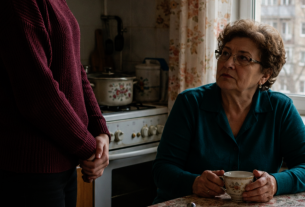
The door was unlocked. A telephone was blaring from the kitchen. Her mother-in-law always used speakerphone. Her hearing was poor, and she lost the glasses she needed to press the correct buttons even more frequently.
Marina’s voice poured from the speaker and filled the entire apartment, all the way to the hallway.
“…Mom, I’m not insane. Why would I pay a nanny? Do you know how much a weekend nanny costs? Ten thousand rubles for one weekend! Forty thousand a month! Why would I pay that when Sveta is free? She enjoys it. She doesn’t have children of her own and never will, so she can at least look after mine.”
“Blood relatives are sacred,” Tamara Pavlovna agreed.
“Blood or no blood, it’s forty thousand rubles in my pocket,” Marina laughed. “Vitalik and I are flying to Dagestan for two weeks in July. I’ll dump the children with Sveta at the country house. I’ve already started making a grocery list. She’ll probably thank me for it. Mom, are you using speakerphone again?”
“My hearing is bad, Marinochka. You know that…”
Svetlana placed the bag of medication on the cabinet in the hallway and left.
She closed the door without making a sound.
Tamara Pavlovna never realized it had been opened.
On the staircase between the second and first floors, Svetlana stopped for a moment.
“She never will.”
Marina had said it casually, between the kefir and Dagestan, as though she were discussing the weather.
Svetlana stood there for a while and then continued downstairs.
At home, she took out a notebook and calculated everything again.
Seventeen Saturdays.
Sixteen Sundays.
Kefir, cottage-cheese snacks, sandals, a sun hat, and train tickets: twenty-nine thousand eight hundred rubles.
Plus the forty thousand rubles a month Marina believed she was saving.
The arithmetic balanced.
On Friday evening, Marina called.
Her voice was overflowing with honey.
“Sveta, sweetheart, the plans have changed. I’ll bring the little bunnies over tonight, around nine, all right? Vitalik’s department reserved a table, so we’re going out with his colleagues. And listen, there was something else I wanted to tell you. We’re going on vacation in July. The children will stay with you at the country house for a couple of weeks. I’ll send you a list of what to buy. You know which kefir Varya drinks.”
She did not ask.
She informed her.
Having taken possession of the Saturdays, Marina was now claiming the Fridays and the entire month of July.
“Tonight won’t work,” Svetlana said. “Bring them tomorrow at eight, as usual.”
“Well, at least you can do that,” Marina sighed magnanimously. “Honestly, I don’t know how I manage everything. I’m constantly running around.”
Denis looked out from the other room.
“What did she want?”
“The children will be staying with us for two weeks in July.”
“That’s fine. We’ll be there anyway.” He returned to the television, then called out, “Why did you take that bag down?”
Svetlana was standing on a stool beside the overhead storage compartment, holding a sports bag.
“You’ll find out tomorrow.”
“More mysteries. You’re always plotting something, and then I’m the one who ends up looking guilty.”
An hour later, her mother-in-law called.
“Sveta, help Marinochka in July. Don’t start making trouble. It’s difficult for her—she has two children. What difference does it make to you? You’re a free woman. You aren’t tied down by children.”
“Right,” Svetlana said.
“That’s a good girl. Family members have to help one another. That’s what keeps a family together.”
Svetlana ended the call and checked the commuter-train timetable.
On Saturday, she got up at seven.
Jeans, sneakers, and a bag beside the door.
Denis was asleep. His Saturdays began at ten in the morning, regardless of the arrival of his niece and nephew.
At 8:03, the doorbell rang.
Marina stood outside in her coat and heels. Behind her were Kiryusha with his shark backpack and Varya holding a cookie.
“My little bunnies, go to Aunt—” Marina noticed Svetlana’s sneakers and bag and stopped. “Where are you going this early?”
“Oh, perfect timing,” Svetlana said. “I’m leaving too. Denis has been looking forward to seeing his niece and nephew. He’ll organize everything.”
“What do you mean, you’re leaving?”
“I have a million things to do.” Svetlana gently guided the children into the hallway beside the coat rack.
Denis appeared from the bathroom in his underwear, a toothbrush in his mouth.
“Wha’s goin’ on?”
“Your niece and nephew are here,” Svetlana said. “You’re going to the country house anyway. The porridge is in the cupboard, and the kefir is in the refrigerator door. The green one is Varya’s.”
She picked up her bag and walked past Marina.
Marina looked from her brother to her watch. Her manicure appointment was at nine.
The manicure won.
“Fine!” Marina shouted from the stairwell. “Denis! Did you understand? The sweater is in the bag! No more than one hour of cartoons!”
“Sveta!” Denis shouted after her over the railing. “Where are the children’s jackets? What time is the train?”
“Denis will organize everything,” Svetlana said without turning around.
The country house belonged to Svetlana. It had once been her mother’s—a six-hundred-square-meter plot in the direction of Shatura.
Svetlana paid two hundred sixty rubles for the commuter train, opened the house, put the kettle on, and switched her phone to silent mode.
By lunchtime, she had fourteen missed calls and a stream of messages from a contact saved as “Deniska.”
“where is the porridge what porridge there are three packets here” — 9:12.
“varya is crying what do i give her” — 9:40.
“kirill is screaming that it’s the wrong cartoon how does this tablet even work” — 10:15.
“i can’t find the jackets and what time is the train” — 10:30.
“answer the phone this isn’t funny” — 11:00.
“you did this on purpose didn’t you” — 11:40.
At 12:50, the messages stopped.
The silence meant reinforcements had been summoned.
At 1:15, Tamara Pavlovna called.
Svetlana answered that call. She deliberately stepped outside onto the porch.
“What are you doing?!” Her mother-in-law was so loud that speakerphone was unnecessary. “Marinochka is in tears! All her plans have been ruined! Denis keeps calling and doesn’t know what to do first! You’re destroying this family!”
“Is Denis at the country house?” Svetlana asked.
“What country house? He’s sitting at home with the children, completely exhausted!”
“That’s strange. For seventeen Saturdays, he kept saying that we were going there anyway. That must mean he’s going too. Let him go.”
“Don’t get clever with me! Children are women’s work!”
“Then Marina should take care of them. She’s their mother. She said it herself: if you give birth, you raise your children instead of dumping them on someone else. She said it in front of you at the anniversary party.”
Tamara Pavlovna gasped and began another speech about blood relatives.
Svetlana listened until she reached the word “sacred,” said, “Right,” and returned to her garden beds.
She weeded two beds, tied up the tomato plants, picked the first bowl of strawberries, and took the six o’clock train home.
Aunt Lyuba from the first floor was on duty on the bench outside the building.
“Sveta, your husband was loading the children into the car at lunchtime,” she reported. “Kiryushka was screaming so loudly the whole courtyard could hear him. Maybe Denis tortured him with porridge. He drove them away around two. He came back alone and furious. Didn’t even say hello to me.”
At home, the kitchen looked like a battlefield.
Burned porridge in a saucepan.
A puddle of kefir on the floor, already drying around the edges.
Three open packets of cookies.
The television in the living room was playing cartoons to itself. Turning it off had apparently proved as difficult as finding the correct cartoon.
Denis sat on the sofa, already looking offended in preparation for the conversation.
“What was that supposed to be?”
“What exactly?”
“You set me up! I made them porridge, but Varya doesn’t eat that kind. I put on a cartoon, and Kirill started screaming that it was the wrong one. Varya couldn’t fit into her jacket. It’s too small, by the way. Were you even aware of that? Was I supposed to travel alone on a commuter train with two children? I called Marina and drove them back. Her manicure and nail extensions were canceled, by the way. She’s furious. You caused a fight between us. Are you happy?”
“You were going to the country house anyway,” Svetlana said. “You repeated that for seventeen Saturdays in a row. I decided to watch you do it for once.”
Denis opened his mouth.
Then he closed it.
Finally, he found an answer.
“That’s different. You’re a woman. This sort of thing comes naturally to you.”
“Naturally,” Svetlana repeated and began scrubbing the saucepan.
Her phone rang.
“Marina.”
The charging cable was too short, and Svetlana’s hands were covered in soap suds. She pressed the speakerphone button without lifting the phone from the windowsill.
“Svetochka, sweetheart.” Marina’s voice flowed like honey. “Why are we behaving like children? Honestly. Everyone lost their temper. It happens. We’re family. We help one another—”
“Ten thousand rubles for the weekend,” Svetlana said.
Silence.
“What?”
“Forty thousand a month. You calculated it yourself while talking to your mother on Thursday. Tamara Pavlovna uses speakerphone. You can hear everything from the hallway. I heard about ‘Sveta being free.’ I heard about Dagestan. I also heard that I ‘don’t have children of my own and never will.’”
The honey disappeared in the middle of a sentence.
Marina’s voice snapped instantly from sweetness into a shriek.
“You! Who do you think you are, listening to my private conversations—”
She stopped.
Too late.
Denis was sitting two meters away from the windowsill. He had heard both of Marina’s voices at once: the pleasant Sunday voice she used for relatives and the real one.
Her mask had not returned quickly enough.
Marina breathed sharply into the phone and disconnected.
“What did she calculate?” Denis asked.
“The cost of the nanny she avoided hiring for four months by using me. Ask your mother. She uses speakerphone, so apparently everything is public.”
“You’re inventing things. Marina isn’t like that. She’s just overwhelmed. She has two children.”
Svetlana dried her hands, picked up her phone, and turned the screen toward her husband.
A message from May:
“Sveta, buy Kiryusha sneakers, size thirty-one. I’ll transfer the money immediately. I’m completely overwhelmed.”
Below it was a photograph of a receipt for twenty-four hundred rubles.
Below that was a heart.
After that, nothing.
“That’s May,” Svetlana said. “Would you like to see April? That was the kefir and the drawing classes. Would you like March? That was the pair of sandals she showed the aunt from Kolomna yesterday and claimed she had ‘chosen personally.’”
Denis stared at the screen.
He did not scroll.
“So what now?” he muttered. “You’re going to refuse to let relatives through the door because of some sneakers? You’re petty, Sveta. Families fall apart because of calculations like yours.”
He mumbled something about how “you’re both as bad as each other” and went into the living room, where the television was still playing cartoons to an empty room.
Three weeks passed.
Nothing changed about Marina. That was the most revealing part.
Every Thursday, she wrote to Denis:
“You’re going to the country house on Saturday, aren’t you?”
Once a week, Svetlana also received a message.
Sometimes it was, “Just so you know, I’m offended with you.”
Sometimes, “Sveta, stop sulking. Varya misses you.”
Sometimes Marina simply sent a list of kefir and groceries, automatically and out of habit.
Every message received the same answer: silence.
Aunt Lyuba’s daughter lived in the same courtyard as Marina, so regular reports arrived.
A nanny now came to Marina’s building on Saturdays.
Ten thousand rubles for the weekend—the exact sum that had supposedly not existed for the previous four months.
The Dagestan vacation was moved to September and shortened to one week.
Marina told the neighbors that she managed everything herself, with her own two hands.
Tamara Pavlovna called once.
“You don’t abandon your own blood, Sveta. I was wrong about you.”
“It happens,” Svetlana said and ended the call.
For two Saturdays, Denis made a great display of being offended and slept until eleven.
On the third Saturday, he appeared in the kitchen and asked when they were going to the country house together. The strawberries would be out of season soon, after all.
“When you get yourself ready,” Svetlana said. “The porridge is in the cupboard.”
On Friday evening, Svetlana bought a ticket for the morning commuter train.
One ticket.