Svetlana left in November.
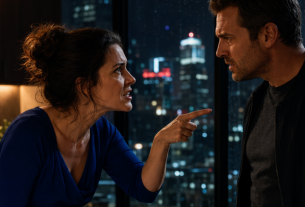
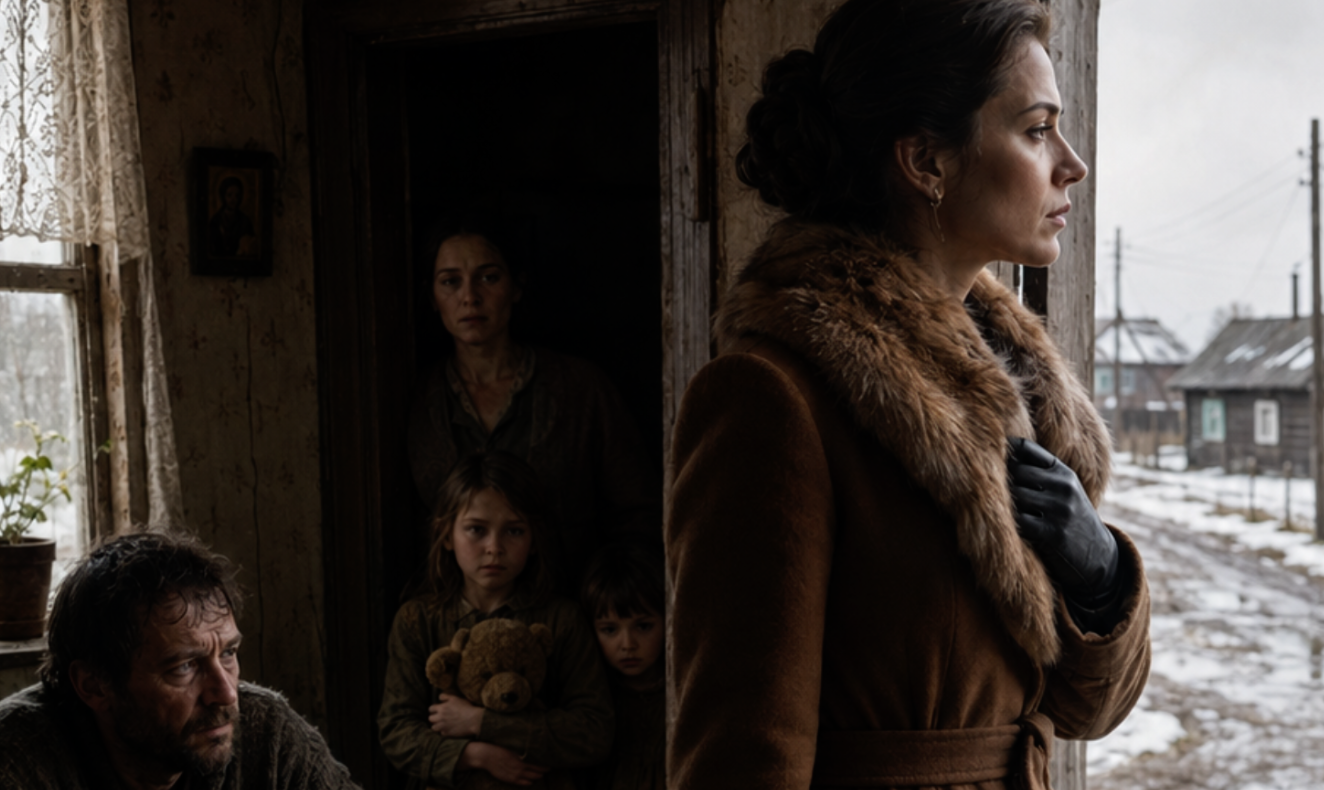
She did not sneak away in the middle of the night or carry someone else’s suitcase. She left in broad daylight, in front of the children. Standing in the middle of the kitchen in a new coat that still smelled of the store, she turned a set of car keys over in her hands and spoke to Ivan.
Her words were measured. Cold. As though she had rehearsed them in advance.
“Try to understand, Vanya. I can’t live like this anymore. I’m tired. I want to live, not merely survive. This place is a dead end. There’s no money and no future. The children? They’ll grow up and thank me for not staying. And you… You’re a good man, Vanya. You’re just poor. And nobody needs a good man who’s poor.”
Ivan sat at the table in silence. He stared at his hands—large, calloused hands, with black grease permanently embedded in the cracks of his skin.
The hands of a machine operator.
Except he was no longer a machine operator. The state farm had collapsed a year earlier, the machinery had been sold off, and he had been laid off. Since then, he had survived on odd jobs: chopping firewood here, repairing a fence there, patching someone’s roof.
The money he earned was barely enough to mention.
“And where are you going?” he asked.
“To Vadim.”
“What Vadim?”
“Vadim Sergeyevich. He owns a business in the district center. A construction company. He’s a serious man. A man with a future.”
“The one building those three houses on the hill?”
“That’s him. We’ve been together for six months already… Anyway, I’m going to live with him. He loves me. He rented an apartment for me and gave me a car. See?”
She raised her hand. The keys with the shiny emblem glittered in her palm.
Ivan nodded.
“Are you taking the children with you?”
Svetlana looked away. She adjusted the collar of her coat and sighed.
“Do you have any idea how well the children will live with me? Vadim’s house has everything anyone could want. But for now… Vanya, you have to understand, it’s too soon. Vadim said they should stay with their father for the time being. Once we’re settled, I’ll take them immediately. Give us six months. Just six months.”
Ivan nodded again.
“I see.”
He said nothing more.
He watched his wife put the keys into her new leather handbag, so different from the worn imitation-leather one she had carried before. He watched her fix her hair in the mirror and walk out the door without looking back.
Outside, a car door slammed. The engine roared and then faded into the distance.
Silence settled over the kitchen.
The children came out of the other room.
Kolya, a lanky thirteen-year-old, stood in the doorway without speaking, biting his lip. Nine-year-old Anya, thin and dressed in an old dress, clutched a stuffed rabbit to her chest. Five-year-old Pavlik did not understand what had happened. He simply stood there, blinking.
“Dad, where did Mom go?” he asked.
Ivan stood and walked to the window. He looked down the road. Ripples were still spreading across a puddle where the car had driven through it.
“Mom went away,” he said. “She had some things to take care of.”
“Will she come back?”
Ivan was silent for a moment. Then he turned toward the children. His eyes were dry.
“I don’t know, Pasha. We’ll have to wait and see. For now, let’s have dinner. What do we have left? Is there any potato?”
There was some potato left.
But not enough for everyone.
The first winter was the worst.
They had no money at all. Their savings—five hundred rubles and a handful of coins kept in an old tea tin—were gone within the first week.
Ivan sold the television. He sold the carpet from the wall. He sold his father’s old tools: wrenches, a hand plane, a drill. Everything that could be sold was exchanged for food.
The house was freezing. They lit the stove only once a day because they were running out of firewood.
Ivan went into the forest with an axe and an old saw. He cut down dead trees and carried the wood home on his back. The children stayed inside, wrapped in three blankets, waiting for their father to return.
One day he came home empty-handed. He had become stuck in the snow, fallen, and twisted his ankle.
He sat on the doorstep, covered his face with his hands, and cried.
It was the first time he had cried since Svetlana left.
He cried silently so the children would not hear him.
But Anya heard.
She came up behind him, wrapped her arms around his neck, and whispered:
“Dad, don’t cry. You’re strong. You told us you were.”
He wiped his face with his sleeve. He looked at his daughter and suddenly began to laugh through his tears.
“I am strong, Anya. I just remembered something. Go inside. I’ll be there in a minute.”
That winter, they discovered what real hunger felt like.
The potatoes ran out in January. The grain was gone by February. In March, they ate bread soaked in boiling water and sprinkled with salt.
Pavlik kept asking, “Dad, when are we going to eat properly again?”
Ivan always answered, “Soon, son. Soon.”
But “soon” never came.
Their salvation was Aunt Toma, an elderly neighbor who lived two houses away. She brought them jars of pickled vegetables, dried mushrooms, and occasionally a piece of pork fat.
Ivan tried to refuse, but Aunt Toma only scolded him.
“You fool! You have three children! What good is pride now? Take it while someone is offering!”
So he took the food.
And he remembered every jar, every piece, and every kind word.
One day, he promised himself, he would repay her a hundredfold.
In the spring, he found work at a sawmill.
The work was exhausting, dirty, and poorly paid. But it was money. Not much, but real money.
That first summer, they began to eat properly again. They grew their own potatoes in the garden, along with cucumbers and squash. They gathered berries in the forest.
The children became cheerful again. Pavlik stopped asking when there would be food.
But Ivan kept thinking.
He thought constantly about what would happen next. The sawmill was not a solution. He could not raise three children on those wages.
He needed a breakthrough.
Something of his own.
Something real.
One evening in August, when the nights had already begun to grow cold, he sat on the porch looking at the empty, overgrown pasture behind the house.
And suddenly, he understood.
“Geese,” he said aloud.
“What?” Anya looked up from her book.
“Geese, sweetheart. We’ll raise geese. And ducks. And rabbits. And chickens. We’ll buy a goat. Then, later, a cow.”
“Dad, are you serious?”
“I’ve never been more serious.”
The following morning, he went to see the head of the village council.
He talked for a long time and asked for an abandoned plot of land outside the village. A collective poultry farm had once stood there, but now there was nothing left except ruins.
The council head scratched the back of his head and hesitated, but eventually leased Ivan the land for a symbolic sum.
It was standing empty anyway.
“Take it, Ivan Petrovich. But what good will it do you?”
It did him plenty of good.
Ivan bought his first gander from a neighboring farmer with the last of his money. The bird was old and slightly crooked, but fertile. Out of pity, the farmer gave him three female geese as well.
That was how the farm began.
The first year was difficult.
The geese died. There was not enough feed. The enclosure kept falling apart.
Ivan repaired the fences himself. He built the barn himself. He carried the sacks of animal feed himself.
The children helped however they could. After school, Kolya went straight to the farm to clean, feed the animals, and remove the waste. Anya looked after little Pavlik. Pavlik ran around with the geese as though they were dogs, and the geese adored him.
During the second year, the farm began to make money.
Ivan sold twenty goslings. He bought more geese, then ducks, ten rabbits, and two goats.
There was milk, sour cream, cottage cheese, and eggs.
Everything was put to use.
In the third year, Ivan took out a small loan, using the house—the only thing he had left—as collateral.
He bought a cow.
She was a pedigree black-and-white cow, and they named her Zorka. She produced twenty liters of milk a day.
The neighbors were astonished.
Where had Ivan managed to get a cow like that?
Ivan said nothing.
He simply worked.
In the fourth year, he bought a second cow and a tractor. It was an old Soviet tractor, but it still ran.
Now Ivan could mow, transport loads, and plow the fields himself.
People began driving out from the district center to buy milk, cottage cheese, and meat. He acquired regular customers.
A shop in a neighboring village agreed to sell his products on a trial basis.
Later, the arrangement became permanent.
By the fifth year, Ivan owned thirty geese, fifty ducks, twenty rabbits, three cows, and five goats.
He hired two workers—men like the person he had once been: unemployed, desperate, and without hope.
He gave them work.
He gave them hope.
The house was transformed.
They no longer lit the stove once a day. They could heat it whenever they wanted.
There was always meat, milk, eggs, and fresh bread on the table.
The children had grown.
Kolya finished school and helped his father on the farm. Anya enrolled in a teacher-training program. Pavlik entered the fifth grade, and his teacher said he was a very capable boy.
Ivan almost never thought about his wife.
Almost.
Sometimes, in the evening, when the work was finished and he sat on the porch looking over his land, memories returned without warning.
The new coat.
The keys with the shiny emblem.
Her eyes turning away from him.
“You’re a good man, Vanya. You’re just poor.”
He pushed the memories aside.
What was the point?
His life had improved. The children were well fed. They had a roof over their heads.
What more did he need?
But life, as always, decided to remind him.
It happened at the beginning of November, exactly five years after Svetlana had left.
Ivan was working on the tractor in the yard. Something was knocking inside the engine, and he needed to find the cause.
Kolya was at the farm. Anya was in the city taking her exams. Pavlik sat on the porch reading a book about dinosaurs.
A woman approached the gate.
At first, Ivan did not recognize her. He assumed she was a customer. People often came to buy milk.
He straightened up, wiped his hands on a rag, and walked toward the gate.
Then he froze.
It was Svetlana.
But she was not the same Svetlana who had driven away five years earlier.
That woman had worn a new coat and carried a set of gleaming keys. Her face had been well cared for, her eyes narrowed with quiet mockery.
This woman was different.
She wore an old coat that did not fit her, as though it had been borrowed from someone else. Her hair was unstyled and tied into a careless ponytail. Her face had become thin, with deep lines around her mouth. Her eyes were tired and lifeless.
She carried a worn handbag.
“Hello, Vanya,” she said quietly.
He said nothing.
“May I come in?” She nodded toward the gate.
He stepped aside.
She entered and stopped in the middle of the yard.
She looked around.
She saw the new barn. She saw the enclosure with the cows. She saw the tractor. She saw the walls of the house, newly covered and freshly painted.
Then she saw Pavlik sitting on the porch—a grown boy staring at her without recognition.
“My God,” she whispered. “How did you…”
“I worked,” Ivan said curtly.
Inside the house, Svetlana sat on a stool and placed her bag on the floor.
She looked around the kitchen.
It was clean and warm, with curtains on the windows, flowers on the sill, and the smell of fresh bread in the air.
“Did you do all this by yourself?”
“Not by myself. The children helped me.”
“And I…” She hesitated. “Vadim went bankrupt. Two years ago. His construction company collapsed. There were debts. They took the apartment. They took the car. They took everything. He left for somewhere. Saint Petersburg, I think. Or Moscow. I don’t know. He simply abandoned me. He said I had served my purpose, and then he left.”
She fell silent and stared at the floor.
“I lived with strangers. I worked every job I could find. I was a saleswoman, a cleaner, a dishwasher. Everything I managed to save went toward renting a corner in someone else’s home. And when I had nowhere left to go, I remembered… you. And the children. So I decided to come here. I walked, took rides, traveled however I could. I thought perhaps you might at least let me sit on the doorstep.”
Ivan remained silent.
He was silent for so long that Svetlana finally raised her eyes, trying to determine whether he was about to throw her out.
“Pavlik,” Ivan said without turning around. “Go to Aunt Toma’s house. Tell her your father asked for a jar of sour cream and some cottage cheese. And a piece of pork fat, if she has any.”
Pavlik ran off.
The kitchen became quiet.
“I’m not asking you to forgive me,” Svetlana said. “What I did can’t be forgiven. I just… You know, Vanya, I thought it had only been five years. Just five years. But they felt like five separate lifetimes. My life ended. Yours was only beginning. I looked at your farm and saw that you accomplished something the two of us could never have achieved together. Perhaps it was good that I left. Perhaps it was meant to happen.”
Ivan gave a bitter smile.
“Perhaps it was. But I’m no philosopher. I’m a working man. I have a farm and children. I don’t have time to philosophize.”
Svetlana lowered her head. Her fingers twisted the handle of her bag back and forth.
“I understand,” she said. “You’re telling me to leave.”
“I’m not telling you to leave. I’m saying you should have thought about all of this earlier. When the children were hungry. When Pavlik asked why his mother had gone away. When Anya cried at night and I didn’t know what to tell her. Do you think it was easy? Do you think it was simple to explain to the children that their mother had traded them for a foreign car and an apartment?”
“Vanya…”
“Wait.” He raised a hand. “I’m not finished. You’re asking whether I’ll take you back. I’m asking what they need you for now. Kolya has grown up. He’s a man. He works on the farm from morning until night, and I’m proud of him. Anya is studying in the city to become a teacher. Pavlik reads books, and his teacher says he’s talented. They grew up without you. Do you understand? Without you.”
Svetlana said nothing.
Tears ran down her cheeks, slowly and continuously. She did not wipe them away.
She sat and cried silently, just as Ivan had once cried on the doorstep so the children would not hear him.
“I’m not trying to justify myself,” she finally said. “I know I’m guilty. Guilty of everything. But I am their mother. A bad mother, perhaps, but still their mother. And if you throw me out now, I’ll leave. I’ll never come back again. Just let me see them once. Just once.”
Ivan stood and walked to the window.
Outside, the gray November sky hung low, almost touching the roof. A cow lowed in the yard. Somewhere in the distance, a dog barked.
“Kolya is at the farm,” Ivan said without turning around. “Go and speak to him. If he accepts you, we’ll decide what to do next. If he doesn’t, you’ll have to respect his decision.”
Svetlana stood.
“Thank you,” she whispered. “Thank you, Vanya.”
She went outside.
Ivan remained by the window.
He watched her cross the yard, walking awkwardly and stumbling almost every few steps. He watched her stop at the entrance to the barn and stand there, unable to gather the courage to open the door.
Then she took a deep breath and went inside.
Ivan stood there thinking about how strange life was.
You believed that the pain had passed. That the wound had healed over. That you had forgotten.
But the pain was still there. Close beside you.
And now, looking at the woman who had once been his wife but had become a stranger with a worn handbag and lifeless eyes, he felt no satisfaction.
He felt no triumph.
He felt only exhaustion.
And something else.
Something that resembled pity.
Kolya was crouching beside one of the cows when the barn door creaked.
He did not turn around. He assumed it was his father.
“Dad, I gave Zorka her hay. I gave some to Zvezdochka too. I think Zvezdochka might be developing mastitis. We should probably call the vet. And also…”
He turned around and stopped speaking.
His mother was standing before him.
Kolya rose slowly and wiped his hands on his work clothes.
He looked at her carefully.
He was eighteen now, no longer a boy. He was tall and broad-shouldered, with his father’s hands and his father’s narrowed gaze.
“Mom?”
“Kolya.” Her voice trembled. “My little Kolya…”
She rushed toward him, wrapped her arms around him, and pressed herself against his rough work clothes, which smelled of hay and milk.
She began to cry.
He stood still.
His arms hung at his sides.
He did not embrace her, but he did not push her away either.
He simply stood there, staring over her head at the stalls, the cows, and the bundles of hay.
“Are you staying long?” he asked hoarsely.
“I don’t know,” she whispered. “I don’t know, Kolya. They’ll probably throw me out. But I wanted to see you. And Anya. And Pavlik. I thought about all of you every night. Every single night, Kolya. Do you believe me?”
He remained silent for a moment.
Then, carefully and awkwardly, he placed one hand on her back.
“I don’t know, Mom. I’m not enough of a boy to believe you anymore, but I’m not enough of a man not to. It’s just… Pavlik doesn’t remember you. He was too young. But Anya remembers. She cried. She cried often after you left. Then she stopped. She used to dream about you. She said that in her dreams, Mom always came back. Then eventually, she stopped dreaming about you too.”
Svetlana stepped away and looked into her son’s face.
There she saw what she had not wanted to see.
He had grown up.
Without her.
He had become a man.
Without her.
He had learned to work, think, and make decisions.
Without her.
And that was the most terrifying thing of all.
Not that he might throw her out, but that he no longer needed her.
“I should go,” she said. “I don’t want to interfere with your lives.”
“Wait.” Kolya took her hand. “Have you eaten anything?”
She shook her head.
“Come to the house,” he said. “Father has probably already set the table. That’s the kind of man he is. He grumbles, but the table is always ready.”
They walked together across the yard.
Past the tractor.
Past the geese, which began honking when they saw the stranger.
Past everything that had grown there during the previous five years.
Everything that had grown without her.
That evening, the lights were burning inside the house.
The five of them sat around the table.
Ivan sat at the head. Kolya sat opposite him. Pavlik sat beside his father, still glancing in surprise at the unfamiliar woman who called herself his mother.
Anya had returned from the city. Kolya had telephoned her and explained what had happened, and she had abandoned her classes to come home.
Svetlana sat at the very edge of the table, quiet and stunned, unable to believe her good fortune.
They ate dinner.
Potatoes with meat. Pickled cucumbers. Milk. Cottage cheese with sour cream. Bread Ivan had baked that morning—delicious sourdough bread with a crisp crust.
Svetlana ate while tears fell into her plate.
She tried not to cry, but she could not stop.
Anya sat opposite her and watched her mother from beneath lowered brows, the way Ivan had once watched her.
There was neither anger nor happiness in Anya’s eyes.
There was something closer to curiosity, as though she were studying an exhibit in a museum.
So this was her mother.
The woman who had left.
The woman who had never returned.
And now she had returned.
“Where are you going to live?” Anya asked.
The question sounded simple, but everything was contained within it.
Svetlana raised her eyes and looked at Ivan.
“I don’t know,” she said. “I have nowhere to go.”
“Aunt Toma has a spare room,” Pavlik suddenly said. “She’s old, and she gets lonely living by herself.”
Ivan smiled and shook his head as he looked at his youngest son.
“You’re quite the diplomat, Pasha. But Aunt Toma will decide for herself whom she allows into her home.”
“I’ll talk to her,” Kolya said.
Svetlana looked at her eldest son and smiled for the first time that evening.
It was a timid, uncertain smile, like the smile of a child who was afraid that a gift might be taken away.
“Thank you,” she whispered.
After dinner, Ivan went outside and sat on the porch steps.
He wrapped himself in his quilted work jacket. The November wind chilled him to the bone.
The door creaked.
Svetlana sat down beside him, carefully keeping some distance between them, afraid to move any closer.
“Thank you,” she said. “For dinner. And for not throwing me out.”
“I didn’t do it for you,” he said. “I did it for the children. Children should know their mother, even one like you.”
“I know. I understand everything. I’m not asking you to forgive me. I’m not asking you to take me back. I just… I’ll leave whenever you tell me to. I’ll find work somewhere. Perhaps I’ll go to the district center and work as a hospital orderly. Or at the factory.”
“There is no factory there anymore. It closed.”
“Then I’ll go somewhere else. I’ll survive, Vanya. I’ve learned how.”
He was silent for a moment and looked up at the sky.
A break appeared in the clouds, revealing a single star. Only one, but it shone brightly.
“Stay with Aunt Toma for now,” he said. “Kolya will arrange it. Then we’ll see. I can find work for you here. You can make cheese. I’ve wanted to start producing cheese for a long time—goat cheese and cow’s-milk cheese. They say there’s good money in it. You can help, if you’d like. I’ll pay you a salary. It won’t be large, but it will be honest.”
She said nothing.
Then she gave a quiet sob.
“Are you really doing this? After everything that happened?”
“I’m not doing it for you,” he repeated. “I’m doing it for the farm.”
But something trembled in his voice.
Only slightly.
It was almost impossible to notice.
But Svetlana heard it.
“I’ll work hard,” she said. “I swear I will. I’ll work so hard, Vanya. You’ll see.”
“All right,” he said. “Go inside. It’s cold.”
She stood and remained there for another moment.
Then she bent down, kissed the top of his head quickly, almost fearfully, and went inside.
Ivan remained on the porch, looking at the stars and thinking.
Five years had passed.
His former life had ended on the day the car door slammed shut behind his wife.
Then a new life had begun.
It had been difficult. It had been hungry.
But it belonged to him.
Only to him, and to no one else.
Now his old life had returned.
It had knocked on his door and asked to be allowed back inside.
And he had not found the strength to send it away.
Perhaps it was because he was tired.
Perhaps it was because children deserved to know their mother.
Or perhaps—who could say?—life sometimes offered people a second chance.
Not because they deserved it.
Simply because that was what life sometimes did.
Ivan stood, brushed off his quilted jacket, and went inside.
Tomorrow, the cows would need to be milked.
The cheese-making operation would need to be established.
And life would have to continue.