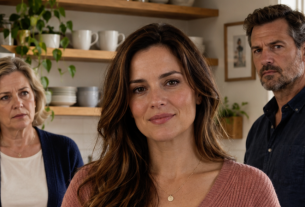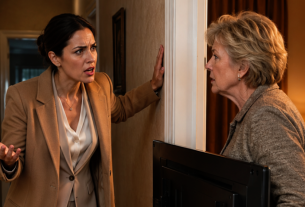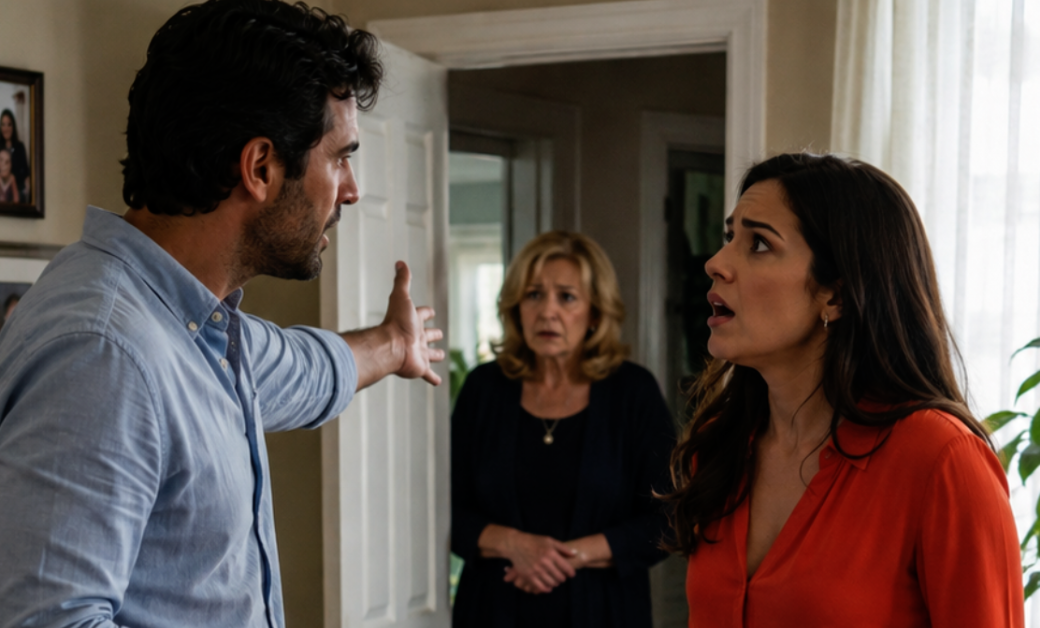
Two months ago, Artyom got down on one knee in the middle of the courtyard, gravel crunching beneath his feet, and Vika said “yes” before he had even finished the sentence. A week later, he arrived with a suitcase, set it down in the hallway, and looked around the two-room apartment as though he had just inherited it. The apartment belonged to Vika’s father—he had moved north long ago and left his daughter the keys with the words, “Live there. You’re going to be together anyway.” Vika had written her father three pages of thanks afterward, while Artyom simply walked from room to room repeating, “Isn’t this great? Just great.”
Then came the lists, phone calls, and endless arrangements. They couldn’t afford a restaurant, so they booked a café for forty people, and even that felt like a victory. Vika’s mother, Svetlana, arranged the cake and flowers herself. Everything was going smoothly until they discovered that almost all of Artyom’s relatives were coming—with two transfers, children, bags, and gifts.
“They’re coming, so they’re coming,” Vika said. “They’re family, after all. They’re not animals.”
She didn’t yet know that there would be exactly as many “animals” in this story as necessary.
Artyom’s mother, Larisa Petrovna, came over on Thursday. Without even taking off her coat, she walked into the room and began measuring the floor with her steps, silently moving her lips.
“We’ll put two people here,” she finally said. “The sofa folds out, right? It does. Three can fit in the other room if we arrange things properly. And one more can sleep by the entrance, on the floor. He won’t care.”
“By the entrance? You mean next to the doormat?” Vika asked. “Perfect. It says ‘Welcome.’ He’ll enjoy waking up there.”
“You’re always joking,” Larisa Petrovna waved her off.
That was when Artyom finally spoke. He stood in the doorway, counting on his fingers: Uncle Valera and his wife, Aunt Inna, his cousin with his wife and their boy, someone else, then someone else. He ran out of fingers, laughed, and started counting again.
“Why are you counting them?” Vika asked.
“Because,” Artyom said casually, as though discussing the weather, “my relatives are coming for the celebration, so you’ll need to leave the apartment while they’re here. You can stay with Svetlana Igorevna. It’s only twenty minutes away. I’ll stay here because they’re my guests and I have to welcome them.”
The silence that followed was brief. Vika had just enough time to feel the tip of her tongue turn cold.
“So the bride moves out and the guests move in,” she said. “Original. Usually it’s the guests who stay in a hotel while the bride stays at home. But apparently we’re having an experimental wedding.”
“Vik, don’t start.”
“I’m not starting anything. I’m translating what you just said into plain Russian. You just suggested that I move out of my father’s apartment so people I’ve never even seen can sleep in my bed.”
“He’s right,” Larisa Petrovna cut in. “A hotel is a waste of money. In our family, this is how it’s done: people arrive, and you find room for them. It’s called hospitality.”
“Hospitality is when the hostess sets the table,” Vika replied. “When you throw the hostess out the door, that’s called a raid. Just one with cheerful faces and bed linen.”
The conversation ended without resolution. Larisa Petrovna left with pursed lips, while Artyom spent the entire evening pacing around and telling Vika she was exaggerating. There was one week left before the wedding. Her dress was already waiting at the bridal salon—a rented one, beautiful, with long sleeves. She was supposed to pick it up the day before the ceremony.
The next day, Vika brought the subject up herself. Calmly, without any buildup.
“Artyom. Where are your guests going to sleep?”
“Mom will arrange everything,” he said, smiling so broadly that it almost sounded believable. “That’s it, forget about it. Vik, I’m on cloud nine, and you’re turning this into an interrogation.”
“I’m not interrogating you. I want to hear either the word ‘hotel’ or the word ‘apartment.’ Pick one. Like a lottery.”
“What apartment? Come on. Mom will arrange everything, I told you.”
“All right,” Vika nodded. “Then she’ll arrange it. But if it suddenly turns out that ‘arrange it’ means folding beds in our bedroom, I’ll arrange something too. And you’ll like my version much less.”
“Do you even know how to just be happy?” he laughed.
“I do. But my happiness comes with fact-checking.”
The evening turned out warm and pleasant. He put on music, and they danced in the narrow hallway. He kissed her temple and whispered that he was the luckiest man in the world. Vika believed him. Believing him was easy—he spoke smoothly and confidently, with the certainty of someone accustomed to never being contradicted.
The next morning was peaceful. But toward evening, the doorbell rang.
Larisa Petrovna entered carrying a stack of bed linen. Pillowcases, sheets—everything ironed and tied with ribbon like a gift.
“What’s that for?” Vika asked.
“What do you mean, what for? For the guests. Three will sleep in the guest room—I’ve already worked it out. And two in your bedroom—Uncle Valera and Nina. They can’t sleep on the floor because of their backs.”
Vika placed the stack carefully on the windowsill with both hands.
“No,” she said.
“What do you mean, ‘no’?”
“No. You heard the first ‘no’ on Thursday. This is the second one. The third will be louder. There will be no Uncle Valera, no bad back, and no Nina in my bedroom.”
“Oh, stop worrying!” Larisa Petrovna’s voice rose, becoming sharp and hurried. “It’s only a week! One week, and you’ll get your bed back. Nobody’s going to carry it away! What’s wrong with people these days, making such a fuss over a bedsheet!”
“I’m not making a fuss over a bedsheet. I’m making a fuss over my own name on the doormat,” Vika said. “And there’s something else that amazes me: you’re assigning people rooms in an apartment where you were invited in for a glass of compote. That’s like visiting someone and immediately starting to rearrange their doors.”
“You’re going to lecture me about doors now?!”
“I’m hitting you with facts. You’re the one hearing doors. Apparently the facts landed.”
The lock clicked in the hallway. Artyom.
Vika turned toward him immediately.
“You said your mother would arrange everything. I told you ‘no’ three times. Why am I finding out about the sleeping arrangements from her, with sheets in her hands, instead of from you?”
“Right, I’m not getting involved in this,” Larisa Petrovna quickly said as she put on her coat. “Sort it out yourselves. I’m not your nanny.”
The door slammed shut. Artyom raised his hands like a man surrendering in advance.
“Vik, everything’s fine. Nobody is going to stay here, okay? Mom is just being overly cautious. That’s how she is.”
“She has a wonderful personality. Yours is the mysterious one. You somehow manage to tell two different people two different versions of ‘yes’ while looking both of them straight in the eye.”
“You’re accusing me of lying over nothing!”
“It’s not nothing,” Vika said. “It’s already been made up with sheets. There’s a stack on the windowsill. Take a look.”
The day before the wedding, Vika picked up her dress. She carried it in her arms like a child, holding the train inside its garment bag and climbing the stairs slowly so she wouldn’t wrinkle it. At the door, she transferred the keys to her teeth, turned the lock, and stepped inside.
The apartment was full of noise.
The hallway was piled with bags. Someone was laughing in the living room. Someone else was moving furniture. A child’s voice squealed somewhere deeper inside the apartment.
A large woman wearing a robe emerged from the bedroom—Aunt Inna—and threw up her hands.
“There she is! The bride! Tyoma, the bride’s here! Let me look at you, beautiful! Come here, let me hug you!”
“Hello,” Vika said evenly, still holding the dress.
“We’ve already settled in, but don’t worry, we’re tidy,” Inna rattled on. “Valera’s in your room because of his back, and the rest of us are all together here. It’s fun—family!”
Artyom appeared from the bedroom.
He saw Vika, and his expression collapsed.
“What are you doing here?” he blurted.
The question hung in the air, and everything was contained in it: the sheets on the windowsill, “Mom will arrange everything,” the dancing in the hallway, the kiss on her temple.
“Me?” Vika repeated. “I live here. Legally, even.”
“I told you to move out temporarily! We agreed!” His voice shot upward, sharp and erratic. “I told you yesterday, and you nodded!”
“I nodded when you told me nobody would be staying here. A nod isn’t a signature, Artyom. Especially not under someone else’s words.”
She placed the dress bag very carefully on the dresser and turned toward the room. Eight pairs of eyes were watching her with friendly curiosity.
“Dear guests,” Vika said loudly enough for her voice to carry into the stairwell. “Please gather your belongings and leave this apartment. There will be no wedding.”
For one second, there was silence.
Then everyone began speaking at once.
“What do you mean, no wedding?”
“Tyoma, what’s going on?”
“Sweetheart, you’re just nervous. It happens before weddings…”
“I’m not nervous. I’m informed,” Vika said. “In ninety seconds, you’ll understand the difference. A week ago, your Artyom announced that I had to move out of my own apartment because his relatives were coming. So you wouldn’t have to spend money on a hotel.”
“Vik, shut up!” Artyom roared.
“I warned you: the third ‘no’ would be louder. Moving on. His mother came here with a measuring tape in her eyes and assigned all of you to different rooms, including my bedroom and the doormat by the entrance. Nobody asked me. Apparently, they decided the girl would swallow it without choking.”
Inna slowly lowered herself into a chair.
“Tyoma… You told us the bride herself had offered to stay with her mother. You said she’d be happy for us to stay here.”
“He’s talented,” Vika nodded. “He looked me in the eye and told me you’d all be staying somewhere else. He looked you in the eye and told you I was delighted. Two sides, two versions of the truth, and a folding bed in the middle.”
“It’s temporary!” Artyom began pacing the room, his hands twitching. “It’s only a week! Do you understand how much a hotel for eight people costs?! Have you even calculated it?!”
“I have. Do you know what costs more than a hotel? Your word. It costs nothing while you keep it, and loses all its value the moment you break it.”
“I did all of this for us!”
“You did it for yourself, and decided I would pay the price. That isn’t ‘for us.’ That’s ‘at your expense.’”
He stepped toward her, grabbed her shoulder, and began speaking quickly, stumbling over his words.
“You’re ruining everything right now, do you hear me?! Over bedsheets! Over some stupid little thing!”
Vika removed his hand and slapped him across the face. Not hard—just one short, sharp slap.
He fell silent.
People in the room began moving. Someone already had a phone to their ear and was saying, “Larisa, there’s trouble. Come over.” Artyom’s cousin silently zipped up his bag.
Inna stood, adjusted her robe, and said quietly:
“She’s right, sweetheart. We could have stayed at a hotel. We’re used to it. This is embarrassing.”
“And you, Tyoma, are an idiot,” someone added from the corner. “Trying to throw a woman like that out of her own home.”
“I didn’t throw anyone out!” Artyom shouted. “She did it herself!”
“Exactly,” Vika agreed. “This time, I’m doing it myself. Bags in the hallway. Don’t forget your shoes, or later someone will claim the bride stole your slippers.”
People left one after another. Some shook her hand. Others avoided her eyes. Ten minutes later, only Vika, the wedding dress on the dresser, and a faint ringing in her ears remained in the apartment.
Vika sat down on the floor beside the door.
She knew Artyom was standing on the other side and wasn’t leaving.
Then she heard footsteps outside—a second person, hurrying.
Larisa Petrovna’s voice:
“Tyoma, what happened here? Tyoma!”
Vika stood, looked at the ring on her finger, removed it, and held it in her palm for a moment, getting used to its weight.
Then she opened the door.
Artyom stood on the threshold. Behind him was his mother, disheveled and without her handbag, as though she had run out of her house during a fire.
“Vikochka,” Larisa Petrovna began, “why did you have to do that in front of the relatives? We’re not enemies. We just wanted to do things simply, like family…”
“Simply,” Vika repeated. Her voice trembled, but she continued. “Tell me honestly: would you tolerate it if a stranger ordered you out of your own home? If someone told you he loved you in the evening and threw you out in the morning for the sake of his aunts and uncles? If your man looked you in the eye and lied as calmly as though he were reading a shopping list?”
Larisa Petrovna opened her mouth, but couldn’t find anything to say.
“You decided I would put up with it because I’m young and in love,” Vika continued. “You weren’t talking to me. You were arranging me, like a piece of furniture. Like the sofa. A sofa can be moved because it doesn’t have an opinion.”
“I didn’t think of it that way…” the woman said quietly.
“Exactly. You didn’t think. That’s the most hurtful part. It wasn’t even cruelty. You simply didn’t consider me a person.”
Artyom stepped forward and reached out to embrace her.
“Vik, enough. I understand now. I’ll fix everything…”
She stretched out her hand and stopped him at arm’s length.
“Don’t. I don’t believe what you say anymore. There’s a good old word for someone like you—a man whose words are empty. Someone whose promise lasts only until the next convenient opportunity comes along. That’s you, Artyom. And it isn’t an insult. It’s a description.”
“I love you!”
“I loved you too. Very much. More than I should have.”
She took his hand, opened his fingers, and placed the ring in his palm.
“I’m hurting right now. Really hurting. But I’ll survive this pain. Just without you.”
“Vika, wait…”
“The dress will go back to the salon. Svetlana Igorevna will cancel the café. Tell the guests that the bride is alive and well. She’s simply going to finally get a good night’s sleep in her own bedroom.”
She closed the door.
Quietly, without slamming it, and turned the key twice.
Two people remained on the landing.
Larisa Petrovna pressed a hand against her chest and thought that the girl had just held up a mirror in front of her—and she hadn’t liked the face she saw reflected in it. There was no point talking now. Vika was angry and upset. Maybe in the evening. Maybe in the morning. It seemed as though there was still time, and that thought made things feel slightly easier.
Artyom stood there, clutching the ring in his fist.
He couldn’t understand how it had happened.
Everything had been falling into place: the apartment, the fiancée who had once had a whole crowd of guys chasing after her at university, the wedding scheduled for the next day.
And now all he had was one ring in his hand, eight witnesses behind him, and a very long evening ahead.
He raised his hand toward the doorbell, then lowered it without pressing.
Inside the apartment, Vika removed the cover from her wedding dress, hung it on the wardrobe door, and stared at the white fabric for a long time.
Then she turned and walked into the bedroom, where her bed stood.
Her bed.
No bad backs. No folding cots. No strangers’ bed linen on the windowsill.