On Tuesday morning, a man I didn’t know called and asked whether I could open the apartment on Saturday for a second viewing. He gave me the street, the floor, and an approximate price. As I listened, I couldn’t understand who had arranged the first viewing. I had no intention of selling the apartment.
“Excuse me, who did you make the arrangements with?” I asked.
He named Lidia Petrovna. My mother-in-law.
He had been told that the apartment belonged to me, but that the family had supposedly already decided to sell it. All that remained was to settle the paperwork with me. I told him there had been no such decision and that I hadn’t listed the apartment. The realtor apologized and promised not to bring anyone else there without speaking to me first.
After the call, I sat with the phone in my hand for several minutes. My mother-in-law couldn’t sell the apartment without me anyway. What bothered me more was that they had gone to a realtor before coming to the owner.
The apartment everyone initially told me to leave alone
My grandmother died last winter. I inherited her one-bedroom apartment, a little over forty square meters. I completed the inheritance paperwork with a notary, registered my ownership, and left the place empty for several months. It was in a good neighborhood, with a school, a clinic, and a bus stop nearby. The renovations were modest, and some of the furniture had been my grandmother’s.
My husband, Andrey, and I lived in our own two-bedroom apartment and were paying off a mortgage. We still owed about 1.8 million rubles. Our son, Misha, was ten. He had the smaller bedroom, while we slept in the living room. We did hope to move somewhere bigger one day, but we had no urgent need to sell everything we could.
At first, Andrey said, “Don’t rush. Sort through her things, then decide.”
So I didn’t rush. On weekends, I went to the apartment, sorted through dishes, gave away things I didn’t need, and called a plumber to check the fixtures. Gradually, I decided it would be better to rent it out. I didn’t want to sell my grandmother’s home only a few months after inheriting it.
Lidia Petrovna initially stayed out of it too. Then she asked how much apartments like that were worth. I gave her a rough figure based on listings and immediately said I wasn’t considering a sale.
“I’m just curious,” she replied.
A week later, Andrey started showing me listings for three-bedroom apartments. His mother had sent them to him. This one was in a newer building; that one had a twelve-square-meter kitchen; another was seven minutes from the school.
“If we sold yours someday, we could pay off the mortgage and get a bigger place,” he said.
“Someday. Not now.”
He nodded. I thought that was the end of the conversation.
Apparently, it was only the end for me.
Over lunch, they had already allocated the money
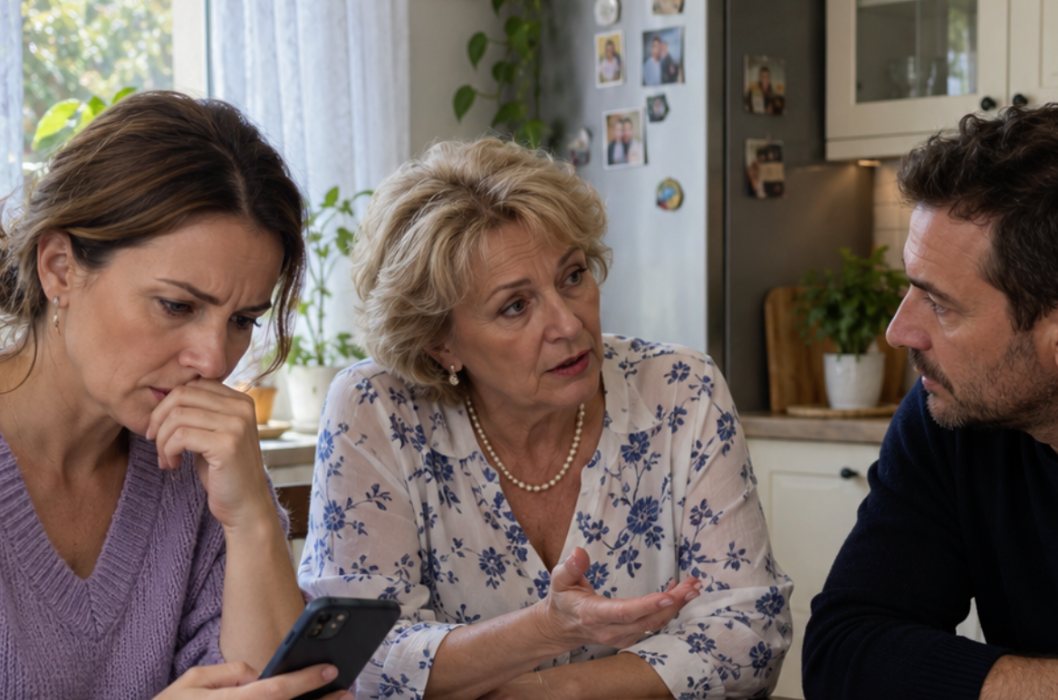
On Sunday, Lidia Petrovna came over for lunch. After we ate, she opened a listing for a three-bedroom apartment on her phone and set it in front of Andrey.
“This is a good option. If Oksana’s apartment sells for at least a little over six million, the numbers work out.”
I was loading plates into the dishwasher and said nothing at first. My mother-in-law opened her calculator, subtracted our remaining mortgage balance from the estimated sale price of my apartment, then worked out a possible down payment on the new place. She suggested setting aside part of what remained for Andrey to buy a car.
“Mom, let’s get through the apartment purchase before we think about a car,” he said. But he pulled the phone closer and began studying the figures.
I closed the dishwasher and sat down opposite them.
“Whose apartment are you selling right now?”
Lidia Petrovna looked at me as though I were making a fuss over a minor detail.
“No one is taking anything from you. We’re working out what’s best for the family.”
“What’s best for the family would start with asking the owner.”
Andrey asked me not to get worked up. His mother was only making a suggestion, he said, and the decision was still mine.
“Then why are you dividing up the proceeds from a decision I haven’t made?”
My mother-in-law put her phone away, but soon started again. The apartment was standing empty while the utility bills kept coming. Tenants could damage it. The money could go toward a proper three-bedroom home. I understood her arguments. Somehow, though, my words—“I’m not selling”—had no place among them.
Then she said, “You’re not going to sit on all that money yourself when you have a growing child.”
Andrey said nothing.
I didn’t continue the argument with our son nearby. Misha was in his room wearing headphones, but his door was partly open. I cleared the cups from the table and put them in the dishwasher.
That evening, Andrey explained again that his mother was only worried about us.
“Fine,” I said. “But your plan still doesn’t have a seller.”
The key to my apartment had already passed into other hands
A few days later, I stopped by the apartment after work. A real estate agency’s business card was lying on the windowsill. I knew I hadn’t brought it there.
Andrey didn’t admit what had happened right away. He still had a second set of keys from when we’d sorted through my grandmother’s things together. Lidia Petrovna had asked to borrow them for a day. A realtor she knew supposedly wanted to give the apartment an informal valuation. Andrey had decided there was no harm in it.
“You let a stranger into my apartment without asking me?” I said.
We were standing in the entryway at home. Andrey took off his jacket, hung it on a hook, and sighed.
“Mom was with him. He looked at its condition and size and gave her a price. That’s all.”
“And now the realtor is calling me about a second viewing.”
Andrey fell silent. A little later, he asked why I was so attached to the apartment if I had no plans to live there. He, too, had grown used to the idea that my inheritance would eventually become the down payment on a new home.
I understood why he liked the idea. A three-bedroom apartment would be more comfortable, and we both wanted to pay off the mortgage sooner. But wanting something and handing a realtor the keys are two different things.
I took back his set of keys. The next day, I had a locksmith change the lock cylinder because I didn’t know whether my mother-in-law had made a copy.
After that, I got serious about finding tenants.
I didn’t sign an agreement with the first people who came along
Through a colleague, I found a family who needed an apartment in our particular neighborhood: a married couple with a daughter in fifth grade. Their previous landlady was returning to the city, so they were looking for a place where they could stay for a while.
We met twice. They asked about utilities, the school, the neighbors, and the appliances. I showed them the apartment, the storage closet, and the meters, and explained which furniture would stay. Then I made an inventory and photographed the rooms before they moved in.
At first, I considered an eleven-month agreement. But the prospective tenants wanted stability because of their daughter’s school, and I didn’t want to start holding viewings again in a year. So I decided on a three-year term.
I showed the draft agreement to a lawyer. He corrected one important detail of the wording: between an apartment owner and the people who would live there, the proper legal term was a residential tenancy agreement, although everyone casually called it a rental agreement. He also explained that a tenancy lasting a year or more created an encumbrance on the property that had to be registered.
I asked separately what would happen if I ever decided to sell.
“You could sell it,” he explained. “But a change of ownership wouldn’t end the existing tenancy. The new owner would become the landlord under the terms of this agreement.”
That was exactly what I wanted. It wasn’t a clever way to ban a sale or take revenge on my relatives. It was a clear decision for the next three years: the apartment would remain mine, and the people I had chosen would live in it.
We set out the rent, utility payments, responsibility for minor repairs, and terms for ending the agreement early. On Thursday evening, we signed the three-year agreement and the handover document. The next day, we submitted the application to register the encumbrance. I gave the tenants the keys after a final inspection and a record of the meter readings.
I didn’t tell Andrey that evening. I wasn’t planning to hide the agreement for months. I just wanted to carry one decision about my own apartment through to completion before it became a family discussion again.
My mother-in-law had already arranged for buyers
On Saturday morning, Lidia Petrovna called me herself.
“Some people can come by at two. Will you be there?”
“What people?”
“Buyers. They like the neighborhood. You can start discussing the price.”
I reminded her that I had personally told the realtor the apartment wasn’t for sale. It turned out she had found another agent through an acquaintance and described the situation as though the owner was still undecided, while the rest of the family favored selling.
“Cancel the viewing,” I said.
Lidia Petrovna sighed heavily. Again she brought up our mortgage, a separate room for Misha, and a car for Andrey. Within a minute, the six million rubles she imagined getting from my apartment had paid off our loan, helped buy a three-bedroom place, and left us a cushion “to get started.”
“I’m bringing them anyway,” she said. “It would be awkward to cancel. At least hear their offer.”
“Don’t bring them. People already live there.”
She went quiet.
“Who lives there?”
“Tenants. They have a three-year agreement.”
“For how long?”
“Three years.”
Then Lidia Petrovna asked whether Andrey knew. I looked across the table at my husband. He was sitting opposite me and had heard my side of the conversation.
“He’s about to.”
When the call ended, Andrey pushed his cup away.
“Are you serious?”
I brought him the agreement and laid it in front of him.
He read the term, looked at the handover document, and then went back to the first page.
“You could at least have discussed it with me.”
“I did. I told you several times that I wasn’t selling.”
“I don’t mean the sale. I mean the three years.”
“Did you discuss giving the keys to the realtor with me?”
Andrey stood up, walked to the window, then came back. He was clearly angry, but that question was hard for him to argue with.
“Did you choose that term because of Mom?”
“I chose tenants who needed a long-term home, and I don’t want to find new people every year. Your mother helped me stop putting off the decision.”
He was about to answer when Lidia Petrovna called again. Andrey didn’t pick up. A minute later, a message appeared in the family chat: She’s doing all this out of spite.
I didn’t reply.
My mother-in-law still arrived as though she owned the place
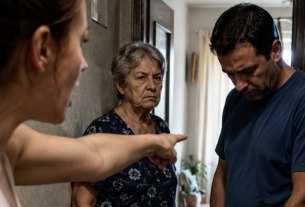
I thought they would cancel the viewing after that call. But at around two o’clock, my tenant phoned me. A woman was downstairs outside the building, claiming to be a relative of the owner and demanding to be let in through the intercom. I knew immediately who it was. I had to drive over.
There were no buyers with her. Apparently, the new realtor had worked out that the owner wasn’t selling and had canceled the viewing after all. Lidia Petrovna was standing outside the building alone.
“You’ve made everyone look foolish,” she said.
“I asked you this morning not to bring anyone.”
“You could have talked about it properly instead of secretly moving strangers in.”
“We did talk. I told you several times that the apartment wasn’t for sale.”
My mother-in-law demanded to see the agreement. I refused. Then she began explaining again that a proper wife didn’t make decisions like this on her own when the family had a mortgage and a child.
I wasn’t going to argue outside the building.
“I inherited this apartment. I’ve decided not to sell it. The tenants have every right to be here. Please don’t come back without an invitation.”
Just then, a neighbor came out of the building. Lidia Petrovna stepped toward the door, but I asked her to stop. This was someone else’s home now. I wasn’t going to drag the tenants into a family argument.
My mother-in-law turned around and walked to her car.
I went upstairs, apologized to the tenants, and asked them to call me if any of my relatives showed up unannounced again. They were calm about it. Their daughter was doing homework at the table by the window. Their shoes stood in the entryway, and towels hung on the drying rack. In just a few days, the apartment had stopped being empty.
Andrey was waiting in the kitchen when I got home. We had a long, unpleasant conversation. He still thought I should have told him about the three-year agreement beforehand. I reminded him that I had been the last to hear about the realtor’s visit.
There was no neat reconciliation. But the next day, Andrey went to his mother’s house himself and took back the old set of keys. They no longer opened the new lock, but that evening he placed them on the table in our entryway.
“That’s it,” he said. “No one goes there anymore.”
A month later, Lidia Petrovna cautiously asked whether the agreement could be ended if a “really good buyer” appeared. I told her I hadn’t sought tenants for three years only to ask them to move out a few weeks later.
After that, she hardly mentioned the apartment.
Recently, the tenants wrote to say that the old bathroom faucet had begun to leak. They asked if they could call a plumber, and I agreed to the replacement. That evening, Andrey offered to stop by and check the work.
“Write to them first,” I said. “No one turns up there without warning now.”
He nodded and sent a message.
Lidia Petrovna was sitting in our kitchen that evening. She heard the exchange, but she didn’t open any property listings or start counting money that wasn’t hers.