A scratch ran from the edge to the very center of the kitchen table. Fourteen years ago, Grigory made it while bringing in the washing machine. The table was new then, Zoya had bought it with her very first paycheck. She was upset; he waved it off: not a big deal, we’ll replace it. He never did. The table stayed. So did the scratch.
This morning felt typical: coffee brewing in a cezve, radio muttering about traffic on Leningradka. Zoya stood by the stove in a stretched-out shirt that read “Sochi 2019,” watching the foam rise. The kitchen smelled of roasted beans, warm stove metal, and something deeply homelike that doesn’t have a name.
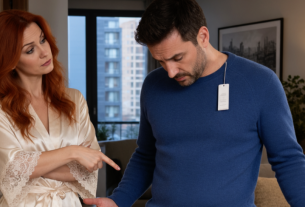
Grigory stepped out of the bathroom in a white shirt with slim cuffs. Not the plaid one she ironed every Sunday—a different, tailored shirt. He smelled different, too: sweet, with a whiff of flowers. Zoya sniffed the air and stopped stirring the coffee.
«Will you have breakfast?»
«No, running late.»
He didn’t look at her as he fastened his watch—the one she gave him for his fortieth. Big fingers, broad nails, fiddling with the clasp like always. Fourteen years, same morning sounds: a click, a rustle, the door closing.
Zoya sipped her coffee. Bitter, just as she drank it since the doctor’s orders about glucose. Outside, the sky was low, heavy, and gray. The radio promised rain.
They lived on the fourth floor of a nine-story brick building in Biryulevskaya: a two-room apartment, walk-through living room, combined bathroom, and a balcony full of jars with dried paint and a stepladder. Once, he meant to make an office out there. He never did. And now, she thought, he never will. Though she didn’t yet realize how literally true that would be.
She knew every corner. The second parquet plank by the door creaked, the bathroom tap dripped past midnight—drip, drip, drip, like a metronome. Behind the winter coats in the closet sat a blue folder with documents, unopened for eight years.
Grigory placed his glass in the sink, unwashed. A drop slipped down the side and paused halfway.
«I’ll be late today,» he called from the hallway.
Zoya nodded, though he couldn’t see. She went to the window and watched him walk out the main door. Quick, springy steps—the kind people take when they’re hurrying somewhere they’re wanted.
The coffee cooled. Zoya ran her finger along the scratch: rough, deep, edged with splinters. Familiar, like everything else here.
He said it Friday evening. Not in the morning, when you can hide in routine, but in the evening, with nowhere to escape.
Zoya was frying cutlets, kitchen heavy with onion and burning oil. The exhaust fan hummed so she barely heard his footsteps. Grigory stood in the kitchen doorway, shoulder on the frame. A tall man, he filled the space. Arms crossed.
«Zoya, we need to talk.»
She flipped a cutlet. Oil spattered her wrist, leaving a red mark. It hurt, but not much.
«Go on.»
«I’m leaving.»
The cutlet hissed. Zoya turned down the heat, laid the spatula on the pan’s edge, and finally faced him. Calm face. Only her right hand found the edge of her apron and squeezed it.
«For whom?»
He blinked. Expected «why»—got «for whom.» The thin scar above his right eyebrow went pale. She knew that sign; he said he got it in the army. She never checked.
«Her name is Lina. We’ve… it’s been a while.»
«How long?»
He shifted his weight. «Six months.»
Six months. Zoya mentally traced back—October. That’s when he started coming home late, stopped eating on Tuesdays, got a gym membership he only used three times—or maybe more.
«When are you leaving?»
«I’ll pack up over the weekend.»
She turned back to the stove and kept flipping cutlets—her hands moving on their own. A strange comfort as her mind faded.
«What about the apartment?» Her voice was steady—she surprised herself.
«We’ll figure it out,» he said lightly, like “we’re out of milk.” «We’ll sit, talk. I’m not a monster, Zoya.»
“Not a monster.” She would remember this phrase. A month later, his words would be very different—and she’d recall them.
She finished with the cutlets and served them up—four for him, three for herself. Silent dinner. The air between them grew so thick it felt almost tangible. She could have touched it, but her hand was busy with the fork.
He finished, got up, and left the plate in the sink.
«Thanks,» he said, like always, and went into the other room. TV, commentator’s shouts, whistles. The ordinary sounds of a perfectly ordinary evening. The last one.
Zoya did the dishes, wiped the table, lingered over the scratch, turned off the light, and sat in darkness. Her wrist stung. The TV mumbled through the wall. The street hummed outside. Everything seemed as usual, but inside, something had shifted for good.
Saturday morning, he packed his things—two suitcases and a sports bag. Zoya sat in the kitchen, coffee in hand, listening to cupboards, hangers, zippers— the sounds of someone extracting himself from a home.
He peeked in before leaving, jacket on, keys in hand. On the ring, her flat key hung next to his car key. Brass, with notches Zoya could recognize by touch. He didn’t remove it.
«I’ll leave the key for now, okay? Still some stuff to pick up.»
«Leave it.»
«You okay?»
«I’m fine.»
«If you need anything, call.»
«Alright.»
The door closed. Quiet in the hallway. The bathroom tap—drip, drip. Now for one.
Zoya finished her coffee, put away the mug, went to the mirror. Dark shoulder-length hair, thin wrists, shadows under her eyes. Thirty-eight, standing alone in the apartment her husband has just left—not crying. Because if she started, she wouldn’t know when to stop. And she still had students’ notebooks to check. And life to live.
She tucked a strand behind her ear. Familiar, automatic. Then she went to the closet.
Behind the winter jackets (his puffer coat, black, with a torn loop, still hung there) was the blue folder. Dust lay thick. Zoya blew it off, opened it.
A deed of gift. Date: March 14, 2012. The giver: Barinova Polina Stepanovna. Recipient: Barinova Zoya Andreevna. Property: An apartment at… their address.
The wedding was in June. The deed dated March. Three months before.
Zoya read it again. Letters blurred; she wiped her eyes. Not tears—tiredness. She’d spent all night listening to him toss and turn in the other room.
She closed the folder, put it back, pushed the coats forward, leaned her face against the closet door. Cool wood with the smell of mothballs her mother once sprinkled between shelves.
Mom. She had to call mom.
Polina Stepanovna picked up after the first ring. Always after the first—like she was waiting. Maybe she was. She was sixty-four, living alone in Tula, and her daughter’s calls were her morning coffee—without them, the day wouldn’t start.
«Mom.»
«What happened?»
She always knew. From the first word, the first pause. No magic—thirty-eight years of mothering.
«Grisha left. For someone else.»
Silence. The clink of a cup on the table. Polina drank mint tea in the evenings, sometimes the clink of her spoon was audible through the line.
«How long?»
«He told me yesterday. Took his things today.»
«And you?»
Zoya leaned against the wall in the hallway. Old wallpaper with small leaf-and-curl patterns. She traced them with her finger.
«I’m okay, Mom. Fine.»
«Zoya Andreevna, don’t lie to your mother.»
She smiled. Full name—jokes were over.
«I’m not okay, Mom. But that’s not it. He said about the apartment, ‘we’ll figure it out’. What does that mean?»
«Means he thinks the apartment’s shared.»
Polina spoke calmly, without anger or gloating. Just the facts.
«But it’s… not shared?»
«Zoya, did you forget?»
Then Zoya remembered—in flashes. March 2012, the notary’s office on Moskovsky Prospect. Tiny office, desk with leather folders, woman in glasses. Mom’s hand signing with a ballpoint. Leather and hair spray—Polina had come straight from the salon. Zoya wondered: why the hairdresser? “Important things should be done beautifully,” Mom answered.
«You gave it to me.»
«I did. Gift agreement. Officially notarized. Registered. All correct.»
«Before the wedding.»
«Three months before. I had my reasons, honey.»
Zoya slid down the wall to the floor. Linoleum was cold. The faucet dripped in the bathroom.
«Mom, did you know he’d leave?»
«No. I didn’t do it for him, I did it for you. Take care of what’s yours, Zoya. I’ve told you a hundred times.»
«You have.»
«Exactly.»
Polina sipped her tea. Zoya heard the swallow.
«The deed’s in the folder?»
«Found it.»
«Don’t lose it. And see a proper lawyer—not the neighbor.»
Zoya nodded. Remembered her mother couldn’t see.
«Okay.»
«And eat something. When was the last time you ate?»
«Morning.»
«Morning was just coffee. I know you. At least boil some eggs, can you do that?»
«I can.»
«Then do it.»
Polina hung up. She always ended first. Said what needed saying, then enough. No point torturing the wires.
Zoya sat on the floor a while. Then stood, went to the kitchen and set eggs to boil. The water bubbled, two eggs bobbing together—a small one and a large. Mother and daughter.
Monday at work, she taught literature to ninth graders. “A Hero of Our Time,” Pechorin and his inability to be happy. Zoya stood at the blackboard, chalk crumbling between her fingers, thirty-two teenagers gazing at her with that “when’s the bell” look.
«Why does Pechorin destroy everything he touches?»
Silence. Then a boy in the back, Dima Selivanov, always chewing pen caps, raised his hand.
«Because he’s bored?»
“That’s part of it. What else?”
A girl in the second row, Nastya—the straight-A student with the braid—said quietly:
“He doesn’t know how to appreciate what he has. He thinks real life is somewhere else.”
Zoya looked at her. Fifteen years old, yet more precise than many adults.
“Exactly. Pechorin runs from what he has, chasing what he doesn’t. And ends up with nothing.”
The chalk broke. Zoya grabbed a new piece and wrote on the board: ‘Fear of standing still.’ The letters came out crooked. The bell rang. The class clattered with chairs and spilled into the hallway, but Zoya stood and stared at those two words until she wiped them away….Continued a bit lower, in the first comment under this post…
A long scratch ran across the kitchen table from the edge right to the middle. Fourteen years ago, Grigory had scraped it with the corner of a washing machine as they moved the appliance into their apartment. Zoya was upset back then—the table was brand new, bought with her very first paycheck. But he just brushed it off: it’s nothing, we’ll get a new one.
They never did. The table stayed. So did the scratch.
The morning went on like usual: coffee brewing in the cezve, the radio on the windowsill mumbling about traffic jams on Leningradka. Zoya stood by the stove in a stretched-out t-shirt that said ‘Sochi 2019,’ watching the foam rise. The foam crept up slowly, lazily bubbling around the edges, and the air was filled with the scents of roasted coffee beans, a warm stove, and something so homely and familiar it’s impossible to name.
Grigory came out of the bathroom wearing a white shirt with narrow cuffs. Not the plaid one she always ironed on Sundays, but another—slimmer, unfamiliar. And he smelled different. A sweetish scent, with a floral note. Zoya breathed in and stopped stirring the coffee.
‘Are you having breakfast?’
‘No, I’m running late.’
He didn’t look at her. He was buckling the watch she’d given him for his fortieth birthday. His fingers were big, his nails wide, and the strap always fought back the first try. She knew this little struggle by heart. Fourteen years of the same morning sounds: the click of the clasp, the rustle of his jacket, the thud of the door.
Zoya took a sip of her coffee. Bitter, plain—just how she’d gotten used to since the doctor told her to watch her glucose. Outside, the sky was gray, heavy and low. The radio promised rain in the region.
They lived on the fourth floor of a nine-story brick building on Biryulevskaya. A two-room apartment with a walk-through living room, a combined bathroom, and a balcony cluttered with paint cans and a step ladder. He once planned to turn it into a study. He never did. And he never will, Zoya thought—even if she didn’t yet realize then how literal that would turn out to be.
She knew every corner of this apartment by feel. The second floorboard by the door creaks when you step on it. The bathroom faucet drips after midnight: drip, drip, drip, like a metronome. In the closet, behind the winter coats, there’s a blue folder with documents she hadn’t opened for eight years.
Grigory set his glass in the sink. Didn’t wash it. A droplet slid down the side and stopped halfway.
‘I’ll be home late,’ he called from the hallway.
Zoya nodded, even though he couldn’t see her anymore. She walked to the window and watched as he left the entrance. His stride was quick, springy. The way people walk when they’re hurrying to where someone’s waiting for them.
The coffee cooled. Zoya traced her finger along the scratch. Rough, deep, with jagged edges. Familiar, like everything else in this apartment.
He told her on Friday evening. Not in the morning, when you can hide behind routine—but at night, when there’s nowhere to escape.
Zoya was frying cutlets. The kitchen was thick with the smell of onions and sizzling oil. The exhaust fan hummed, and through that noise she didn’t hear the footsteps right away. Grigory stood in the doorway, leaning his shoulder against the frame. At one meter eighty-four, he looked even taller there. His arms were crossed over his chest.
‘Zoya, we need to talk.’
She flipped a cutlet. Hot oil splattered her wrist, raising a red mark on her skin. It hurt. But it was bearable.
‘Go ahead.’
‘I’m leaving.’
The cutlet sizzled. Zoya turned down the heat, rested the spatula on the edge of the pan, and turned around. Her face looked calm. Only the fingers of her right hand reached for the edge of her apron and squeezed the fabric.
«With whom?»
He blinked. He expected ‘why,’ but instead got ‘with whom.’ The thin scar above his right eyebrow turned white. Zoya had seen that sign hundreds of times before—his skin always reacted to nerves in that way. He claimed the scar was from the army. She never checked.
«Her name is Lina. We… have been together for a while.»
«A while—how long is that?»
Grigory shifted from foot to foot.
«Six months.»
Six months. In her mind, Zoya rolled back the time. October. That’s when he started staying out late. He stopped having dinner at home on Tuesdays. Bought a gym membership—went three times and quit. Or maybe he didn’t quit. Maybe he just didn’t go to the gym.
«When are you leaving?»
«I’ll pack my things this weekend.»
She turned back to the stove. Flipped the second cutlet. The third. The fourth. Her hands kept working on their own, which was a relief—her mind had already stopped.
«And the apartment?»
Her voice was steady. She was surprised by it herself.
«We’ll figure it out,» he said lightly, as if he was talking about running out of milk. «We’ll sit down, discuss it. I’m not a monster, Zoya.»
‘Not a monster.’ She would remember that phrase. In a month, he’d call and say completely different words. And she would remember.
The cutlets finished cooking. Zoya placed them on plates: four for him, three for herself. Put them on the table. He sat down and picked up his fork. They ate in silence—the space between them weighed heavy and thick, almost tangible. You could have reached out and touched it, but her hand was busy holding a fork.
He finished eating. Got up. Put his plate in the sink.
«Thank you,» he said, just like every evening.
And then he went to the other room. TV on, commentator’s shouts, crowds cheering. The usual sounds of an ordinary evening. Only this one was the last.
Zoya washed the dishes. Wiped the table, her hand lingering for a moment on a scratch. Turned off the light and sat in the dark. The burn on her wrist tingled. The TV mumbled through the wall. The street was noisy behind the window. Everything seemed normal. Only something inside had shifted, and nothing would go back to the way it was.
On Saturday morning, he packed his things. Two suitcases and a sports bag. Zoya sat in the kitchen with a cup of coffee, listening to the sounds: closet opening, hangers clinking, zipper buzzing. This is the sound of someone subtracting themselves from the space.
He peeked into the kitchen before leaving. Wearing his jacket, keys in hand. His apartment key was on the ring with his car key—brass, with notches Zoya would recognize by touch. He hadn’t taken it off.
«I’ll leave the key for now, okay? There are still some things I haven’t picked up.»
«Leave it.»
«How are you?»
«I’m fine.»
«If you need anything, call me.»
«Alright.»
The door closed. The hallway fell silent. In the bathroom, the faucet dripped: drip, drip, drip. A metronome. Now, for just one.
Zoya finished her coffee. Set down the cup. Stood up and walked over to the hallway mirror. Dark shoulder-length hair, slender wrists, shadows under her eyes. She’s thirty-eight, standing in the apartment her husband just left, and isn’t crying. Because if she starts, she doesn’t know when she’ll be able to stop. And she still has notebooks to check. And a life to live.
She tucked a strand of hair behind her left ear—a familiar gesture—and headed for the closet.
Behind the winter coats (his puffer jacket, black, with a torn loop, was still hanging) there was a blue folder. Dust covered it in a smooth, gray layer. Zoya blew it off and opened it.
A gift contract. Date: March fourteenth, 2012. Donor: Barinova Polina Stepanovna. Recipient: Barinova Zoya Andreevna. Object of the gift: an apartment at… that exact address.
The wedding was in June. The contract was dated March. Three months earlier.
Zoya read it again. The letters blurred and she rubbed her eyes with the back of her hand. Not tears. Just tiredness. She’d spent the night listening to him tossing and turning in the other room.
She closed the folder, put it back, and pushed the coats forward. She pressed her forehead to the wardrobe door. The wood was cool, smelled of mothballs her mom poured between shelves long ago.
Mom. She should call Mom.
Polina Stepanovna picked up after the first ring. Always on the first. As if she’d been sitting and waiting. Maybe she was. She was sixty-four, living alone in a one-bedroom in Tula, and her daughter’s calls were like morning coffee: the day just wasn’t a day without them.
«Mom.»
«What happened?»
She always knew. By the first syllable, by the pause. No magic. Thirty-eight years of being a mother.
«Grisha left. For someone else.»
Silence. Then a sound: a cup being set on the table. Polina drank mint tea in the evenings; sometimes, you could hear the soft clink of a spoon against porcelain over the phone.
«How long ago?»
«He told me yesterday. Took his things today.»
«And you?»
Zoya leaned against the hallway wall. The wallpaper was old, decorated with little patterns: leaf, swirl, leaf, swirl. She traced them with her finger.
«I’m okay, Mom. Really.»
«Zoya Andreevna, don’t lie to your mother.»
She smiled. When her mom used her full name and patronymic, it meant the jokes were over.
«I feel awful, Mom. But that’s not the point. He said about the apartment: ‘We’ll work it out.’ What does that even mean?»
«It means he thinks the apartment belongs to both of you.»
Polina said it calmly. No anger, no triumph. Just the facts.
«But… it doesn’t?»
«Zoya, did you forget?»
And then Zoya remembered. In bits and pieces. March 2012, the notary on Moskovsky Prospekt. A small office, desk with leather folders, a woman in glasses. Mom’s hands with a ballpoint pen. The smell of leather and hairspray—Polina had gone right from the hairdresser. Zoya had wondered: why come to the notary straight from the salon? Mom answered: “Important things should be done beautifully.”
«You gave it to me.»
«I did. Gift contract. Notarized. Registered with Rosreestr. Everything by the book.»
«Before the wedding.»
«Three months before. It wasn’t just random, sweetheart.»
Zoya slid down the wall and sat on the floor. The linoleum was cold. Water dripped from the bathroom tap.
«Mom, did you know he would leave?»
«No. It wasn’t about him. It was about you. You have to protect what’s yours, Zoya. I must have told you a hundred times.»
«You did.»
«There you go.»
Polina took a sip of tea. Zoya could hear her swallow.
«The contract’s in the folder?»
«I found it.»
«Don’t lose it. And go see a lawyer. A proper one, not the neighbor.»
Zoya nodded. Then remembered Mom couldn’t see her.
«Okay.»
«And eat something. When was the last time you ate?»
«This morning.»
«This morning you just had coffee. I know you. At least boil some eggs, Zoya. Can you do that?»
«I can.»
«Then do it.»
Polina hung up. She always hung up first. Once she’d said what she had to, that was enough. No need to torture the phone lines.
Zoya sat on the floor for a while. Then she got up, walked to the kitchen, and put some eggs on to boil. The water began to bubble. Two eggs danced at the bottom of the pot, gently tapping against each other. One small, one large. A mother and a daughter.
On Monday at work, she was teaching a literature class. Ninth grade, «A Hero of Our Time,» Pechorin and his inability to find happiness. Zoya stood at the blackboard, chalk crumbling in her fingers, and thirty-two teenagers stared at her with that look that clearly means, «When’s the bell going to ring?»
«Why does Pechorin destroy everything he touches?»
Silence. Then a boy from the last row raised his hand. Dima Selivanov, always chewing on his pen cap.
«Because he’s bored?»
«Not only that. What else?»
A girl in the second row, Nastya—the honor student with a braid down her back—answered in a quiet voice:
«He doesn’t know how to appreciate what he has. He thinks real life is somewhere else.»
Zoya looked at her. Fifteen years old, and she can express herself more clearly than some adults.
«Exactly. Pechorin runs away from what he has, always chasing after what isn’t there. And ends up with nothing.»
The chalk broke. She grabbed a new piece and wrote on the board: «Fear of stopping.» The letters came out uneven. The bell rang. The class scrambled their chairs and spilled into the hallway. Zoya stood by the board, staring at those two words until she erased them.
After class, Vera Pavlovna from the neighboring classroom stopped by. She silently placed a chocolate bar on the desk. Dark chocolate. Eighty percent.
«Why?»
«Because of your face.»
«What about it?»
«Like this.»
Vera left. Zoya ate the chocolate during the break, standing by the teachers’ lounge window. The bitterness on her tongue, the smell of cocoa, outside the schoolyard and children weaving between puddles. Suddenly, something caught in her throat. Not because of the chocolate, but because someone noticed.
By Tuesday, she had found a lawyer. Not «Alyosha from the next building,» as her coworker suggested, but Taras Veniaminovich Kravets. Online reviews were simple: «helped,» «got it sorted out,» «didn’t cheat.» Not a single exclamation mark. That convinced Zoya more than five-star raves.
The office was on the third floor of a business center by the metro. The hallway smelled like plastic and coffee from a vending machine. Kravets greeted her at the door: short, with thin-rimmed glasses, the elbows of his jacket a bit worn. There was a thermos on his desk. He immediately poured her some tea in a plastic cup. The scent of lemon and a gentle warmth through the cup.
«Tell me your story.»
Zoya told it briefly. No pressed white shirt, no stranger’s scent, no silent dinners. Just the facts: her husband left, they’d been together fourteen years, the apartment was in her name, a gift from her mother. Date: March 2012. Wedding: June 2012.
He listened without interrupting. Then he reached out his hand.
«Do you have the contract with you?»
She took out a blue folder. He opened it, flipped through, stopped at one page. Adjusted his glasses. Zoya squeezed the cup, feeling the warmth seeping through the plastic into her hand.
«Everything’s in order. The deed of gift, notarized, registered. Date: March 22, 2012. When was the marriage?»
«June 15th.»
«This is your personal property. Not something acquired together. Article 36 of the Family Code: any property received as a gift isn’t split in a divorce. And in your case, it was even before the marriage. Double protection.»
Zoya let out a breath. She hadn’t realized she’d been holding it in.
«Can he challenge it?»
Kravets took off his glasses and wiped them with a cloth. It was a practiced motion, like a watchmaker’s.
«In theory, through article 37. If he can prove that during the marriage he made significant investments that increased the property’s value. Major renovations, redesign, reconstruction. He’d need receipts, contracts, official documents. Does he have those?»
Zoya remembered the jars of dried paint on the balcony. The hammer drill that broke three years ago. The linoleum in the hallway, still there since her mom.
«No. We only changed the wallpaper once. And the faucet.»
«Wallpaper and a faucet don’t count as substantial improvements.»
He finished his tea and closed the lid of his thermos.
«Keep your documents safe. If your husband makes any claims, send him to me. And don’t discuss the apartment without your lawyer present. People say too much in these situations, and later regret it.»
Zoya put the folder into her bag. She clutched it to her, like something fragile. Kravets’ hand was dry and warm.
It was drizzling outside, that light April rain. She turned her face up to the drops and stood there for ten seconds. Her palms were wet. And not just from the rain.
Grigory called three days later. His voice was cheerful. The voice of someone who sleeps well.
«Zoya, we need to talk about the apartment.»
«Go ahead.»
«I think we can do this like decent people. No court, no lawyers. We’ll sell it and split the money. You’ll have enough for a small place farther out, and I’ll add some and get something decent.»
Zoya stood by the window. The glass was cold. She pressed her palm to it.
«Grish.»
«Yeah?»
«The apartment is mine.»
A pause. Somewhere near him, music was playing. Soft, female vocals. Not his kind of music.
«What do you mean?»
«Exactly what I said. It’s in my name. A gift contract from my mom. Before we got married.»
«Hold on. What contract? We’ve lived here for fourteen years. Together. I did the repairs, bought the furniture…»
«The faucet and wallpaper. That’s not major renovation, Grish.»
Silence. Zoya pictured him standing with his phone, the white scar on his hand showing.
«Are you serious? This is our apartment. Ours. I’m registered there.»
«Being registered doesn’t give you ownership. They’re not the same thing.»
«Since when do you play lawyers?»
She didn’t answer. Through the wall the neighbors’ TV blared a talk show: a woman talking tearfully about infidelity. Zoya stepped away from the window.
«If you want to discuss it, call my lawyer. I’ll give you the number.»
«What lawyer? We’re normal people, Zoya…»
«Normal people don’t leave someone after fourteen years. Do you want the number or not?»
He hung up. Zoya placed her phone on the table next to a scratch on its surface. Her hand trembled. Not from fear. Because for the first time, she said what she thought, without softening it.
She poured the cold coffee down the sink. Washed the coffee pot. Grigory’s glass was long since put away in the cupboard, behind the other glasses. That’s where it belongs.
A week of silence.
Zoya went to work, and in the evening, came home to the apartment. Without his shoes in the hallway, without the sound of the TV from the other room, without the aftershave scent in the bathroom. New scents filled the space: her chamomile shampoo, laundry detergent, coffee in the mornings.
I didn’t get used to it quickly or slowly—it was more like adapting to a new season. At first, I noticed every little thing: the empty hook where his towel used to hang, the extra pillow on the bed, the silence after ten o’clock. But eventually, you stop noticing. Not because you forget, but because the silence just becomes normal.
Every evening, my mom would call. Exactly at eight—never a minute late. She’d ask: Have you eaten? She’d ask: Did you sleep? She’d ask: Are your documents safe? Zoya would answer: yes, yes, yes. Three short yesses, like three nails holding up a shelf—simple, barely noticed, but without them, everything would collapse.
One evening, she asked:
«Mom, back then in 2012, when you went to the notary… didn’t you feel sorry? You sold the country house, invested everything.»
«Of course, I felt sorry. And? Feeling sorry isn’t a reason not to do something.»
Polina paused. Behind her, a cuckoo clock ticked on the wall—a clock whose bird had long since fallen silent. But the clock still worked.
«My father left when I was eight. My mother was left with nothing. No apartment, no money, two kids. She rented a room from her aunt, then finally got a place in a shared apartment. She waited twenty years for decent housing.»
Zoya closed her eyes. Her memories of grandma Tamara were blurry: dry hands, the scent of heart medicine, knitting on a lumpy couch. And that tiny room in the shared apartment where grandma lived until the end. The smell of other people’s soup and other people’s lives.
«You have to protect what’s yours. My mother drilled that into me. Now I’m drilling it into you. Maybe you’ll pass it on to your daughter, if you ever have one.»
«I don’t have a daughter, Mom.»
«Then make sure you drill it into yourself even harder.»
Polina hung up the phone. The kitchen clock read 21:05. A blue folder sat on the shelf above the table. In plain sight. Like a reminder.
Grigory showed up two weeks later. No call. He unlocked the door with his own key, and in the silence of the apartment the sound of the lock echoed like a clap.
Zoya was in the bathroom. She peeked out with a towel in her hands and wet hair. Her neck felt chilled.
«Grisha?»
«Hey.»
He looked different. Not the springy man who left with suitcases. His jacket was wrinkled, there were shadows under his eyes. But his gaze was sharp and focused.
«I talked to a lawyer.»
«Which one?»
«My own. I have a lawyer too, Zoya.»
He walked into the kitchen, didn’t even take off his shoes. Wet footprints from his boots streaked the floor. April just wouldn’t stop pouring rain on the city.
«He said the apartment could be considered joint property if I prove my contributions. And I did contribute. Fourteen years’ worth.»
Zoya hung up her towel and went to the kitchen.
«Like what exactly?»
He sat down at the table, planted his elbows right on a scratch. Zoya noticed it and felt a surge of anger—not at him, but at herself. She’d silently resented that scratch for fourteen years, and he didn’t even remember where it came from.
«Renovations. Furniture. Paid the utilities.»
«Paying utilities is a living expense, not a major improvement.»
«Since when are you a lawyer, Zoya?»
«You’ve asked before. Since the day you left.»
He leaned back in the chair and crossed his arms over his chest. She knew that gesture by heart: he did it whenever he felt like he was losing control—and tried to look confident.
«I don’t want a war. But if you think I’ll just leave and hand over the apartment I lived in for fourteen years…»
«You already left. Two weeks ago. With your suitcases.»
«I left the relationship. Not the apartment.»
«And you left the apartment too. Willingly. With your things.»
He stood up. The chair squeaked against the floor. Walked over to the window, back to her, shoulders tense and broad.
«My lawyer will file a lawsuit.»
«Go ahead.»
He turned around. Zoya was sitting at the table, hands folded on top of each other.
«You’ve changed.»
«No. You just never noticed.»
The door slammed. Wet footprints on the floor. Zoya stared at them for a long time before grabbing a rag. She cleaned every corner. Hung the rag up. Returned to the table.
Her hands shook. She clenched her fists, waited, then released. Filled a glass with water. Drank it in one gulp, the glass clinked against the sink. The sound echoed through the whole apartment.
Three days later, a letter arrived. Official, with the legal firm’s crest at the top. Thick paper, blocky letters. «Pretrial claim.»
Grigory Olegovich Rastorguev (for the first time ever she thought of him by his full name) demanded the apartment be recognized as jointly acquired property and split equally. Grounds: cohabitation, shared household, investments in renovation.
Zoya took a photo and sent it to Kravets. The reply came in an hour, just three words: «Expected. Don’t worry.»
She tried to convince herself she wasn’t worried. The difference between «I’m calm» and «I choose to be calm» is huge, and Zoya felt every bit of it. Her stomach tightened. Not fear. Anticipation. Like before an exam you studied for, but aren’t sure you know enough.
In the evening, she called her mom.
«Got the letter. A claim. He wants half.»
«You called and you got it. So what?»
«I don’t know. Kravets says not to worry.»
«He’s right. So don’t worry and make some borscht.»
«Mom, borscht now?»
«Regular borscht. Buy beets, cabbage, meat. You need to eat. You’re losing weight from stress and you’re thin as it is.»
Zoya looked at her wrists. Her mom was right. The t-shirt hung looser than before.
«I’ll make some.»
«And buy some decent bread. With a crust. Not that rubbery stuff from the supermarket.»
That evening, Zoya stood at the stove peeling beets. Her fingers were burgundy. It smelled like earth, sweet and raw. The water boiled in the pot, steam settling on the kitchen window. It was getting dark outside, and the streetlamp at the corner flickered. Grigory once promised to call the city office and complain about that lamp. He never did. Just like with the table. Or the balcony. Or anything else.
The borscht turned out great. Thick, dark, with just the right hint of sourness. Zoya sliced up bread (found it at the bakery by the metro, crunchy crust) and ate slowly, burning her mouth a bit. The spoon tapping the plate in the empty apartment wasn’t a lonely sound—it felt like home. It was a subtle difference, but she noticed.
Then she called Kravets.
«Taras Veniaminovich, what happens next?»
«They’ll file a lawsuit. We’ll submit a response. The court will review it. They don’t have grounds.»
His voice was steady, unwavering. Kravets talked about court like listing train schedules: no emotion, just dates and numbers.
«What if he brings receipts for the furniture?»
«Furniture doesn’t increase the legal value of an apartment. You need major renovations: contracts, statements, permits. Does he have those?»
«He’s got three dried-up cans of paint on the balcony. And a stepladder.»
«That’s not renovation. That’s intention.»
Zoya laughed. For the first time in three weeks, she genuinely laughed. It was brief and a little raspy, but it was real.
The lawsuit was filed in May. Zoya received the summons at work and signed it with neat, precise letters.
Kravets came to court with a thermos, sipping tea in small gulps as he looked through the documents. Zoya sat beside him and watched his calm hands—so much more reassuring than any words.
Grigory arrived accompanied by a young lawyer in a suit that gleamed like it was fresh out of the package. His tie was a striking blue, and the guy kept adjusting it nervously. Zoya avoided looking at Grigory and instead watched the lawyer. He looked about twenty-seven. Maybe this was his first serious trial.
The courtroom was small. It smelled of dust and government-issued varnish. The chairs were hard, wooden. The window was shut, and the air was stuffy.
The judge, a woman around fifty with a short haircut and sharp eyes, opened the case file.
«The plaintiff is asking the court to recognize the apartment as jointly acquired property and to divide it equally. What are the grounds?»
The young lawyer stood up. He adjusted his tie and listed them confidently: joint residence, managing a shared household, paying utility bills, investing in repairs and maintenance of the apartment. All ticked off from his notes.
The judge turned to Kravets.
«What is the defendant’s position?»
He stood up and discreetly put away his thermos.
«The apartment was received by my client as a gift from her mother, Polina Stepanovna Barinova. Registration date with the State Register: March 22, 2012. The marriage was registered on June 15 of the same year. The apartment was received before the marriage, and it was a gift. According to Article 36 of the Family Code, this is considered the wife’s personal property and is not subject to division.»
He placed on the table a copy of the gift contract, a statement from the registry, and the marriage certificate. Carefully, one document after another.
Zoya watched Grigory. He sat absolutely still, his face stone-like, the scar on his face turning pale. He hadn’t expected this. His lawyer hadn’t checked it. Grigory never bothered with documents. In fourteen years, Zoya had watched him skip reading contracts at the bank, wave off fine print, sign things without looking. Now, that fine print had just become very large.
Silence filled the courtroom. A printer chattered behind the wall.
«Is the plaintiff claiming significant improvements to the apartment made with shared funds?»
The young lawyer stood up again.
«Yes, Your Honor. Renovations, replacing plumbing, buying built-in furniture…»
Kravets raised his hand.
«I request documentary evidence. Contracts for services, receipts, acts of completed work.»
The lawyer fell silent, glancing at Grigory. Grigory clenched and unclenched his jaw. There were no documents, and Zoya knew that better than anyone in the room. He never kept receipts. He never kept anything. He never really knew how to hold onto things—not receipts, not relationships, not promises.
«We have witness statements,» the lawyer said after a pause.
Kravets tilted his head slightly.
«About what? Changing the faucet and re-papering the walls? Routine maintenance isn’t considered a major improvement and doesn’t increase the property’s market value.»
The judge looked up from her papers.
«The court notes that the presented gift agreement is properly executed and was registered before the marriage. The plaintiff has not provided documentary evidence of substantial investments that would increase the apartment’s value.»
A pause. Zoya clenched her hands on her knees. Her nails dug into her palms.
«The court denies the claim.»
Six words. She would count them again that evening in the kitchen. Six words, and the walls that remembered all their arguments, the silence, and their rare good evenings, now stayed with her.
Grigory was waiting on the courthouse porch. No lawyer. His jacket unzipped, the May wind deceitful: it feels warm, but cuts to the bone.
«Zoya.»
She stopped. Kravets tactfully stepped towards the parking lot, pulling out his phone.
«You knew. From the very beginning. That the apartment was only yours. And you said nothing.»
«I didn’t say nothing. I told you on the phone.»
«No. You knew for fourteen years. We lived there together, and you never said a word.»
Zoya looked at him. Her eyes were red. Not from tears. From anger, from sleepless nights, from the world turning its face away from him. He was forty-one, and for the first time he wasn’t in control.
«Why would I have said anything? We were a family. It was our home. Until you decided you didn’t need it anymore.»
«I didn’t decide I didn’t need the home. I decided…»
«That you needed Lina. You said it between bites of cutlet. I remember.»
The wind picked up her hair, and she tucked a strand behind her left ear. A familiar gesture. He’d seen it a thousand times. Maybe for the last time.
«Zoy, I have nowhere to go.»
«You have Lina.»
«She rents a one-room apartment.»
«That’s not my story, Grisha.»
He stood before her, and for the first time she saw him lost. Not angry, not pressuring, not folding his arms. Just not knowing what to do. A man who was sure he’d walk away with half an apartment, but left instead with two suitcases and a duffel bag.
«I didn’t mean for it to be like this, Zoy.»
«What wasn’t on purpose? Not meaning to live in two homes for six months? Not meaning to file a lawsuit?»
«I didn’t mean for it to happen like this.»
Zoya nodded. Slowly, the way people do when they don’t believe it, but arguing is pointless.
«Give me the key.»
He took a long time pulling the key ring from his pocket. He removed the apartment key. Brass, with ridges. Placed it in her palm. The metal was warm from his body.
«My things are still in the closet.»
«I’ll pack them. I’ll let you know when to pick them up.»
He turned and walked toward the street. His walk was heavy. Not springy, like a month and a half ago. More like someone who dropped something and couldn’t pick it up.
Kravets walked over.
«All done?»
«All done.»
«You should change the lock. Just in case.»
Zoya squeezed the key in her fist. The ridges pressed into her palm. It hurt. But she could take it.
She changed the lock that same evening. The locksmith wore a work jumpsuit, smelling of engine oil and tobacco. He worked quickly, silently. He only asked once, «New, or after a divorce?» Zoya answered, «After.» He nodded and never asked again. For two hundred rubles extra, he tightened the bathroom faucet.
The new lock clicked differently. Louder. Two turns. Zoya closed the door, and the sound echoed through the apartment. The walls sighed. Or maybe she sighed. Hard to tell.
She walked through the rooms. The bedroom. She took the second pillow and put it in the closet. One pillow on the wide bed didn’t look lonely, it looked spacious. A small detail that changed everything.
In the bathroom, his towel with the blue stripe was hanging from a hook. She took it down, folded it, put it in a bag. Razor, shaving foam. The bag to the hallway.
Found a box of his things up in the attic: old sneakers, a winter hat, mismatched gloves. Under those gloves was a photo. A wedding photo. June twelfth. She’s in a white dress, he’s in a gray suit. Both smiling. Neither knows how it all will end. And they weren’t supposed to know. That June day, it all felt right. Two people who believed they could make it work.
Zoya held the photo for a moment. Then she put it back in the box. Didn’t throw it away. Didn’t tear it up. Just put it away. It happened. It was part of life, and there was no need to pretend it wasn’t.
In the kitchen, she turned the kettle on. Took out her cup with the chipped rim. Grigory always said, throw it out, we’ll buy a new one. But she’d reply, it’s still alive. He could never understand how a cup could be alive.
The tea brewed. Zoya wrapped her hands around the cup. The warmth soaked through the porcelain into her palms. Quiet all around. The faucet isn’t dripping. This silence feels different. Full, not empty.
The phone rang exactly at eight.
– Well?
– The court denied it, Mom.
– Good.
– Mom. Are you crying?
– No. I’m cutting onions.
Cutting onions at eight in the evening. Of course.
– Mom, I’ll come over. This weekend.
– Come. I’ll bake a pie. With apples, just the way you like.
– I haven’t liked apple pie for a long time. I like cherry now.
– Cherry pie it is.
A pause. Then softly, so softly:
– I’m glad, my girl. That the walls stayed with you.
Zoya gripped the cup tighter. The porcelain was hot, nearly burning. But she didn’t pull her hands away.
On Saturday, she traveled to Tula. The commuter train from Kursky, two and a half hours. Villages outside Moscow, fields, more villages flashed by the window. Zoya sat by the window and pressed her temple to the cold glass. The carriage smelled of pastries from the platforms and sun-warmed plastic. Next to her sat a woman with a little girl, about five years old. The girl ate a bagel, swinging her legs not quite reaching the floor. Zoya watched them and thought about her own mother, who used to take her on the train the same way. And it always smelled of pastries.
Polina met her at the platform. One hundred and fifty-eight centimeters, beige cardigan she’d worn seemingly forever. Gave her a hug. Hands dry, warm. She smelled of flour, vanilla, and something indefinably motherly.
– So thin.
– Mom.
– You’re not eating enough.
– I’m eating.
– Not enough.
They walked. Ten minutes from the station to the Khrushchyovka apartment. A little front garden with bushes and a single lilac starting to bloom. The scent was so thick it tickled her nose.
Inside, it smelled like pie. Cherry, just as promised. Checkered tablecloth—the very one Zoya used for homework as a child. Cups with gold rims from Grandma Tamara. Sugar bowl with a chipped lid.
– Sit down.
The pie was warm. The cherry filling a little tart, the dough soft and crumbly. Zoya ate and felt something tight inside her start to loosen. It didn’t go away, but it stopped pressing. Like a knot that hadn’t come undone, but no longer cut into her.
– Mom.
– Hm?
– Thank you.
Polina cut herself a thin slice. Ate a little. She hadn’t made the pie for herself.
– When I went to the notary, my hands shook. Not from fear—from the importance. I sold the dacha where I grew up. The place where my mother lived. Where I ran barefoot through the garden beds. Sold it and didn’t look back. Because new garden beds will grow, but my daughter needs her own roof over her head.
She looked up. Her eyes dark, with lines around them, like fine cracks on old porcelain.
«My mother always told me: Polina, never rely on a man. He’s good as long as he’s good. But a solid roof over your head—now that’s always good.»
Both of them laughed. Softly, briefly. Then they went silent and drank their tea, the quiet between them full and rich, like a pie with plenty of filling—not empty at all.
In the evening, they sat out on the tiny balcony that Polina grandly called a ‘terrace.’ Two chairs, a pot of geraniums, and a view of the front garden. Dusk was settling. The streetlamp on the corner flickered on slowly, swaying gently. The air smelled of lilacs and damp earth after the day’s rain.
«Mom, what if we had lived happily? If he hadn’t left us?»
«Then you’d never have known. And you wouldn’t have needed to.»
Polina fidgeted with the edge of her cardigan—a habit from childhood: fabric between her fingers when she was deep in thought.
«And what if he had been good till the very end?»
«Then the apartment would still be here. It would be in your name, simple as that. It never would have been a problem for anyone.»
«What about him?»
«He wouldn’t have known. Why would a good husband care whose name the apartment is in? A good husband never thinks about things like that.»
Zoya took her mother’s hand. The fingers were rough, dry. Those hands had baked pies, washed school uniforms, signed the contract at the notary’s in March of 2012 so her daughter would never end up like Grandma Tamara—in someone else’s corner, with someone else’s furniture, in someone else’s life.
«Mom, you sold the summer house back then. How much did you get?»
«Exactly as much as the apartment cost. Not a penny more, not a penny less. There wasn’t even enough left for wallpaper.»
«Is that why the apartment had your wallpaper?»
«That’s right. And the linoleum was mine. And the sink too. I didn’t change a thing because we couldn’t afford it. Then you got married, and Grisha said, ‘We’ll handle it ourselves.'»
«He changed the faucet. And the wallpaper, once.»
«Exactly.»
Polina pulled her hand away and stood up.
«Time for bed. You’re leaving tomorrow, and I need a good night’s sleep.»
Zoya was left alone. Lilacs, darkness, the streetlamp. Silence everywhere. Somewhere beyond the houses, a train passed by—the rails hummed, and the sound slowly faded away into the air.
The streetlamp flickered and went out.
It’s alright. It’ll turn on again in the morning.
On Sunday, she returned home. Opened the door with a new key: two quick turns. Her boots at the door. Jacket on the hook. One occupied hook out of four. Three empty. And nothing else.
The kitchen was quiet. Sunlight washed over the table, making the scratch gleam in its slanting rays. Zoya paused and stared at it. Fourteen years ago, he’d banged it with the washing machine, she’d been upset, and he said: it’s nothing, we’ll replace it. He never did. And now he never will.
But the table is still here. The apartment is still here. And so is she.
She turned on the kettle. Pulled out the coffee pot. Poured in coffee, added water, set it on a slow flame. The foam rose slowly and steadily, bubbling at the edges. The kitchen smelled of coffee beans and morning. The radio on the windowsill muttered: sunny, dry, light wind.
She poured the coffee into her cup—the one with the chipped rim. Took a sip. Bitter, plain. Just how she liked it.
She ran her finger along the scratch. Rough, deep, familiar.
She isn’t going to replace the table. She likes it just the way it is.