Ekaterina bought that apartment when she was thirty-one — on her own, without anyone’s help, after seven years of working as a senior analyst at an insurance company in Voronezh. It was a two-room apartment on the fifth floor of a new building, with a view of a small park and a sensible layout, where the kitchen did not run into a wall after two steps.
Ekaterina renovated it according to her own taste — calm, without unnecessary details: light walls, a dark floor, bookshelves up to the ceiling in the living room. She hung a small shelf for herbs in the kitchen and placed a floor lamp with warm light in the corner. She lived alone, and she lived well.
Maksim appeared in her life through acquaintances, through a shared group of friends at someone’s birthday party. He was handsome, talkative, knew how to listen — or skillfully pretended to listen, which looks the same in the first few months. He worked as a purchasing manager and earned a little less than Ekaterina — about 54,000 compared to her 75,000 — but Ekaterina never attached any importance to that. It was not about money.
They got married two years later. Maksim moved in with Ekaterina — logically, because her apartment was more spacious and better located. At first, everything went smoothly. Maksim was neat, did not leave things lying around, did not smoke at home, and sometimes cooked on weekends himself. Ekaterina thought: this is it, a normal life between two adults who respect each other’s space.
Then the visits began.
The first time Oksana Pavlovna came was a month after the wedding — to see how they had settled in. Ekaterina set the table, took out the good dishes, and baked an apple pie. Oksana Pavlovna did not come alone — she arrived with her husband, Daniil Arkadyevich, and her younger son, Vsevolod, who was twenty-six and behaved as if he felt at home everywhere.
They sat down, ate, and talked. Oksana Pavlovna looked around the apartment with the expression of someone evaluating not the home itself, but the correctness of the decisions that had been made. Once she asked why the shelves in the living room were so high — after all, it was inconvenient to reach things. Ekaterina replied that it was convenient for her. Oksana Pavlovna pressed her lips together and did not return to the subject.
The visit went fine. Almost.
Then they began coming more often.
At first, once every two weeks. Then once a week. By autumn — twice, sometimes even three times, if you counted Vsevolod’s separate visits, when he occasionally showed up by himself, said he had business in the area, and somehow naturally stayed for dinner.
At first, Ekaterina did not argue. She told herself: this is my husband’s family, this happens, we need to adjust to each other. She rearranged her evenings, postponed her own plans, cooked for five when she had expected to cook for two. The workweek would end, Friday would promise silence and rest — and at half past six, Maksim would call: Mom and Dad are on their way, be home.
Not a question. Not a request. A notification.
“Maksim,” Ekaterina said one evening after the guests had finally left and her husband was sitting on the sofa with his phone, “I need to tell you something.”
“Hm?” Maksim did not lift his head.
“Please look at me.”
Her husband looked up. Ekaterina was standing by the window, and there was something in her expression that made Maksim put his phone aside after all.
“I’m tired of hosting guests every week. I work, you work. After work, I need a home — my home, calm and peaceful. Not constant gatherings.”
“Katya, they’re family.”
“I understand that they’re family. I’m asking for advance warning. At least a day ahead.”
“They can’t plan a day ahead.”
“Then I can’t cook for five.”
Maksim was silent for a moment.
“Are you suggesting we forbid them from coming?”
“I’m suggesting a normal arrangement. We meet on weekends, once every two weeks, by agreement. Like adults.”
“Mom will be offended.”
“That is her right. My right is to know in advance that my evening is taken.”
Maksim nodded with the look of a man who was agreeing simply to end the conversation. Ekaterina saw that, but decided: we’ll see, maybe something will change.
Nothing changed.
A week later, Oksana Pavlovna rang the intercom on Wednesday at seven in the evening. Ekaterina was washing her hair at that moment. Maksim opened the door — and by the time Ekaterina came out of the bathroom with a towel on her head, three people were already sitting in the kitchen, and Vsevolod was opening the refrigerator, studying its contents.
“Oh, Katya,” Vsevolod said, “you have chicken. Will you fry it?”
Ekaterina looked at him. Then at Maksim, who was standing by the stove with the expression of a man trying very hard not to meet his wife’s eyes.
“Good evening,” Ekaterina said to Oksana Pavlovna and Daniil Arkadyevich. Then she turned to her husband. “Can I speak to you for a minute?”
They stepped into the hallway. Ekaterina spoke quietly.
“We talked about this a week ago.”
“Katya, Mom was passing by.”
“She lives on the other side of the city.”
“Well, she had errands in this area.”
“Maksim.” Ekaterina looked straight at her husband. “Did you talk to her?”
A pause.
“Well, I said that you get a little tired from frequent visits.”
“And?”
“And she was upset. She said she just wants to see her son.”
Ekaterina closed her eyes for a second. Then she opened them.
“Fine. I’ll go out now and say good evening to everyone. But next time, Maksim, if they come without warning, I will open the door and say that today is inconvenient. And you will support me in that.”
“Katya…”
“Will you support me?”
Maksim looked away.
“Don’t turn this into a problem.”
Ekaterina returned to the kitchen. She took out a frying pan. She fried the chicken.
Oksana Pavlovna’s remarks began almost imperceptibly — first as if they were advice, then as observations, then as evaluations no one had asked for.
“Katerina, do you add salt at the end? You should do it at the beginning; it tastes better that way.”
“Katerina, why is the rug in the living room so small? The room looks empty.”
“Katerina, the curtain in your bedroom is dusty. Did you notice?”
Daniil Arkadyevich usually kept silent, but he kept silent in such a way that it was clear he agreed. Vsevolod sometimes smirked, sometimes added something of his own — supposedly not offensive, but with that intonation that is worse than a direct insult.
Maksim reacted the same way every time: either he looked at his phone, or found a reason to leave the room, or said something neutral that could be interpreted as agreement and disagreement at the same time.
“Maksim, did you hear what your mother just said?” Ekaterina asked once after everyone had left.
“Katya, she didn’t mean anything bad. She’s just like that.”
“She has been ‘just like that’ for six months. And every time you say she didn’t mean anything bad.”
“So what am I supposed to do? Start a scandal with my mother?”
“Just tell her that this is my apartment and I don’t need her assessments.”
Maksim stood up and walked around the kitchen.
“You’re exaggerating. She’s a little harsh, but she’s a good person. She’s getting used to you.”
“That’s what you call getting used to me?”
“Katya, let’s not.”
Let’s not was Maksim’s favorite phrase. It could end any conversation without answering a single question.
Months passed. Ekaterina learned to recognize the approach of another visit by small signs: on those days, Maksim became slightly fussy, a little too lively, tried to come home earlier, and casually asked what was in the refrigerator. Ekaterina looked at her husband and thought: he understands. He understands everything. He just isn’t ready to do anything.
In October, Ekaterina tried a different approach.
“Maksim, I want us to spend this Friday evening together. Just the two of us. No guests.”
“All right,” her husband said. “Agreed.”
On Friday at six thirty, the intercom rang.
Maksim went to open the door before Ekaterina had time to say anything. A minute later, Oksana Pavlovna, Daniil Arkadyevich, and Vsevolod were standing in the doorway with a bag from which a loaf of white bread was sticking out.
“We won’t stay long,” Oksana Pavlovna said in the tone of a person who never leaves quickly.
Ekaterina stood in the hallway and looked at her husband. Maksim looked at his slippers.
Nothing had changed.
She set the table. Silently, methodically. She took out plates, sliced the bread, and reheated the soup she had made for herself. Vsevolod sat down without taking off his jacket, then finally took it off. Daniil Arkadyevich took the armchair by the window — his place, already familiar. Oksana Pavlovna swept her eyes over the kitchen, found something on the countertop, and rubbed it with her finger.
“Katya, there’s a stain here.”
“I see it,” Ekaterina said.
“Well, wipe it.”
Ekaterina took a cloth and wiped it. Not because it needed to be done — because otherwise she would have had to answer.
Dinner went on as usual. Oksana Pavlovna told some story about a neighbor on the stairwell, Daniil Arkadyevich ate in silence, Vsevolod scrolled through his phone. Maksim laughed in the right places, nodded, and was part of his family — that part of it where Ekaterina did not belong.
She took a pie out of the oven. She had baked it during the day — pumpkin and cinnamon, using a recipe she had found back in spring and had long wanted to try. She put it on the table.
“Oh, pie,” Vsevolod said and reached for it.
Oksana Pavlovna took a piece. She bit into it. Chewed. Looked at the pie, then at Ekaterina.
“The dough is a bit dry.”
“I like it,” Daniil Arkadyevich said, which, by Daniil Arkadyevich’s standards, was the highest praise.
“No, it’s dry,” Oksana Pavlovna repeated. “And the filling is bland. You should have made the pumpkin with honey; that would have been different. Try it with honey next time, Katya.”
“I’ll keep that in mind,” Ekaterina said.
“And the dough needs to rise longer. You can tell right away that you were in a hurry.”
“It’s a normal pie,” Vsevolod said with his mouth full.
“Normal is not a compliment,” Oksana Pavlovna cut him off and looked at Ekaterina again. “You should cook in such a way that a guest remembers it. But this — well, we ate it, and that’s that.”
Maksim was listening. Ekaterina saw that her husband was listening, seeing it, understanding everything — and still taking a second piece of pie with the expression of someone about to say something neutral and smooth over the situation.
“Oh, come on, Mom,” Maksim said. “Our Katya isn’t really good at the cooking part anyway.” And he laughed. Briefly, as if he had made a joke.
Oksana Pavlovna pressed her lips together with a satisfied look. Vsevolod smirked. Daniil Arkadyevich said nothing.
And Ekaterina lowered her fork onto her plate. Slowly. Very carefully.
Then she raised her head and looked at her husband.
“Am I a bad hostess?” Ekaterina said. Her voice was even, without trembling. “Well, as a husband, you’re no good at all.”
Silence hung in the room. That special kind of silence where you can hear the clock ticking in the hallway.
Maksim looked at his wife — and on his face was an expression Ekaterina had never seen before. Not confusion, not offense, but something like fear. As if the floor beneath him had suddenly turned out to be thinner than he had thought.
Oksana Pavlovna was the first to recover from the shock.
“What was that just now?” Her voice became hard. “Katerina, how are you speaking in the presence of your elders?”
“I’m speaking normally,” Ekaterina said. “I’m responding to my husband’s remark.”
“Maksim was joking. Don’t you understand jokes?”
“That wasn’t a joke. That was an assessment he voiced in front of you to please you.” Ekaterina looked at Maksim. “Am I right?”
Her husband was silent.
“Katerina, you’re being rude now,” Vsevolod interfered, folding his arms across his chest. “Maksim is your husband, and you—”
“Vsevolod,” Ekaterina turned to him, “you are sitting in my apartment, eating a pie I baked, and at this moment you are making comments to me. Am I understanding the situation correctly?”
Vsevolod opened his mouth.
“Because if I am,” Ekaterina continued, “then that is strange.”
“You are ungrateful,” Oksana Pavlovna said loudly. “We come to you with open hearts, and you behave like this. Maksim, do you see?”
“Mom,” Maksim finally spoke, “let’s calm down.”
“She is the one who should calm down!” Oksana Pavlovna pointed a finger toward Ekaterina. “A good wife does not humiliate her husband in front of people!”
“In front of people,” Ekaterina repeated, “a husband should not humiliate his wife either. It works both ways, Oksana Pavlovna.”
“He was joking! That’s obvious!”
“Maybe you can explain to me what the joke was? I genuinely didn’t understand.”
Oksana Pavlovna fell silent. Daniil Arkadyevich, who had been eating the pie with an unflappable expression all this time, put his cup down on the table.
Maksim stood up.
“Katya, let’s talk later. Without everyone here.”
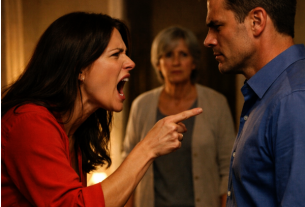
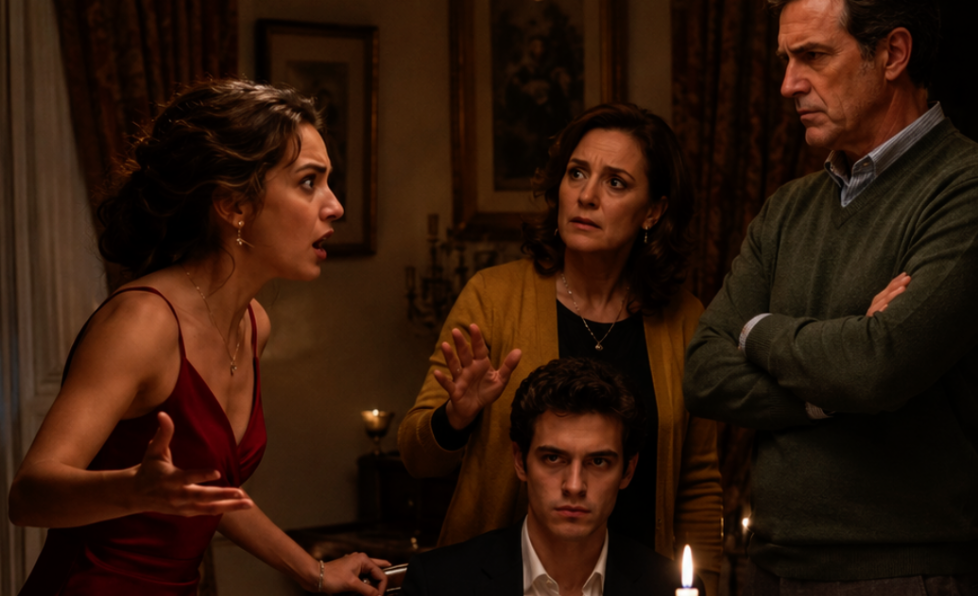
“Let’s,” Ekaterina agreed. “But first I want to say something. In front of everyone, since everyone is here.” Her voice did not rise, and that, it seemed, had more force than any shouting. “I receive guests by agreement. I cook and set the table when my husband’s family comes over. I listen to remarks about my food, my furniture, my curtains, and my countertop. I have been doing this for more than a year. I have never once said, ‘Don’t come.’ But I have also never once heard Maksim say: stop, this is my home and my wife, enough. Not once.”
The room was quiet.
“You’re exaggerating,” Maksim said.
“I am not exaggerating. I am calling things by their names.”
“So Katerina is offended now,” Vsevolod drawled in that tone meant to sound condescending. “It happens. Maksim, tell your wife we didn’t mean anything bad.”
“Vsevolod.” Ekaterina looked at him. “Do you have your own apartment?”
“Well, I rent.”
“When I come to your place without warning, open your refrigerator, and ask you to fry me something, will you say that I didn’t mean anything bad?”
Vsevolod fell silent.
“Exactly.” Ekaterina rose from the table. “I am asking you to leave. Right now.”
Oksana Pavlovna shot up.
“Maksim, do you hear this? Your wife is throwing us out!”
“Mom,” Maksim said wearily.
“No, you tell her! This is your family! We came to see you! What is this, anyway?”
“Oksana Pavlovna,” Ekaterina spoke without anger, completely evenly, “the apartment is registered in my name. Maksim lives here because we are married. But I am the owner. And I am asking you to leave.”
Daniil Arkadyevich stood up first. Silently, he took his jacket. Vsevolod sat for another second — demonstratively — then stood up too. Oksana Pavlovna remained motionless, looking first at Ekaterina, then at her son.
“Maksim. Are you going to say anything?”
Maksim stood in the middle of the kitchen. He looked at his wife, then at his mother. On his face was that very expression of a person stuck exactly between two shores — neither here nor there.
“Mom,” he finally said, “maybe it really would be better to leave…”
“Are you serious?” Oksana Pavlovna broke off, as if she could not believe it. “You listen to her and not to me? Your own mother? Either you come with us, or I don’t know what to think of you.”
The pause lasted several seconds. Ekaterina looked at her husband — not with expectation, but with the calm curiosity of a person who already knows the answer but wants to make sure.
Maksim took his jacket from the chair.
“I’ll walk you to the car.”
Ekaterina nodded. She took out her phone, placed it on the table, and went to wash the dishes.
Maksim returned twenty minutes later. He entered the kitchen and stopped in the doorway. Ekaterina was washing the last plate.
“You shouldn’t have done that,” her husband said.
“Are you defending them right now, or yourself?”
“Katya, it was a joke. About housekeeping. You know I didn’t mean it seriously.”
“I know.” Ekaterina dried her hands. “Only jokes like that are convenient — you say them and then deny everything. But I’m the one left with the unpleasant feeling.”
“I didn’t think it would be taken that way.”
“No. You thought they would laugh and you would be one of them. But you didn’t think at all about how I would take it. That is the problem.”
Maksim was silent for a moment.
“Do you want me to apologize?”
“It’s too late.” Ekaterina leaned against the sink and looked at her husband calmly. “Not because I’m offended. Because you can apologize now, and next time you’ll choose their side again, just as you have for the past year and a half.”
“I didn’t choose…”
“Maksim, you stayed silent when you needed to speak. Silence is also a choice.”
Her husband walked around the kitchen. He stopped by the window and looked outside.
“So what now?”
Ekaterina was silent for a moment. Not because she did not know the answer — because she wanted to say it precisely, without anything unnecessary.
“Now I want you to understand one thing. Not for me — for yourself. You lived for a year and a half in someone else’s apartment and never once took the side of the person who let you in here. Not because of flower beds and not because of a pie. Because it was more convenient for you to be with your own people — it’s simpler there, they don’t evaluate you there, you are always one of them there. But here, you needed to think about someone else. And you didn’t want to.”
Maksim looked out the window.
“Do you want a divorce?”
“I want an honest conversation. Without excuses about jokes or about how Mom is just like that. Are you ready for that kind of conversation?”
Maksim was silent for a long time. Outside the window, the street was noisy; somewhere, the entrance door slammed.
“I don’t know,” her husband finally said. Quietly, almost reluctantly.
“That is an honest answer,” Ekaterina said. “The first one in a long time.”
She poured water into the kettle and put it on the stove. Maksim remained standing by the window.
Over the next few days, the apartment was unusually quiet. Oksana Pavlovna did not call — either she was maintaining a pause, or she was waiting for Maksim to call first and smooth everything over. Maksim moved around the apartment carefully, like a person who does not know where the floorboards in this house creak.
They talked — not the way they had before, when conversation was replaced with silence or neutral phrases, but for real. Maksim said that since childhood he had never known how to argue with his mother, that Oksana Pavlovna always knew how to make her son feel guilty, and that he had long ago learned not to argue — it was easier to agree, and then she would let go. Ekaterina listened and understood that this was true, not an excuse. A person who grew up in such a system does not change after one conversation.
“I’m not asking you to start scandals with your mother,” Ekaterina said one evening. “I’m asking you to stand beside me. Not instead of her — beside me.”
“I don’t know how to do that,” Maksim said. And there was no defensiveness in those words — there was something real.
“Then maybe it’s worth figuring out.”
They agreed on one thing: no more visits without coordination. If Maksim wanted to see his mother, he would go to her. If he wanted to invite her here, he would warn Ekaterina two days in advance and ask whether it was convenient. Not inform her, not present her with a fact — ask.
Maksim agreed. He called Oksana Pavlovna himself — Ekaterina was in the bedroom at the time, but she heard fragments of the conversation: her husband’s voice was even, without apologies for his wife, without his usual guilty tone. He said something about agreements, about advance notice, about how it would be more proper this way.
Judging by the pauses, Oksana Pavlovna remained of her own opinion.
But that was already her choice.
Ekaterina came out to the kitchen when Maksim finished the call. Her husband stood with the phone in his hand and looked at the countertop.
“She said I chose a strange woman over my family,” Maksim said.
“And?”
“And that I’ll regret it.”
“And you?”
Maksim lifted his head. He looked at Ekaterina.
“I said she understood it wrong. That you are not a stranger.” A small pause. “That you are my wife.”
Ekaterina nodded. She opened the cabinet and took out two mugs.
“Do you want tea?”
“I do.”
She put the kettle on. Maksim came closer and stood beside her, a little awkwardly, the way people do when they do not know what to do with their hands. Then he took her mug from the shelf — the one Ekaterina always used — and silently put it back. He took another one.
A small thing. Almost unnoticeable.
But Ekaterina noticed.
Whether Oksana Pavlovna would call was unclear. Whether Maksim would keep his word the next time his mother pressured him harder was also a question without a quick answer. Something in their relationship had shifted, but it had only shifted — it had not broken and it had not been repaired all at once. It had simply shifted.
For now, the kitchen smelled of tea, cars hummed outside the window, and the floor lamp in the corner of the living room glowed with that warm light Ekaterina had chosen herself when she had renovated this place and still had no idea how life would turn out.