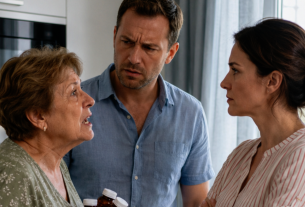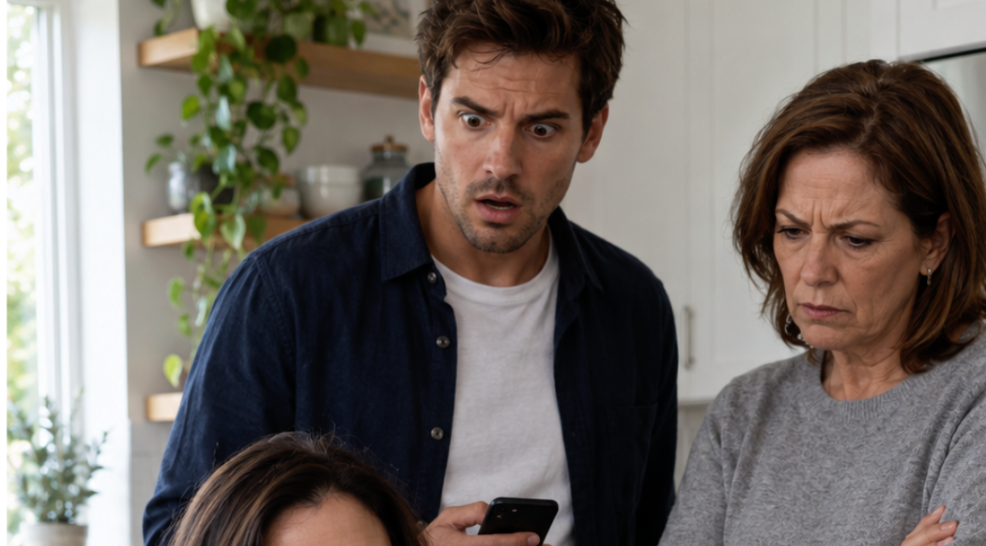
“We deleted all your messages. Now you have no proof,” Anton said, placing Ekaterina’s phone on the kitchen table. “Now explain why Mom supposedly owes you 540,000 rubles.”
Ekaterina did not pick up the phone immediately. The messenger app was still open on the screen. Her conversation with Lyudmila was empty, and the messages she had exchanged with Anton over the past several months had disappeared as well.
Lyudmila sat across from her. Her handbag rested on the chair beside her, and her coat hung in the hallway. She looked perfectly calm, as though they were discussing nothing more serious than an unsuccessful purchase.
“You went through my phone yourself?” Ekaterina asked.
Anton pushed the device toward the edge of the table.
“I knew the passcode. You told me yourself once.”
Ekaterina turned her gaze toward her mother-in-law.
“Has the garage been sold?”
Lyudmila adjusted the strap of her handbag.
“Yes. I got the money. But you helped the family voluntarily.”
Anton immediately backed her up.
“There was never any loan. And now you can’t use those messages to pressure anyone.”
Ekaterina scrolled through the list of chats. Lyudmila’s February request was gone, along with her promise to return the entire amount after selling the garage. Anton’s messages, in which he himself had called the money a debt, had disappeared too.
“Don’t touch my phone again,” Ekaterina said.
Anton leaned back comfortably, clearly convinced that the conversation was over.
“Fine by me. There’s nothing left there anyway.”
Ekaterina picked up the phone, and at that moment she remembered the old tablet.
She said nothing.
The tablet had been lying in a desk drawer in the bedroom for four days. On Sunday, Ekaterina had taken it with her to the country house, where she had read work documents and replied to Lyudmila through the same messenger app. During the drive, she had disconnected it from the internet, and after returning home she had never turned it on again.
Anton had seen the tablet countless times, but he had long considered it useless old technology. Ekaterina had been planning to give it to her niece.
“So the two of you decided that I simply gave you the money as a gift?” she asked.
Anton rubbed his forehead irritably.
“Katya, Mom bought the country house and helped Oksana buy a car. The money is already spent. What exactly do you want from her now?”
Ekaterina placed her phone face down on the table.
“I want our agreement to be honored.”
Lyudmila stood up and picked up her handbag.
“I never thought you’d start treating every bit of help within the family as a debt.”
Ekaterina did not answer. She took her phone and went into the bedroom.
A few minutes later, her mother-in-law left. Anton remained in the kitchen.
Back in February, Lyudmila had found a country house for sale not far from the city. She was 540,000 rubles short of the purchase price. Her garage had already been listed for sale, and Anton asked Ekaterina to temporarily lend his mother the missing amount.
“Once the garage is sold, the matter is settled,” he had told her then. “Mom will pay you back immediately.”
The money was in Ekaterina’s savings account. For several years, she had been putting part of her salary and bonuses into it, so the decision had not come easily.
Lyudmila herself had written:
“Katya, I feel uncomfortable asking. As soon as the garage sale goes through, I’ll return the money to you immediately—all 540,000.”
Then Anton sent another message:
“I’ve discussed everything with her. This isn’t a gift.”
Ekaterina transferred the money from her account to her mother-in-law’s. They did not draw up any separate documents. Anton had been sitting beside her, Lyudmila had repeated the terms in writing, and at the time that had seemed sufficient.
At the end of June, the garage was sold.
Ekaterina found out through the family group chat. Oksana, Anton’s younger sister, posted a photograph of a used car and thanked their mother for helping her buy it.
That evening, Ekaterina asked her husband about repayment.
Anton told her that his mother was still sorting out her expenses. A couple of days later, he suggested that she stop rushing Lyudmila. Several days after that, her mother-in-law suddenly declared that she did not consider the money she had received to be a debt at all.
Ekaterina opened their February conversation and showed it to her husband.
Anton read the messages and placed the phone back on the table.
“Mom was afraid she’d lose the country house,” he said. “She wrote what you wanted to hear.”
After that, Ekaterina saved a bank statement on her work laptop. Several days later, Anton took her phone and deleted the chats.
Now Ekaterina closed the bedroom door, changed the passcode on her phone, and took out the old tablet.
She switched it on without connecting it to the internet.
The messenger app took a while to load. Eventually, the list of conversations that the tablet had last saved on Sunday appeared on the screen.
The chat with Lyudmila was still there.
Ekaterina scrolled back to February. The request for 540,000 rubles, the promise to return the money after the garage was sold, the messages about the country house—it was all still there.
Then she opened her conversation with Anton and noticed a sentence she had barely paid attention to before.
Shortly before the garage was sold, he had written:
“Mom wants to give part of the money to Oksana for the car. You don’t mind, do you?”
Ekaterina’s reply appeared directly beneath it:
“I do mind. First she returns my money. After that, she can do whatever she wants with her own.”
Anton had replied with a single word:
“Understood.”
Another message from him had also been preserved below:
“I reminded Mom. Her debt to you comes first.”
Ekaterina stopped scrolling.
This was what Anton had particularly wanted erased from her phone.
He had not merely known the original terms. He had specifically asked whether his wife agreed to let her money be given to Oksana, received a direct refusal, and confirmed that he understood.
Ekaterina kept the tablet offline. She photographed the necessary screens with her phone, recorded a short video showing the dates and sequence of the messages, switched the tablet off, and placed it in her bag.
Part of her wanted to walk straight into the kitchen and show Anton his own “Understood.”
She could already imagine the expression on his face changing.
But there was no reason to rush.
The next morning, Ekaterina opened the bank statement she had saved earlier and checked the transfer to Lyudmila once more.
That evening, Anton was waiting for her alone in the kitchen.
“Did you find anything to prove your version?” he asked.
Ekaterina placed her bag on a chair and pulled out the bank statement.
“I wrote to your mother that I expect all 540,000 rubles to be returned.”
Anton glanced over the sheet.
“This only proves that you transferred the money.”
Ekaterina put the statement back into her bag.
“I have more than the transfer. And you’re never touching my phone again.”
Anton became alert. He leaned forward, but Ekaterina had already taken out her phone herself.
“What did you save?”
Instead of answering, she opened a photograph of the conversation and placed the phone in front of him.
Anton read his mother’s message and then saw his own question about giving some of the money to Oksana.
His eyes remained on Ekaterina’s reply for longer.
“I do mind. First she returns my money.”
Below it was his brief response:
“Understood.”
Anton pushed the phone away.
“So what? I asked, you answered.”
Ekaterina swiped to the next photograph.
“I reminded Mom. Her debt to you comes first.”
Now he was no longer looking at the screen.
He was staring at Ekaterina.
“Where did you get that?”
Ekaterina took her phone back.
“From my messages.”
Anton sharply turned his head toward the bedroom.
“The old tablet?”
Ekaterina slipped her phone back into her bag.
“You forgot about it.”
Anton stood up and paced along the table.
“This changes nothing. Mom has already distributed the money. Oksana bought the car. What are you suggesting now—that we demand the money from her?”
Ekaterina remained where she was.
“I’m not demanding anything from Oksana. Your mother received my money.”
Anton picked up his own phone, quickly typed a message, and left the device face up on the table.
A minute later, Lyudmila replied.
Anton read the message first.
“Mom will return half. That settles the matter.”
Ekaterina held out her hand.
“Show me.”
Anton pushed the phone toward her.
Lyudmila was indeed offering to repay half of the amount and consider the rest a contribution toward helping Oksana.
Ekaterina read the message once and handed the phone back.
“I never agreed to that.”
Anton raised his voice, but Ekaterina did not interrupt him.
He talked about the country house, his sister’s car, family expenses, and reminded her of all the times he had helped her around the house.
Eventually, his argument circled back to the claim that “normal family members don’t keep score like this.”
Ekaterina took out her phone and once again opened his February message:
“Understood.”
“You already asked for my permission,” she said. “Here is my answer. And here is yours.”
Anton fell silent and removed his phone from the table.
For the first time during the entire argument, Ekaterina could see that he no longer had his previous leverage.
He could no longer deny the original agreement, nor could he pretend that his mother’s decision had been made with everyone’s consent.
“You’re throwing away everything else because of money?” he asked more quietly.
Ekaterina shook her head.
“The money can be settled with a bank transfer. The problem is that you took my phone and deleted the messages after you had personally confirmed the debt.”
Anton tried to argue, but Ekaterina refused to let the conversation drift back toward his mother and Oksana.
“Pack your things. You’re going to your mother’s today.”
He stared at her for a long time, as though waiting for her to soften her words.
Ekaterina took his sports bag from a hook in the hallway and placed it beside the bedroom door.
Anton said nothing.
After some time, he packed the things he needed and left.
The next day, Lyudmila sent a long message.
Once again, she wrote about helping family members, but this time she no longer denied that there had been a debt.
At the end, she repeated her previous offer: half of the amount.
Ekaterina replied briefly:
“Our agreement was that the entire amount would be returned.”
Lyudmila called her.
Ekaterina did not answer and kept all further communication in writing.
Anton contacted her that evening.
This time, he did not dispute the messages.
“Katya, Mom is giving part of it back. Isn’t that enough?”
Ekaterina placed some store receipts into the kitchen drawer before replying.
“No. If she doesn’t have the full amount right now, she can repay it in installments.”
Anton was silent for a moment.
“So it’s really over between us?”
Ekaterina looked at the empty hook in the hallway where his jacket had once hung.
“After what happened that evening—yes.”
On Monday, they filed for divorce together.
That same day, 300,000 rubles arrived in Ekaterina’s bank account.
Anton came to collect the rest of his belongings that evening.
Ekaterina let him inside and remained in the hallway while he packed his shirts, charger, and documents.
When his bag was ready, Anton paused by the door.
“Mom returned most of it. Isn’t that enough?”
Ekaterina took the rest of his belongings from a shelf and handed them to him.
“There are still 240,000 rubles left.”
Anton took the items and frowned.
“She’s paying you back.”
Ekaterina nodded.
“Then the money issue will be closed after the second transfer.”
He shifted from one foot to the other.
“Are we really splitting up because of this?”
Ekaterina did not raise her voice.
“Not because of the transfer. Because of what you did after you realized I didn’t agree to pay for the arrangement you and your family had made concerning Oksana.”
Anton did not argue anymore.
He took his bag and left.
On Wednesday, Lyudmila transferred the remaining 240,000 rubles.
The payment included a short note:
“Settling the matter.”
Ekaterina saved the new bank statement beside the one from February.
Lyudmila never called her again.
Anton contacted her only about belongings and documents.
Ekaterina answered only what was necessary, and they never returned to the argument about the money.
On August 13, their divorce was officially finalized.
That evening, Ekaterina brought the old tablet home.
It had remained switched off all that time.
She connected it to the internet.
The app immediately began updating, but Ekaterina no longer watched the conversations. Everything she needed had already been saved separately.
She erased her personal data from the tablet, placed it in a box of electronics intended for her niece, and left the box in the hallway.
The two bank statements—the February transfer and the complete repayment—went into the desk drawer.
And on the empty hook beside the box, none of Anton’s things were hanging anymore.