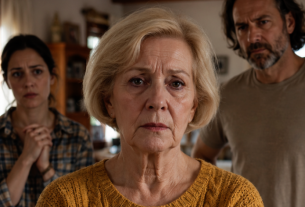
For 20 years, her husband taunted her over every bite of bread she ate. Then one day, she decided to leave him for a whole week, leaving him alone with their three kids and all the housework…
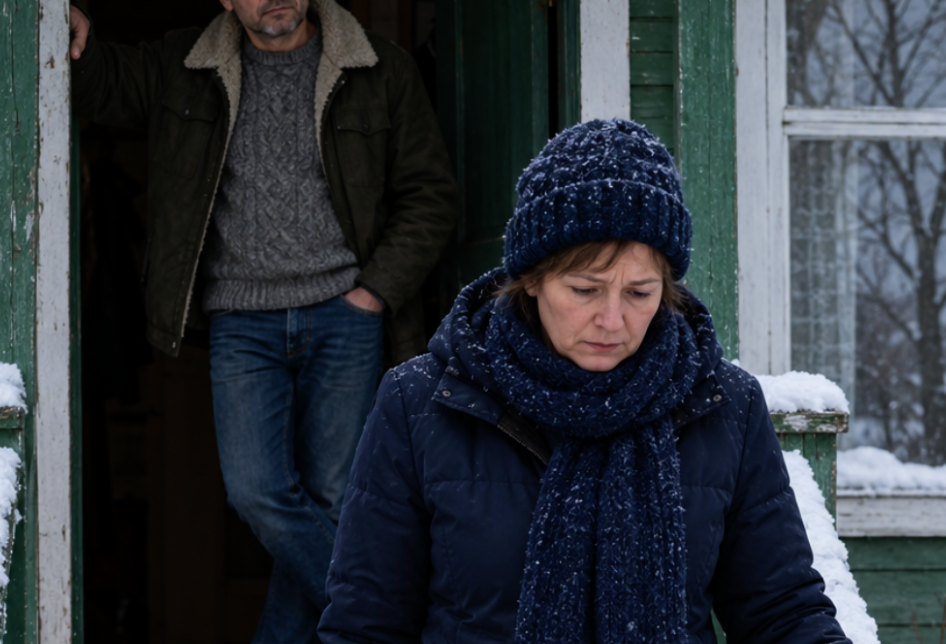
Grigory paused on the doorstep, hooking his thumbs into the waistband of his old wool pants. With a crooked smirk and the attitude of someone who thinks he’s in charge, he watched his wife zip up a well-worn, bulky bag. It was a frosty November morning: the puddles had a thin layer of ice, and from the cowshed came the damp steam and long, hungry mooing of Zorya.
“Go on, if you’re so important,” Grigory sneered, folding his arms. “Trying to scare us, are you? We’ll be just fine without you! I’ll even cross myself when you close that gate behind you. Maybe I’ll finally get some peace, without your endless complaining. ‘Tired, exhausted’… What are you tired from? You sit at home all day and do nothing much! I’ve been breaking my back driving the logging truck since five in the morning, every penny I make goes to this family—all you freeloaders—and your only job is to rattle those pots in the kitchen. And you dare say you’re worn out!”
Nadezhda didn’t even turn her head. She struggled with the zipper on her bag, adjusted her cherry-colored knitted hat, and for a moment her gaze lingered on the chunky wooden fence. Her hands, rough from endless laundry and icy well water, trembled slightly. But her face was unusually pale and still, as if carved from solid birch. For twenty years, she had listened to the same set of accusations. Any new item bought for the house, a schoolbook for her son, even a can of paint for the fence, was always a reason for yet another evening reproach: “You all live off me. I spent my youth on you, freeloaders.”
“Grisha, I left the list on the fridge,” Nadezhda said calmly, still not looking at him. “You need to milk Zorya at six in the morning and seven in the evening. Soak the feed with bran, don’t give more than two scoops of grain or she’ll bloat. Boil potatoes for the piglets the night before. Heat the stove in the kids’ room twice a day, but don’t close the damper right away or you’ll fill the house with smoke. Take Varya to daycare by eight; I ironed her dress, it’s in the closet, tights are folded on the shelf. Give Yegor the money for his sports class on Wednesday, and remind Kolya not to skip his allergy shots.”
“Oh please, no need to teach me! Acting like you’re the boss,” Grigory laughed, though there was a flicker of annoyance at her strange calmness. “We’ll manage, we’re not kids. Go run off to your mother in that far-off village. You’ll be crawling back in less than two days, I know you! How will you survive without your warm stove and fresh bread?”
Nadezhda didn’t answer. She hefted her bag, stepped down the wooden porch and walked across the crunchy frost toward the road. The bus to the district center was already waiting. She didn’t look back, not once. The garden gate creaked pitifully, then closed behind her.
With a sneer, Grigory spat, slammed the front door and stretched out blissfully… Continued in the comments.
Grigory paused on the doorstep, thumbs hooked behind the waistband of his old woolen pants. With a crooked smirk and the air of someone who thinks he’s in control, he watched his wife zip up a well-worn, bulky bag. Outside, the frosty November dawn was settling in: a thin layer of ice now covered the puddles, and from the direction of the cowshed came the humid breath and drawn-out, hungry mooing of Zorka.
“Well, well, go on, if you’re so important,” Grigory said mockingly, folding his arms across his chest. “Trying to scare us? We’ll do just fine without you! I’ll even cross myself when that gate closes behind you. Maybe I’ll finally get a little peace without your endless complaints. ‘Tired, worn out’… What are you tired from? You sit at home all day, don’t really do anything! Meanwhile I’ve been breaking my back on the logging truck since five in the morning, bringing every last kopek home to support all you freeloaders, and your big job is just banging pots around. And after all that, you still dare to say you’re exhausted!”
Nadezhda didn’t even turn her head. She yanked the stubborn zipper on her bag, adjusted her cherry-colored knit hat, and for a moment let her eyes settle on the massive timber fence. Her hands—rough from constant laundry and ice-cold well water—trembled slightly. But her face remained exceptionally pale and still, as if it had been carved from hard birch wood. For twenty years, she’d been listening to the same accusations. Year after year, any new item bought for the house, a textbook for their son, even a can of paint for the fence, always became fodder for Grigory’s evening reproaches: “You’re all living off me. I’ve wasted my youth on you freeloaders.”
“Grisha, I left a list on the fridge,” Nadezhda said calmly and flatly, still refusing to look at her husband. “Zorka needs to be milked at six in the morning and seven at night. Mix her feed with bran, and don’t give more than two scoops of compound feed or she’ll bloat. Boil the potatoes for the piglets the night before. Heat the stove in the children’s room twice a day, but don’t close the damper right away or you’ll get carbon monoxide. Walk Varya to kindergarten by eight, her dress is ironed and in the closet, tights are nearby on the shelf. For Egor, pay for the physical activity club on Wednesday, and remind Kolya not to miss his allergy shots.”
“Oh, come on, don’t try to teach me! Acting like you’re in charge!” Grigory laughed, though for a split second, irritation crept into his voice at her strange calmness. “We’ll manage just fine, we’re not kids. Go on then, run off to your mother in that distant village. You’ll be crawling back on your knees in less than two days, I know you! Where else can you go without a warm stove and fresh bread?”
Nadezhda didn’t answer. She picked up her bag, stepped off the wooden porch, and walked across the crunchy crust of snow toward the road. The local bus to the district center was already waiting. She never once looked back. The gate gave a plaintive creak, then closed behind her.
Grigory spat with contempt, slammed the front door shut, and had a good stretch.
Now THAT’S what I call peace and quiet! This is the life, guys! No one breathing down my neck, no one nagging me, no one forcing their borscht on me!
His first hour without his wife was pure bliss. He cranked up the TV volume, got comfortable, propped his feet up on a stool, and pulled a slab of smoked sausage from the fridge. But nearing noon, his peace was shattered by loud, desperate mooing from the cowshed. Zorka was demanding water and fresh hay.
Grigoriy swore, pulled on his felt boots, and reluctantly headed out to the animals. The barn reeked of manure and damp cold. Ice had formed over the water in the buckets. The cow greeted him with a disgruntled look, nervously shuffling her feet.
«Hold still, you horned beast!» he barked, trying to shove a heavy galvanized bucket beneath her udder.
But as soon as Grigoriy clumsily squeezed the teat too hard, Zorka gave a swift kick to the bottom of the bucket. Yesterday’s dirty water splashed all over him, and the cow stepped squarely on the toe of his boot.
Grigoriy let out a loud yell, jumped aside, and banged the back of his head against a low beam. Furious, he hurled the milking pail into the corner. In the end, he managed to get only about half a liter of cloudy milk. His wrists and fingers ached from the unfamiliar work as if he’d spent the entire day hauling heavy logs on a forest ramp.
Around two in the afternoon, the front door slammed and the boys returned home. Fifteen-year-old Egor dropped his heavy backpack with a thud in the hallway and immediately called out:
«Mom, I’m hungry! Is the borscht ready yet?»
Instead of their mother, their bedraggled father appeared from the dimly lit room, wearing a sweater stained with various spots.
«Mother’s not here. I’m in charge today. Sit down, I’ll fry up some potatoes for you.»
But the potatoes in the heavy cast-iron skillet weren’t cooking quickly. First, they lay for ages on the barely glowing coals, then suddenly burned to a black crust on the bottom, while staying raw and hard on top. Eleven-year-old Kolka poked the burnt food with his fork, then gave a quiet sniffle.
«Mom fries them with onions… hers always have that perfect crispy crust…»
«Eat what’s on the table!» Grigoriy barked. Hunger and irritation were knotting his stomach. «This isn’t a restaurant!»
By five in the evening, it was time to pick up six-year-old Varya from kindergarten. Outside, a blizzard was raging; the wind flung prickly snow in his face. Grigoriy got to the group later than anyone else. The teacher—a strict, thin woman in glasses—greeted him with a disapproving look.
«Grigoriy Ivanovich, did you even check the time? All the other children have already been picked up. And can you explain why your daughter came in mismatched socks this morning? Nadezhda Vasilievna would never have allowed such carelessness.»
The trek home turned into a real ordeal.
The stove, which Nadezhda could easily light with just a couple of birch sticks, refused to cooperate for Grigory. Instead of the smoke heading up the chimney, it poured straight into the room. Thick, biting gray smoke quickly filled the cabin. The kids coughed desperately by the open windows. Varya sat on the trunk, whimpering—her tights were soaked, her feet frozen, and unraveling her tightly tangled braid without her mother’s familiar gentle hands had become torture. The girl shrieked with every pull of her father’s comb.
«Dad, the piglets need potatoes cooked for them too. They’re squealing so loud the whole street can hear,» Egor reminded him gloomily, glancing at the sink piled high with dirty dishes. The mountain of plates kept growing and looked like it might crash to the floor any moment. «And I need money for physics. Tomorrow is the last day—the teacher warned she won’t let me take the exam otherwise.»
Grigory dug into his wallet, took out a bill, and handed it to his son. Then he grabbed the heavy cast-iron pot to cook some small potatoes for the piglets. Soon, though, the water overflowed, splashed onto the hot embers, and hissed loudly. The kitchen filled with the smell of hot, raw steam mixed with smoke.
Close to midnight, the children finally fell asleep. Varya dozed off with her hair still tangled and her eyes swollen from crying, while the boys finished their homework under the desk lamp’s glow. Grigory, completely exhausted, slumped onto the kitchen stool. His arms ached from all the unfamiliar chores, his lower back throbbed with pain, and his clothes were soaked in the smell of smoke and manure.
«It’s alright,» he told himself through gritted teeth as he stared into the dark windowpane. «It’s only the first day. I just need to get used to it. There’s nothing hard about this. These are just regular women’s chores.»
But by the third day, he hadn’t gotten used to anything. Instead, the household chores hit Grigory like a massive birch log falling on him during logging work.
He discovered that clean shirts don’t just appear on the hangers by themselves. To make clothes wearable, they had to be soaked, collars scrubbed with laundry soap, rinsed several times in freezing outdoor wind, dried by the stove, then ironed with a heavy iron. By day three, Egor had run out of clean socks, so he had to go to school in his father’s work socks, cuffed at the toes.
He also learned that because of his poor milking, Zorka started giving less milk, and her udder grew hard. He had to ask their neighbor, Aunt Masha, for help. She stepped into the house, glanced over the soot-blackened walls, the piles of dirty dishes everywhere, and Grigory, whose face was twisted with frustration. As she took it all in, she shook her head disapprovingly.
— Well, look at you now, breadwinner. Did you really think Nadya just sits around and does nothing? She’s been up since four in the morning, running around taking care of everything like a spinning top while you sit your eight hours behind the wheel, then collapse onto the couch. Watch yourself, man—you just might burn down the house or kill the cow, and then Nadya won’t come back. Even a woman’s patience has its limits; it’s not made of steel.
By the fifth day, Grigoriy had lost five kilograms. He barely got three hours of sleep a night. From sunrise, it was a nonstop grind: first the barn, then manure, then stoking the stove, followed by the chaos of the kids—getting the boys ready for school and rushing to drop the little one at daycare. After that, it was off to his shift driving the logging truck, where sheer exhaustion made his eyelids droop and his mind spiral with worries: “Will the coal be enough? Did the water freeze in the tank? Did Kolya get an F for not doing his homework?” Evenings brought no relief—he’d come home only to dive back into chores: tending the livestock, doing laundry, cooking, checking homework, and soothing a crying Varya, who stubbornly refused to eat her burnt noodles and called for her mom again and again.
On Friday night, Grigoriy sat at the kitchen table, staring blankly at his own fingers. The skin had turned black and cracked from constantly plunging them into icy water. The porridge had boiled over again, leaving a disgusting brown puddle on the stove. In the corner, Varja sat, a pile of shattered plate pieces at her feet—she’d dropped it from hunger and weakness. She whimpered softly, doing her best not to catch her father’s eye and trigger another outburst. Yegor stood silently by the sink, scrubbing a frying pan with all his strength. At fifteen, his back was already tense, and he looked much older than his years, as if he’d had to grow up overnight.
Grigoriy’s eyes fixed on his daughter. There she was, a tiny, skinny girl in a dress washed so many times it had lost all color. Her braids were tied haphazardly, with stray wisps sticking out in all directions. Suddenly he remembered how every night, Nadya would gently run her hand over Varya’s hair before bed, tell her the story of the Silver Hoof, and kiss her tenderly on the crown of her head. He recalled other evenings too: coming home from work to the sound of quiet dishes clinking, a steaming plate of rich soup under a clean towel waiting on the table. Next to it, a freshly washed frosted glass, and a pair of warm socks by the door. But instead of gratitude, he’d just sit down, scowl, and grumble: “Soup again? Couldn’t you make anything else, you good-for-nothing?”
Grigoriy felt as if a tight, metal noose had closed around his throat. Real fear and unbearable shame flooded him—deeper than anything he’d ever felt, even the time his logging truck skidded out of control toward the edge of an icy winter ravine.
Now it finally hit him. For the first time in his forty-five years, Grigory truly understood who had really held up their big wooden house, managed the homestead, cared for the children, and taken care of him—all these years, despite his overwhelming pride, his logging truck, and his empty masculine arrogance. The moment that quiet, steady feminine strength vanished, it took only five days for their familiar life to start falling apart. The house felt more like a cold barn, the kids went without proper care, and Grigory himself felt ready to howl with loneliness and longing, like a wild animal cornered and desperate.
On Saturday, Grigory woke his sons at six in the morning.
“Up and at ‘em, boys. Your mother comes back tomorrow. We have to get the house in order.”
For the next fourteen hours, they cleaned without a single break. Yegor hauled bucket after bucket of water, Kolka dusted every cabinet and shelf, and Grigory himself dropped to his knees, scrubbing the soot-blackened wooden floors with soap until the pine boards turned almost white. He washed all the laundry that had piled up, polished the stove to a shine, and stuffed the barn with so much dry straw it reached the animals’ knees. Meanwhile, the neighbor’s daughter carefully braided Varya’s hair into neat, tight plaits, tying them with satin ribbons.
By Sunday evening, deep blue twilight had fallen over the village. The frost was getting sharper, and a steady pillar of white smoke rose from their chimney up to the starry sky. Inside, the house was filled with the scent of fresh bread. Grigory had asked the neighbor to help with the dough, then watched vigilantly over the loaf near the oven vent, hardly daring to move for fear of ruining it.
Suddenly, he heard the crunch of snow behind the gate. Then, the metallic ring of the latch followed.
The children, who’d been sitting at the table, instantly grew quiet. Grigory stood up and took his place by the door, absently wiping his damp hands on the apron he’d forgotten to take off. His heart hammered so hard, it felt like it might burst from his chest.
The door swung open, bringing a rush of freezing air, and Nadezhda stepped inside. She wore a deep blue jacket and her familiar cherry-red knitted hat, carrying her bag in one hand. She looked pale and wary, her face set and stern, as if bracing herself for the usual teasing, reproaches, accusations, or the sight of chaos and dirt.
Nadezhda set her bag on the floor, glanced up—and suddenly froze in surprise.
The house was so immaculately clean, it seemed the air itself rang with freshness. A spotless white tablecloth covered the scrubbed table. In the center, a big golden-brown loaf of bread stood proudly, next to it a pot of steaming boiled potatoes and a bowl of salty pickled mushrooms. The children stood by the stove—washed, hair neatly done, in crisp ironed shirts—watching their mother, barely breathing.
Grigory stood at the center of the room. He looked noticeably gaunt, cheeks hollowed, dark circles deep under his eyes. His hands trembled and his fingers were blackened with stubborn dirt and hard work.
Nadezhda was about to say something, but the words never had a chance to leave her lips.
A strong, broad-shouldered forty-five-year-old man, known throughout the area as a stern and unyielding lumber crew foreman, suddenly dropped to his knees in front of his wife right in the middle of the room without saying a word.
He leaned forward, grabbed the cold edge of her coat with both hands, pressed the fabric to his unshaven face, and began to sob. His cries were heavy, raw, desperate—the tears of a grown man who, for the first time in his life, realizes just how close he’s come to the edge of a real abyss.
«Forgive me, Nadya…» he managed to choke out, still clutching her coat through his tears. «Forgive your blind fool… For Christ’s sake, forgive me… You’re not a burden… You’re our lifeblood! You are the soul of this house! Forgive me, I’m ready to wash your feet for the rest of my life, just please don’t ever leave us again… Without you, we’re lost… Like blind puppies, we’d be completely helpless…»
A heavy silence filled the room. Only the children quietly sniffled in unison.
Nadezhda stood perfectly still. Hot tears slowly ran down her cheeks, as if they were washing away the hurt, resentment, and exhaustion that had built up over twenty years. The drops fell onto her husband’s tousled head, now streaked with gray.
Slowly, she took off her knitted hat, then knelt down beside Grigory on the freshly cleaned floor. She wrapped her arms around his broad shoulders, which were shaking with sobs, and hugged him tightly.
«That’s enough, Grisha… Come on, stop it, man… Get up off the floor, you’ll catch a cold. I’m home now. I’m home. Where would I ever go, away from you all, my poor souls…»
With joyful cries, the children ran up from behind and threw themselves into their parents’ arms. They hugged each other tightly, as if melded together into one strong, inseparable knot. And behind the stove, a cricket began to chirp brightly and carefree, as if to announce that true peace, warmth, and long-awaited happiness had finally returned to this home.