Alla froze with her fork halfway to her mouth. I watched her over the rim of my cup, a warm, almost intoxicating calm spreading inside me. Everything was just right. My mother-in-law was pouring tea into the fancy cups, my father-in-law was telling our guest about the country house, and the guest—a well-groomed guy in a shirt that probably cost as much as my whole monthly salary—was nodding politely and smiling. He had come to meet the parents. Alla was glowing all evening, shining brighter than a freshly polished samovar.
I set my cup down on the saucer and said in the most casual tone:
«You know, Artur cleaned his bowl spotless again today.»
To help you understand why my hand didn’t even tremble, we need to go back a few months.
Gena and I are both twenty-five. We got married once we were each firmly established, and right away decided: no more renting, no living in someone else’s place that eats up half our salaries. We were saving up for our own home. But saving while still paying a landlord is like pouring water into a sieve. That’s when Gena suggested we move in with his parents. Their apartment was spacious, there was plenty of room for everyone, and we could save nearly all our money.
I had my doubts. Everyone’s heard stories about mothers-in-law who rearrange your pots and daughters-in-law who cry in the bathroom. But I was lucky. Valentina Petrovna turned out to be reserved and kind, and Nikolai Ivanovich basically lived in his own world of newspapers, fishing, and TV. Nobody told me how to live, nobody checked for dust on the shelves, and nobody commented on what I made for dinner.
The one thing I insisted on was having our own fridge. Small and narrow, it fit right in the corner of the kitchen. My mother-in-law was surprised, but didn’t argue.
«Of course, Nastya, whatever makes things easier for you.»
It really did make things easier for me. Gena and I budgeted down to the last penny, shopped once a week, and cooked ahead so we wouldn’t waste money or time on takeout after work. Having our own fridge meant order and predictability. I knew what was in there and exactly how many days it would last.
The problem was, it didn’t last as long as I’d planned.
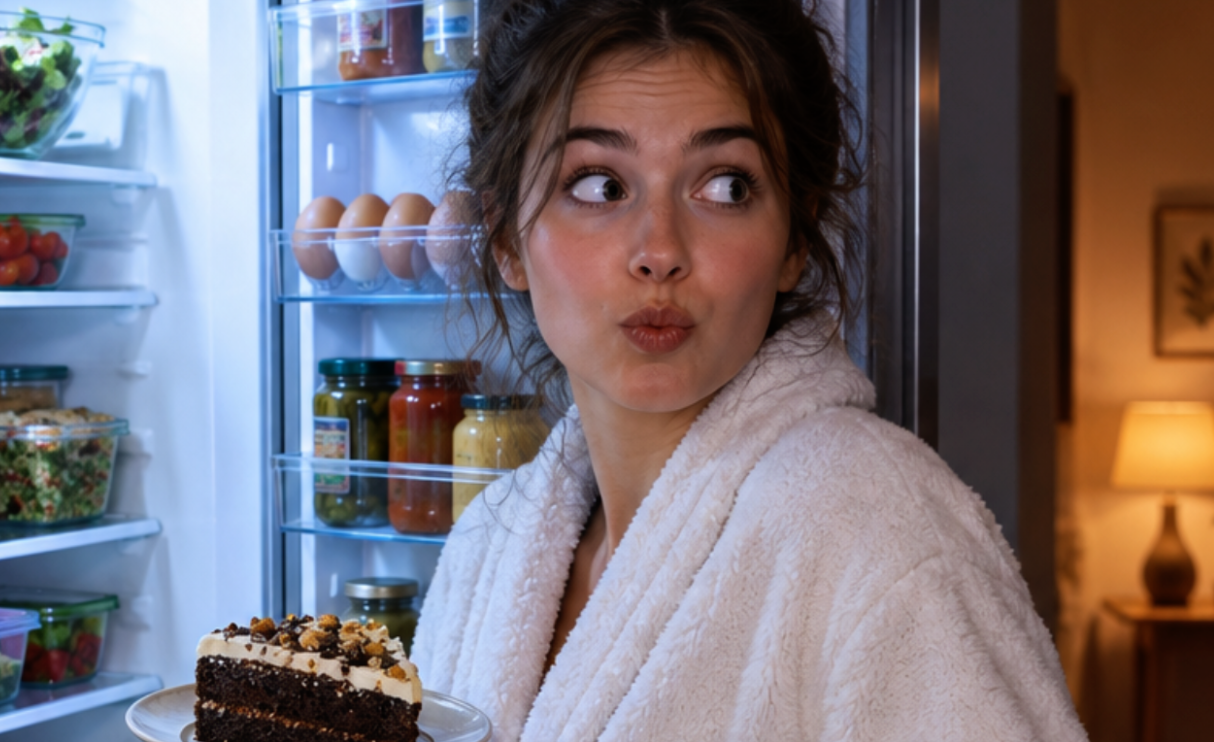
At first I thought I was mistaken. Three syrniki I left for breakfast disappeared. Then half a container of buckwheat and cutlets was gone. Then the cheese vanished—good, hard cheese I’d bought on sale. I started keeping notes on what I put in and what I found. My notes kept pointing to one thing: food was leaving at night or while Gena and I were at work.
«Maybe Mom?» Gena suggested when I showed him my notebook.
«Your mom would never open someone else’s fridge. She even asks before taking my salt.»
Gena rubbed the back of his head and sighed. He already knew who it was, but he felt awkward saying it out loud.
Alla, his younger sister, was in her second-to-last year of economics school. She was beautiful and vibrant, always with a perfect manicure, and talked about money like it grew on windowsills. She had no plans to work. Her parents took care of her university fees, clothes, outings to cafés with friends, and Alla was genuinely proud of this. She often repeated that her family, “unlike some,” knows how to provide for their children.
I picked a moment when it was just the two of us alone in the kitchen. She was sitting on the windowsill with her phone, casually chewing on my ham.
«Alla, can I ask you something?» I tried to keep my tone as gentle as possible. «This fridge belongs to Gena and me. We plan out our groceries for the week. If you want to take something from it, please ask first, or get your own food.»
She glanced up at me, and I saw pure, genuine astonishment in her eyes, as if I’d just asked her to stop breathing.
«Nastya, what’s wrong with you? We’re family. In a normal family, food is shared. Whatever our relatives have is yours too. Maybe in your home, everyone ate from their own plate, but we don’t do it that way.»
«Gena and I have our own ways, and I’m asking you to please respect that.»
«Oh, come on,» she said, jumping down from the windowsill and popping the last bit of ham in her mouth. «Fighting over food? That’s not order, that’s just being stingy.»
She left, and I was left standing there with a lump of ice in my chest. I didn’t want to argue, but I wasn’t going to let anyone walk all over me either.
The next morning, I entered Alla’s room. To say my heart was pounding would be an understatement. I took her expensive face cream from the table—she cherished it like a relic. Then I found a delicate beige silk scarf in her closet. On the dressing table, a brand-new palette of eyeshadows caught my eye—the same one she got for her birthday and hadn’t opened yet.
That evening, Alla burst into the kitchen where I was drinking tea, her face flushed, eyes blazing.
«Did you take my things?!»
«I did,» I replied calmly. «The cream is lovely, thank you. You always say that in a family, everything’s shared, so I just followed your rule.»
«That’s different! That’s my makeup! It’s personal!»
«My fridge is personal too, Alla. But you didn’t seem to notice that.»
She was speechless with rage. I could see her fingers trembling.
«Don’t you dare go through my room again!»
«Alright, deal. I won’t touch your stuff, and you won’t touch our food. It’s only fair.»
She slammed the door so hard the glasses in the cupboard rattled. An hour later, Valentina Petrovna and Nikolai Ivanovich came into the kitchen. They both looked grim. Turns out, Alla had run to complain, but in her version, she wasn’t the one at fault. Her parents listened to her side first, then listened to mine. The conversation was brief.
My mother-in-law turned to me and spoke with such pain in her voice that I immediately felt awkward for everyone involved:
«Nastenka, forgive us. We had no idea. It’s so embarrassing.»
Then they went to speak to Alla, and for a long time behind the closed door, I could hear my father-in-law’s muffled voice. Later, Gena told me what was said: if their daughter didn’t learn to act like an adult, they wouldn’t pay for her education anymore. If you want to enjoy an easy life, you have to respect those around you.
Alla simmered down after that. For about two weeks, she moved around the house like a quiet shadow, avoided me completely, and made sure to stay away from the kitchen. The fridge stood untouched. I even thought the issue was resolved.
Arthur showed up in our home at the end of autumn.
He used to belong to some distant relatives of Nikolai Ivanovich, an elderly couple living in another city. After his owners both passed away, the dog was left all alone in their empty house. My father-in-law went there, sat for a while on the porch, then called his wife and said, «I’m bringing him home.» Valentina Petrovna sighed, but didn’t argue.
Arthur turned out to be a German Shepherd—huge, serious, with intelligent amber eyes and a graying muzzle. The first few days, he would lie in the hallway, resting his head on his paws, staring at the door. He was waiting for someone who would never come. I used to sit down next to him on the floor, quiet, gently stroking his coarse fur. On the third day, he rested his head on my knee and let out a heavy sigh.
From then on, we became friends. I started walking him in the mornings, buying him treats, brushing him. My mother-in-law just shook her head whenever she saw me crawling across the floor with a brush.
«You should take care of yourself that well,» she joked.
But I could tell she liked it. The house had come to life again, filled with the warm presence of a new inhabitant.
And once again, the fridge started getting slimmer.
Now it was happening more subtly. Unlike before, there were no more entire containers vanishing. Instead, there was just a little less cheese. The casserole in the pot would be missing a corner, as if someone had broken off a piece. Yogurt would appear opened, even though I was sure it was sealed before. Most people would probably blame forgetfulness. But I had my notes—and according to those, everything added up.
«She’s up to her old tricks,» I told my husband. «Only now she’s being careful. Just enough so I can’t say anything. Out of spite.»
Gena frowned.
«Maybe we should talk to your parents?»
«They’ve already talked to her. It only worked for a couple weeks. We need something different this time.»
I spent a few days thinking. No point in arguing, and complaining would just repeat what we’d already done. I needed to do something that would help Alla understand what it means to take what isn’t hers—and ideally, make sure the lesson stuck.
The plan came to me while I was standing in the kitchen, watching Arthur lap water from his bowl. The vet we’d taken him to had recommended adding more meat and veggies to his meals, more protein. I’d been reading up on dog nutrition—and that included insect protein, which people now add to dog food as a sustainable and nutritious protein source. That’s when the idea hit me.
On Sunday, I cooked a giant pot of meat stew—beef, carrots, zucchini, onions, a bit of greens, all simmered low and slow. The smell was so good, even my father-in-law put down his newspaper to come and sniff around. I kept half the stew for Gena and me. The other half went into a separate pot, to which I added a few spoonfuls of powdered crickets that I’d bought at the pet store for Arthur, stirred it well, and set it right at the front of the fridge. I didn’t hide it behind jars or block it with bags. It went right on the middle shelf, clearly visible.
The stew smelled amazing. The crickets disappeared completely into the thick gravy.
A day later, I opened the fridge and saw the pot was a lot lighter. A solid third of the stew was gone. There was even a drop of gravy left on the shelf that hadn’t been wiped up.
I closed the fridge and grinned. For the first time in ages, my smile was real—wide and a little wicked. The bait was taken. Now I just had to wait for the perfect moment.
That moment arrived on Saturday.
Alla was rushing around the apartment all morning, as if she was about to take an exam. She let our parents know that a young man named Dmitry, someone she was «seriously seeing,» would be visiting that evening. Mom immediately pulled out the fancy dinnerware, Dad put on a clean shirt. I could hear Alla giving orders in the kitchen—where to place the flowers, how to serve the pie. She was preparing her life’s big showcase.
Dmitry arrived at seven. He was tall, well-groomed, wearing an expensive watch and carrying a designer bag. Inside were a box of chocolates and a bottle of good wine. He studied in a parallel program at university, and Alla had mentioned a few times that his father owned a chain of car dealerships. The way she looked at him, you’d think she’d brought a prince home.
I was seated at the end of the table. Gena sat next to me and squeezed my hand under the table. He knew what I was up to, but didn’t try to stop me. He just mouthed, ‘Be careful.’
The first half hour went smoothly. My mother-in-law asked Dmitry about his studies, my father-in-law chatted about gas prices. Alla sat up straight, politely laughing at every joke the guest made. I poured tea, served pie, and waited.
Then, after a while, a short pause fell over the table. These always happen when everyone is full but it’s too early to get up. I set my cup on its saucer and said, in the most casual voice:
“You know, Artur licked his bowl clean again today.”
Everyone turned to look at me. Artur, who was lying by the door, lifted his head at the sound of his name.
“He’s such a good boy,” Dmitry replied politely. “A beautiful dog.”
“Thank you,” I smiled as warmly as I could. “We take great care of him. I even checked with a vet about his diet. He said that an older dog needs a special menu. Now I cook separately for Artur. Stewed meat with vegetables, all-natural, nothing artificial.”
“How thoughtful,” my mother-in-law nodded.
“And I add ground crickets, too,” I went on just as casually. “It’s very trendy among dog owners now. An amazing source of protein, and dogs digest it really well. Artur loves it—he can’t get enough. Yesterday I cooked a big batch and left it in the fridge. Just two spoonfuls of cricket powder for the pot, and that’s it, the perfect treat.”
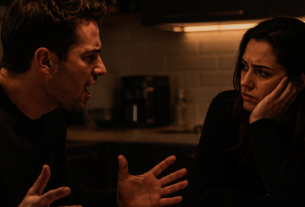
As I spoke, I saw Alla’s face change with every word. First, it just froze. Then the color drained from her cheeks, leaving her ghostly pale. Her eyes widened, her pupils huge. She stared at me without blinking, her hand, resting on the table, starting to tremble.
“Which… which fridge?” she asked in a thin voice.
“Ours, Gena’s and mine,” I said. “There was a pot with stew for Artur. At first, I worried someone might accidentally take it for regular food, but then I thought, in our home, no one takes what’s not theirs. Right?”
For a moment, the room was silent. Then Alla jumped up, knocking over her chair and doubling over. She threw up—right onto the table, the tablecloth, and onto Dmitry’s expensive shirt before he could move away. He jumped up, his face red with shock and disgust, while Alla straightened, wiping her mouth with a trembling hand, and screamed in a voice I had never heard from her before:
«You fed me dog food! You… you did it on purpose! I ate… I ate that!»
My mother-in-law covered her mouth with her hand. My father-in-law stood up, confused, not understanding what was happening. Dmitry stood in the middle of the room, brushing off his sleeve in disgust at what had landed on him.
I slowly stood up and said, calmly and with the tired clarity people use when stating the obvious:
«Maybe you shouldn’t have stolen from someone else’s fridge, Alla.»
«You’re crazy!» she screamed. «Mom! Dad! Do you hear her?! She poisoned me!»
«No one poisoned you,» Gena replied calmly, standing up beside me. «It’s food. Just not yours.»
Dmitry silently took his jacket from the hook. He didn’t even look at Alla. From the doorway, he tossed over his shoulder, dry and cold:
«Sorry for the trouble. I think I’d better go.»
«Dima, wait!» Alla rushed after him, but he was already gone. The door clicked softly in the lock. The sound of his footsteps faded into the stairwell.
Alla slid down the wall and burst into tears—not prettily or like in the movies, but loudly, howling like a child whose favorite toy has just been taken away. My mother-in-law quietly sat down next to her, but didn’t hug her. She just sat there.
Nikolai Ivanovich stood for a long time, looking at his daughter. Then he said in a dull voice:
«Alla. How many times have we asked you? You embarrassed us in front of the person you wanted to impress. And you embarrassed yourself. You’re twenty years old, but you’re behaving like a spoiled child. We won’t pay for your final year.»
Alla lifted her tear-streaked face:
«Dad!»
«If you want to study, get a job and pay for it yourself. Maybe then you’ll understand how hard it is to earn money. How hard it is to get food. How hard it is to get everything you’ve always taken for granted.»
«Mom!»
Valentina Petrovna just shook her head, not raising her eyes. She didn’t defend her daughter. That night, there was nothing left to defend.
Gena came into our room late, after walking Arthur. I was sitting on the edge of the bed, hugging my knees, and suddenly realized I was shaking. The adrenaline had faded, and all that was left was emptiness.
My husband sat down next to me and was silent for a while.
«That was harsh,» he said finally. «You know that, right?»
«I know.»
«But I don’t blame you. Honestly. She was only right about one thing: she always got away with everything. We, and our parents, let it go for too long. But you finally had enough.»
I leaned my forehead against his shoulder.
«I think I finally ruined her appetite,» I said wearily.
Gena laughed quietly, and I laughed too. It was nervous, through tears, the kind of laugh that only comes after too much tension.
When the house was quiet, we tiptoed to the kitchen. Arthur lifted his head in the hallway, looked at us with his amber eyes, then put his head back on his paws. He understood everything.
I pulled out the second pot from the fridge—the one I set aside just for us, no weird powder in it. It was simple stew, thick and aromatic, with tender beef and sweet carrots. I warmed it slowly, letting that familiar smell fill the kitchen. We sat by the table under the dim light above the stove, eating straight from the pot with big spoons, just like when we were kids.
«This is delicious,» Gena said, his mouth full.
We finished the stew in silence, and I could feel my muscles relax and the last of my tension fade away. There was a strange, calm happiness in just being together, with the house asleep and a new day waiting for us tomorrow.
Alla settled down. Not right away, but she did. For two weeks she didn’t leave her room, then started talking to her parents in an even tone, and a month later she got a job as an administrator at a small beauty studio near the university. She had to get up early, spend all day on her feet, and smile at clients—some who behaved even worse than she ever had. She’d come home exhausted, kick off her shoes in the hallway, and her first stop was always to pet Artur. The dog welcomed her with no hard feelings.
One evening she stopped me in the kitchen.
«Nastya.»
I turned around. Alla was standing in the doorway, hunched over, without her usual sparkle in her eyes.
«I just wanted to say that I was wrong. Not because I have to say it now, but for real. It just never crossed my mind that this was important. I thought it was nothing, just some food.»
I looked at her for a long time, then nodded.
«It’s not about food, Alla. It’s about respect. About the fact that everyone has their own things, and you can’t cross into someone else’s boundaries like it’s just a doorway.»
«I get it,» she said quietly. «I really do.»
We didn’t become friends. But the chilly tension between us gave way to something calmer and more even. She stopped opening our cupboard, and I no longer rummaged through her makeup bag. Sometimes in the evenings she would come to the kitchen and ask, «Nastya, can I have an apple?» I’d answer, «Of course, take one.» And we both knew this «can I» meant something completely different now.
Our savings were growing. Gena and I counted every week, made spreadsheets, and denied ourselves any extras. Then the day came when the bank finally approved our mortgage, and we went to see the apartment—a bright place with big windows and a kitchen big enough for a real family table. I stood in the empty room and felt like crying from happiness.
We moved at the start of spring. My mother-in-law packed us jars of homemade jam, my father-in-law silently loaded boxes into the car, and Alla brought out her old but fancy imported lamp from her room and shyly said, «Take it, I’ve got a new one anyway.»
Artur stood in the doorway, watching as we left. I crouched down in front of him and took his heavy head in my hands.
«We’ll come back to visit, you hear? Every weekend. You know I can’t be without you.»
He licked my hand and whimpered softly.
In the car, Gena started the engine and caught my eye in the mirror.
«What are you thinking about?»
«About how, in our new kitchen, there will be one fridge for the two of us,» I smiled. «And no one else will get to decide who takes what from it.»
My husband laughed, and we set off toward our new home.