“Since I’m such a terrible daughter-in-law, why are you so drawn to my apartment? Go visit your beloved daughter instead, and inspect the dust under her шкаф there.”
That weekend when it all began turned out to be surprisingly sunny and quiet. Rays of light danced across the table, where freshly brewed coffee steamed in a large mug. I sipped it, enjoying the warmth of the cup in my hands and the peaceful sight of my husband. Maxim was reading the news on his tablet, occasionally commenting on something funny. In moments like that, our home felt like a real fortress, cozy and impregnable.
“Want a little more?” Maxim reached for the coffee pot, and in his eyes was that very calmness that makes life worth living.
I was just about to nod when the sharp, relentless buzz of the intercom sliced through the morning idyll. My heart gave an unpleasant jolt. Nine in the morning on a Saturday? That could only be someone close. Or rather, someone who considered herself entitled to burst into our lives without warning.
Maxim frowned, walked over to the panel, and pressed the button.
“Hello?”
“Son, it’s me!” my mother-in-law’s brisk, commanding voice rang through the apartment. “Open up, my hands are full, the bags are heavy.”
The click of the lock sounded like a sentence. I exchanged a look with Max. Something like apology flickered in his eyes, but he quickly hid it.
“Mom brought treats,” he muttered with a shrug.
Less than a minute later, the door flew open, and Galina Petrovna sailed into the apartment. She never simply entered a home; she arrived as if stepping onto a stage, where everyone was obliged to play by her rules. In one hand she held a net bag of apples, in the other a huge container with something unidentifiable inside.
“Well, here I am!” she announced, sweeping the room with a quick, scanning glance. “Maxim dear, help me, take these. Oh, and it’s dusty in here.”
She set the bags down and, without even taking off her coat, walked into the living room. Her gaze slid over the shelves, the television, and paused on my favorite vase.
“Drinking coffee,” she remarked, and in those words was a silent reproach for our carelessness. “My Ira,” she paused, letting us fully feel the difference, “has already finished all her chores by this time. The floors are washed, the laundry is done. But then again, her husband has golden hands, he manages everything. And you two are just… lounging about.”
I clenched my teeth, feeling goosebumps run down my back. Maxim gave an uncertain smile.
“Mom, sit down. Want some coffee?”
“What, do I look like a loafer? I’ve already done everything at my place.” She waved a hand and headed for the kitchen.
As if hypnotized, we trailed after her. Galina Petrovna opened the refrigerator and, with a deep, suffering sigh, began rearranging the jars of pickles, which apparently were not standing where they should.
“You shouldn’t keep milk in the door shelf, it spoils faster. Don’t you know that?” she said to the air. “And I brought you some homemade salad. Olivier. My Mitya adores it. Alisa, take a look at how it’s supposed to be made properly.”
I kept silent. The words stuck in my throat in a lump of resentment and anger. Maxim tried to joke.
“Mom, this isn’t a sanatorium. We manage on our own.”
“Oh, I can see how you manage,” she shot back, closing the fridge. Her long, grasping fingers ran over the countertop, checking for invisible dust.
Then her eyes landed on the couch where we had been sitting just moments before.
“And what are these crumbs? Do you eat right on the couch?”
“It’s probably from the cookies,” I said through clenched teeth, feeling like a guilty schoolgirl.
“At Ira’s place,” my mother-in-law started again, and my patience snapped.
I had already opened my mouth to say something sharp, but Galina Petrovna suddenly turned to us, pretending she had only just remembered.
“Oh, right, I almost forgot the main thing. By the way, your Mitya will be taking your couch for a week. His apartment renovation started, you know, Max, and renting something right now is too expensive. Let him stay with family.”
A heavy pause hung in the air. A week? This man, who in three days could turn even a storage room into chaos? I looked at Max. He lowered his eyes, studying the pattern of the parquet floor. He avoided my gaze, and in that posture, in that silent compliance, I read everything.
The battle was lost before it had even begun.
He showed up the next evening. Not the same day, no. That would have been too simple, too predictable. He gave us one evening to live in anxious ожидание, the way a condemned man waits for dawn.
The doorbell rang just as I was washing the dishes after dinner. Maxim opened it. On the threshold stood Dmitry, my husband’s brother, with a small backpack slung over one shoulder and that unshakable confidence in his right to the whole world, the kind no money can buy.
“Hey, family!” he boomed cheerfully, stepping over the threshold without waiting to be invited in. “Let the sufferer in, save me from the renovation!”
He dropped his backpack right in the hallway, next to my neatly placed pair of shoes, and strolled into the living room, surveying it like its new owner.
“Not bad here, cozy,” he concluded, flopping down onto the very couch intended for him. His gaze slid over to me. “Hey there, Aliska. Haven’t missed me too much?”
I said nothing, drying my hands with a towel. Maxim nervously patted his brother on the shoulder.
“Settled in already, Mitya?”
“What’s there to settle in? Just crash for a couple of nights,” he said, sprawling more comfortably as he pulled out his phone. “Main thing is the internet works. I’ve got business to handle.”
His “business” began almost immediately. Less than half an hour had passed before he was already talking loudly on the phone, pacing around the living room.
“Yeah, Petrovich, it’s a million-ruble project, obviously! I’m in negotiations with partners right now, at the office.” He paused, listening to the other person, then lit a cigarette without asking permission. “The investors are hanging on me, you understand? Accounts are on fire around the clock. Well, you know how it is… By the way, bro, spot me a little till tomorrow, just to get things moving? I’ll pay back every bit, a hundred percent!… Continued a little lower in the first comment.”
There’s one small typo in the first sentence of the Russian text: “шкафом” was partially replaced by “шкаф.” The intended meaning is clearly “under the wardrobe/cabinet,” which I translated naturally.
That very weekend when it all began turned out to be surprisingly sunny and quiet. Rays of light danced across the table, where a large mug of freshly brewed coffee was steaming. I sipped it, enjoying the warmth of the mug in my hands and the peaceful sight of my husband. Maksim was reading the news on his tablet, occasionally commenting on something amusing. In moments like that, our home felt like a true fortress—cozy and impregnable.
“A little more?” Maksim reached for the coffee pot, and in his eyes was that very calmness that makes life worth living.
I was just about to nod when the sharp, relentless buzz of the intercom sliced through the morning idyll. My heart gave an unpleasant jolt. Nine in the morning on a Saturday? It could only be someone close. Or rather, someone who considered themselves entitled to barge into our lives without warning.
Maksim frowned, walked over to the panel, and pressed the button.
“Hello?”
“Sonny, it’s me!” my mother-in-law’s brisk, commanding voice rang through the apartment. “Open up, my hands are full, the bags are heavy.”
The click of the lock sounded like a sentence being passed. I exchanged a glance with Max. Something like apology flickered in his eyes, but he quickly hid it.
“Mom brought some treats,” he muttered with a shrug.
Less than a minute later, the door swung open, and Galina Petrovna swept into the apartment. She never simply entered a home; she entered as if stepping onto a stage where everyone was expected to follow her script. In one hand she carried a mesh bag full of apples, in the other a huge container with something unidentifiable inside.
“Well, here I am!” she announced, sweeping the room with a quick, scanning look. “Maksyusha, help me, take this. Oh, and it’s dusty in here.”
She put the bags down and, without taking off her coat, walked straight into the living room. Her gaze skimmed the shelves, the TV, then lingered on my favorite vase.
“You’re drinking coffee,” she observed, and in those words there was a silent reproach for our carelessness. “My Ira,” she paused, letting us feel the contrast, “has already finished all her chores by this hour. The floors are washed, the laundry’s done. But then again, her husband has golden hands—he manages everything. And you two are just… luxuriating.”
I clenched my teeth, feeling goosebumps run down my back. Maksim smiled uncertainly.
“Mom, sit down. Want some coffee?”
“What am I, a lazybones? I’ve already done everything at my place.” She waved a hand and headed for the kitchen.
As if under a spell, we trailed after her. Galina Petrovna opened the fridge and, with a deep, suffering sigh, began rearranging the jars of pickles, which apparently were not standing where they should.
“You shouldn’t keep milk on the door shelf, it spoils faster. Don’t you know that?” she said to the air. “And I brought you some homemade salad. Olivier. My Mitya loves it. Alisa, take a look at how it should really be made.”
I stayed silent. The words stuck in my throat in a hard lump of resentment and anger. Maksim tried to joke.
“Mom, this isn’t a sanatorium. We manage just fine.”
“Oh, I can see how you manage,” she shot back, shutting the fridge. Her long, grasping fingers ran over the countertop, checking for invisible dust.
Then her gaze fell on the couch where we had just been sitting.
“And what are these crumbs? Do you eat right on the couch?”
“It’s probably from the cookies,” I said through tight lips, feeling like a guilty schoolgirl.
“At Ira’s…” my mother-in-law began again, and that was when my patience snapped.
I had already opened my mouth to say something sharp, but Galina Petrovna suddenly turned to us, pretending she had only just remembered.
“Oh yes, I completely forgot the most important thing. By the way, your Mitya will be taking the couch for a week. His apartment renovations have started, you know, Max, and renting a place is too expensive right now. Let him stay with family.”
A heavy pause hung in the air. A week? That man, who could turn even a storage room into chaos in three days? I looked at Max. He lowered his gaze, studying the pattern in the parquet floor. He avoided my eyes, and in that posture, in that silent compliance, I read everything.
The battle was lost before it had even begun.
He showed up the following evening. Not that same day, no—that would have been too simple, too predictable. He gave us one evening to live in anxious anticipation, the way a condemned person waits for dawn.
The doorbell rang just as I was washing the dishes after dinner. Maksim opened it. On the threshold stood Dmitry, my husband’s brother, with a small backpack slung over one shoulder and that unshakable confidence in his right to the whole world—something money alone can’t buy.
“Hey there, family!” he boomed cheerfully as he stepped inside without needing an invitation. “Let the poor sufferer in, save me from the renovation!”
He dropped the backpack right in the hallway next to my neatly placed pair of shoes and strolled into the living room, surveying it like a new owner.
“Not bad here, pretty cozy,” he concluded, flopping down on the very couch that had been prepared for him. His gaze slid over to me. “Hey, Aliska. Didn’t get too bored waiting for me, did you?”
I said nothing, drying my hands on a towel. Maksim nervously patted his brother on the shoulder.
“You settling in already, Mitya?”
“What’s there to settle? Just need a place to crash for a couple nights,” he said, sprawling more comfortably as he pulled out his phone. “Main thing is the internet works. I’ve got business to handle.”
His “business” started almost immediately. Less than half an hour later, he was already talking loudly on the phone, pacing through the living room.
“Yeah, Petrovich, it’s a million-ruble project, obviously! I’m in negotiations with partners right now, at the office.” He paused, listening to the other person, then lit a cigarette without asking permission. “The investors are hanging on me, you understand? Money’s burning around the clock. You know how it is… By the way, bro, spot me a little until tomorrow, just for expansion? I’ll pay it all back a hundred percent!”
I was standing in the kitchen chopping vegetables for tomorrow’s salad. Through the hiss of potatoes frying in the pan, his boastful voice carried through. Maksim sat at the table pretending to watch TV, but it was obvious he was tense.
Mitya ended the call and shouted without getting up from the couch:
“Alisa, what smells so good in the kitchen? I’m hungry! Any chance there’s barbecue?”
Something inside me twitched. I stepped into the kitchen doorway, still gripping the vegetable knife in my hand.
“Dinner’s long over, Dmitry. I’m cooking for tomorrow.”
“Then heat something up!” he replied without taking his eyes off the phone. “A man needs strength. I’ve been running around starving all day.”
Maksim looked up at me, and there was pleading in his eyes. Don’t start, please. I took a deep breath, turned around, and poured the leftover soup into a bowl. I reheated it in the microwave. The sound of it seemed unnaturally loud.
I set the bowl in front of him on the coffee table. He poked at the soup with his spoon.
“No bread? Is this all?”
“The bread’s in the breadbox,” I forced out through clenched teeth. “In the kitchen.”
He grunted in annoyance, but got up and shuffled into the kitchen in his socks. A minute later he came back with half a loaf of bread, sat down, and started eating noisily while watching some stream on his phone. Crumbs fell onto the clean carpet.
That evening, when Maksim and I lay down in the bedroom, I couldn’t hold back any longer.
“Max, he’s been here three days already and he still hasn’t even washed a single dish after himself! Did you hear the way he talks to us? Like we’re servants!”
“Just bear with it, Alisa,” my husband said tiredly, turning onto his side. “It’s not forever. Renovations. He’s family—where’s he supposed to go?”
“Family who asks anyone and everyone for money while planning to buy a new car?” I shot back, remembering his conversation from yesterday.
“You must have heard it wrong.” Maksim switched off the light. “Go to sleep. Everything will work out.”
But nothing worked out. In the silence of the room, through the closed door, I heard Mitya’s muffled voice. He was on the phone again, and a few words came through clearly, as if he were standing right outside.
“Come on, the renovation’s practically done, but the place here is free and they feed me. I’ll stay a while longer. Need money for a new car—I sold the old one.”
I froze, listening. Blood pounded in my ears. Practically done. Staying. They feed me. New car.
I turned toward my husband’s back—he was already almost asleep—and whispered into the darkness:
“Family, you say… I wonder if your family knows he’s nothing more than a freeloader here.”
The silence after Galina Petrovna left lasted exactly two days. On the third day, closer to evening, the very same intercom buzz I had subconsciously been expecting rang out. My mother-in-law’s voice sounded sweet and anxious at the same time.
“Maksyusha, open up! I’m here to see Mitenka, I’m worried about him. And I brought some treats.”
The moment Mitya heard it, he perked up as if he’d received a signal. He hadn’t cleaned up after breakfast all morning, and his dirty plate with dried crumbs was lying right on the coffee table in plain sight.
The moment Galina Petrovna came in, her gaze, like radar, immediately locked onto that unsightly artifact. She froze in the doorway, and her face fell.
“Mitenka, my dear, why are you eating at the coffee table?” she said reproachfully, taking off her coat. “That’s not a table, that’s a piece of furniture! Alisa, don’t you have a proper kitchen table?”
Before I could answer, she walked over to the couch, where her younger son was lounging, and fondly ruffled his hair.
“How are you here, son? They’re not mistreating you, are they?”
“Well… depends how you look at it, Mom…” Mitya sighed with fake sorrow and shot me a meaningful glance. “Some days I practically have to reheat my own food. Makes me feel kind of unwanted.”
My breath caught at such brazen lying. I was standing at the sink, washing the pot in which I had boiled pasta for his lunch.
“Wait a second, Dmitry,” I said, wiping my hands. “What days are you talking about? I cooked for you yesterday and today.”
“Well, reheated something…” he waved a dismissive hand. “A man needs proper hot meals, not reheated leftovers.”
Galina Petrovna’s eyebrows shot up, and her eyes flashed with cold fire. She turned to me, and her voice rang tight as a pulled string.
“So this is how you host my son? I thought you’d at least take a little care of him! He’s a man, he needs support, not constant reproaches! He’s under stress—he’s got renovations going on!”
The patience that had been building inside me for weeks finally burst. The lump in my throat dissolved, giving way to icy fury.
“What renovations, Galina Petrovna?” I asked with deliberate calm. “You yourself said everything at his place was almost done. Or am I mixing something up?”
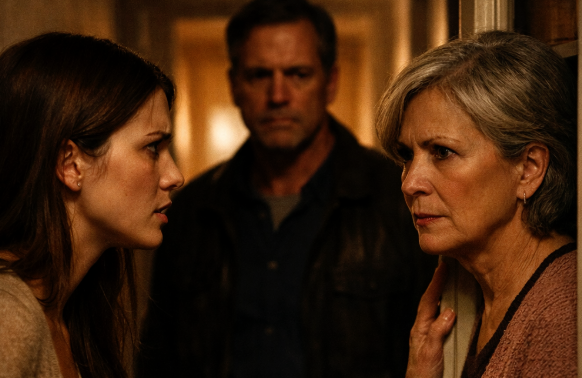
“Don’t play dumb!” my mother-in-law flared. “You’re making his life miserable here! You look at him like he’s your enemy! And you don’t even bother taking care of yourself”—her gaze slid venomously over my simple house robe—“there’s been dust under the wardrobe for a week already, I noticed last time! Maybe that’s why you don’t have children—because you live in filth?”
Such a low, unexpected cruelty made everything go dark before my eyes. Maksim, hearing the noise, came out of the bedroom. He stood there pale, looking like a frightened teenager.
“Mom, Alisa, calm down!” he tried weakly to say.
“Be quiet, Maksim!” I snapped, turning sharply to him. “Are you going to say one thing that isn’t in their favor? Or will you just keep silent again?”
But he only spread his hands helplessly. That silence was the last straw.
“You know what, Galina Petrovna?” My voice trembled, but I spoke clearly, looking straight into her eyes. “If I’m such a terrible daughter-in-law, such a slob, practically a menace to your son, then why are you so irresistibly drawn to my apartment? Go visit your beloved daughter, Ira! Everything’s perfect at her place, isn’t it? Go inspect the dust under her wardrobe, if that’s your main measure of family happiness!”
Dead silence fell. Galina Petrovna stood up straight, lips pressed into a thin white thread. Mitya looked at me with open contempt, but there was curiosity in his eyes too—he was enjoying the show. And I looked at Max’s ashen face and felt something important collapsing between us with a crash, some final support. My faith in us. My marriage had cracked, and the crack was deeper and more terrifying than any quarrel.
After they left, a deathly silence settled over the apartment. It was thick, ringing, pressing against my ears. I stood in the middle of the living room, still clenching my fists, unable to move. The words that had been spoken in the argument hung in the air like poisonous fog. Maksim was the first to break the silence. He didn’t come over to me, didn’t try to hug me. He just whispered, looking at the floor:
“Why did you do that? She’s my mother…”
His voice sounded tired and hopeless. Instead of answering, I turned and walked into the bedroom, closing the door behind me. The click of the lock wasn’t loud, but for both of us it meant an insurmountable barrier.
I sat on the bed and looked out the window at the darkening sky. Inside, there was no anger, no hurt. There was emptiness. Emptiness and a cold, crystal-clear understanding: I was alone. The husband who was supposed to be my support, my ally, had in the decisive moment ended up on the other side of the barricades. His “family blood” had turned out to be thicker and more important than our years together, our vows, and our shared home.
Memories drifted before my eyes. Our wedding. Maksim looking at me with adoration. The first apartment we furnished together, arguing over wallpaper colors and laughing at crooked shelves. We dreamed of children, made plans. It had seemed nothing could destroy our little universe.
Now that universe had cracked. And the crack did not come from Mitya’s arrogance or Galina Petrovna’s tyranny. It came from my husband’s silent consent. His unwillingness to protect me, his home, our shared space.
I walked to the mirror and looked at my reflection. I memorized that face—tired, with dark circles under the eyes, but with a new, unfamiliar gleam in them. A gleam of determination.
There were no tears. There was steel.
I took my phone out of my purse, opened the voice recorder, and pressed the red button. My voice sounded quiet but clear in the silence of the room.
“Recording for October twentieth,” I said. “Today Galina Petrovna and Dmitry caused another scandal. My husband did not stand up for me. From this moment on, I am starting to gather evidence. Audio recordings, photographs, videos. Everything that will help me defend my right to a peaceful life in my own home.”
I switched off the recorder. The first step had been taken.
The next morning I woke up earlier than everyone else. My day began not with coffee, but with a cold, calculated plan. I had studied law, and it was time to remind everyone of that—including myself.
I made breakfast for myself only. I sat at the table and ate slowly, enjoying the silence. Mitya woke up first. Unshaven and rumpled, he wandered into the kitchen and poked around the stove and fridge.
“Where’s breakfast?” he asked irritably.
“There are eggs and bread in the fridge,” I replied indifferently, not looking up from my plate. “Men need strength, as you say. Especially big businessmen like you.”
He muttered something under his breath and started frying eggs, banging the pan loudly. I didn’t scold him. I simply watched. And remembered.
Maksim came out later. He looked miserable and lost. He tried to speak to me, his voice soft and guilty.
“Alis, let’s talk…”
“Not now, Maksim.” I stood up and carried my plate to the sink. “I need to go to work.”
I left, leaving that suffocating atmosphere of unspoken things behind me. But inside, the old pain was gone. There was only cold, heavy resolve. They wanted a war? Fine. They would get one. But on my terms.
That evening, when I came home from work, I did not cook dinner for everyone. I stepped into my apartment as if into a fortress captured by an enemy garrison. Mitya was watching television, sprawled on the couch. Maksim, apparently, had locked himself in the study.
I went into the kitchen, made myself tea and a sandwich, and took it into the bedroom. The door closed behind me with a quiet but confident click.
I opened my laptop and created a new file. It was empty, clean. The cursor blinked in the white space, waiting. I placed my fingers on the keyboard and typed the title:
“Fortress.”
It was time to defend myself.
The silence in the bedroom was deceptive. Through the thin wall came the muffled sound of the television—Mitya was watching another match. But inside my head there was absolute, crystal clarity. I opened my laptop, and the bright light of the screen illuminated my resolute face. The file titled “Fortress” was no longer just a metaphor. It had become a battlefield.
I started with something simple—memories. Before getting married, I had graduated from law school. Not the most prestigious university, but it had given me a solid foundation. Civil law, housing legislation… All of it had seemed so distant and unnecessary in my peaceful life with Maksim. Now that knowledge was becoming my main weapon.
I opened the browser and plunged into legal research. I read slowly, carefully, absorbing every phrase. I needed not just to understand, but to build a flawless strategy.
After several hours of painstaking work, I found what I had been looking for. Article after article, lawyers’ explanations, examples from court practice. The picture came together clearly and undeniably.
Dmitry was not registered at our apartment. Legally, he was not a member of our household. He was simply a guest. And a guest, under the law, does not have the right to live in a home against the will of an owner. Yes, Maksim was one of the owners, but so was I. And my refusal was enough.
I opened a new document and began typing. A statement concerning the unlawful occupation of residential premises. Every word was measured, every phrase sounded like a hammer strike. I was not threatening anyone; I was stating facts. I included dates, the duration of the illegal stay, cited the relevant laws. It was not a cry of the soul, but a cold legal document.
When I finished, I reread it once more. The text was dry and unemotional, exactly as an official statement should be. That was what gave it strength. It contained none of my grief, none of my humiliation—only facts and statutes.
I printed the statement. The printer hummed in the silence, producing a sheet of paper that became the tangible embodiment of my resistance. I took it in my hands. The paper was still warm.
Now I had to take the next step. File it with the police? No, that would be too straightforward. Too crude. Mitya and Galina Petrovna did not understand the language of diplomacy, but they respected the language of force. They needed to see that I was not just an offended woman, but an opponent who played by rules they had never even heard of.
I neatly folded the sheet and stepped out of the bedroom. As expected, Mitya was sprawled on the couch in the living room. He was muttering something into his phone, but when he saw me he quickly ended the call.
“Aliska, any dumplings planned?” he asked with a strained smirk.
“The fridge is empty,” I replied dryly. “Just like your prospects of staying here.”
I walked into the kitchen and pretended to look for something in the drawer with the cutlery. Then, as if by accident, I dropped the folded sheet onto the table right across from the entrance to the living room. It fell with a faint rustle. I pretended not to notice and walked out of the kitchen, heading for the bathroom.
Closing the door partway, I listened. At first there was silence. Then hesitant footsteps. Then the rustle of paper. And finally—dead silence, lasting an entire minute.
When I came out, the sheet was gone from the table. And on Mitya’s face, when he glanced at me, I saw a mixture of anger and genuine fear. Without a word, he grabbed his phone and stepped out onto the balcony, hurriedly dialing someone’s number. Most likely his mother’s.
I returned to the bedroom, to my laptop. The file “Fortress” was still open on the screen. I added a new entry:
“First move made. The opponent has seen the cards. Awaiting counterattack.”
I leaned back in my chair. Now the initiative was on their side. But for the first time in this entire war, I felt not like a victim, but like a commander. A commander who had finally unfolded the map of the terrain and understood where the enemy’s weak points lay.
They did not keep me waiting. The next day, closer to evening, the intercom did not merely ring—it shrieked angrily and continuously, as if someone had jammed a finger on the button and had no intention of letting go. I walked to the panel already knowing who it was. My heart began pounding, but not from fear—from cold, concentrated anticipation.
“Hello?” I said in an even voice.
“Open up! Right now!” Galina Petrovna hissed into the speaker, her voice warped with rage. “What have you done, you wretch!”
I pressed the unlock button. Before opening the door, I took three deep breaths, took out my phone, turned on the voice recorder, and slipped it into the pocket of my robe. My palms were dry.
The door flew open, and Galina Petrovna burst into the apartment like a hurricane. Behind her, wearing a triumphant expression, came Mitya. My mother-in-law was without her coat, face flushed, eyes blazing.
“Where is it? Where is it?” She shot me a murderous look. “How dare you threaten my son? Throwing your husband’s own brother out into the street! Who do you think you are?”
Mitya made himself comfortable in the doorway to the living room, arms crossed over his chest, clearly ready to enjoy the spectacle.
“Mom, calm down,” Maksim muttered, appearing from the hallway. He looked worn out.
“Be quiet, Maksim!” she snapped without even looking at him. “Your wife has completely lost her mind! Threatening our Mitenka with the police!”
I did not move, simply watching her with cold composure.
“Galina Petrovna, Dmitry is living here without my consent. I am against it. I have every right.”
“What consent?” she snorted, stepping almost nose-to-nose with me. “This is my son’s apartment! He decides here! And you’re just a temporary passerby!”
“Mom!” Maksim suddenly cried out sharply, but once again no one listened.
I held her gaze. In my pocket I could feel the faint vibration of the phone confirming the recording was running.
“Galina Petrovna,” I said slowly and very clearly, emphasizing every word, “please state for the record: are you officially confirming that your son Dmitry is living in this apartment, of which I am also an owner, without my knowledge and against my will?”
She froze for a second, thrown off by my calm, almost formal tone. But rage won out.
“Don’t try to confuse me with your ‘for the record’ nonsense!” she roared. “Yes, I confirm it! What are you going to do about it? He has every right to live here! More than you do!”
Without taking my eyes off her, I slowly pulled the phone out of my pocket, stopped the recording, and placed it on the little table by the door.
“Thank you,” I said quietly. “That’s enough. It’s all recorded. Either Dmitry packs his things and leaves my apartment forever within the next hour, or in two hours the police will be here with this statement”—I nodded toward the printed document on the table—“and all of you will be going to the station to give explanations. At the very least, for unlawful self-help.”
A deafening silence filled the apartment. Even the television was silent. Galina Petrovna stared at me, and I watched the anger in her eyes gradually give way to confusion, and then to understanding. For the first time, she saw in me not a daughter-in-law she could torment with impunity, but a person holding a weapon. And that weapon was the law.
Mitya stopped smirking. He straightened up, his face falling.
“Mom?” he called uncertainly. But Galina Petrovna did not answer. She kept looking at me, and in her gaze I saw something new—fear. Fear of the system, of official papers, of the humiliating trip to the police station.
Slowly, as if she had aged ten years in a minute, she turned to her younger son.
“Pack your things, Mitya,” she said dully. “You’re coming to my place.”
And without another word, without looking at me or at Maksim, she stepped into the stairwell and pulled the door shut behind her. Her departure was more eloquent than any scandal.
Mitya stood there for another moment, throwing me a look full of hatred and fear, then spat at the floor and trudged into the living room for his backpack.
I remained standing in the hallway, looking at my husband’s pale face. The battle had been won. But the air smelled not of victory, but of ashes.
The silence that settled after the slam of the front door was different. Not ringing, as it had been after the argument, but thick and heavy, like lead. It pressed on the ears, the lungs, the heart. I stood in the hallway, leaning against the doorframe, unable to move. There was no triumph inside me. Only icy emptiness and a weariness that reached the bone.
Mitya left, muttering something under his breath, bitter and indistinct. Galina Petrovna retreated, broken and humiliated. And Maksim… Maksim was looking at me. His face was white as chalk, and in his eyes a storm raged—hurt, anger, and genuine horror.
He was silent, and that mute scene seemed to last forever. He was gathering his thoughts, choosing his words. And when he finally spoke, his voice was quiet, but every word burned like red-hot metal.
“Happy now?” he whispered. “You got what you wanted. You drove my brother out. You humiliated my mother. You made her cry. Are you happy now?”
I slowly straightened up. I had no strength left for shouting. Only coldness remained.
“I was protecting my home, Maksim. Our home. The one where, apparently, you stopped being the хозяин long ago.”
“What home? What хозяин?” His voice cracked into a shout. “You carried out a purge here! You brought the police on your own family!”
“Family doesn’t do things like this!” I shot back, and for the first time a note of tired trembling entered my voice. “Family doesn’t mooch off you and spit in your soul! Family doesn’t lie about renovations and talk behind your back about how nice it is to ‘sit in a free apartment’! Want to hear it?”
I didn’t wait for an answer. I walked to the little table, picked up my phone, and found the recording I needed. The one where Mitya bragged about his scheme. I turned the volume all the way up.
In the silence of the hallway, his brother’s voice sounded especially cynical and clear:
“…Come on, the renovation’s practically done, but the place here is free and they feed me. I’ll stay a while longer. Need money for a new car—I sold the old one…”
Maksim listened, and his face changed. Anger slowly gave way to confusion, then to bitter understanding. He looked down at the floor, his shoulders slumping.
“You… you knew all this time?” he finally choked out.
“Yes, Maksim. I knew. And you? You chose not to know. You chose to close your eyes and force me to put up with this circus. Because of ‘family blood.’”
I paused, giving him time to grasp the full depth of the betrayal. Not Mitya’s—his own.
“And now,” I continued quietly, “you have a choice to make. Their arrogant, cynical selfishness wrapped in cries of ‘family.’ Or our family. Ours—you and me. But I’m warning you now: I will never again let them cross the threshold of my home. Never. Decide.”
He looked up at me. In his eyes I saw a painful struggle. On one side, the old lesson drilled into him for years: never betray your own. On the other—me, his wife, and the truth he had ignored for so long.
He remained silent so long that I already knew his answer.
Then slowly, like an automaton, he turned, went into the bedroom, and a couple of minutes later came out carrying a small sports bag stuffed with a few things. He didn’t look at me.
“I need… I need to be alone,” he said dully, heading for the door.
“At your mother’s?” I asked, and there was not a drop of reproach in my voice, only plain fact.
He didn’t answer. He just opened the door and walked out. The lock clicked behind him. This time, quietly and окончательно.
I was left alone in the hallway. In the quiet, clean, hard-won apartment. I let my eyes move over the empty living room, the tidy kitchen. The enemies had been driven out. The fortress had held.
But the air smelled not of victory. It smelled of ashes and loneliness. Slowly I sank down to the floor, leaned my back against the wall, and closed my eyes. And only then, in the complete silence, did the first hot, bitter tears of all that time finally roll down my cheeks.
The weeks that followed Maksim’s departure passed in a strange, ghostlike rhythm. I lived as if in a dream, where every action was clear and precise, but stripped of its former meaning. Wake up. Make coffee. Go to work. Come back. Cook dinner for one. Go to bed.
At first the silence in the apartment pressed on me, rang in my ears. Then I got used to it. It became my shelter, my sanatorium after a long illness called “someone else’s family.” I didn’t cry. The tears had stayed there, on the hallway floor, the night he left. Now there was only quiet, weary clarity inside.
I didn’t call him. He didn’t call me. Sometimes I caught myself checking my phone, but that was just a reflex. Deep down I had already come to terms with the fact that, in defending my home, I had lost my husband. The price was high, but I was willing to pay it. Peace was worth more than the illusion of family.
I began seeing my friends more often, returned to old hobbies I had abandoned because of endless “family circumstances.” Once I even went away alone for the weekend to another city, simply to feel free. I was learning how to be alone again, and it no longer frightened me.
One evening, sitting on the balcony with a cup of tea, I watched the sunset and thought that my fortress, though empty, truly belonged to me now. I was its sole mistress. And that brought a bitter but genuine satisfaction.
It was on just such an evening, quiet and unremarkable, that the doorbell rang. Not sharp and demanding like before, but short, almost hesitant.
For a moment, my heart skipped. I walked to the door and rose onto my toes to look through the peephole.
Maksim was standing on the threshold.
He was alone. No suitcase, no bags. In his hands he held a modest bouquet of irises—my favorite flowers, which he had seemed to forget long ago. But it wasn’t about the flowers. It was about his eyes. They held none of his former certainty, no hurt or anger. Only weariness, deep and hard-won, and the same clarity that had appeared in me.
He didn’t ring again, didn’t try to call my phone. He simply stood there and waited.
I slowly lowered myself from my toes. My hand reached for the lock on its own. My fingers wrapped around the cold metal handle.
He said he understood everything. He asked for forgiveness. He called it our home. My home.
I looked at his face through the cloudy glass of the peephole and found in myself neither anger nor any desire for revenge. There was only quiet weariness and caution, like an animal that has already once been caught in a trap.
Slowly, very slowly, I reached for the door handle…
The decision was mine alone.