“Here, pay this,” my husband’s mother said, handing me the folder with the bill for her anniversary celebration.
I had long understood one simple thing: money does not solve problems. It only makes problems more expensive.
When Igor and I first got married, I thought his mother was just an eccentric person. You know the type: a little theatrical, a little demanding, but basically harmless. Valentina Stepanovna had taught at a music school for thirty years, had raised a son who was an artist, and now sincerely believed that her whole family was something like a bohemian island in a sea of gray everyday life. She wore long skirts, drank only loose-leaf tea, and never watched television—only arthouse films on her laptop. At the same time, her apartment was neglected, her pension was small, and her refrigerator was regularly empty until we filled it with groceries.
Igor painted. Not for money—heaven forbid. For the soul. He got up at noon, brewed coffee, stared out the window for a long time, then picked up a brush and worked for about three hours. Sometimes his paintings sold—rarely, for little money—but the very fact of a sale was treated in the family as the artist condescending to the crowd. I, meanwhile, worked in marketing. From eight in the morning until eight in the evening, sometimes longer. I built strategies, managed clients, went to meetings, answered emails on weekends, and thought about work even on vacation—though I had not had a real vacation in several years.
“Ksyusha is our practical one,” Valentina Stepanovna would say to her friends in a tone that made the word “practical” sound roughly like “limited.” “But Igoryok—he’s sensitive. He doesn’t need to earn money, he needs to create. And she is very good at earning money. So let her earn it.”
I heard that more than once. At first I got angry. Then I learned to let it go in one ear and out the other—I simply had no time for resentment. But the residue remained. A dense, heavy residue that does not dissolve with time, only grows thicker.
We paid her utility bills—“well, you can afford it, and I’m on a pension.” We bought her medicine—“Igoryok, tell Ksyusha to pick it up from the pharmacy.” We brought groceries, fixed the faucet, changed light bulbs. Once she called me at work right in the middle of a presentation for a major client and asked me to transfer her money because she liked a tablecloth in an online store. I stepped out of the meeting room, sent the money, and went back in with a smile as if nothing had happened. Because there was no other way. Otherwise there would be a scandal, tears, “I gave my whole life to my son,” and Igor would spend a week walking around looking like a man who had been betrayed.
Igor was kind. Truly kind—and I say that without irony. He was never rude, never shouted, knew how to listen, and knew how to rejoice in other people’s successes. Mine too. It was just that he had this worldview in which money existed somewhere on the periphery of reality—it was there, there was enough of it, and that was sufficient. Where it came from was not a question that interested him. His mother had planted in him the belief that a creative person stands above everyday concerns, and he carried that belief lightly, as if it weighed nothing. For him. But not for me.
I learned about Valentina Stepanovna’s anniversary two months in advance.
“I’m turning seventy,” she announced during Sunday lunch, and there was such solemnity in her voice that it sounded as though she were announcing a matter of state. “This is not just a birthday. It is a milestone.”
“Of course, Mom,” Igor nodded, spooning himself more salad.
“I want to celebrate it properly. So that everyone can see.”
“So that everyone can see what?” I asked. She looked at me with mild surprise, the way one looks at a person who has asked an inappropriate question.
“That we live well, Ksyusha. That we have everything. That my son has made something of himself and that his family is strong.”
I said nothing. Because I had plenty to say, but the moment for it had not come yet.
Over the next few weeks, I watched the preparations unfold. Valentina Stepanovna found a café—not just pleasant, but pompous, with high ceilings, crystal chandeliers, and a menu whose dish descriptions alone made your throat tighten. She drew up the guest list with the methodical precision of a general: friends from the music school, former colleagues, a second cousin from another city, neighbors from the dacha—the ones who bought a new car last year and, apparently, had not given her a moment’s peace since. She wanted flowers, wanted champagne, wanted live music—“at least one violinist, that’s inexpensive.”
Igor listened and smiled. He quite evidently did not sincerely think about who was going to pay for all of it. Or perhaps he did think about it, but the answer seemed so obvious to him that it did not require discussion.
I thought about it. And quietly prepared.
One evening, after Igor had already fallen asleep, I sat in the kitchen for a long time with a cup of tea and thought. I thought about how many years I had already been carrying all of this. About how Valentina Stepanovna had never—not once—thanked me directly. Always through Igor: “tell Ksyusha thank you,” as if I were not a member of the family but some remote contractor. About how my own parents live modestly, and I help them as much as I can, but I had never heard a single word of respect from my mother-in-law for that. About how she pronounced the word “marketer” with the same intonation other people use for “accountant” or “sales manager”—that is, as something functional, not creative, and therefore second-rate.
And I made a decision. A very calm, very firm decision.
I would not say anything in advance. I would come to the celebration. I would smile and offer congratulations. But when they brought the bill—I would not pay.
It sounds simple. In reality, it took weeks of internal work, because I am the kind of person who is used to solving problems, not creating them. But sometimes, I understood this more and more clearly, the only way to stop being an ATM is to refuse to dispense money one day.
The celebration turned out exactly the way Valentina Stepanovna had imagined it.
The café sparkled. The tables were laid lavishly. They did hire the violinist after all—a young man in a black jacket played something quietly classical by the entrance. There were many guests: noisy friends in elegant dresses, former colleagues with flowers, the dacha neighbors—the ones with the car—came as a couple and looked around with undisguised curiosity.
Valentina Stepanovna was in her element. She accepted congratulations with the dignity of a queen condescending to grant an audience. She gave toasts—long, beautiful toasts about life, art, and the idea that the greatest wealth is close loved ones. When she said “loved ones,” she looked at Igor. At me—almost never.
I sat beside my husband, smiled, answered strangers’ questions about my job, sipped champagne in small gulps, and waited.
The evening went on in its own course. They brought the hot dishes—rich and abundant. Then dessert—a cake with real candied flowers on it, clearly custom-made. Then coffee. Then another toast. Then another.
I watched the plates disappear, the bottles empty, the violinist by the entrance long since finish his allotted hours and leave, while the bill kept growing and growing somewhere at the unseen administrator’s desk.
At last the evening began to wind down. Guests started saying goodbye, hugging, taking pictures. The birthday woman stood in the center, flushed from champagne and all the attention, absolutely happy.
The waiter approached her quietly and politely, a leather folder in his hands.
I saw Valentina Stepanovna take the folder. I saw her open it. I saw the slight pause—a second of confusion that she instantly hid beneath her usual composure… Continued just below in the first comment.
I understood one simple thing a long time ago: money doesn’t solve problems. It just makes problems more expensive.
When Igor and I had just gotten married, I thought his mother was simply an eccentric person. You know the type: a little theatrical, a little demanding, but basically harmless. Valentina Stepanovna had taught at a music school for thirty years, raised a son who was an artist, and now sincerely believed that her entire family was something like a bohemian island in a sea of gray everyday life. She wore long skirts, drank only loose-leaf tea, and never watched television—only arthouse films on her laptop. At the same time, her apartment was neglected, her pension was small, and her refrigerator was regularly empty until we filled it with groceries.
Igor painted. Not for money—God forbid. For the soul. He got up at noon, made coffee, stared out the window for a long time, then picked up a brush and worked for about three hours. Sometimes his paintings sold—rarely, for little money—but the very fact of a sale was treated in the family as the artist condescending to the crowd. I, meanwhile, worked in marketing. From eight in the morning until eight at night, sometimes longer. I built strategies, managed clients, went to negotiations, answered emails on weekends, and thought about work even on vacation—though I hadn’t had a real vacation in several years.
“Ksyusha is our practical one,” Valentina Stepanovna would say to her friends in a tone that made the word practical sound roughly like small-minded. “Igoryok is sensitive. He doesn’t need to earn money, he needs to create. And she’s good at earning. So let her earn.”
I heard that more than once. At first it made me angry. Then I learned to let it go in one ear and out the other—I simply didn’t have time to be offended. But the residue remained. A thick, heavy residue that doesn’t dissolve with time, only grows denser.
We paid her utility bills—“Well, you can afford it, and I’m on a pension.” We bought her medicine—“Igoryok, tell Ksyusha to pick it up at the pharmacy.” We brought groceries, fixed her faucet, changed her lightbulbs. Once she called me at work right in the middle of a presentation for a major client and asked me to transfer money—she’d liked a tablecloth in an online store. I stepped out of the meeting room, sent the money, and came back smiling as if nothing had happened. Because otherwise it was impossible. Otherwise there would be a scandal, tears, “I gave my whole life to my son,” and Igor would spend the next week looking like a man who had been betrayed.
Igor was kind. Truly kind—and I say that without irony. He was never rude, never shouted, knew how to listen, and knew how to be happy for other people’s success. Mine included. It was just that in his picture of the world, money existed somewhere on the periphery of reality—it was there, there was enough of it, and that was sufficient. Where it came from was not a question that interested him. His mother had instilled in him the belief that a creative person stands above everyday concerns, and he carried that belief lightly, as if it weighed nothing. For him. But not for me.
I found out about Valentina Stepanovna’s юбилей—her anniversary birthday—two months in advance.
“I’m turning seventy,” she announced during Sunday lunch, with such solemnity in her voice that it sounded as though she were reporting a state event. “This is not just a birthday. It’s a milestone.”
“Of course, Mom,” Igor nodded, spooning himself more salad.
“I want to celebrate it properly. So everyone can see.”
“So everyone can see what?” I asked.
She looked at me with mild surprise, the way one looks at someone who has asked an inappropriate question.
“That we live well, Ksyusha. That we have everything. That my son has made something of himself and that his family is strong.”
I said nothing. Not because I had nothing to say, but because the time for it had not yet come.
In the following weeks, I watched the preparations unfold. Valentina Stepanovna found a café—not just pleasant, but pompous, with high ceilings, crystal chandeliers, and a menu whose descriptions alone made your throat tighten. She made the guest list with the methodical precision of a general: friends from the music school, former colleagues, a third cousin from another city, neighbors from the dacha—the ones who had bought a new car last year and, apparently, had not let her forget it. She wanted flowers, champagne, live music—“At least one violinist, that’s not expensive.”
Igor listened and smiled. Apparently, it genuinely never occurred to him to wonder who was going to pay for all of it. Or maybe it did occur to him, but the answer seemed so obvious to him that it didn’t require discussion.
I wondered about it. And quietly prepared.
One evening, when Igor was already asleep, I sat in the kitchen with a cup of tea for a long time and thought. I thought about how many years I had already been carrying all of this. About the fact that Valentina Stepanovna had never—not once—thanked me directly. Always through Igor: “Tell Ksyusha thank you,” as if I weren’t a member of the family but some kind of remote contractor. About the fact that my own parents lived modestly, that I helped them as much as I could, but I had never once heard a word of respect from my mother-in-law for that. About how she pronounced the word marketer in the same tone other people used for accountant or sales manager—that is, as something functional, not creative, and therefore second-rate.
And I made a decision. A very calm, very firm decision.
I would not say anything in advance. I would come to the celebration. I would smile and offer congratulations. But when they brought the bill—I would not pay it.
It sounds simple. In reality, it took me a week of inner work, because I am the kind of person who is used to solving problems, not creating them. But sometimes, I was realizing more and more clearly, the only way to stop being an ATM is to refuse to hand out money one day.
The party turned out exactly the way Valentina Stepanovna had imagined it.
The café glittered. The tables were laid lavishly. They had hired the violinist after all—a young man in a black jacket played something unobtrusively classical by the entrance. Many guests came: noisy friends in elegant dresses, former colleagues with flowers, the dacha neighbors—the ones with the car—came as a couple and looked around with undisguised interest.
Valentina Stepanovna was in her element. She received congratulations with the dignity of a queen granting an audience. She gave toasts—long, beautiful toasts about life, art, and the idea that the greatest wealth is loved ones. When she said loved ones, she looked at Igor. At me—almost never.
I sat beside my husband, smiled, answered strangers’ questions about my work, sipped champagne in small mouthfuls, and waited.
The evening went on. They brought the hot dishes—rich and abundant. Then dessert—a cake with real candied flowers, clearly custom-made. Then coffee. Then another toast. And another.
I watched the plates disappear, the bottles empty, the violinist by the door finish his allotted hours and leave, while the bill kept growing somewhere at the invisible administrator’s counter. Finally, the evening began to wind down. Guests started saying goodbye, hugging, taking pictures. The birthday woman stood in the center, flushed from champagne and all the attention, absolutely happy.
The waiter approached her quietly and politely, carrying a leather folder.
I saw Valentina Stepanovna take the folder. Saw her open it. Saw the slight pause—a second of confusion, which she instantly hid under her usual composure.
She turned. Found me with her eyes. Came over.
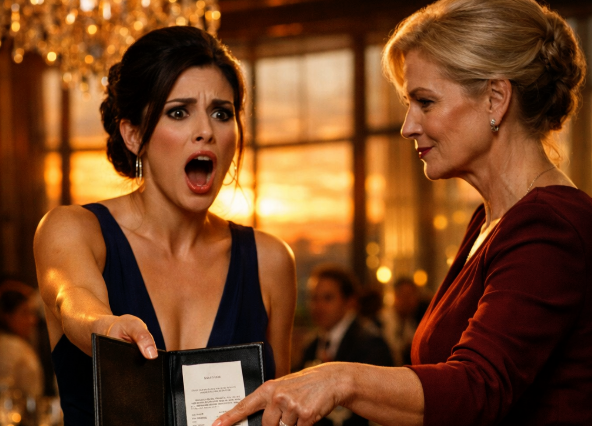
“Here, pay it,” my husband’s mother said, holding out the folder with the bill for her anniversary birthday—casually, the way one hands over something self-evident. As if we had agreed. As if it had been part of a deal I knew nothing about, but which had long existed in her head.
I looked at the folder. Then at her.
And smiled.
“No, Valentina Stepanovna.”
The pause was very short—but a great deal fit inside it.
“What do you mean, no?” she said quietly, almost in a whisper, because there were still guests nearby.
“I’m not going to pay. It’s your celebration. You organized it, you invited the guests. It’s your responsibility.”
I spoke calmly. Without anger, without a tremor in my voice. I had rehearsed it many times inside myself—and now the words came out evenly, as if I were simply stating a fact.
Valentina Stepanovna looked at me as though I had done something indecent. Something impossible. Something that simply could not happen in the world as she understood it.
“Igor,” she called to her son.
Igor came over holding a glass, still not understanding what was happening.
“Igoryok, here’s the bill. It needs to be paid.”
I watched my husband. Saw him take the folder. Open it. And on his face appeared the expression I had seen before only when he heard about some unexpected large expense—something between confusion and mild fear.
“Mom…” he began.
“What?”
“I don’t have that kind of money right now.”
“What do you mean, you don’t?” she said with genuine astonishment. Genuine—that was the worst part. She truly didn’t understand. For so many years she had never thought about where the money in this family came from that she simply could not imagine it might not exist.
“Well… I didn’t sell anything this month. Or last month either. Usually Ksyusha…”
“Ksyusha is refusing,” I said just as calmly.
A few guests who had not yet left tried to look away—with that characteristic concentration on their own phones and handbags that people adopt when they unwillingly become witnesses to someone else’s embarrassment. The dacha neighbors, the couple with the car, were standing by the coat check and were clearly hearing everything.
Valentina Stepanovna understood that. She felt their eyes on her—or their deliberate lack of eyes on her, which was even more eloquent. She, who had gathered all these people to show that she lived well. That they had everything. That the family was strong.
The café administrator tactfully appeared beside us.
“Excuse me, are you ready to settle the bill?”
“Yes,” said Valentina Stepanovna. And her voice did not waver—I gave her credit for that.
She took out her wallet. Took out a credit card—the one she almost never used because she was afraid of debt. She always said loans were a trap for the weak. That respectable people lived within their means.
The card went through. The waiter brought the receipt. The celebration was paid for.
We rode home in silence. Igor sat beside me in the back of the taxi and stared out the window. I could feel that he wanted to say something but did not know how.
“You could have just…” he finally began.
“No,” I said. “I couldn’t.”
“She was upset.”
“I know.”
“It was her anniversary.”
“Igor.” I turned to him. “How many years have I been paying for things nobody even asks me about? How many times have I been told that my work is not creativity, just a way of extracting money for people who have something more important? How many times has your mother looked at me like I was a cash register?”
He was silent.
“I’m not your mother’s enemy,” I said more quietly. “I’m just not a cash register anymore.”
The taxi stopped by our building. We got out. Igor took my hand—carefully, the way one takes something fragile—and we walked toward the entrance.
He said nothing. But he did not let go of my hand.
Valentina Stepanovna called three days later.
I had expected an angry call—with reproaches, tears, rhetoric about ungrateful daughters-in-law and a ruined old age. But she called differently. Her voice was dry, even, a little tired.
“Ksenia,” she said. “I want to talk.”
We met at her place. Without Igor—she herself had asked for that.
She made tea. Put cookies on the table. Sat for a long time in silence, staring into her cup.
“I’m angry with you,” she finally said. “Very angry. I want you to know that.”
“I understand,” I replied.
“But I also…” She paused, searching for words. “I also understand that I put myself in a ridiculous position. By myself. With my own hands.”
I said nothing.
“The neighbors saw. Lyusya saw—she messaged me afterward asking if everything was all right.” She said it with difficulty, as if each word were bitter. “It was… unpleasant.”
“I’m sorry you had to be in that situation,” I said. And it was true.
“You did it on purpose.”
“I didn’t set anything up. I just didn’t pay.”
She raised her eyes to me. A long, studying look—the kind she had never looked at me with before. Usually she looked straight through me, the way people look at a function, not a person.
“You work a lot,” she said. It sounded almost like a question.
“Yes.”
“I never…” She stopped, fell silent again. “I never thought of it as something serious. Marketing. It seemed to me that it was simple. That you were just good at doing something that came easily to you.”
“Nothing comes easily, Valentina Stepanovna. It’s just that some things don’t look like labor if no one is really looking at them.”
She nodded. Slowly, as if agreeing with something uncomfortable.
We sat in silence a little longer. Drank tea. Outside, March drizzled on—wet and gray.
“I’m not going to ask your forgiveness,” she finally said. “Not now. I need time.”
“All right,” I answered.
“But I… won’t do that anymore.” She said it quietly, with effort, like someone speaking a sentence for the first time in her life, without any habit of such words. “About money. I won’t do that anymore.”
I did not say thank you, and I did not say I’m glad. I simply nodded.
Because words were not needed here.
Several months passed.
Valentina Stepanovna did not become a different person—that would have been both a lie and a fairy tale. She still sometimes said, “Igoryok is so sensitive,” in exactly the same tone. She still looked at my work as something prosaic. But she stopped handing me bills—literally and figuratively.
She started calling me herself sometimes. Not for business, but just because—to tell me something, to ask my opinion. As if she had finally noticed in me a separate person, not merely an attachment to her son.
Igor sold several paintings—suddenly, unexpectedly, several at once. He came home with money and a glowing face, and the first thing he said was, “Ksyush, let me cover the utilities for half a year.” I laughed and agreed.
Maybe something had shifted. Slowly, awkwardly, the way it does with people who have looked in one direction for a long time and then suddenly decide to turn.
And that leather folder with the bill—I sometimes think about it. About how simply it had been held out to me. As though it were the most natural thing in the world. Like air, which simply exists and which people breathe without thinking.
And about how sometimes the most important thing is simply to say no.
Not loudly. Not with tears. Not with accusations.
Just—no.
And see what happens.