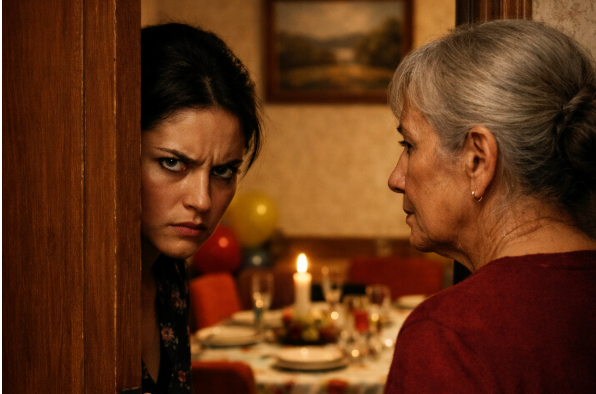
“‘And I’ve set a separate table just for you,’ Tanya gave the relatives a ‘surprise’ after which they stopped coming to visit
She had started kneading the dough the night before. Her hands moved from habit, almost without any help from her mind — her mind was busy with something else, replaying an old conversation that simply refused to fade from memory.
‘Too salty,’ her mother-in-law, Nina Vasilyevna, had said then, pushing away the plate of borscht as if something inedible had been set before her. ‘Tanya, you’re a grown woman. Is it really that hard to remember?’
‘I think it’s fine,’ her husband, Seryozha, put in cautiously, but no one paid him any attention.
‘And the meat is tough,’ added her sister-in-law Marina, poking at it with her spoon. ‘I wouldn’t serve something like that at all.’
Meanwhile, Marina had already eaten two bowls. And she took a third — ‘so the food wouldn’t go to waste.’
Tanya stood by the stove in silence, watching the family demolish something she had spent several hours making. That morning she had gone to the market, chosen the meat carefully, smelled it, felt it with her hands, bargained for a long time with a mustached vendor. Then she had stood over the pot, skimming off the foam, adding roots and herbs she herself had dried back in summer. The borscht had turned out fit for a restaurant. Thick, ruby-colored, with a rich broth.
Too salty. Tough meat.
She said nothing. As always.
The relatives dropped by regularly — three or four times a month, sometimes even more often. Nina Vasilyevna, Marina and her husband Kostya, and sometimes Uncle Fedya too, the mother-in-law’s brother, who actually lived in another city but somehow managed to appear exactly when Tanya was cooking something.
They never warned her ahead of time. They would simply call from the car: ‘We’re on our way, we’ll be there soon.’ And Tanya would start rushing around the kitchen, trying to figure out what was in the fridge and how to turn it into a table spread she wouldn’t be ashamed of.
She was never ashamed. The table always came together — pies, salads, hot dishes, appetizers. Seryozha would only shake his head and say she was a magician. The children — daughter Masha and son Artyom — ran circles around her and tried to steal something straight off the baking tray.
But the relatives had a different opinion.
‘Tanya, why don’t you make aspic?’ Nina Vasilyevna would ask, spreading butter on her fourth slice of bread already. ‘I always made aspic. Seryozha likes aspic.’
‘I like Tanya’s pies,’ Seryozha would say.
‘Pies are not serious food,’ Nina Vasilyevna would wave him off.
Marina specialized in a different kind of remark. She was obsessed with healthy eating — at least in words. In practice she devoured everything, but always felt compelled to comment:
‘Mayonnaise in salad is such a blow to the liver, you have no idea. I’d dress it with yogurt.’
‘Then dress yours with yogurt,’ Tanya snapped once, finally unable to take it anymore.
Marina got offended and stayed silent the whole evening. Still, she ate more than anyone else.
Kostya, Marina’s husband, never said anything at all — he just ate. Methodically, intently, like a man doing important work. When he got up from the table, he would pat his stomach and say:
‘Well, not bad.’
The highest possible praise from Kostya.
Uncle Fedya was kinder than the rest — he praised her. But in a strange way:
‘This one’s all right,’ he would say, pointing to some dish. ‘Not like last time. Last time, remember, Nina, she dried the chicken out? That was something else, of course. But this time — not bad.’
Sometimes Tanya imagined grabbing Uncle Fedya by the collar and leading him out the door. Calmly, without unnecessary words. Just — out the door.
But of course, she never did anything like that.
The breaking point came on an ordinary Sunday.
That morning Tanya had begun making stuffed fish — a labor-intensive, temperamental dish that required patience and several hours of work. She loved that fish, loved the whole process — cleaning it, putting it together, then letting it stew in the oven while the smell drifted through the house and made the children start hovering around the kitchen.
In the middle of the day Nina Vasilyevna called:
‘Tanya, we’re coming. There’ll be a lot of us, do you mind?’
‘There’ll be a lot of us’ meant that besides Nina Vasilyevna herself, Marina and Kostya would be coming, and judging by the tone of her voice, someone else too.
‘All right,’ Tanya said.
She managed it. The table turned out beautiful — the fish in the center, vegetable appetizers beside it, homemade pickles she had put up back in autumn, an apple pie she had baked for the children but which had now also ended up on the table.
They arrived: Nina Vasilyevna, Marina and Kostya, and that same Aunt Zoya — the mother-in-law’s cousin, whom Tanya had seen maybe twice in her life.
The moment Aunt Zoya stepped inside, she looked around and said:
‘It’s not very tidy in here.’
The house was tidy. Tanya had cleaned it that morning while the fish was slowly cooking.
At the table Aunt Zoya tasted the fish and said:
‘A bit bland. Nina, remember how Mama used to make it? Now that was fish.’
‘I remember,’ Nina Vasilyevna sighed with a look as if Tanya had deliberately cooked worse than the late grandmother.
This time Marina went after the pie:
‘Tanya, what kind of recipe is this? I’d adjust it a little — less sugar, and no cinnamon at all…’
‘I’ll give you the recipe,’ Tanya said evenly.
‘No, no need. Yours is a little… well, too plain.’
Too plain.
Tanya looked at the pie. At the fish. At the table she had been setting since morning. At the children, who had gone quiet because they sensed that their mother was different now. At Seryozha, who was staring down at his plate.
Something inside her quietly clicked.
It didn’t explode, didn’t turn upside down — it clicked, exactly like that. Like a lock finally meeting the right key.
Tanya smiled, stood up to clear the plates, and began to think.
For the next two weeks she was unusually calm. Seryozha noticed and got worried:
‘How are you?’
‘Excellent,’ Tanya replied.
‘Really?’
‘Absolutely.’
She was thinking through an idea, examining it from every angle, looking for weak spots. There were no weak spots.
When Nina Vasilyevna called again and announced that they would ‘all be coming on Sunday,’ Tanya said:
‘Wonderful. I’ll prepare.’
‘Good,’ Nina Vasilyevna said happily. Apparently she heard something special in Tanya’s words, because she added, ‘Last time the fish was a little dry.’
‘Bland,’ Tanya corrected her.
‘What?’
‘Nothing. I’ll be waiting for you.’
She started preparing on Saturday evening.
Seryozha sat in the kitchen, watching his wife take food out of the refrigerator, arrange it on the table, write something down on a sheet of paper.
‘What are you doing?’ he finally asked.
‘Preparing for Sunday.’
‘I can see that. But why are you setting aside those…’
‘Seryozha,’ Tanya looked at him calmly and clearly. ‘Do you trust me?…’
Continuation is missing here — the original text ends with: ‘To be continued just below in the first comment.’”
She had started the dough the night before. Her hands moved by habit, almost without her mind’s help — her mind was busy elsewhere, replaying an old conversation that refused to fade from memory.
“You oversalted it,” her mother-in-law, Nina Vasilyevna, had said then, pushing away her bowl of borscht as if something inedible had been set before her. “Tanya, you’re a grown woman. Is it really that hard to remember?”
“I think it’s fine,” her husband, Seryozha, had put in cautiously, but no one paid him any attention.
“And the meat is tough,” her sister-in-law Marina added, poking at it with her spoon. “I wouldn’t have served this at all.”
Meanwhile, Marina ate two bowls. Then helped herself to a third — “so it wouldn’t go to waste.”
Tanya stood by the stove and silently watched the family devour something she had spent hours making. That morning she had gone to the market, choosing meat, smelling it, testing it with her fingers, bargaining for a long time with a mustached vendor. Then she had stood over the pot, skimming the foam, adding roots she had dried herself back in the summer. The borscht had turned out fit for a restaurant: thick, ruby-red, with a rich broth.
Oversalted. Tough meat.
She said nothing. As always.
The family came by regularly — three or four times a month, sometimes more. Nina Vasilyevna, Marina with her husband Kostya, and sometimes Uncle Fedya too, the mother-in-law’s brother, who lived in another city but somehow always managed to appear exactly when Tanya was cooking something.
They never warned her in advance. They just called from the car: “We’re on our way, we’ll be there soon.” And Tanya would start rushing around the kitchen, figuring out what was in the fridge and how to turn it into a table spread she wouldn’t be ashamed of.
In truth, she was never ashamed. The table always turned out well — pies, salads, a hot main course, appetizers. Seryozha would only shake his head and say she was a magician. The children — their daughter Masha and son Artyom — would run around nearby, trying to steal something straight off the baking tray.
But the relatives had a different opinion.
“Tanya, why don’t you make aspic?” Nina Vasilyevna would ask, spreading butter on her fourth slice of bread already. “I always made aspic. Seryozha likes aspic.”
“I like Tanya’s pies,” Seryozha would say.
“Pies are not serious,” Nina Vasilyevna would wave him off.
Marina specialized in a different kind of criticism. She was obsessed with healthy eating — at least in theory. In practice, she devoured everything in sight while making sure to comment:
“Mayonnaise in salad is such a blow to the liver, you have no idea. I’d dress it with yogurt.”
“Then dress yours with yogurt,” Tanya snapped one day, finally losing patience.
Marina took offense and stayed silent the rest of the evening. Still, she ate more than anyone else.
Kostya, Marina’s husband, said nothing at all — he just ate. Methodically, intently, like a man doing important work. Rising from the table, he would pat his stomach and declare:
“Well, not bad.”
The highest praise Kostya could offer.
Uncle Fedya was the kindest of them all — he complimented her. But in a strange way:
“This one’s all right,” he would say, pointing to some dish. “Not like last time. Remember, Nina, how she dried out the chicken last time? That was something else, sure enough. But this — this is all right.”
Sometimes Tanya imagined grabbing Uncle Fedya by the collar and escorting him to the door. Politely, without extra words. Just — out the door.
But of course, she never did anything like that.
The breaking point came on an ordinary Sunday.
That morning Tanya had started making stuffed fish — a labor-intensive, temperamental dish that required patience and several hours of work. She loved that fish, loved the process itself — cleaning it, assembling it, then letting it slowly cook in the oven while the smell drifted through the house and the children immediately began hovering in the kitchen.
In the middle of the day Nina Vasilyevna called.
“Tanya, we’re coming. There’ll be a lot of us — you don’t mind?”
“There’ll be a lot of us” meant that besides Nina Vasilyevna herself, Marina and Kostya would be coming, and judging by the tone of her voice, someone else too.
“All right,” Tanya said.
She managed it. The table turned out beautiful — the fish in the center, vegetable appetizers beside it, homemade pickles she had put up in the fall, an apple pie she had baked for the children but which had now also ended up on the table.
They arrived: Nina Vasilyevna, Marina with Kostya, and that same Aunt Zoya — the mother-in-law’s cousin, whom Tanya had seen maybe twice in her life.
The moment Aunt Zoya stepped inside, she looked around and said:
“It’s not very tidy in here.”
The house was tidy. Tanya had cleaned in the morning while the fish was cooking.
At the table Aunt Zoya tried the fish and said:
“A bit bland. Nina, remember how Mother used to make it? Now that was fish.”
“I remember,” Nina Vasilyevna sighed, as if Tanya had deliberately cooked worse than the late grandmother.
This time Marina went after the pie.
“Tanya, what kind of recipe is this? I’d adjust it a little — less sugar, and no cinnamon at all…”
“I’ll give you the recipe,” Tanya said evenly.
“No, that’s all right. Yours is a little… well, too simple.”
Too simple.
Tanya looked at the pie. At the fish. At the table she had been setting since morning. At the children, who had gone quiet because they sensed that their mother was different now. At Seryozha, staring at his plate.
Something inside her clicked softly.
It didn’t explode, didn’t turn upside down — it clicked. Like a lock finally meeting the right key.
Tanya smiled, stood up to clear the plates, and began to think.
For the next two weeks she was unusually calm. Seryozha noticed and became worried.
“How are you?”
“Excellent,” Tanya replied.
“Really?”
“Absolutely.”
She thought the idea through, turning it over from every angle, searching for weak points. She found none.
When Nina Vasilyevna called again and announced that they would “all be coming on Sunday,” Tanya said:
“Wonderful. I’ll prepare.”
“Good,” Nina Vasilyevna said, pleased. She seemed to hear something special in Tanya’s words, because she added, “Though last time the fish was a little dry.”
“A little bland,” Tanya corrected her.
“What?”
“Nothing. I’ll be waiting for you.”
She began preparing on Saturday evening.
Seryozha sat in the kitchen watching his wife take food out of the refrigerator, lay it out on the table, write something on a sheet of paper.
“What are you doing?” he finally asked.
“Preparing for Sunday.”
“I can see that. But why are you setting those things aside…”
“Seryozha,” Tanya looked at him calmly and clearly, “do you trust me?”
“Well…”
“Just say yes or no.”
“Yes,” Seryozha said.
“Then wait until tomorrow.”
He shrugged and left. Tanya smiled and continued.
On Sunday she got up early. First she set the big table in the living room — the one by the window where guests usually gathered. A white tablecloth, beautiful dishes from the cabinet. In the center — roast chicken with apples and oranges, beside it potato gratin with a golden crust, a fresh vegetable salad dressed with olive oil and herbs, homemade fruit leather she had made for the children the week before, warm bread from the oven. Everything was beautiful, delicious, proper — she knew that, because she had cooked it with pleasure, not out of obligation.
Then she set a second table — in the kitchen, but neat as well. On it stood fresh vegetables — tomatoes, cucumbers, bell peppers, bunches of herbs; a bowl of eggs; a whole raw chicken on a cutting board; oil, salt, pepper, spices in little jars; a frying pan and a pot. Beside them Tanya placed a kitchen knife and a clean towel.
Seryozha came into the kitchen, saw all this, and stopped short.
“Tanya…”
“They don’t like the way I cook,” she said simply. “So let them cook for themselves. The way they like it.”
He was silent for a second. Then he laughed — quietly, but with relief, like a man who had been waiting for something for a long time and had finally seen it happen.
“You’re a genius,” he said.
“I’m just tired,” Tanya replied.
Masha and Artyom, drawn by the smells, ran into the kitchen, saw the chicken, and immediately started begging for a taste. Tanya cut them each a piece right then, before lunch — because she could, because it was her house and her table, and no one could forbid her.
The relatives arrived right on time — Nina Vasilyevna, Marina and Kostya, and with them Aunt Zoya again, who had somehow become a regular member of these visits.
They walked into the entryway, shrugged off their coats, and immediately headed for the living room — the smell was too impossible to ignore. Nina Vasilyevna had already begun opening her mouth to say something — praise it or criticize it, it hardly mattered — and was already reaching toward the table when Tanya said:
“Wait.”
Her voice was even. Not angry, not hurt — simply calm.
Everyone turned around.
“I set a separate table for you,” she said, pointing toward the kitchen.
A pause.
Nina Vasilyevna blinked.
“What?”
“A separate table. Come on, I’ll show you.”
She led them into the kitchen. The relatives stood there looking at the neatly arranged vegetables, the eggs in the bowl, the chicken on the cutting board.
“There,” Tanya said. “Everything is fresh and high-quality. Salt, spices — everything’s there. You can cook it exactly the way you like. The way you think is right.”
“You…” Marina began.
“You always know better how things should be done,” Tanya continued in the same even voice. “Mine is oversalted, dried out, bland, too simple. I decided it would be fairer to let you do it your own way. The stove is free, the knives and everything else you need are here.”
Aunt Zoya opened her mouth, closed it, then opened it again.
“What kind of mockery is this?” she said at last.
“No,” Tanya said. “It’s hospitality.”
In the living room, at the beautiful table with the white tablecloth, Seryozha was already sitting down, serving chicken to the children. Masha was laughing about something, and Artyom was dragging off a piece of bread.
“We are not going to cook here,” Nina Vasilyevna said. Her voice had turned thin and offended.
“All right,” Tanya agreed. “That’s your choice.”
“Tanya, do you realize that this… this is very rude of you?”
“What’s rude is feeding people who are going to say you made everything wrong anyway.” Tanya shrugged. “This seems honest to me.”
Another pause — long and heavy.
Then Nina Vasilyevna straightened up.
“We’re leaving.”
“Safe travels,” Tanya said.
They left quickly. They dressed in silence, without looking at Tanya. Marina wanted to say something — she even opened her mouth — but catching Tanya’s eye, changed her mind. Kostya said nothing, as always. Aunt Zoya was the last to leave, and at the door she turned around.
“You’ll regret this.”
“Maybe,” Tanya said politely.
The door closed.
She stood in the entryway for a second. Then she returned to the living room, where Seryozha looked at her questioningly from behind the table.
“They left,” she said.
“I heard.”
“Are you upset?”
He shook his head.
“I’m upset this didn’t happen sooner. Sit down, the chicken’s getting cold.”
Tanya sat down. Masha immediately demanded that her mother give her that particular piece with the crispy skin. Artyom dropped his fork and crawled under the table for it. Everything was ordinary, homey, and because of that Tanya suddenly felt her eyes sting — not from grief, but from a sharp kind of relief.
She helped herself to some chicken. Tasted it. The chicken was good — exactly as it should be. Neither dried out nor bland.
Just delicious.
Nina Vasilyevna didn’t call for a week. Then she called — about something else, briskly, as if nothing had happened. She didn’t mention Sunday. Tanya didn’t mention it either.
A few days later Marina sent a message — long, several screens’ worth, about respect and how she had always meant well. Tanya read it, thought for a moment, and replied briefly: “I understand. It’s all fine.” Marina never wrote again.
They stopped dropping by. Sometimes they showed up for birthdays or holidays. But it was different now. They warned them in advance. They didn’t criticize. Once, Marina even said the salad was tasty, and it sounded like a small miracle.
Aunt Zoya never appeared again. Tanya did not miss her.
The next Sunday — with no guests — Tanya started making stuffed peppers. Just because she felt like it. The children hovered nearby and got in the way, Seryozha read the news on his phone and kept glancing into the kitchen like a man expecting something good.
“Much longer?” he kept asking.
“As long as it takes,” Tanya would reply.
She didn’t rush. She cut the peppers carefully, stuffed them with pleasure, arranged them in the pot so they looked nice. The kitchen filled with a warm, homely, mouthwatering smell.
She had always loved cooking. It was just that now it was once again only for herself and for those who sat at her table not out of habit and not because it was convenient, but because they wanted to be there — specifically there, specifically with her.
As she stirred the sauce, she thought that was no small thing at all.